Thanksgiving 2025: Day 1, Rome


Thanksgiving road trips (mostly various US National Parks) have been my family’s annual ritual for years. But this year, we decided to do something different: visiting Italy.
My daughter is a high-school junior, and next year will likely be packed with college prep and deadlines. It felt like one of the last chances to take a long family trip without negotiating calendars too much.
I visited Italy more than 25 years ago, mostly spending time in Firenze (Florence), which I remember fondly (with a few less-fond moments mixed in). My wife’s favorite city in Italy, on the other hand, has always been Rome where I never had enough time to explore properly back then. And my daughter? She developed an interest in Italy too thanks to Nana Tour, a Korean TV show where her favorite K-pop boy band, Seventeen, traveled through Italy.
For once, all our interests aligned on the same destination. That might not be an usual case in a family. So we started planning the trip early this year.
The planning, however, was not easy. The best part of a road trip is that all you really need to worry about is whether your car works (and the weather, of course). You can just get in and go. Traveling to a foreign country is a very different story. Flights have to be booked, and flexibility disappears quickly.
I soon realized there are very few direct flights from SFO to Italy (in fact, only one per week). That meant we had to embrace connections, which was exactly what I (maybe anyone) want to avoid during the Thanksgiving season. To be safe, I built in very generous transfer times—more than three hours. However, the itinerary I planned almost a year in advance didn’t survive reality. Our flights were canceled twice, and the schedule kept getting reshuffled by the airlines during the almost one-year period. In the end, our outbound route became SFO → ORD → FCO, with a 2 hour 50 minute layover. The return flight was even more adventurous: MXP → YUL (Montreal!) → SFO, with just a 1 hour 50 minute connection, and in Canada! I learned that the U.S. immigration would be processed in Montreal, and YUL → SFO would be considered as a domestic flight, though I had totally no idea what that experience would be like, and it made me nervous right up until the very last moment. Luckily, at least, the government shutdown dropped off from my list of worries just a week before departure.
The travel itinerary itself was another challenge. It was a 7-night, 9-day trip covering four cities—Roma(Rome), Firenze(Florence), Venezia(Venice), and Milano(Milan). Packing that much into a single trip required careful planning. ChatGPT turned out to be surprisingly helpful here. We dumped our entire wishlist (places, foods, etc.) into it, and it generated detailed day-by-day itineraries. Of course, I still had to sanity-check everything and verify whether it was actually feasible, but it was incredibly useful for building the basic structure of the trip.
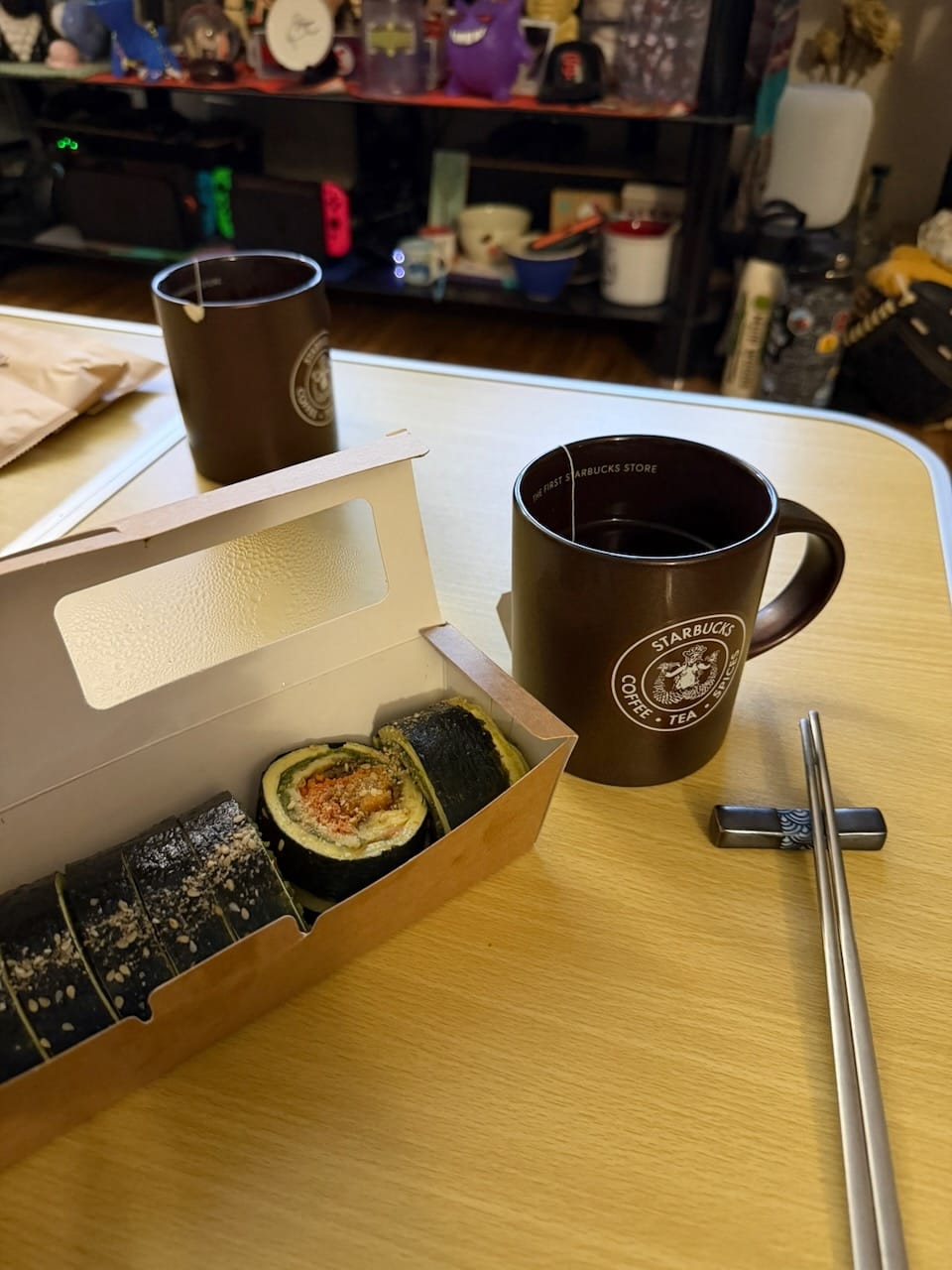
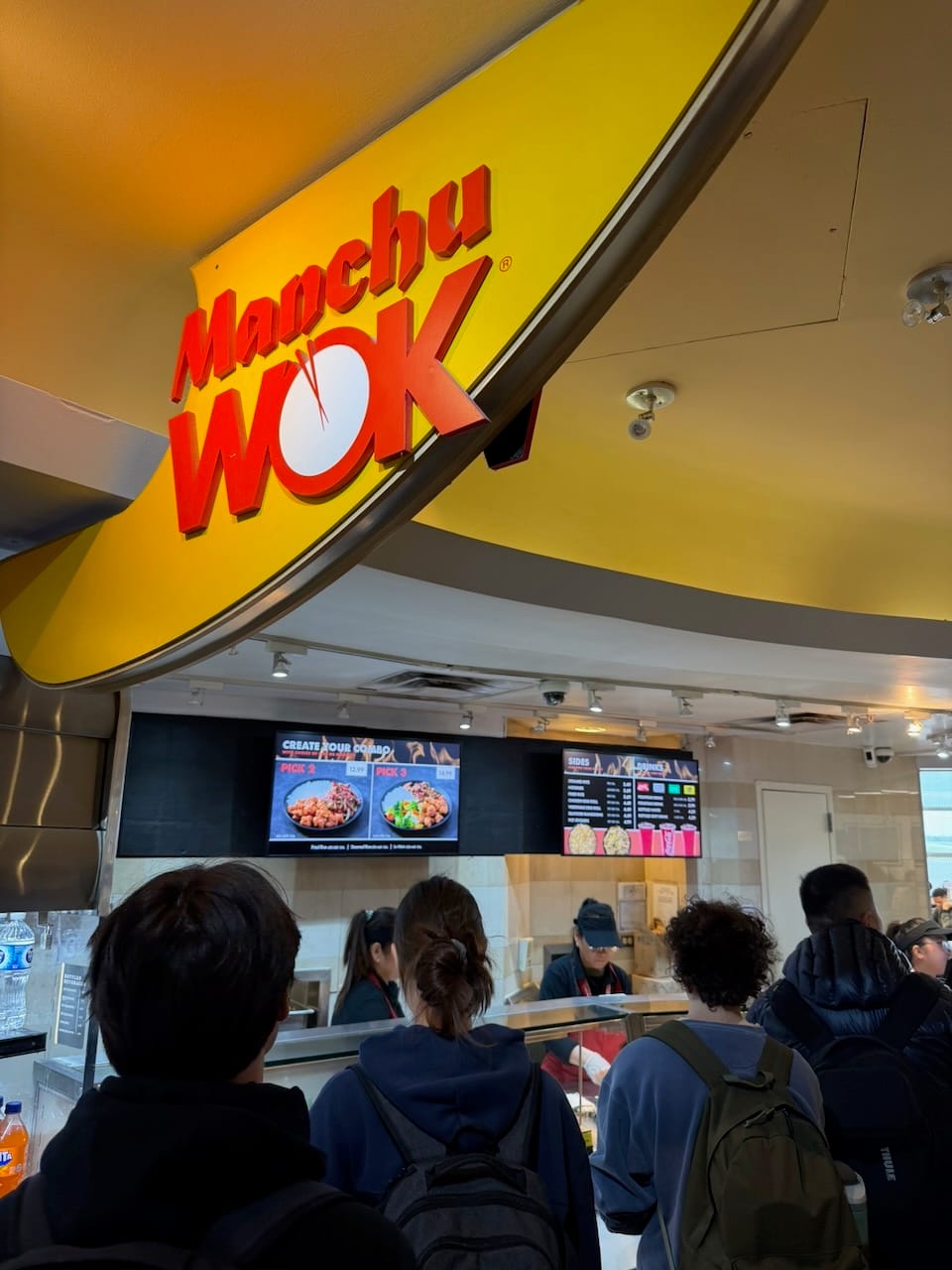
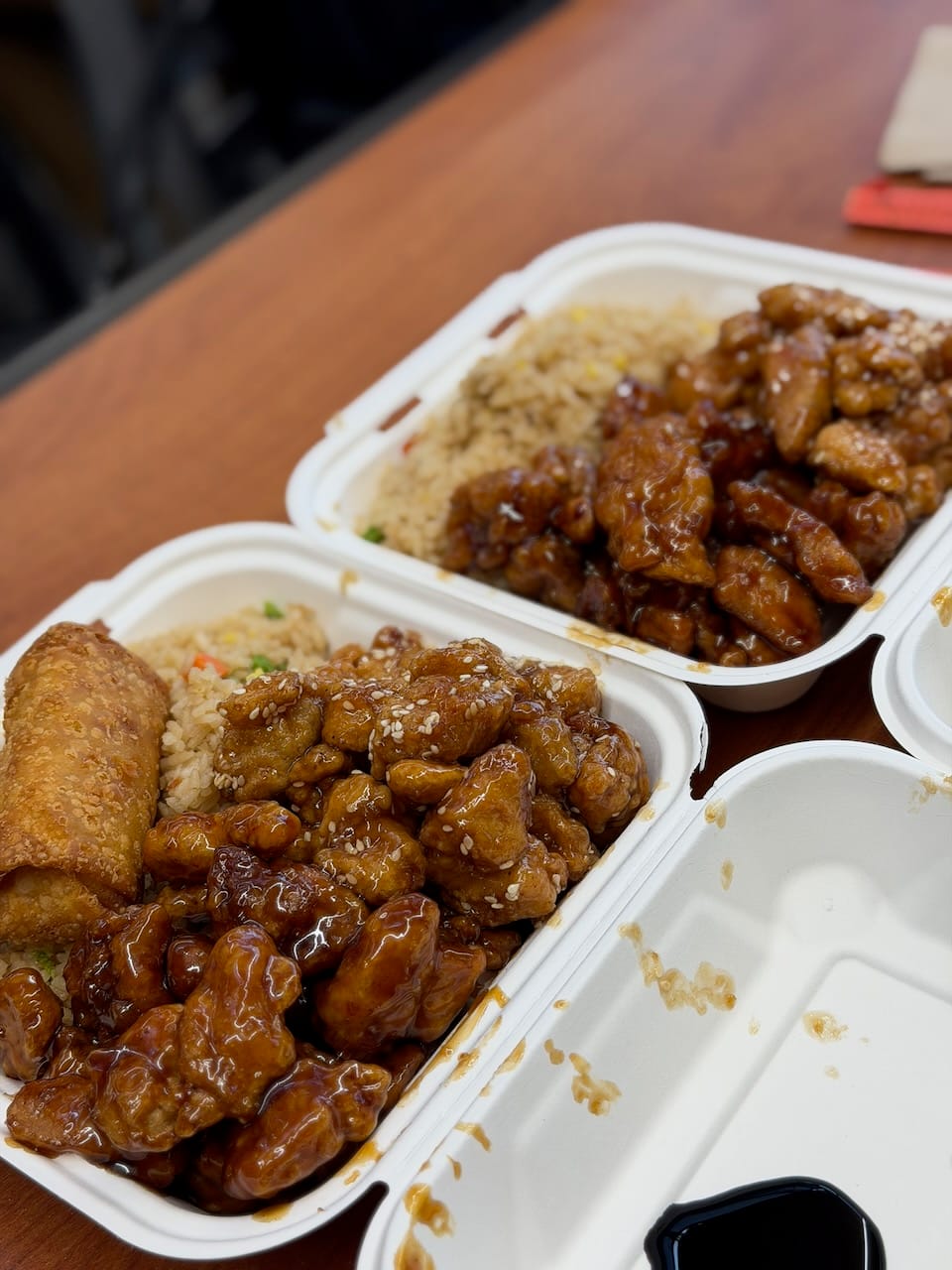
The trip started with my family’s favorite comfort food these days: kimbaps from Kunjip Tofu, which I picked up the day before. But it was 3 am, for a 6 am flight.
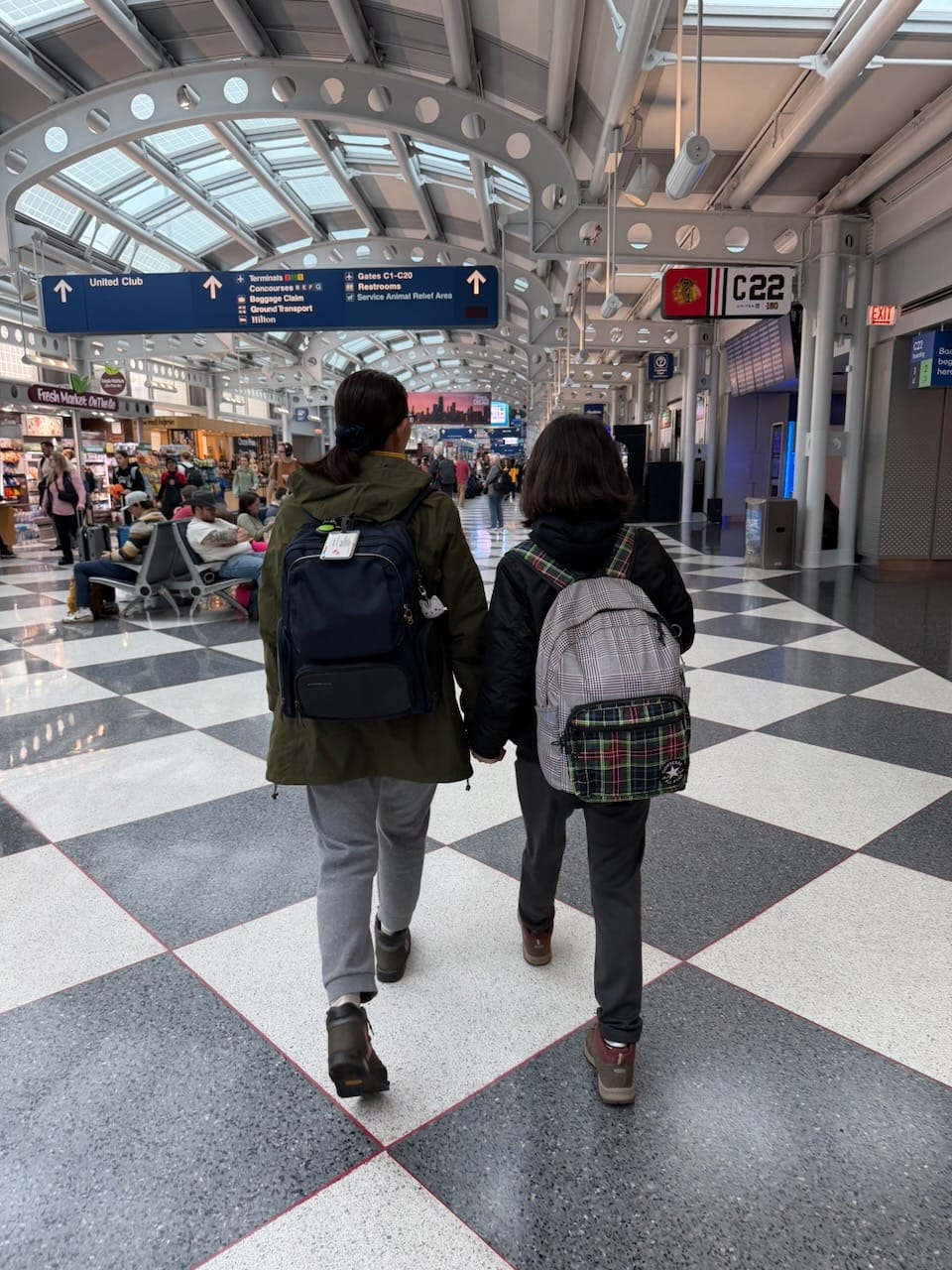
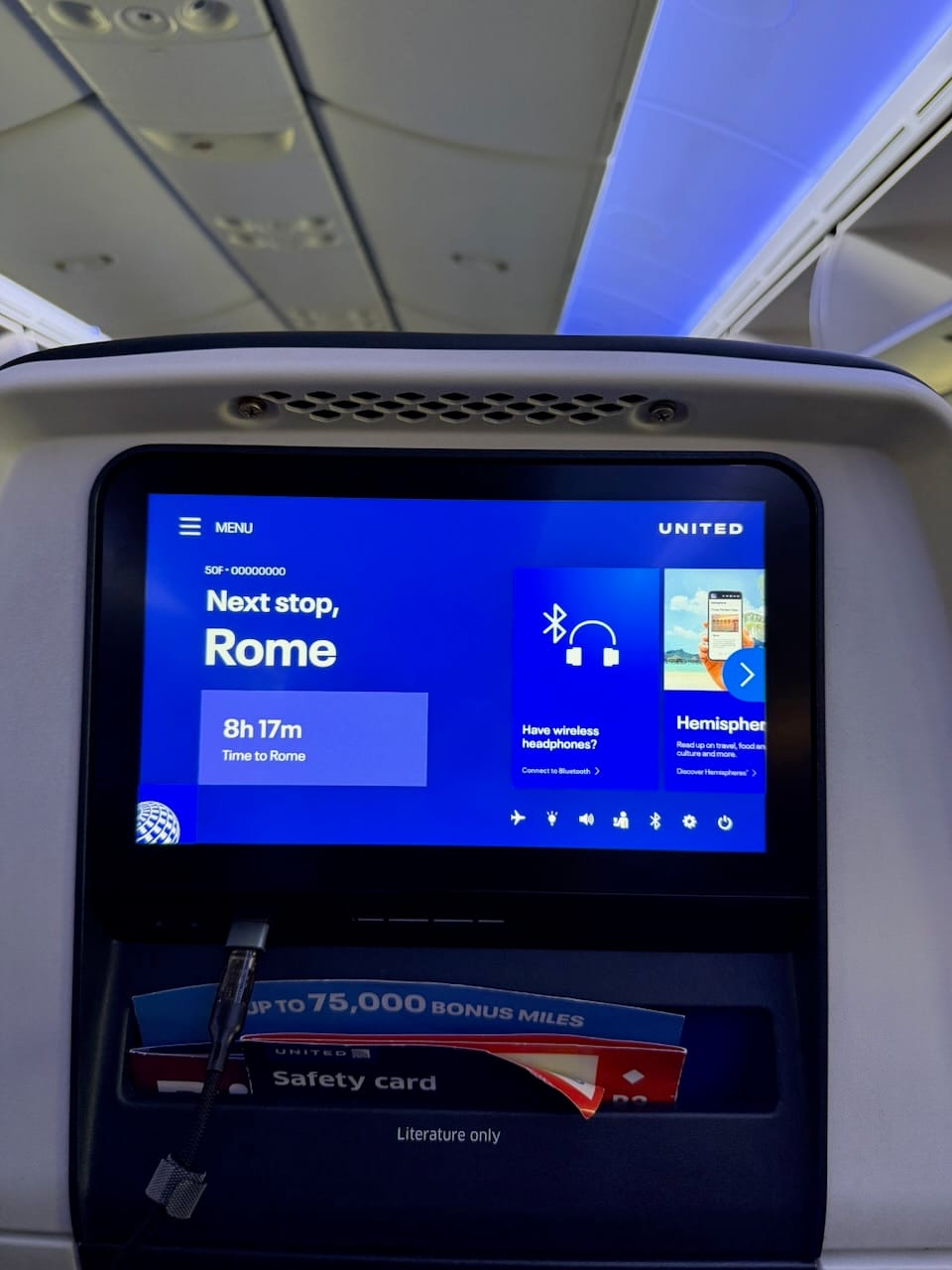
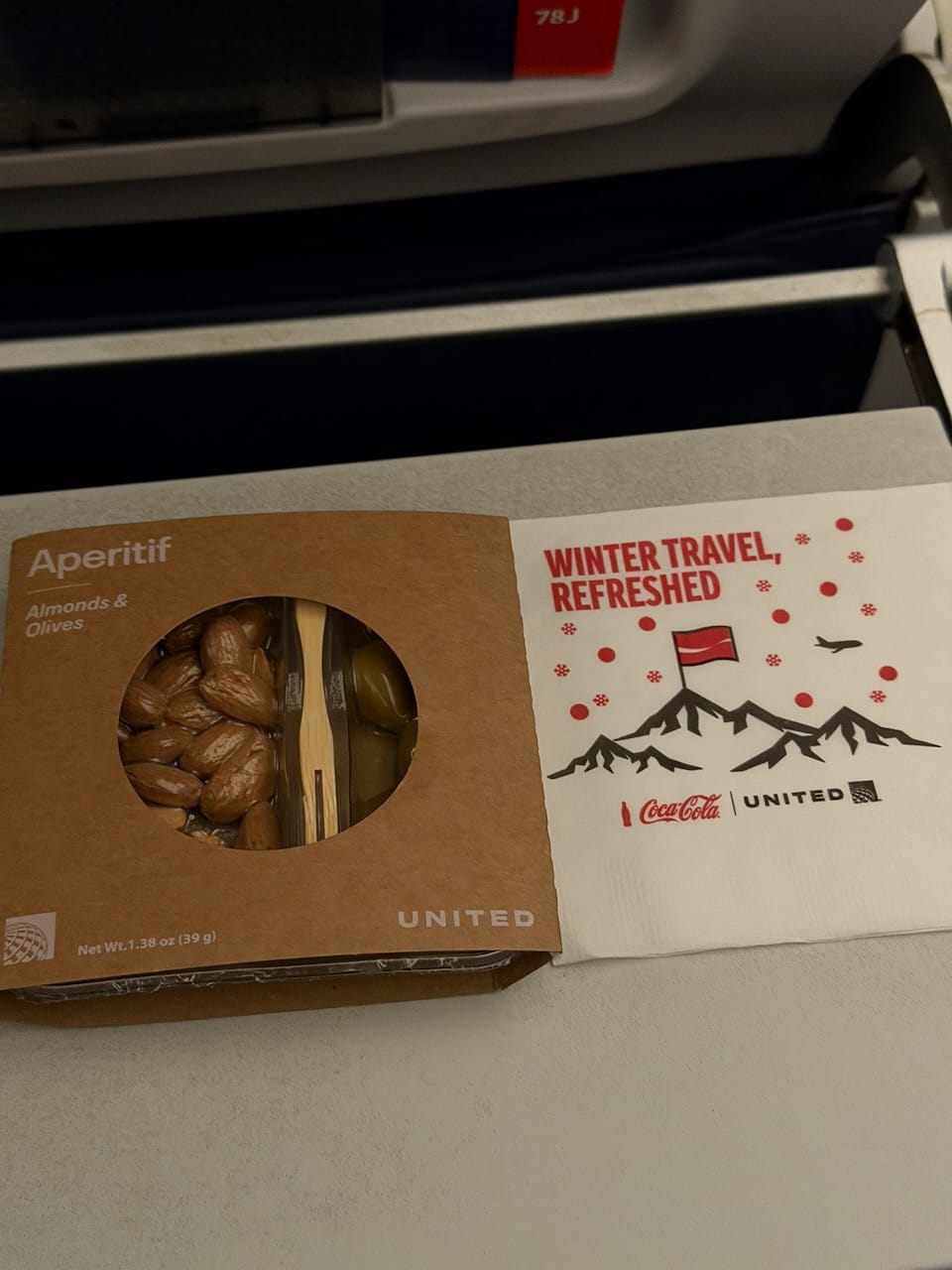
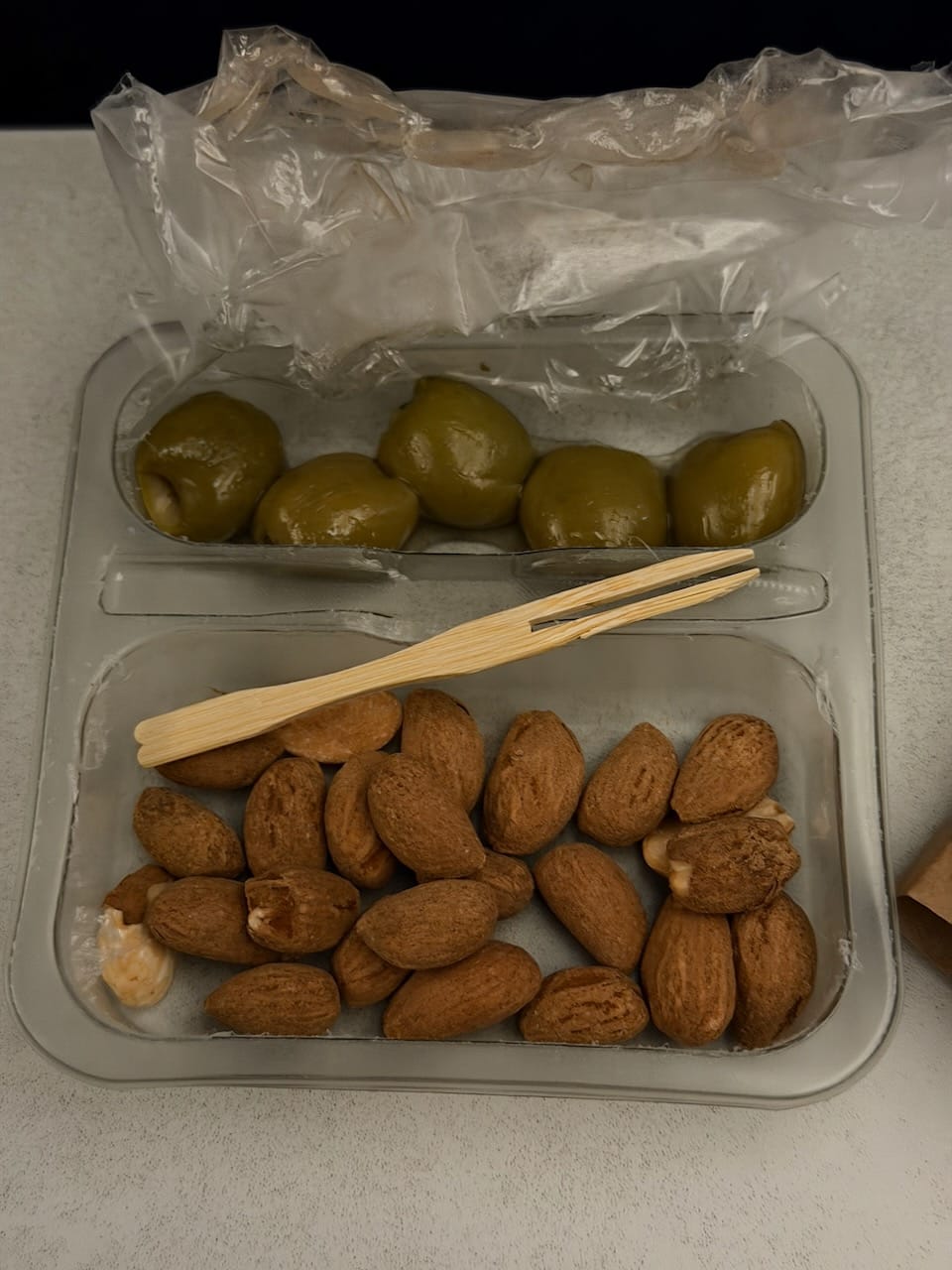
It was our second time connecting through ORD, and I’ve grown to find it oddly comfortable. I was also reminded that U.S. airlines (United, in this case) actually serve proper in-flight meals on international routes. Even though I usually fly United when traveling to Korea, this flight somehow felt more like a long domestic one. I know many wouldn’t agree with me, but I actually like United’s in-flight meals. They focus on the core objective: providing some energy. That said, the olive in the appetizer was unexpectedly impressive, though.
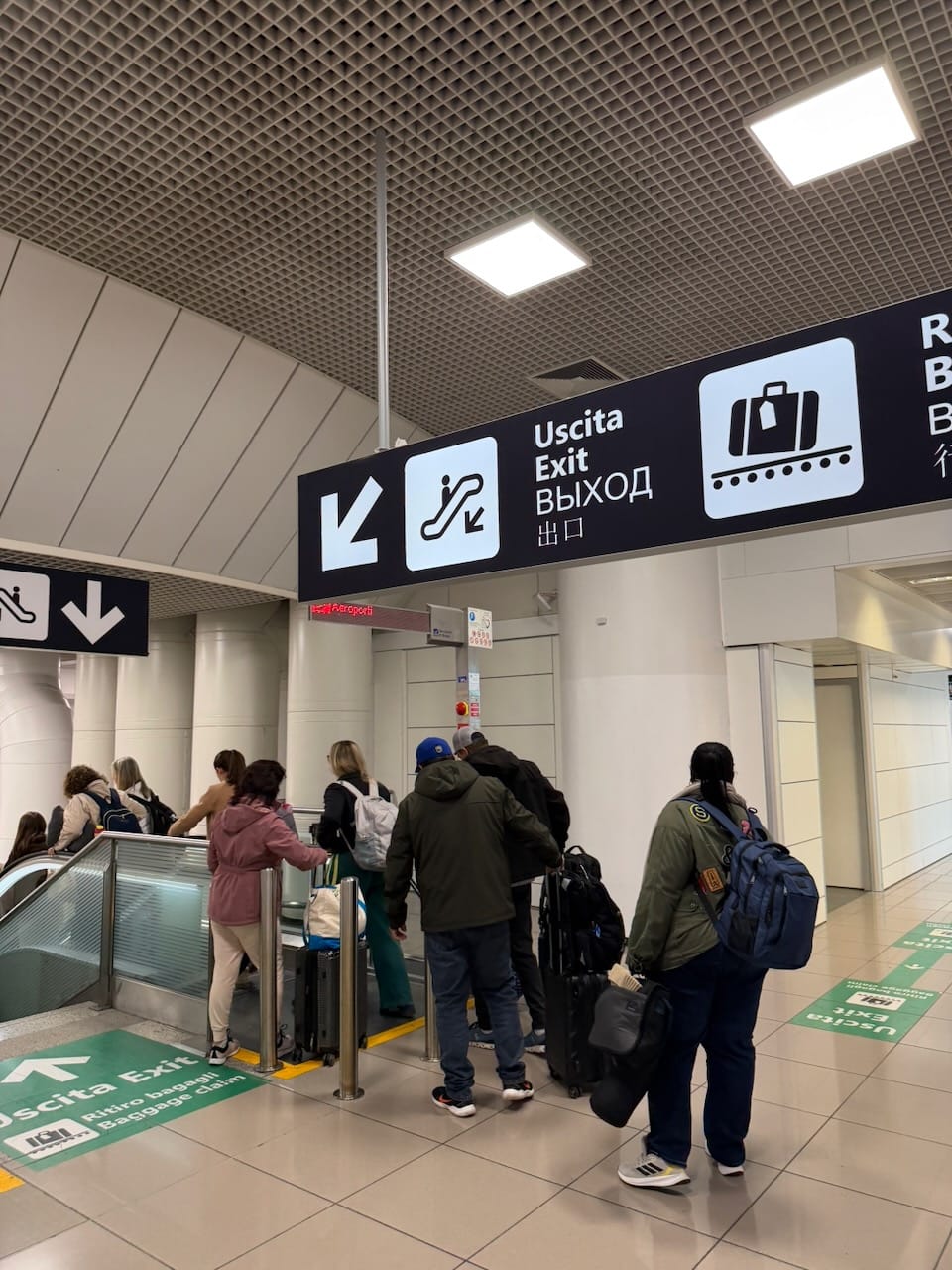
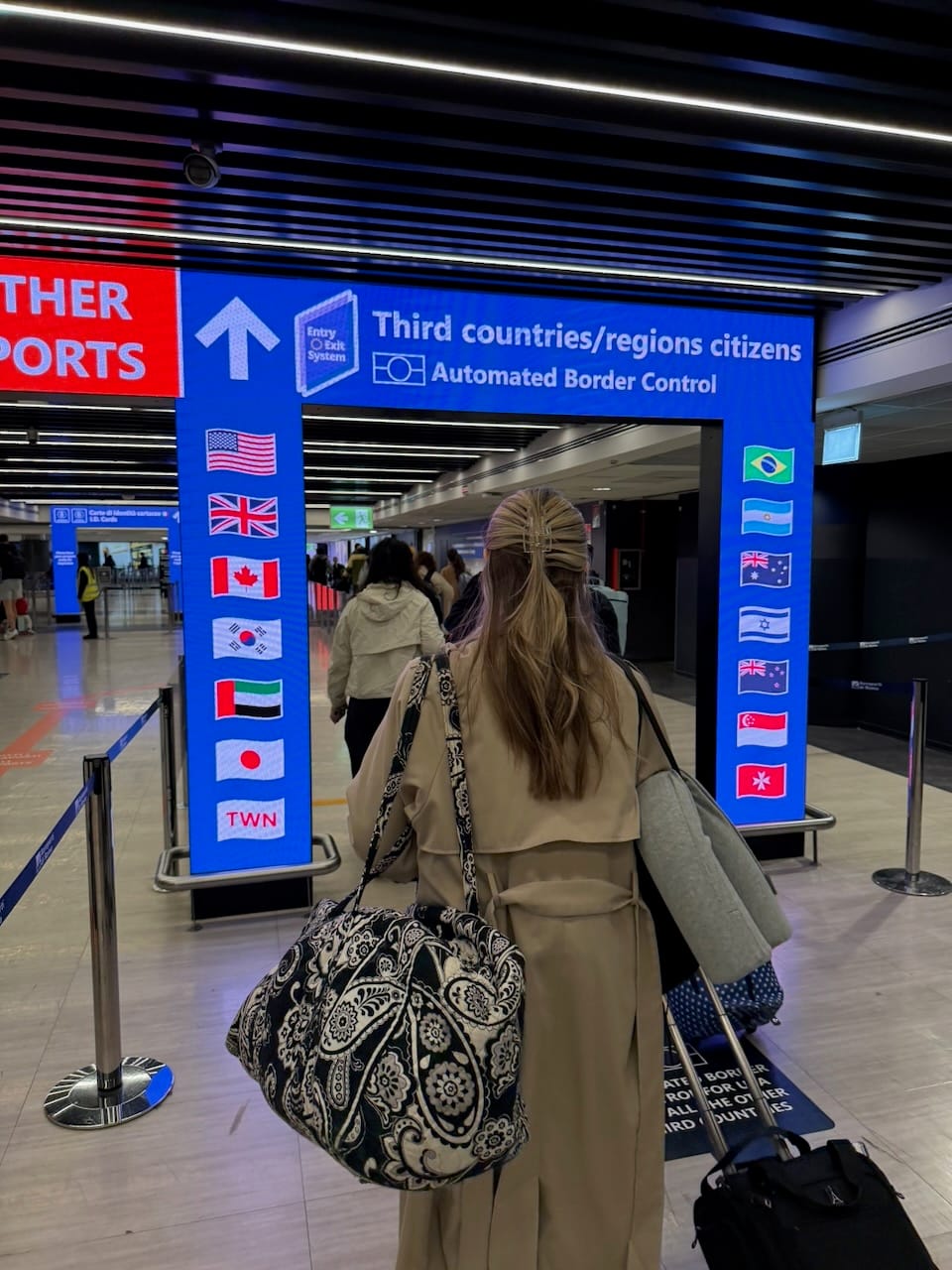
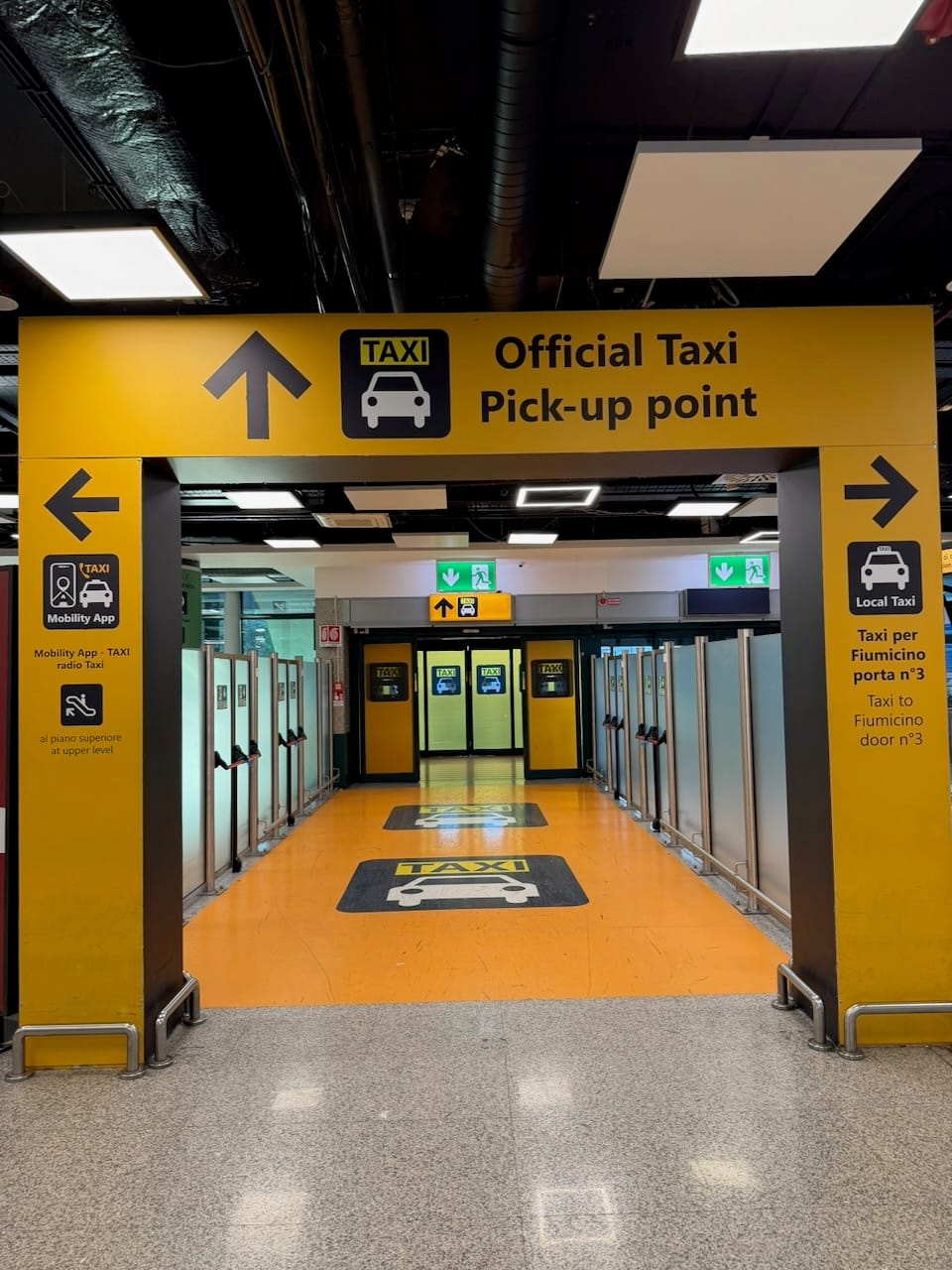
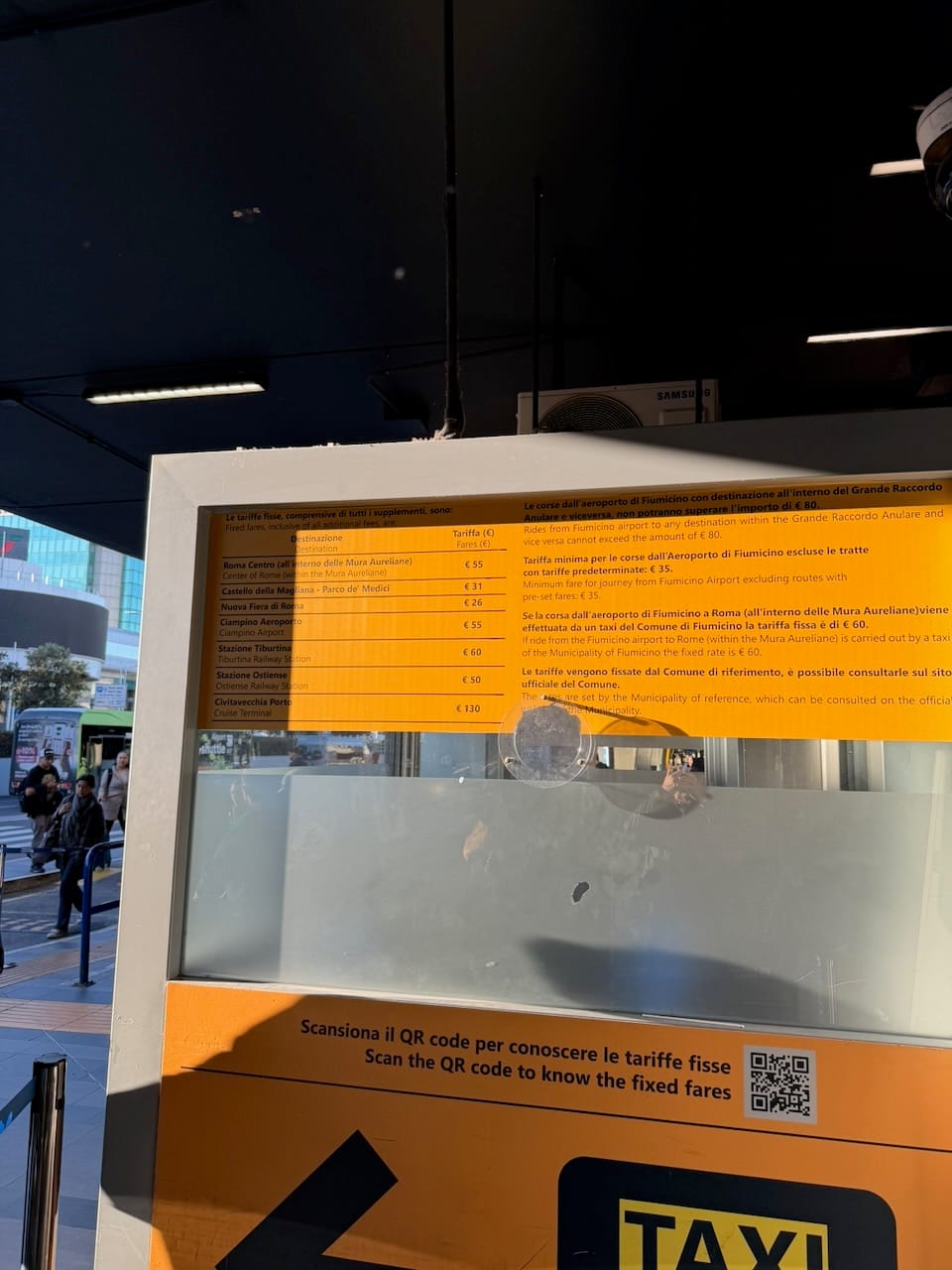


FCO turned out to be a good airport—no distractions, no trouble. The signage was clear, and both U.S. and Korean passport holders could use the expedited immigration lanes, which made arrival painless. I briefly considered booking an airport transfer through the hotel, but many people recommended taking a regular white Rome taxi, and they were right. The driver was kind and entertaining, turning the ride into a light introduction to the city. The fare was a flat €55 (from the airport to Rome Central), as expected. He did ask for a €10 tip, not aggressively, though. Perhaps he knew that travelers from the U.S. tend to take it for granted.
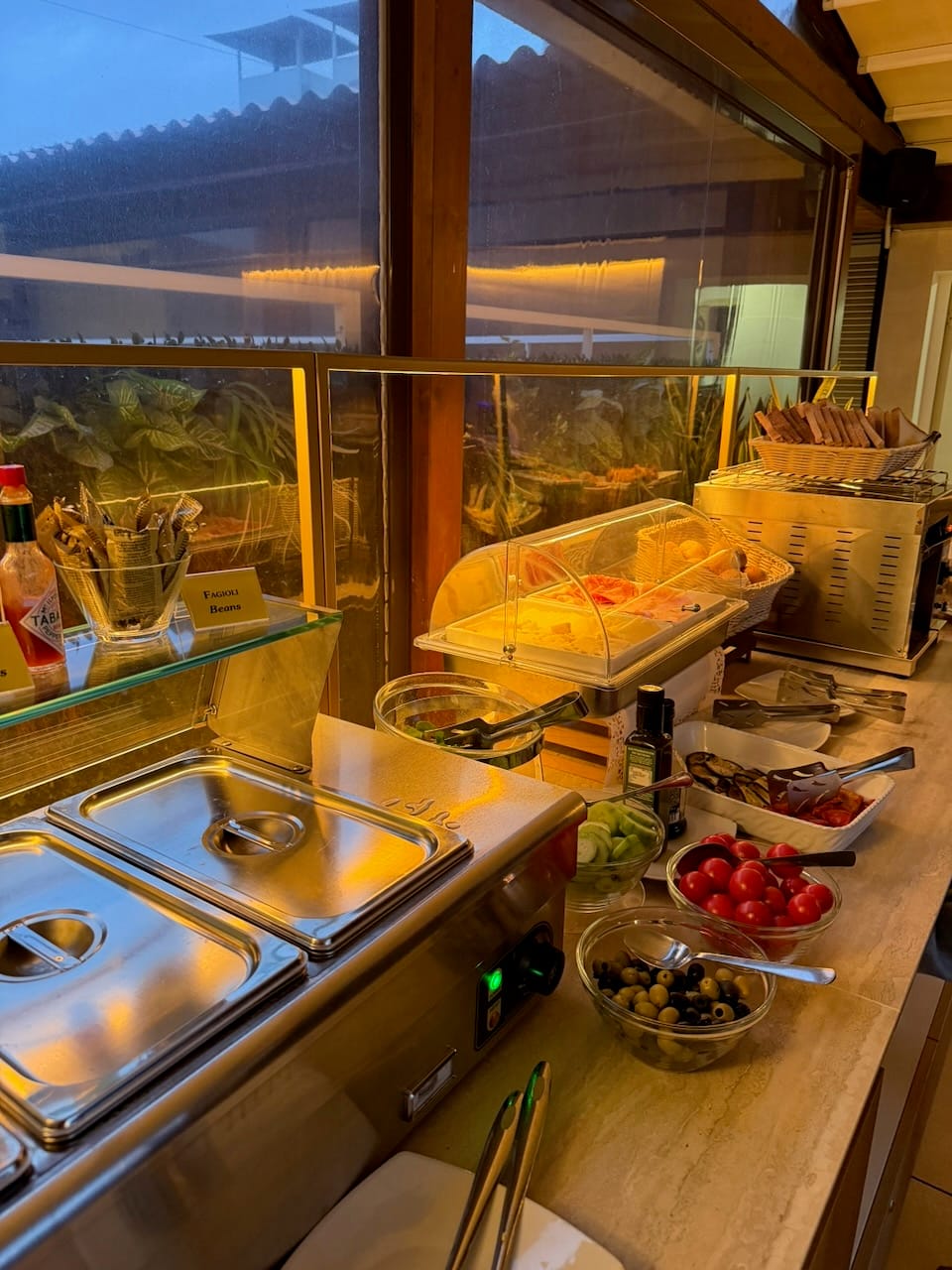
In Rome, we stayed at Cosmopolita Hotel Rome by Hilton. I chose it mainly for the location (and, admittedly, for some Hilton points). The highlight was the breakfast buffet—genuinely excellent.
It reminded me that Europeans take breakfast seriously. This was nothing like a typical U.S. hotel “continental breakfast.” If anything, I believe the U.S. hotels should rethink about what ‘continental’ is supposed to mean.

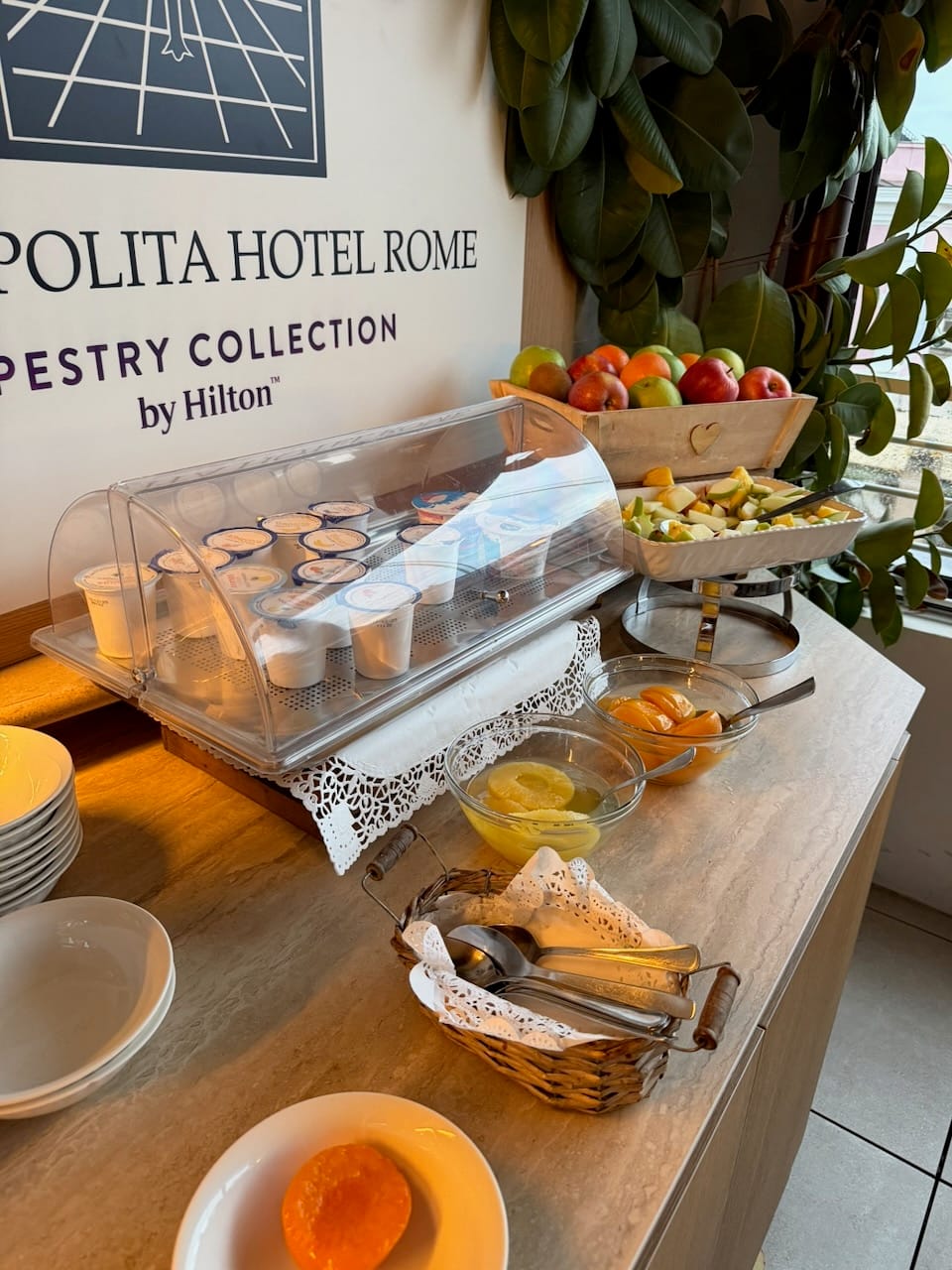
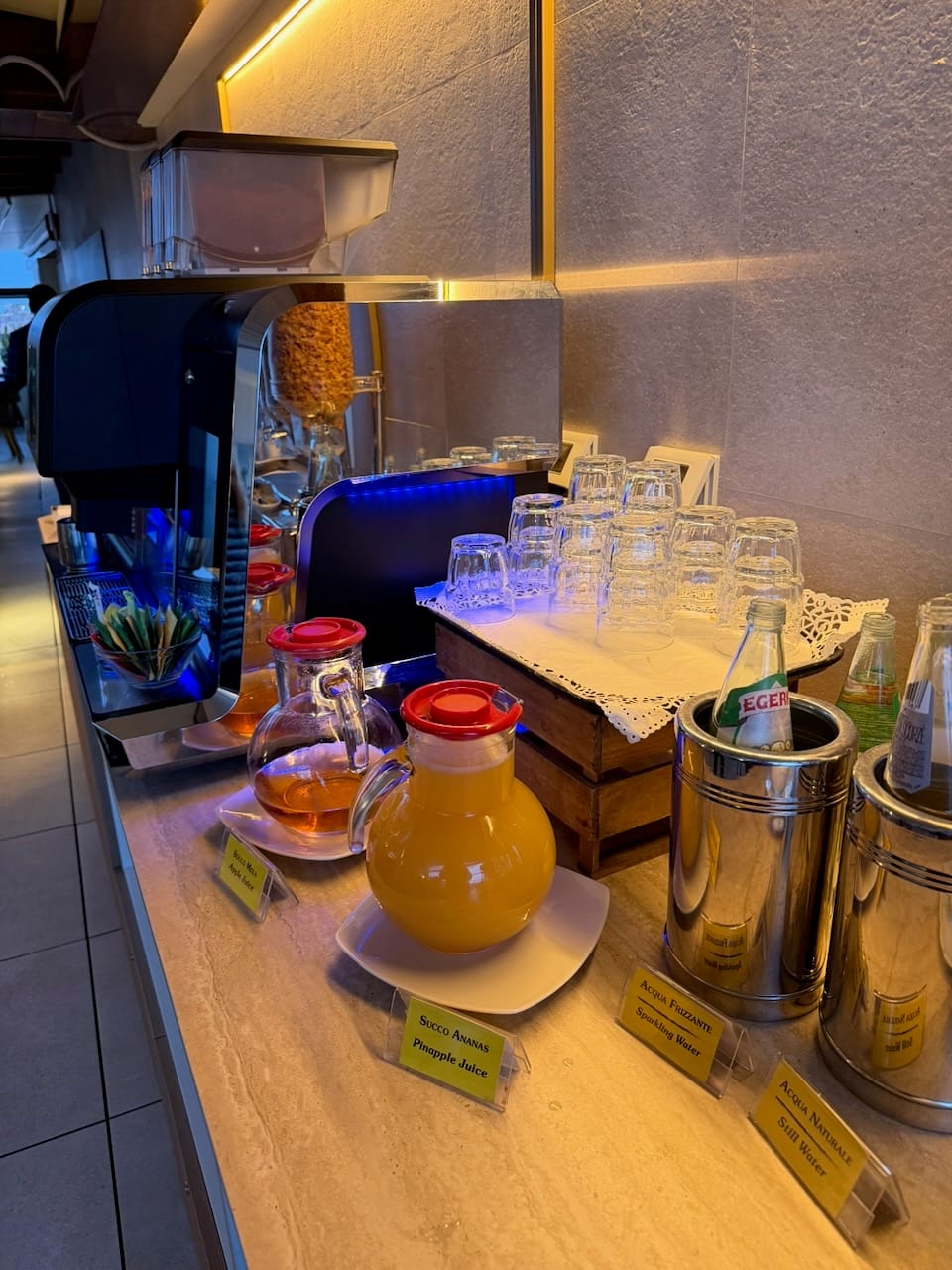


As I mentioned, the location was the hotel’s biggest advantage. It sat right in the heart of central Rome, with many major sights within walking distance. We arrived around 9 am, left our luggage at the hotel, and headed straight out.
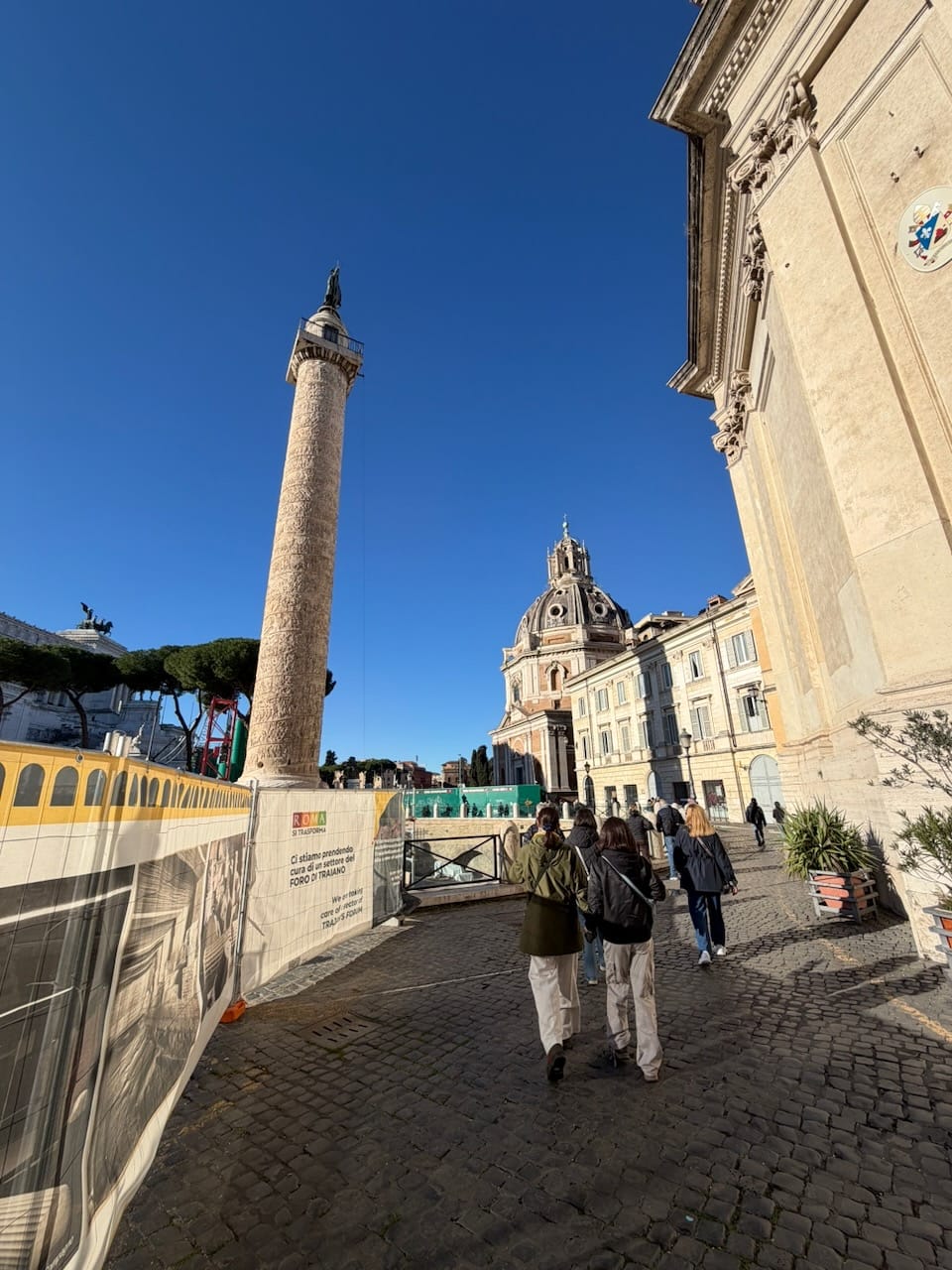
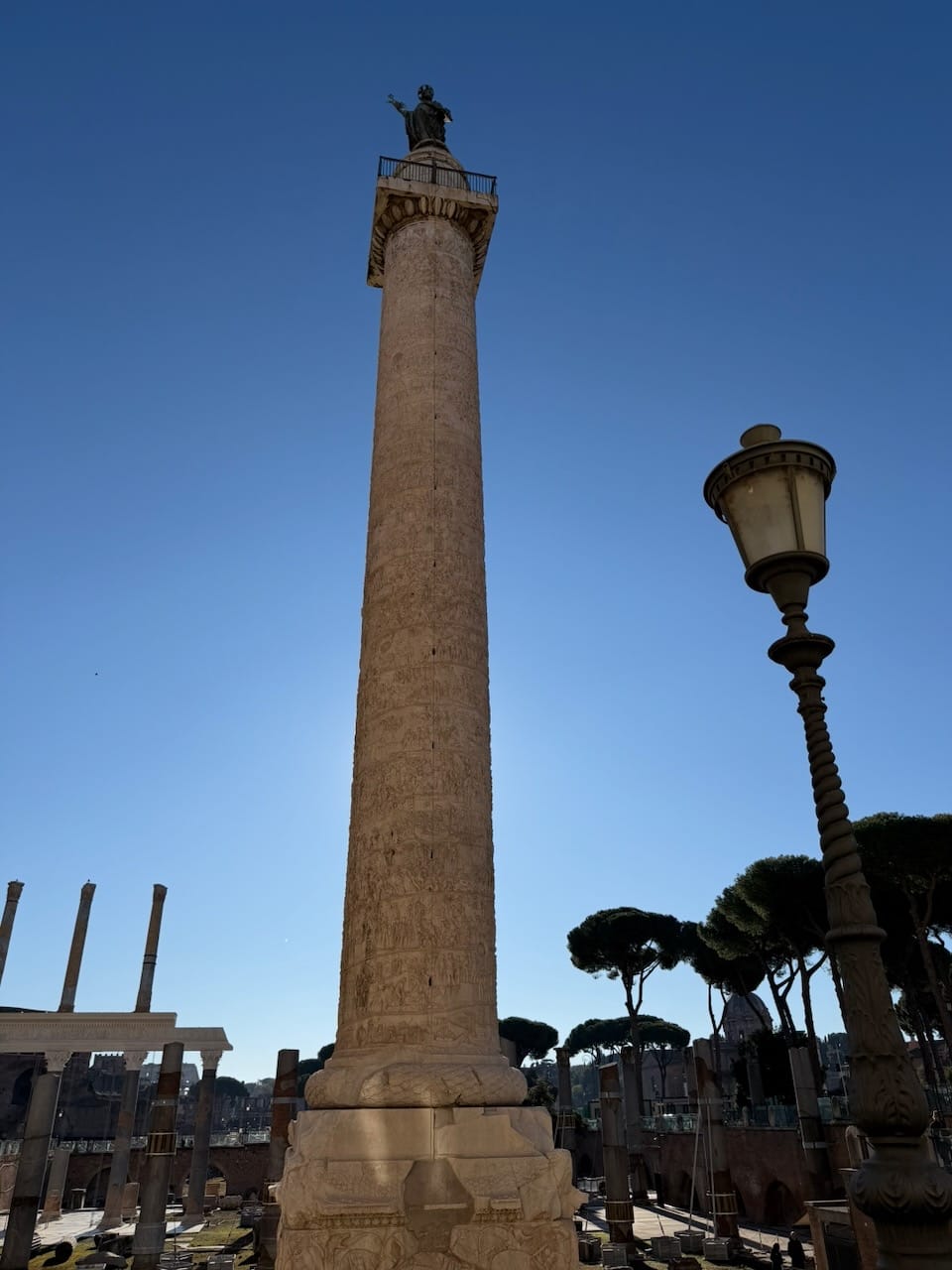
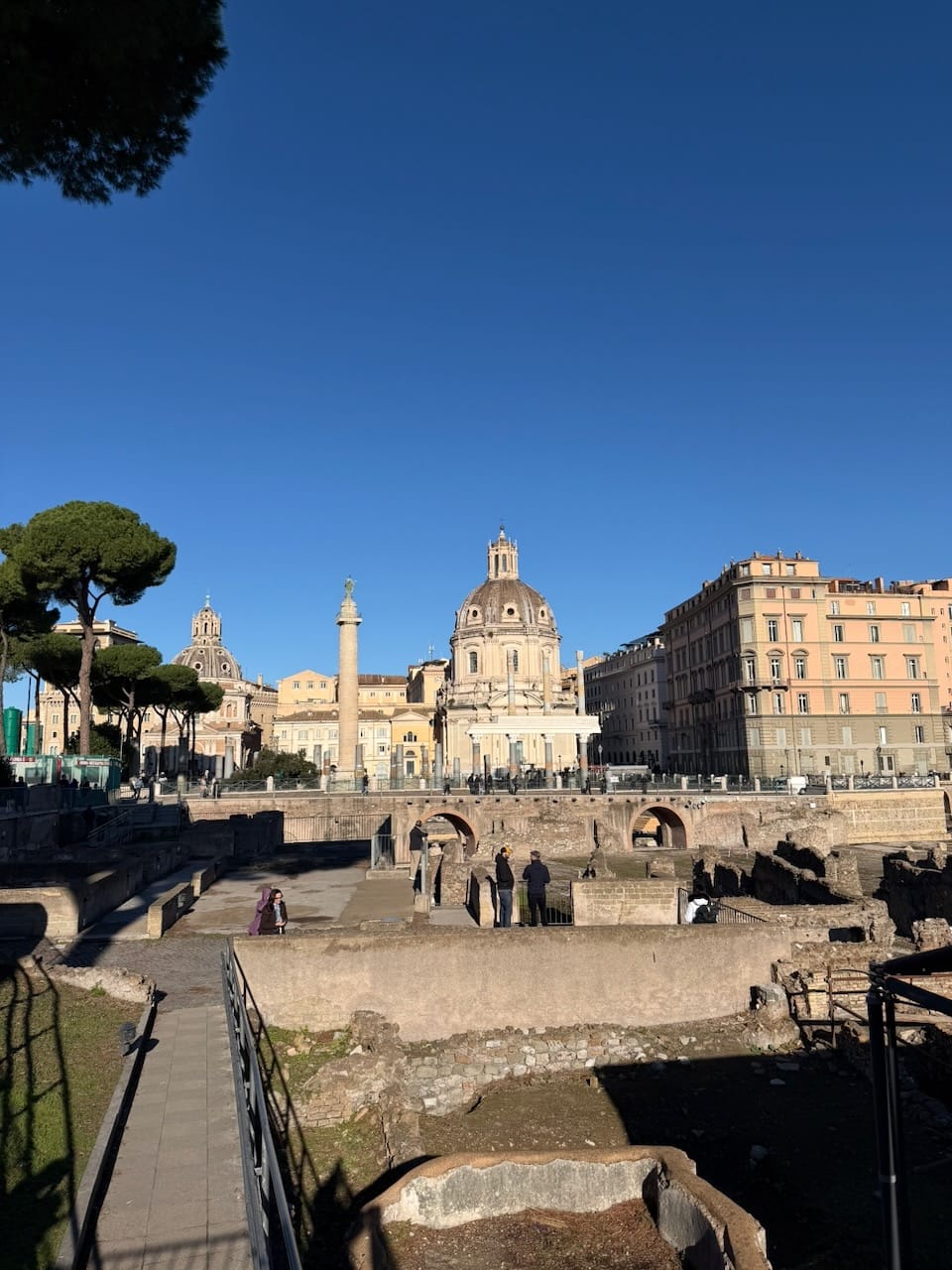
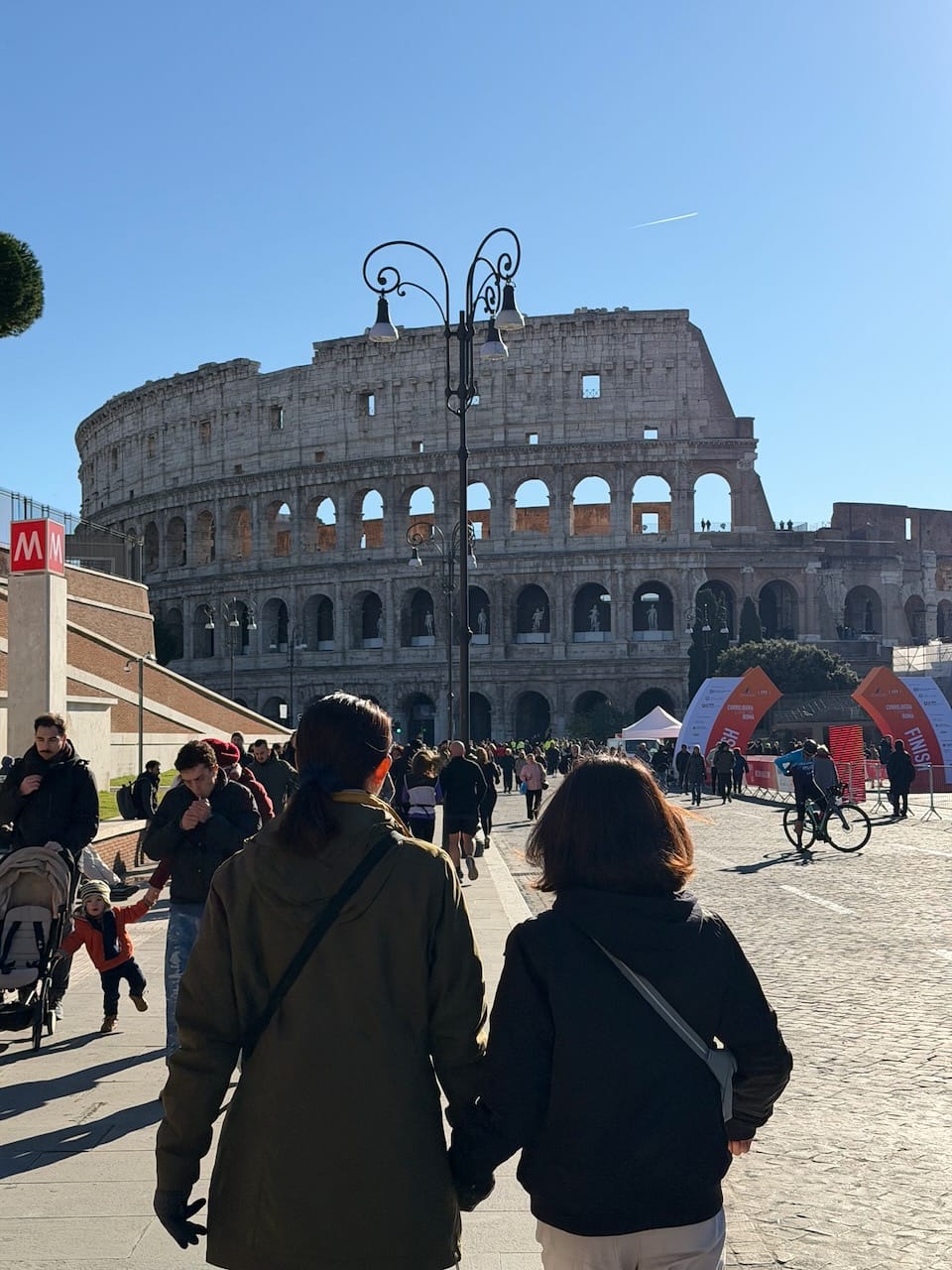
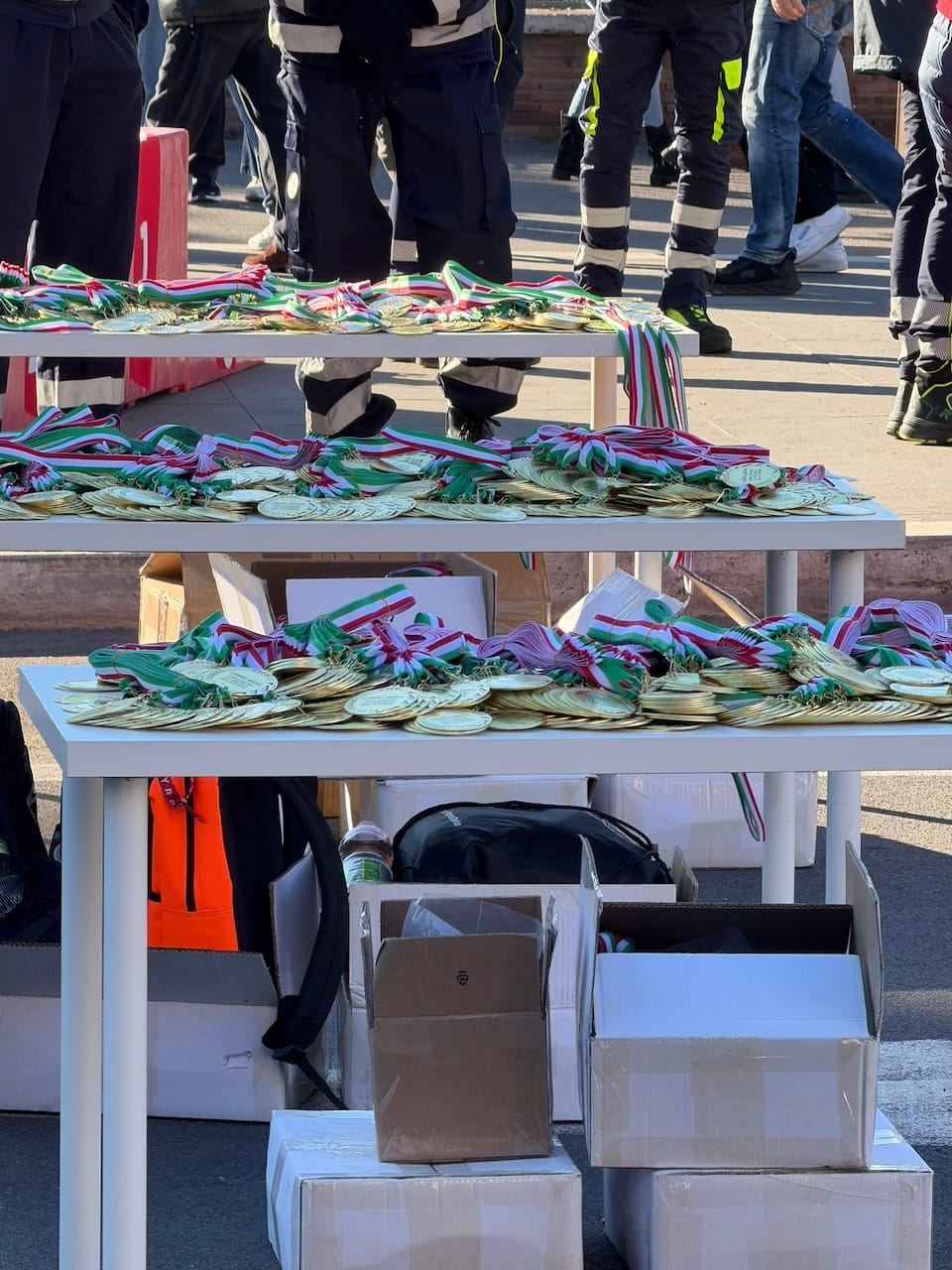
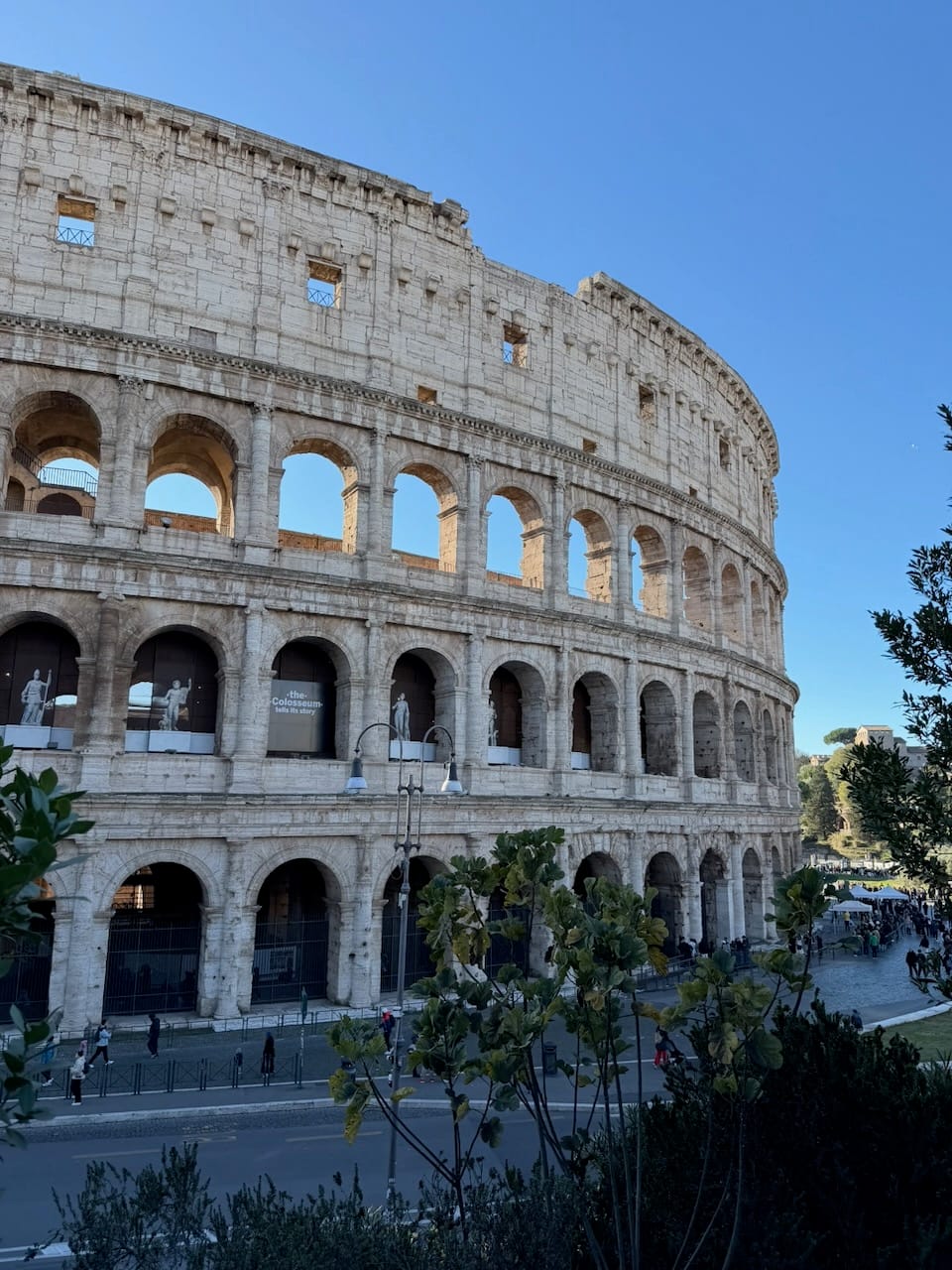
It was Sunday, and according to the forecast, the only day with decent weather during our stay in Rome. Rain was expected on the following days, so we decided to make the most of it and cover as much ground as possible. Just a few minutes’ walk brought us to Colonna Traiana (Trajan’s Column), which naturally led us toward the Colosseum. We had already booked a guided tour for the next day, so we just took it from the outside. It looked like a marathon was happening that day, with the finish line near the Colosseum. Standing there, looking at that iconic structure, was deeply satisfying. That was the moment I truly felt: I’m in Rome.
The theme of the day was visiting Rome’s great churches. After passing the Colosseum, our first stop was Basilica of San Pietro in Vincoli (Basilica of Saint Peter in Chains). It’s known for the relic of the chains (We were lucky that day; the chains were on public display.) that once bound Saint Peter, as well as Michelangelo’s statue of Moses.
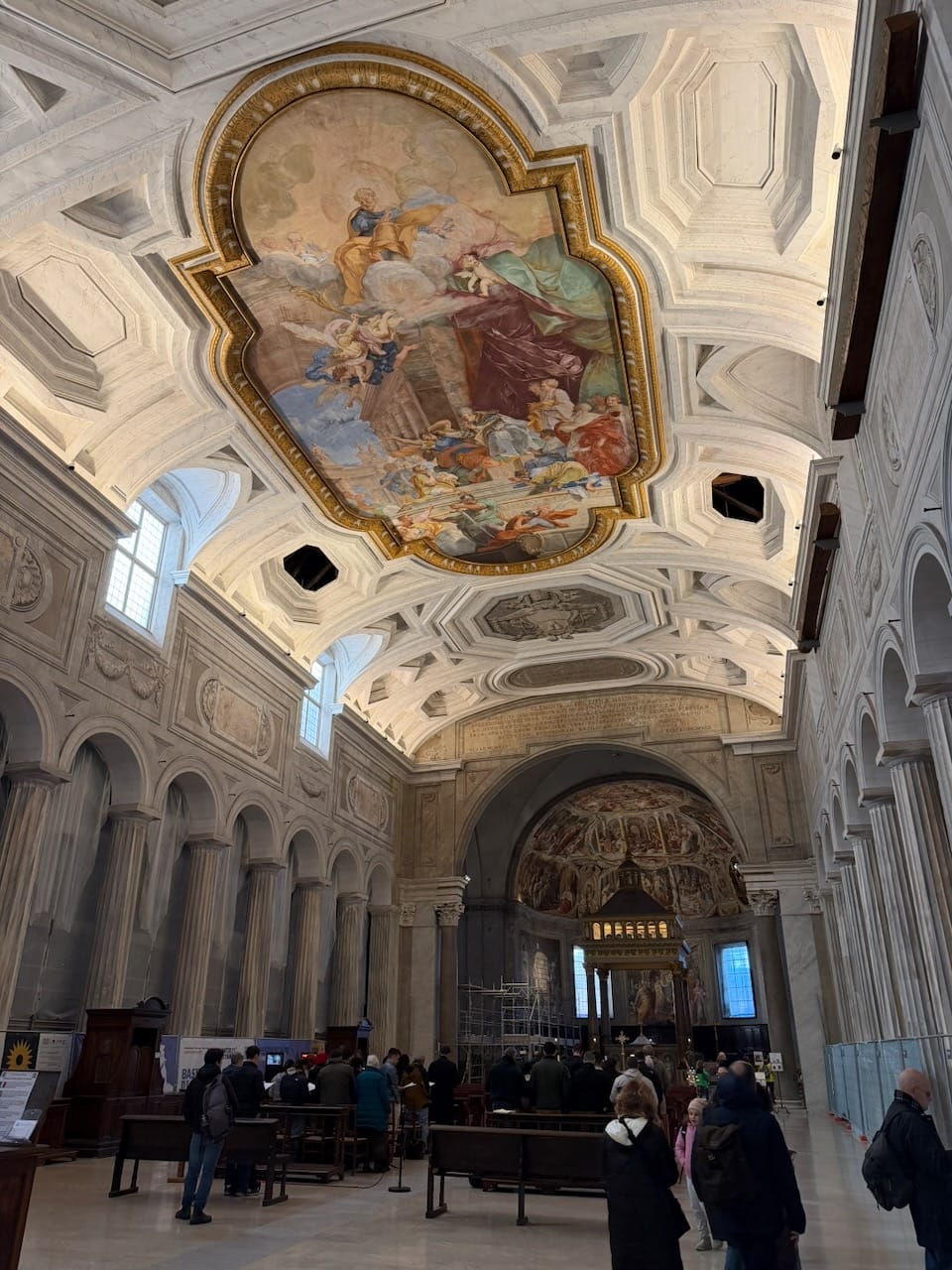
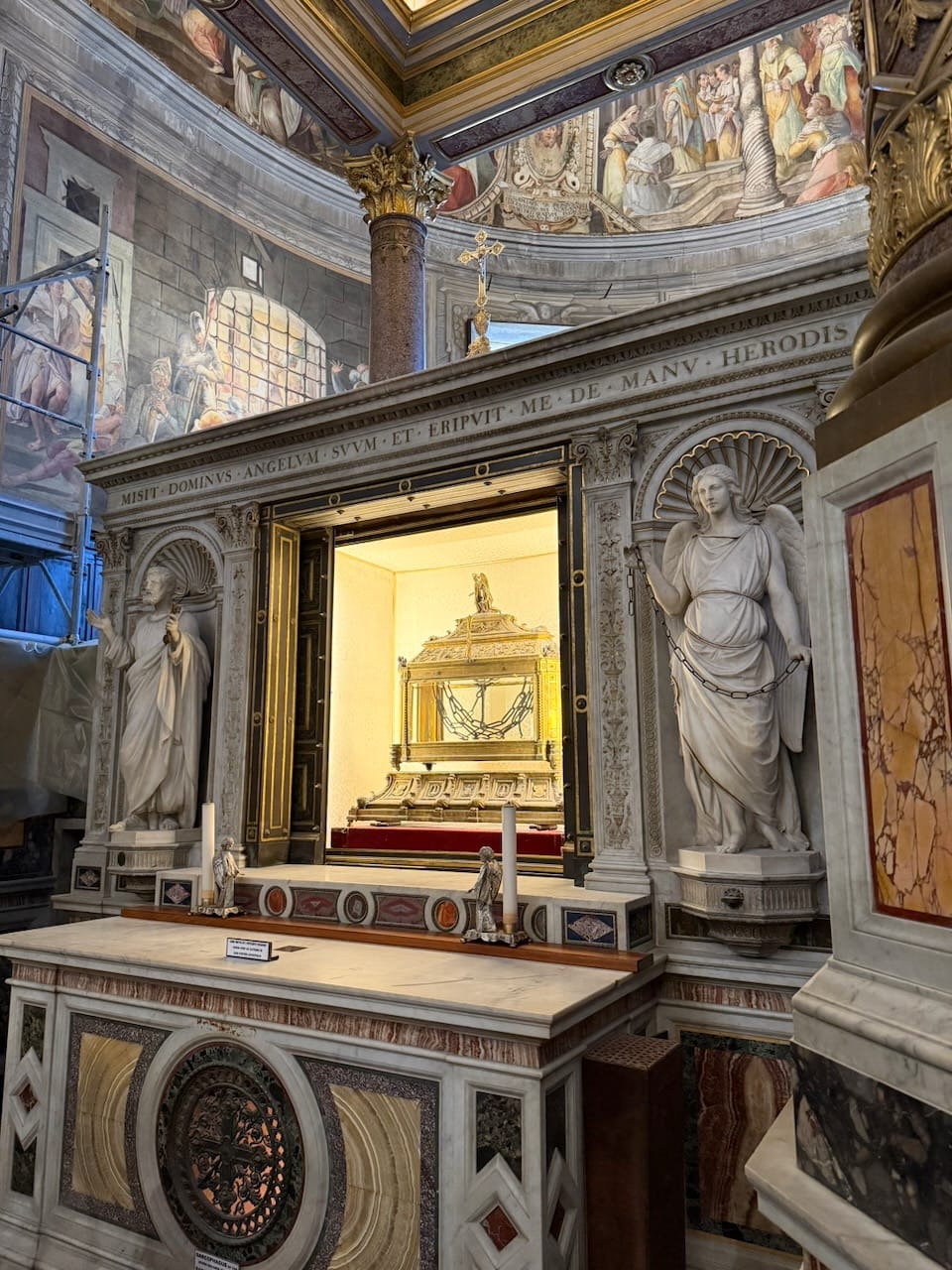
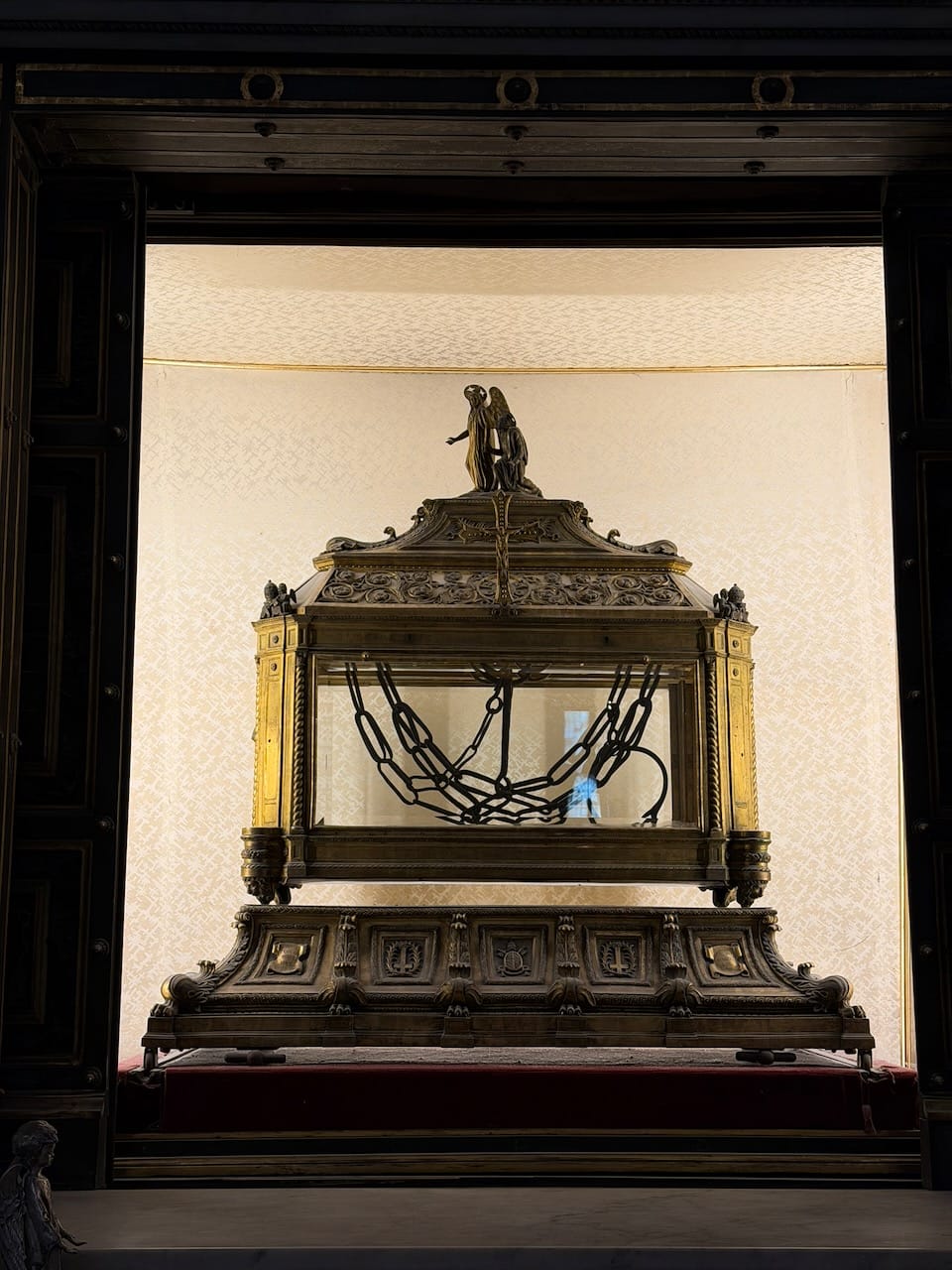
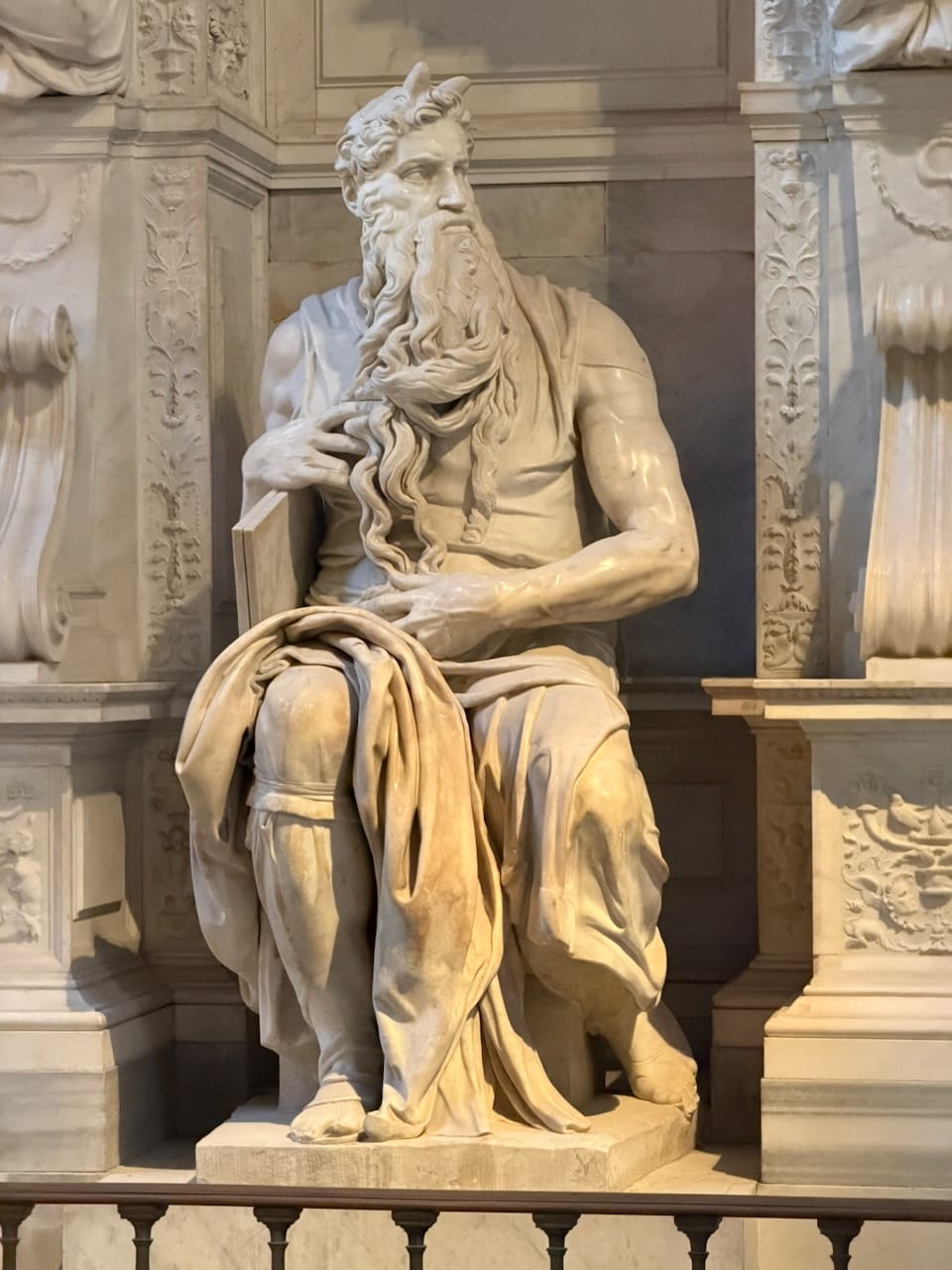
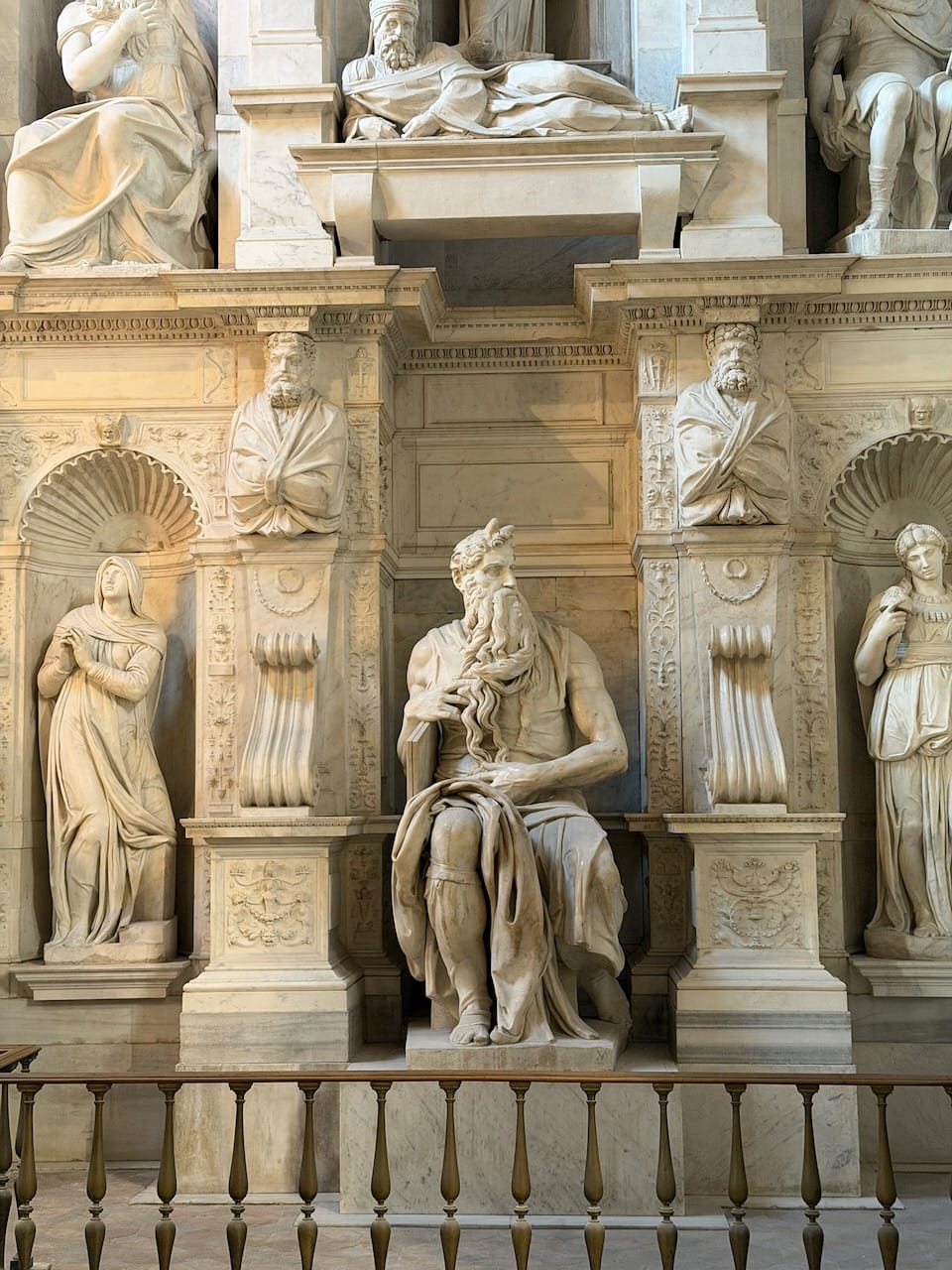
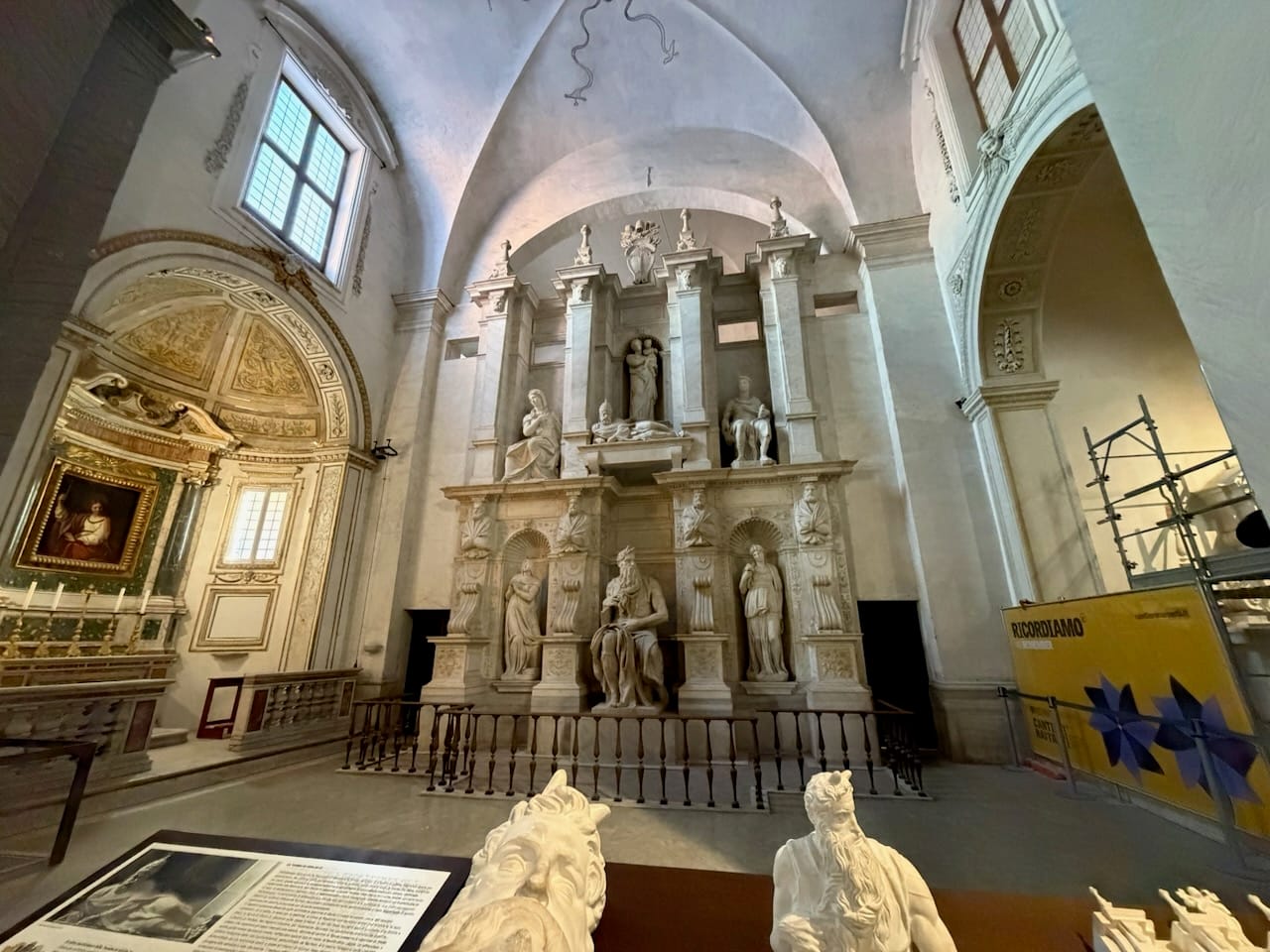
Basilica of Saint Peter in Chains
Next was Basilica di Santa Maria Maggiore (Basilica of Saint Mary Major), one of the four major papal basilicas—and now the place where Pope Francis rests in peace. The emblem of the crossed keys made it clear that this was a papal basilica. There was a long line to enter, even though there was no ticket or entrance fee. 2025 is a Jubilee Year in the Catholic Church, and the Holy Door was open, which explained both the crowd and the sense of occasion.
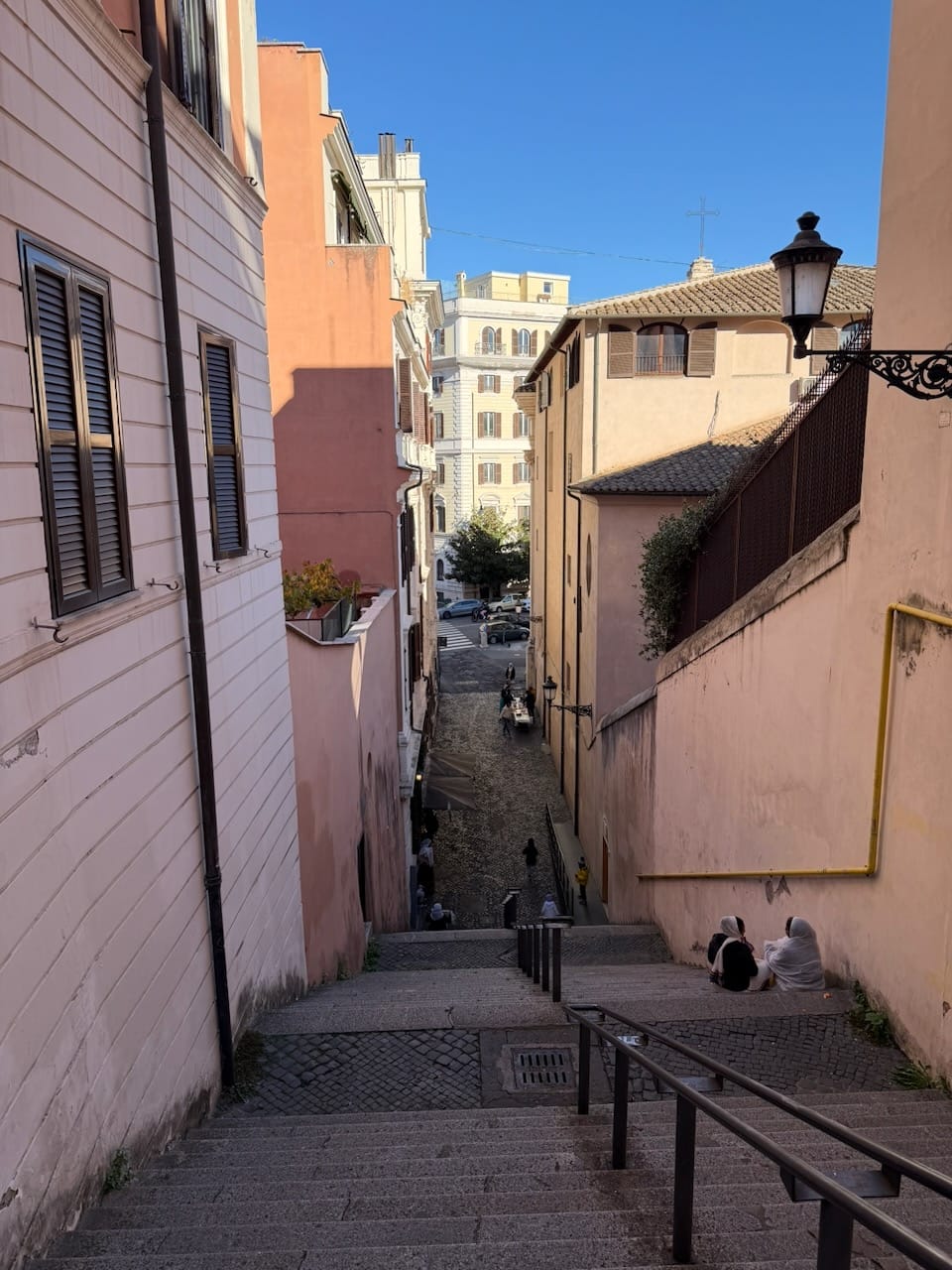
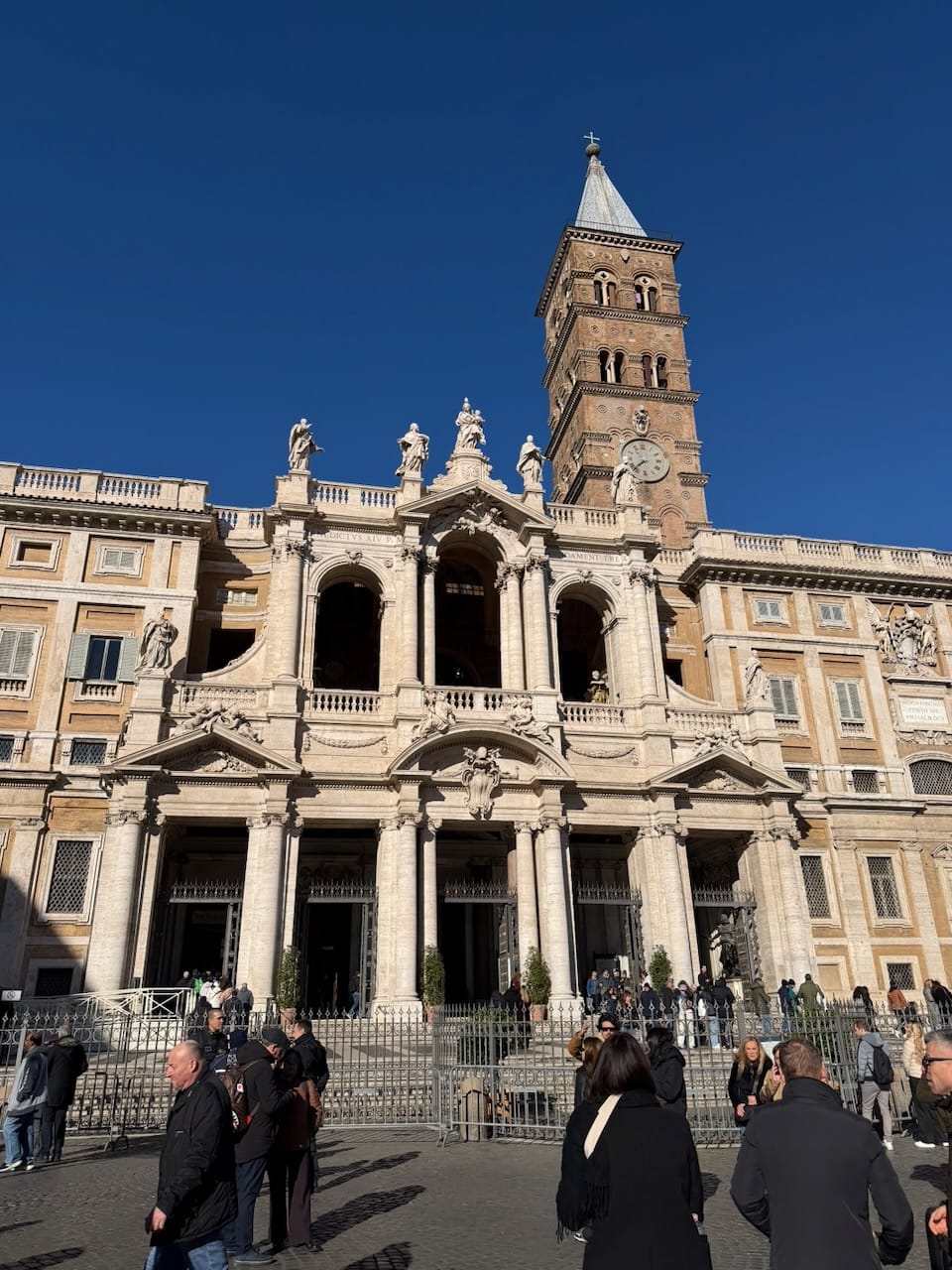
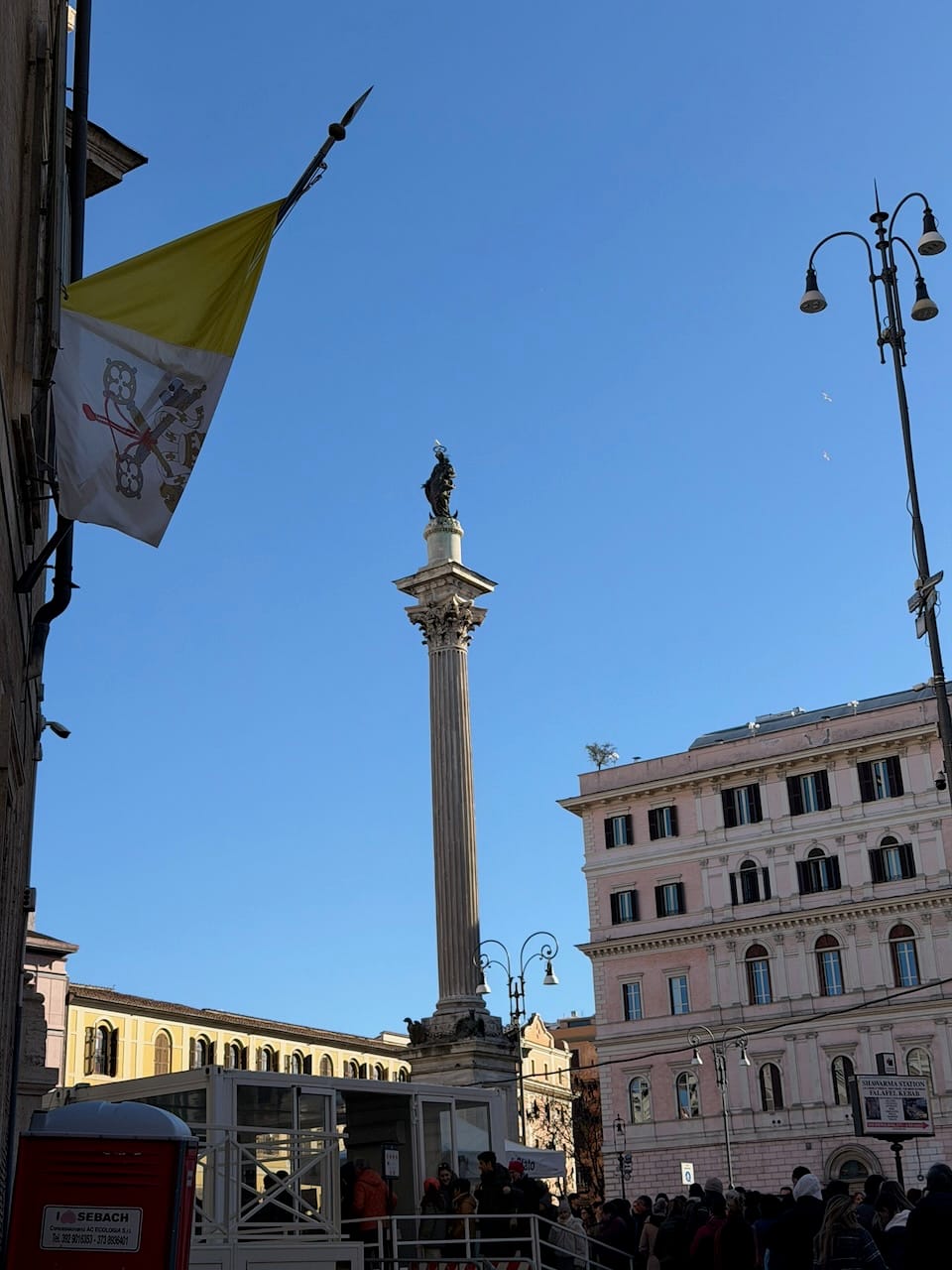
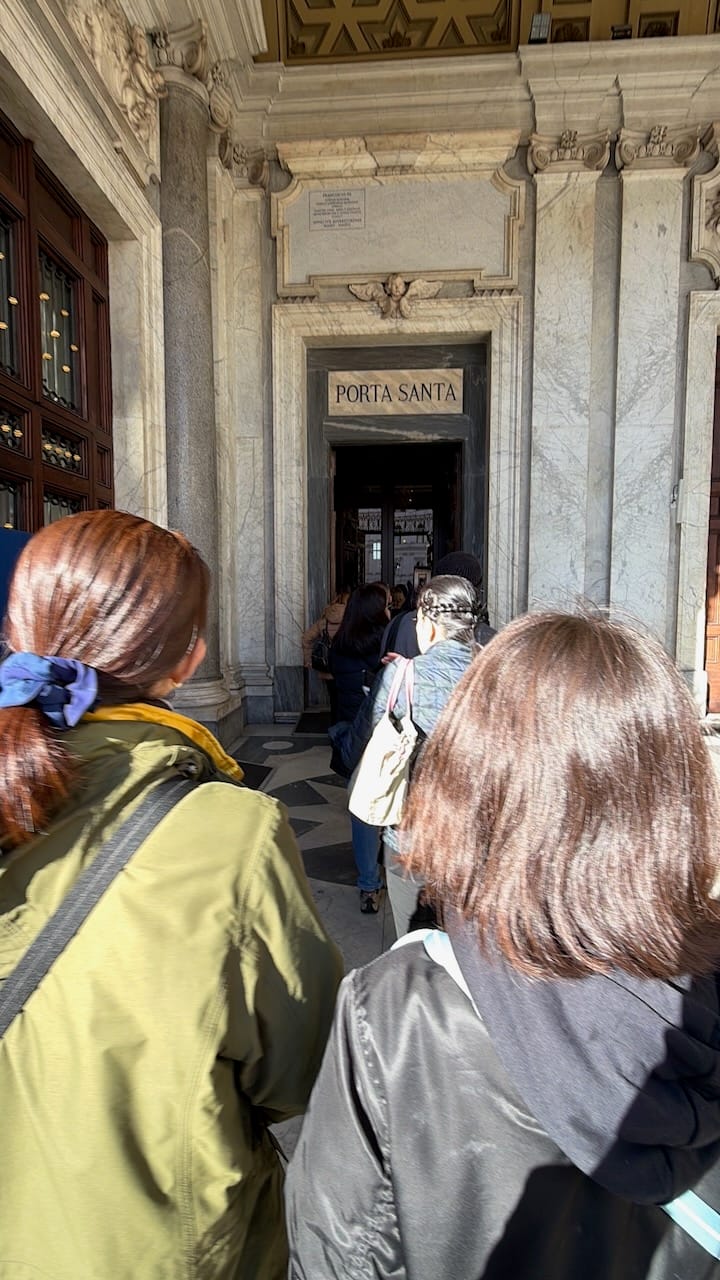


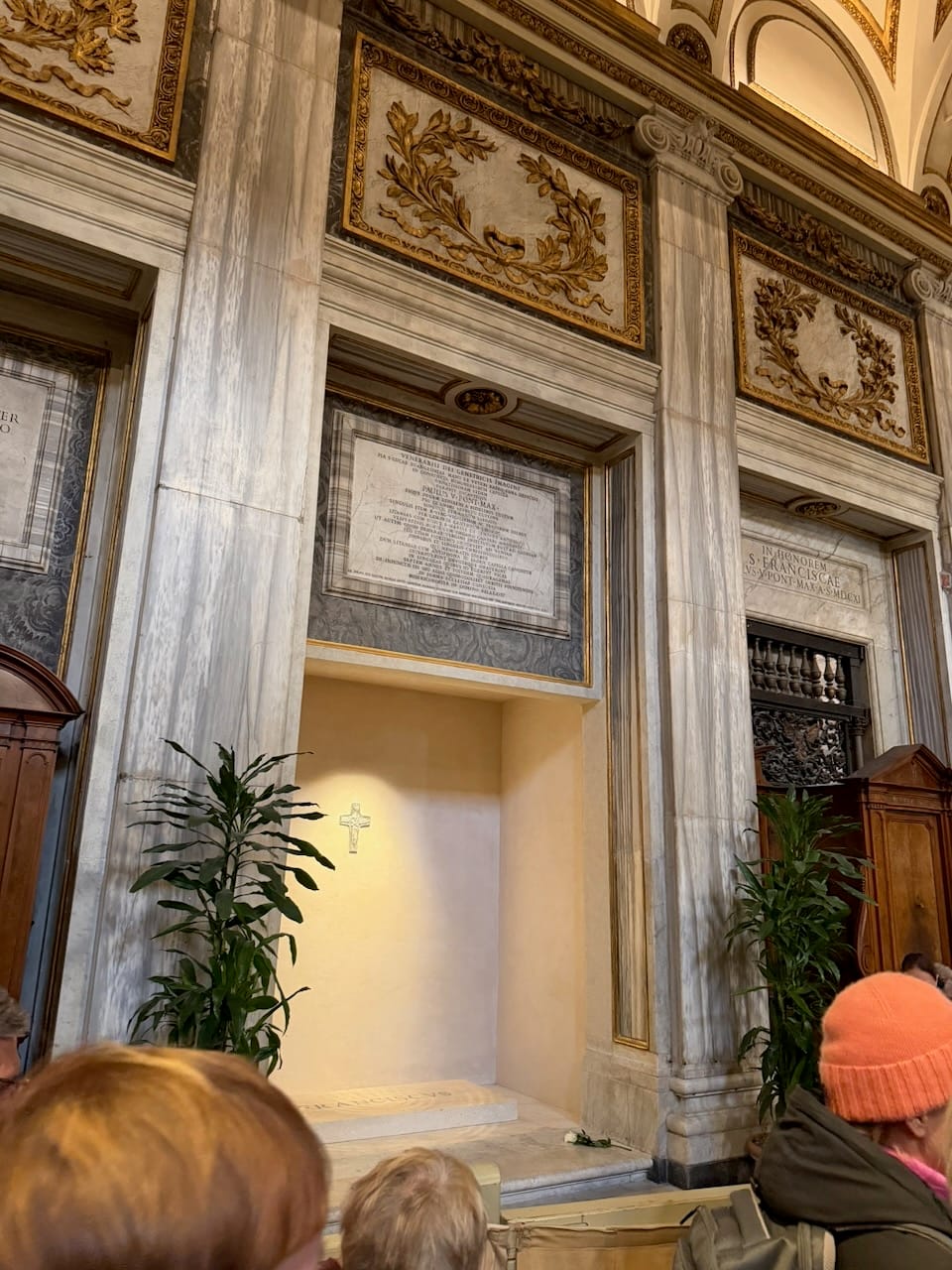
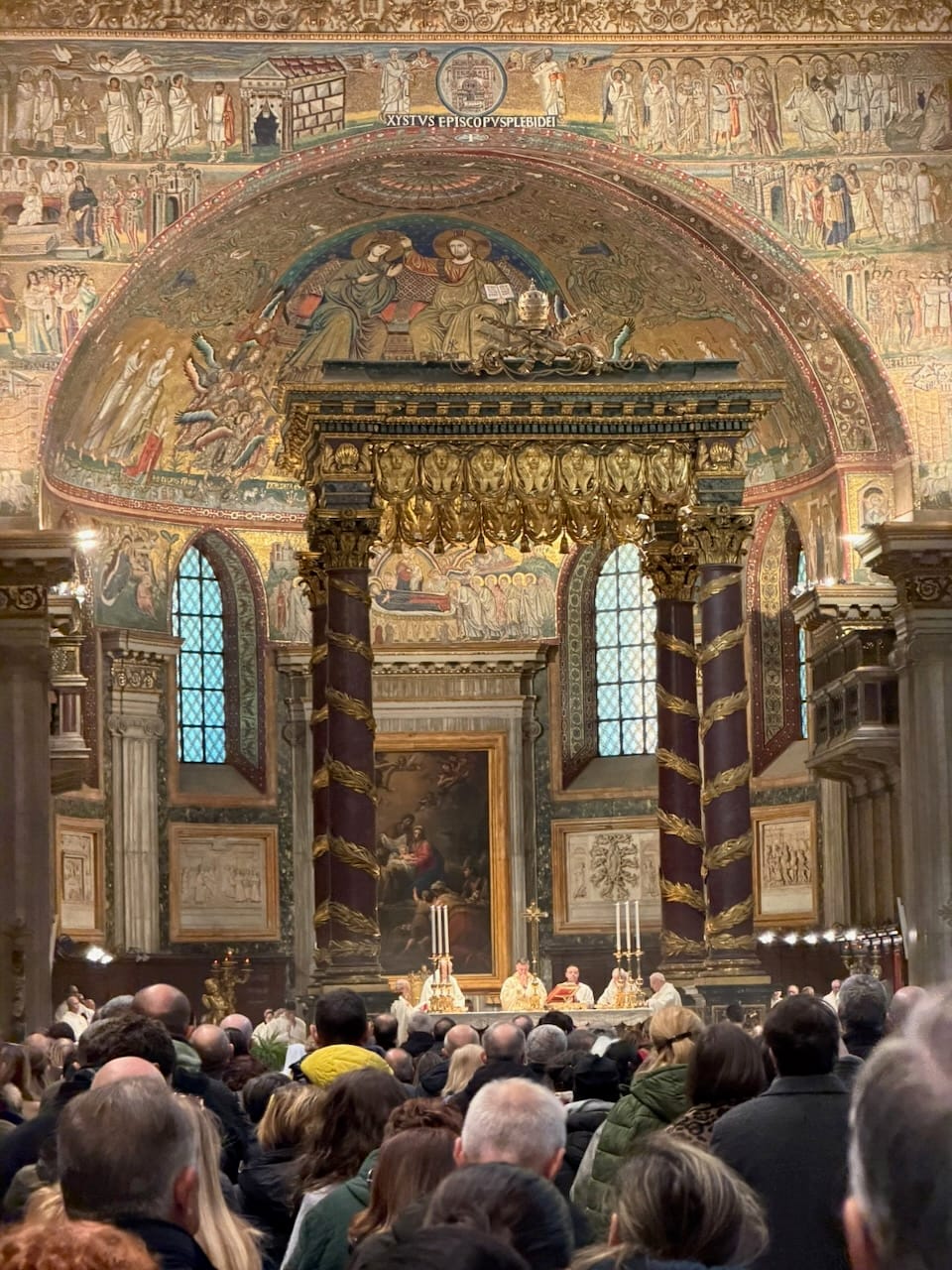
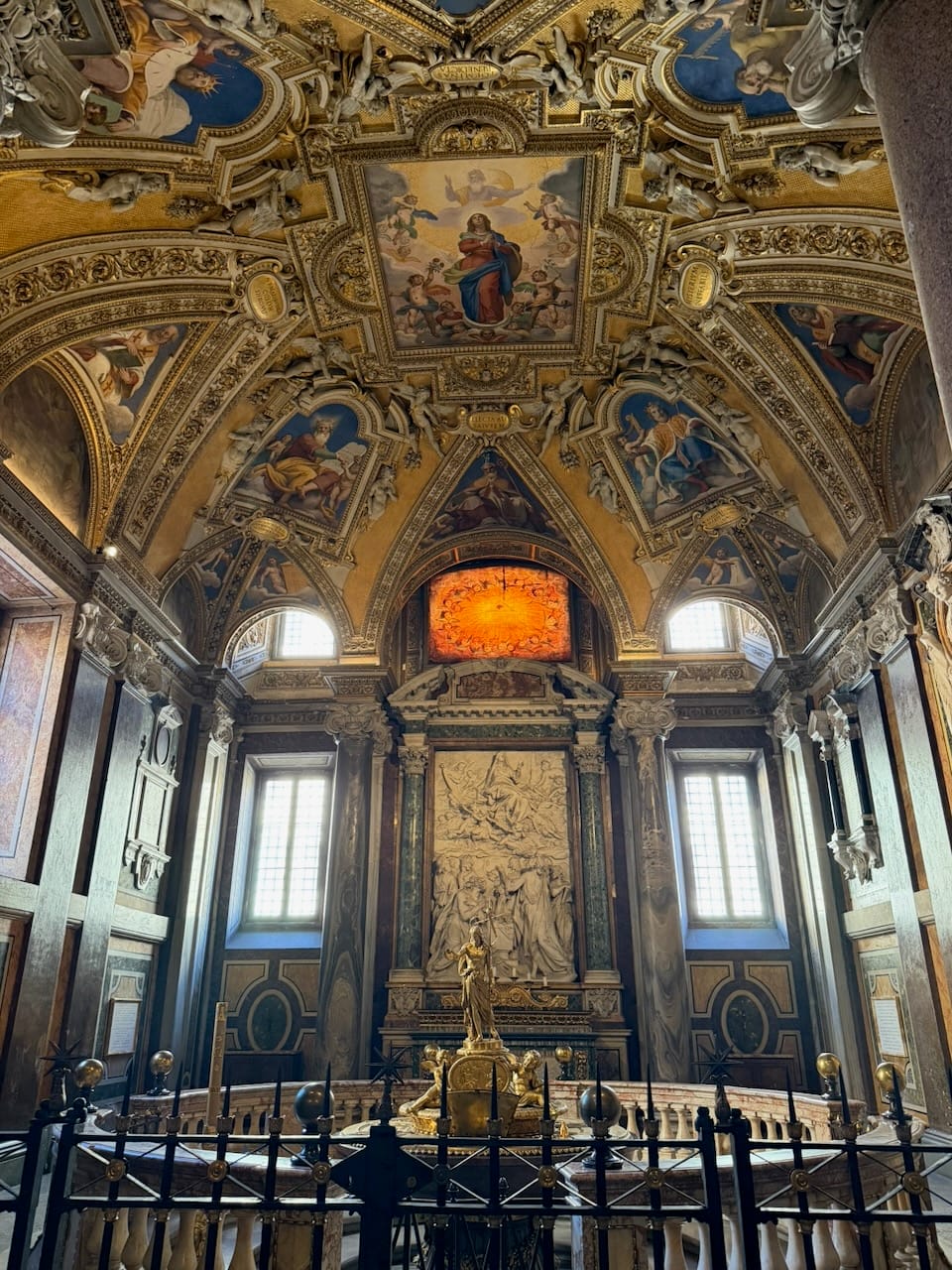
Basilica of Saint Mary Major
From there, we walked to Basilica di San Giovanni in Laterano (Archbasilica of Saint John Lateran), the oldest of the four major papal basilicas and officially the cathedral of Rome.
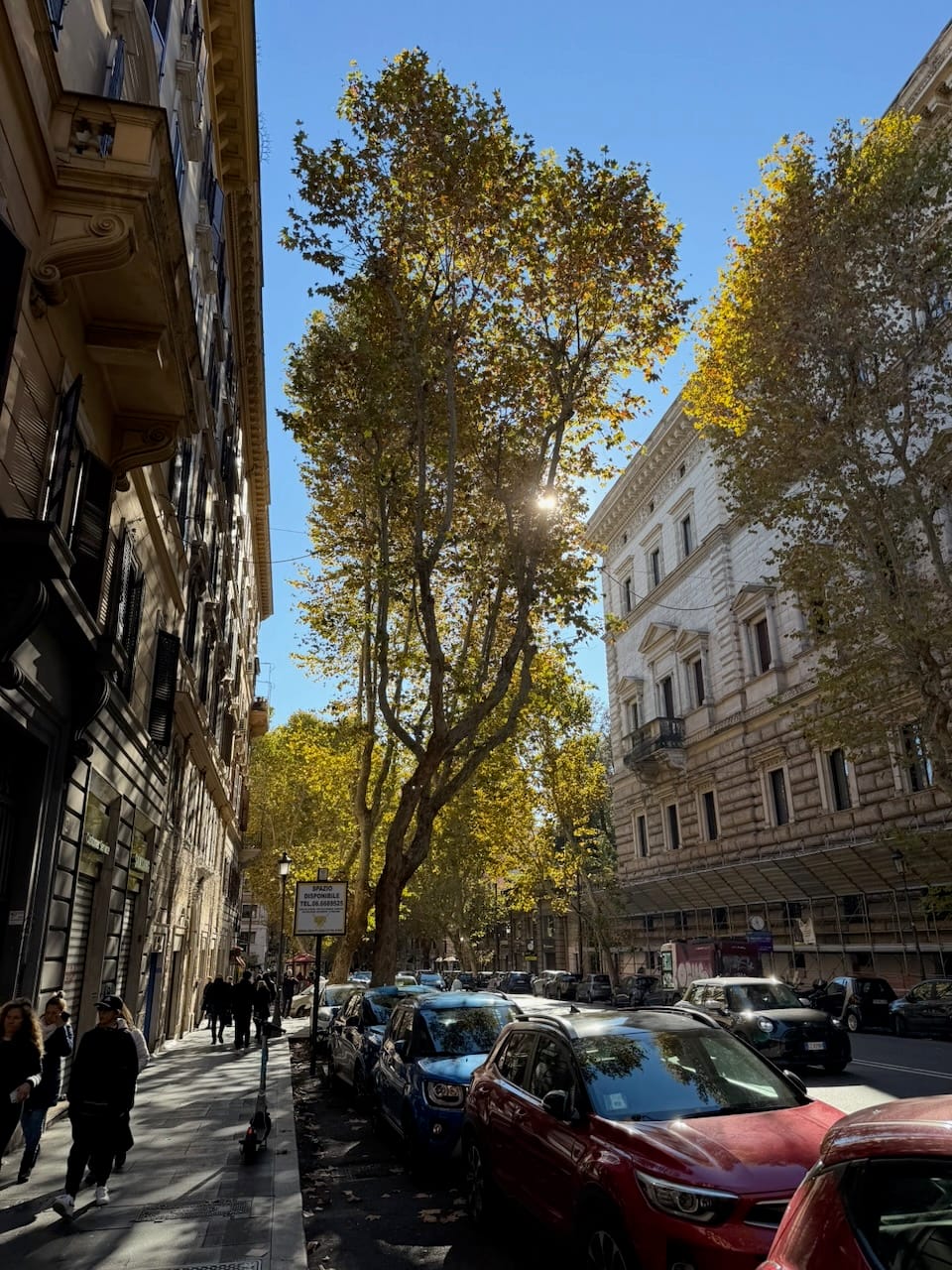
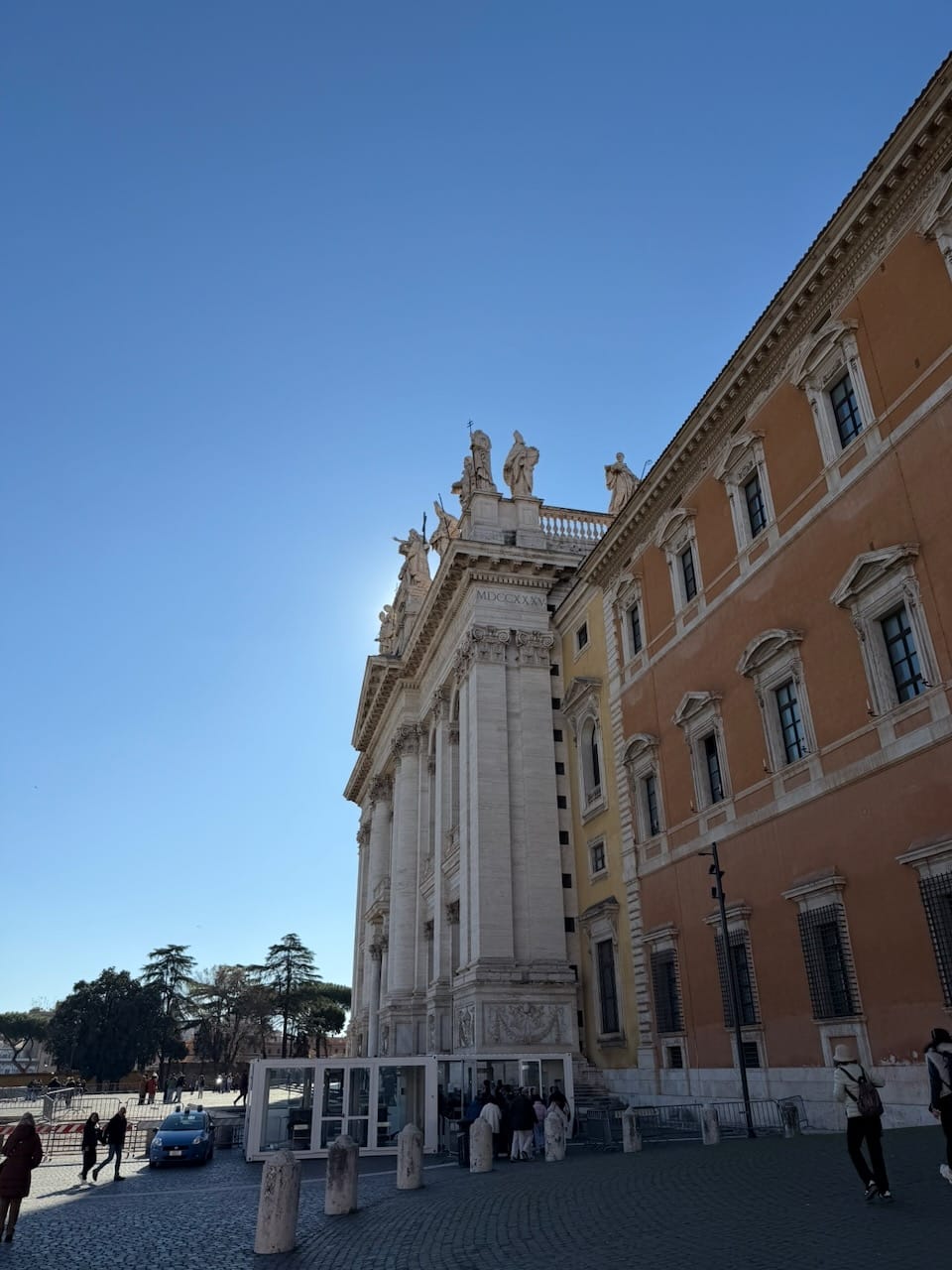
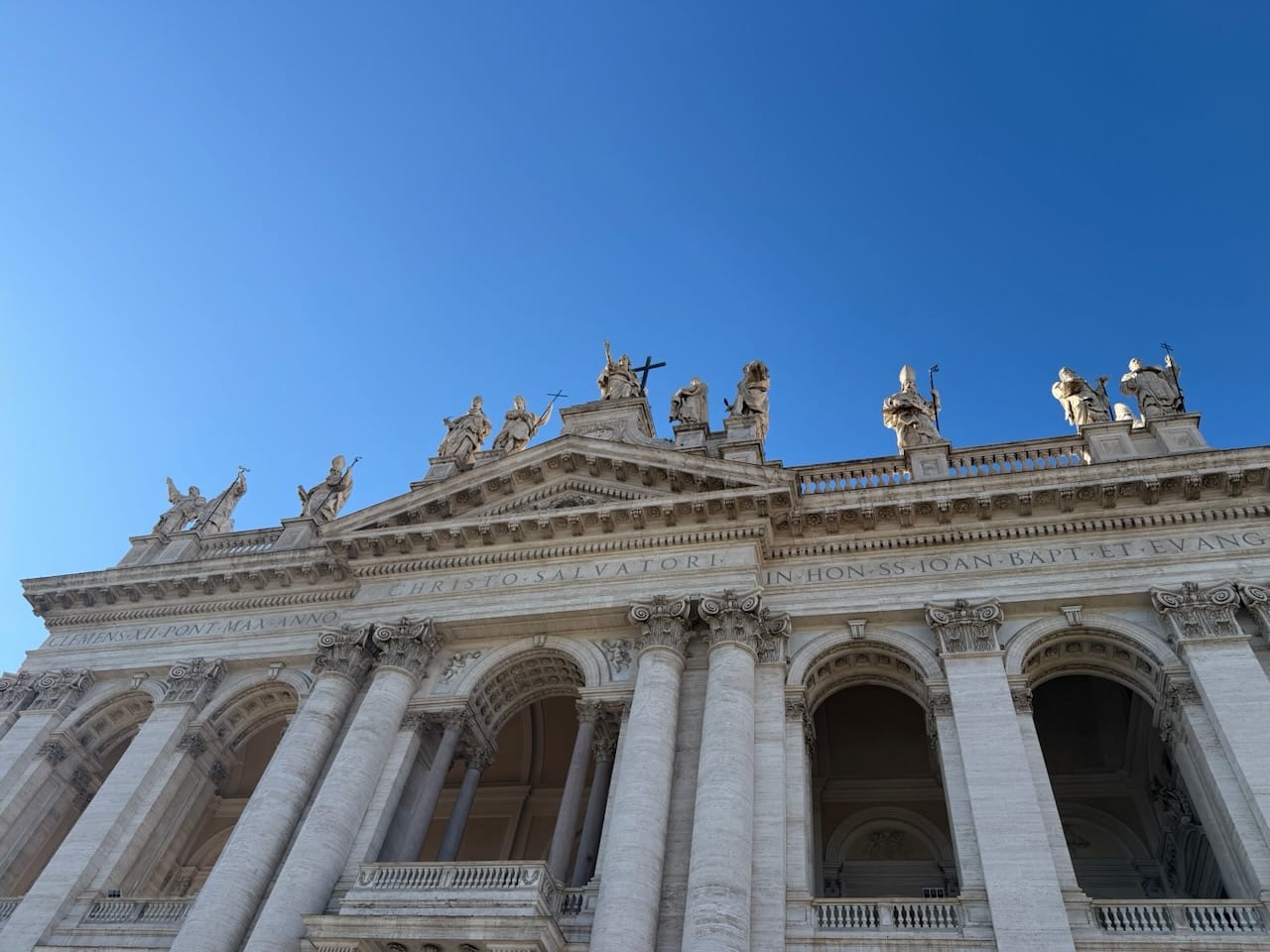
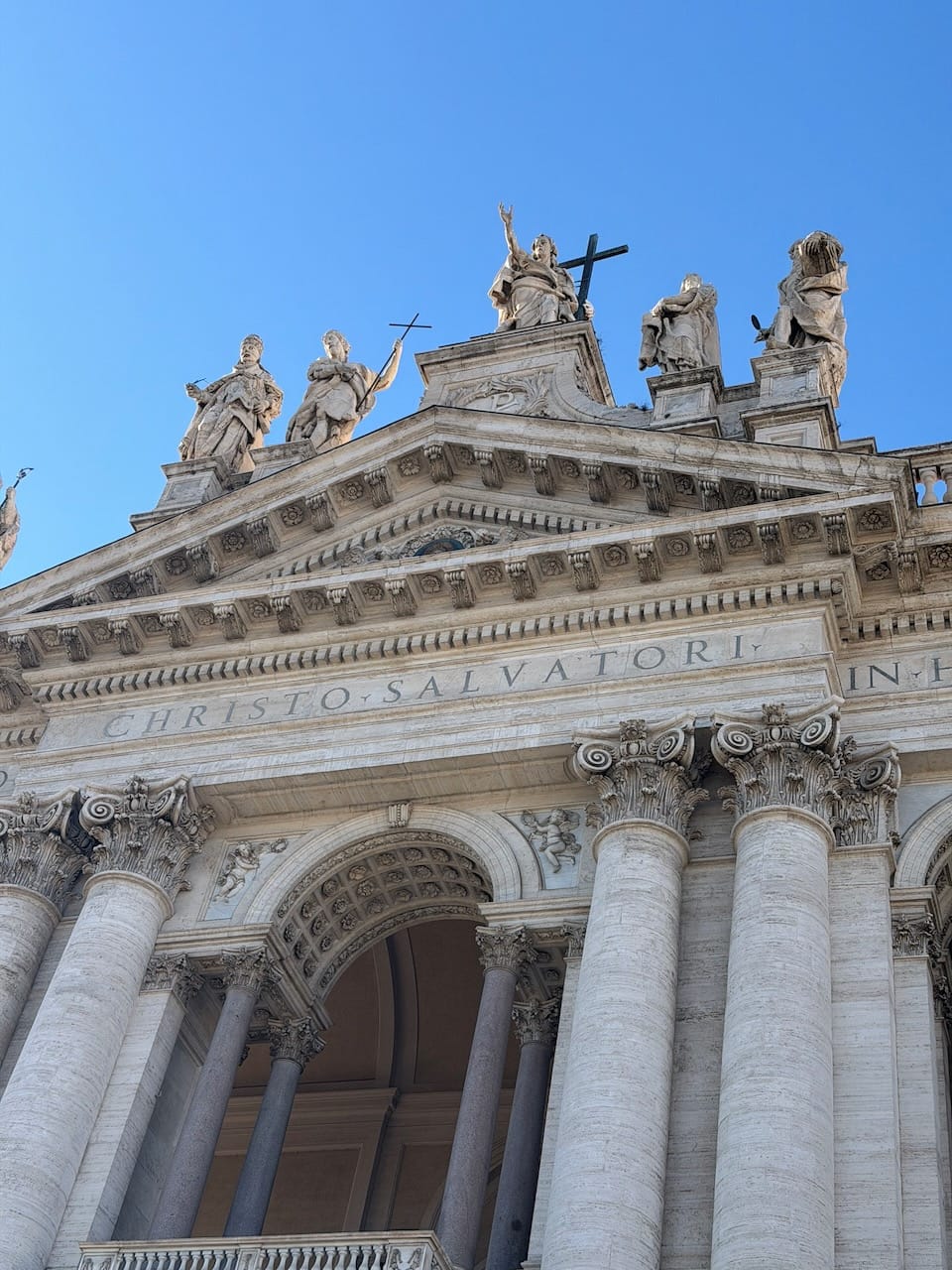
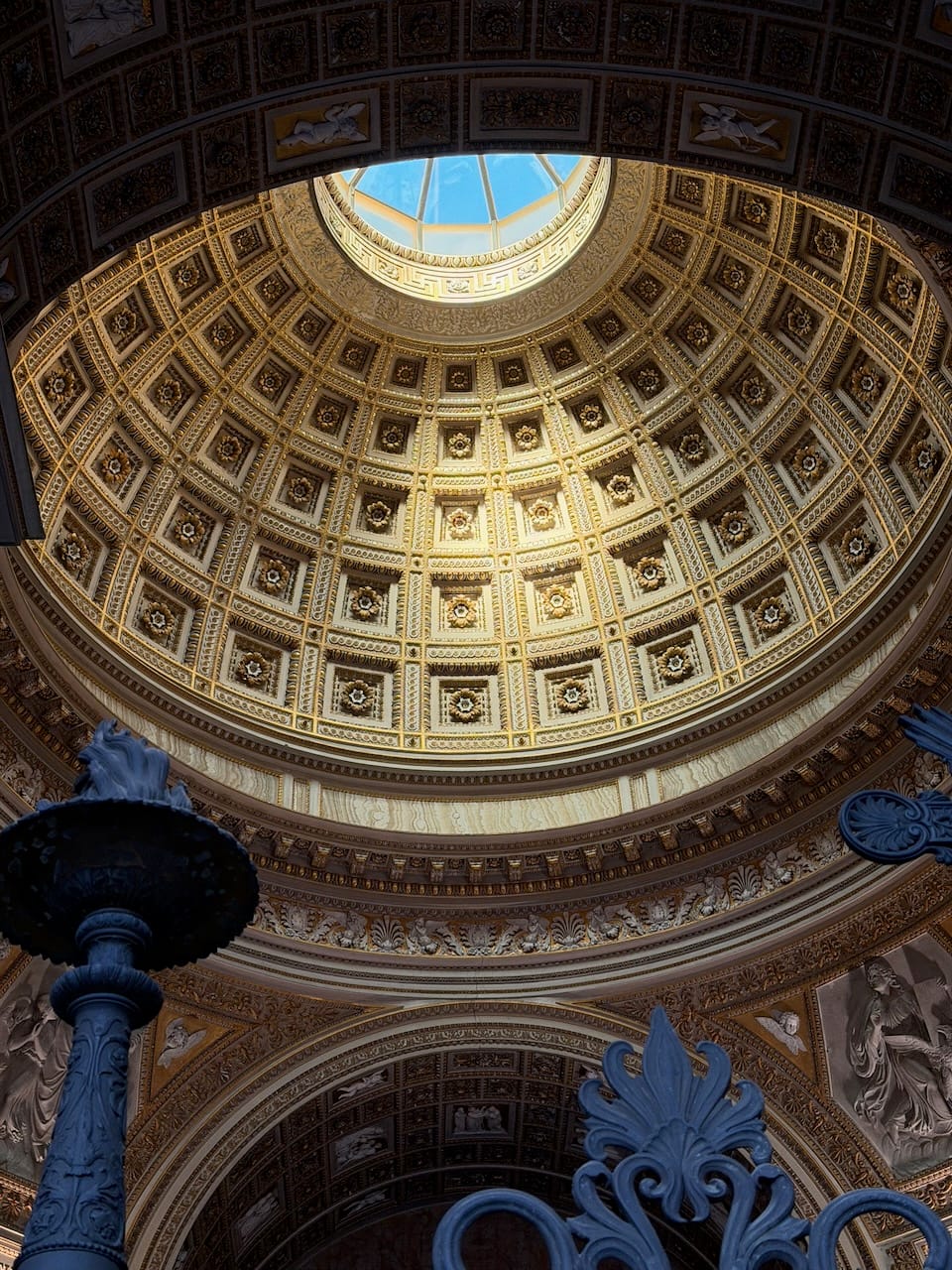
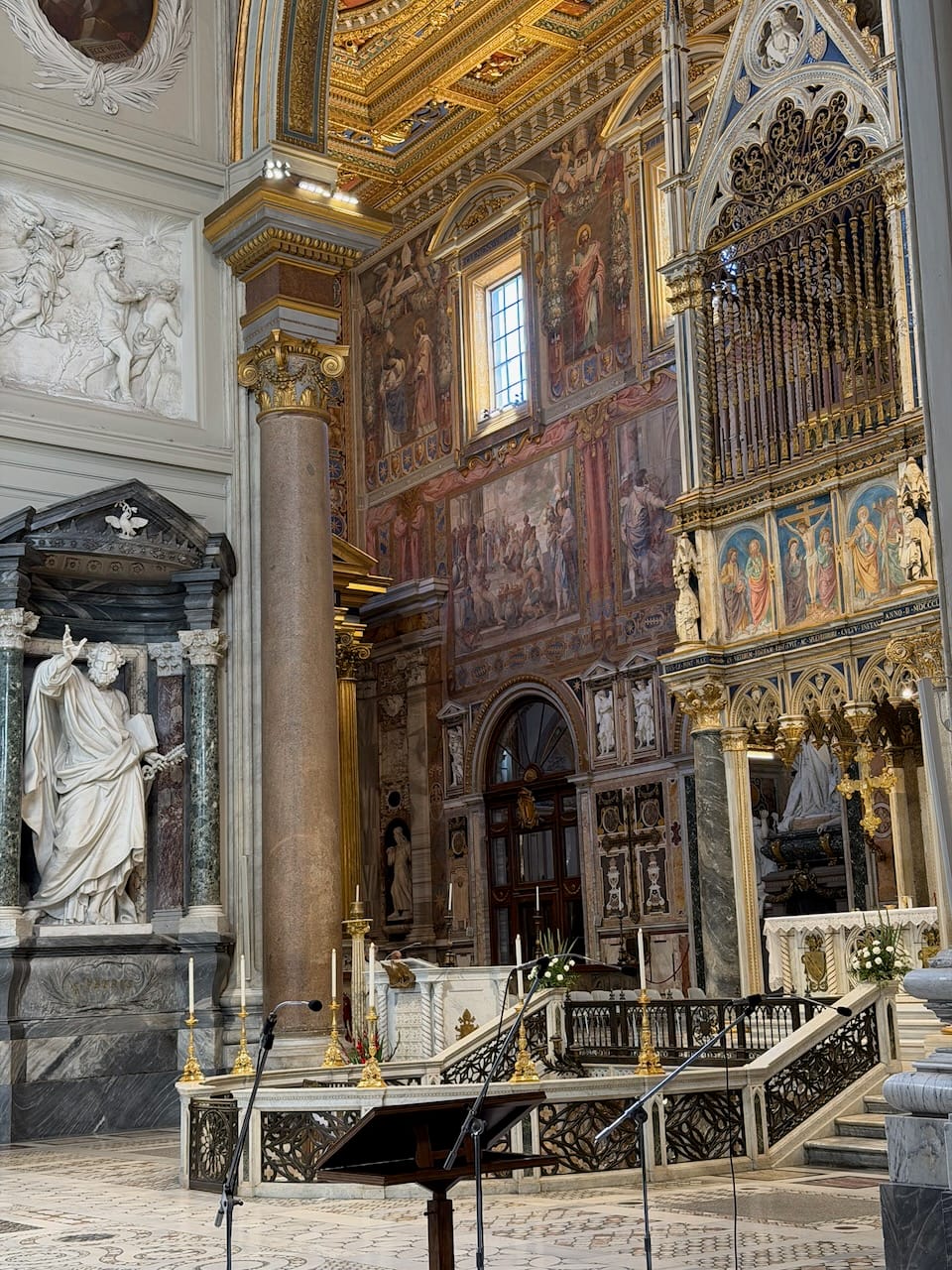
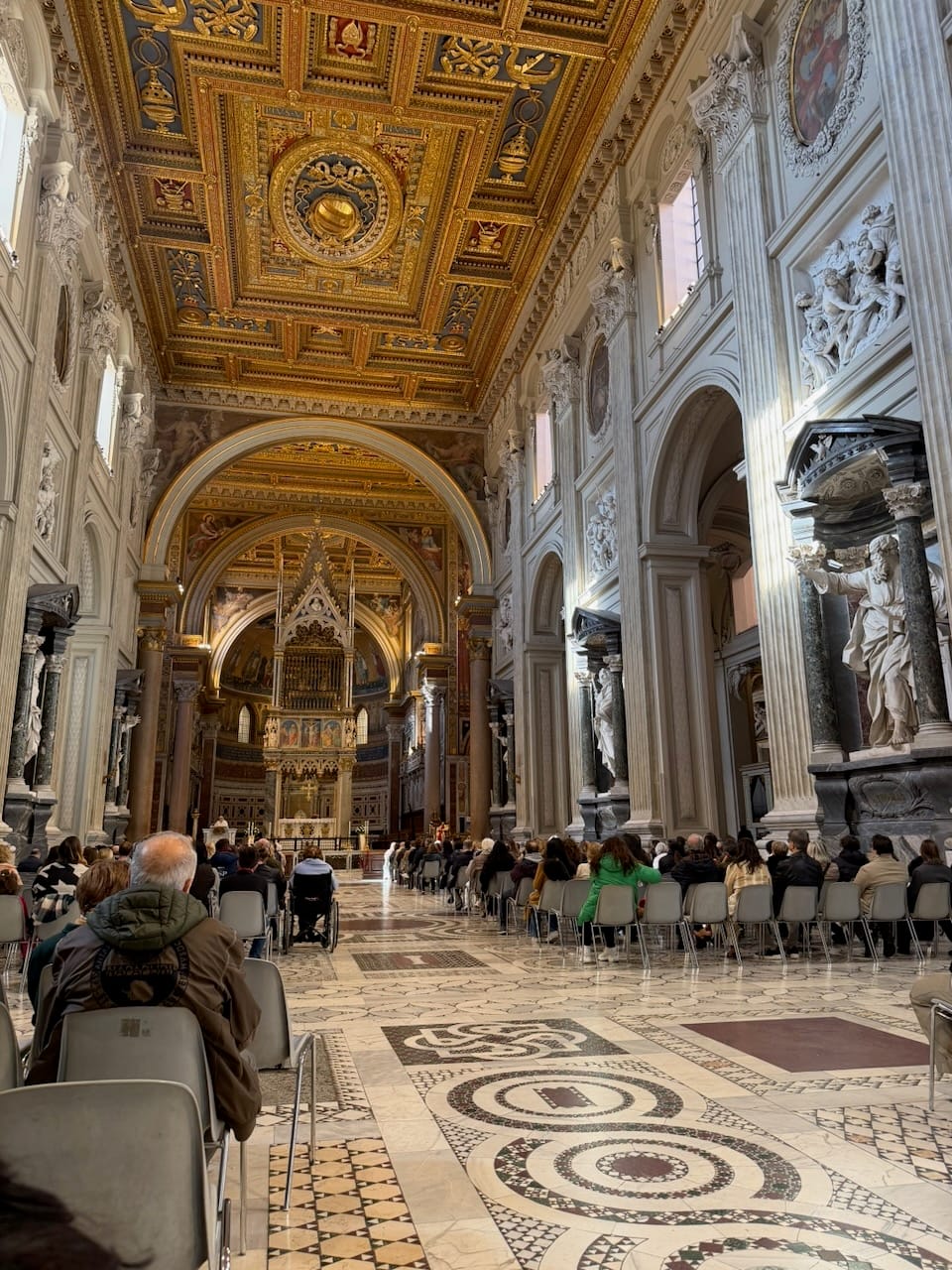
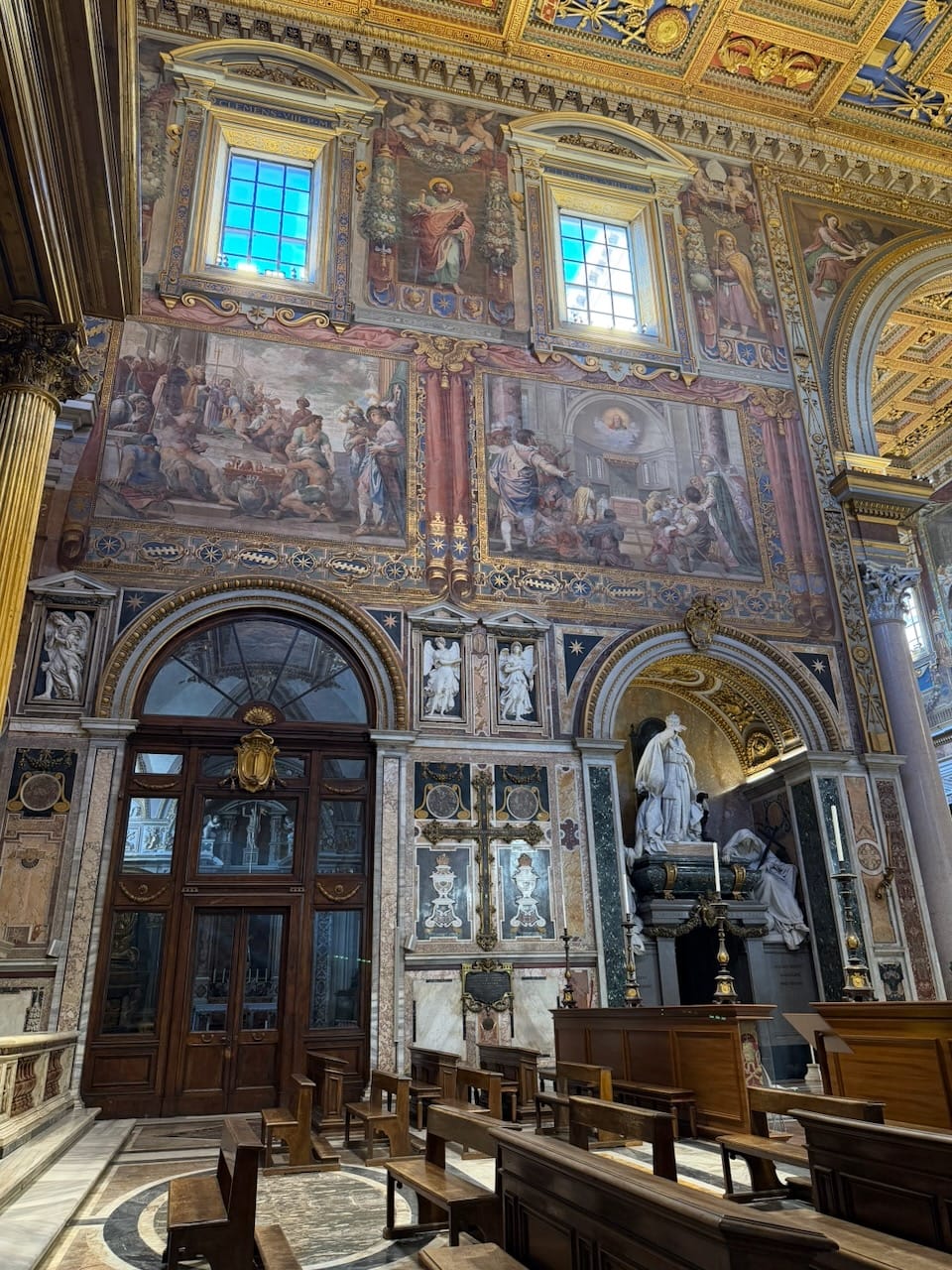
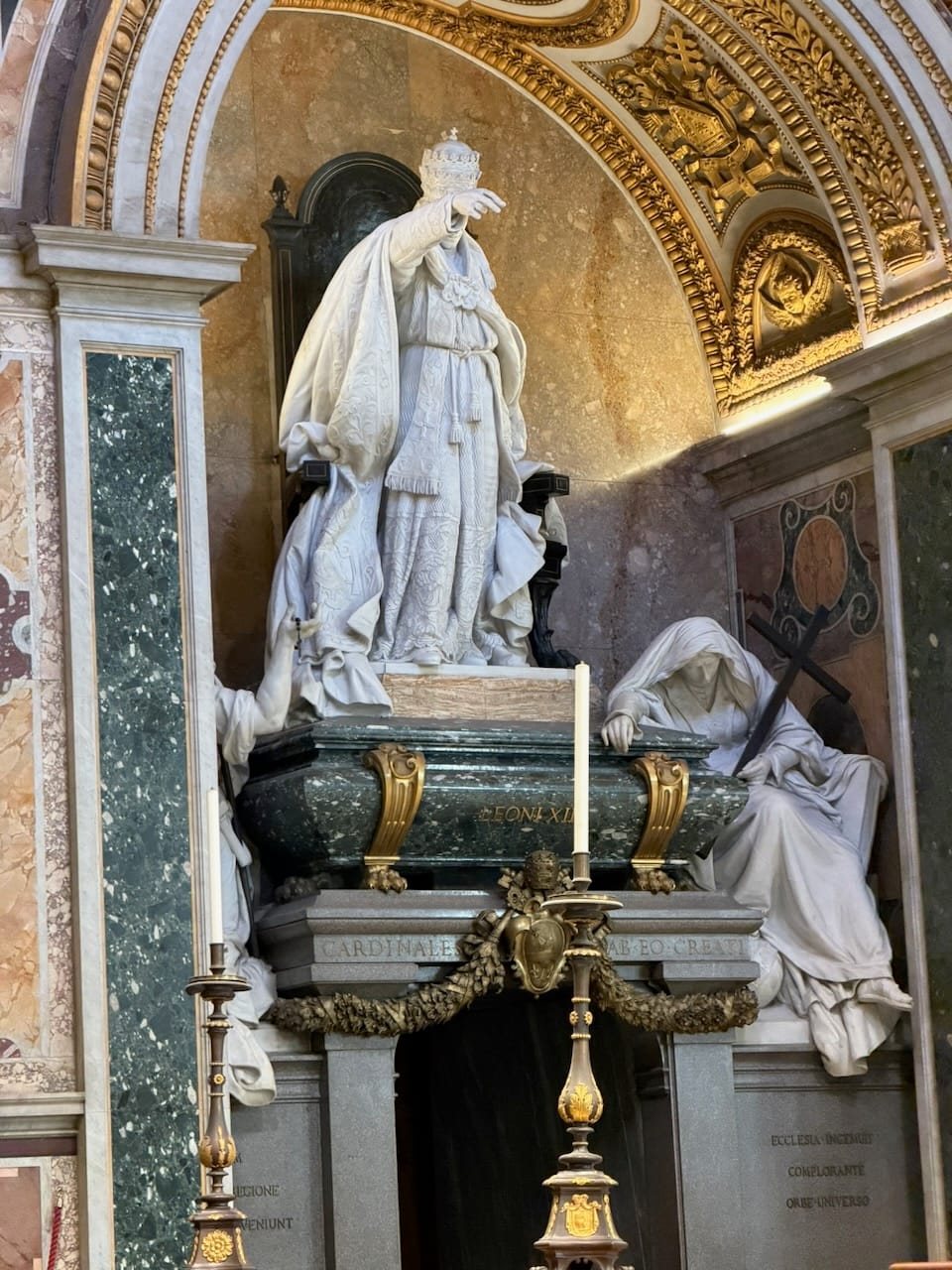
Archbasilica of Saint John Lateran
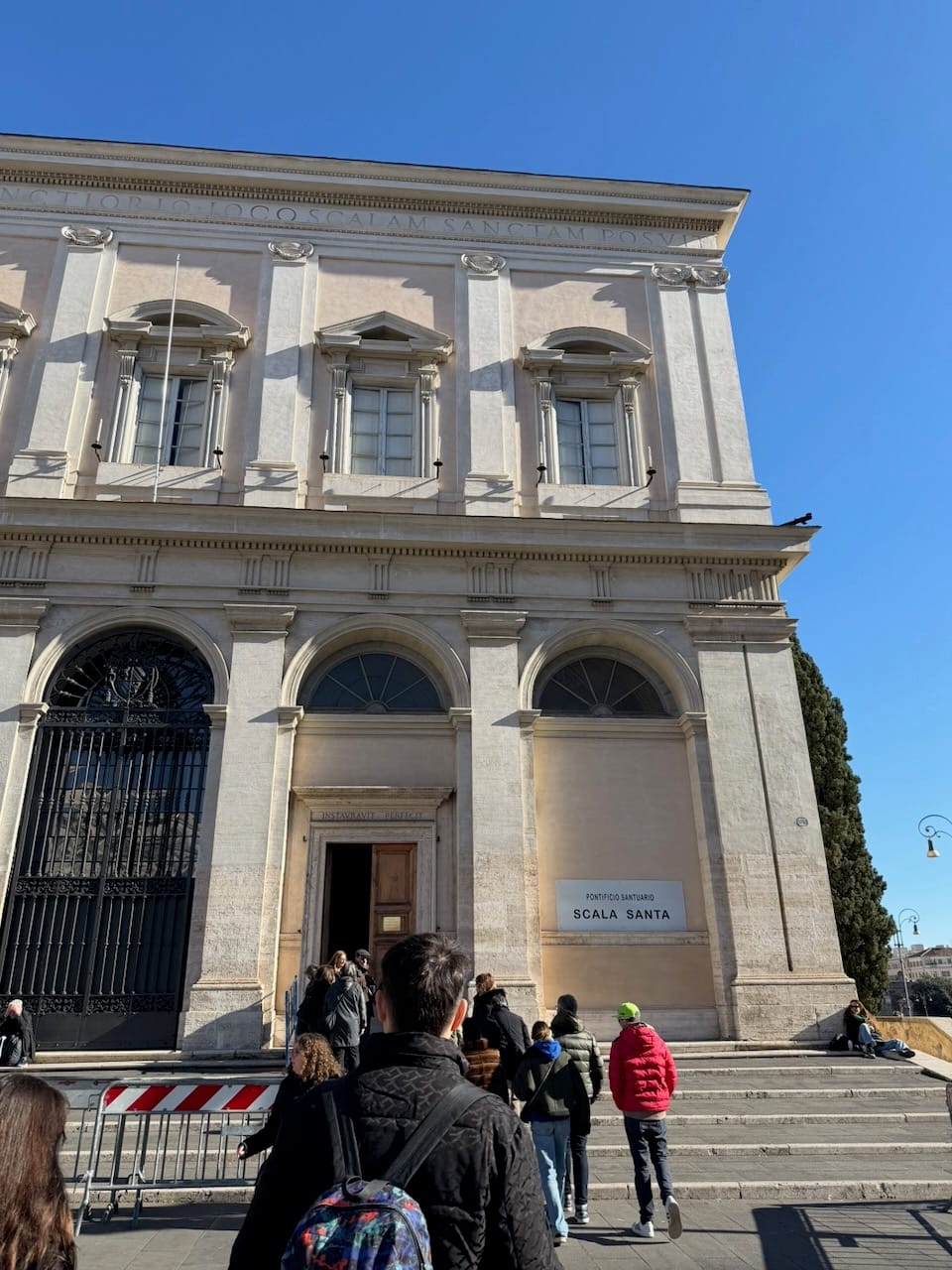
Then we visited Scala Sancta (Holy Stairs). The photo was prohibited. According to tradition, these are the steps that Jesus climbed during his trial before Pontius Pilate, later brought to Rome from Jerusalem. Many pilgrims were ascending the stairs on their knees, quietly and reverently, a sight that was both humbling and moving to watch.
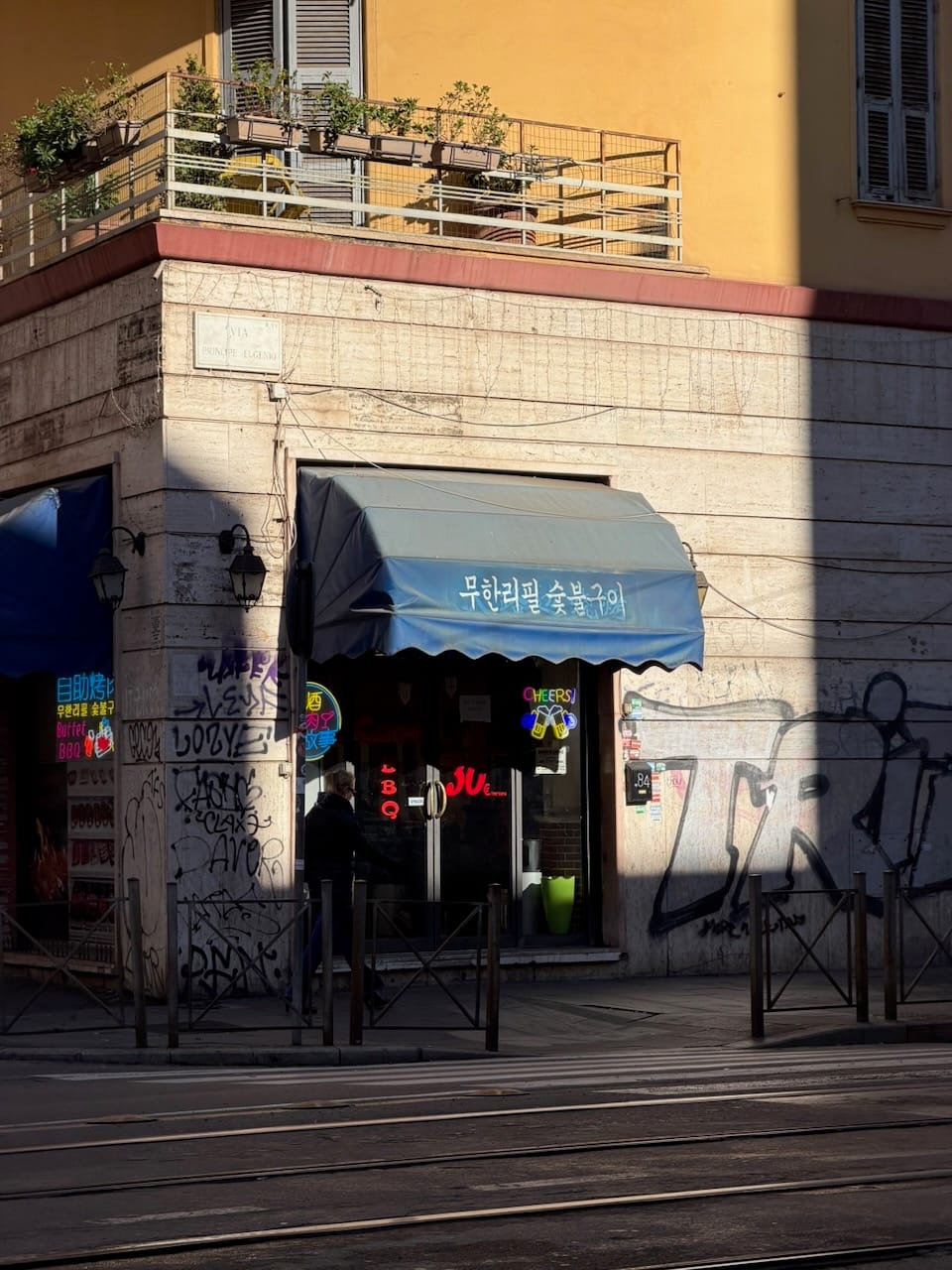
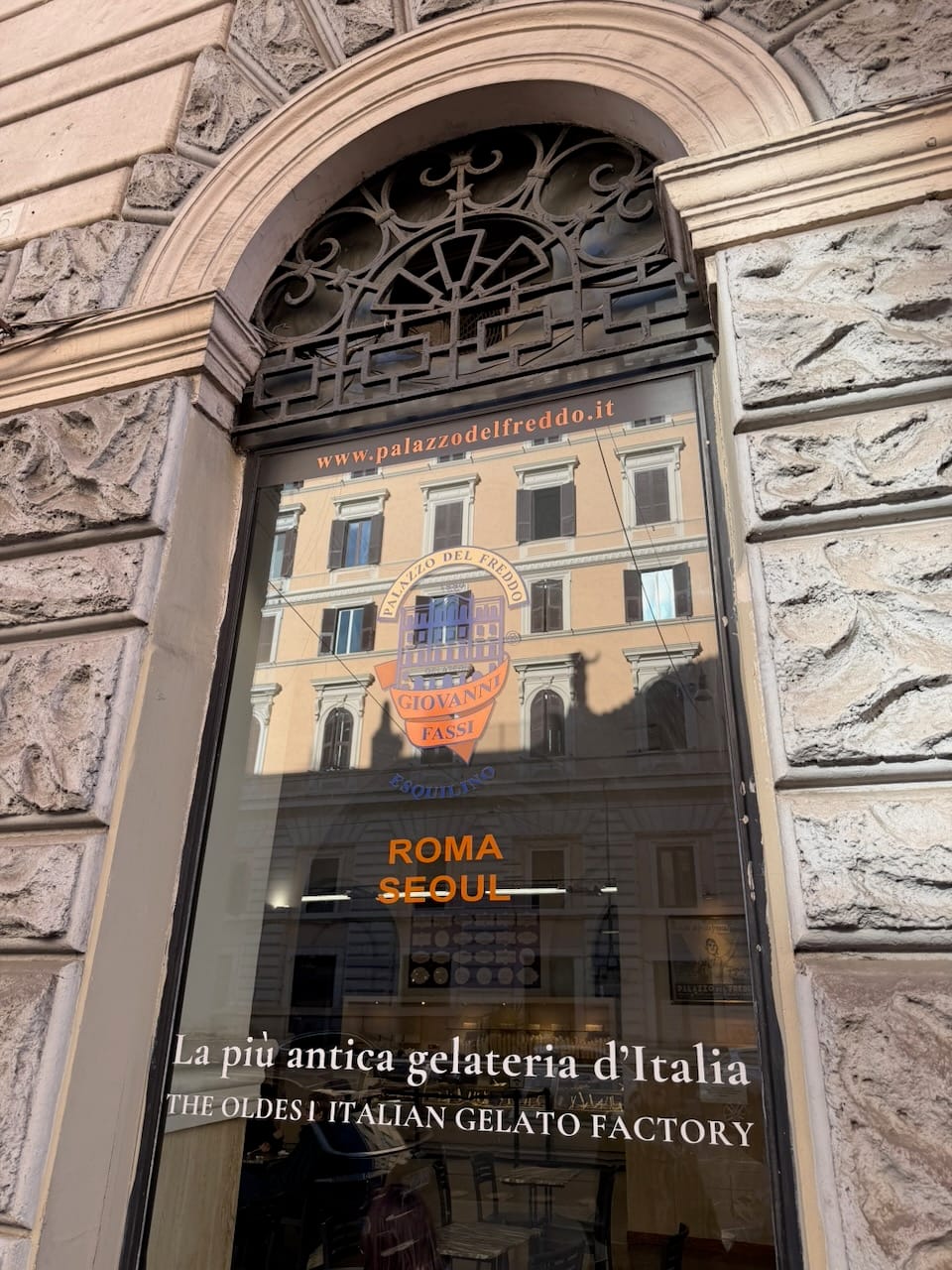
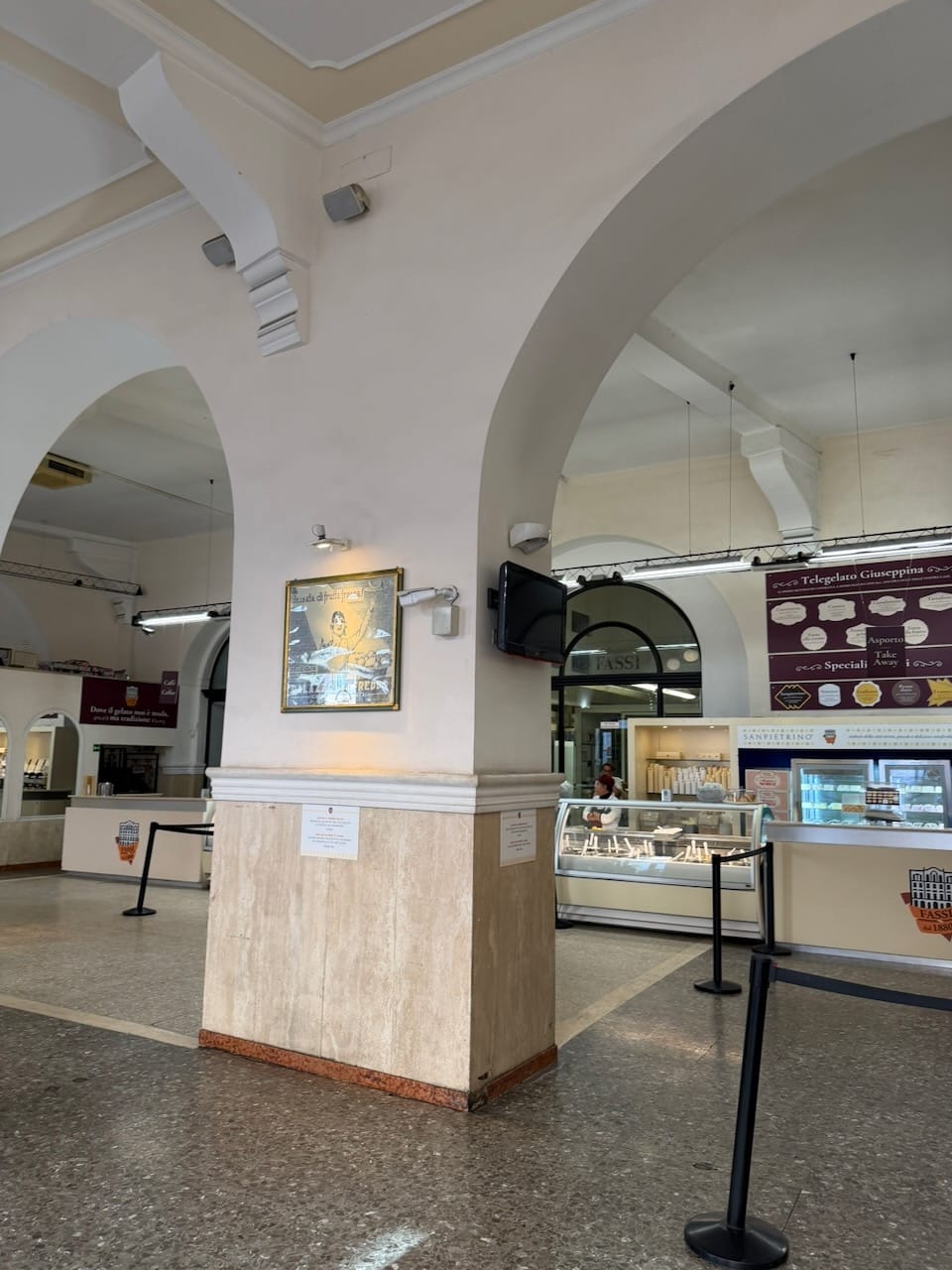

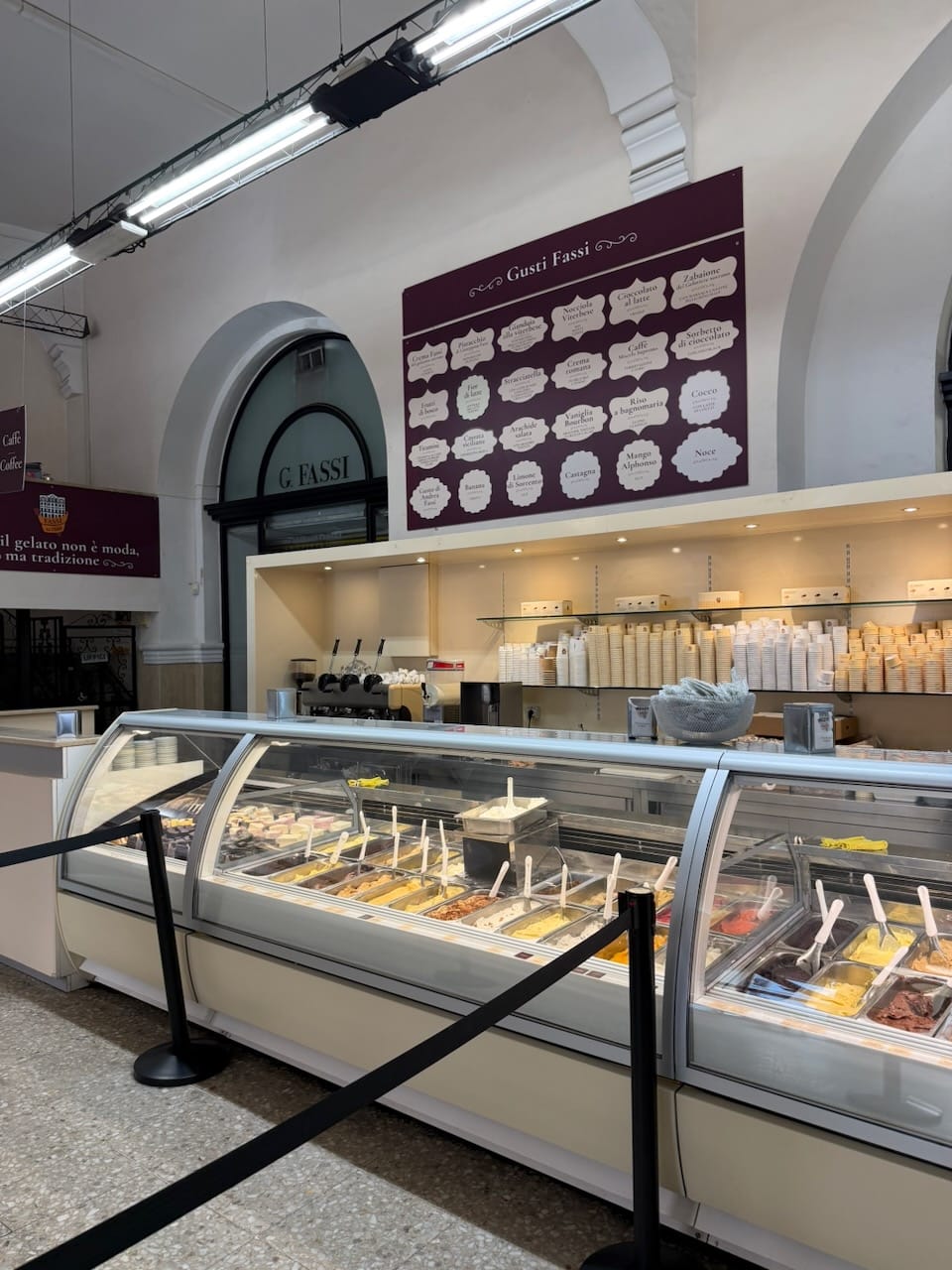

Then we dropped by Giovanni Fassi, a famous gelato shop. We had ambitiously planned for three espressos and three gelatos a day, which we quickly realized was… optimistic. In the end, we did our best to manage at least one of each per day. For me, the riso flavor was the clear winner.
We also stopped by the Basilica of Saint Mary of the Angels and the Martyrs, though it was unfortunately closed. Designed by Michelangelo (I heard it was his last work), the church was built within the ruins of the ancient Baths of Diocletian, blending Roman engineering with Renaissance architecture.
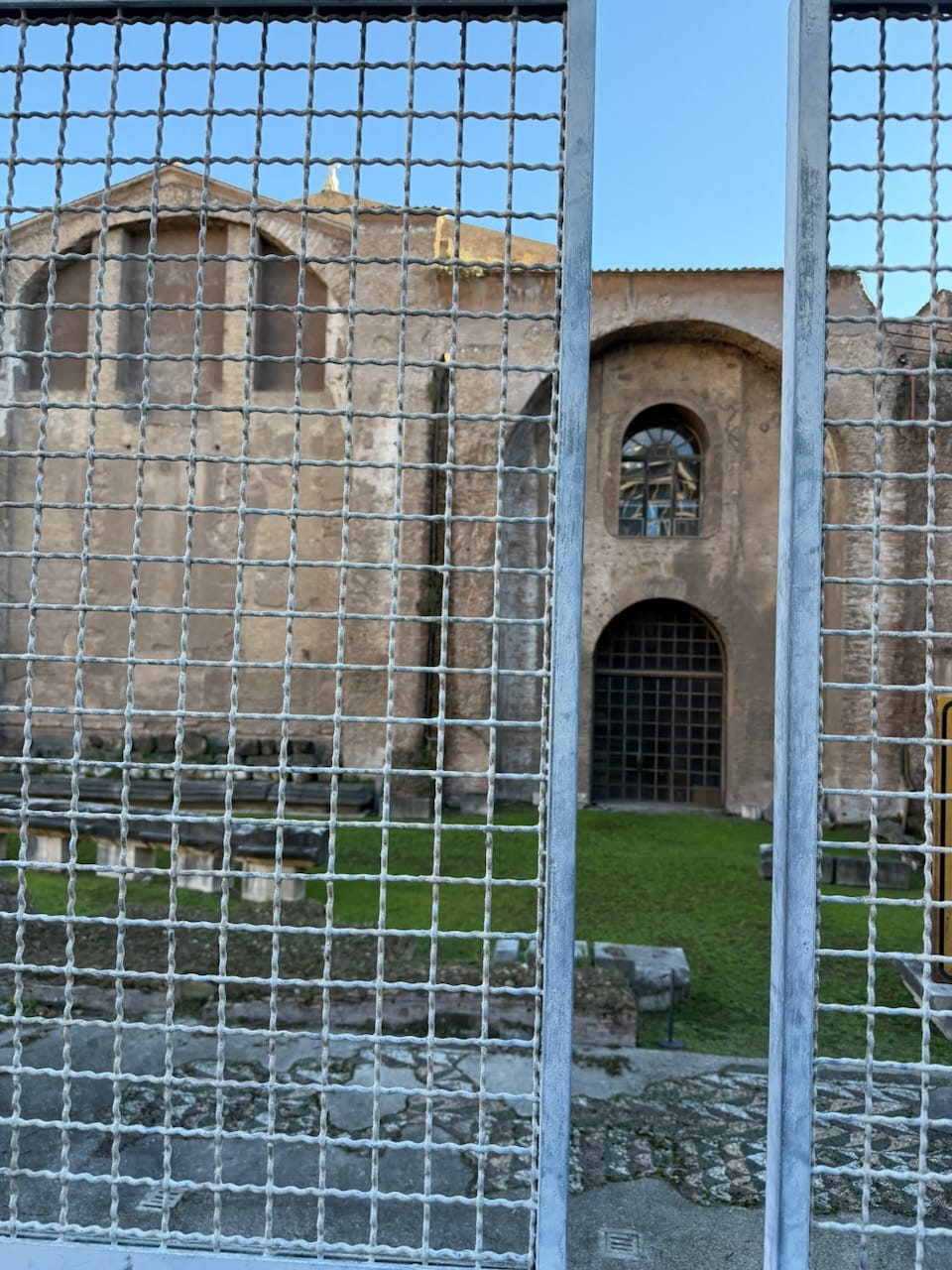

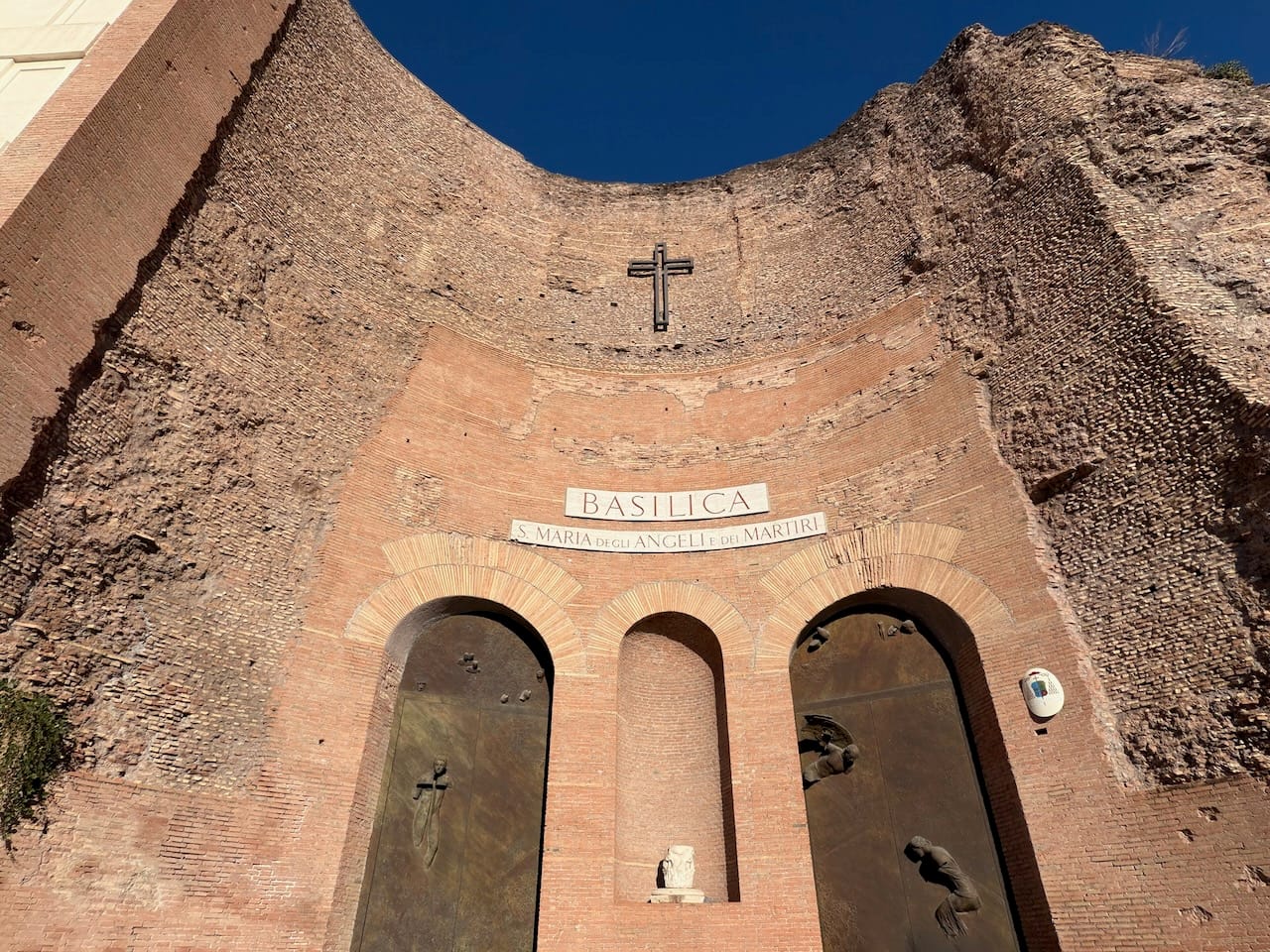

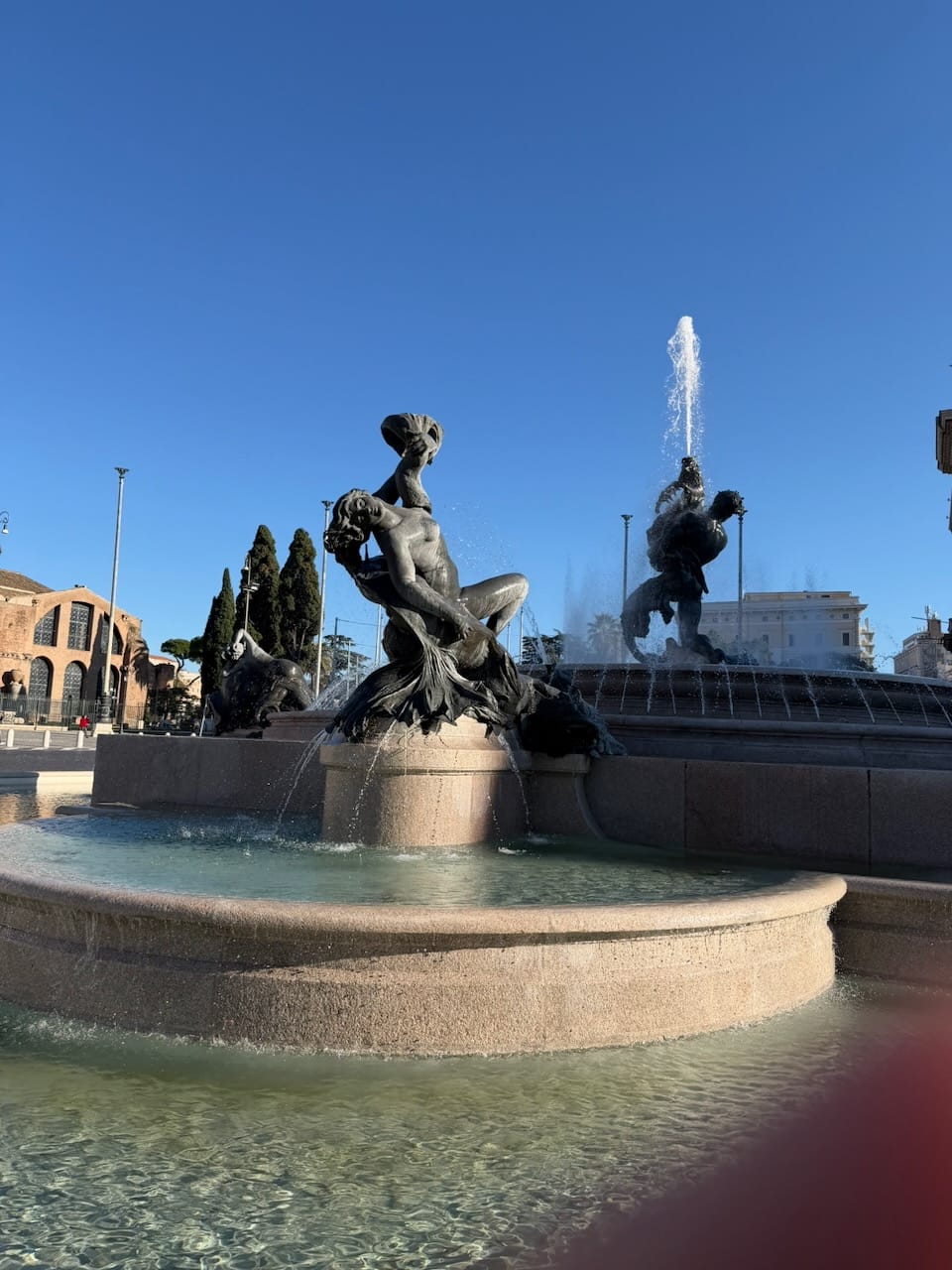

It sits at Piazza della Repubblica, a vast circular roundabout that feels impressive mainly because of its sheer scale. That said, figuring out how to cross the road without clear traffic signals or pedestrian priority was… less impressive.
Next was my wife’s most memorable place from her previous visit — also more than 20 years ago — Museo e Cripta dei Cappuccini (Museum and Crypt of the Capuchin Friars). She told me that there hadn’t been a museum section back then, and indeed, the museum itself was well designed and thoughtfully presented. But the real shock was the Crypt. The underground chapels are decorated with the bones of thousands of Capuchin friars—skulls, femurs, and vertebrae arranged into patterns, arches, and even chandeliers. It was meant as a reminder of mortality, but standing there felt deeply surreal and unsettling. It was a bizarre experience—memorable, but not exactly comfortable. And somehow, the trivial fact that the word cappuccino comes from the Capuchins’ hooded hairstyle refused to leave my head the entire time.
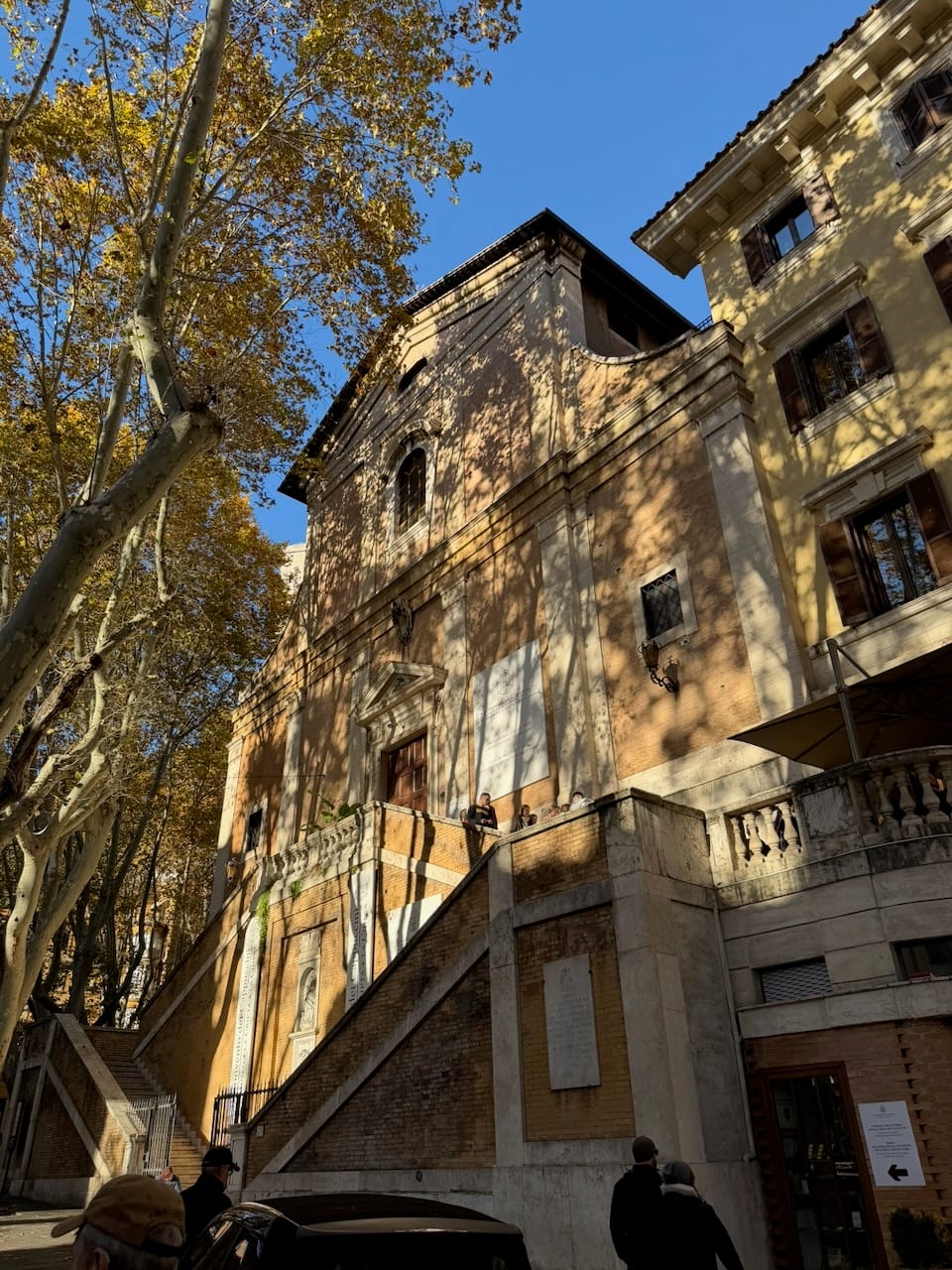
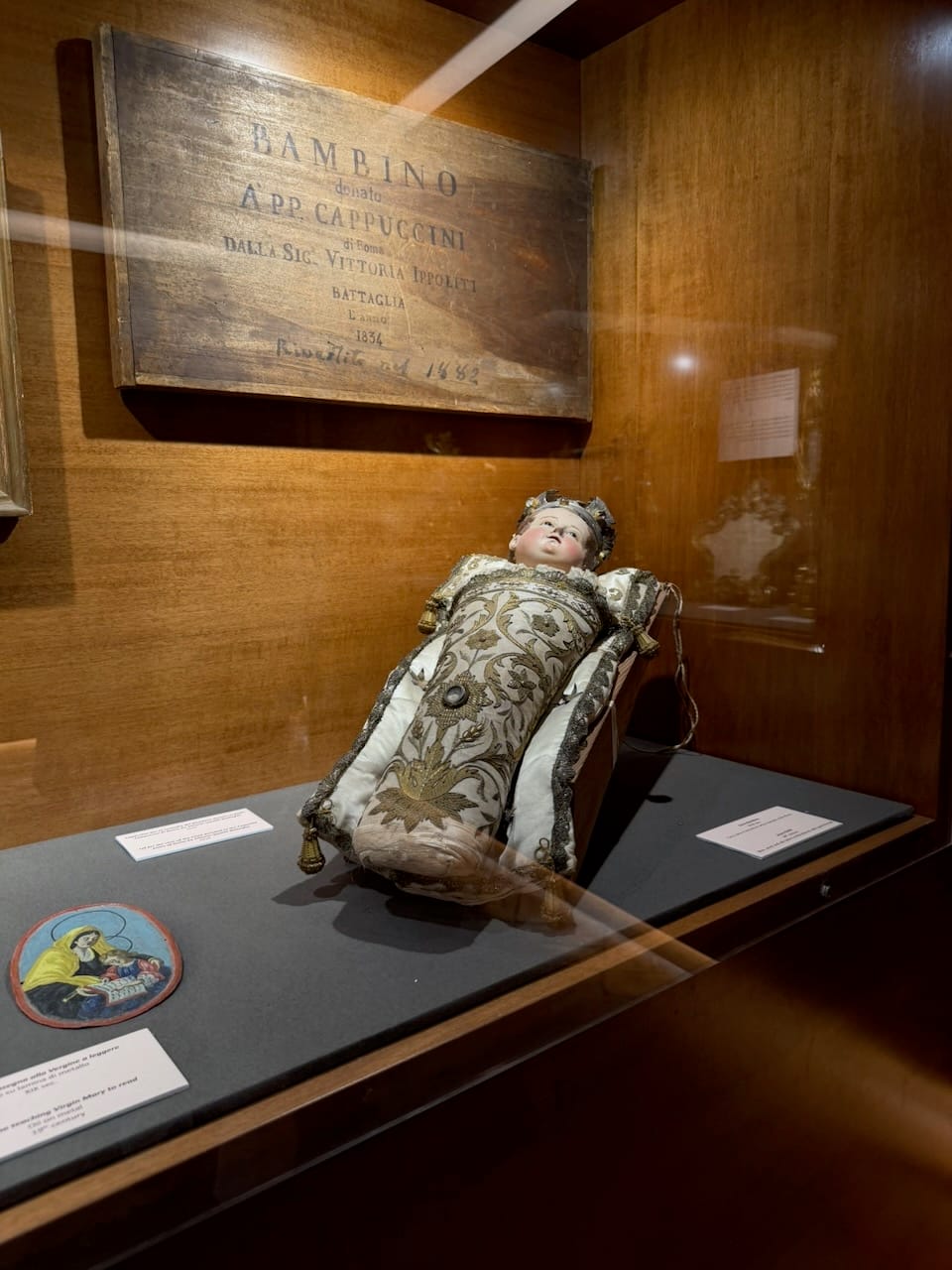
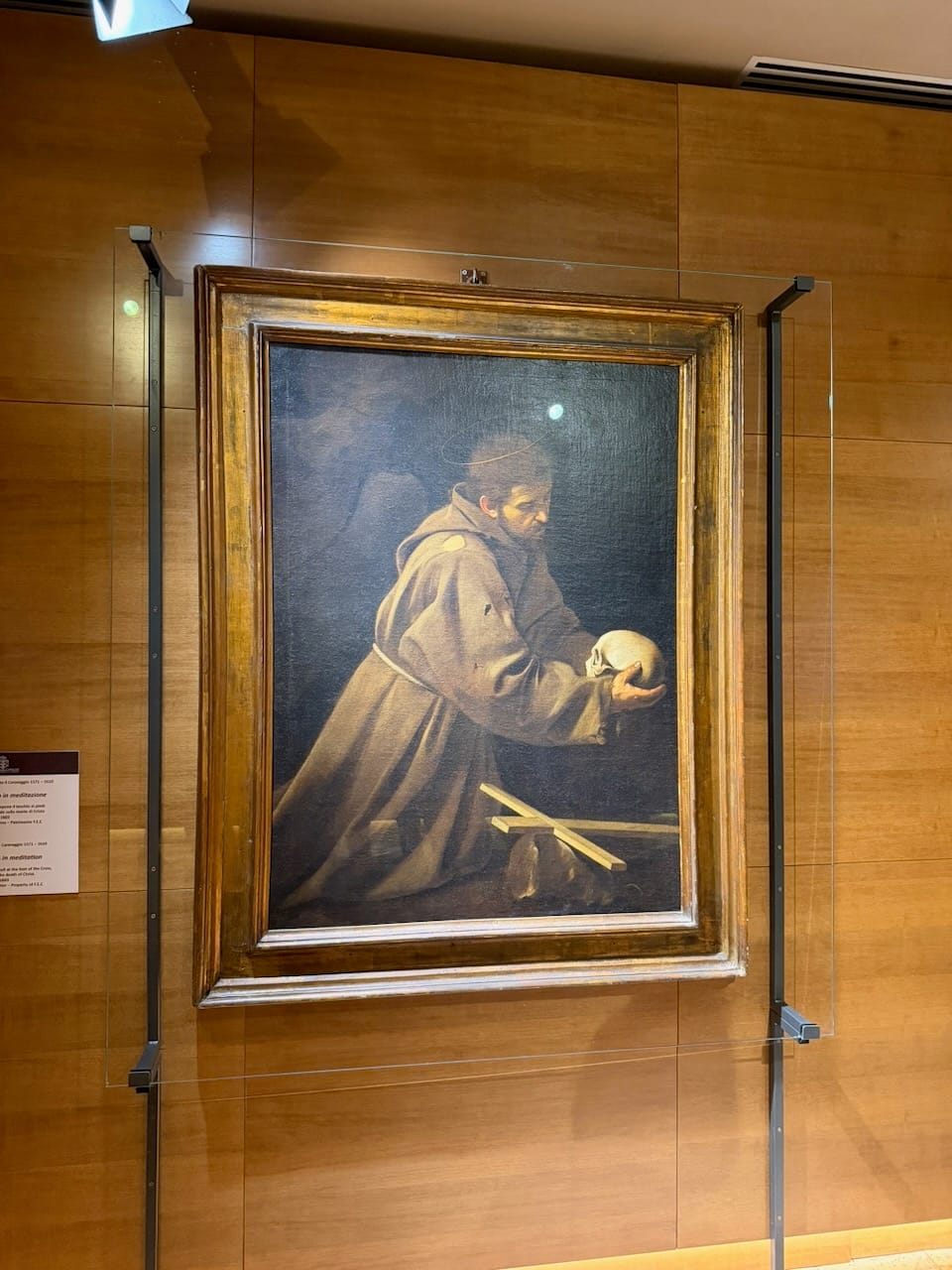
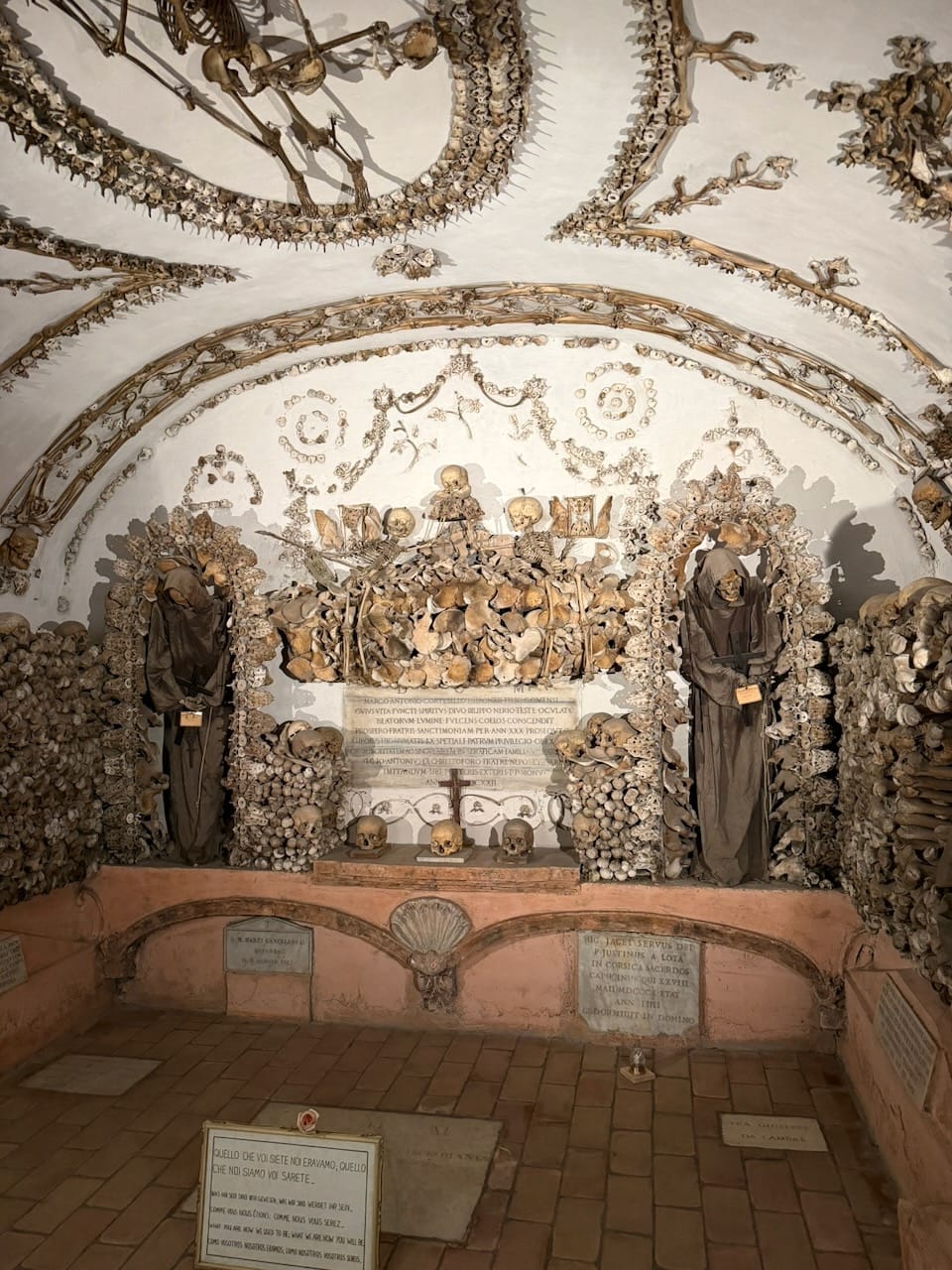
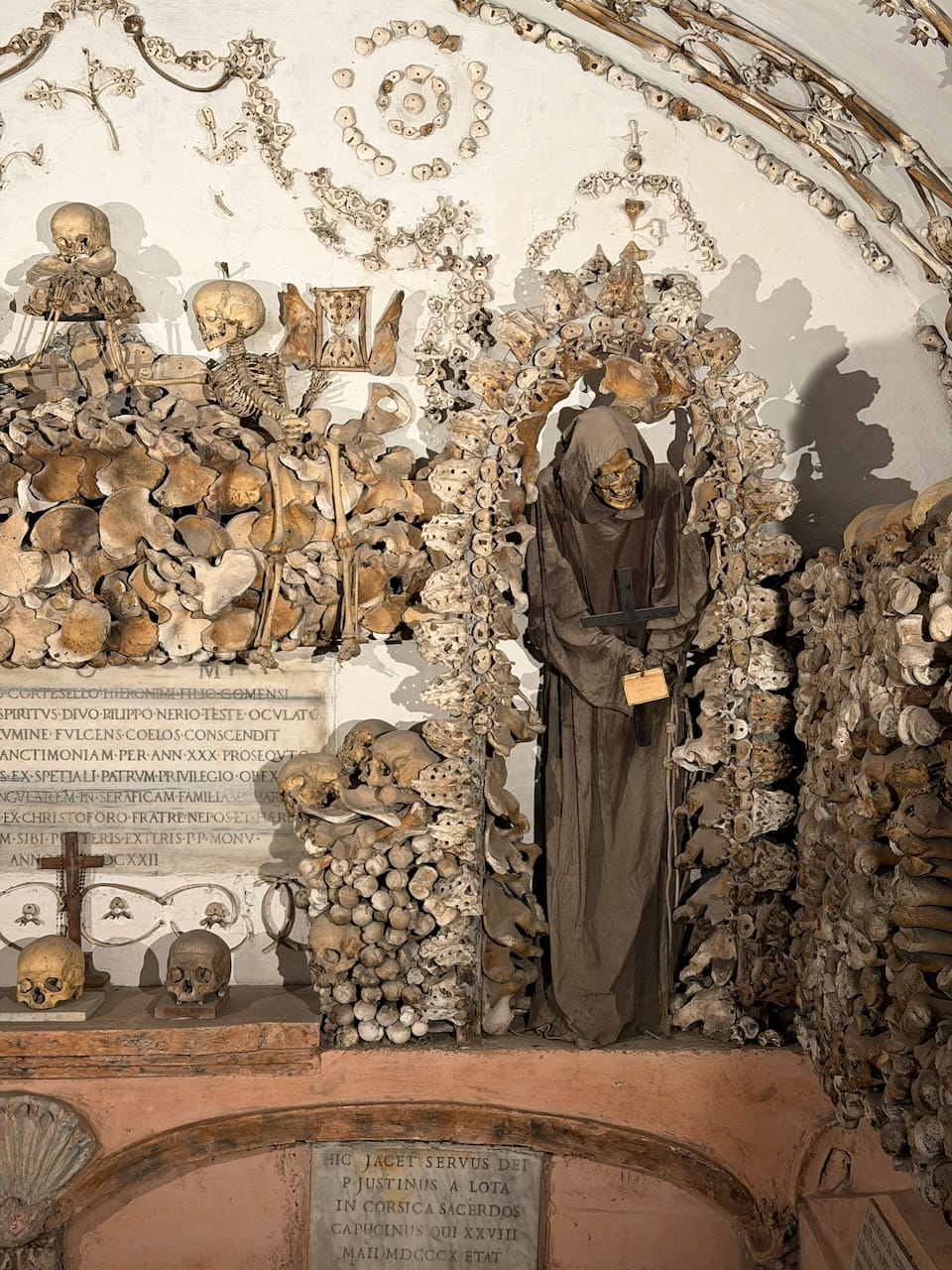
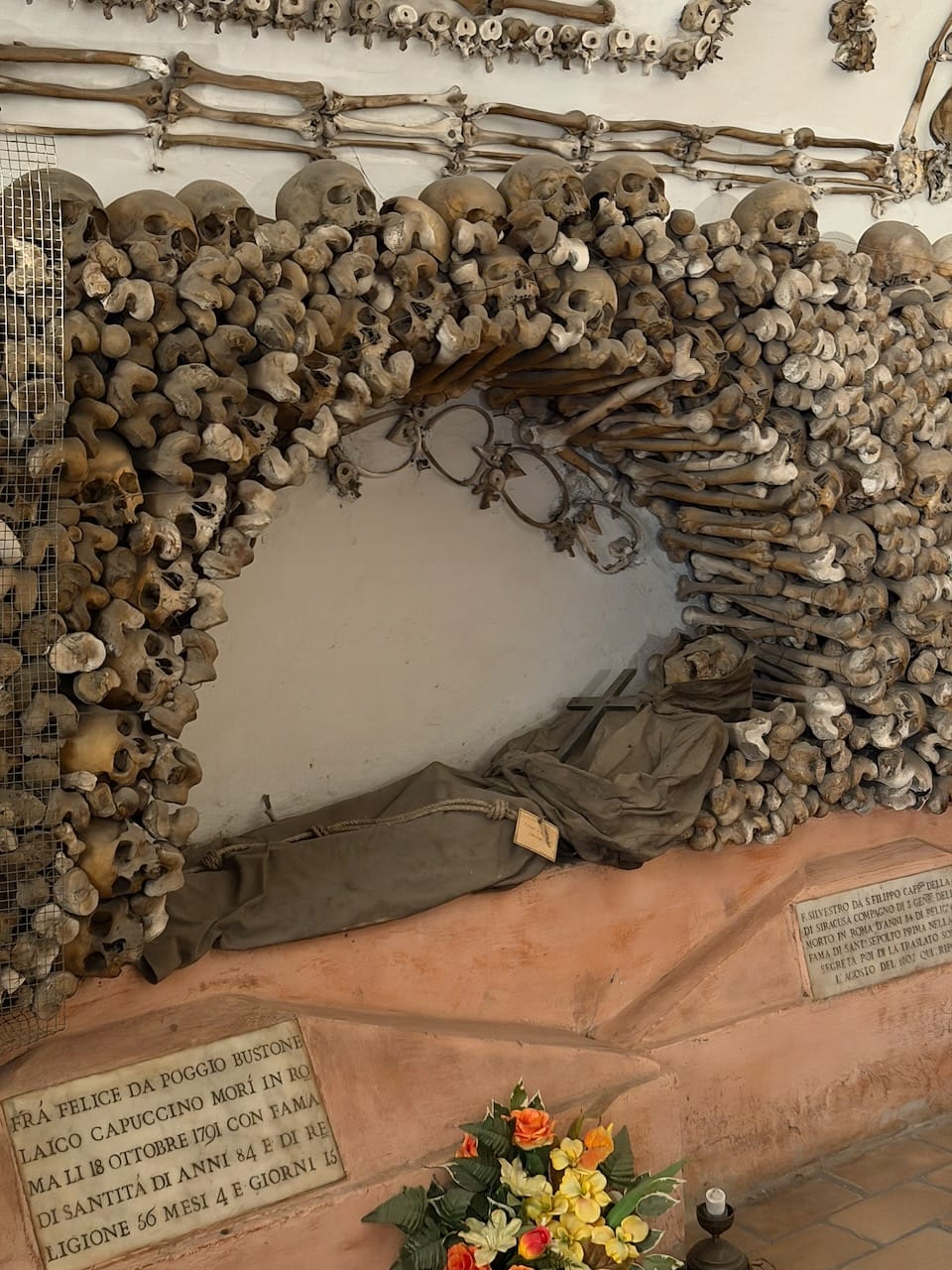
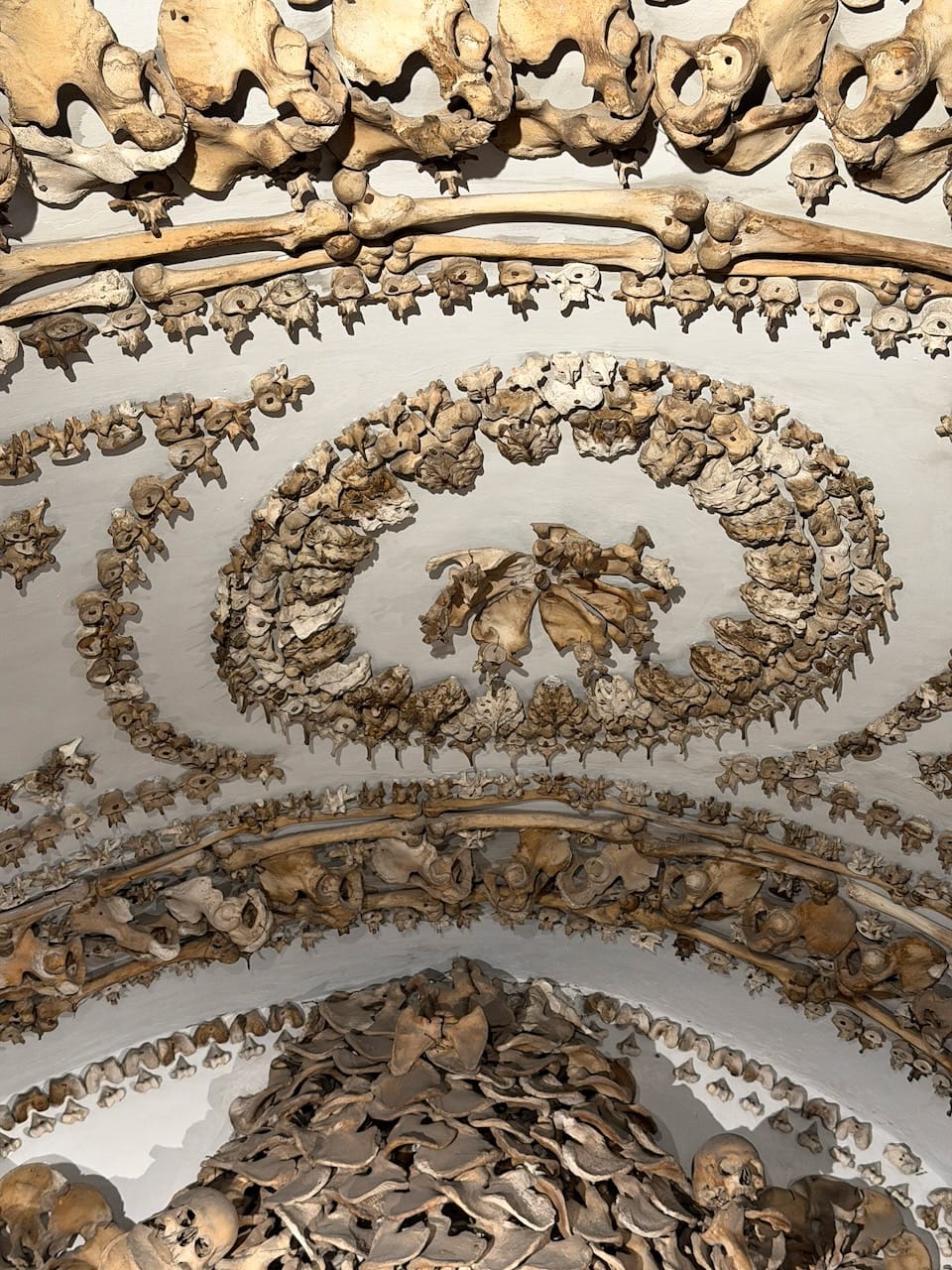
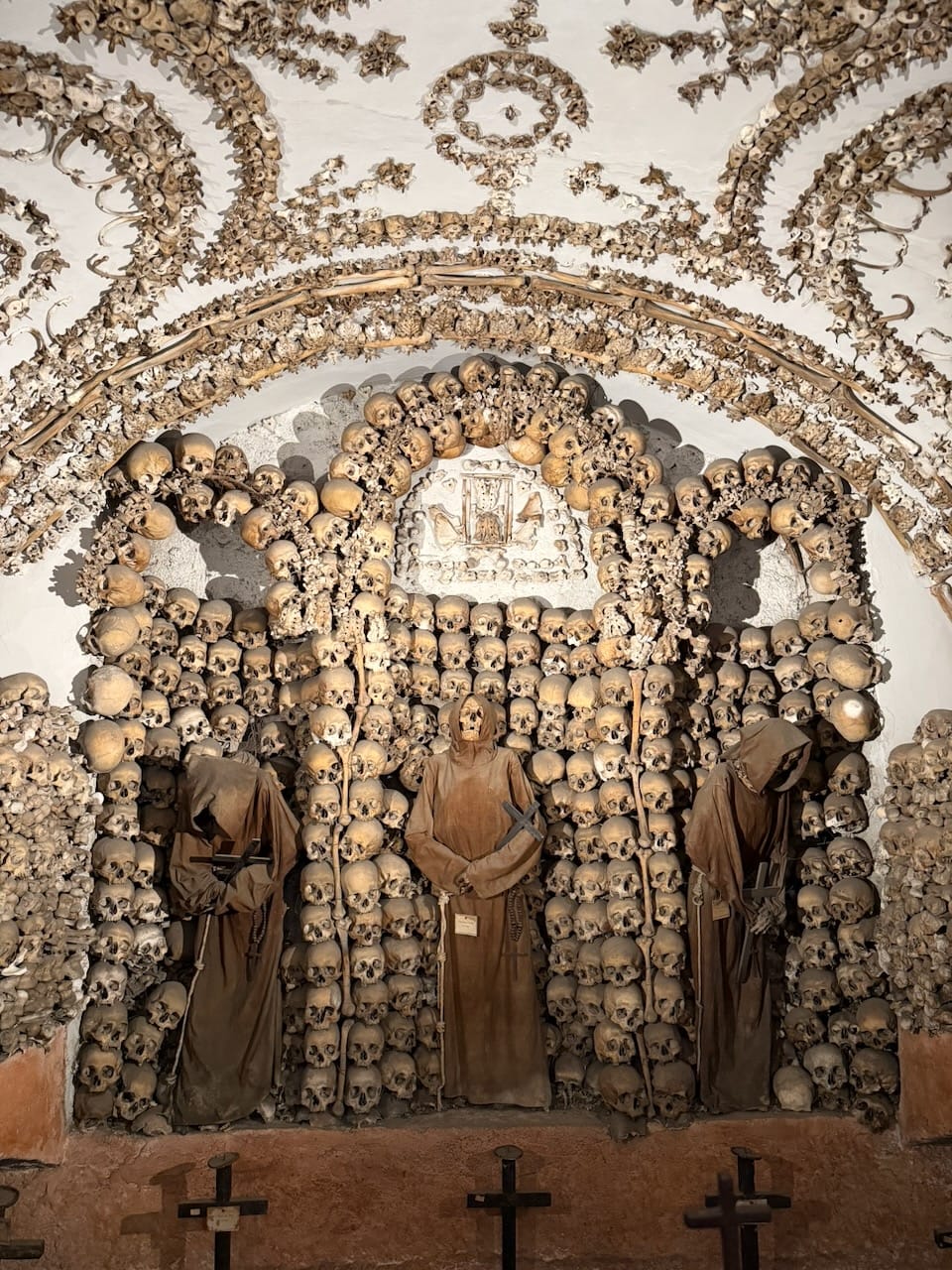
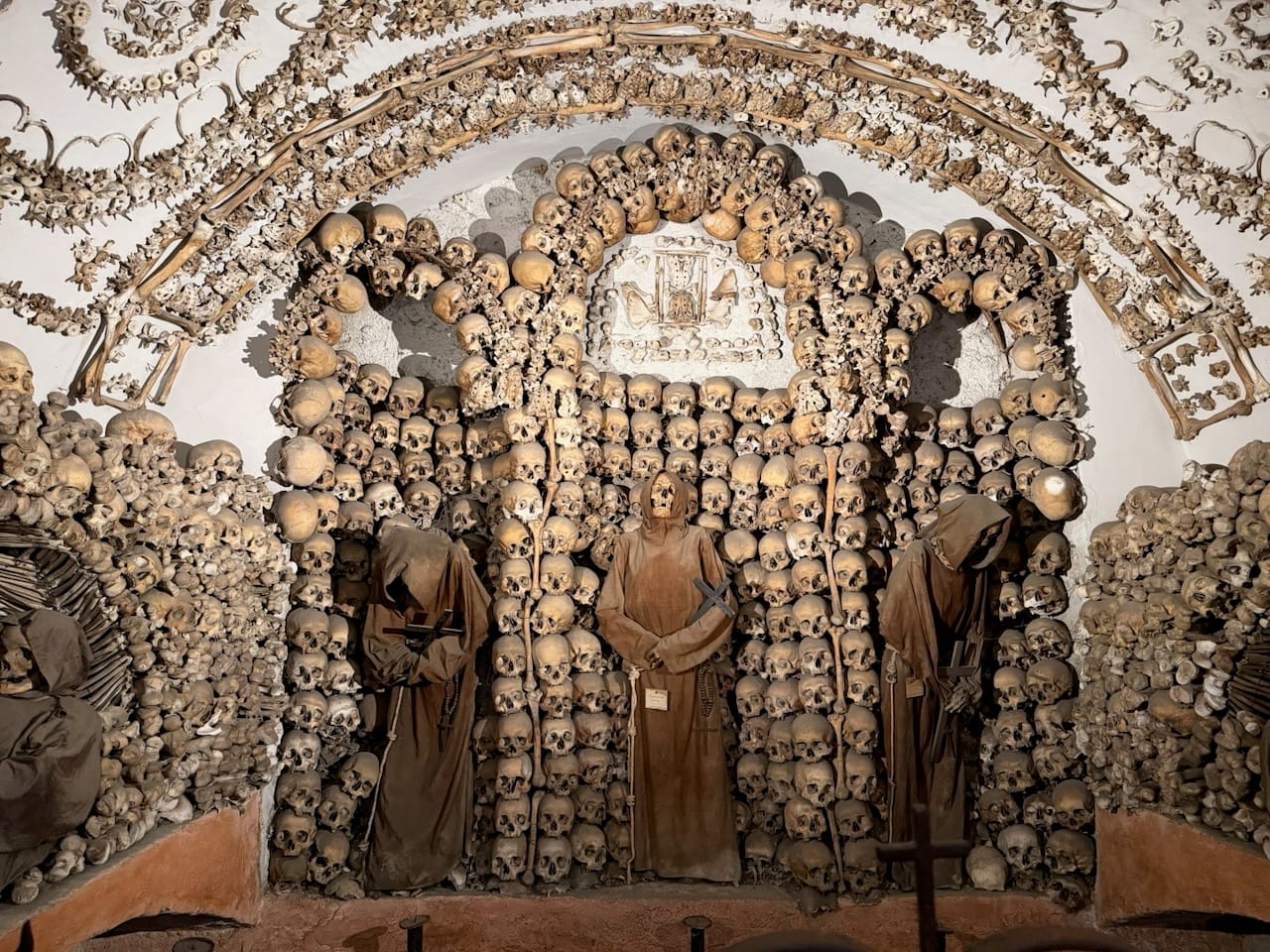
Museum and Crypt of the Capuchin Friars
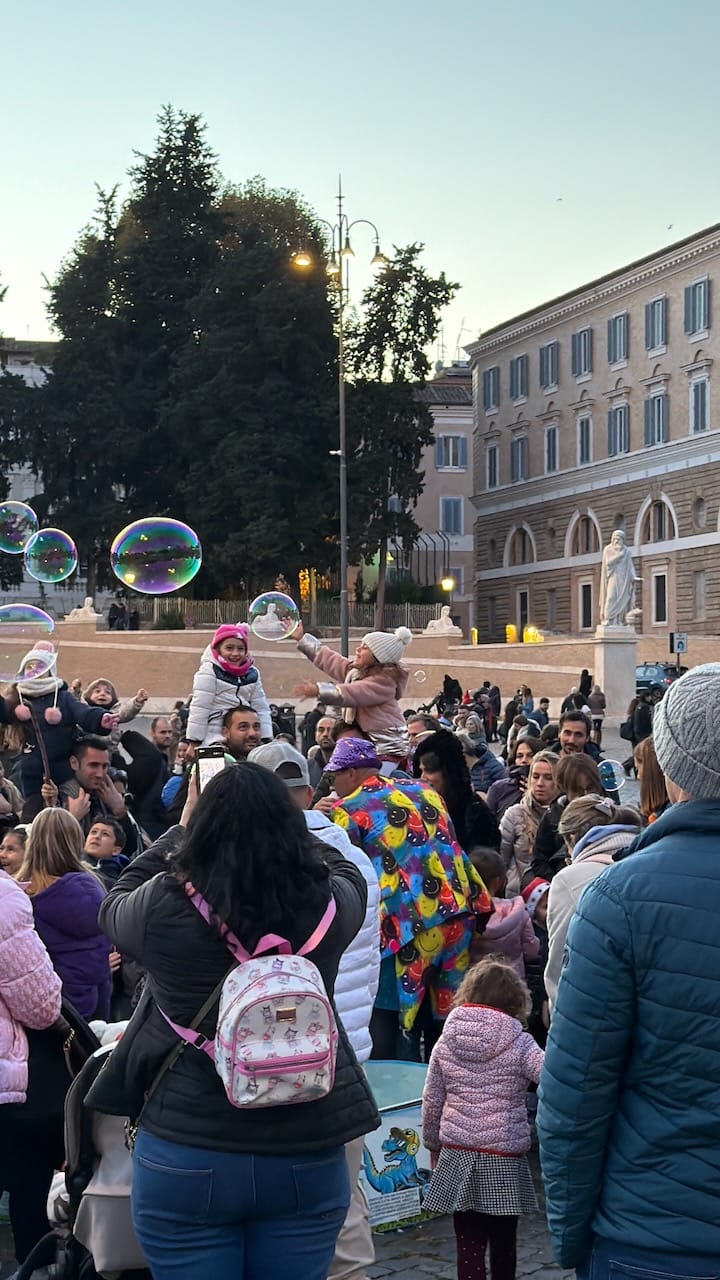
As evening approached, we headed toward Pincio Terrace, passing through the famous Spanish Steps. There seemed to be some kind of early Christmas event, and the steps were packed with people—so crowded that it was actually hard to recognize them as the Spanish Steps.

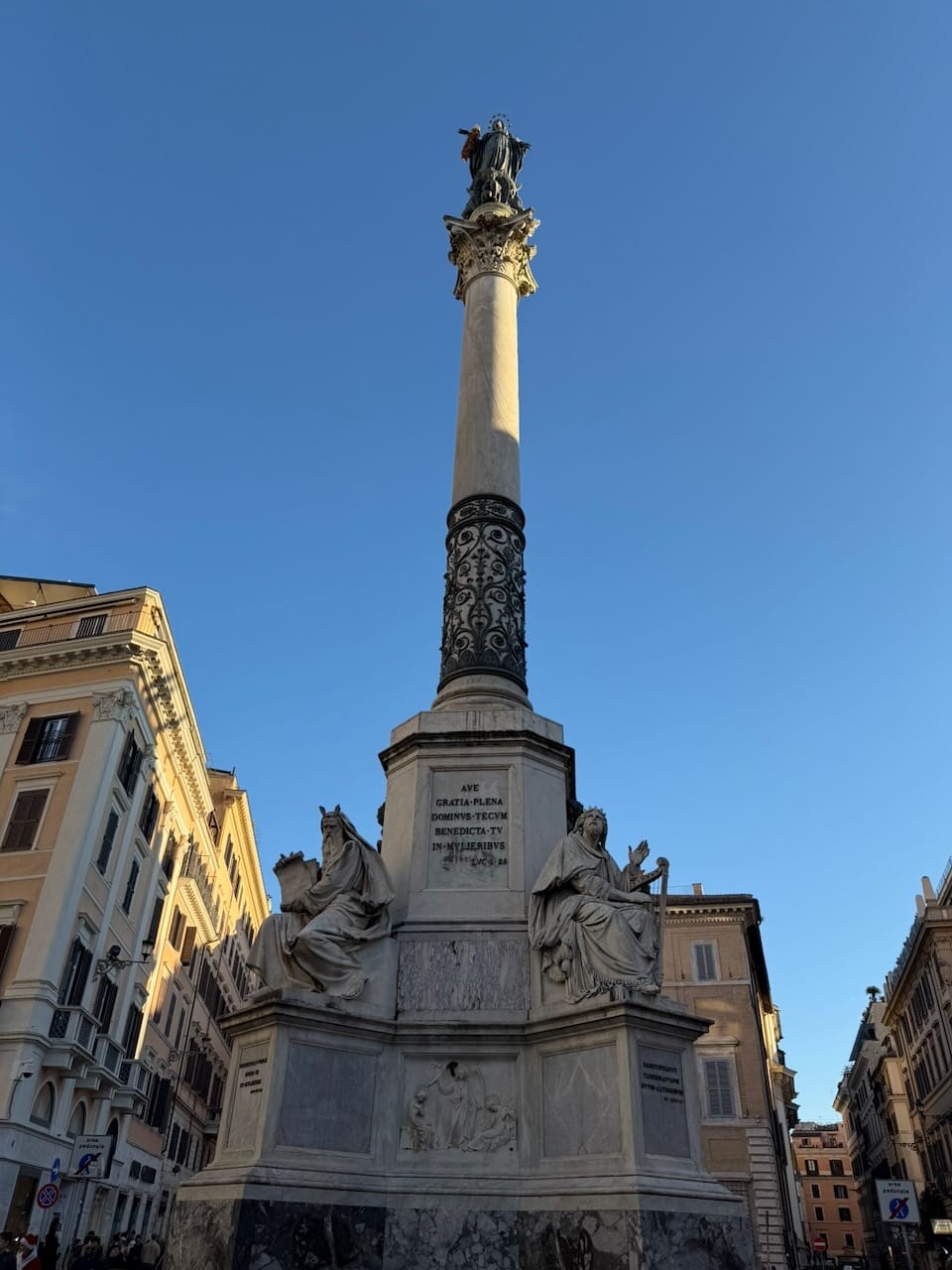
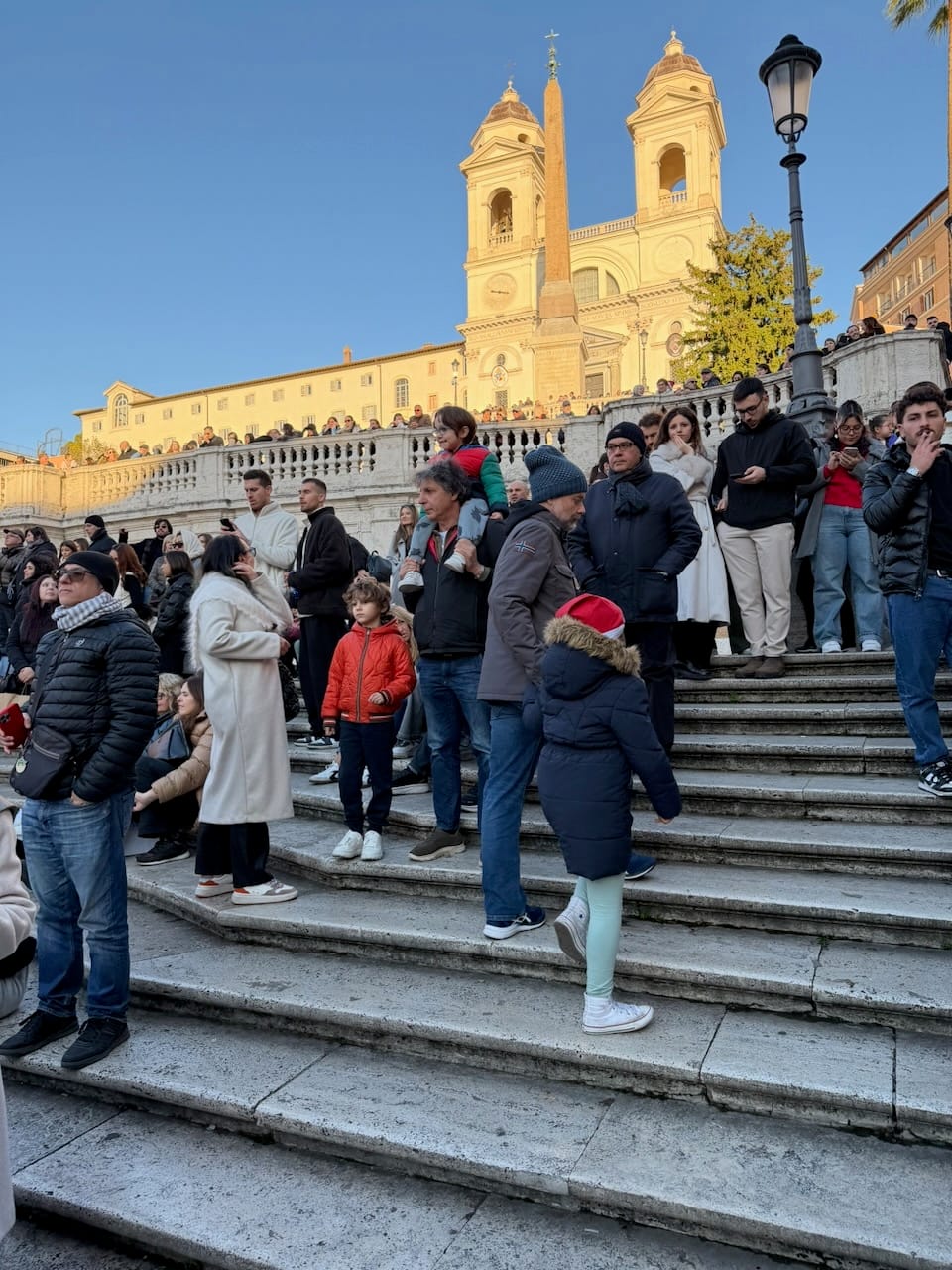

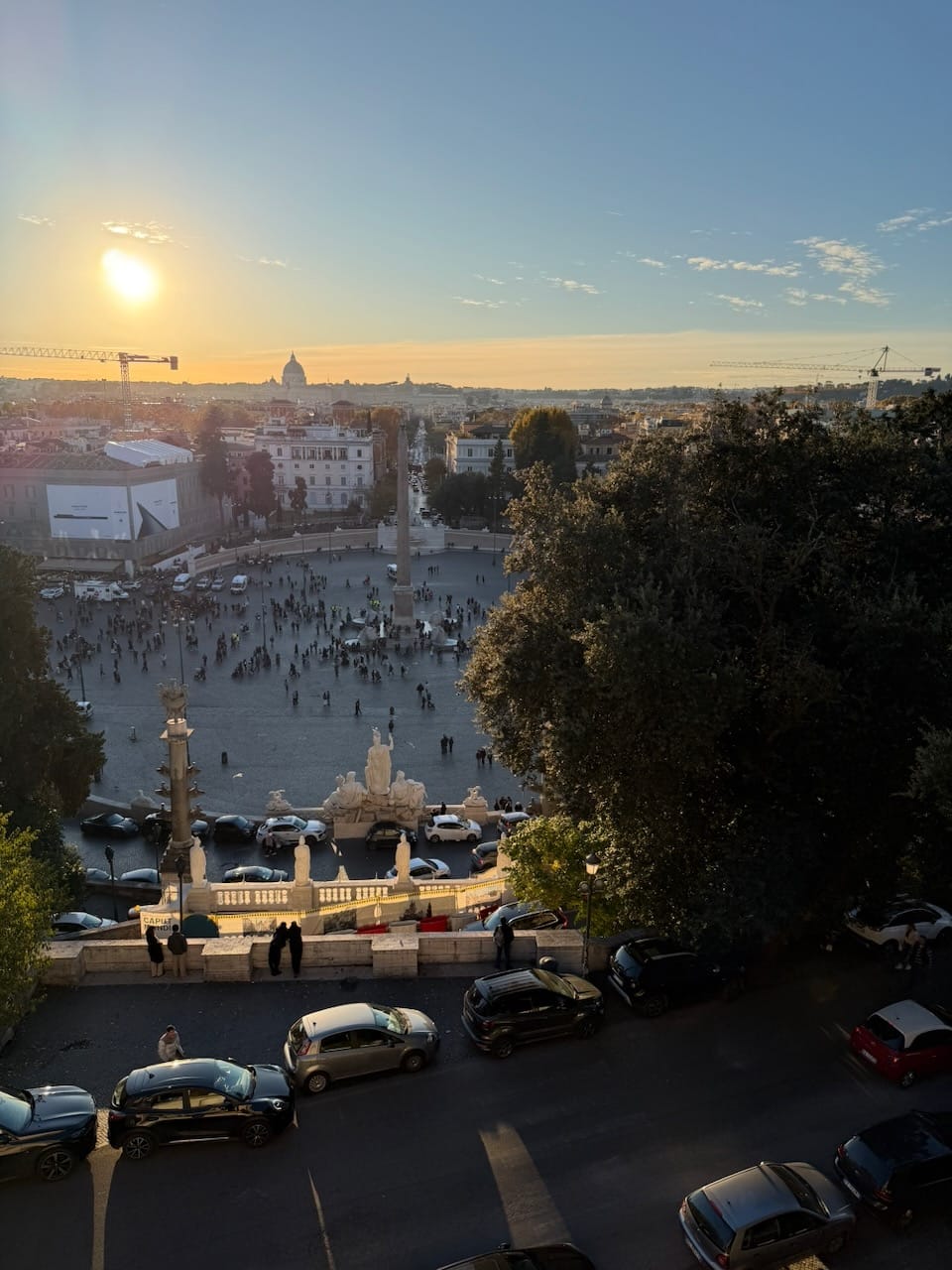
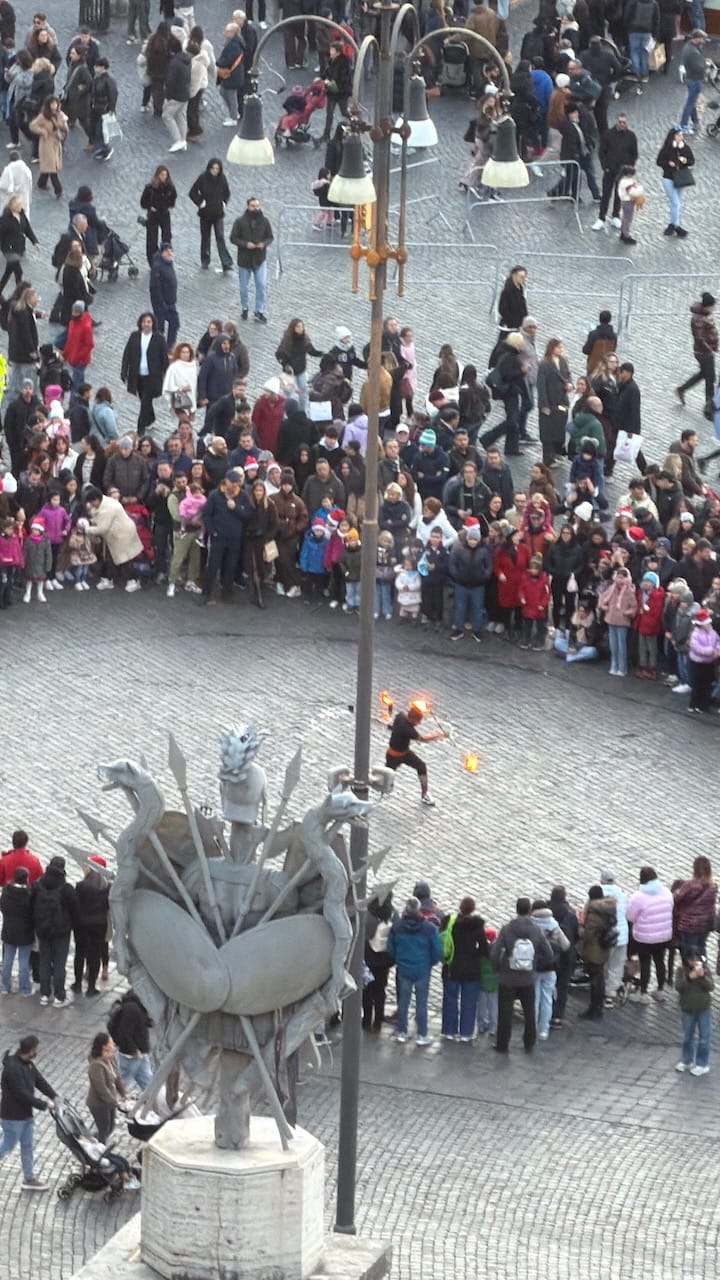
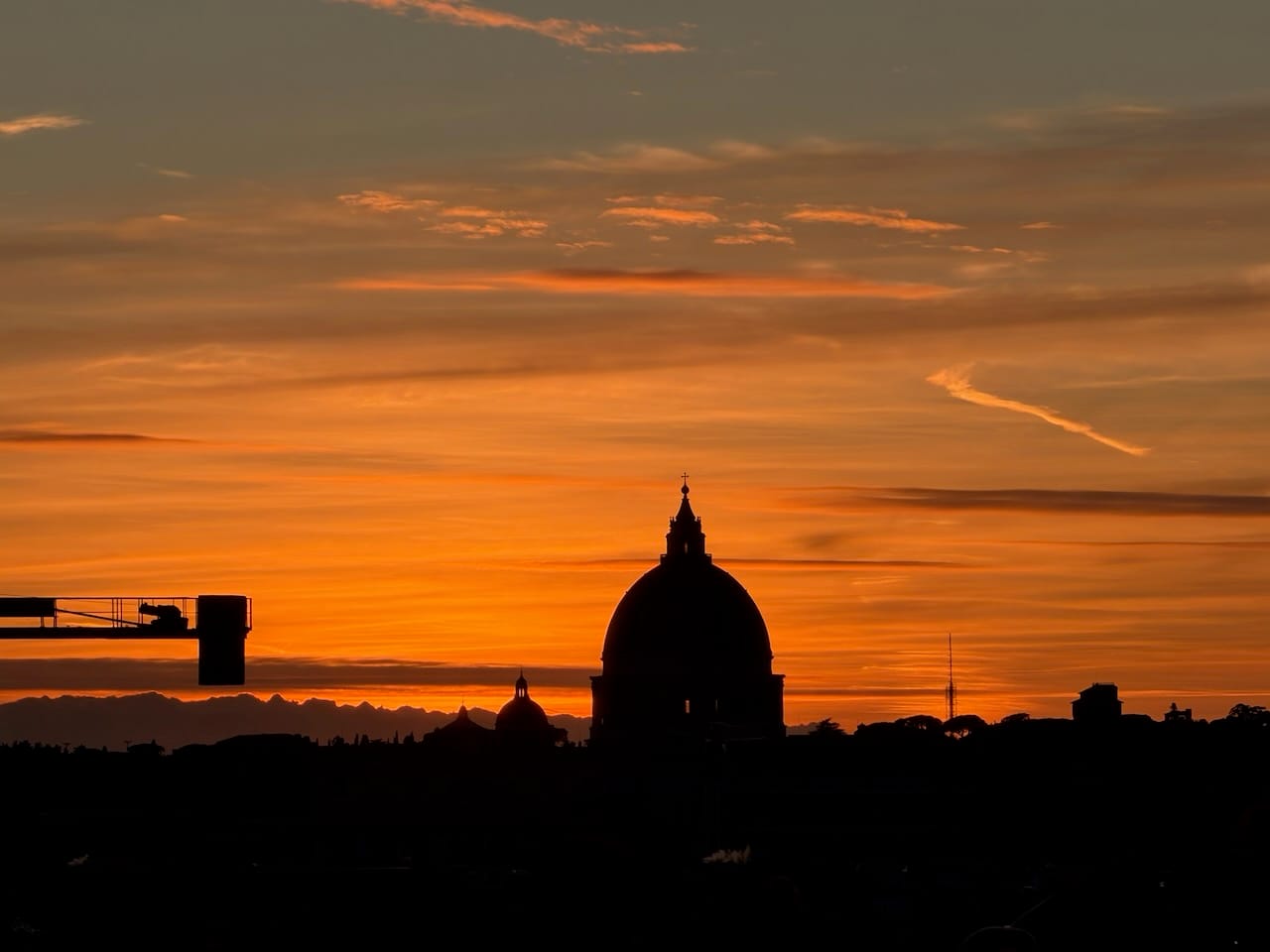
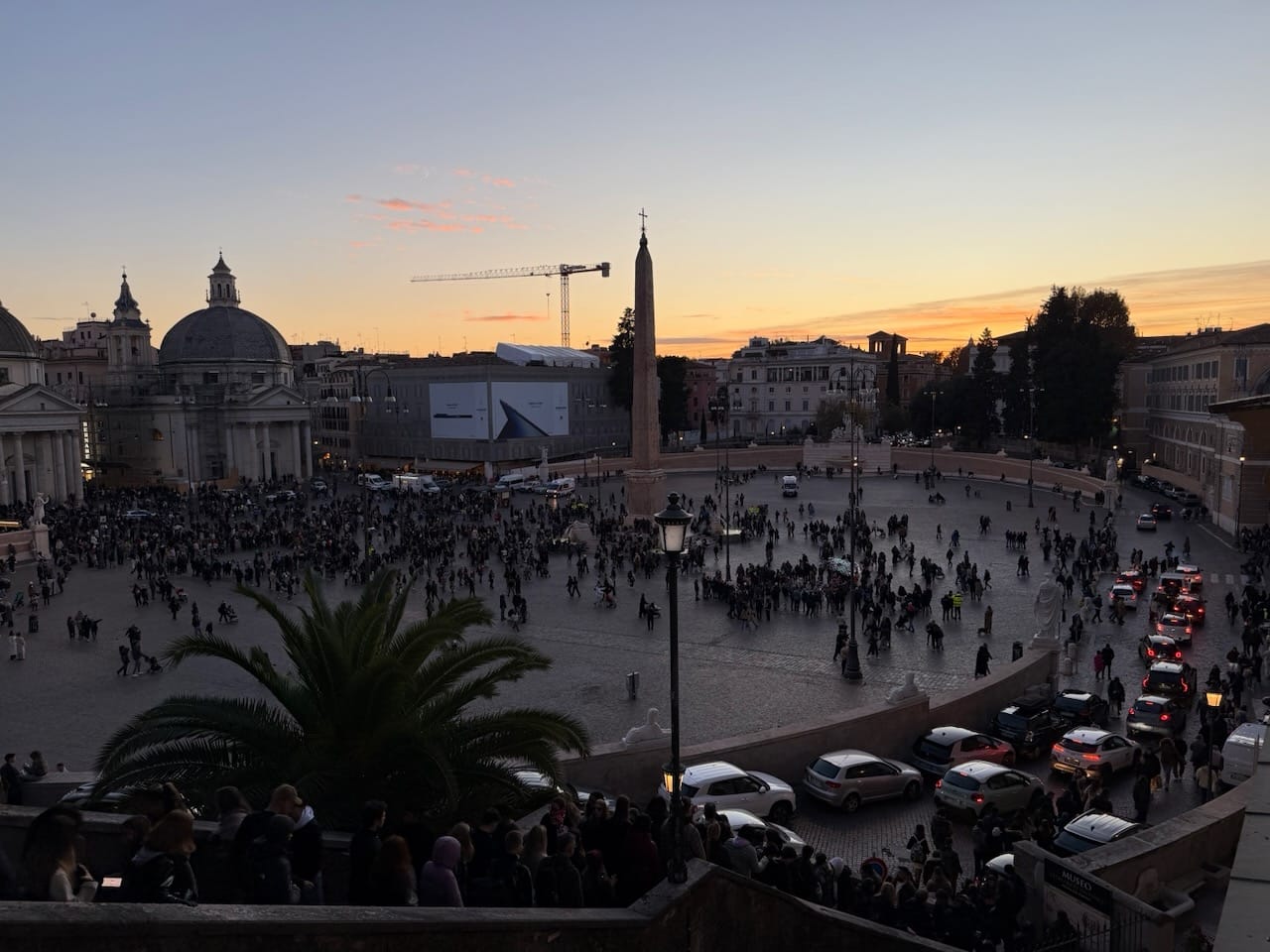
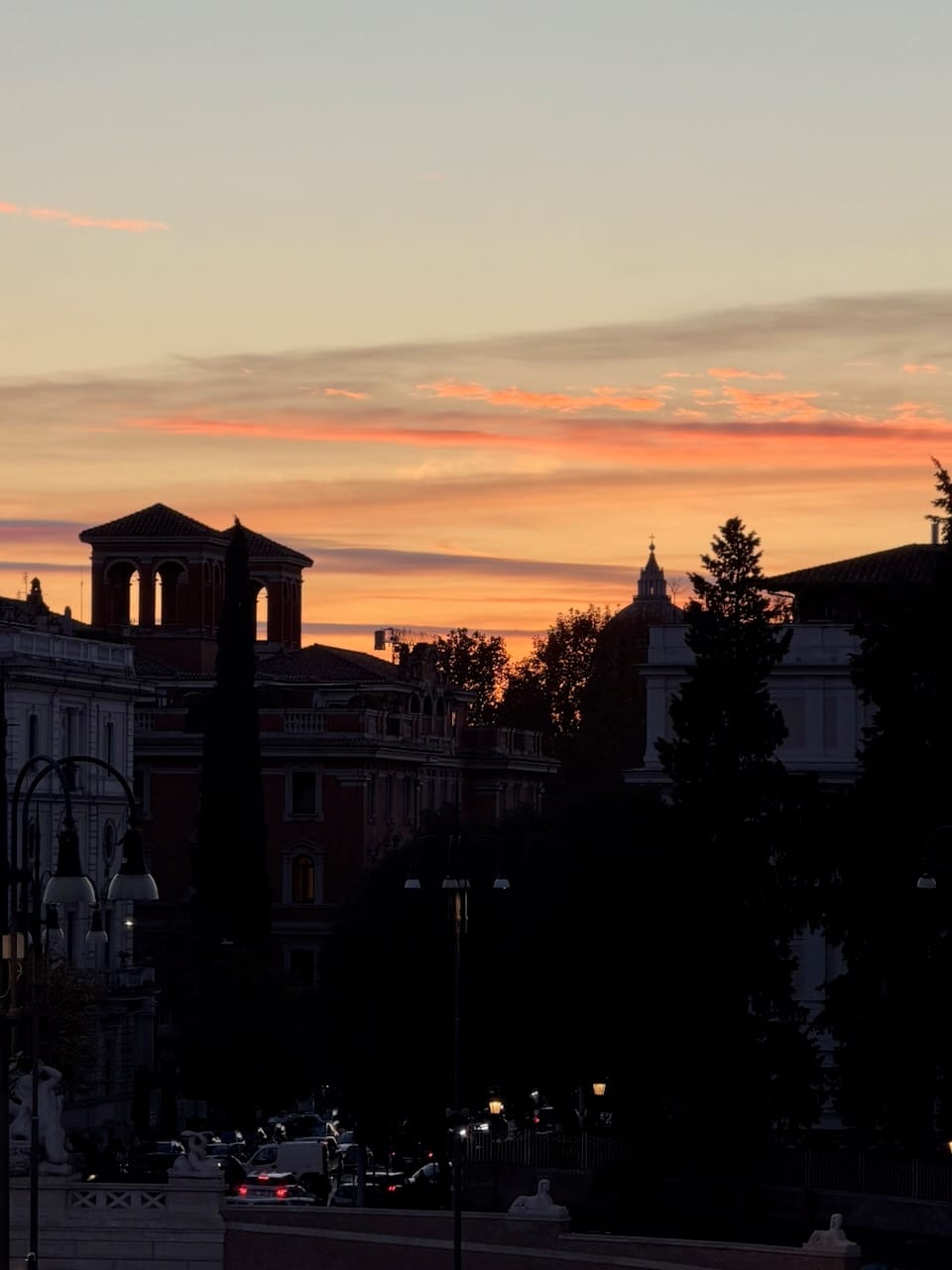
Pincio Terrace, though, was worth it. It’s a wonderful place to watch the sun set over Rome, with a sweeping view that stretches toward the Vatican. As the light softened and the city slowly changed color, the place felt calm and almost timeless. At least until I suddenly realized I urgently needed a restroom...
Finding a restroom, as it turns out (actually I knew it), is a universal challenge in Europe. Neither Google Maps nor Apple Maps pointed me to the right place. After wandering around for about ten minutes, I learned (by asking someone, the best strategy, as usual) that the nearest one was just a few steps below where we had been standing all along. Most public restrooms in Europe require payment, so I had prepared some €1 coins in advance. What surprised me, though, was how modern things have become: many restrooms now accept contactless credit cards, even Apple Pay. Rome may be ancient, but it’s not stuck in the past.
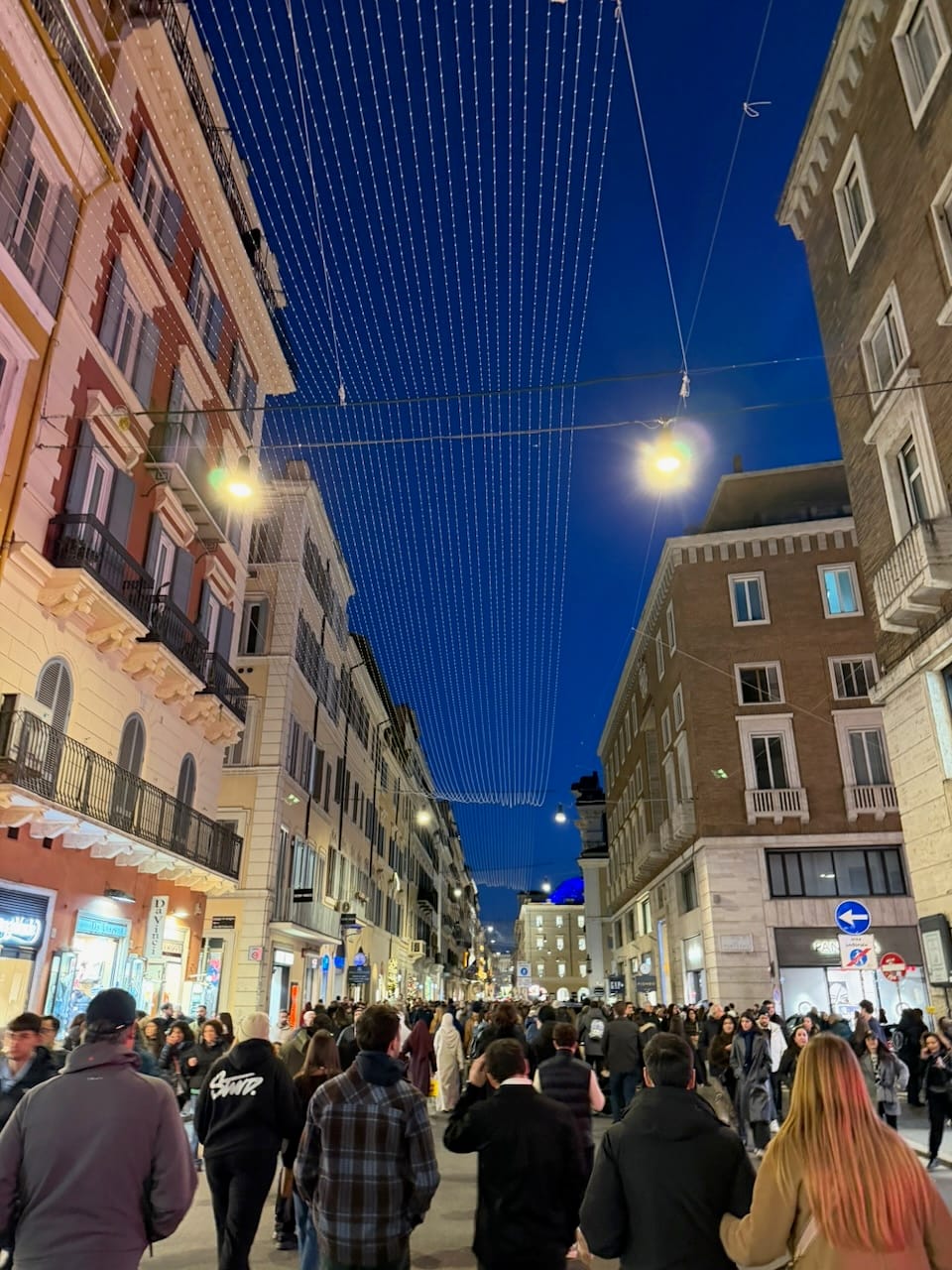
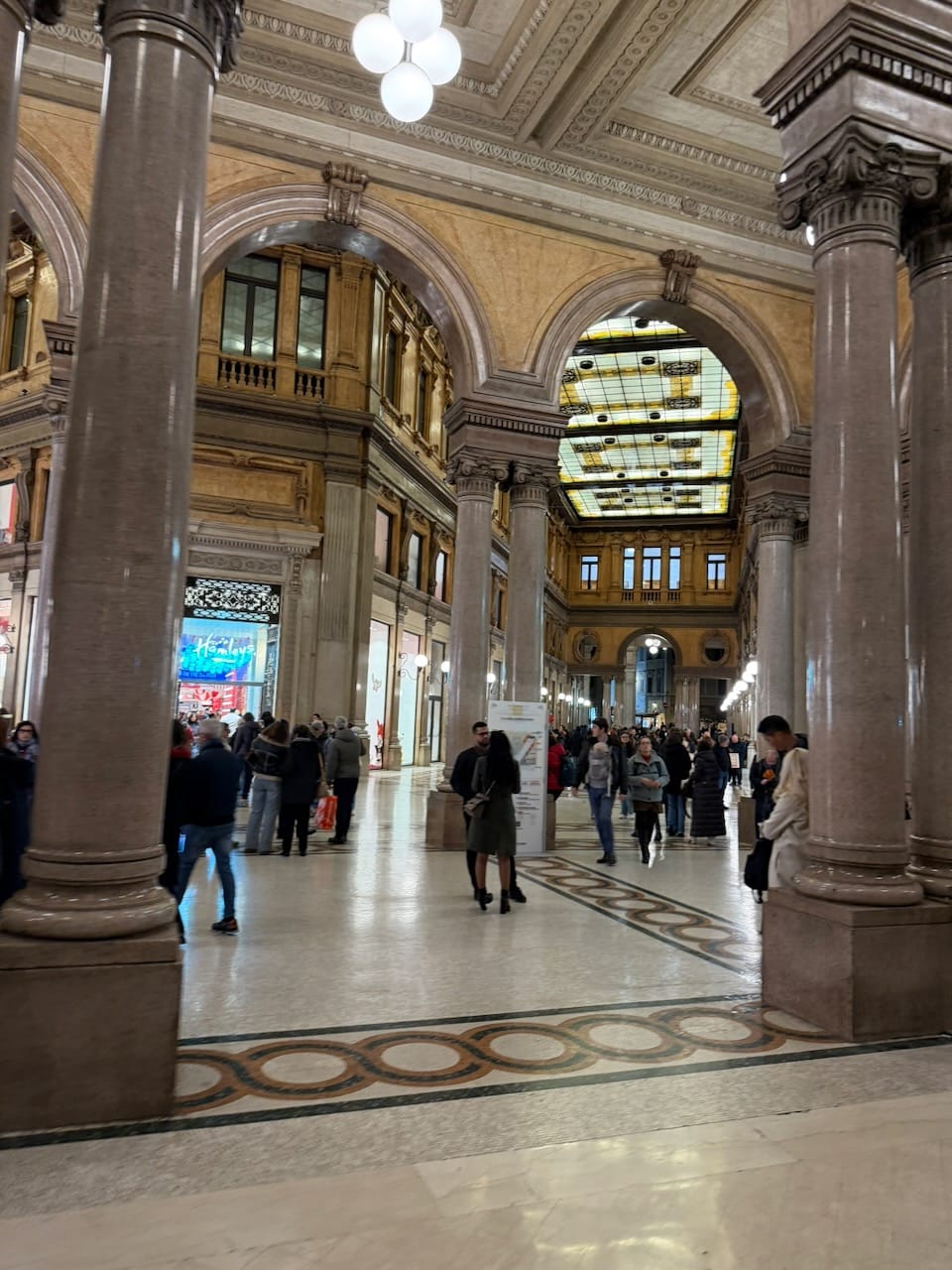
We still had some time before dinner, so we walked along Via del Corso, one of Rome’s main shopping streets. I was a bit surprised to see that many of the stores were brands I was already familiar with from the U.S. I wasn’t sure whether that was simply the reality of global luxury brands, or whether this particular street had been fully taken over by them. Either way, we didn’t find much we wanted to buy. Nothing felt especially exotic or distinctive, and everything looked… familiar in the wrong way.
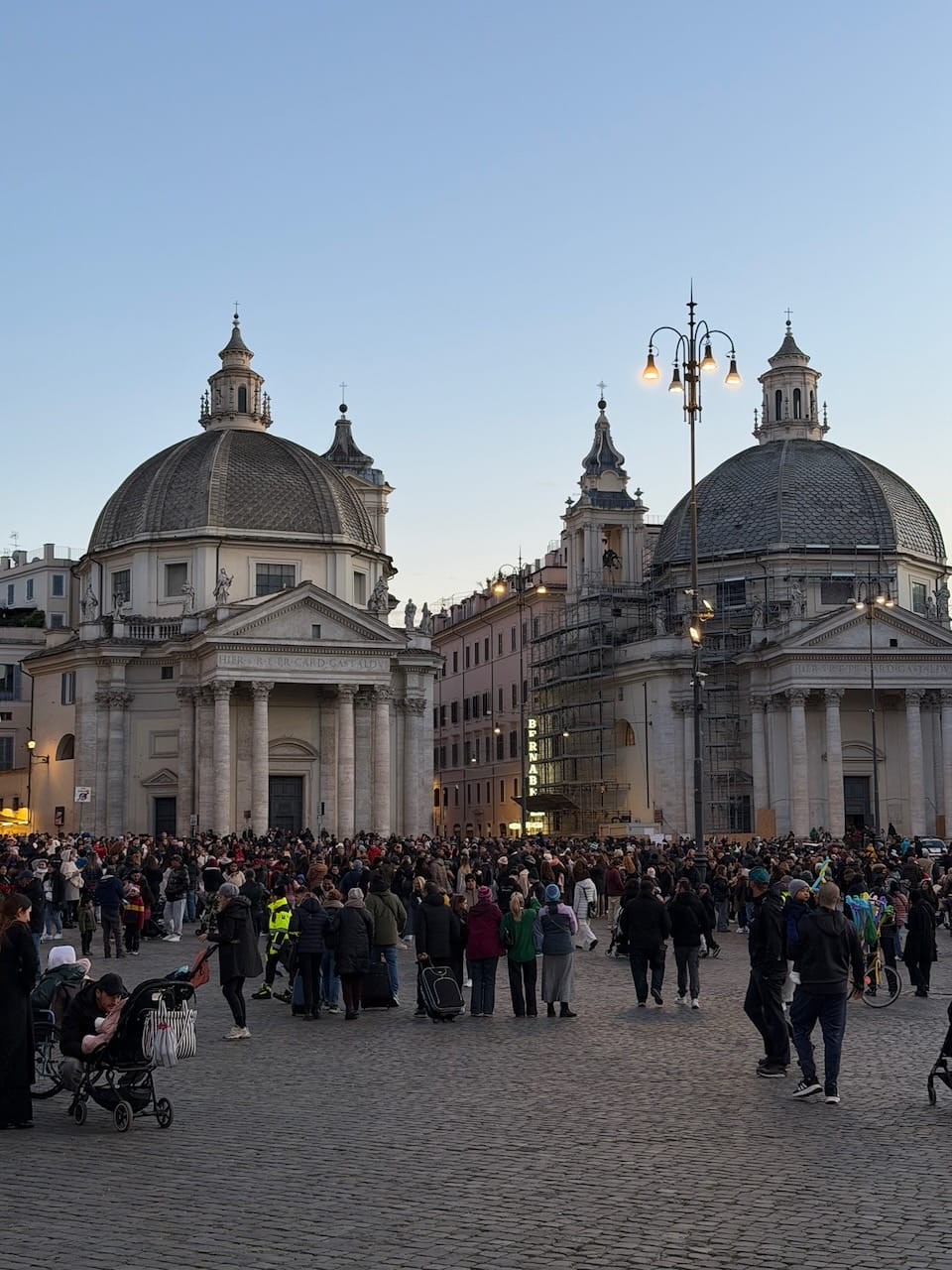
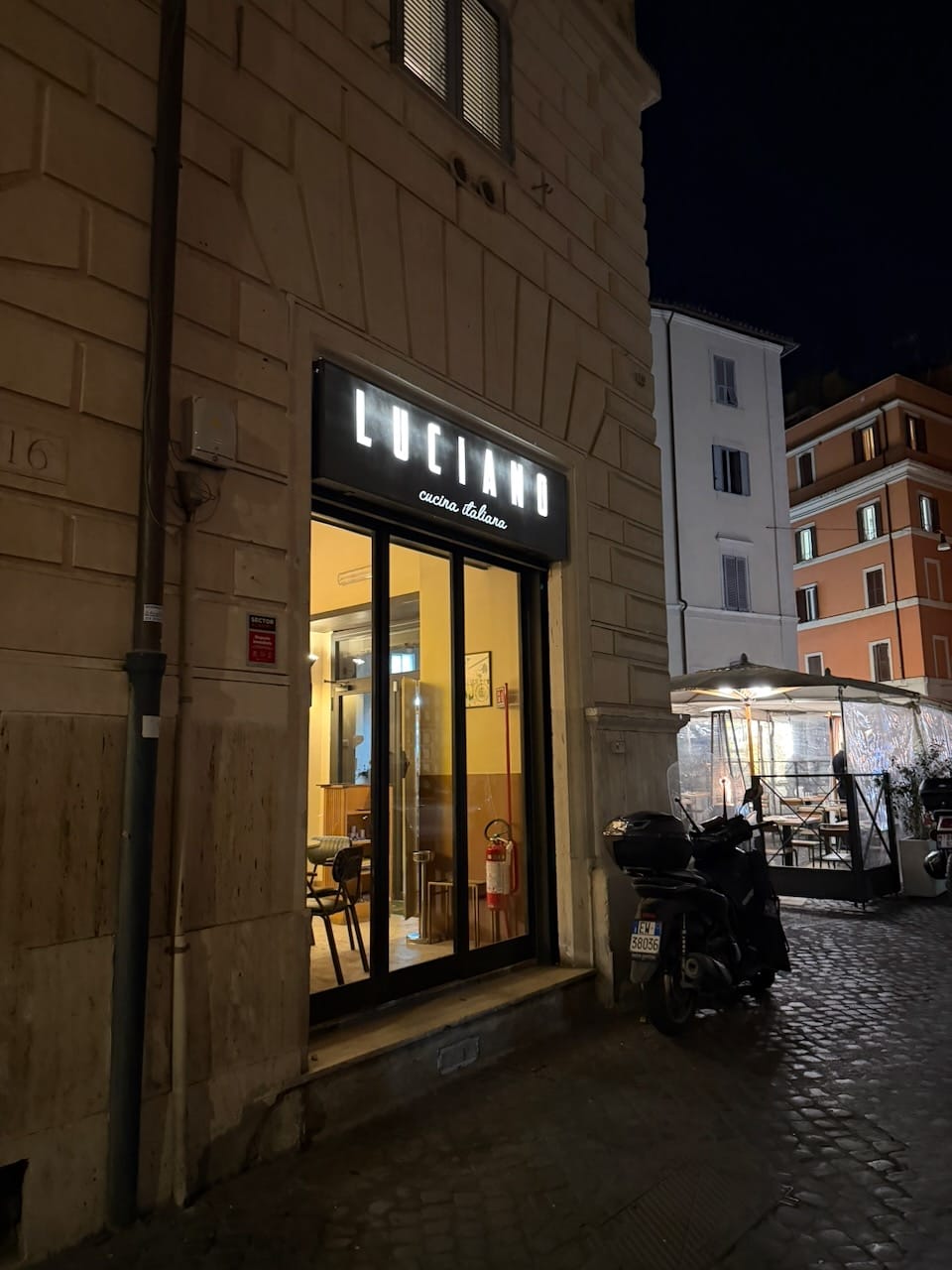
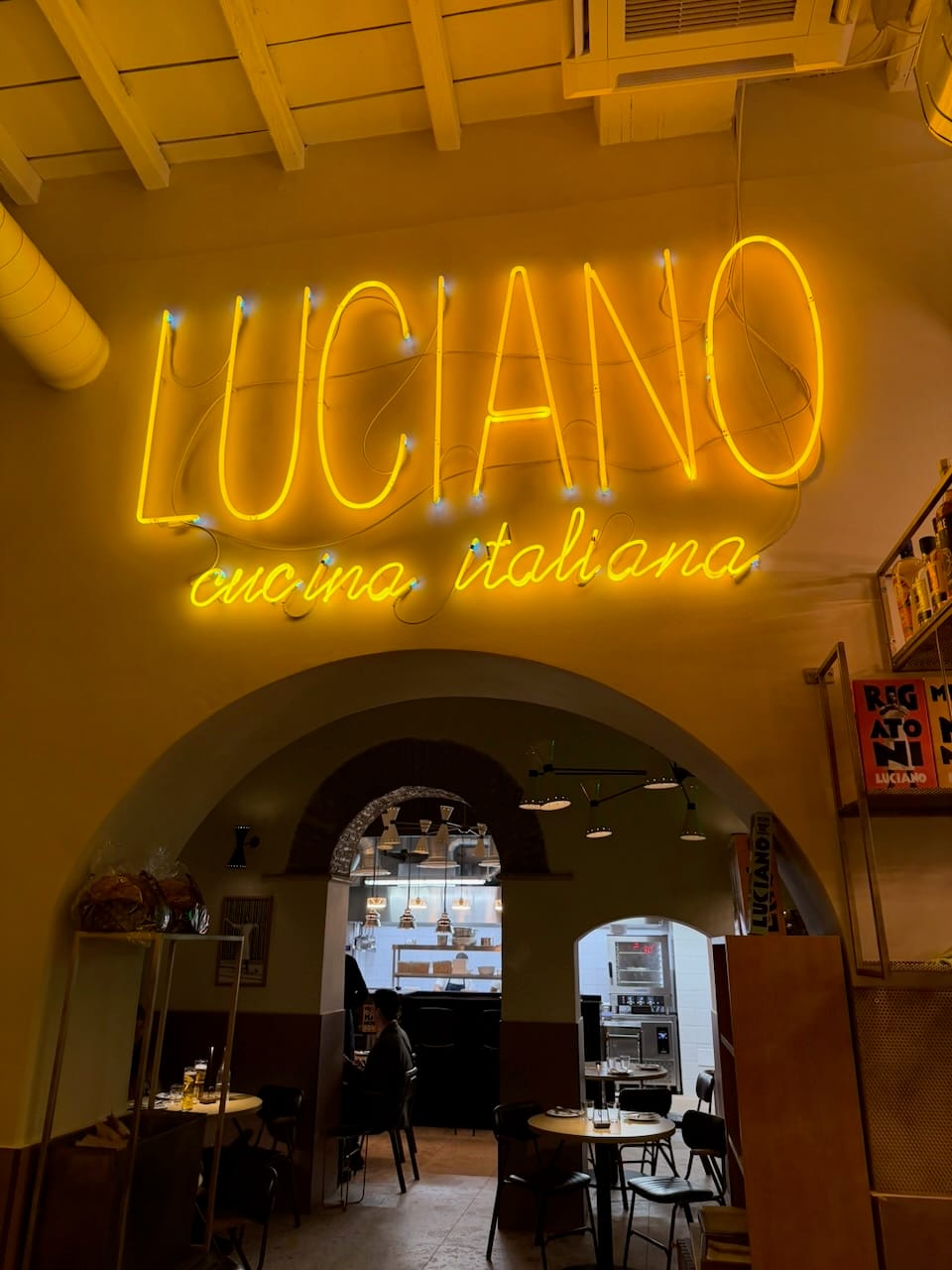
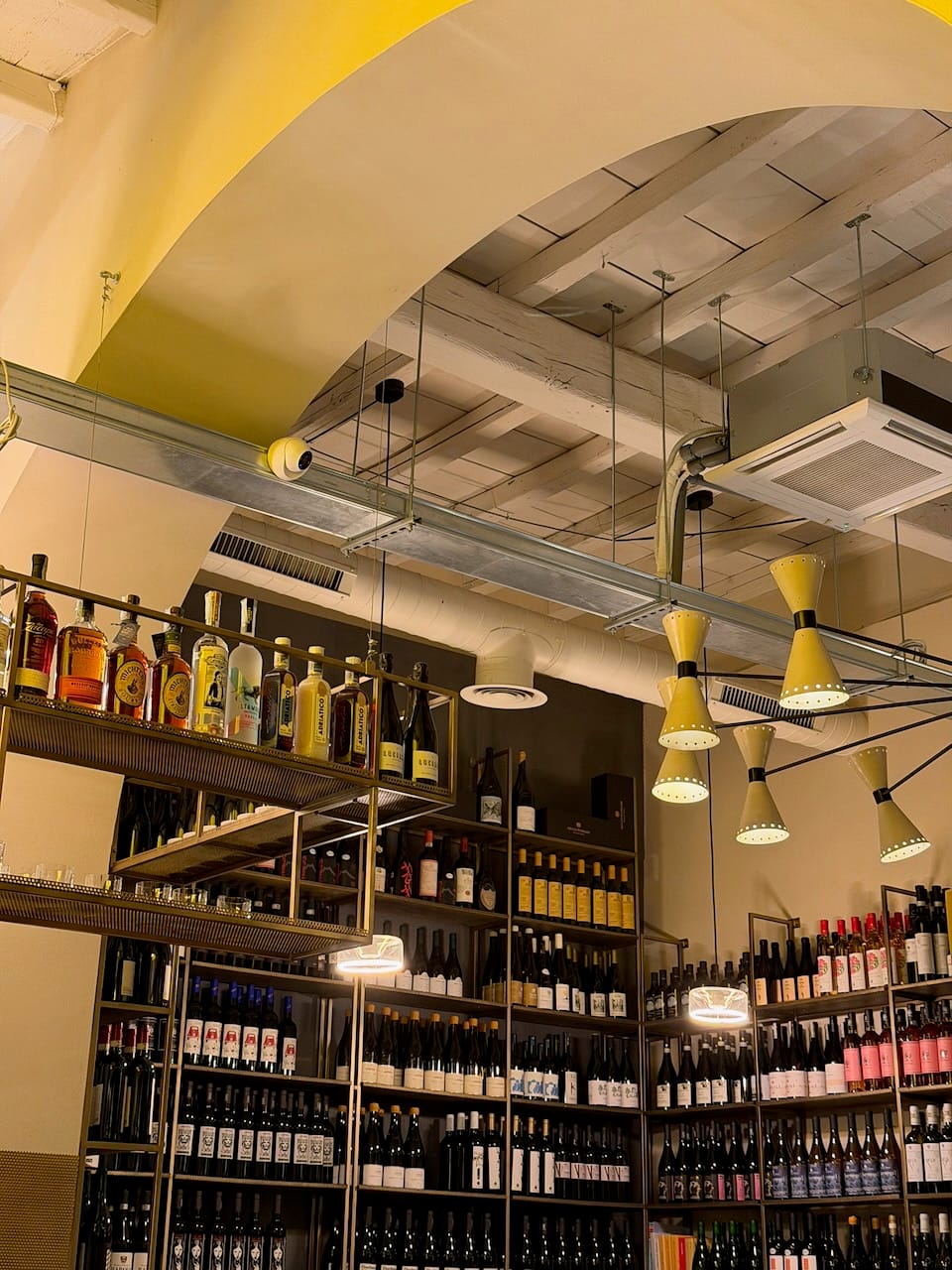
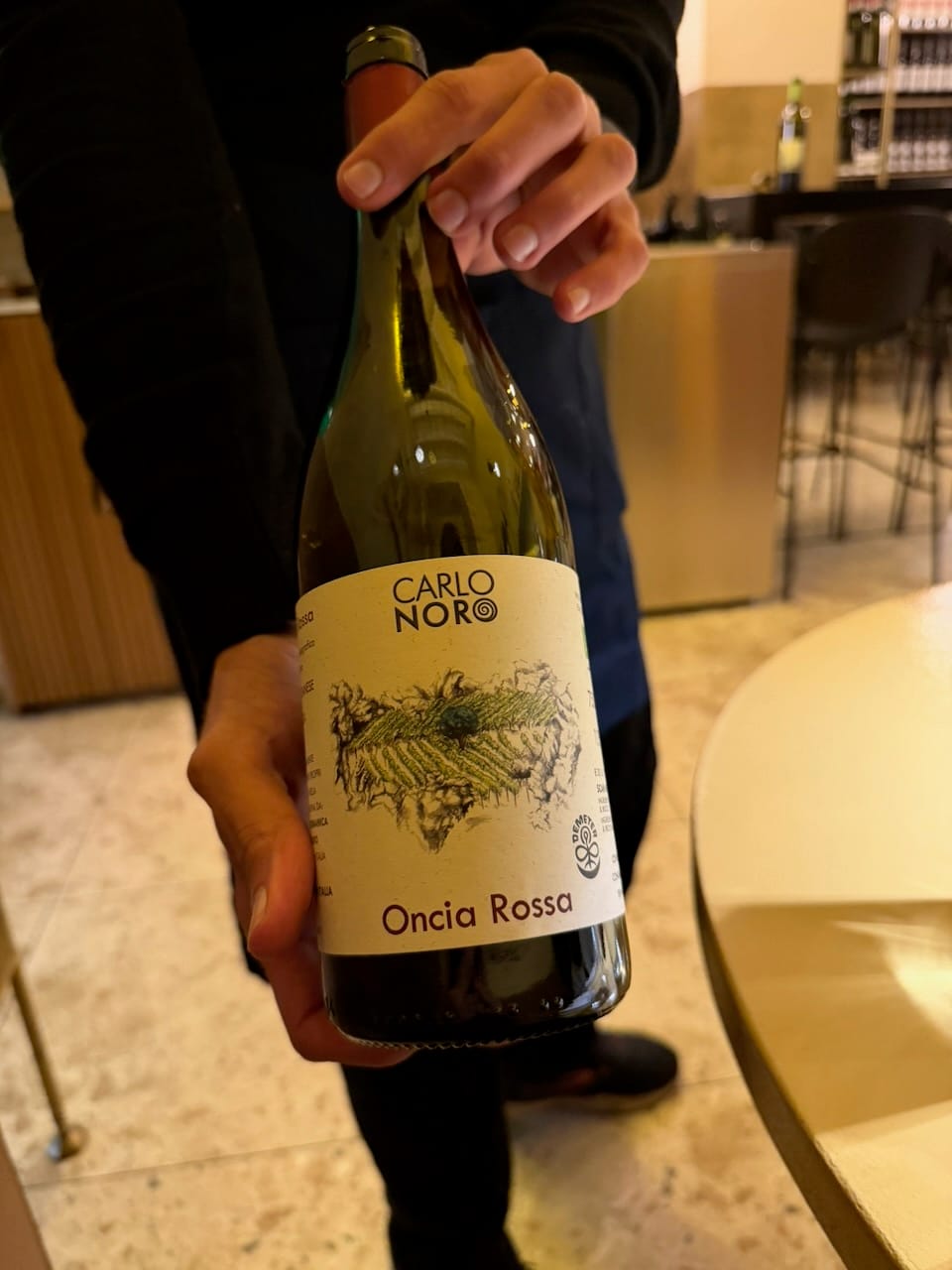
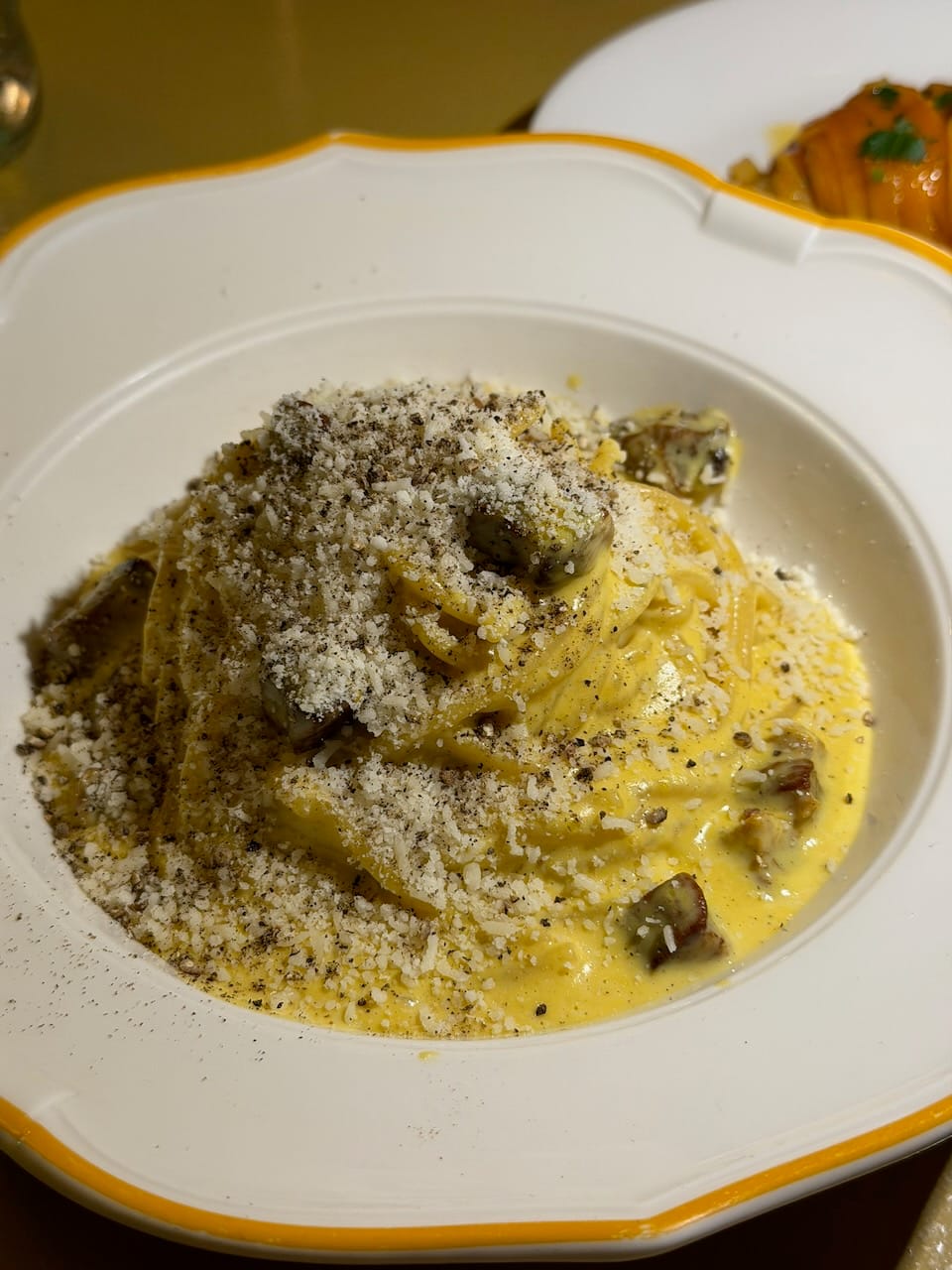
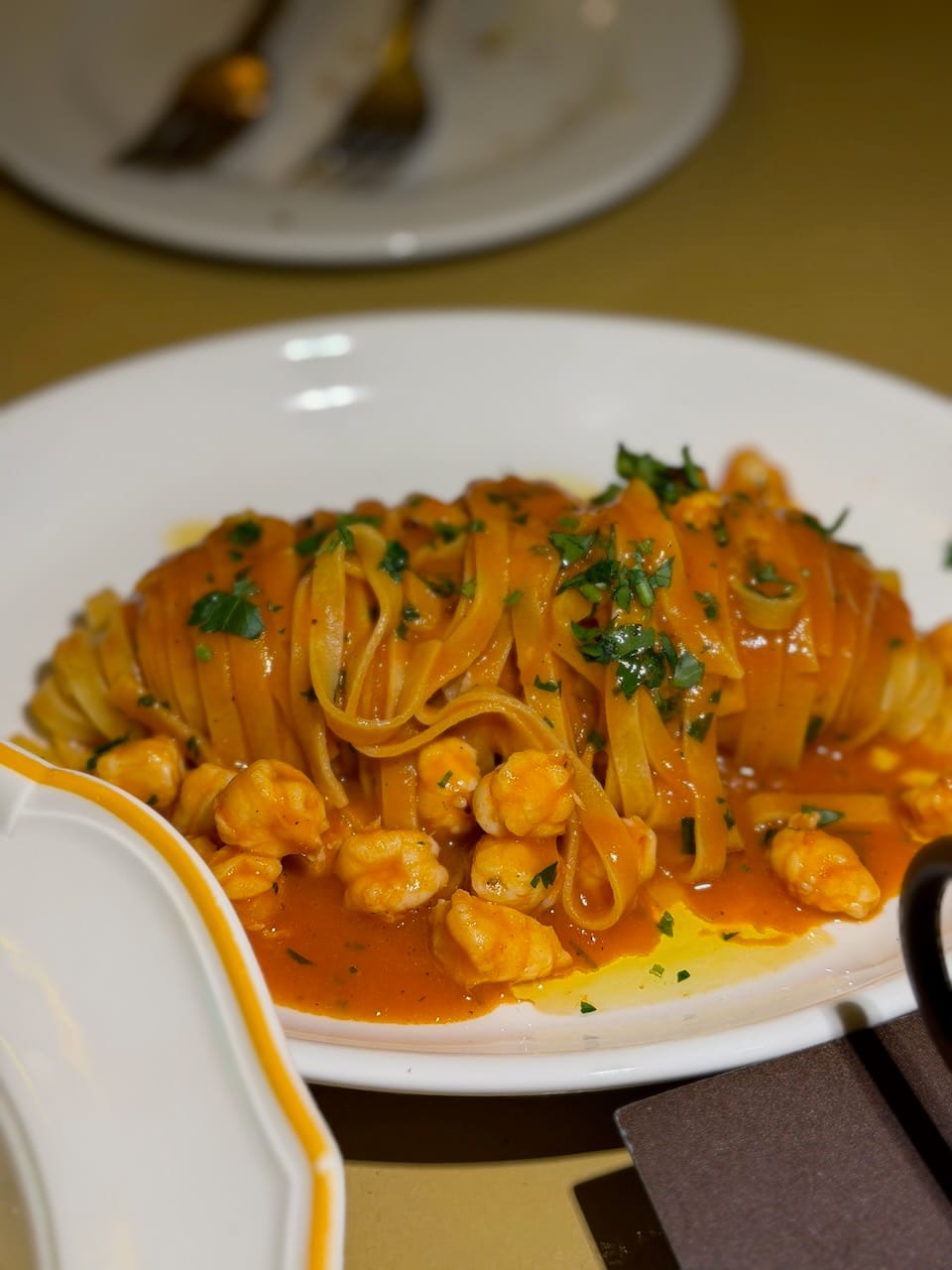
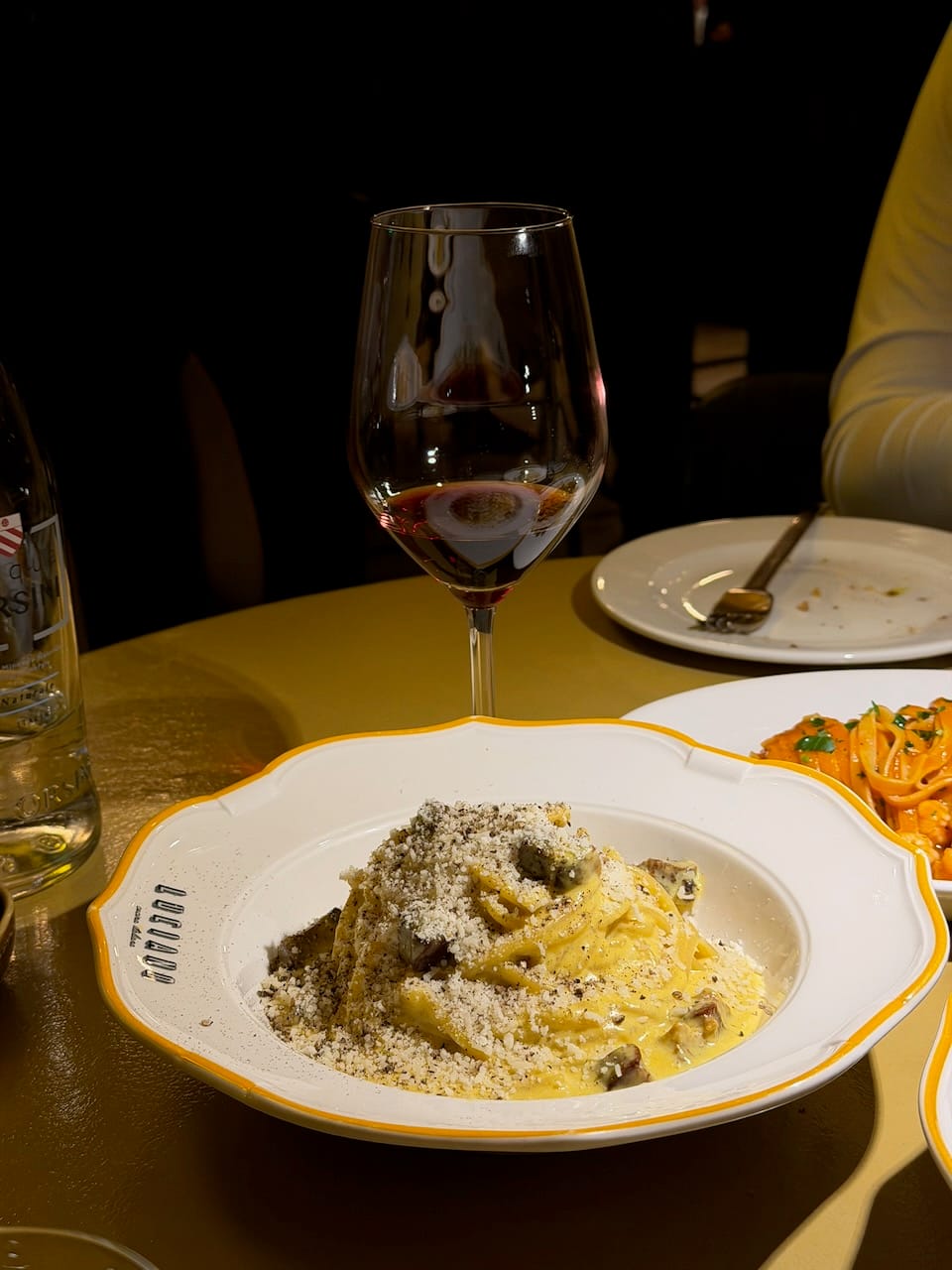
I like carbonara. In Korea (and Japan), carbonara usually means pasta with bacon and cream sauce, and I knew very well that this has nothing to do with Italy. So I wanted to try the real thing. And if you’re going to do that, Luciano—often called the king of carbonara—felt like the obvious choice. It was impressive in every way. The pasta had a firm bite, which I liked, and most importantly, the guanciale was in a completely different league from bacon. There was no comparison. That first dinner set the tone for the trip—deeply satisfying.
And spoiler alert: what I felt about food in Italy can probably be summed up in one sentence: what we’ve been having in the Bay Area…
That night, on our way back to the hotel, we stopped by the Pantheon. Even from the outside, it was breathtaking—a massive, perfectly proportioned structure quietly sitting in the middle of the city. The columns felt impossibly solid, and the building carried a calm authority that didn’t need explanation. Unfortunately, we couldn’t fit a daytime visit into our schedule, and the interior was already closed. We could only peek through the narrow gap between the doors. Still, even that brief glimpse was enough. The Pantheon’s structure conveyed a kind of dignity as if it had nothing to prove after standing there for nearly two thousand years.
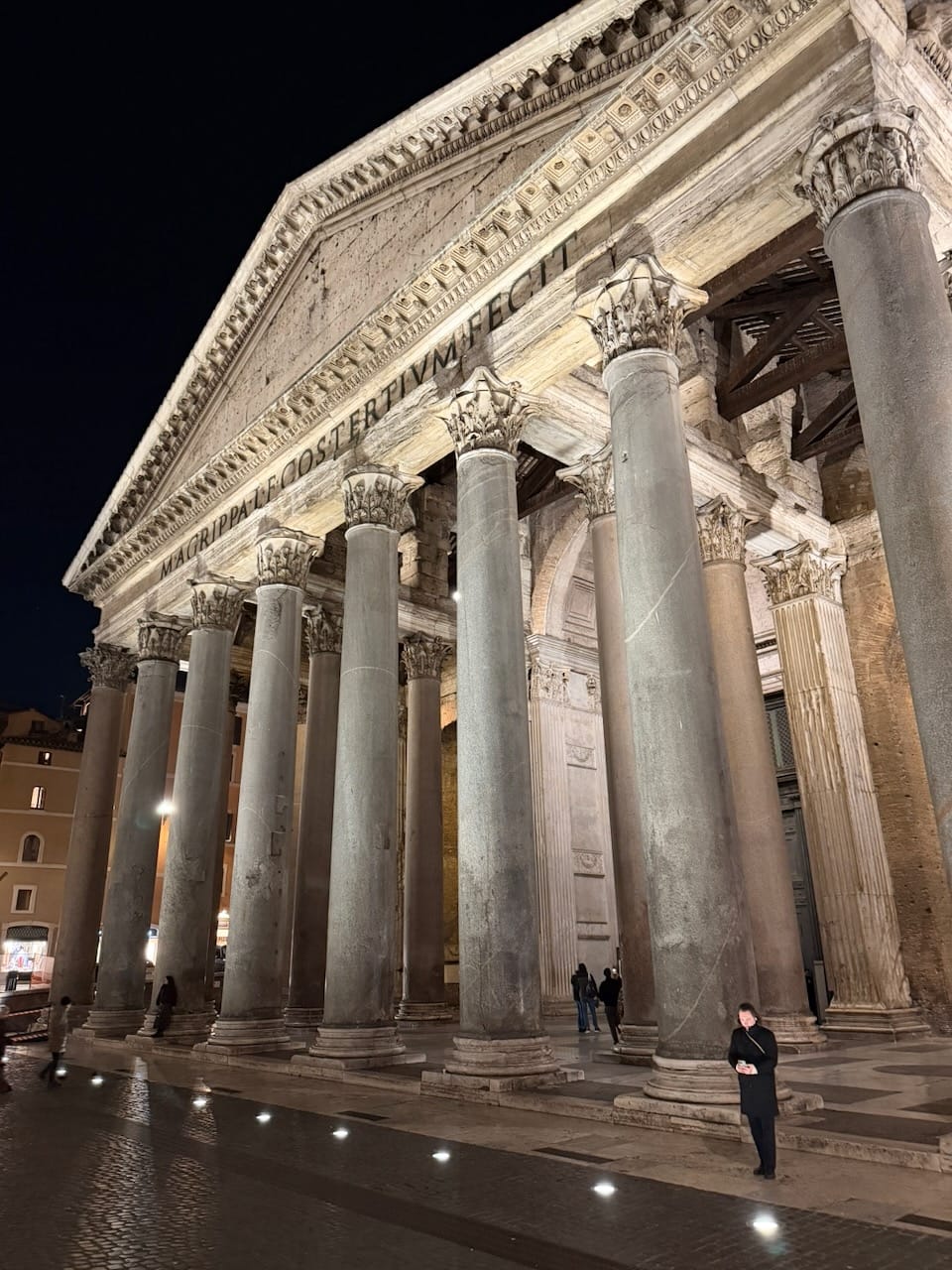
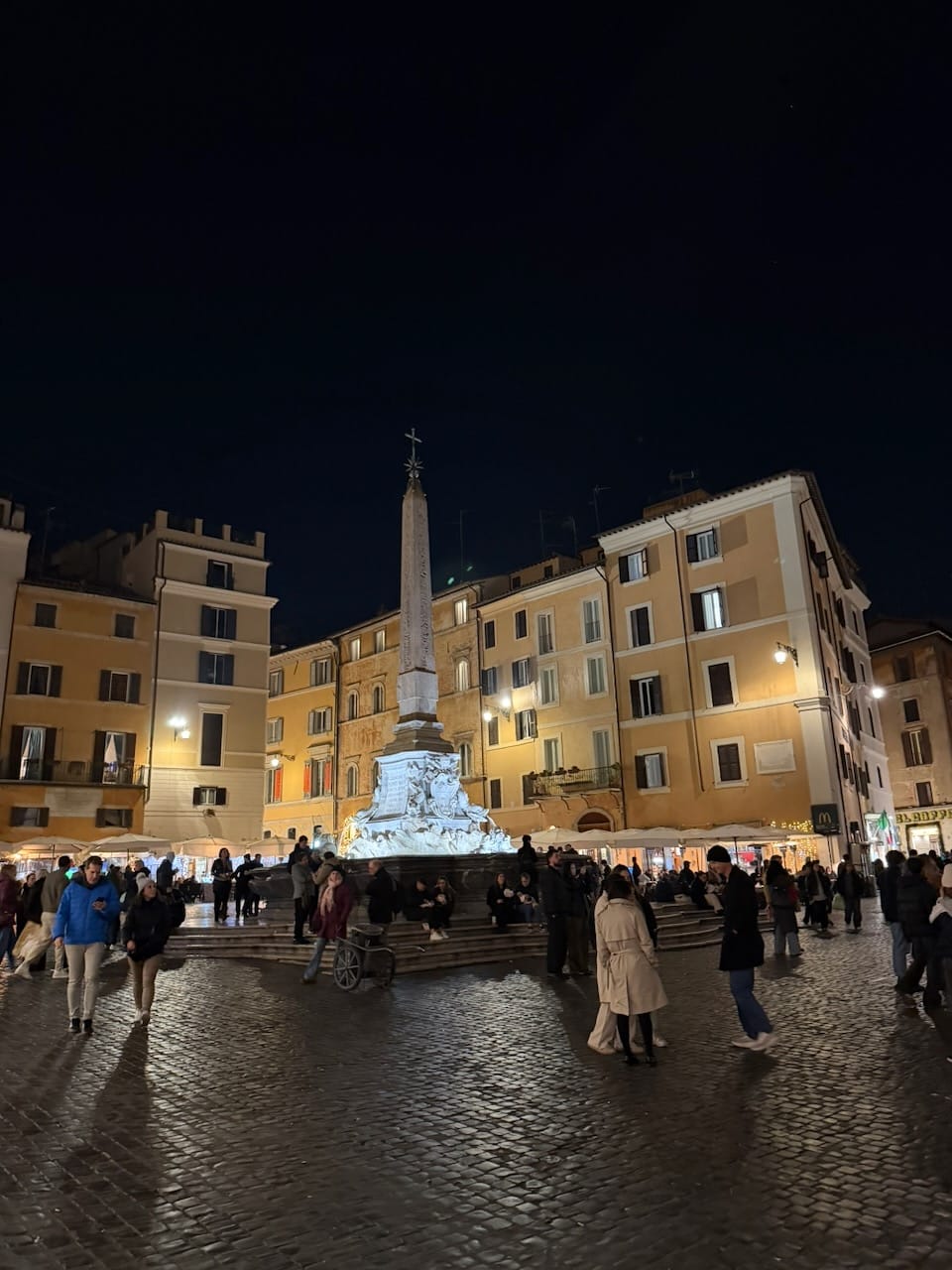
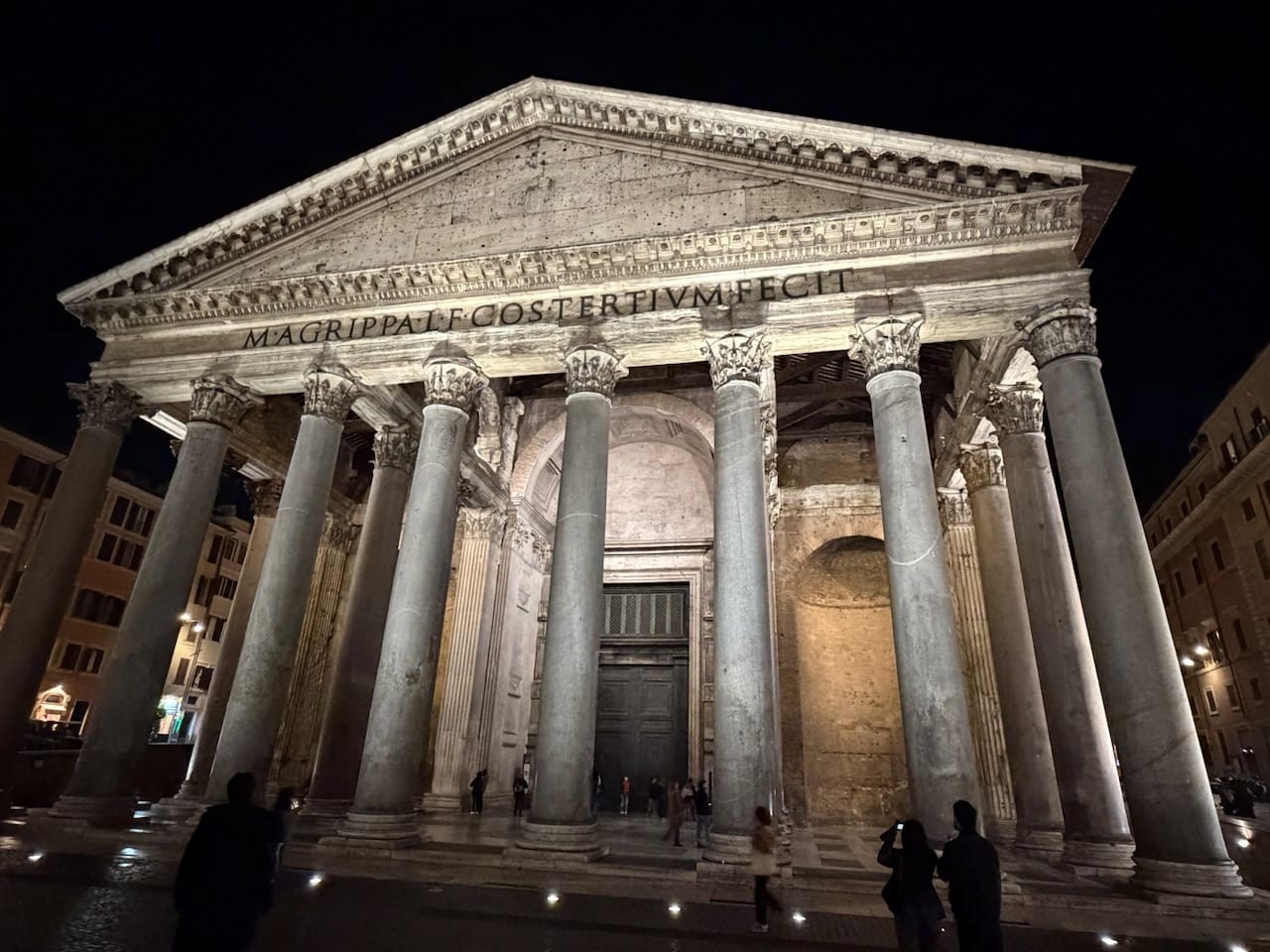
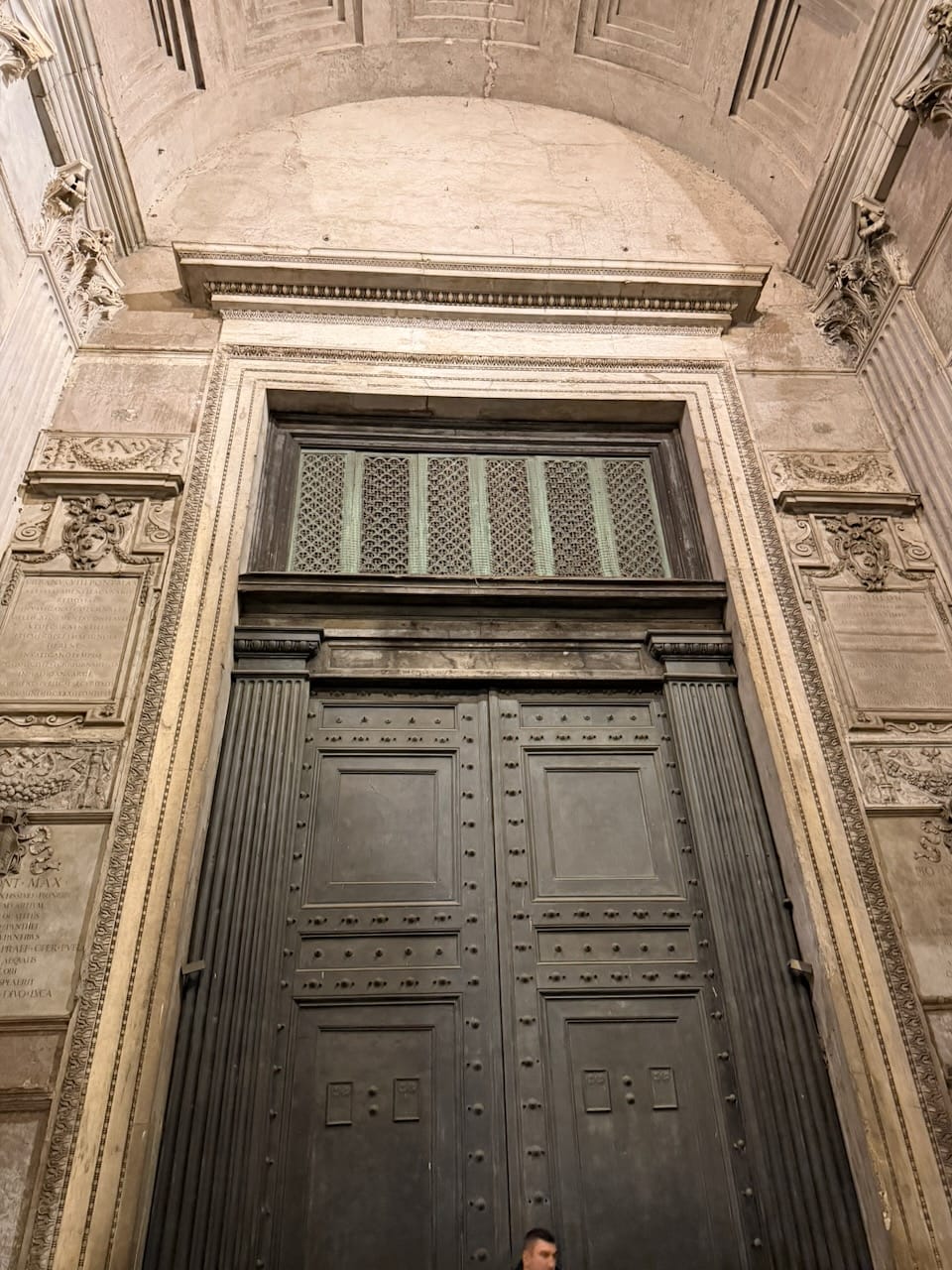
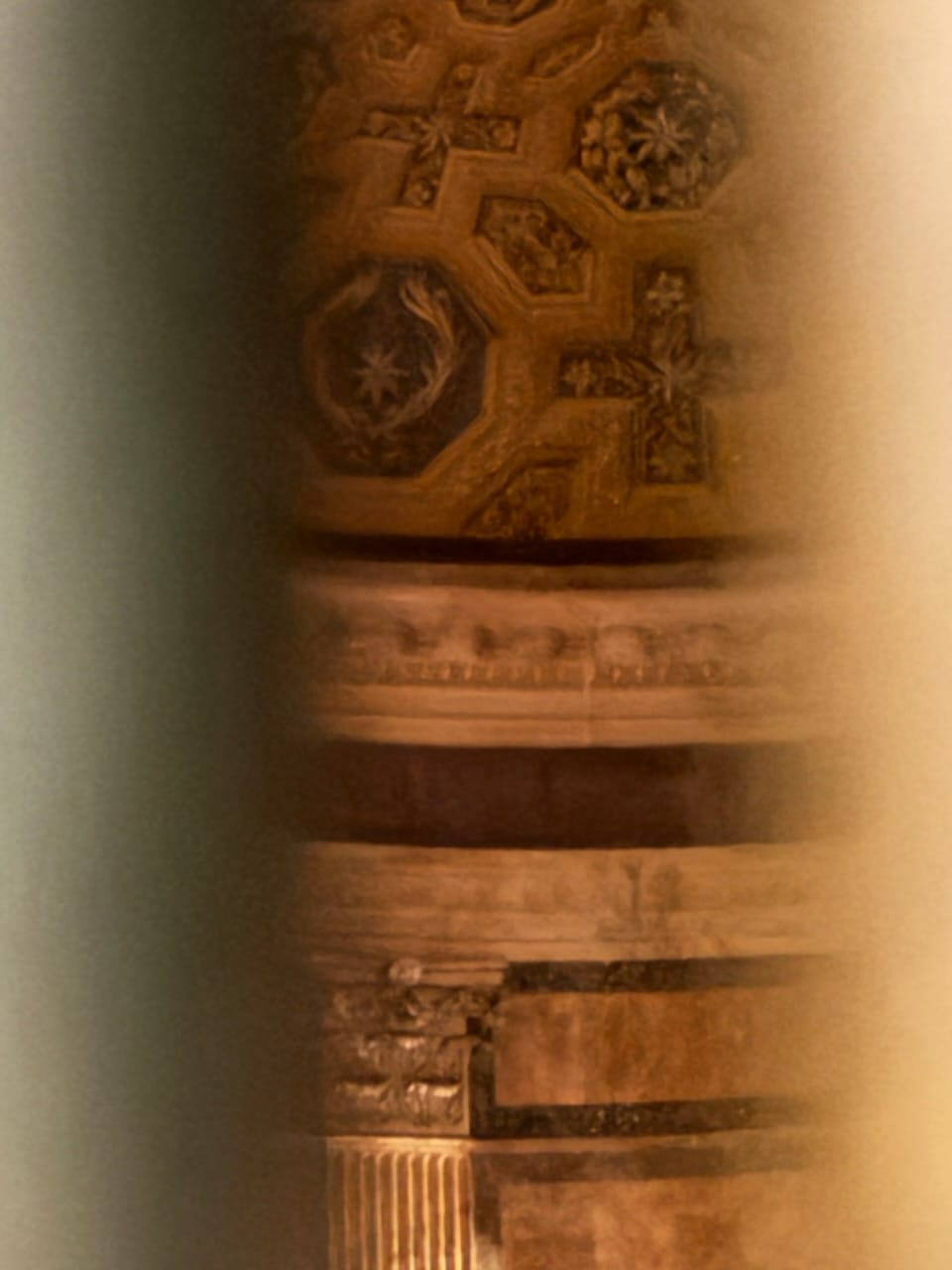
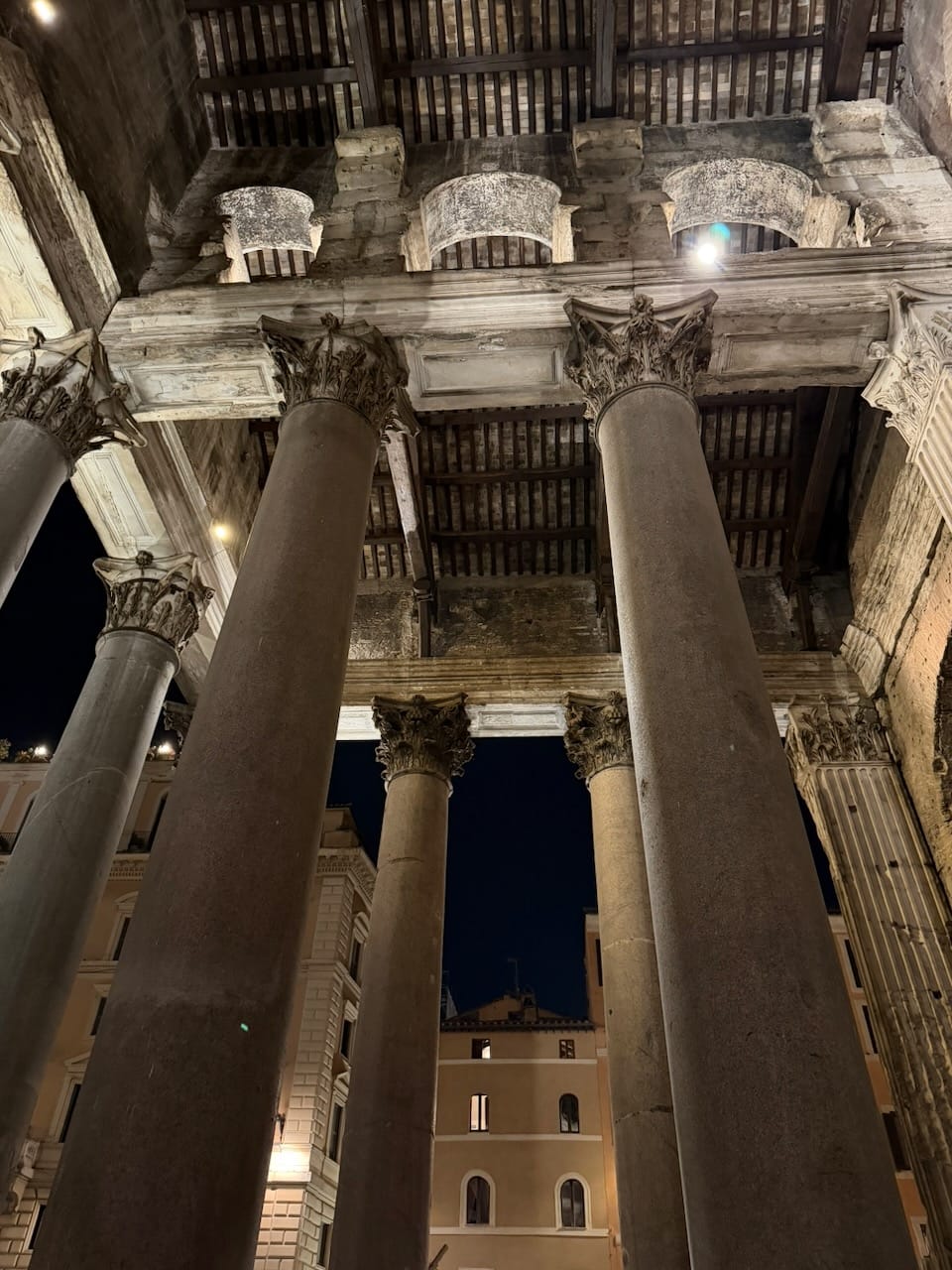
Pantheon at night
Our final stop of the night was the Trevi Fountain. Visiting it after dark turned out to be the perfect choice. It was far less crowded, and we could easily make our way to the front. We added a few coins into the fountain—a small ritual, and a small contribution to preserving Rome’s culture.
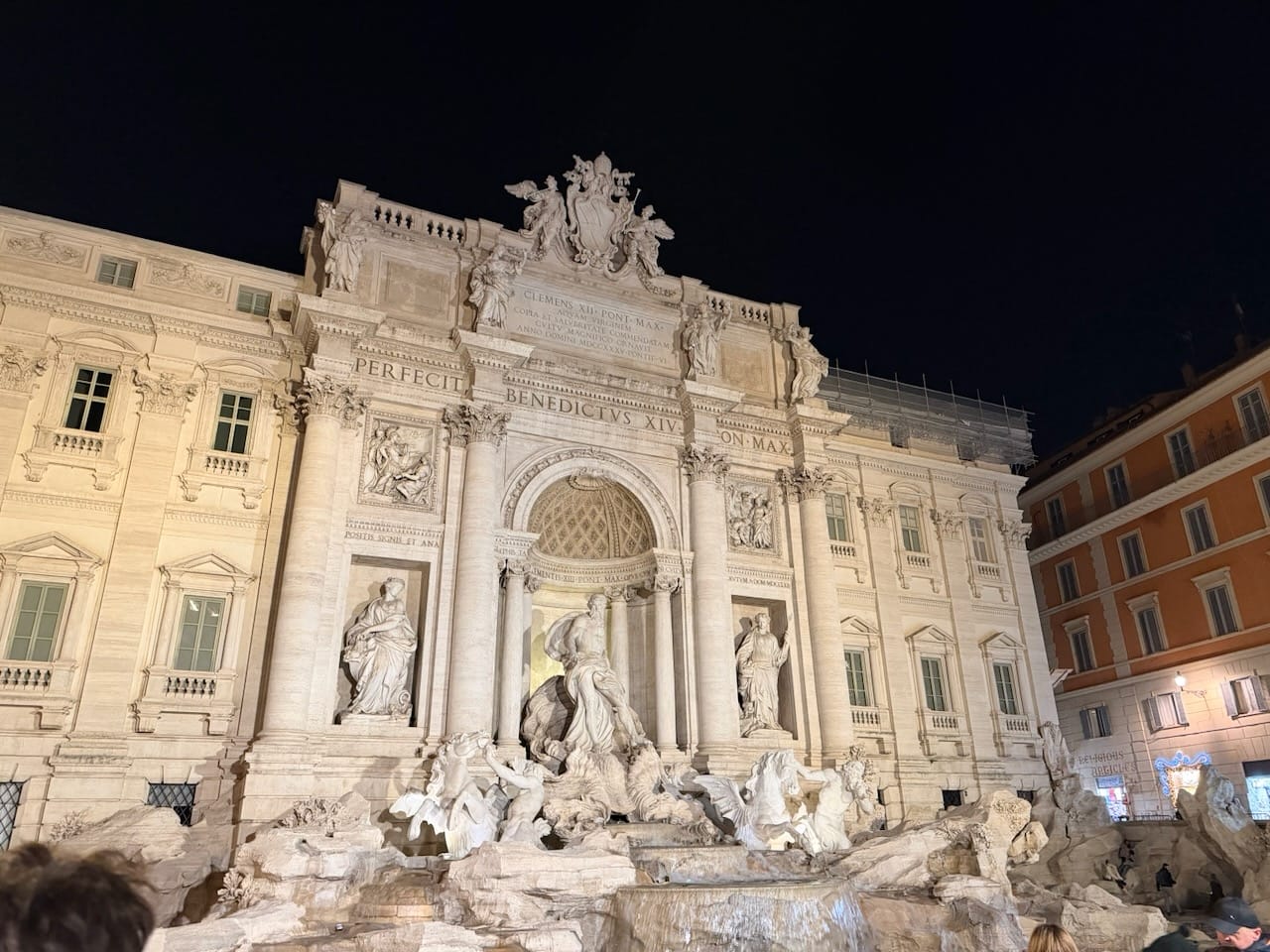
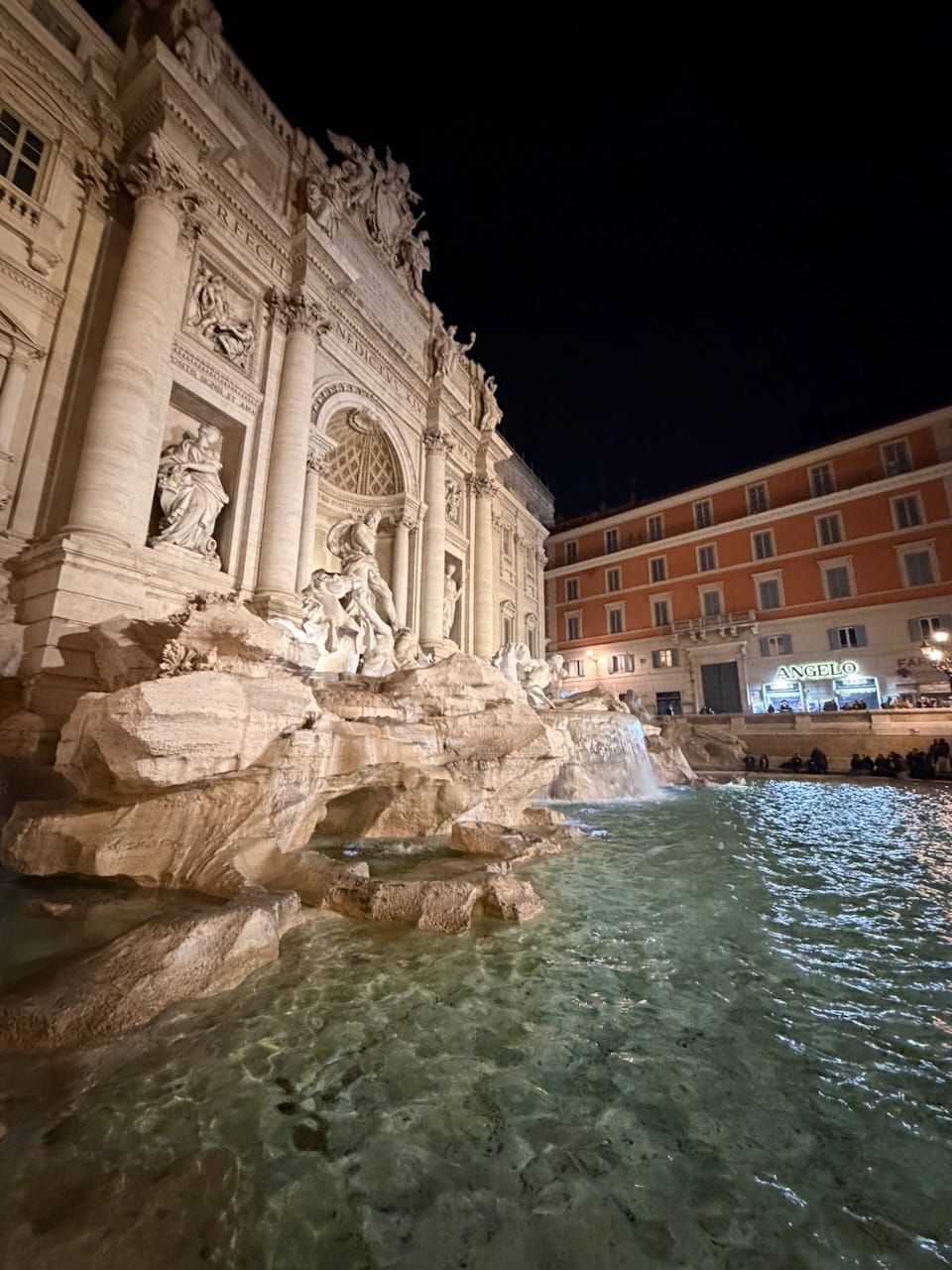
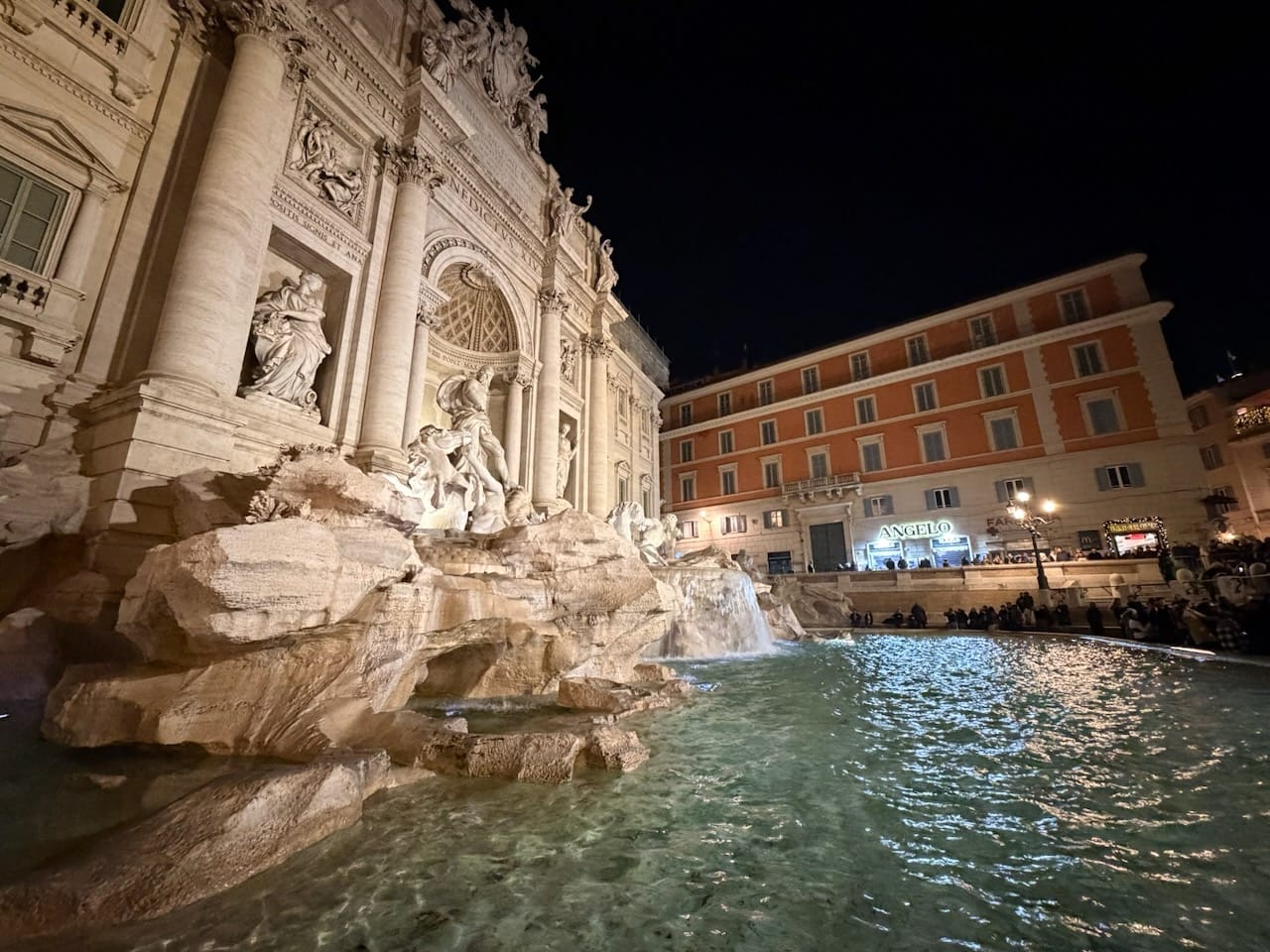
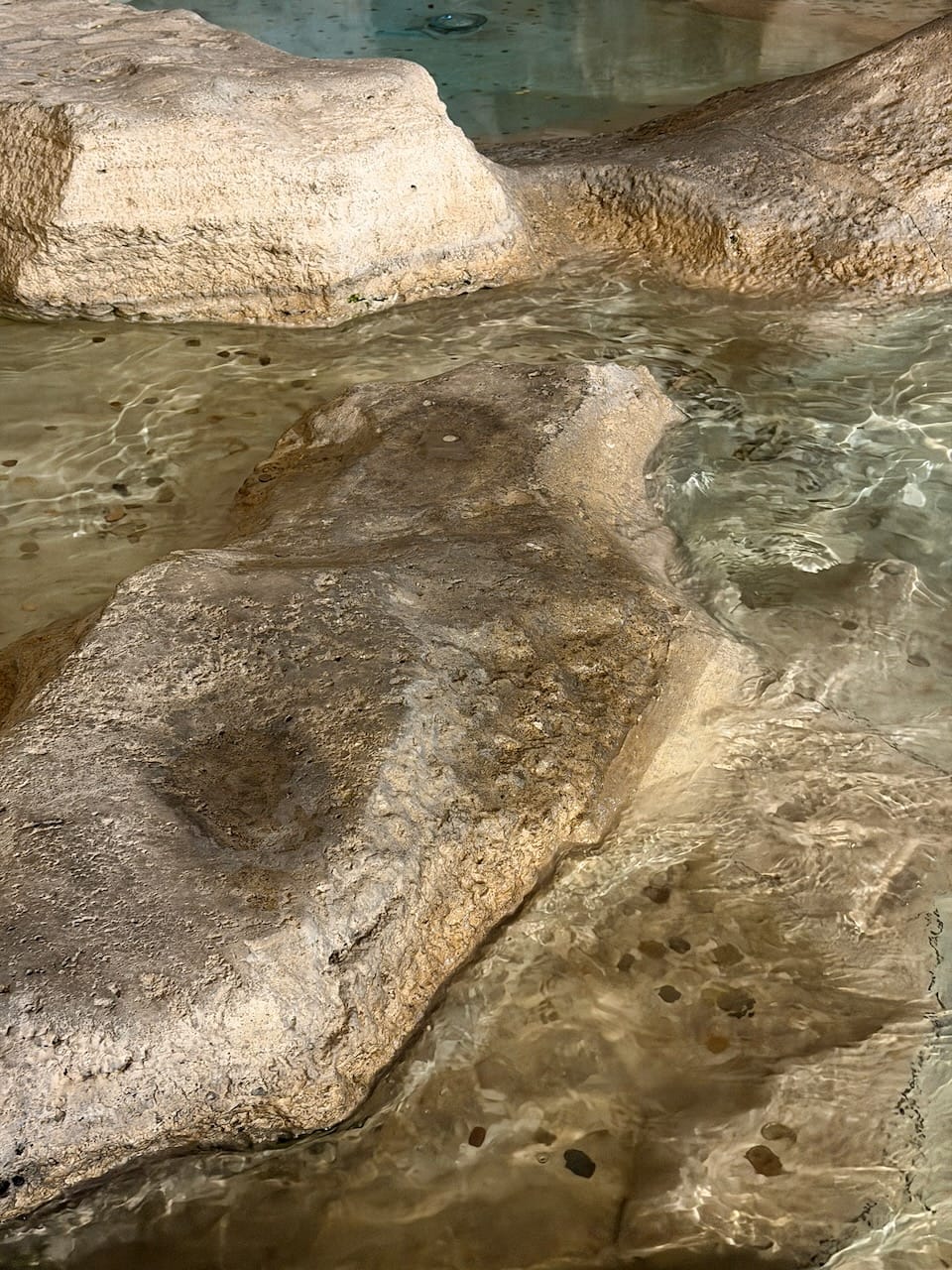
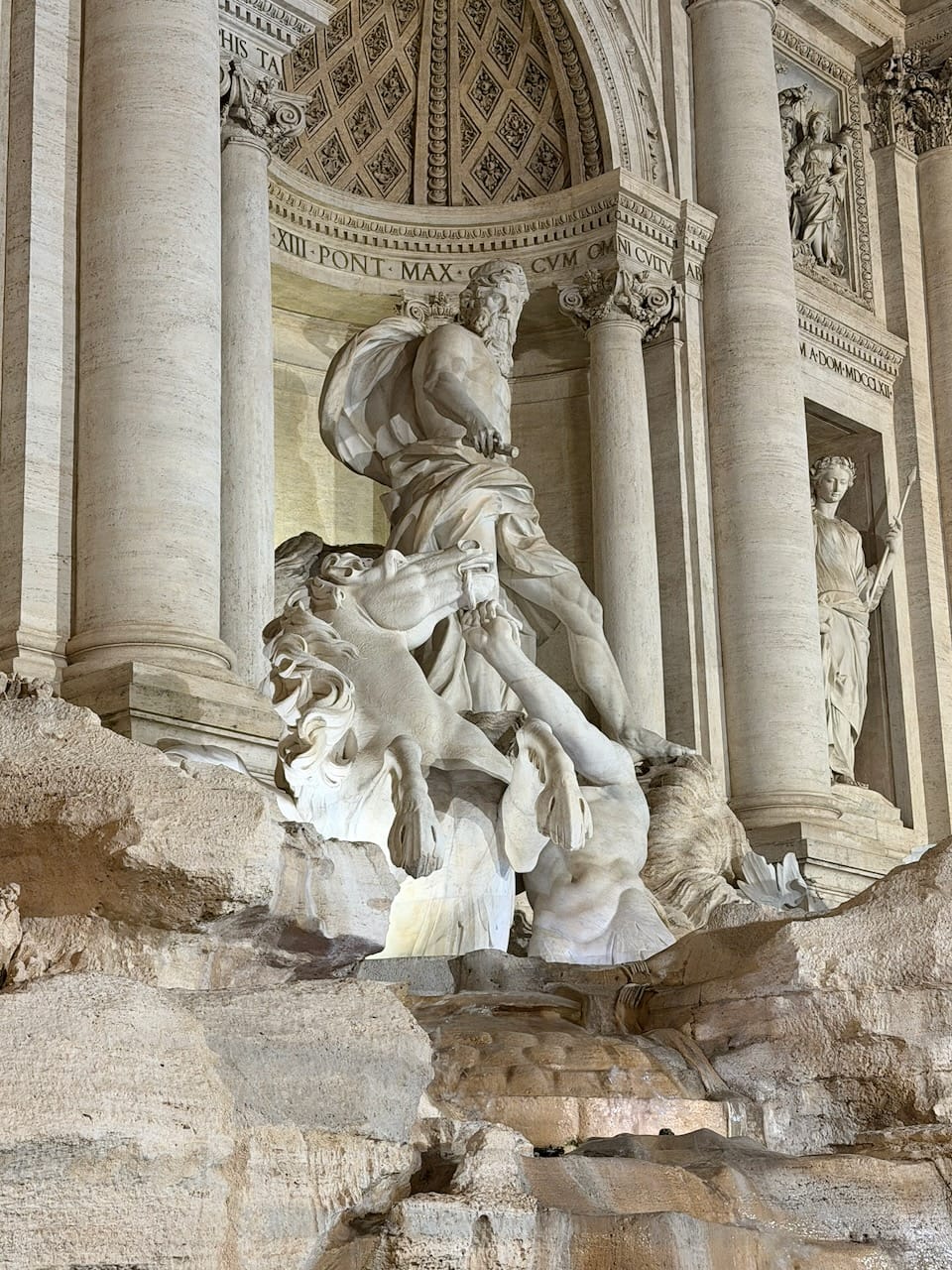
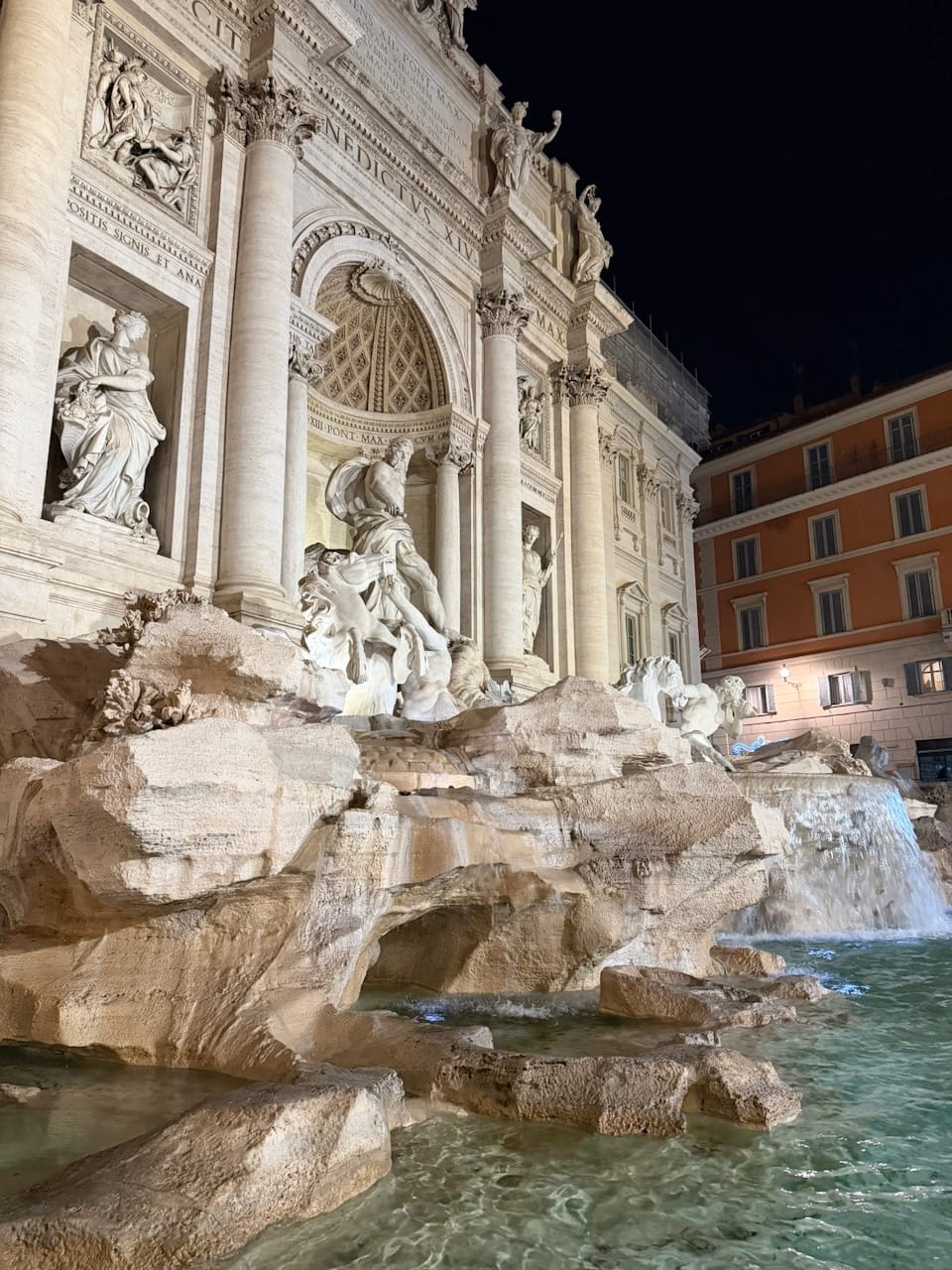
Trevi Fountain at night
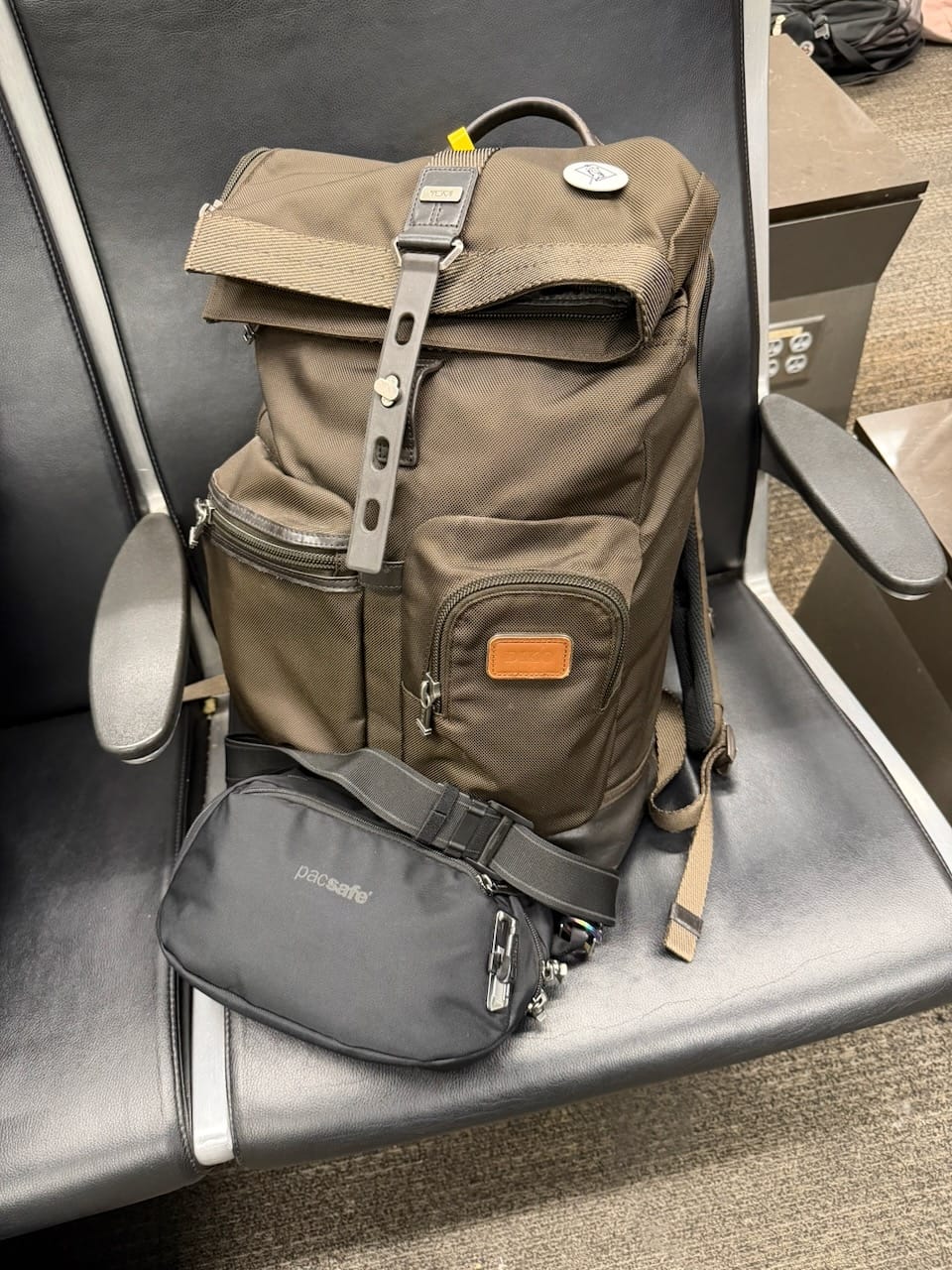
Rome at night felt far more comfortable than I had expected. I had been a little worried about the city’s reputation for pickpockets, but we never felt threatened. That may have been partly thanks to our anti-theft Pacsafe bags (more on that later), but overall the city felt lively rather than uneasy. People strolling, talking, lingering late into the night.
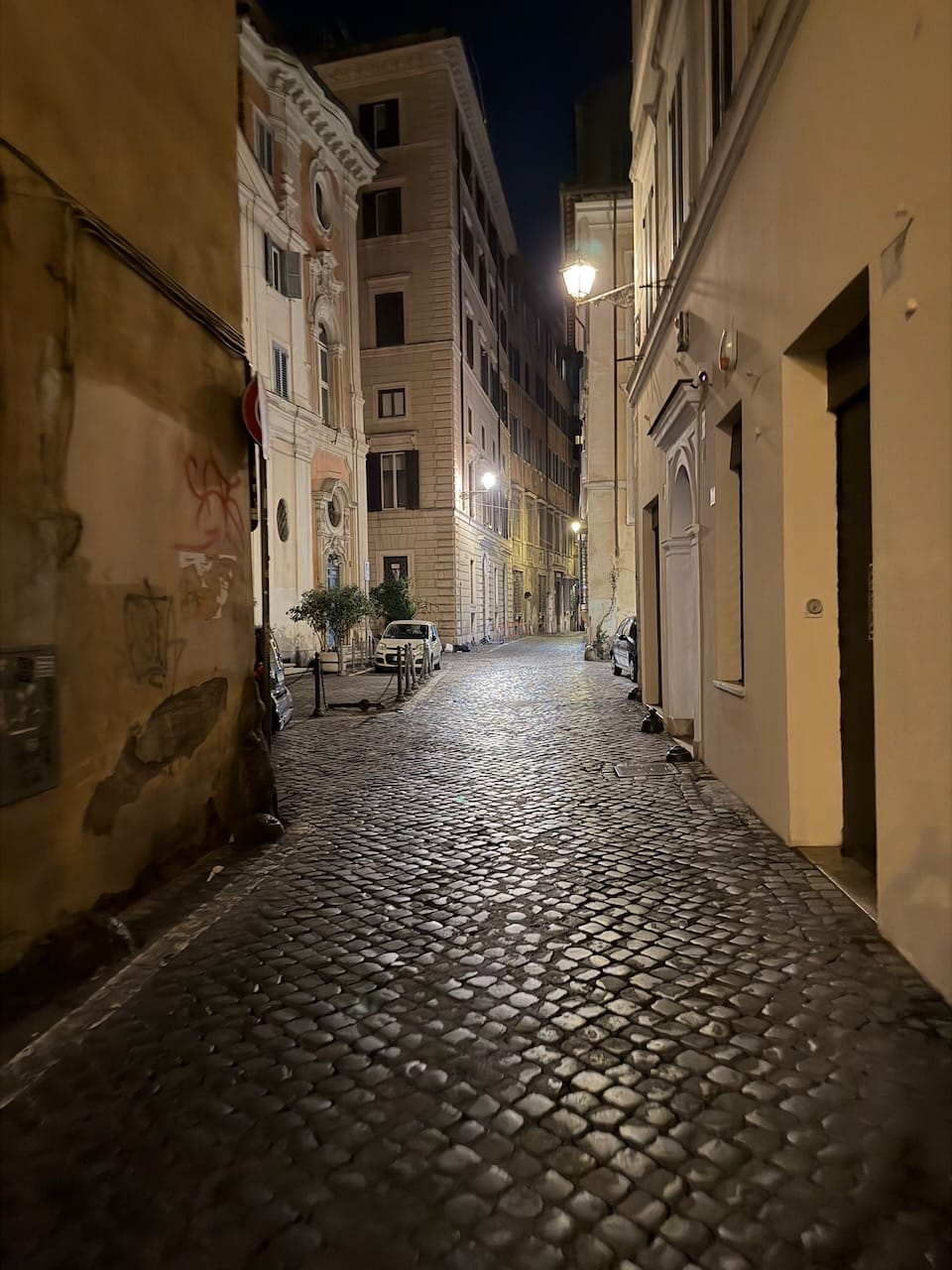
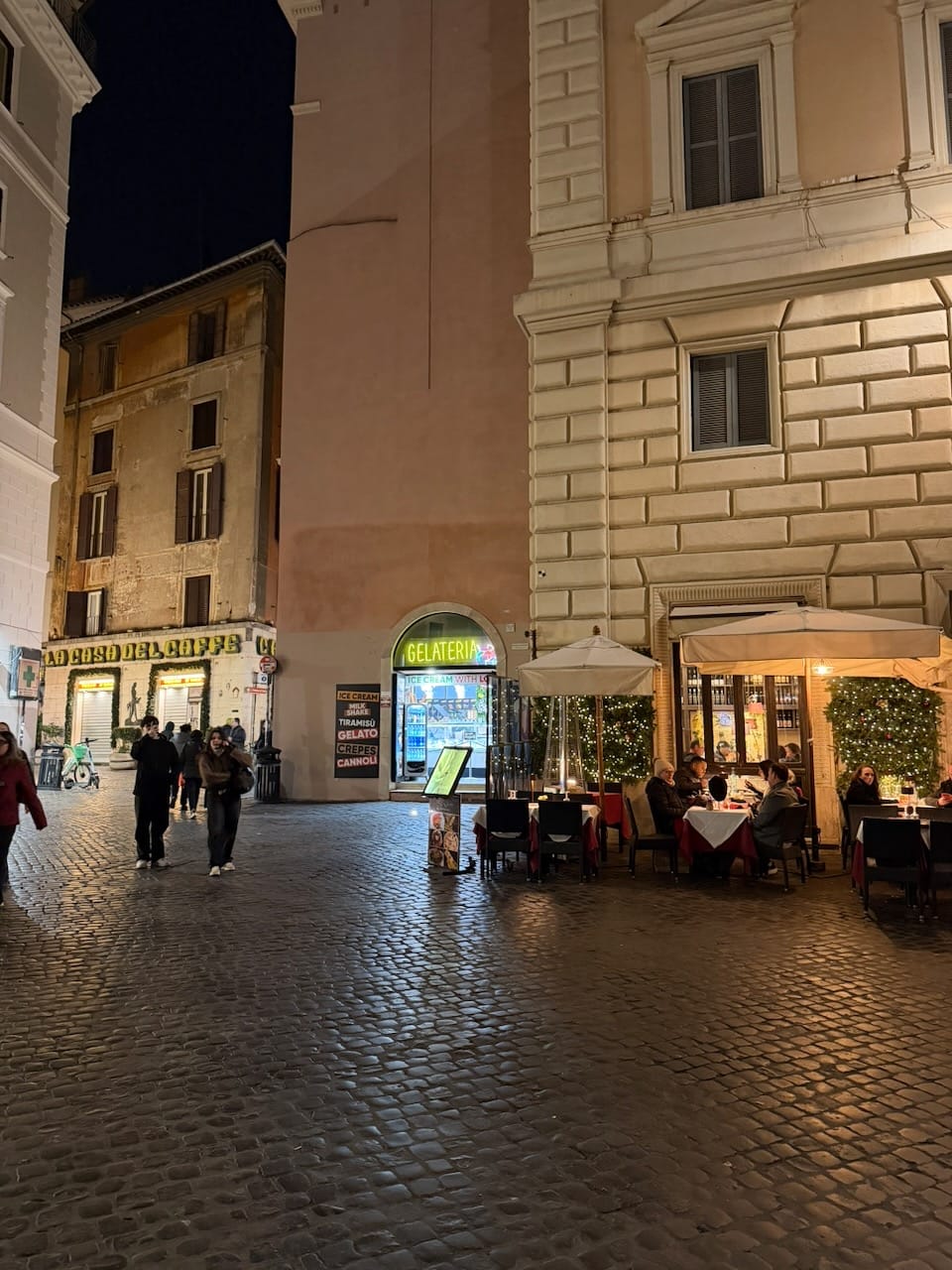
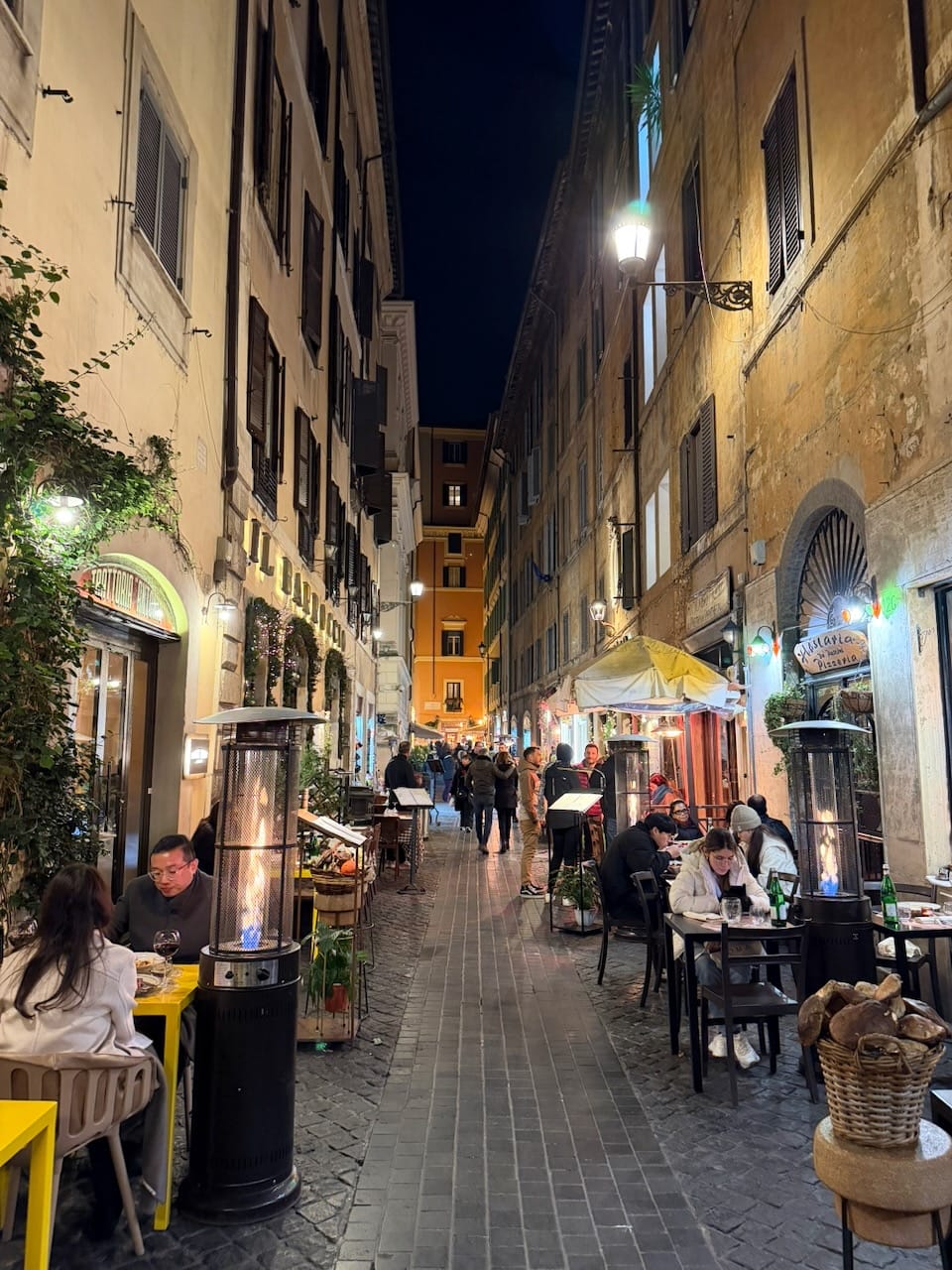
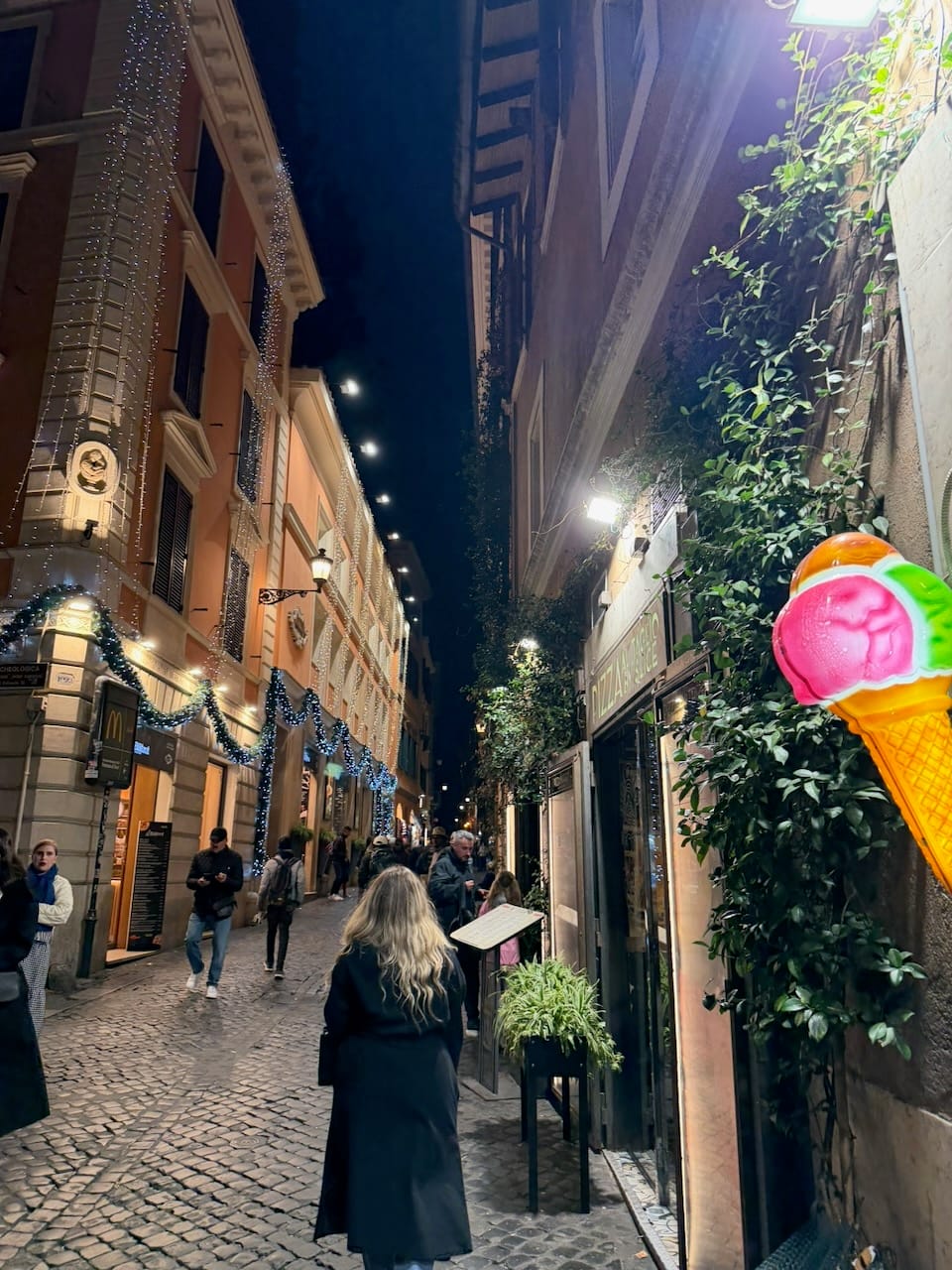
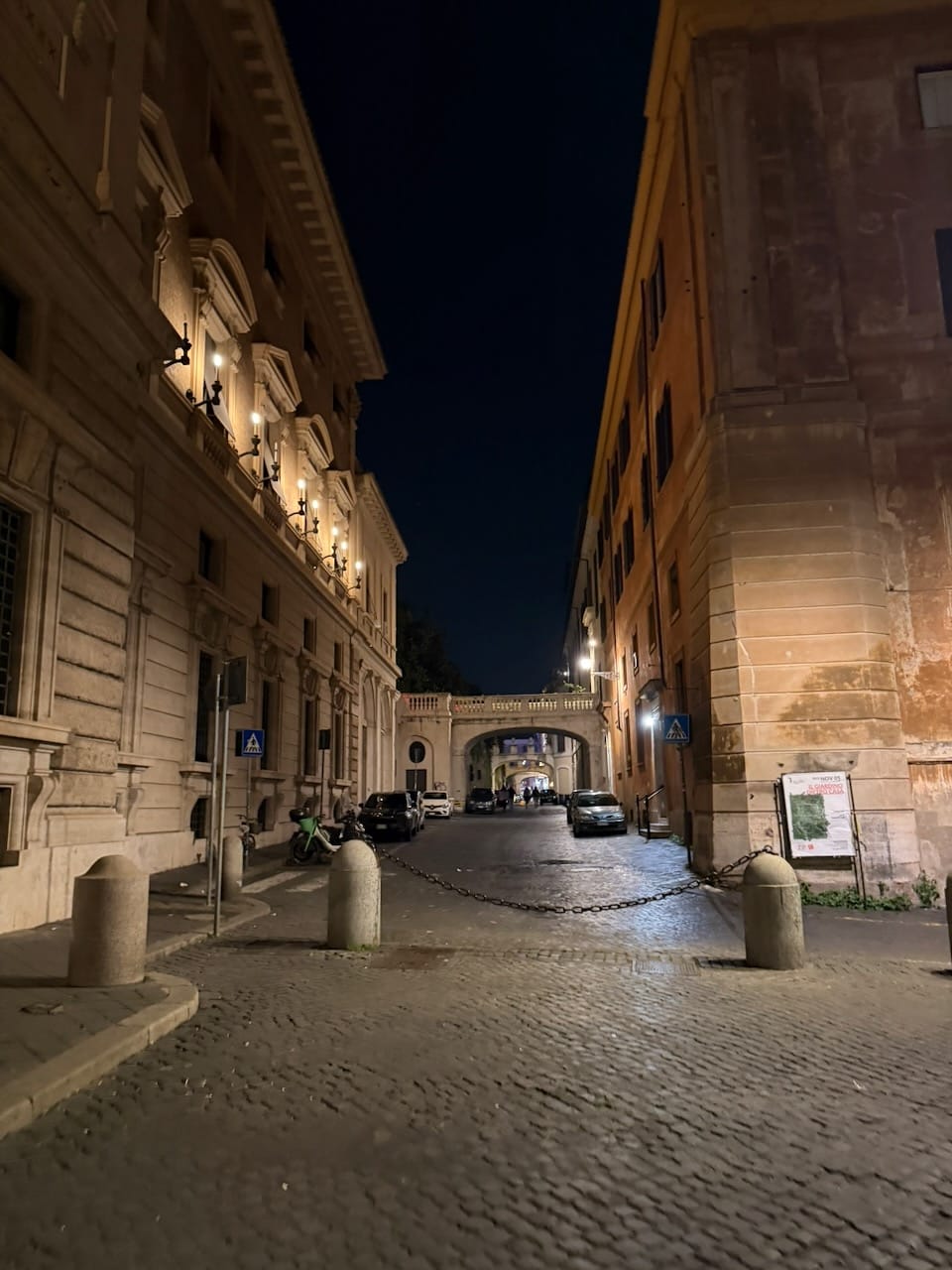
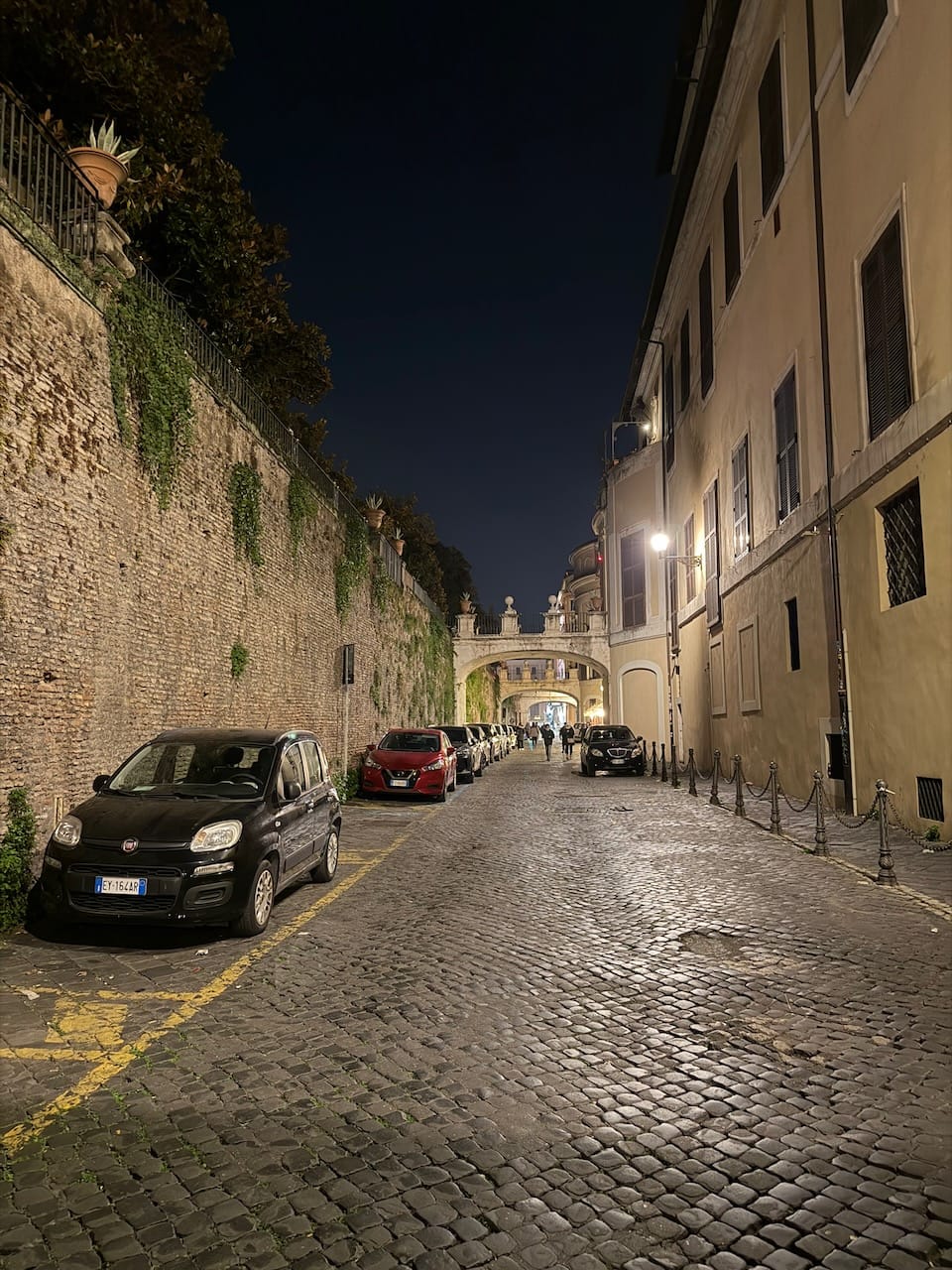
And with that, it was the end of our long first day with the 14-mile “walk” across the city. To be honest, it was a tough one right after almost one day flight. I even had to buy a small sewing kit to deal with my blisters (still the most practical lesson I ever learned from the army). Pain aside, it was a relatively sound start to what promised to be an exciting family trip.