Thanksgiving 2025: Day 4, Firenze

On the morning of Day 4, we said goodbye to Rome and headed to Firenze (Florence). I know it is Florence in English, but for some reason, I have to prefer its Italian name—Firenze. Firenze has been my favorite Italian city ever since I first visited in 1999, back when I came here for my first international conference presentation (ICMCS’99). Looking at that paper now, from today’s perspective, everything feels so rudimentary and basic—even a little embarrassing, honestly. But at the time, it meant the world to me. It was the moment I decided I wanted to become a researcher. Funny enough, years later, I find myself preferring something different: to be an engineer, to build things, to make something real.
Around the same period, Nanami Shiono’s books on Roman history became hugely popular in Korea, and she also wrote another book: “Machiavelli, My Friend,” focused on the history of Firenze. I don’t remember every detail now, but I remember being deeply impressed. I even promised myself that one day I would read it again and return to walk every place it mentioned. This trip, though, was only two days in Firenze and with my family. We could do little more than revisit and skim the most famous spots. There was a quiet sense of disappointment, but the deeper journey will have to wait for another time.
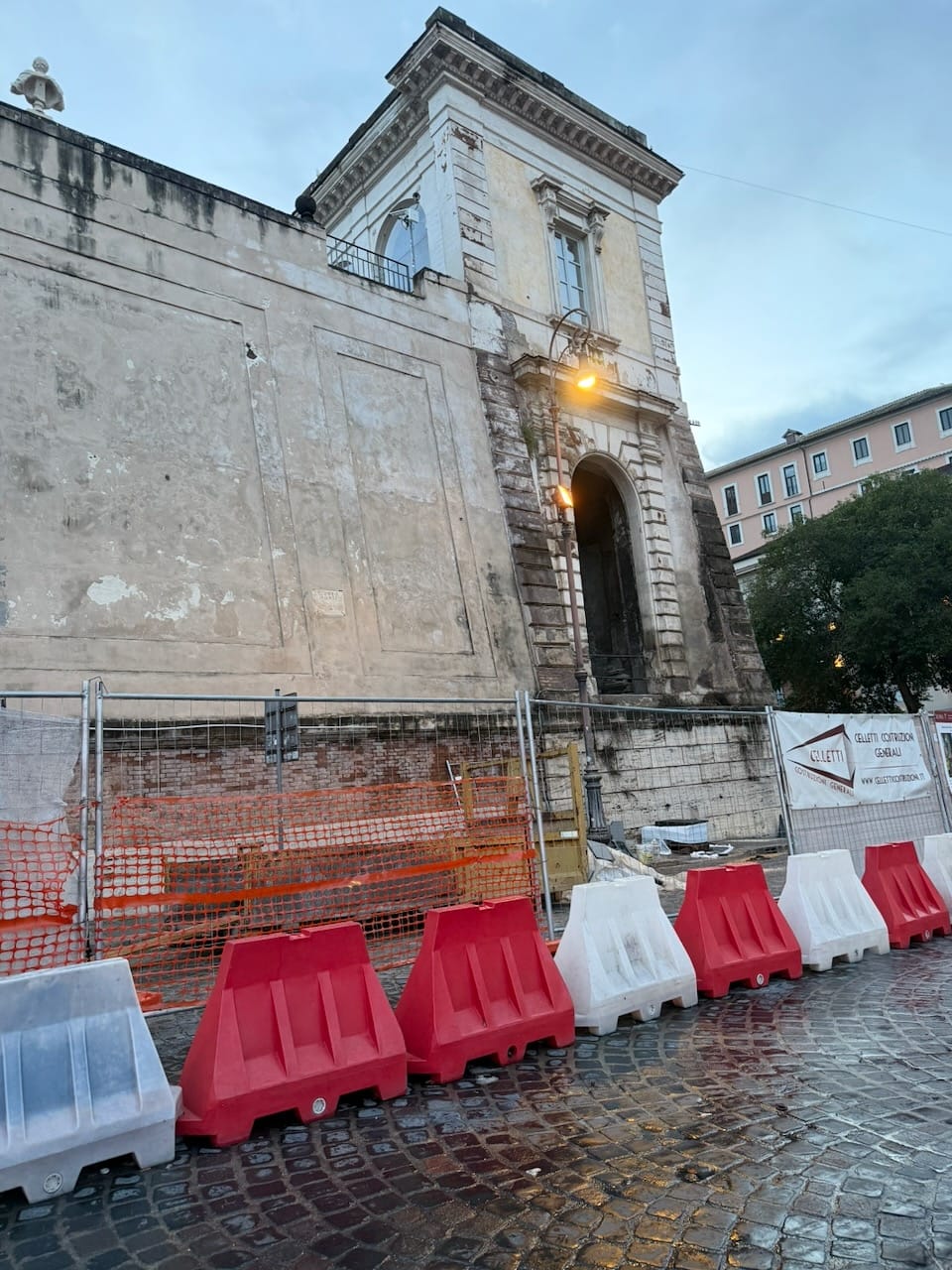
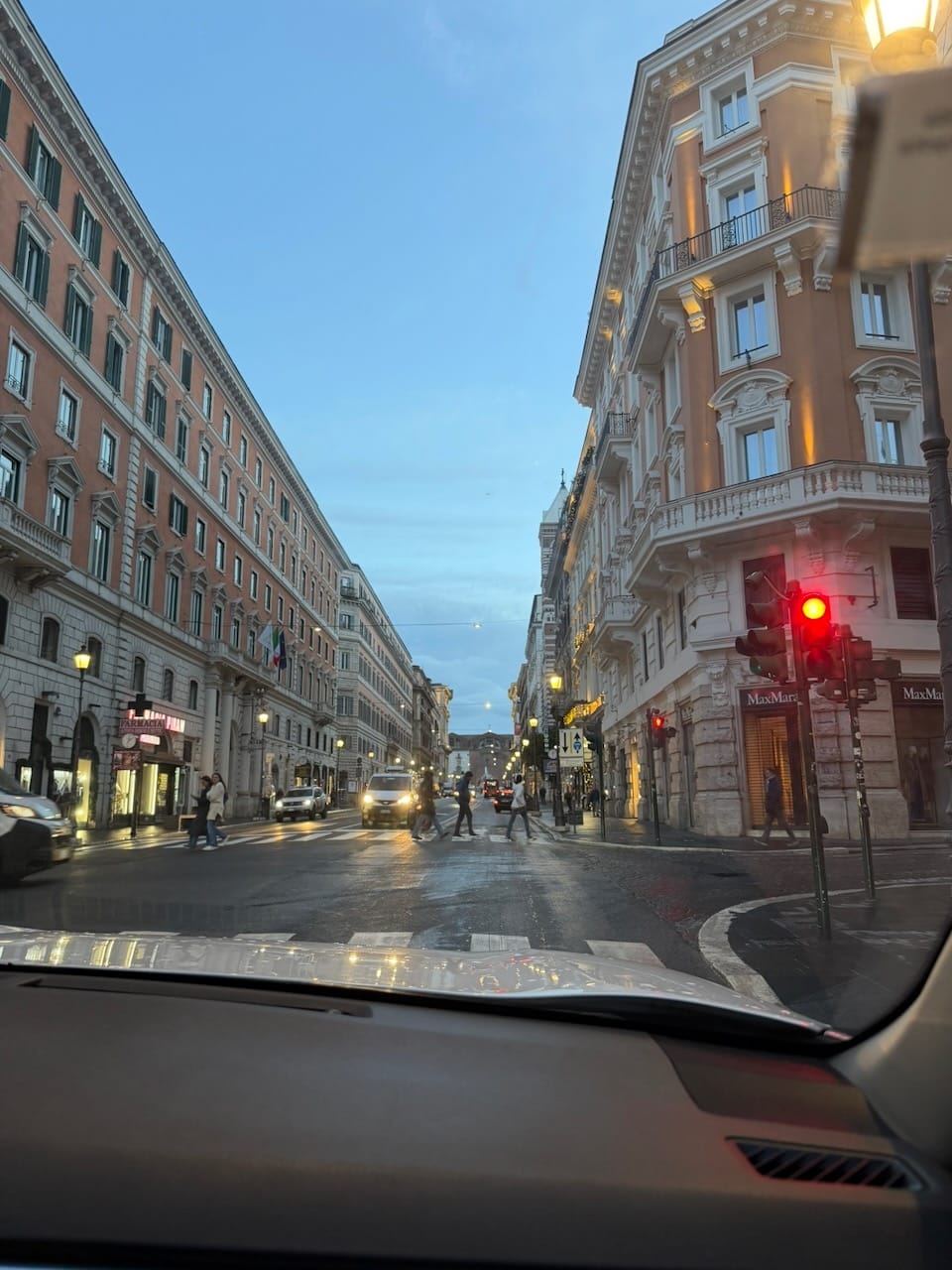
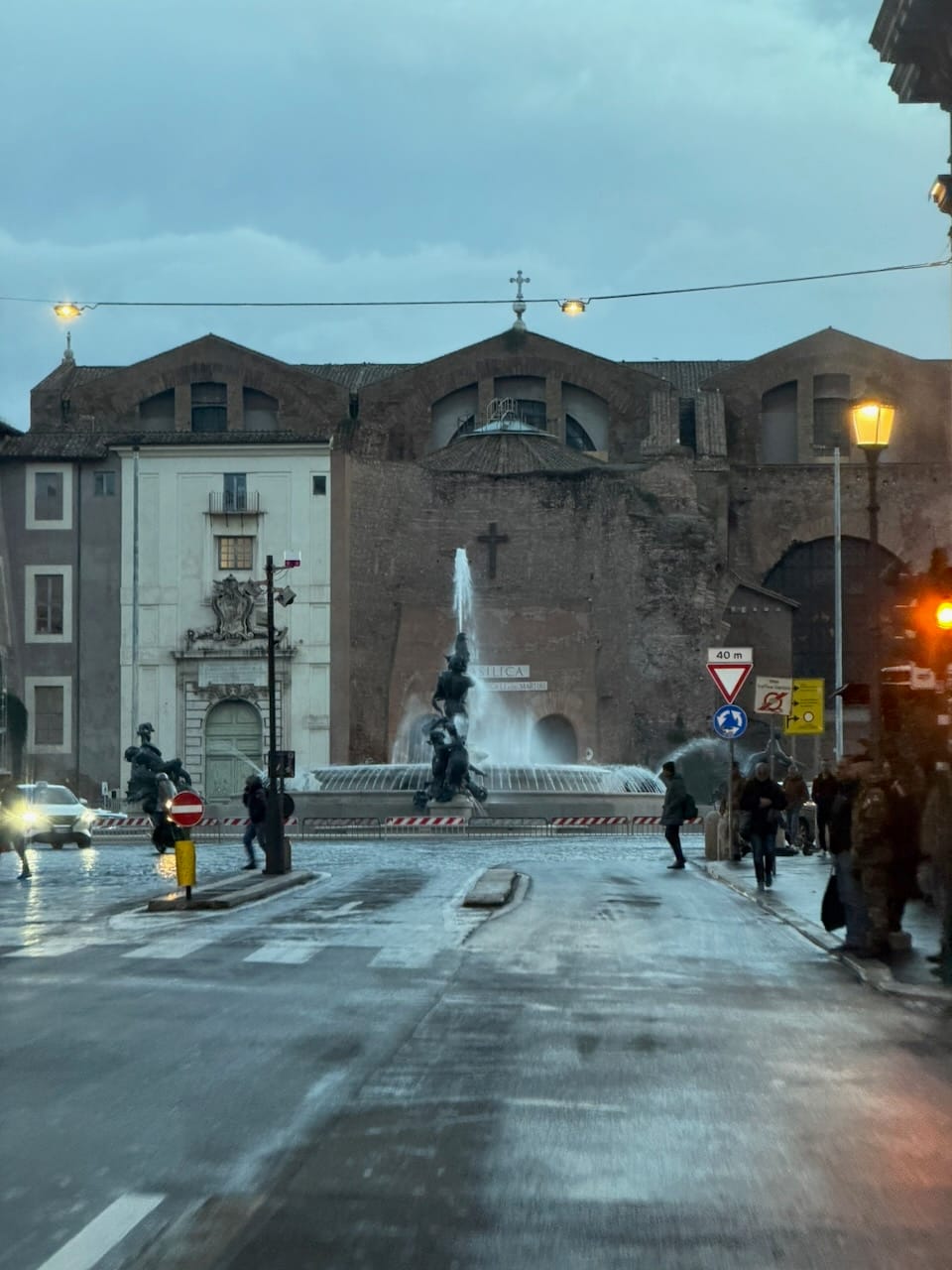
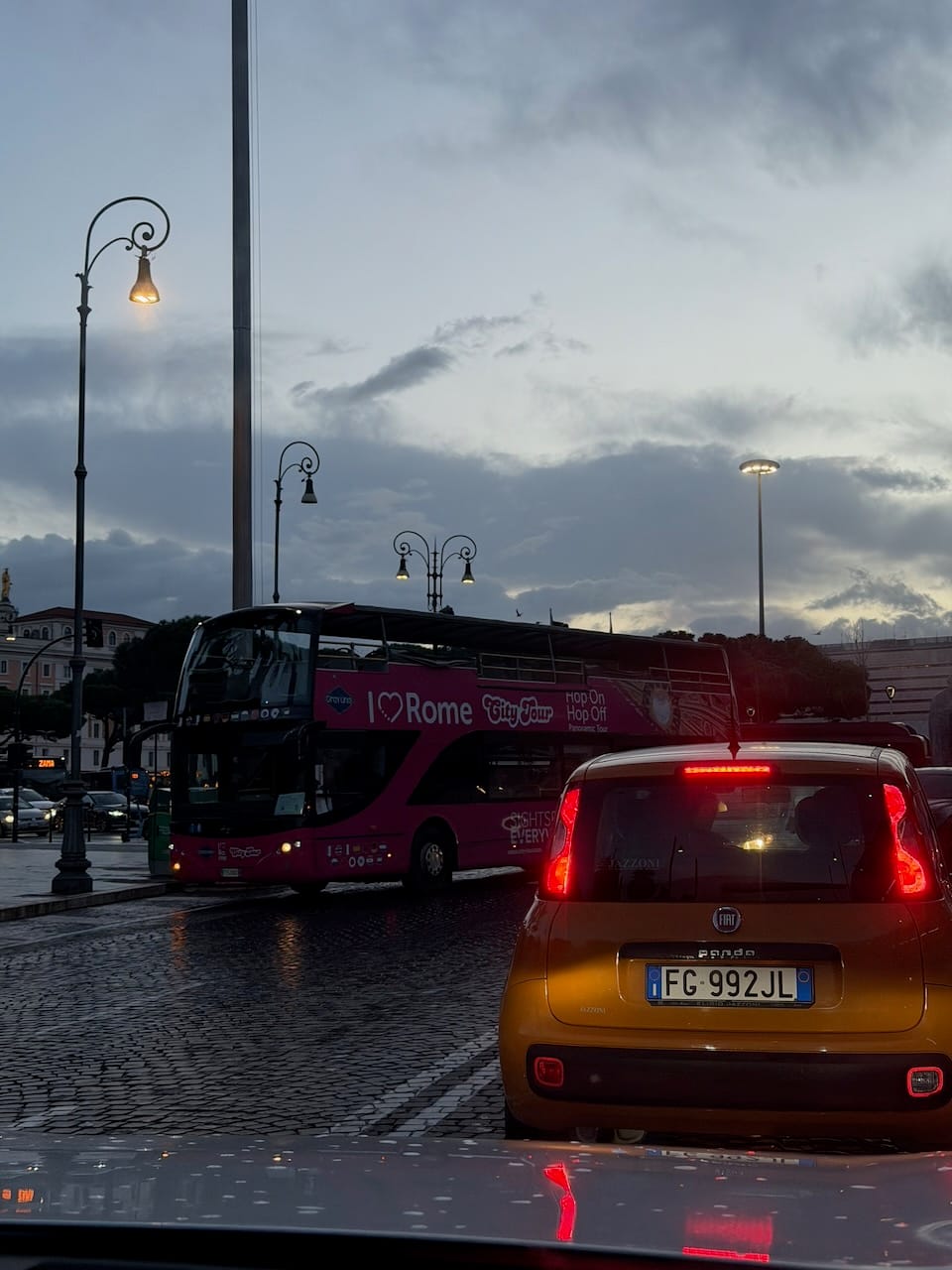
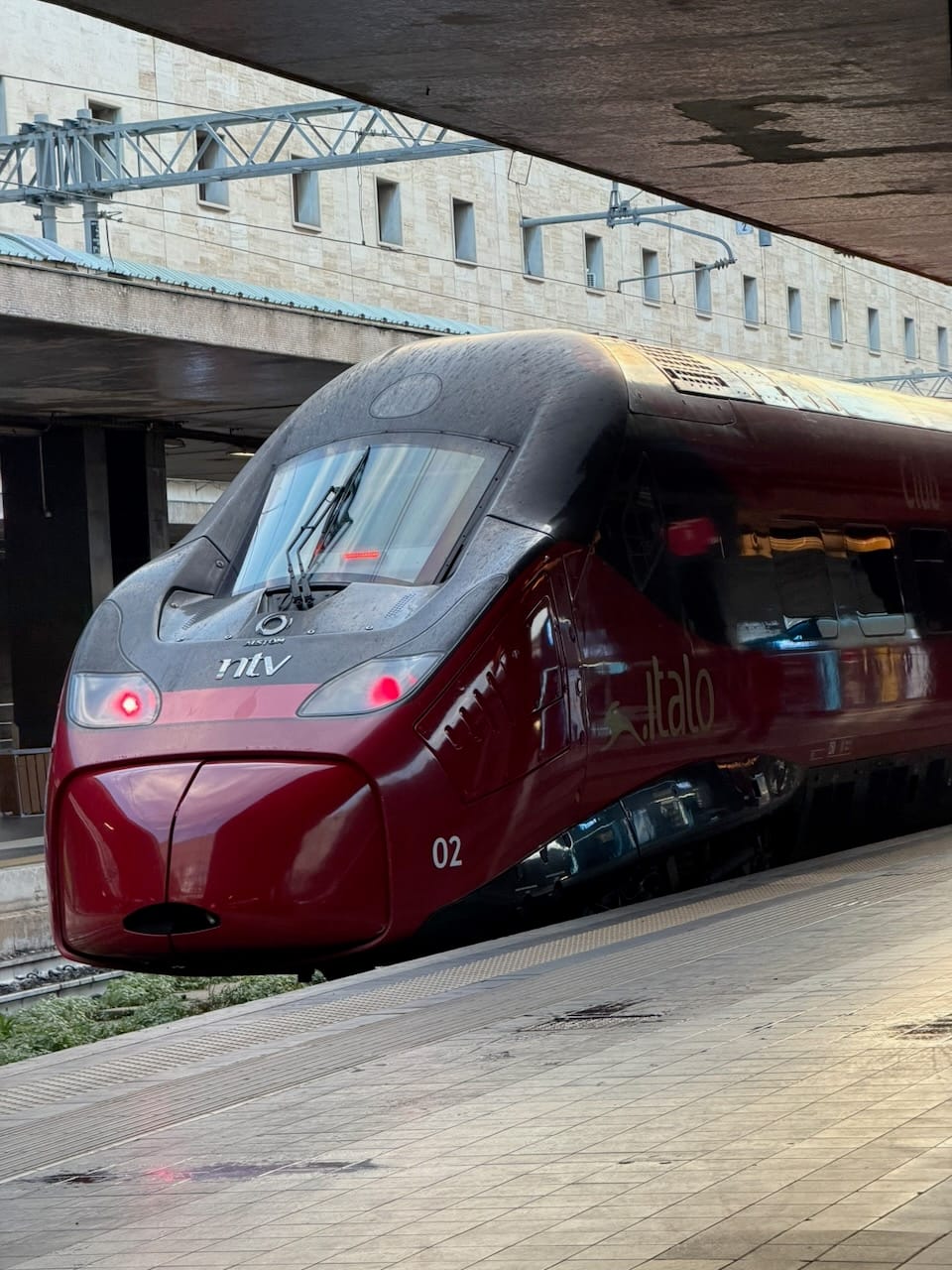
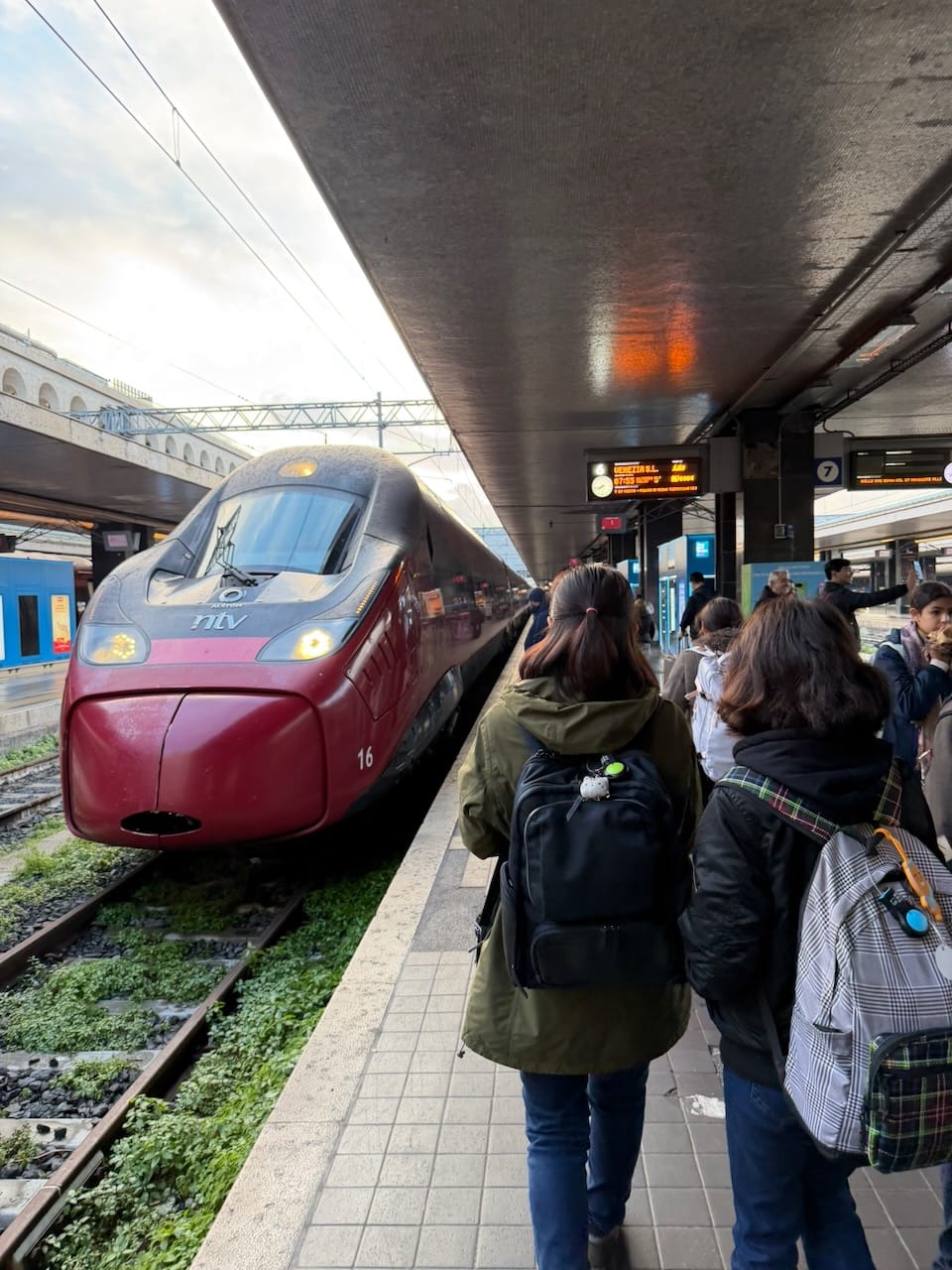
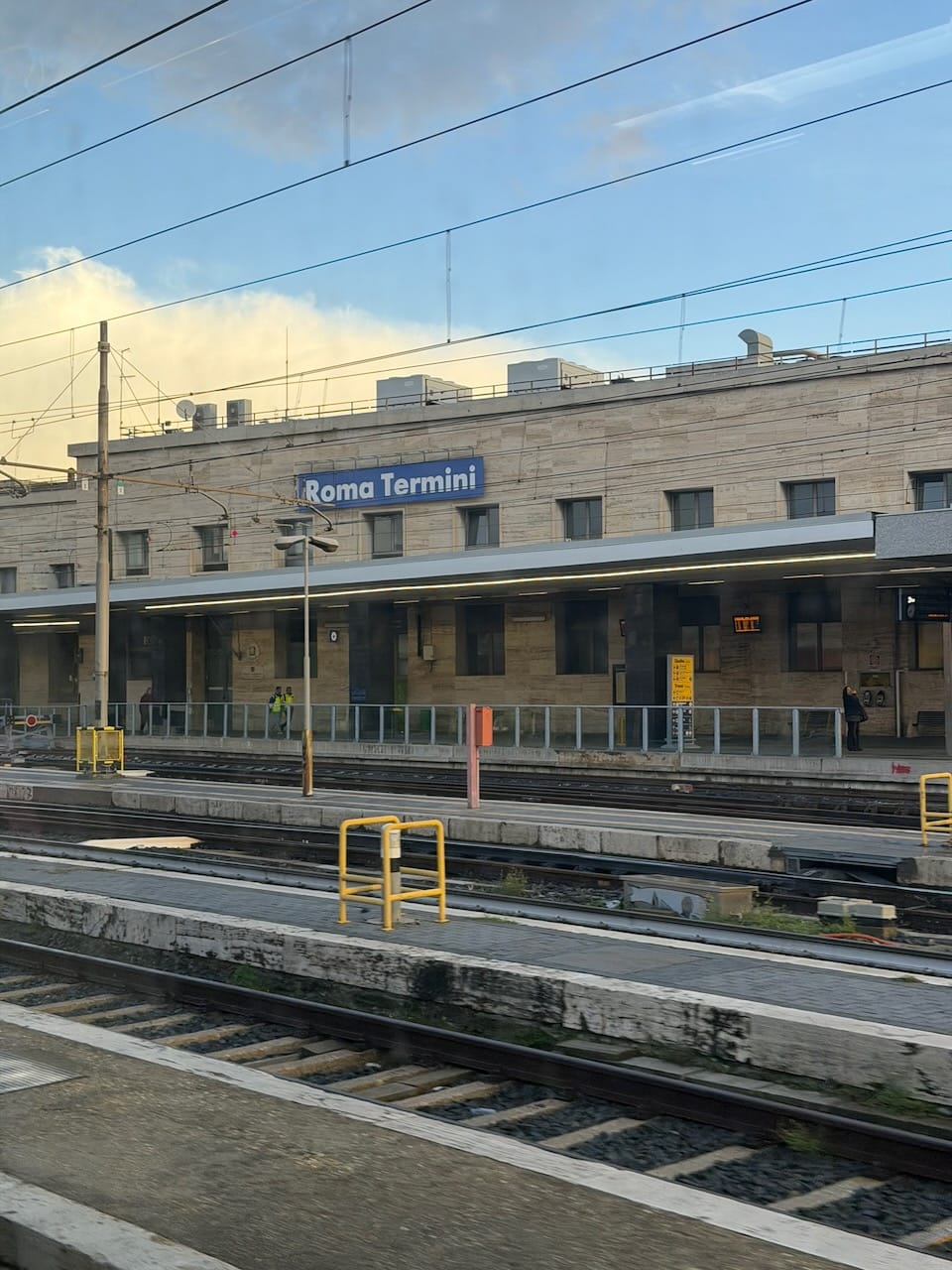
Our ride was the Italo high-speed train departing Rome Termini at 7:55 am. and arriving at Firenze S.M. at 9:31 am. We called a taxi before 7, thinking it would be safe since the hotel was only about ten minutes from the station. It was not. Morning traffic had completely clogged the streets around the hotel, so the taxi couldn’t even reach the entrance. The driver parked somewhere nearby, and we had to run through the streets with our all bags to find him. We made it. Barely.
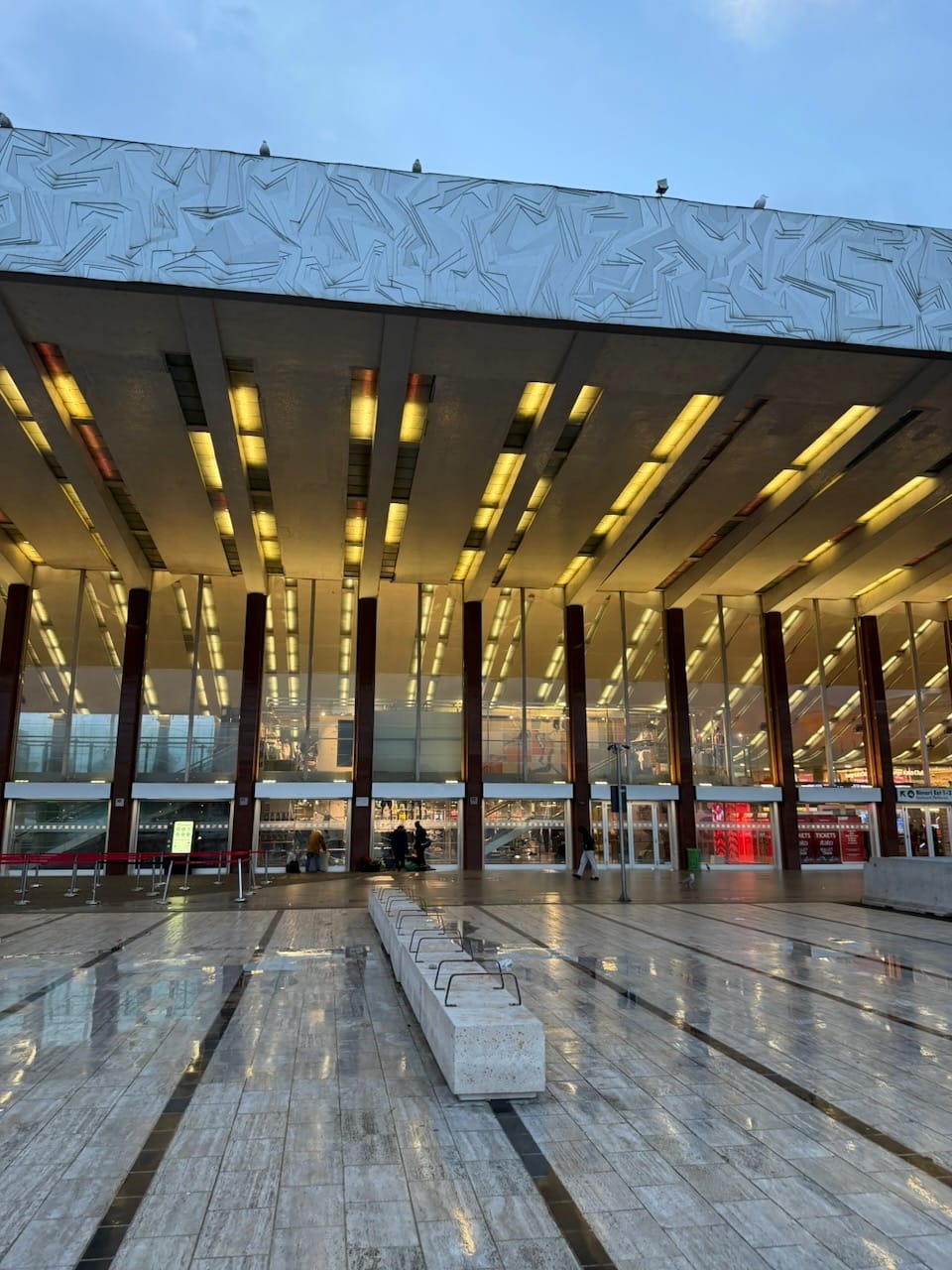
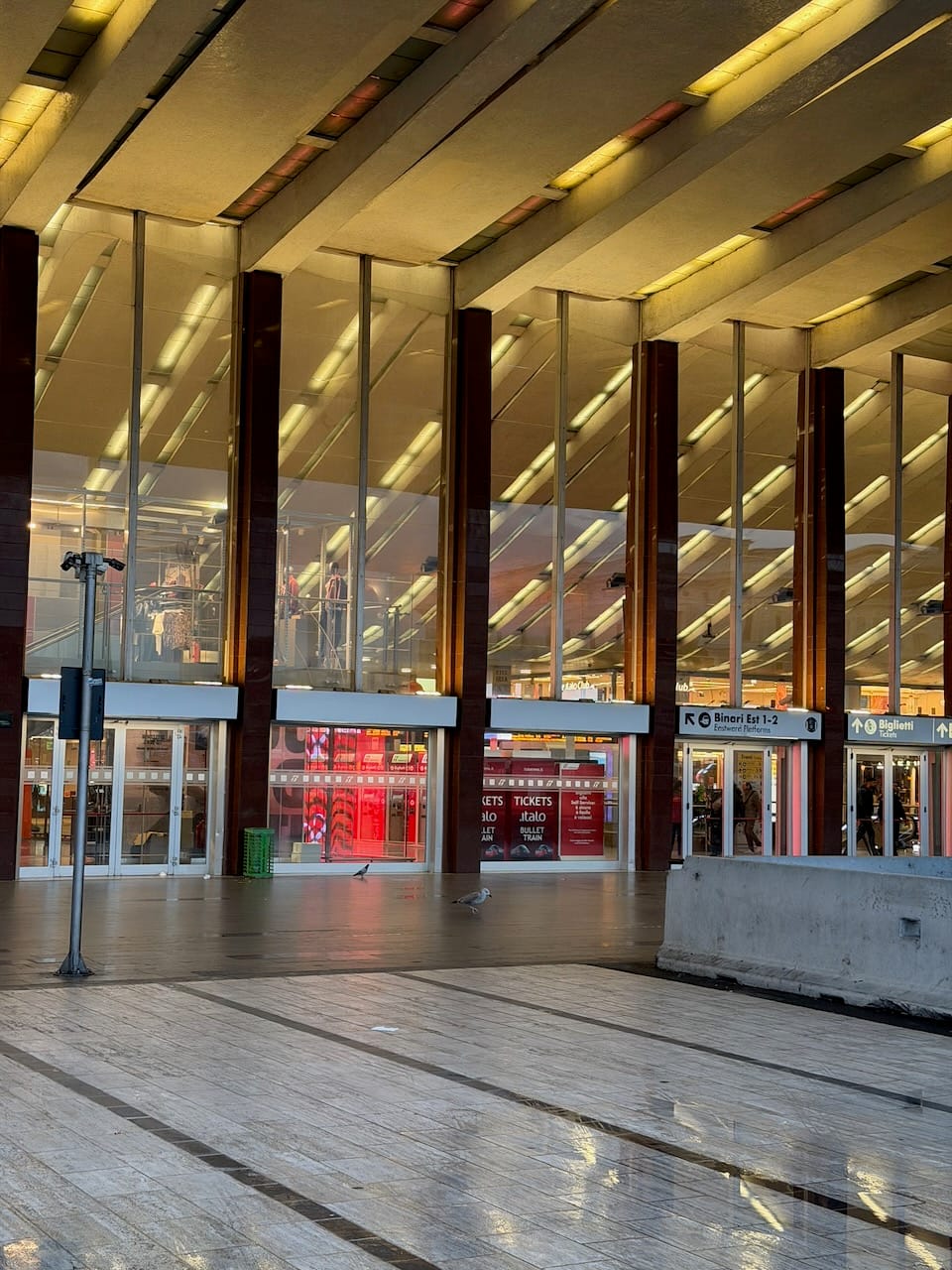
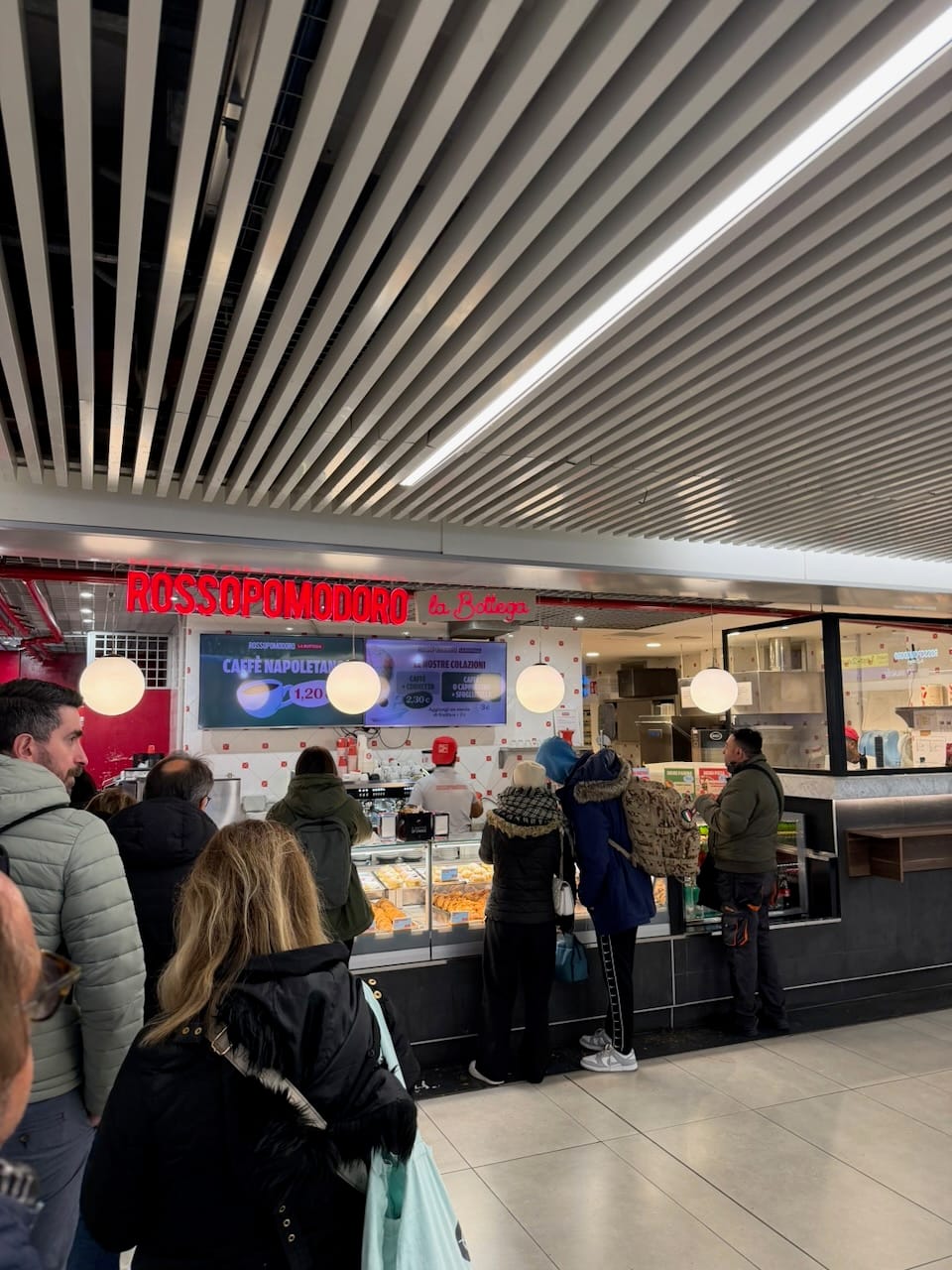
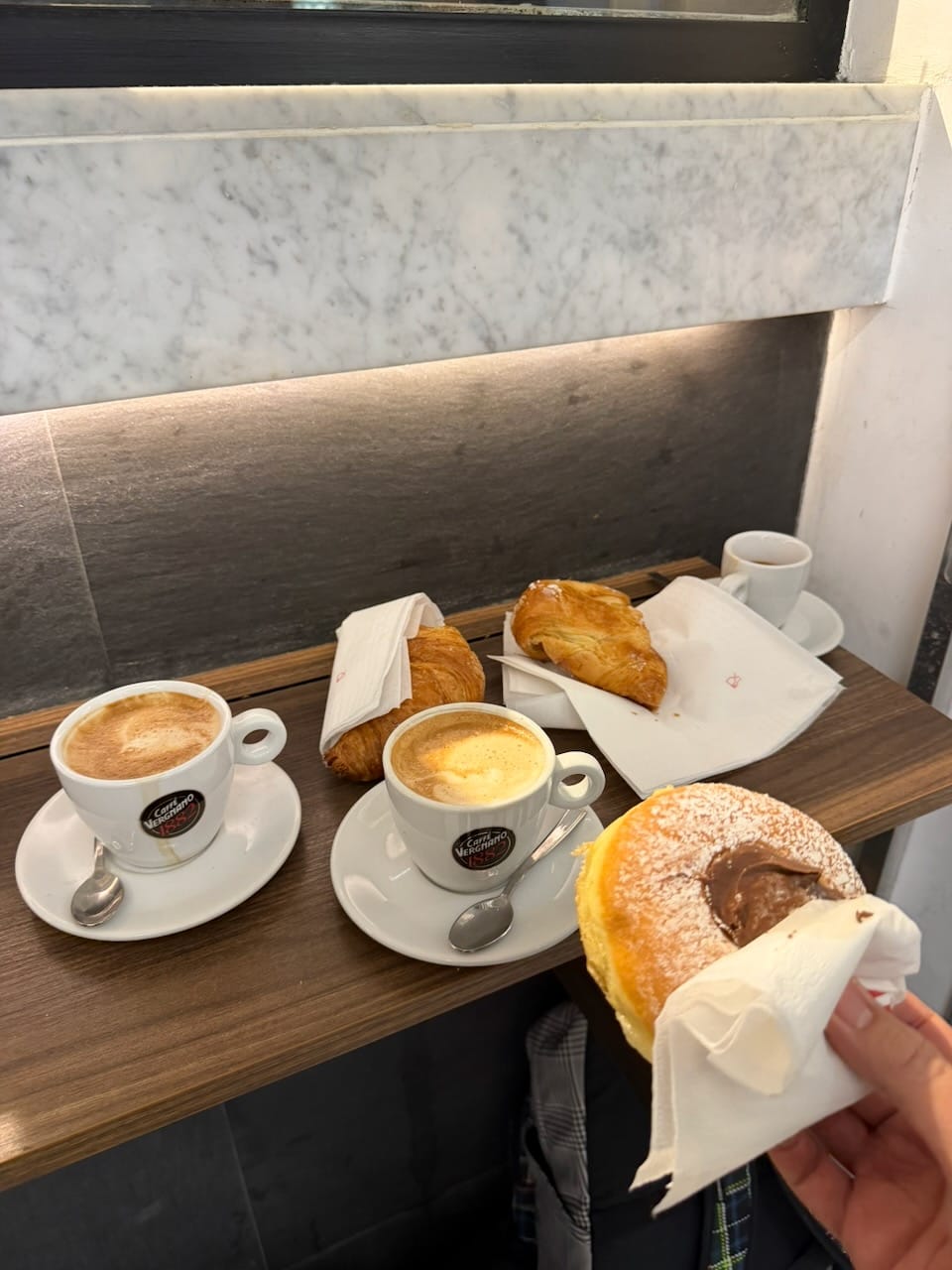
Another small regret: the hotel breakfast started at 7 am., which meant we missed the excellent buffet we had been enjoying. Instead, we grabbed pastries and espressos like locals, which, wasn’t a bad consolation prize.
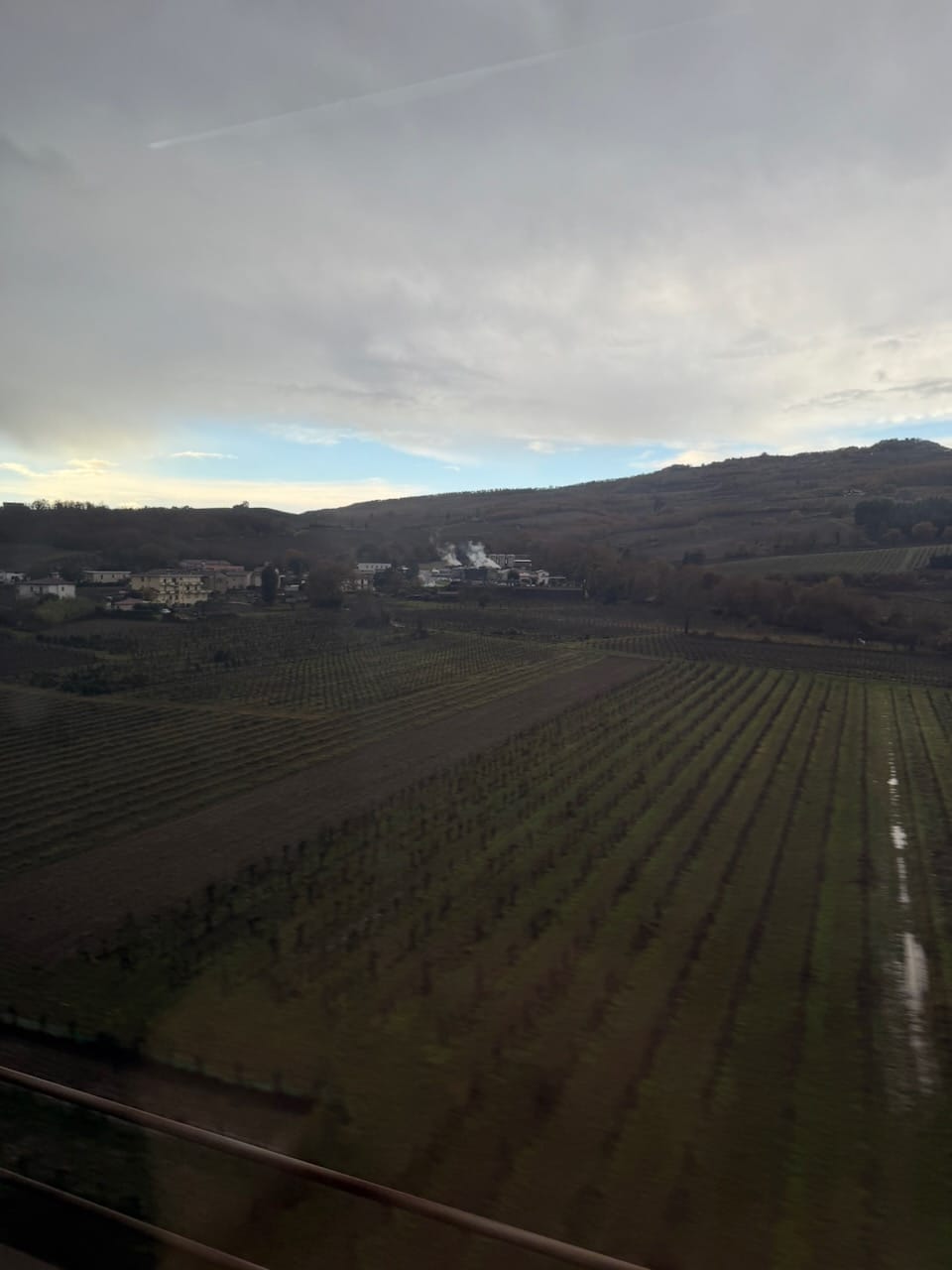
The Italo train itself was fast, quiet, and extremely comfortable; it was Prima Business class seats and about 30 Euro (per person). And once again, I found myself wondering why the U.S. still hasn’t seriously invested in high-speed rail. Coming from Korea, where bullet trains are part of daily life, the lack of rail infrastructure in the U.S. feels like a missed opportunity. Especially with this year’s unpredictable weather, reliable high-speed trains would completely change how I explore the country. Even something like a proper LA–SF line would open up so many new possibilities.
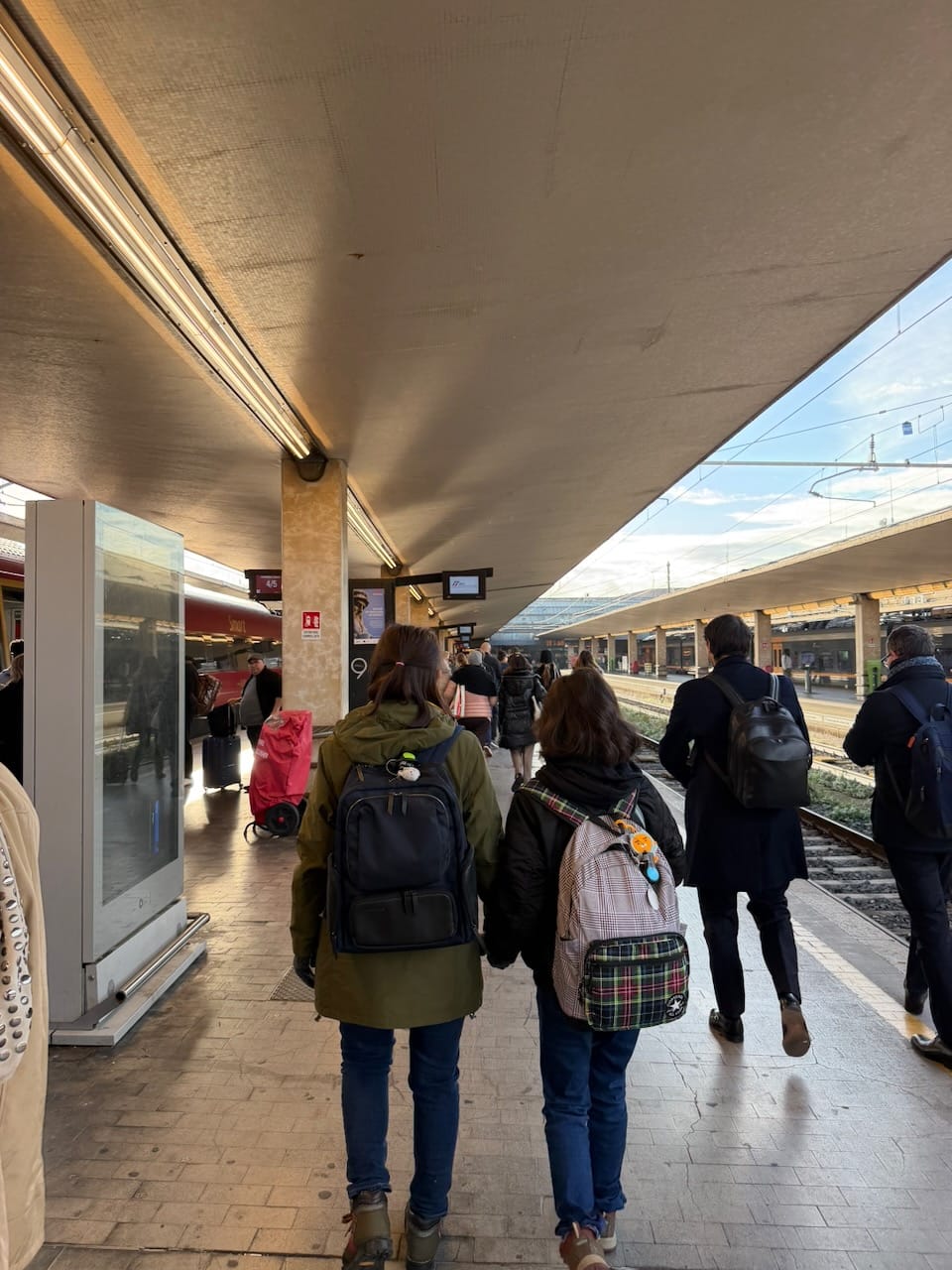
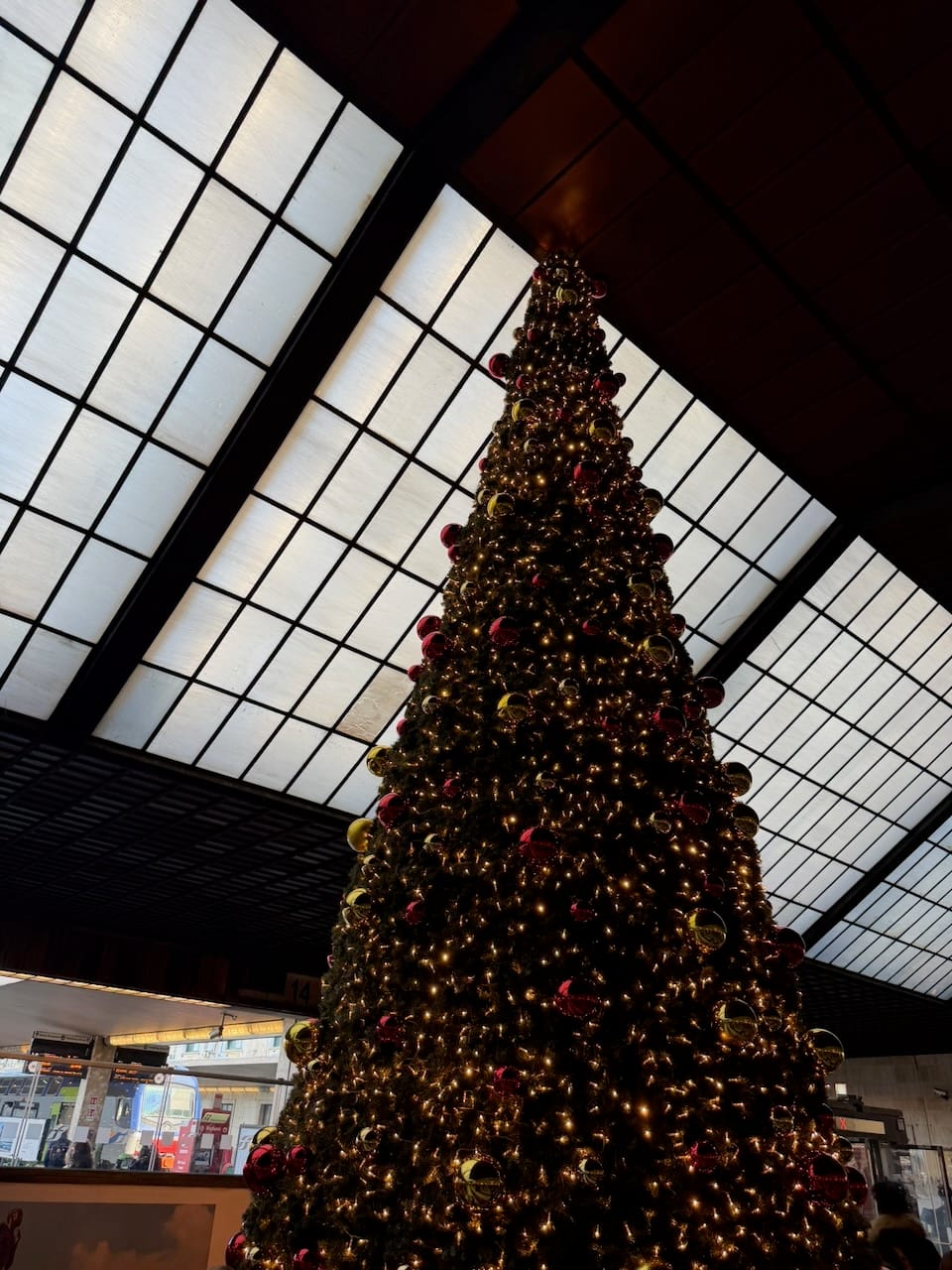
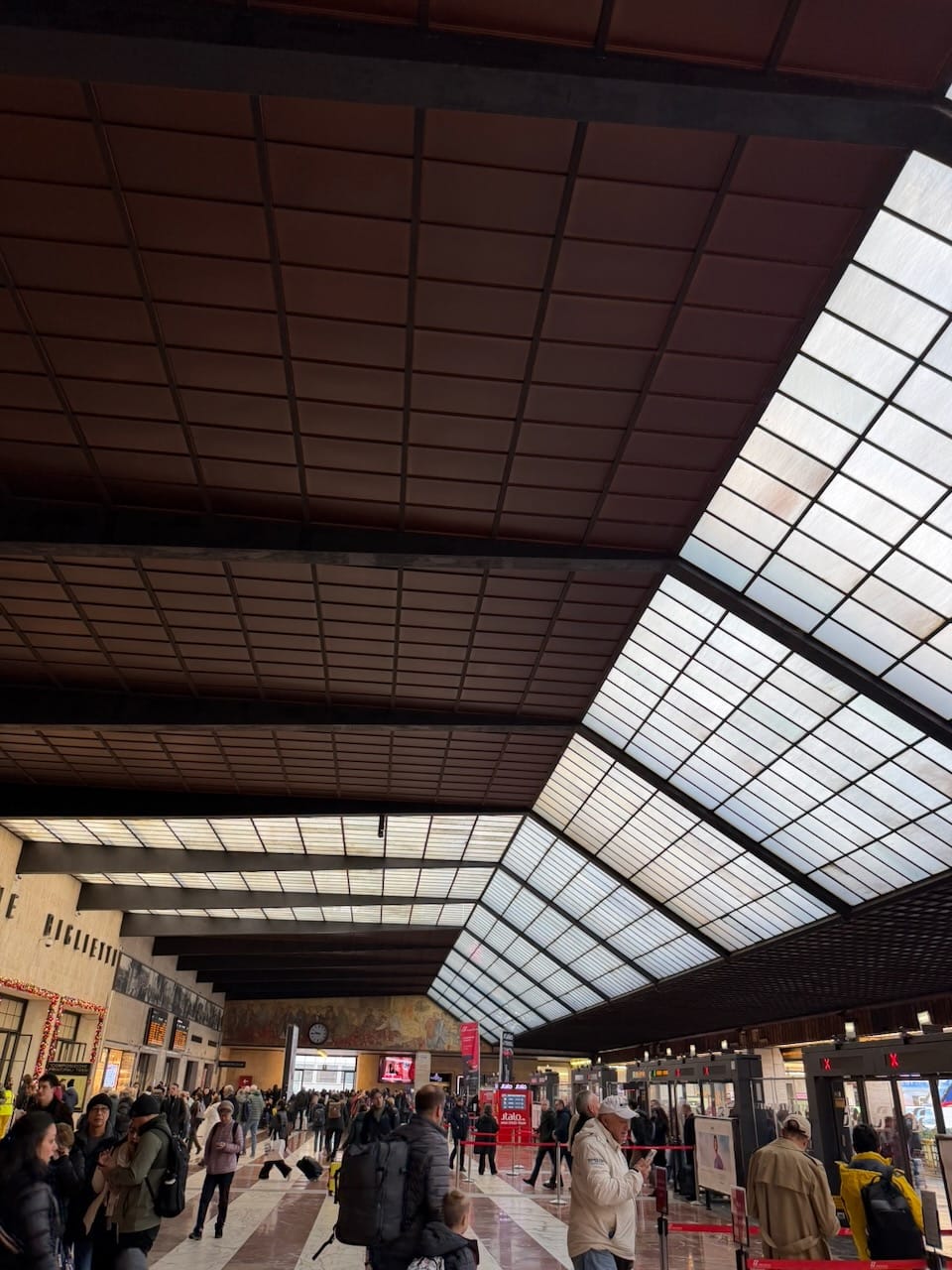
The train arrived in Firenze right on time. From there, we headed to our hotel: Apollo Guest House. Technically, it wasn’t a hotel, but it also wasn’t a typical guesthouse where you share rooms or beds with other travelers. Instead, it felt more like a well-organized collection of private Airbnb-style rooms, which seemed to be quite common in Firenze. It was on the third floor (other guesthouses are on other floors), and the elevator itself was an experience: tiny, old-fashioned, and the kind where you have to open the doors by hand. Charming, slightly terrifying, but classic.
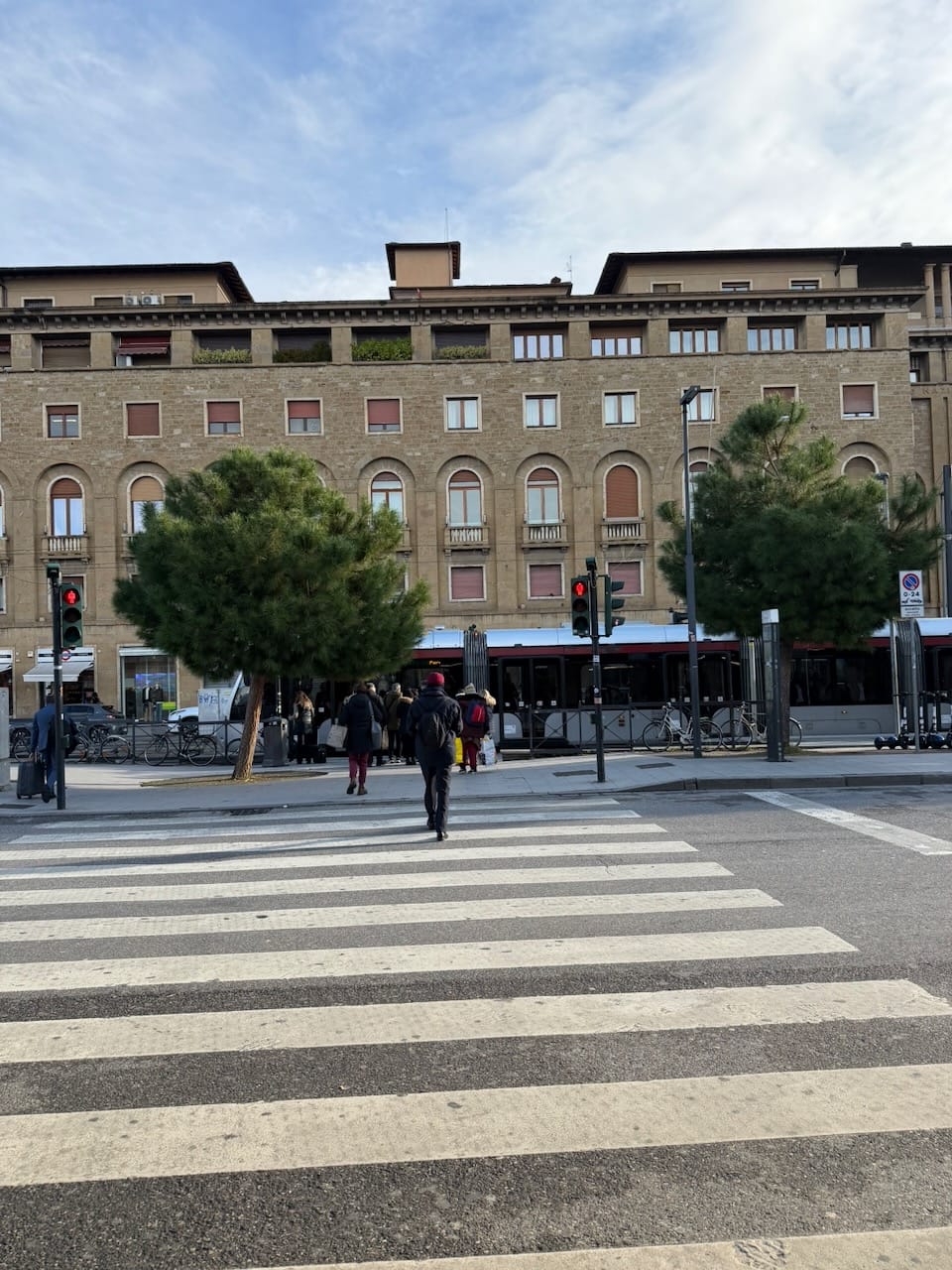
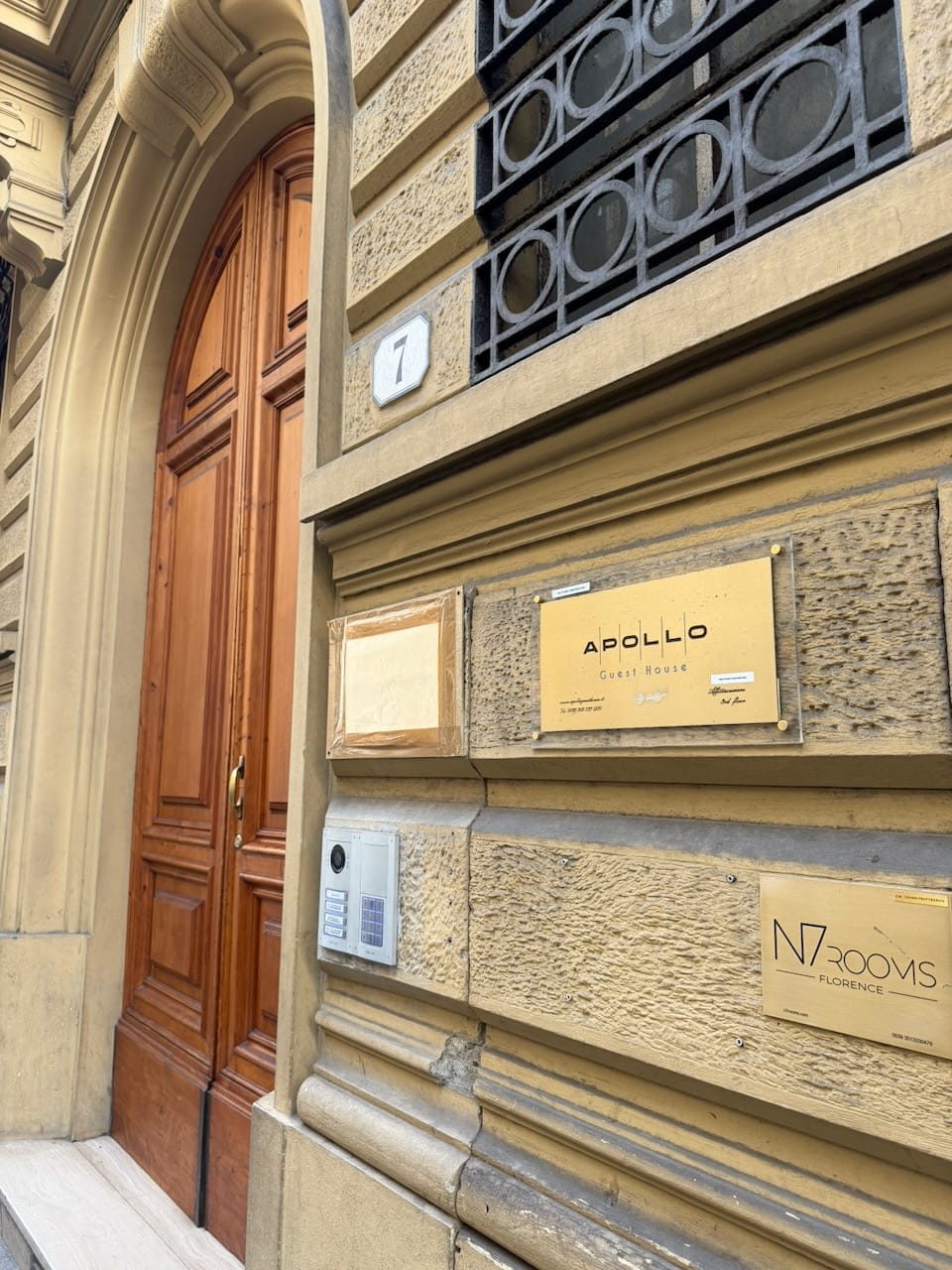
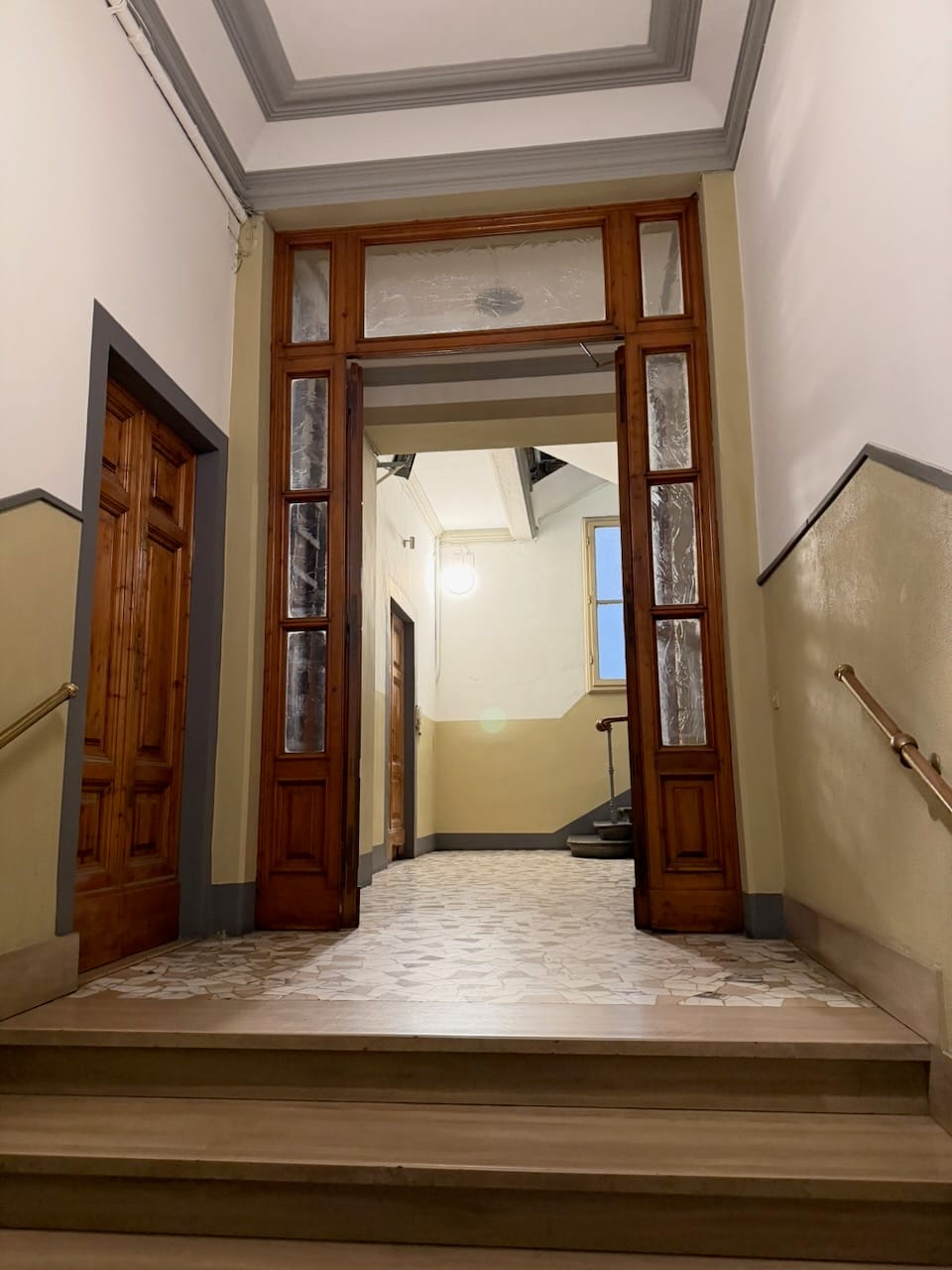
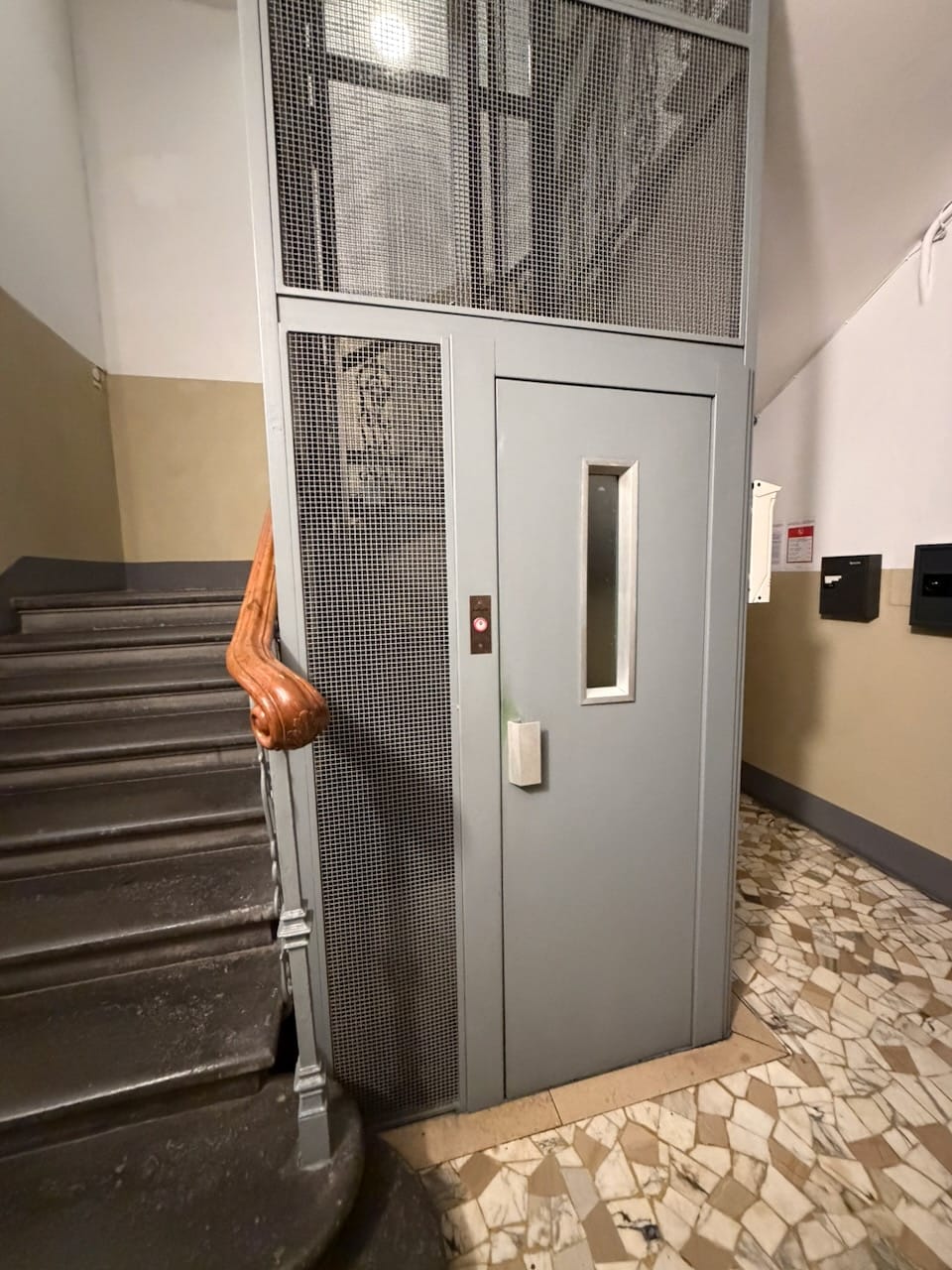
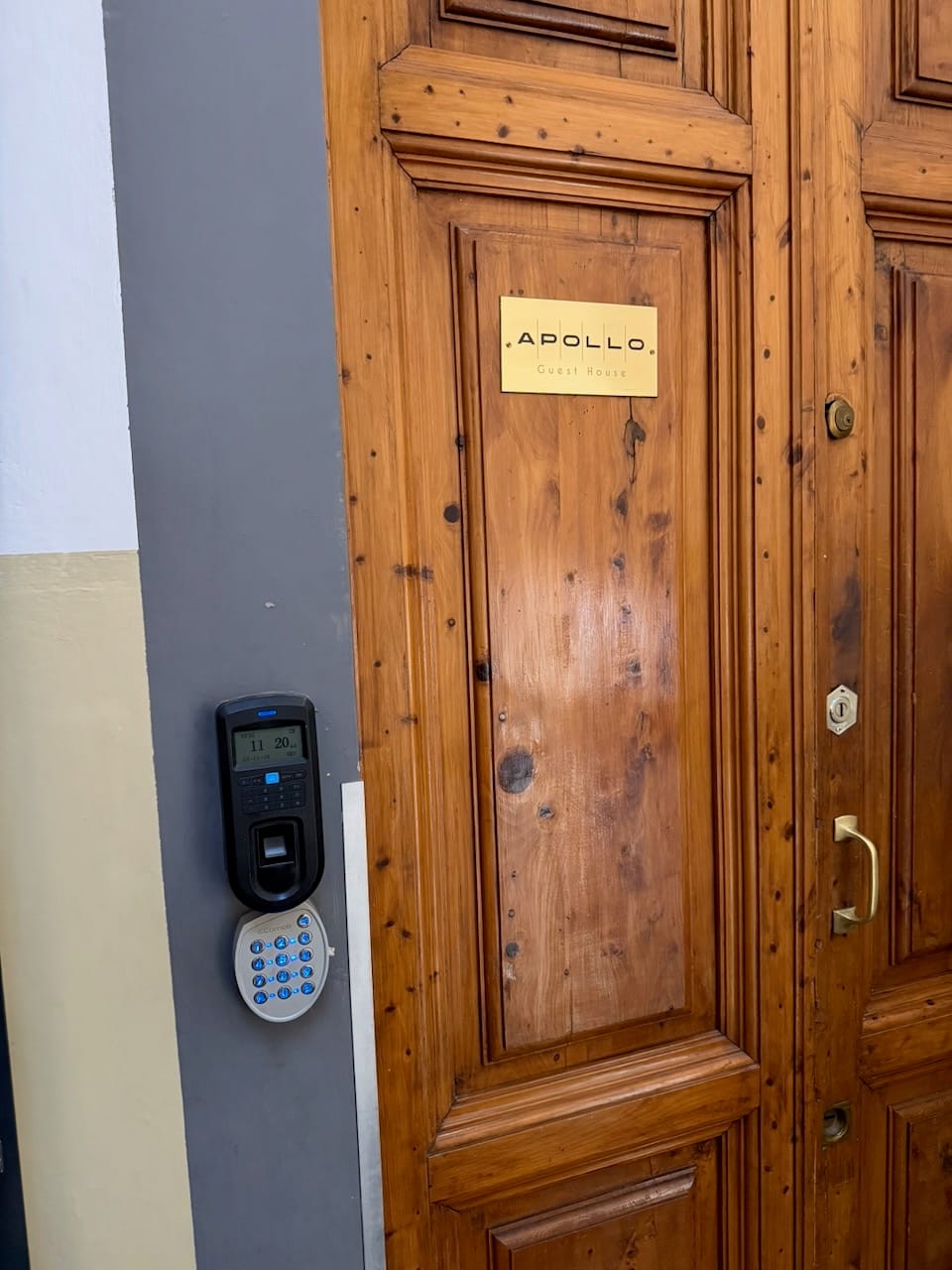
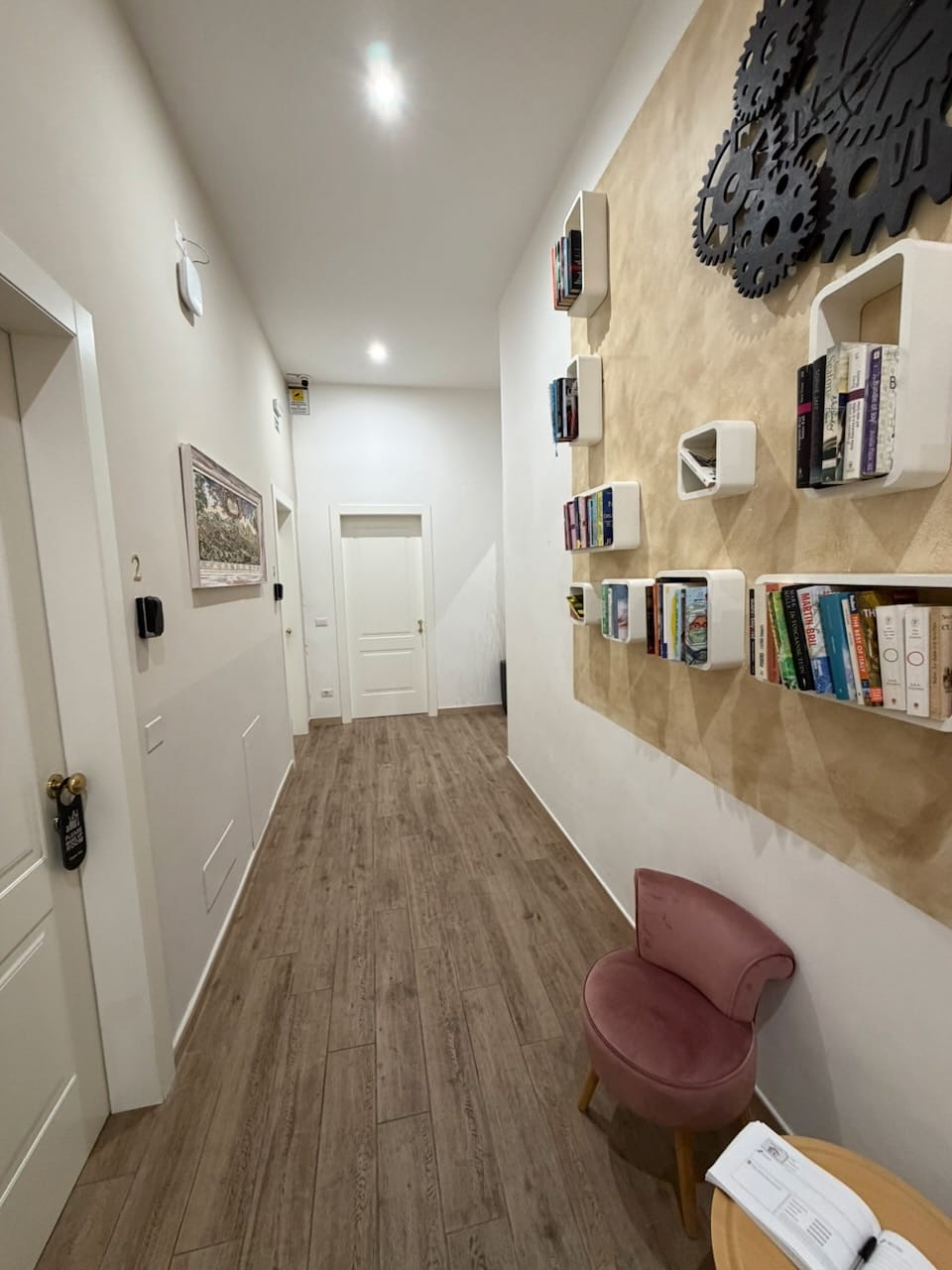
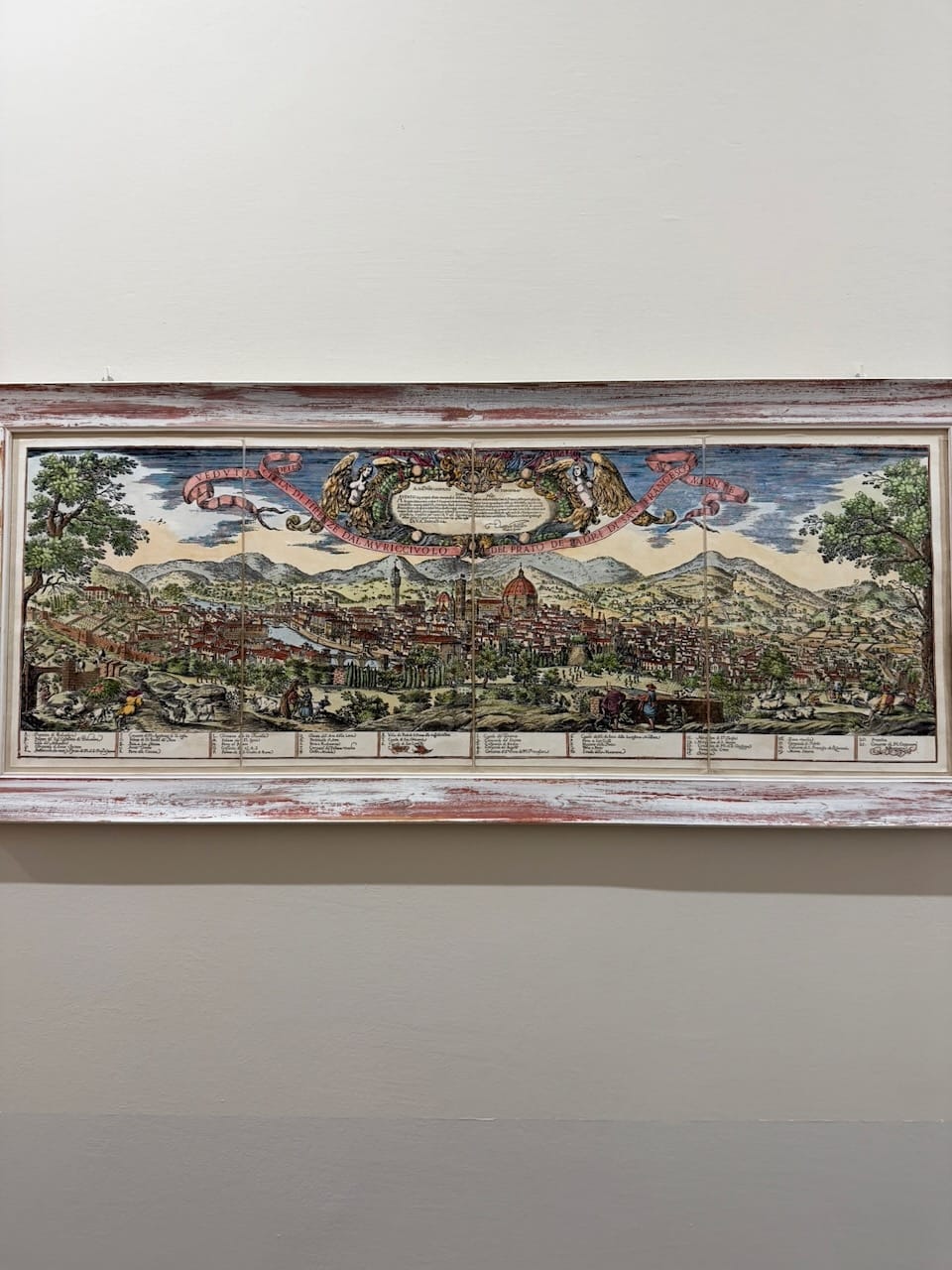
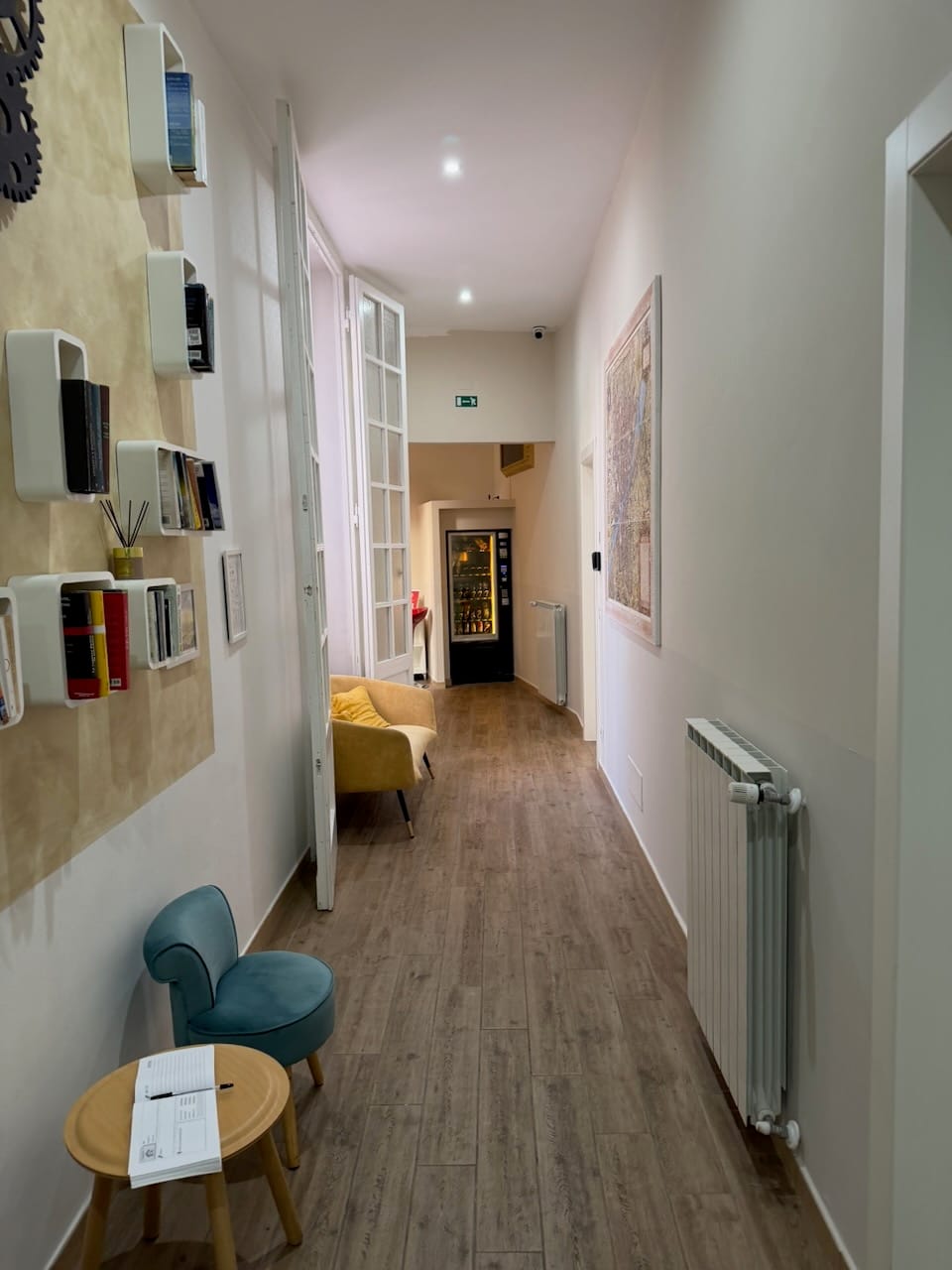
Apollo Guest House
Our check-in was entirely contactless. We received two keypad codes (one for the main entrance, one for the gate at the floor) via an email, and another lockbox code for the room key. It was still early in the morning, and our official check-in time wasn’t until 3 pm., but we had booked the Brunelleschi’s Dome (Cupola) climb for 10:30 am., so there was no time to relax. We only needed to drop our luggage. The staff told us we could simply leave the bags in the hallway, which felt uncomfortable at first until we realized the corridor was accessible only to guests, protected by multiple keypads and security cameras. So we decided to trust the system, dropped our bags, and rushed off toward the Duomo.
From the hotel, the Duomo was only a ten-minute walk away. That’s one of the things I loved most about Firenze. So many of the city’s highlights are packed into an easy walking radius. We walked through narrow European streets, surrounded by everyday life, and then “suddenly” the grand, beautiful Duomo revealed itself in front of us. That’s the feeling I was hit 25 years ago. The feeling never gets old.
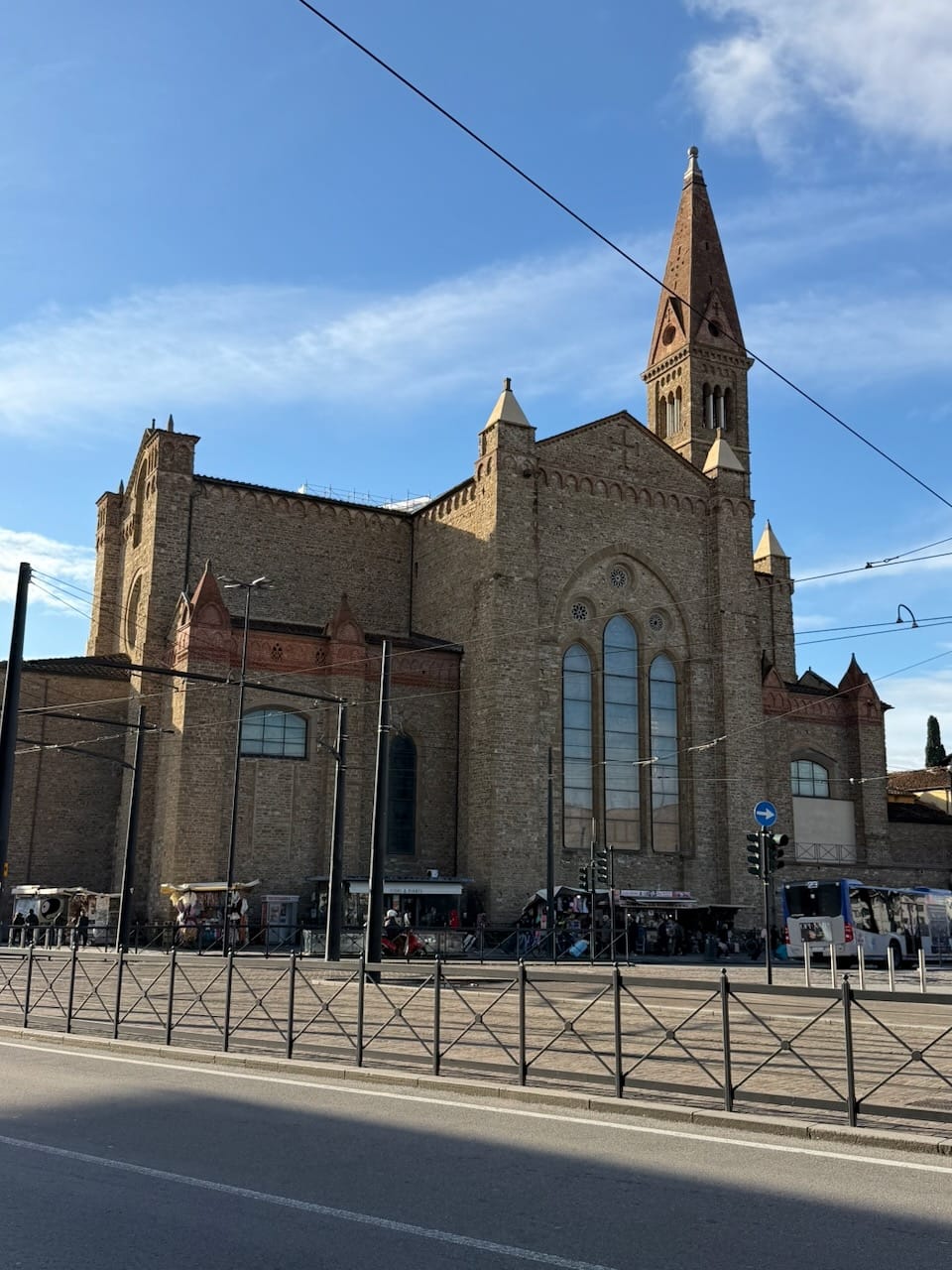
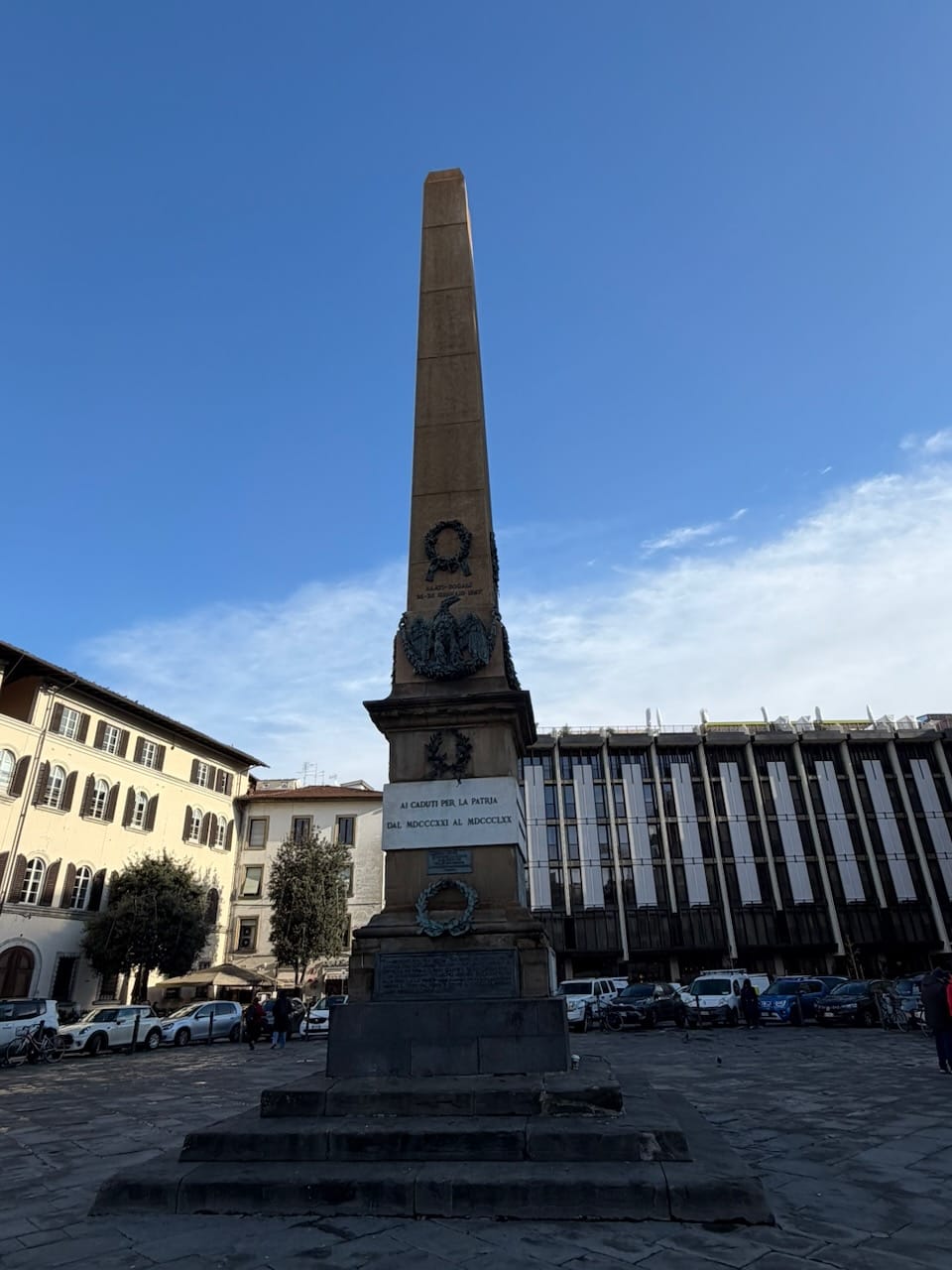
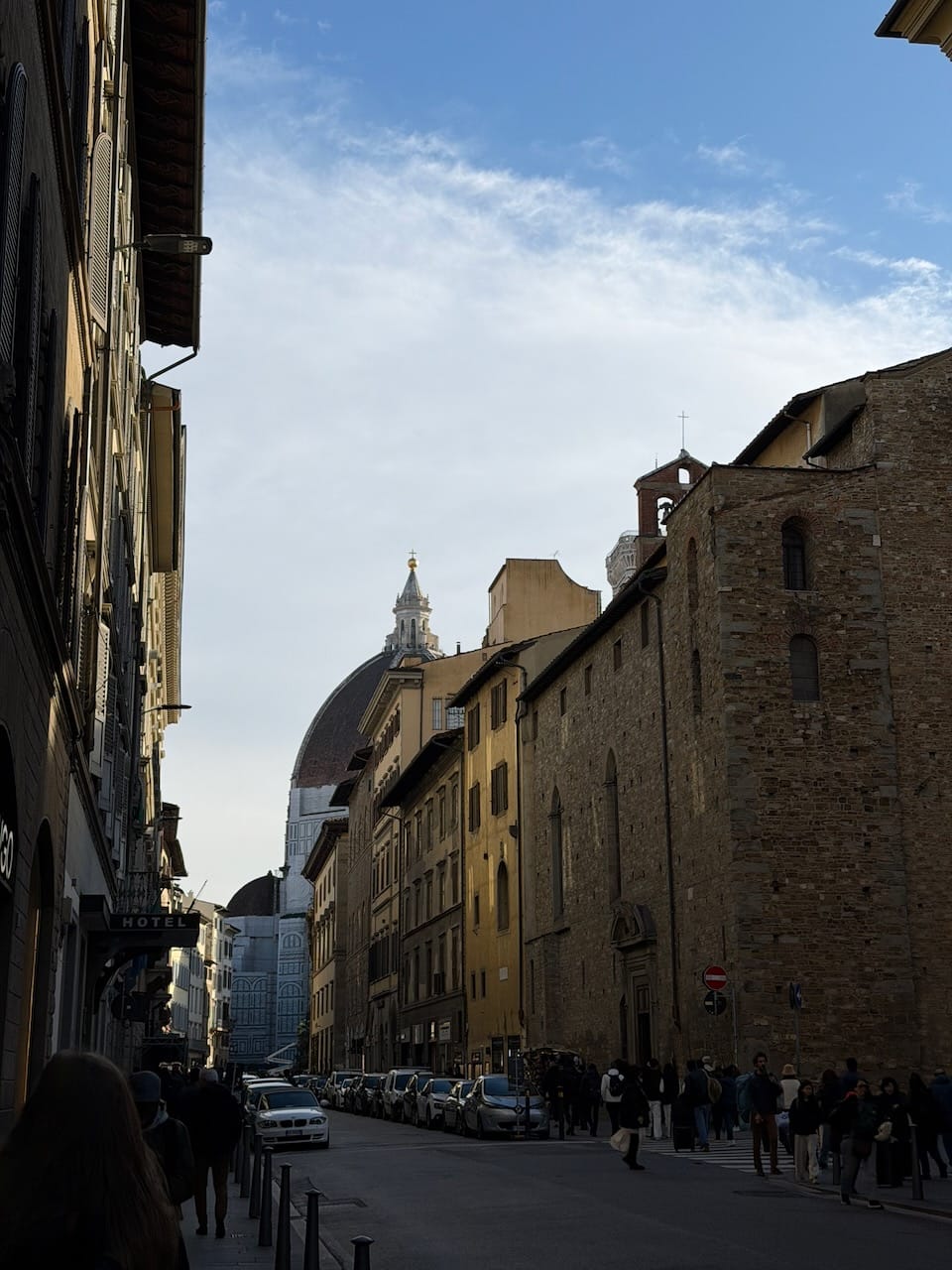
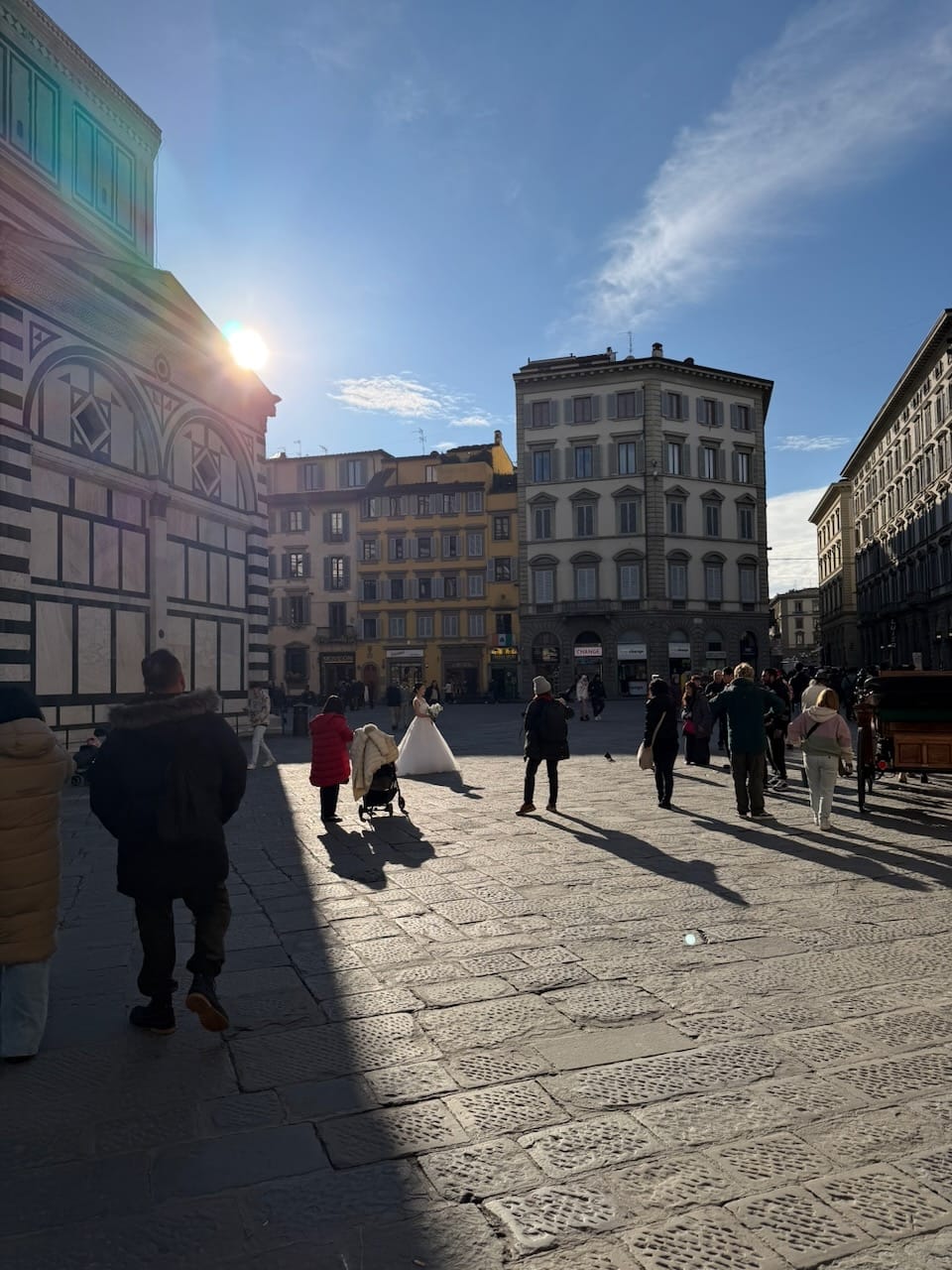
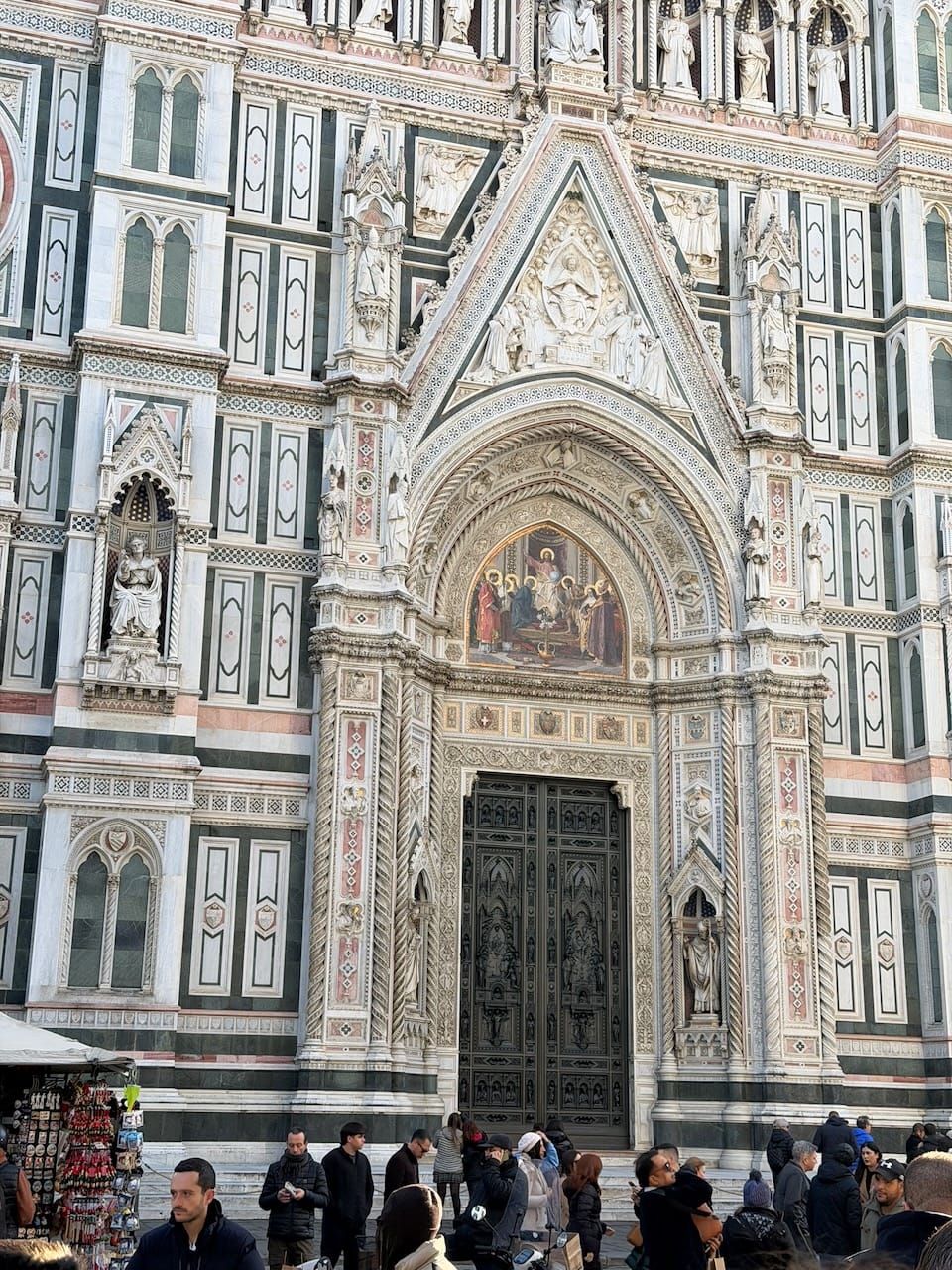
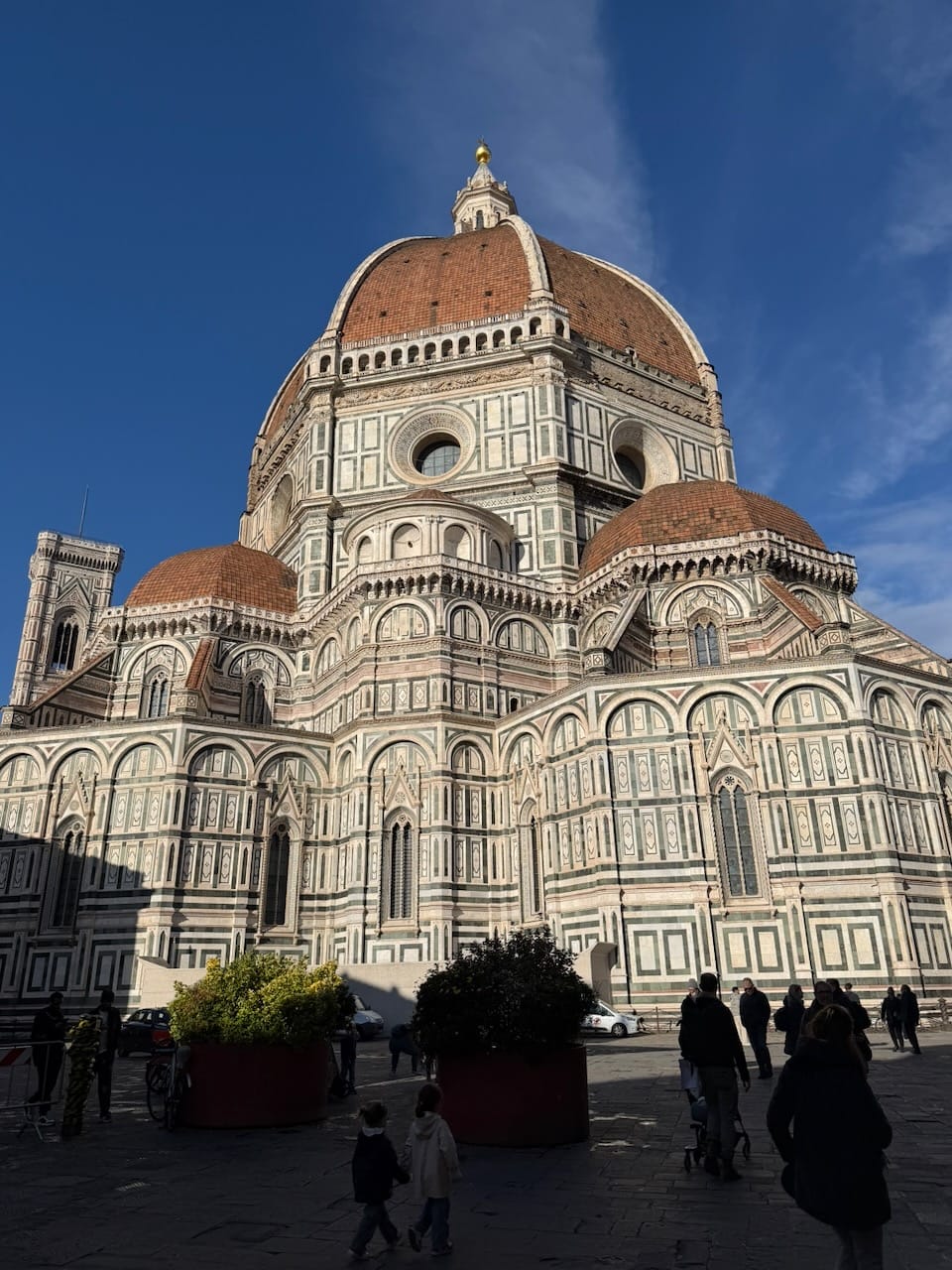
There was already a long line forming for the Duomo climb. We had purchased the Brunelleschi Pass (30 EUR per person), which covered quite a lot: Brunelleschi’s Dome climb, entry to the Florence Cathedral (Duomo) at a reserved time (with the Dome climb), Giotto’s Bell Tower climb, the Baptistery, and Museo dell'Opera del Duomo (the Opera del Duomo Museum). Aside from the Dome climb, which requires a specific time slot, everything else could be visited freely during the validity period (3 days). Our reserved time for the Dome climb was 10:30 am. The climb began inside the Cathedral itself. There was a security check but no id check—I heard there are some times, but it seemed that photo-copies would work. Compared to the stunning exterior, the interior felt almost humble, especially when measured against the luxurious basilicas of Rome. And yet, it was still magnificent in its own quiet, restrained way.
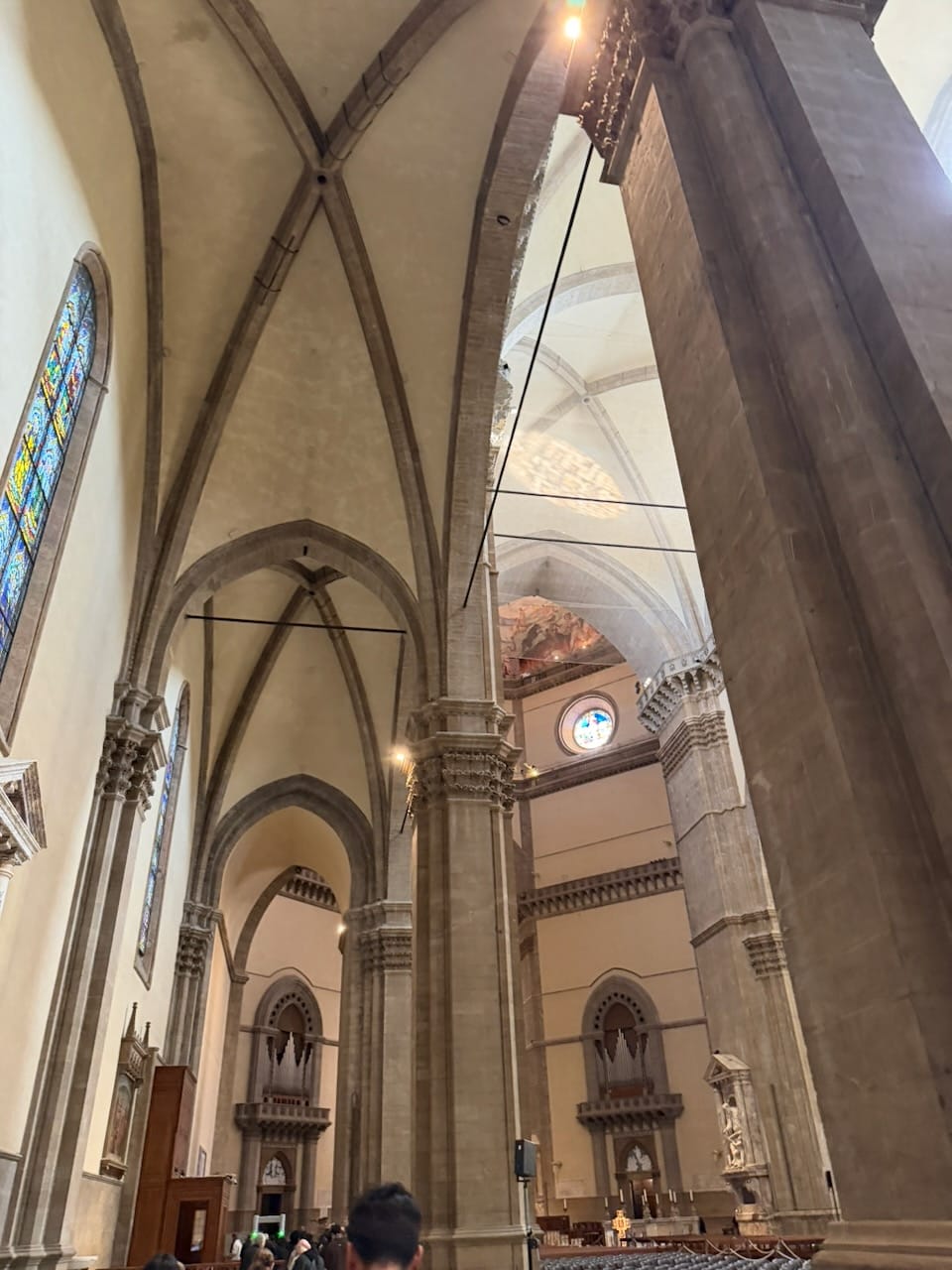
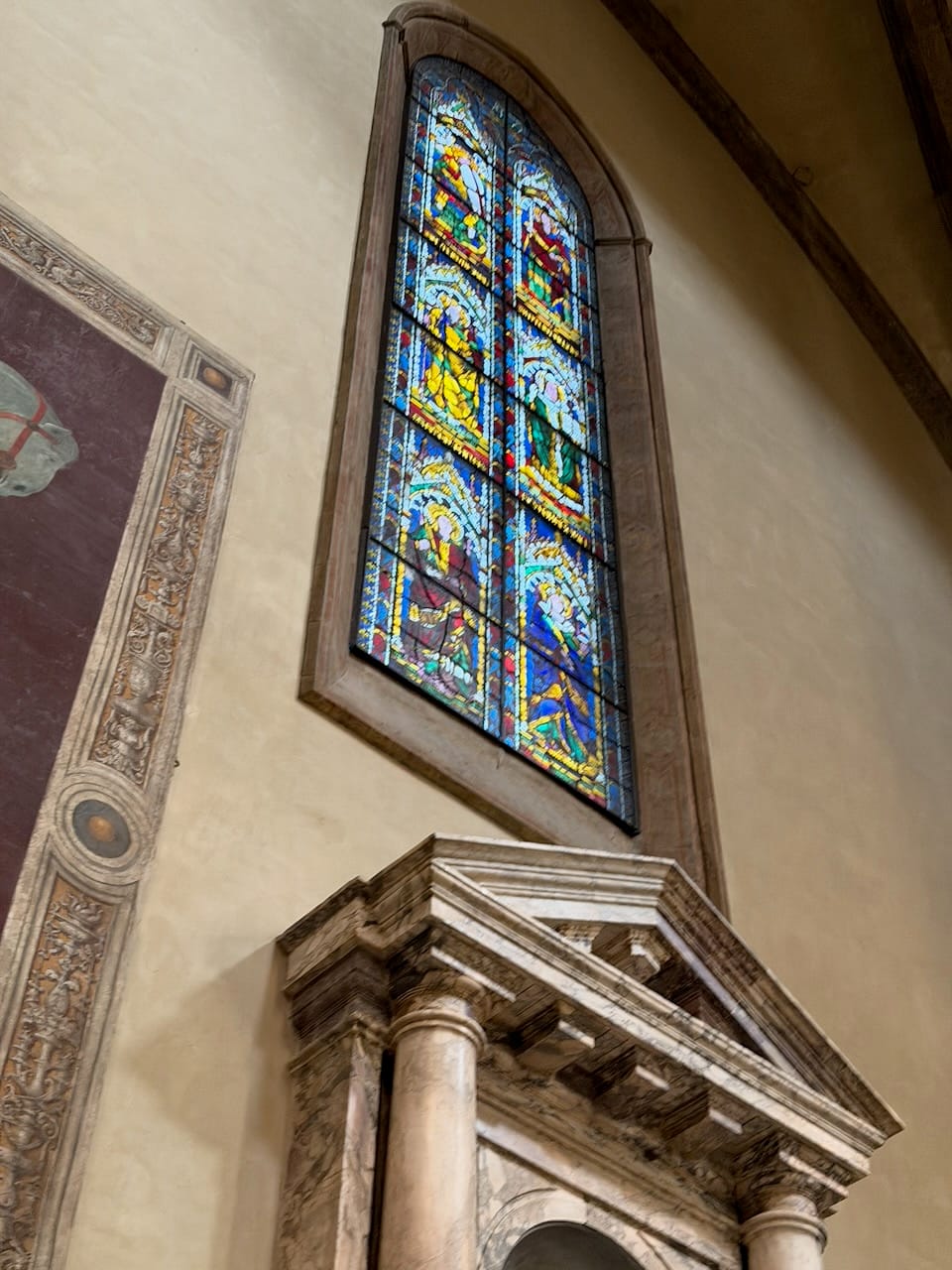
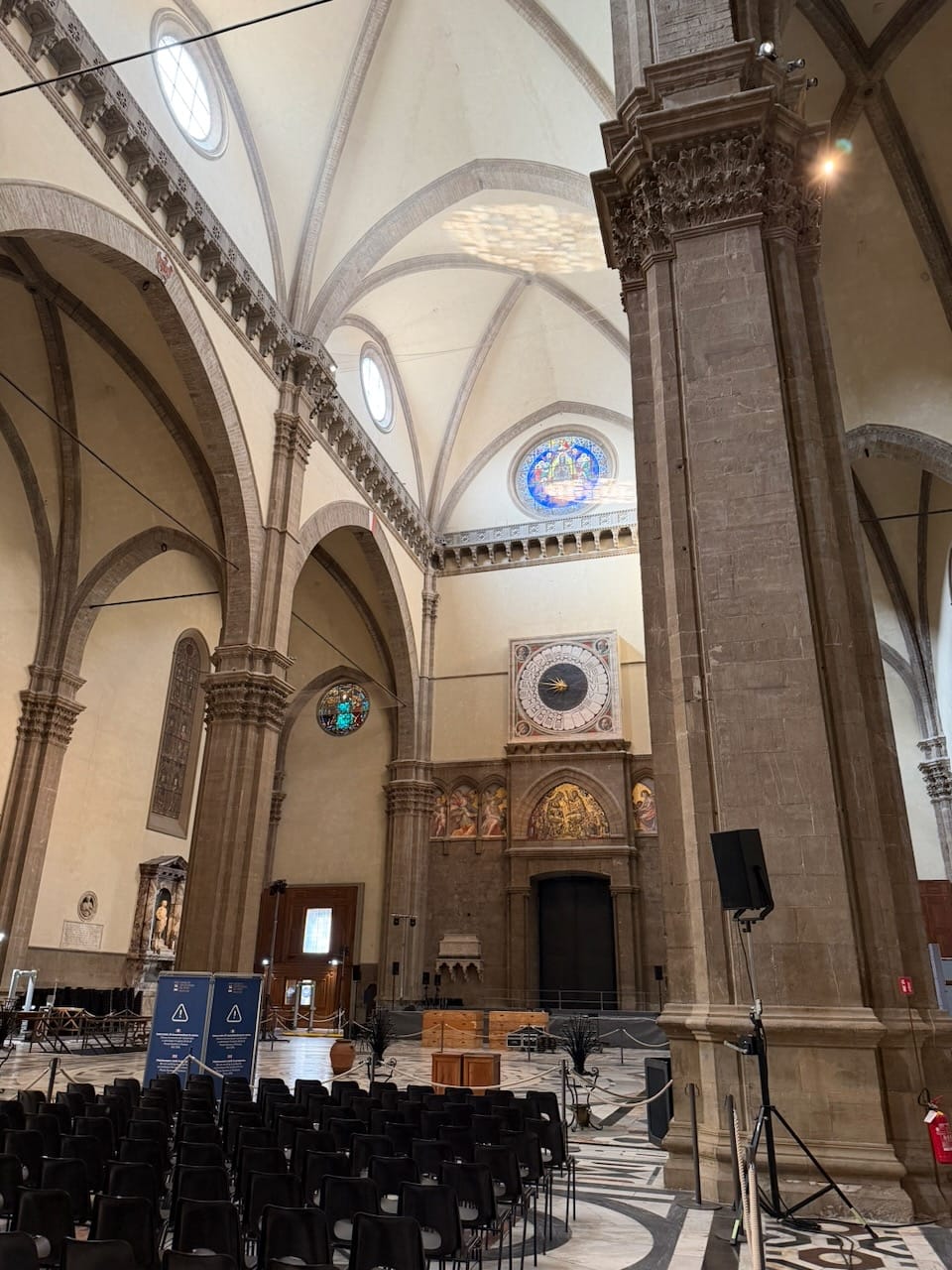
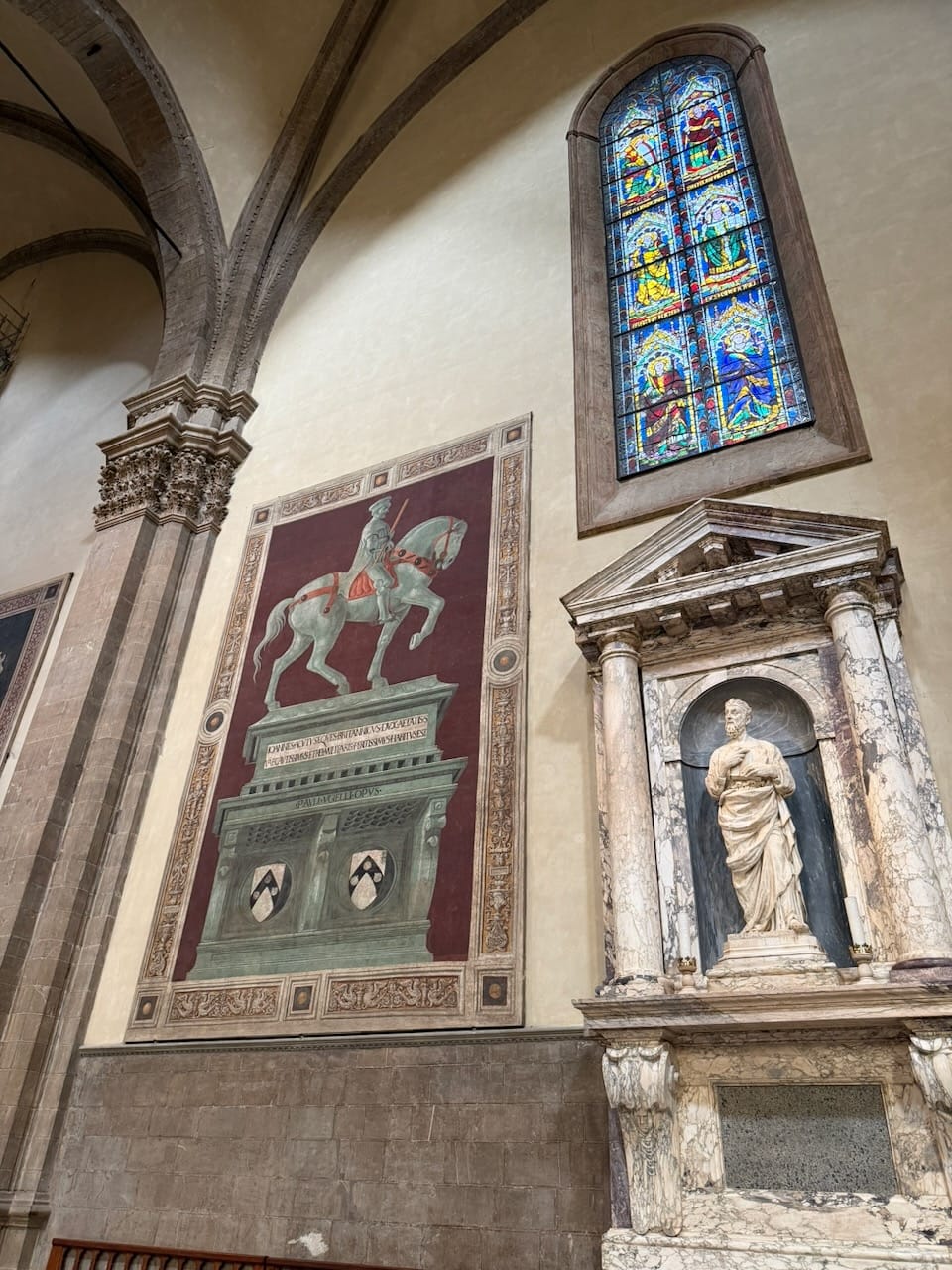

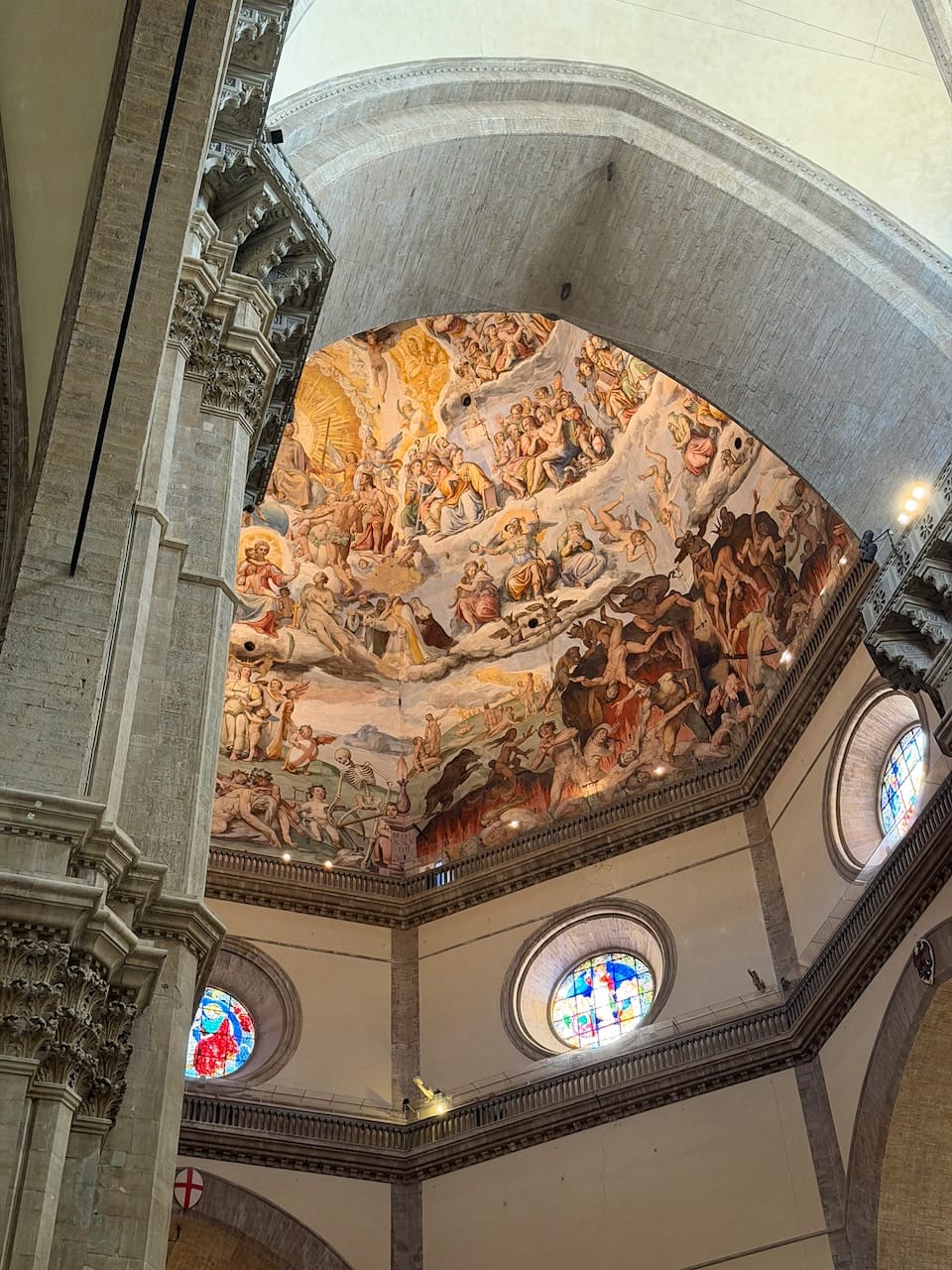
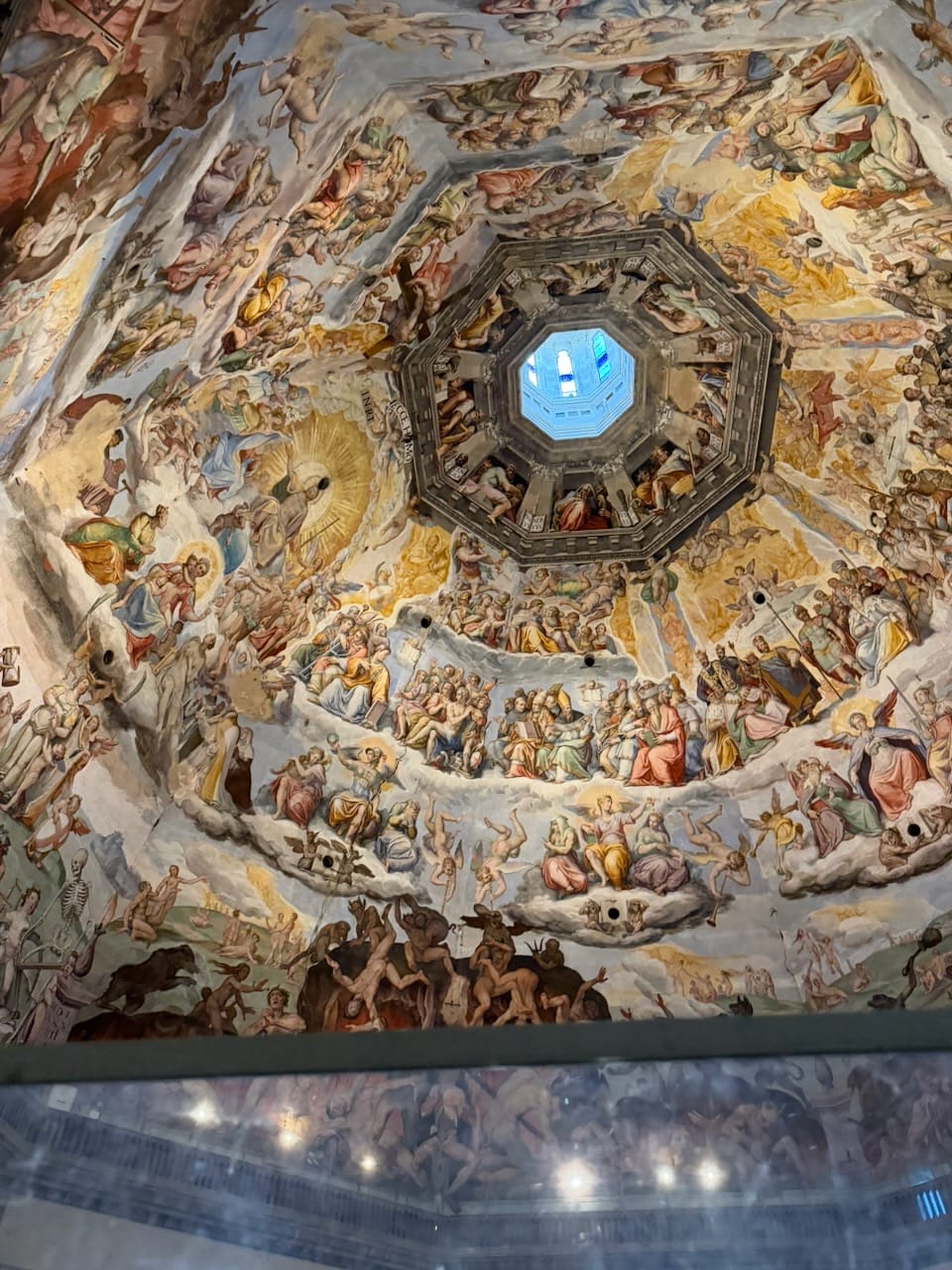
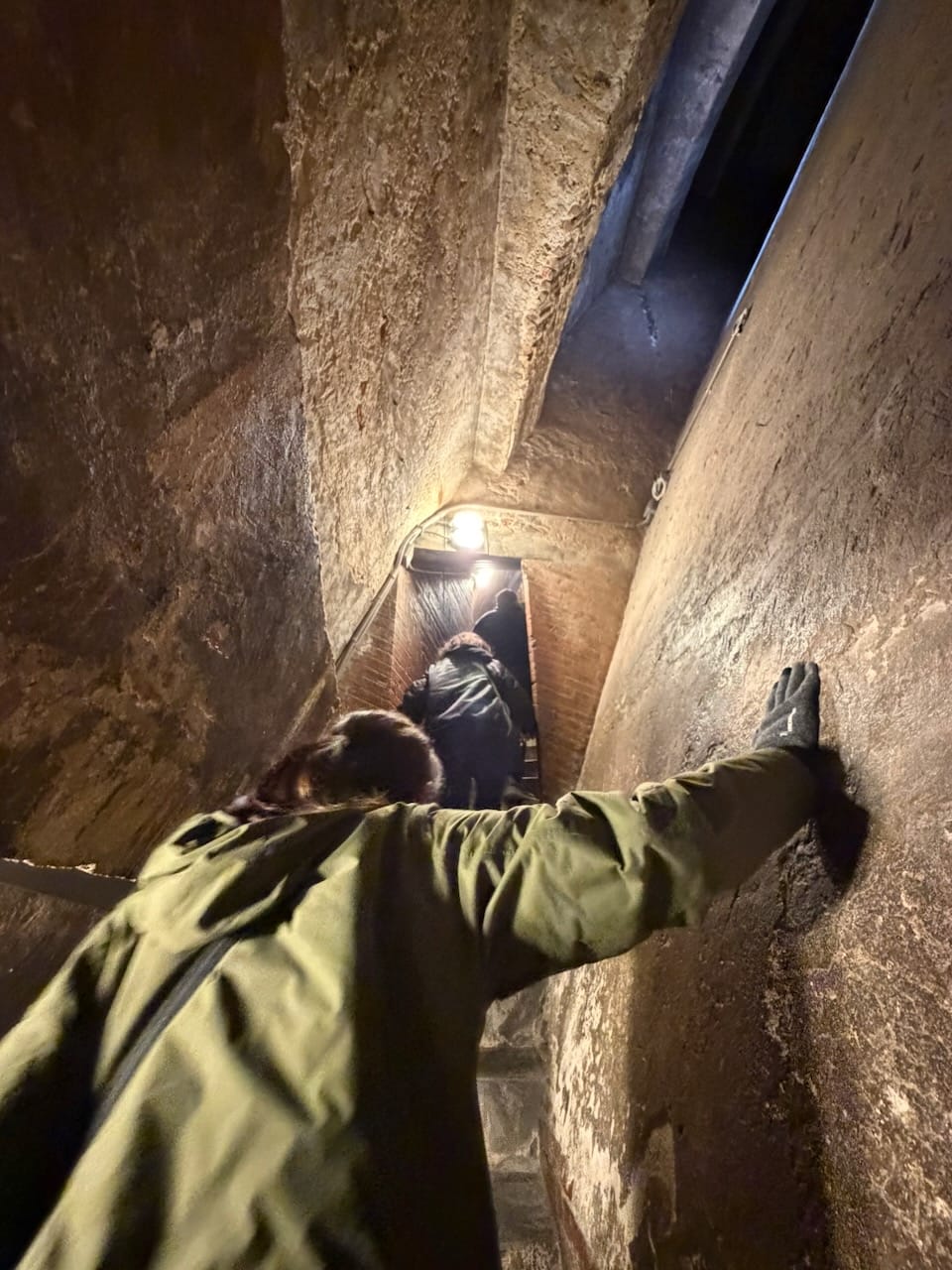
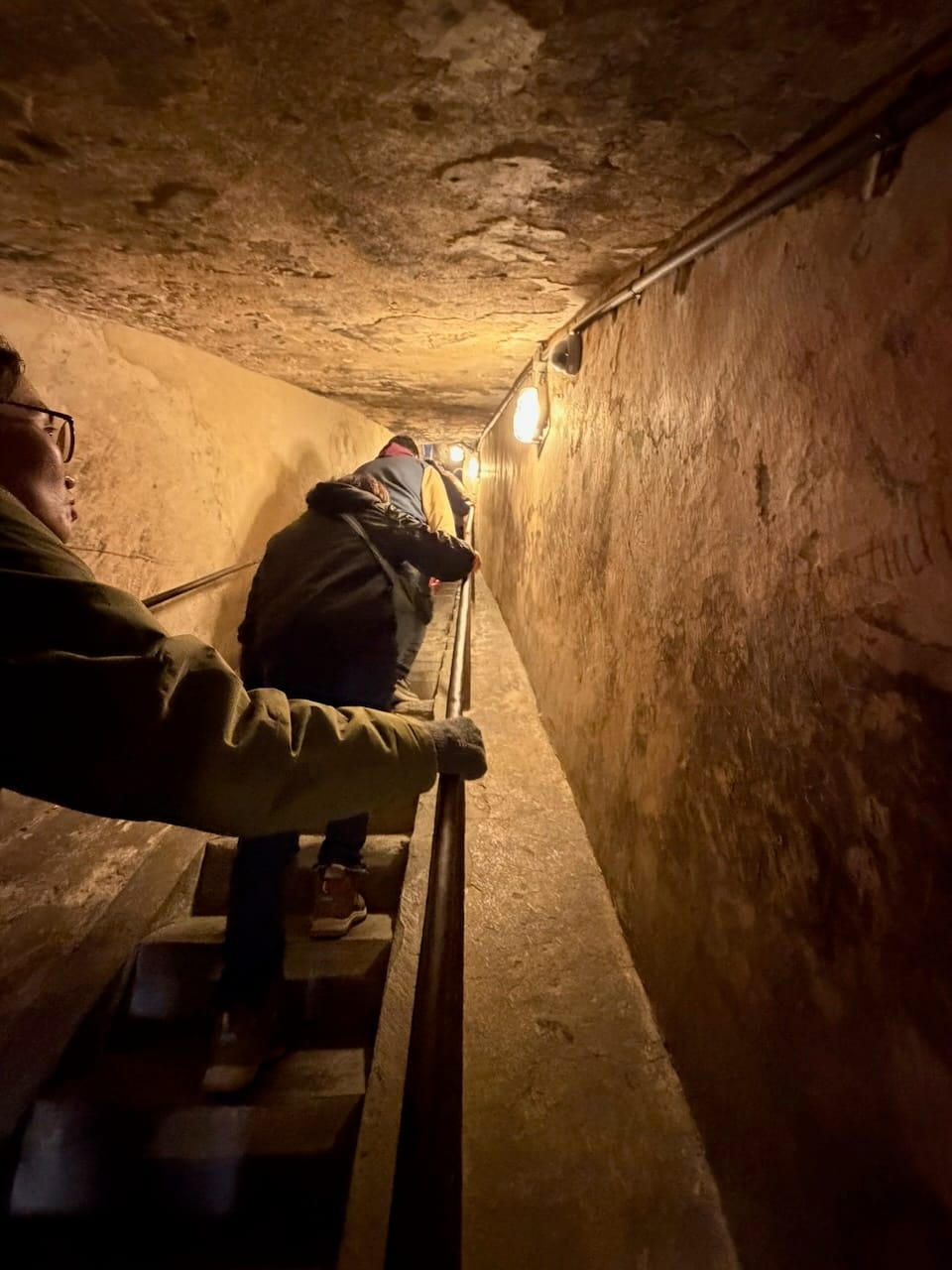
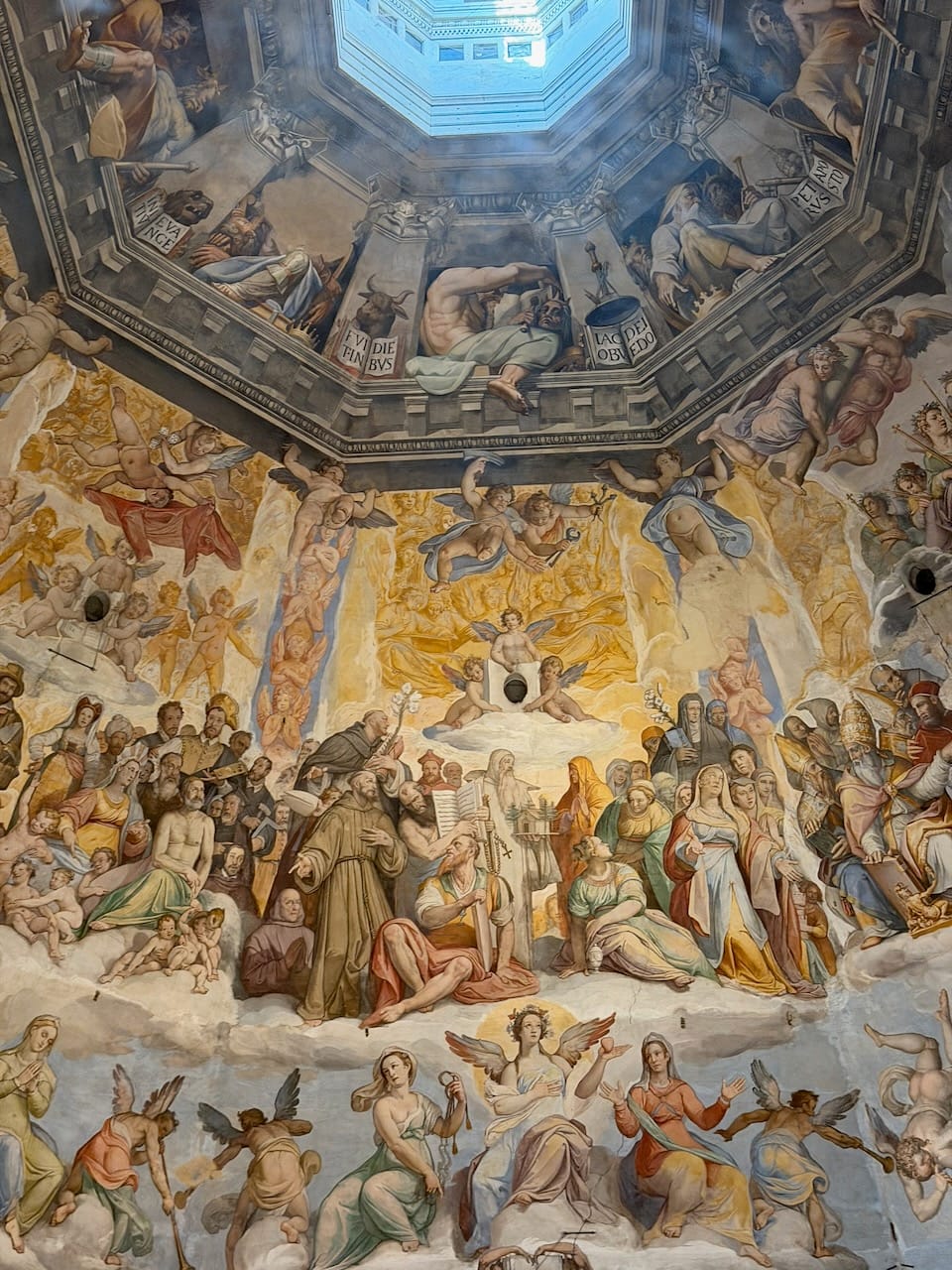
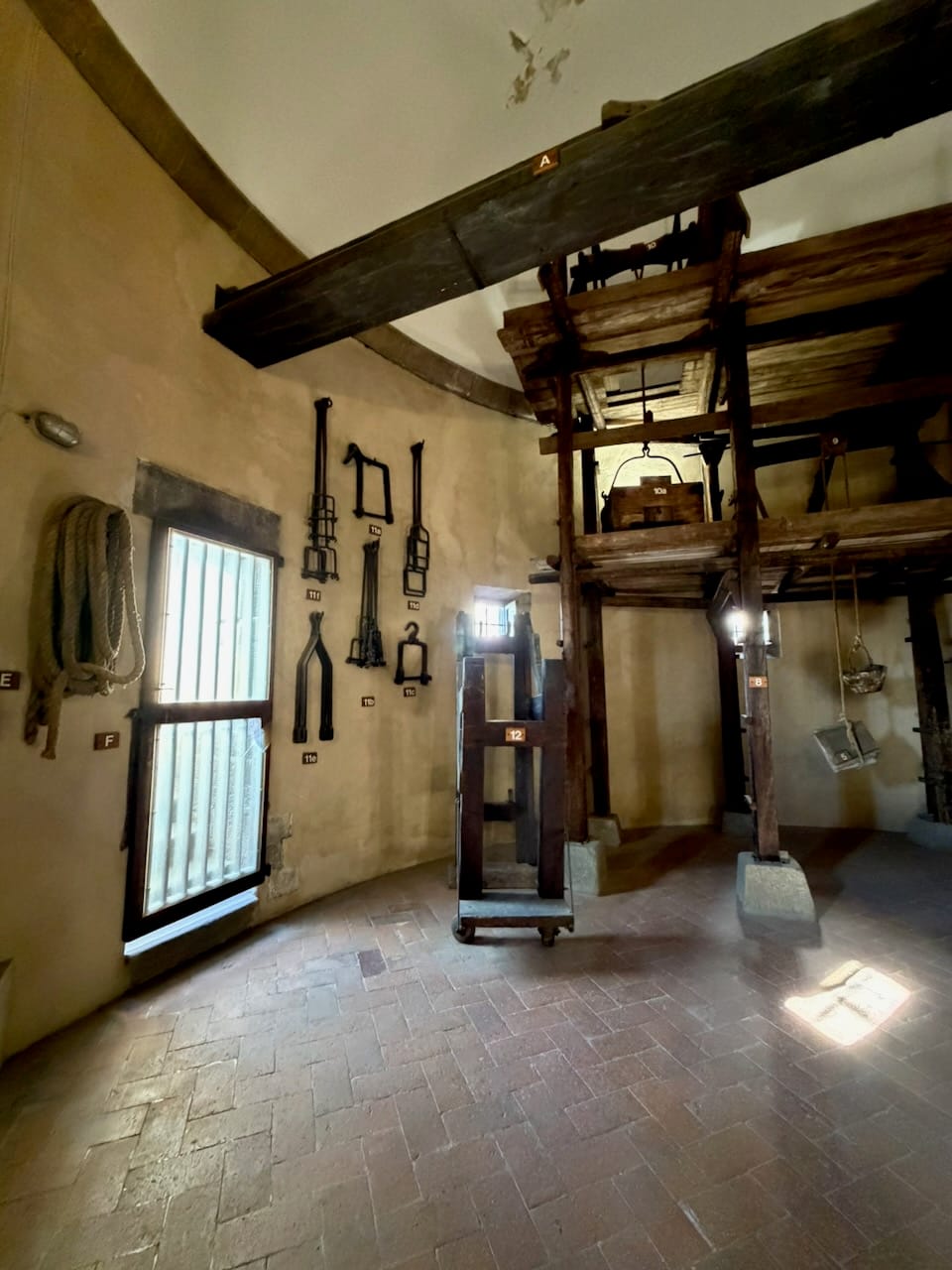
The climb itself was 463 steps. Not easy, but not too tough either. The real challenge was the narrowness of the passageways. At several points, I completely understood why time slot reservations were necessary; there’s simply no safe way for people to go up and down at the same time. About halfway up, we reached the inner circular gallery (a platform running around the inside of the dome). From there, we could look directly at the massive fresco of The Last Judgment (although behind the glass fences), painted by Giorgio Vasari and Federico Zuccari, covering the interior of the dome. It felt like we were already near the top... We were not. That platform was only the halfway point. There were still more than 200 steps waiting for us.
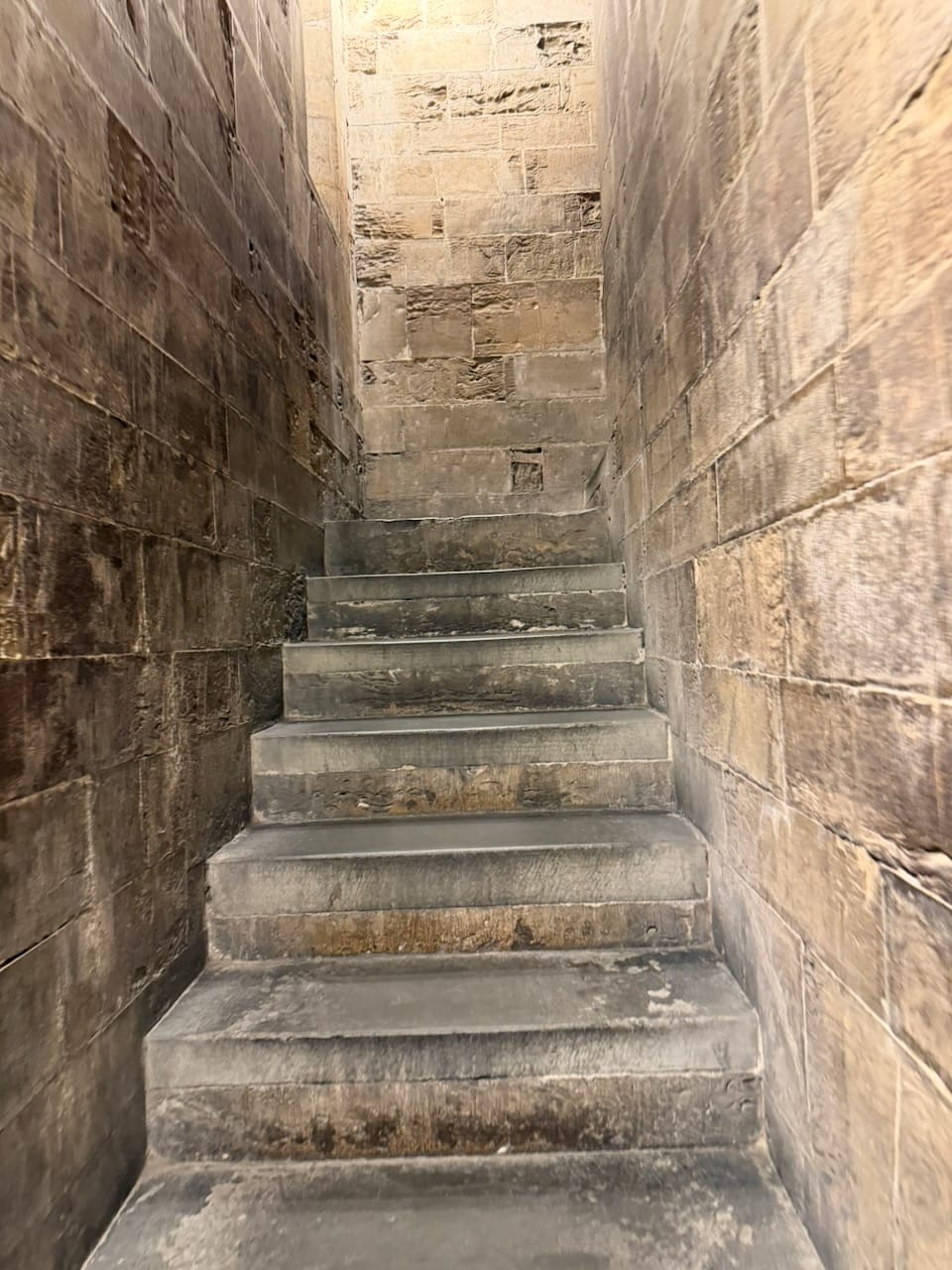
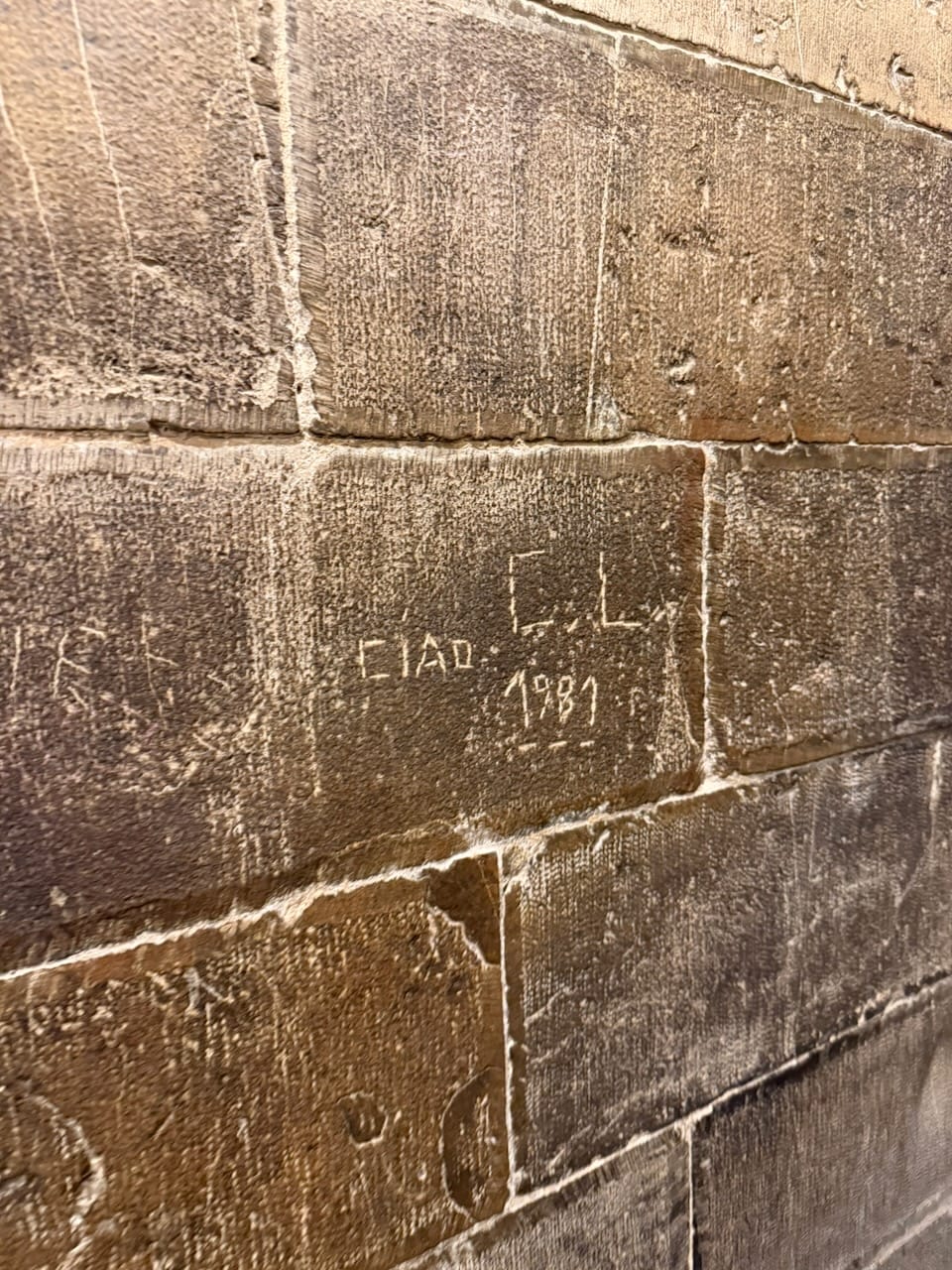
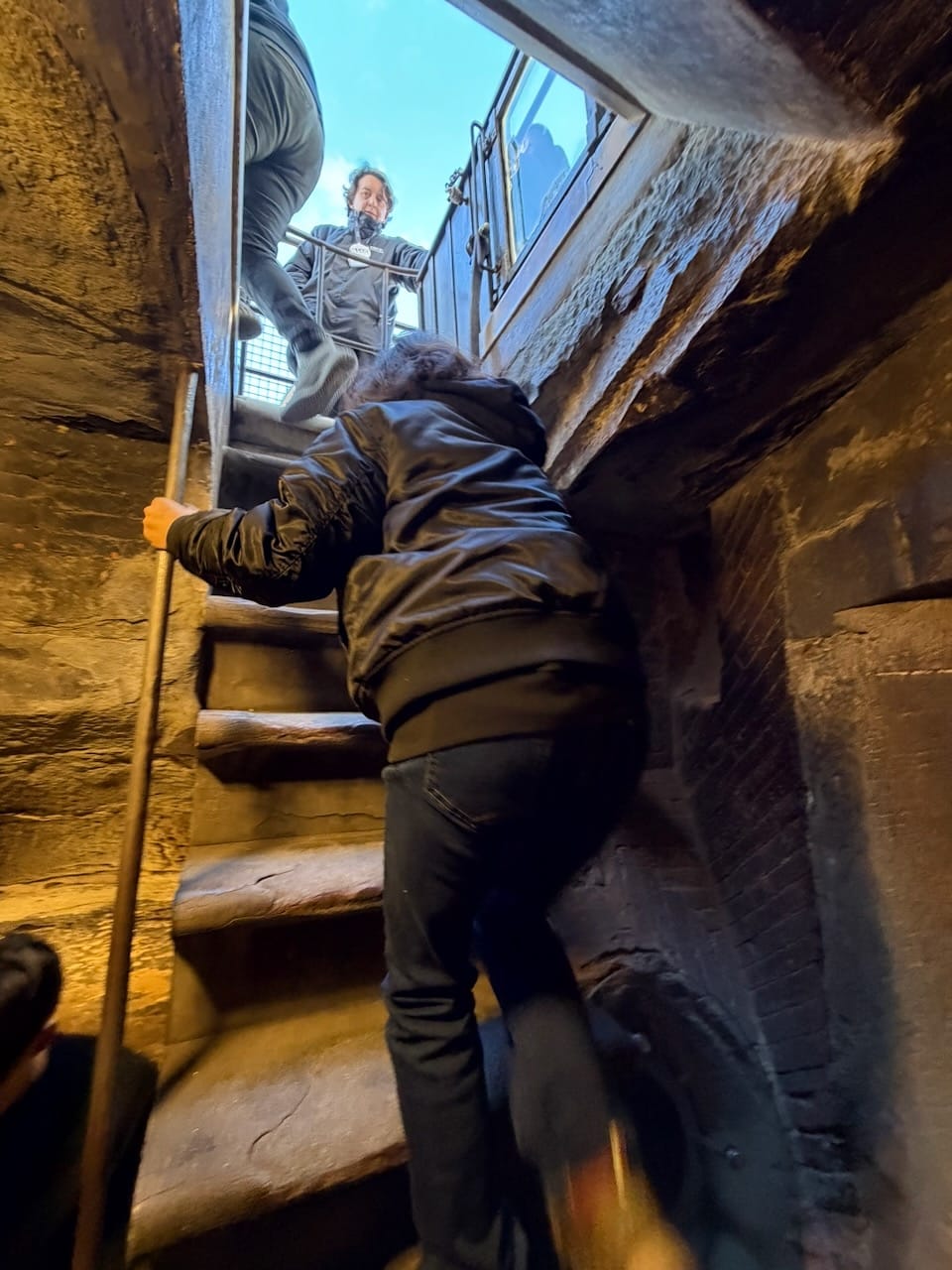
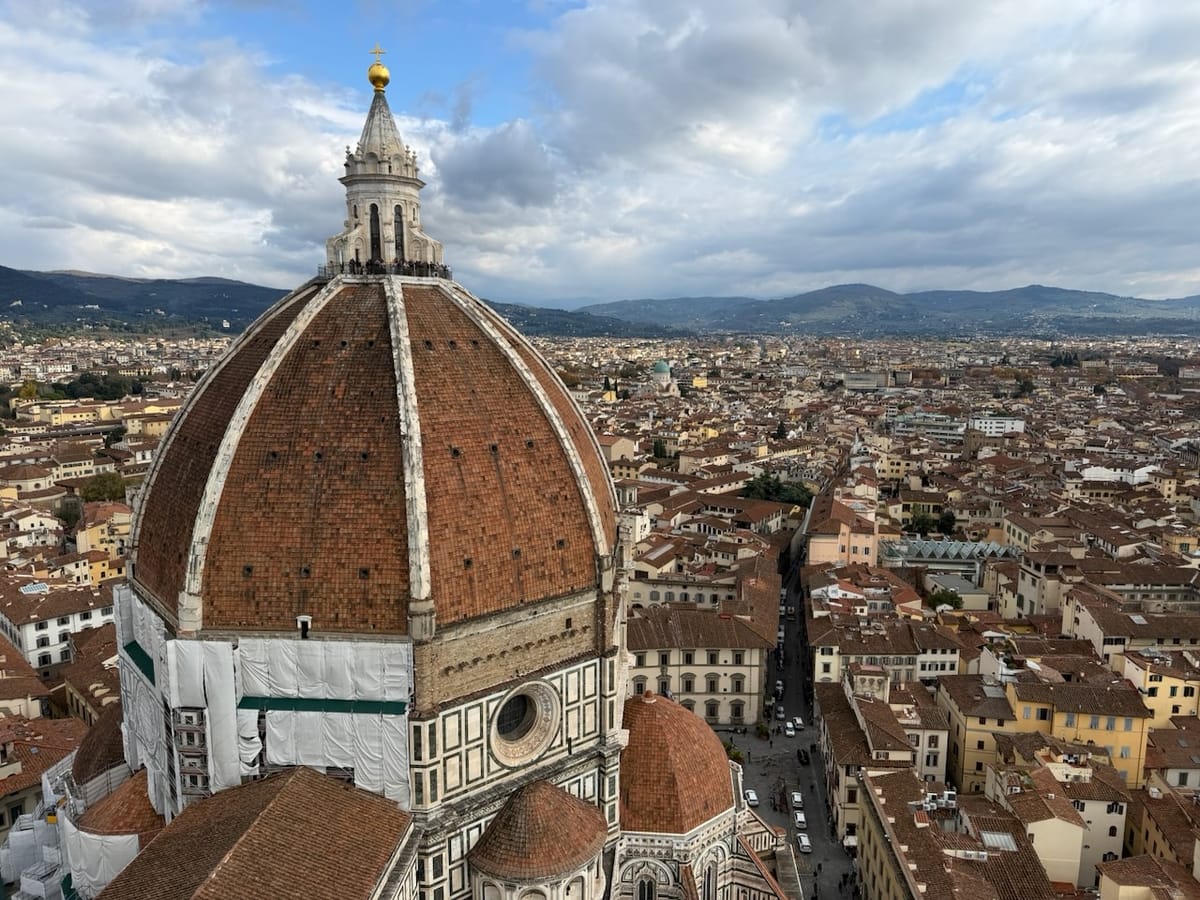
And the top was every bit as rewarding as a good climb should be. From there, we had a 360-degree panoramic view of Firenze. The rainy days in Rome had finally cleared in Firenze, and the sky opened up just in time, making the city below look almost unreal. It was the perfect reward.
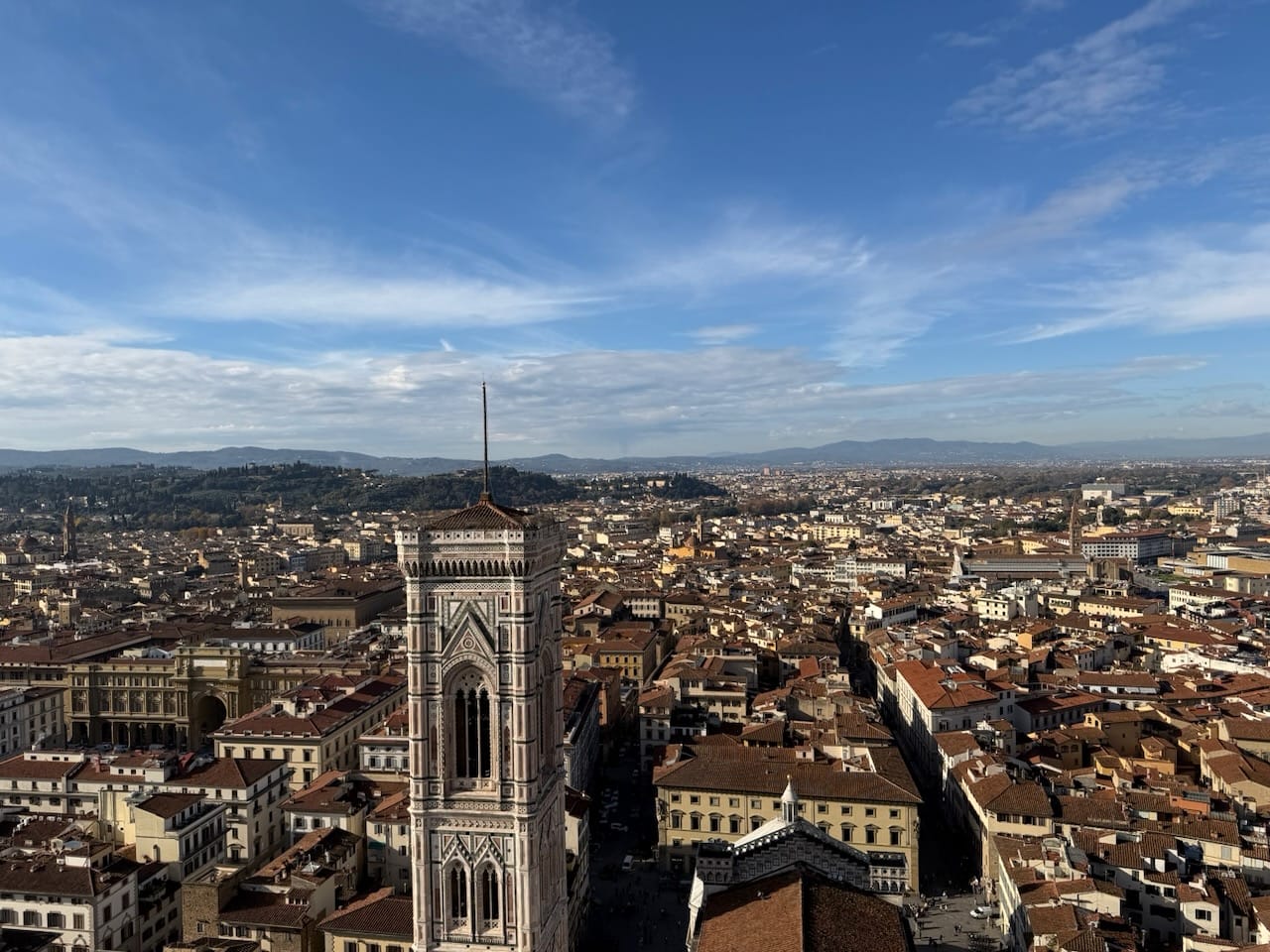
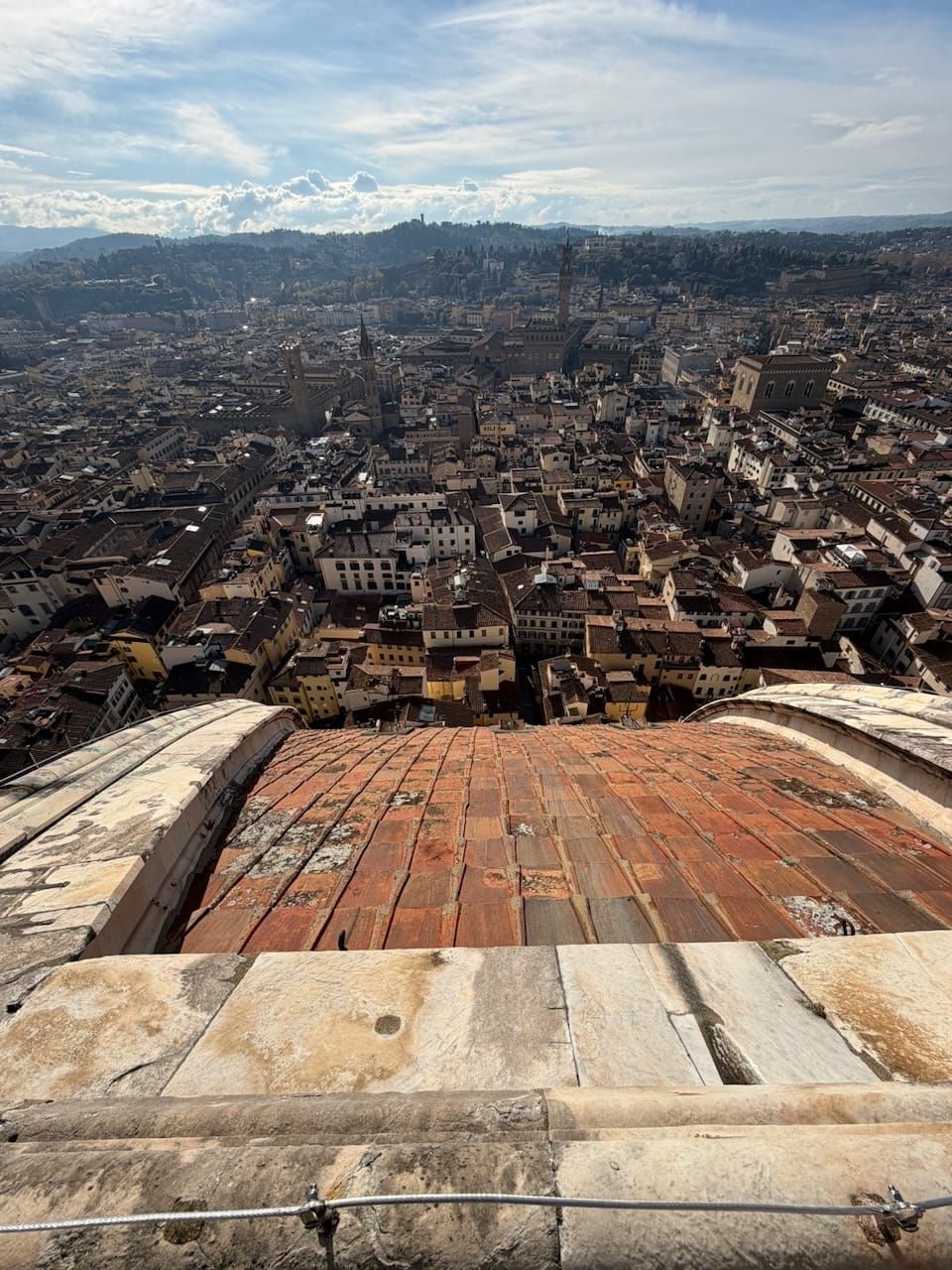
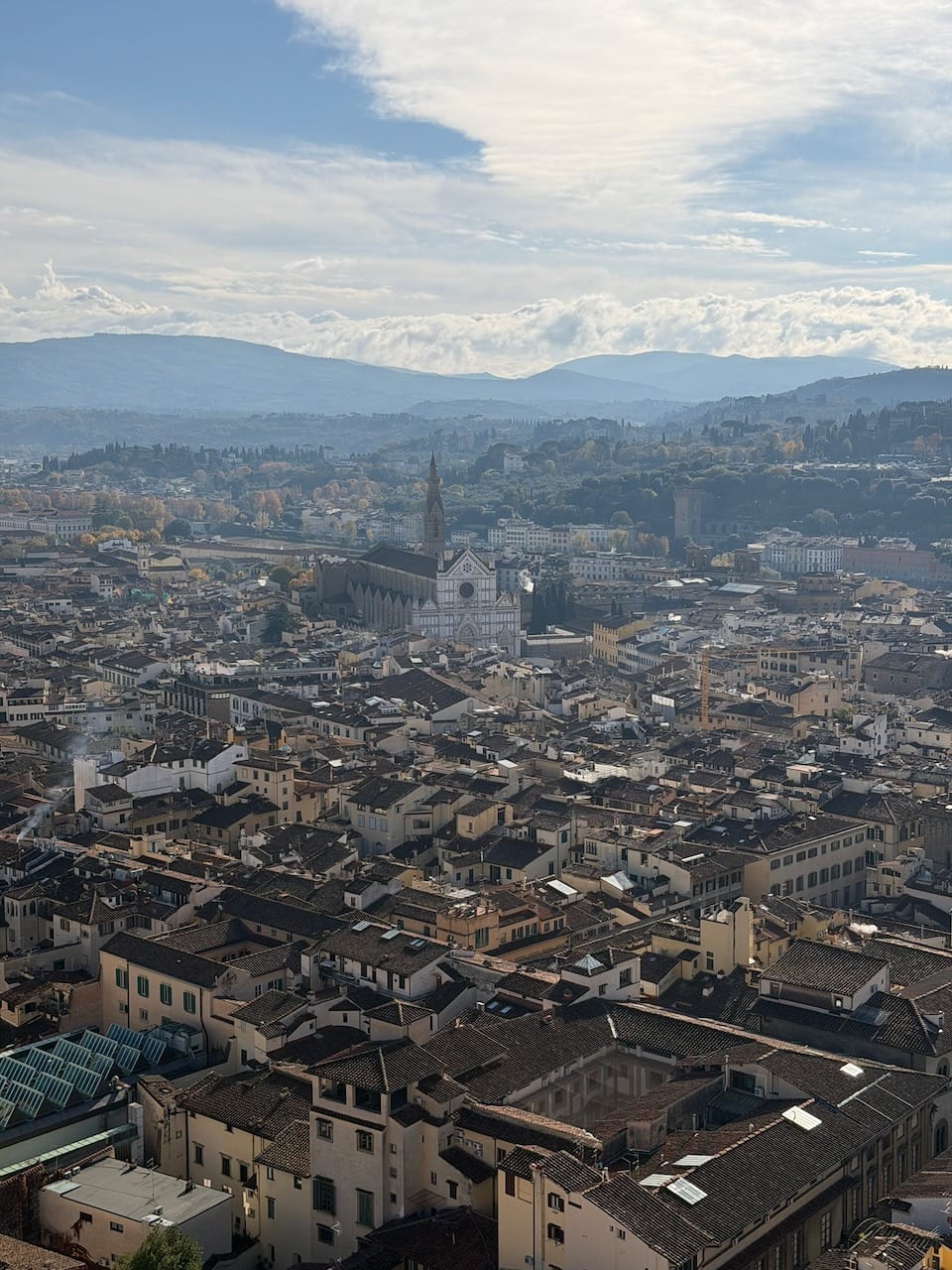
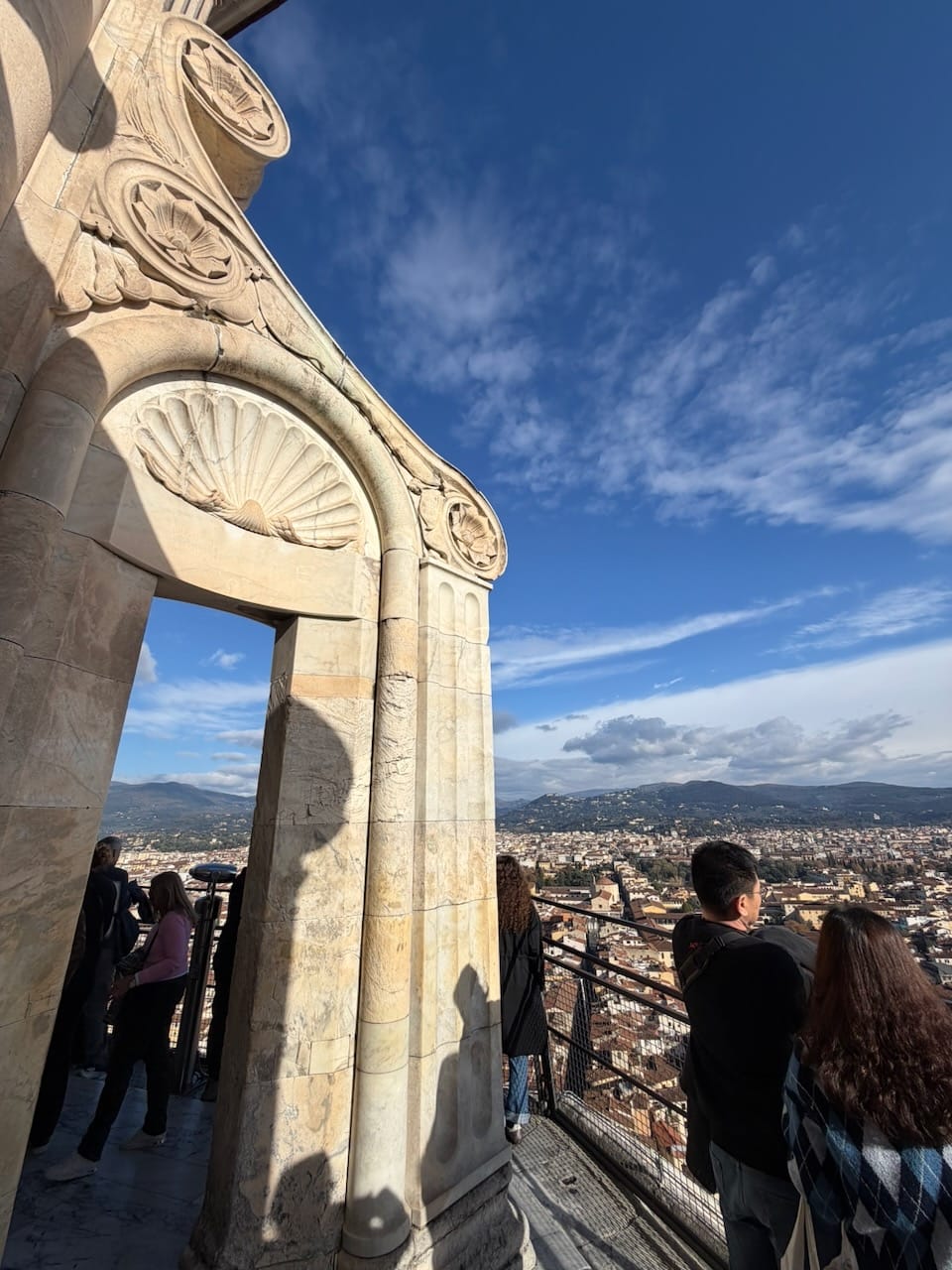
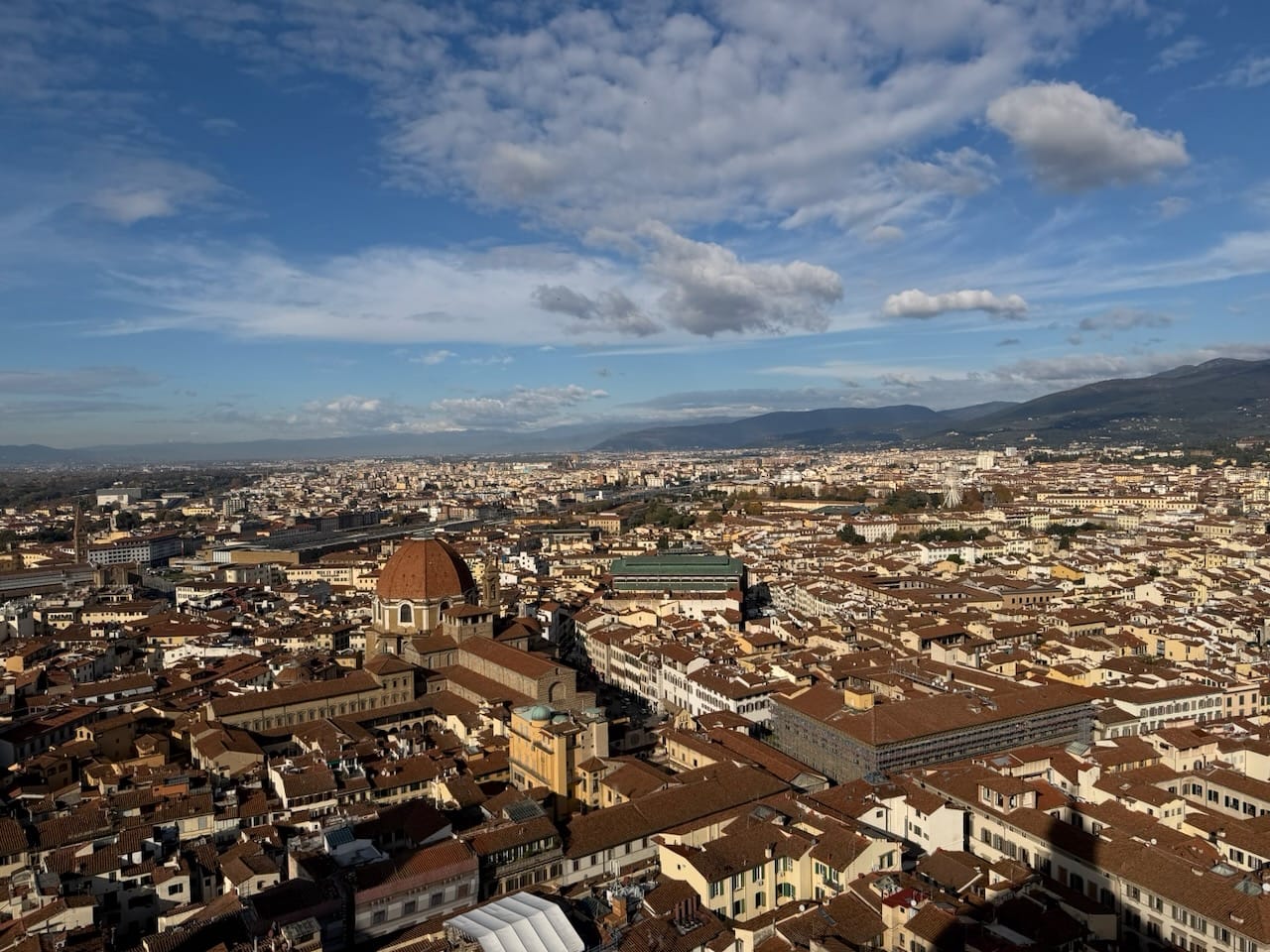
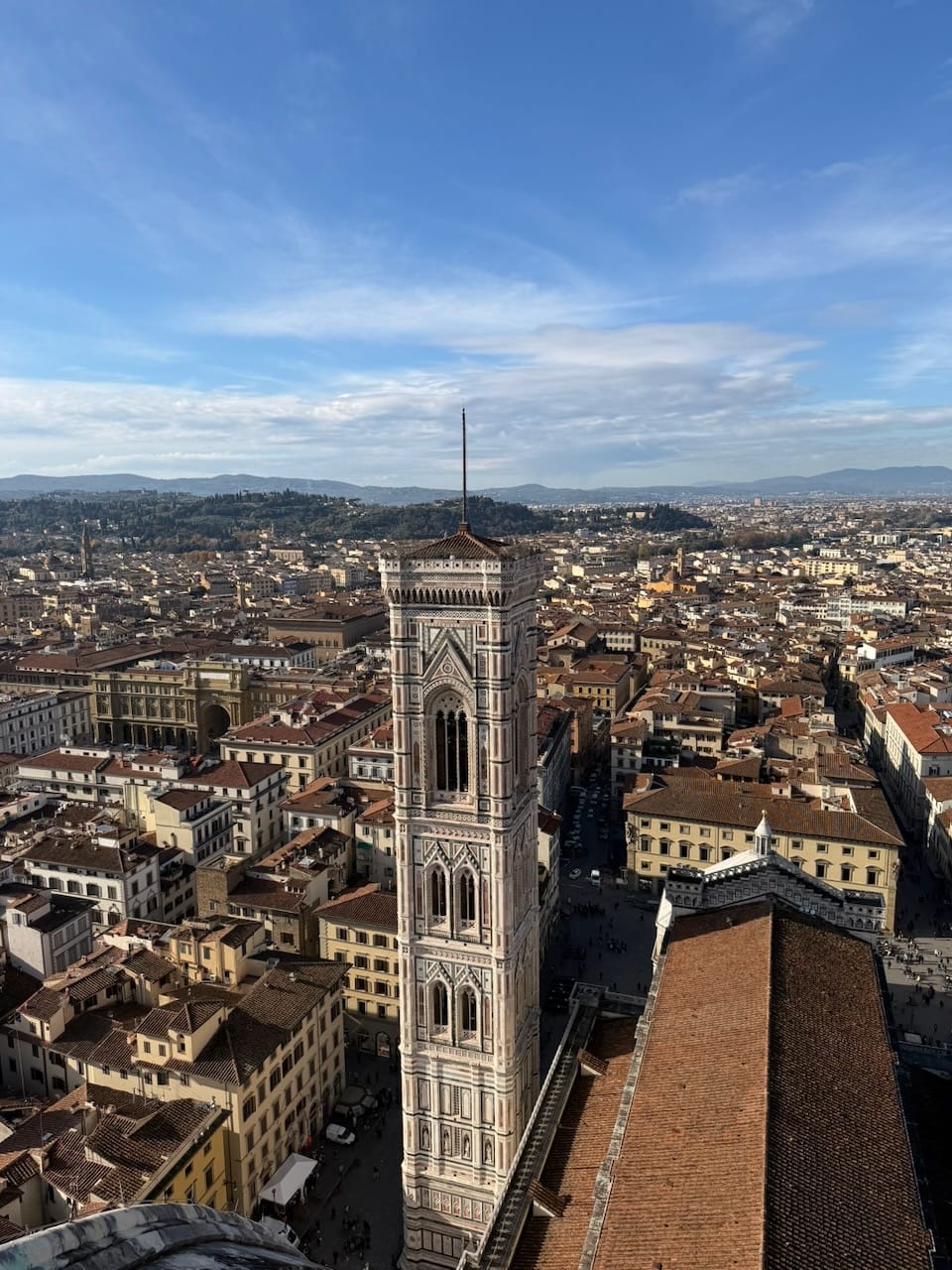
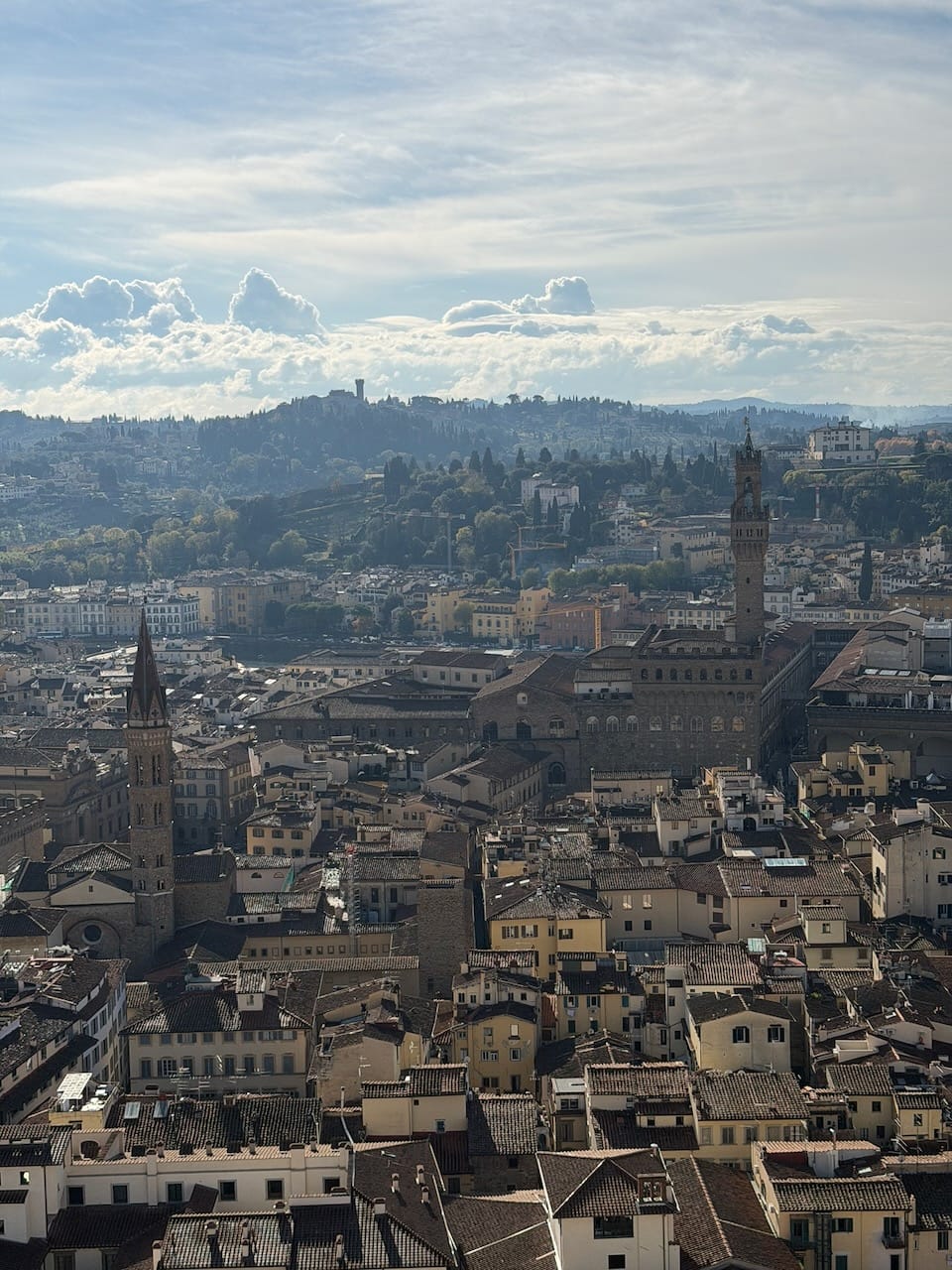
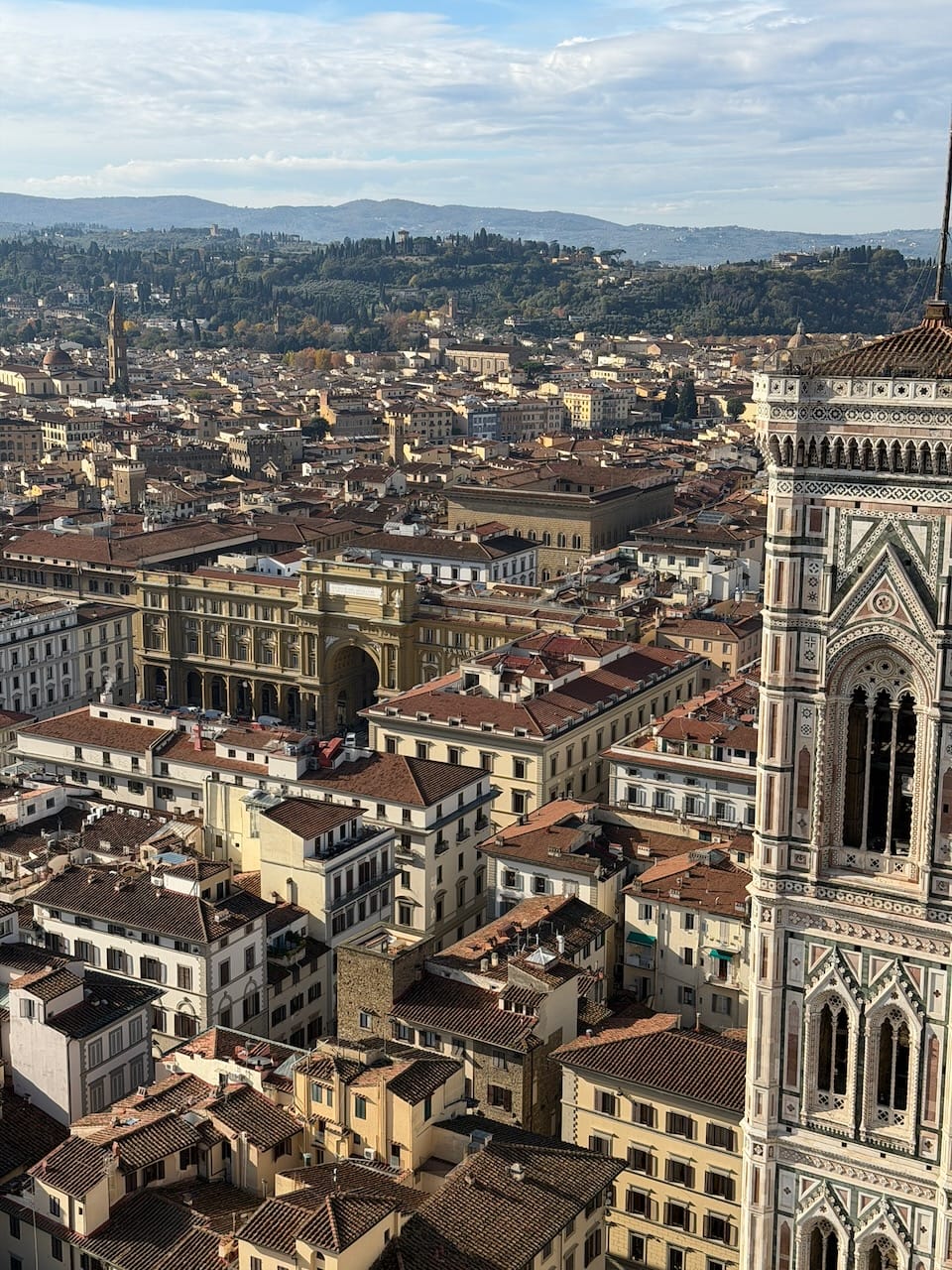
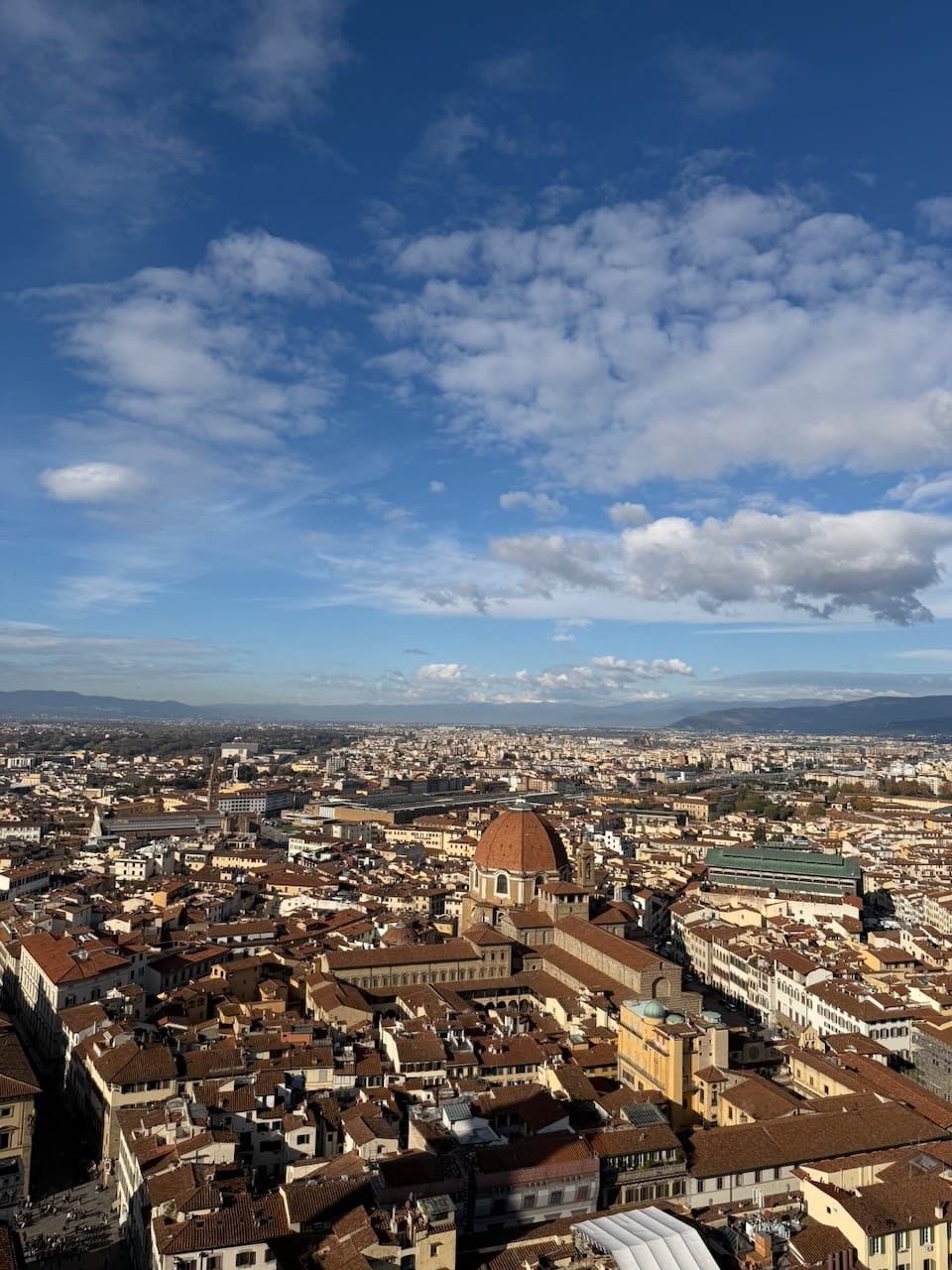
from the top of the Duomo
The way down was much easier, though we still had to be careful as the stairs were steep and narrow. This time, the crowd had thinned, so we could look at The Last Judgment more freely, lingering a little longer with the artwork now that the climb was behind us.



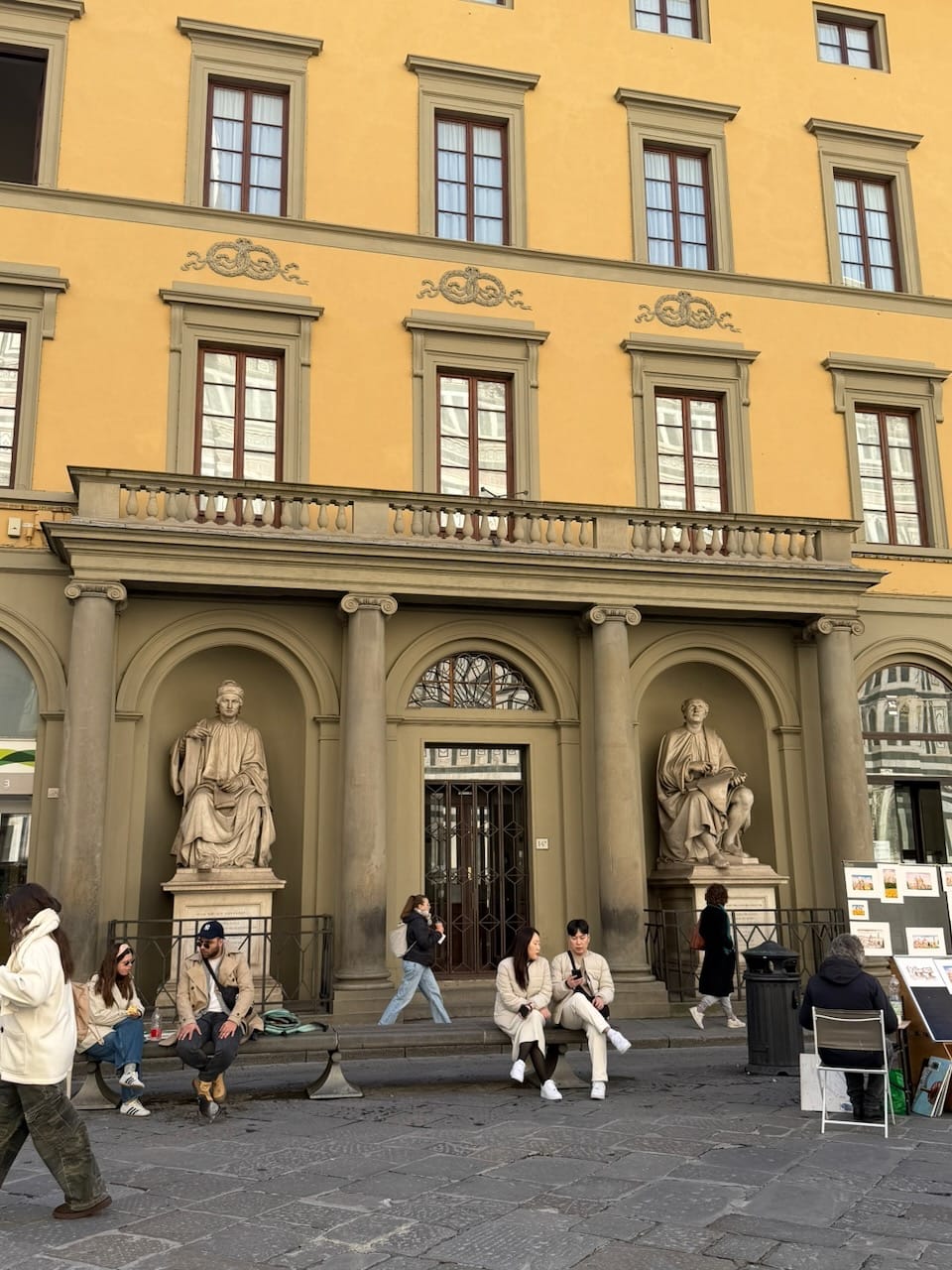
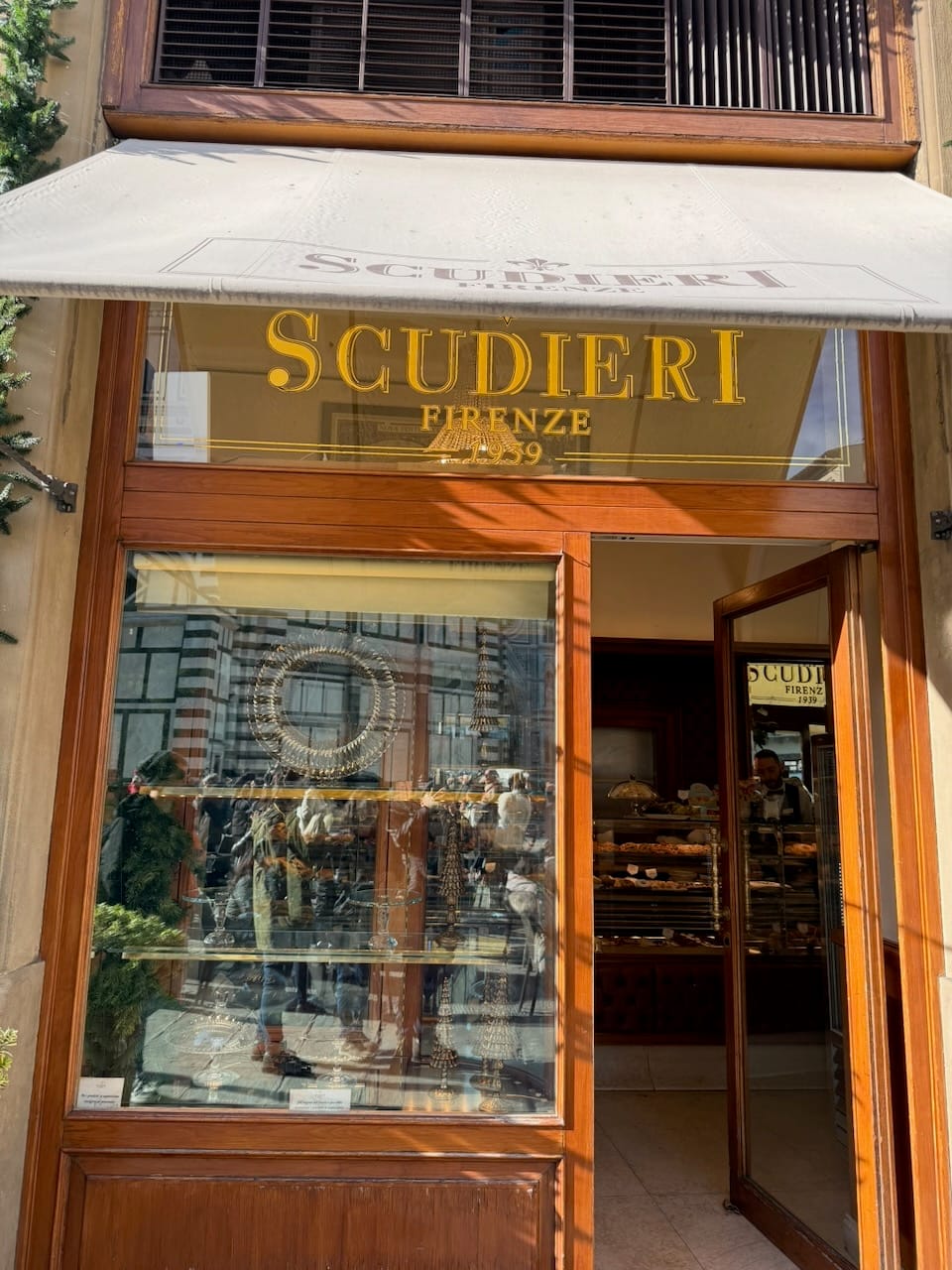
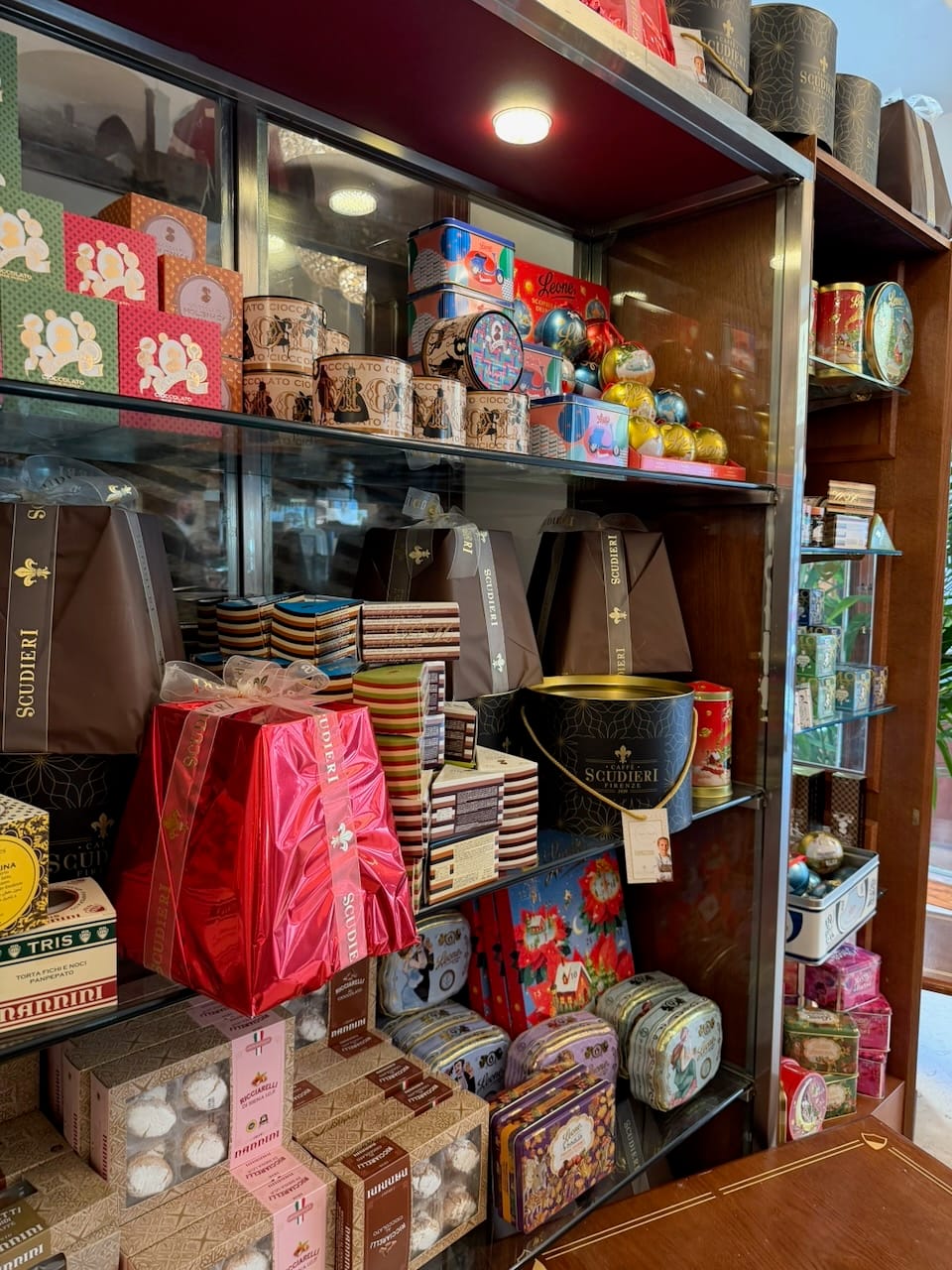
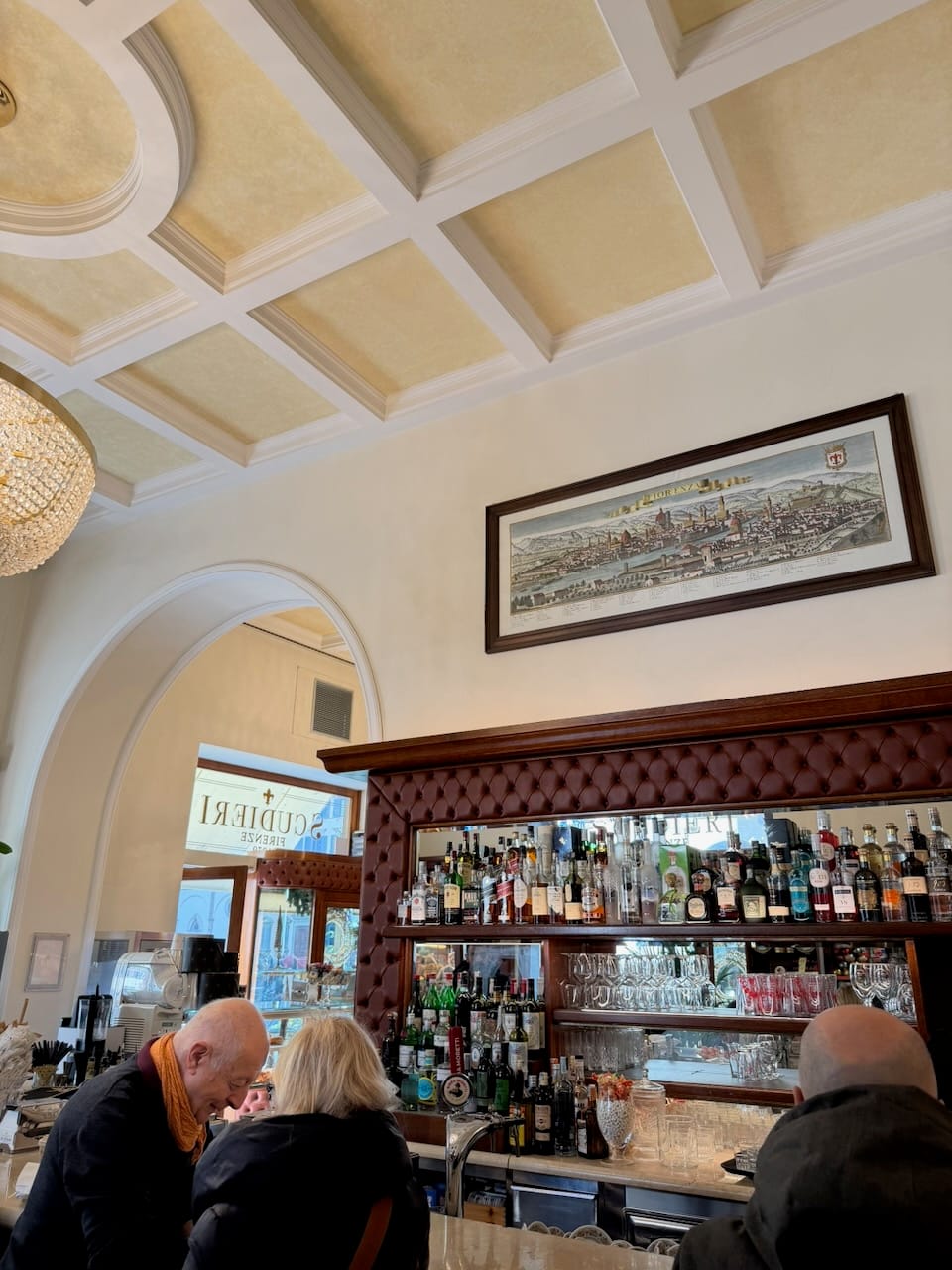
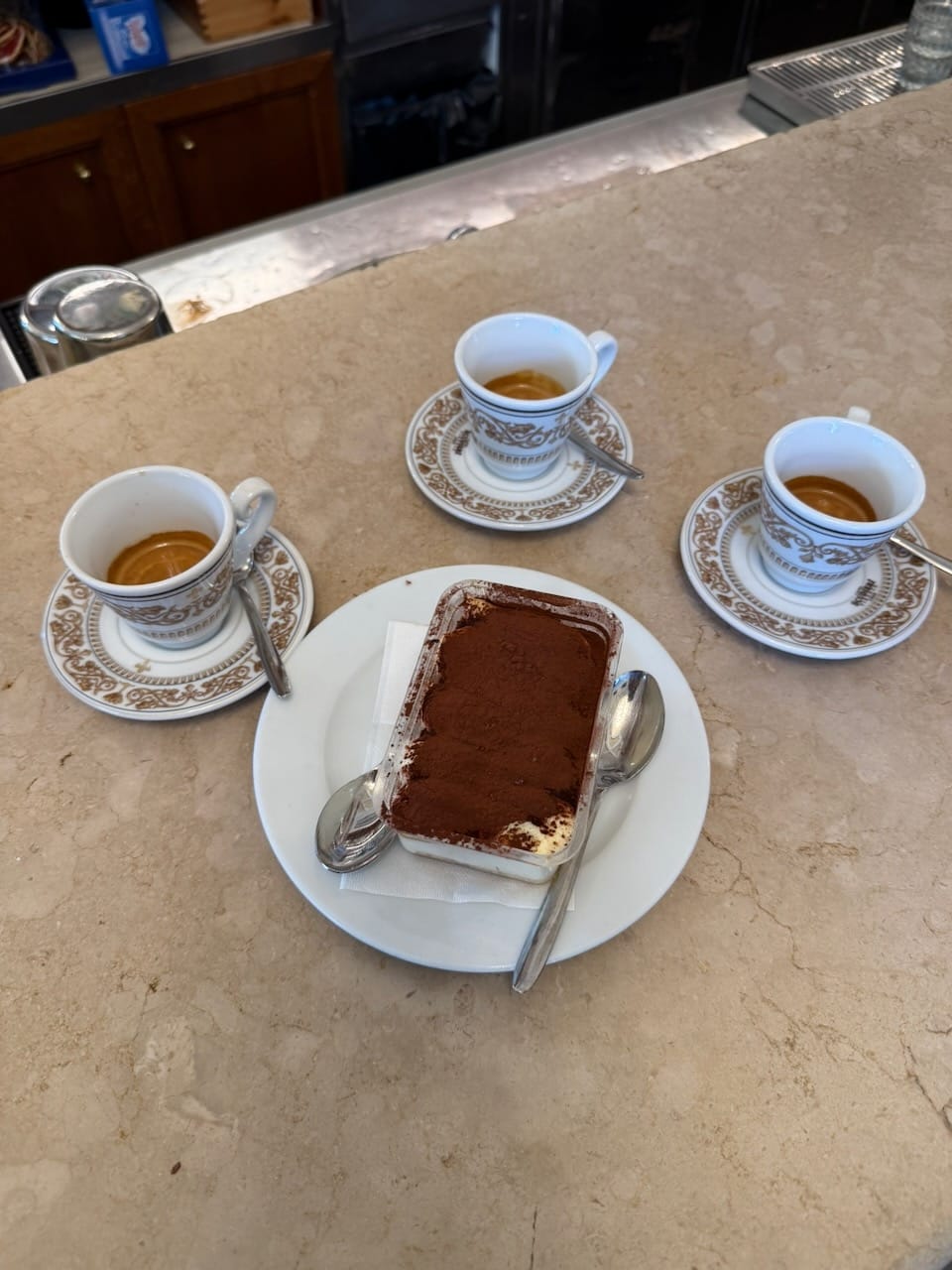
As always, restrooms were an issue. We couldn’t find a public one before the climb—and, actually, we tried but the place Google Maps pointed us to was completely fake. So we did what experienced travelers do: we found a cafe, and Scudieri saved us. A cafe is always the best solution when you need a restroom. As a bonus, we enjoyed excellent espresso and a very good tiramisu before moving on.

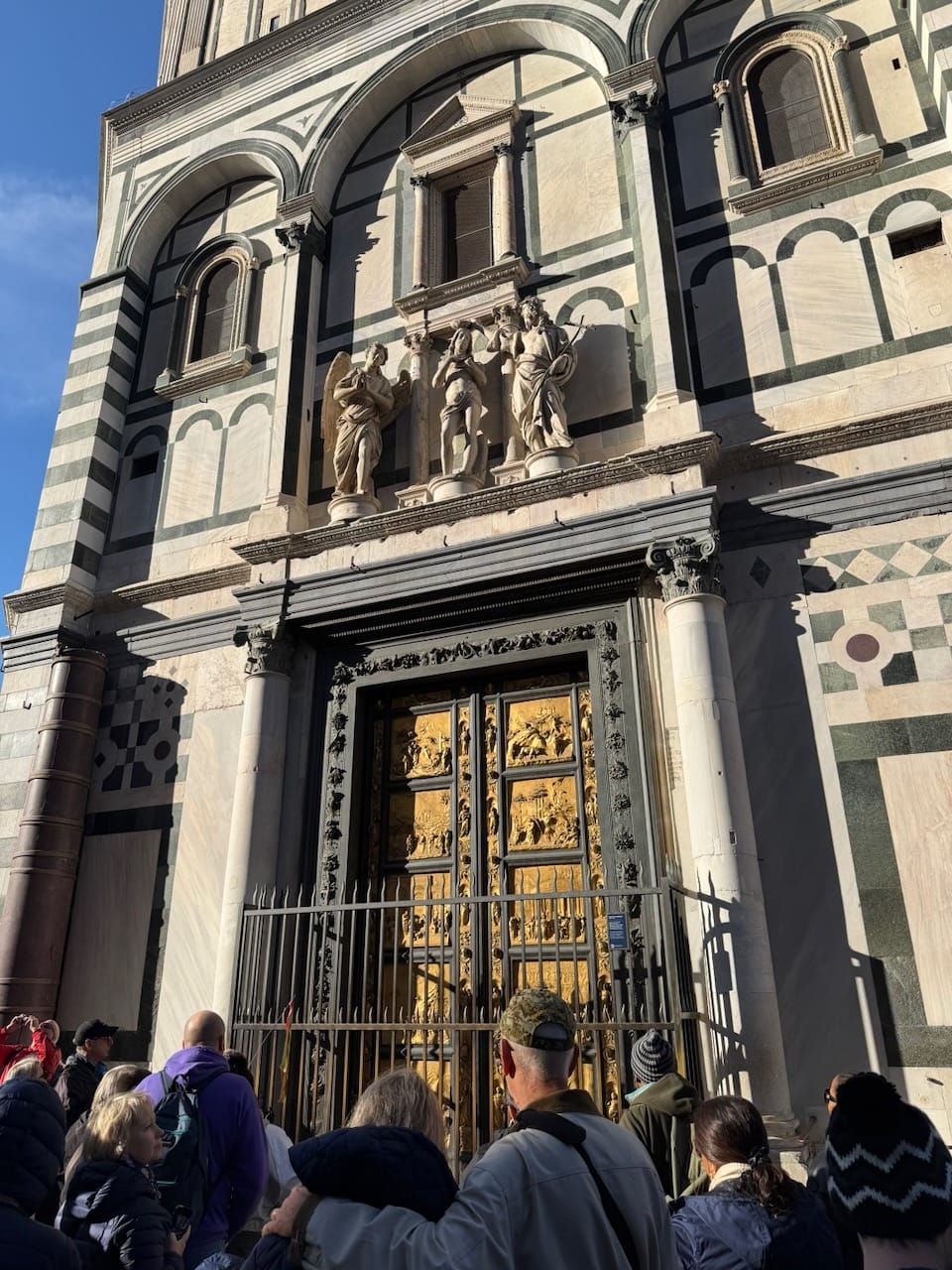
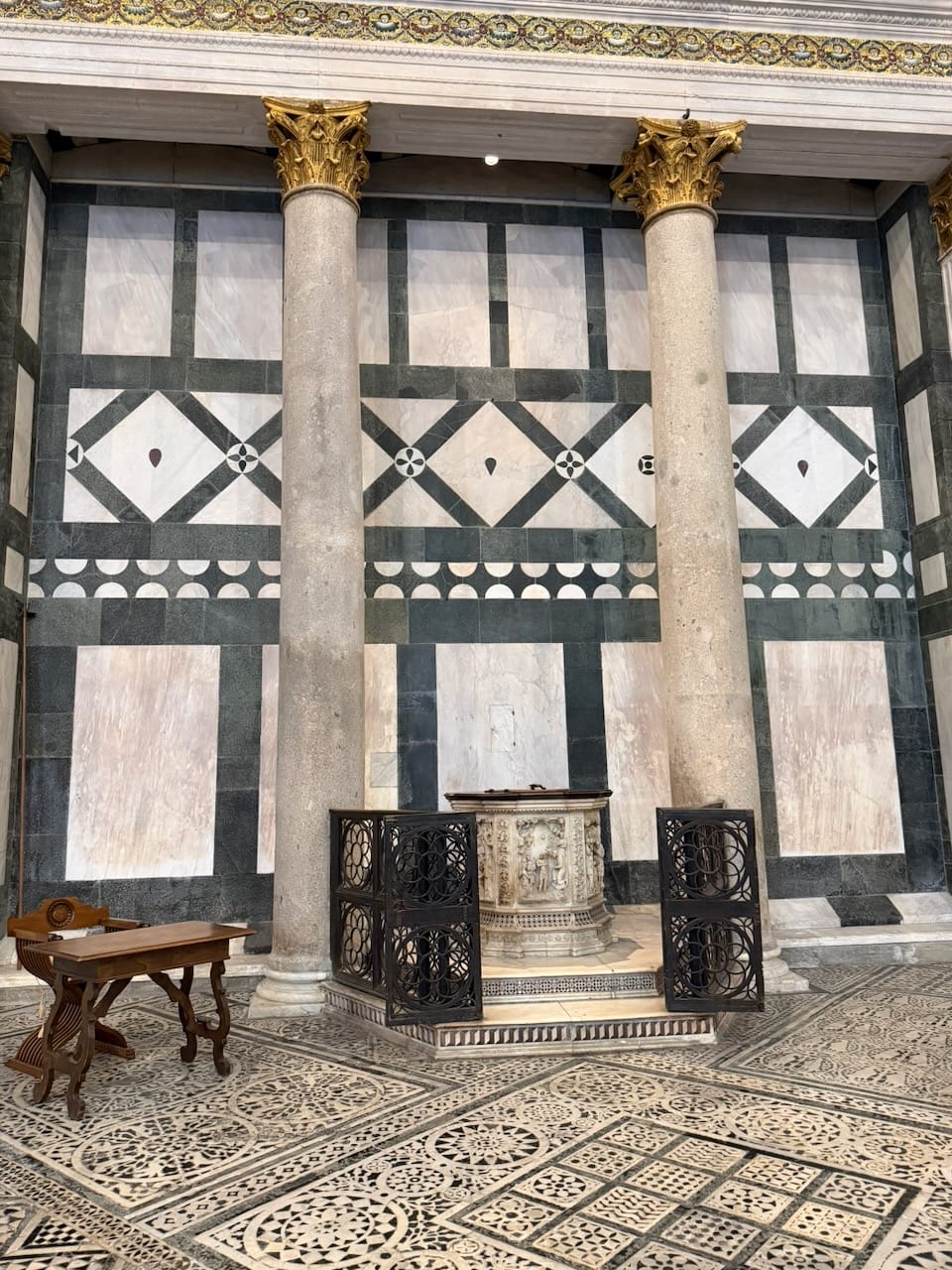
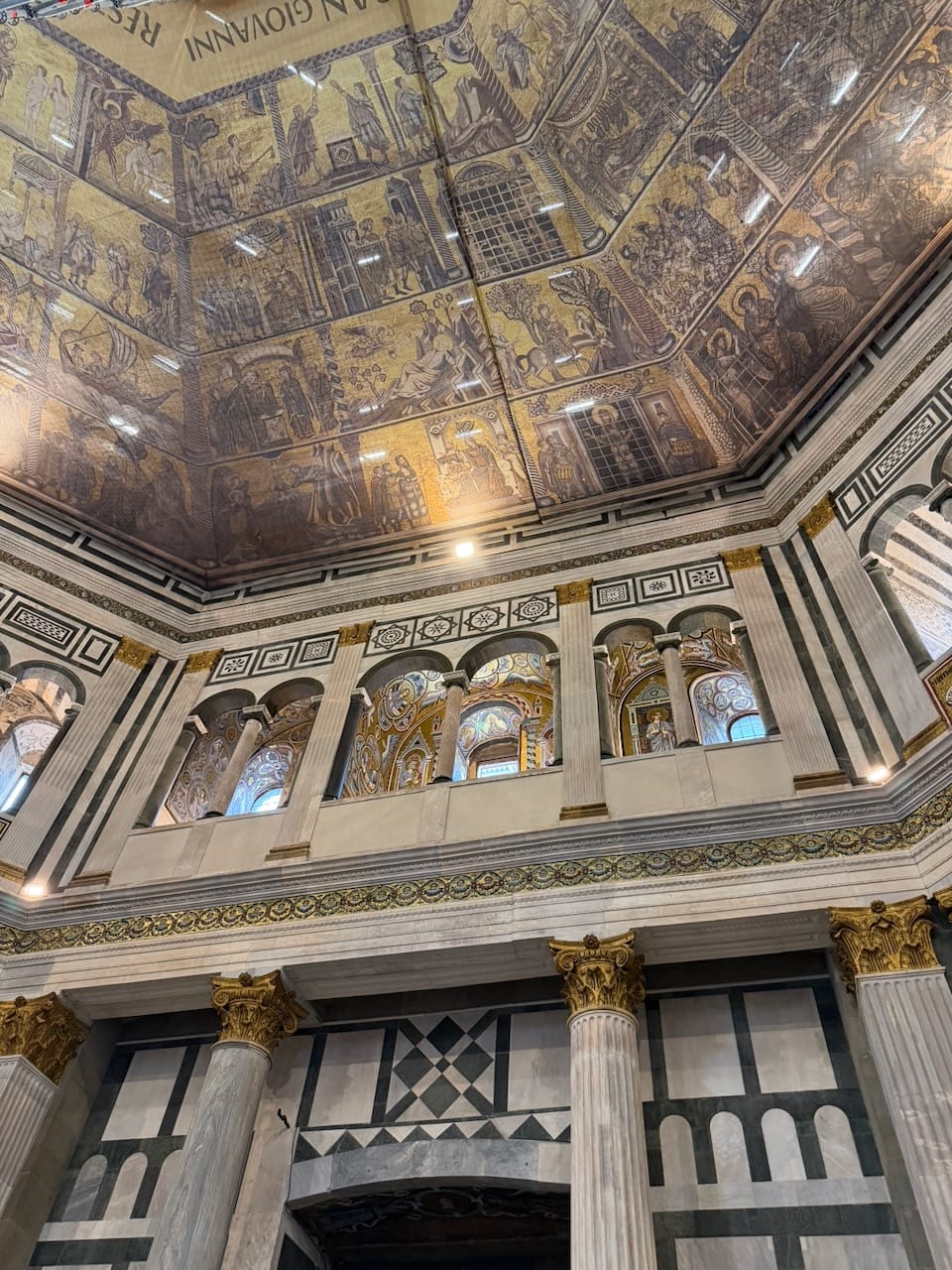
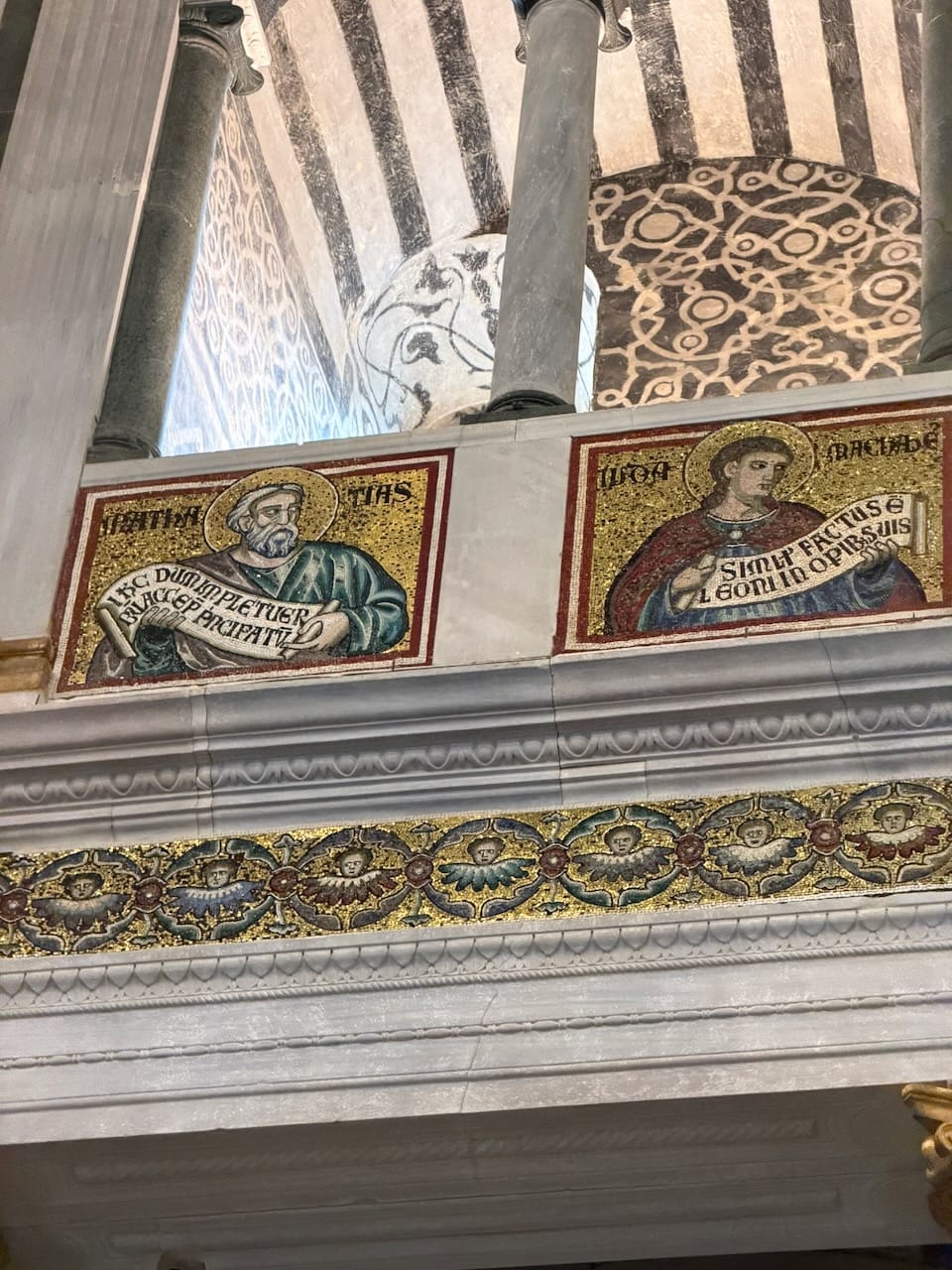
We were eager to make the most of our Brunelleschi Pass, but when we saw the long line forming for Giotto’s Bell Tower, we decided to switch plans and head to the Baptistery instead. It’s famous for its bronze doors—especially the glowing “Gates of Paradise,” created by Lorenzo Ghiberti and covered with gold leaf, which is why they shine so brilliantly. Some parts were under renovation, which was a little disappointing, but the interior itself was still striking. Compared to the great basilicas of Rome, the space felt small, yet intensely focused and luminous. The golden mosaic ceiling seemed to float above us, quiet and timeless, as if the entire building existed for that single shimmering surface.
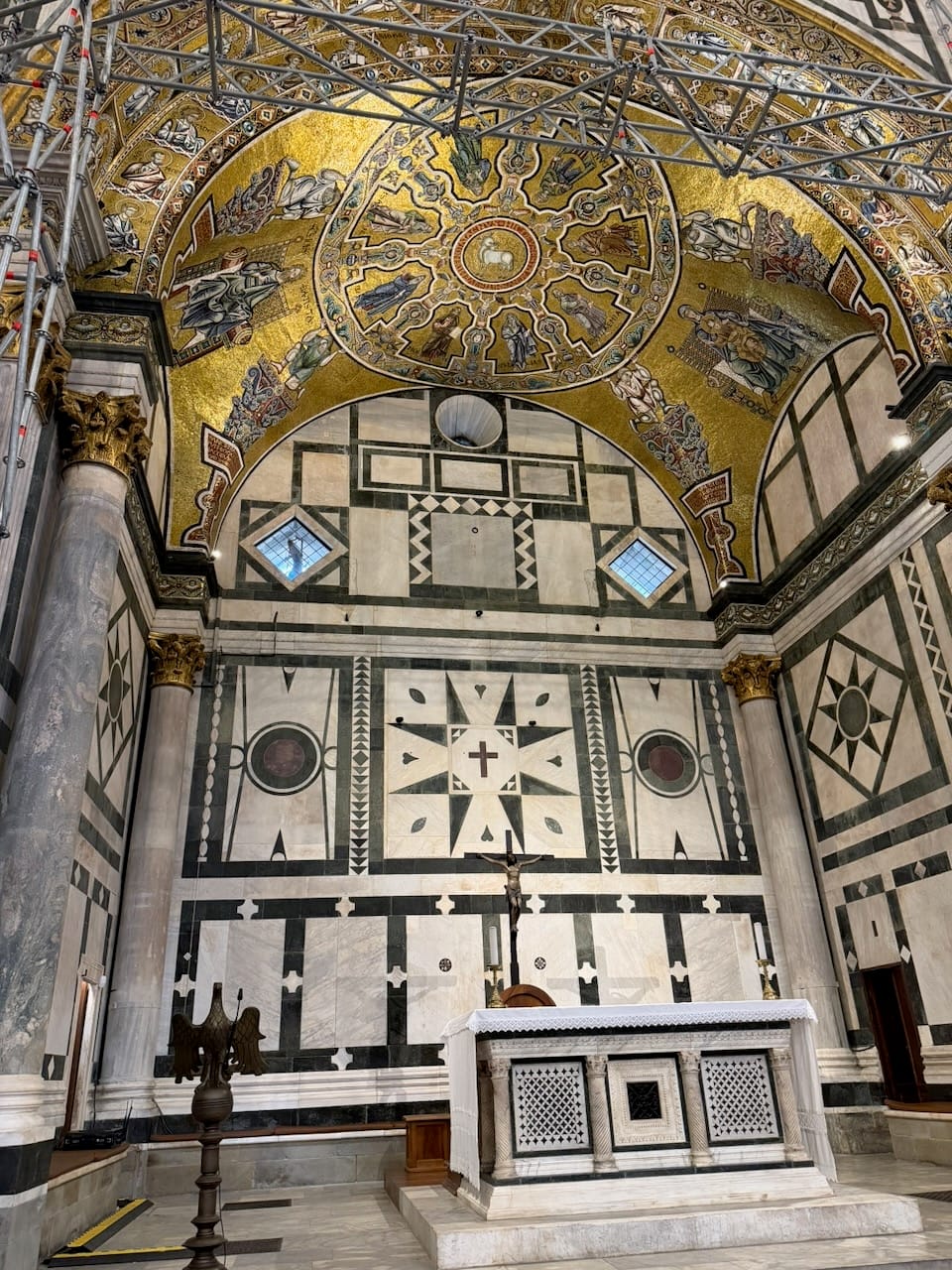
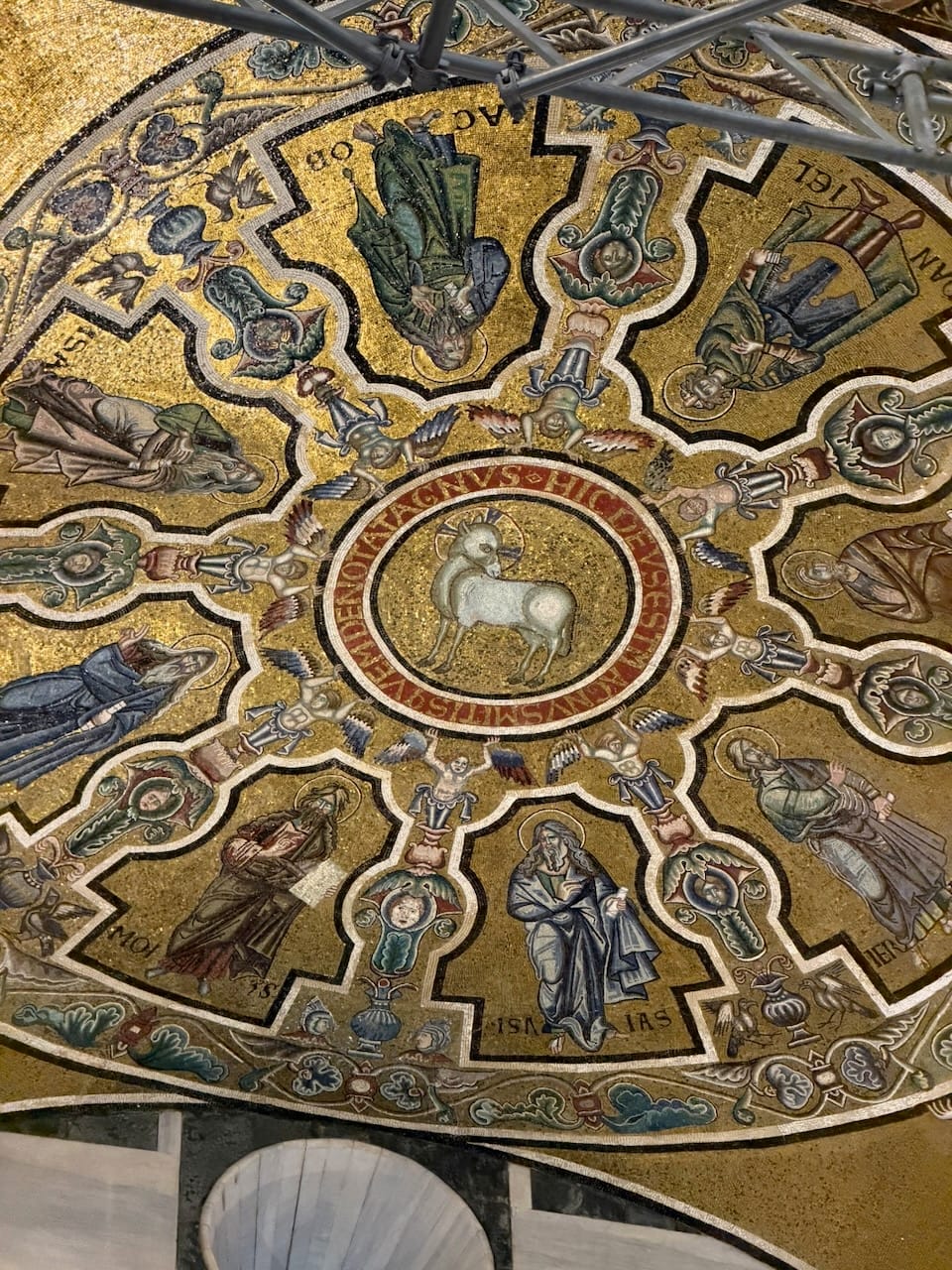
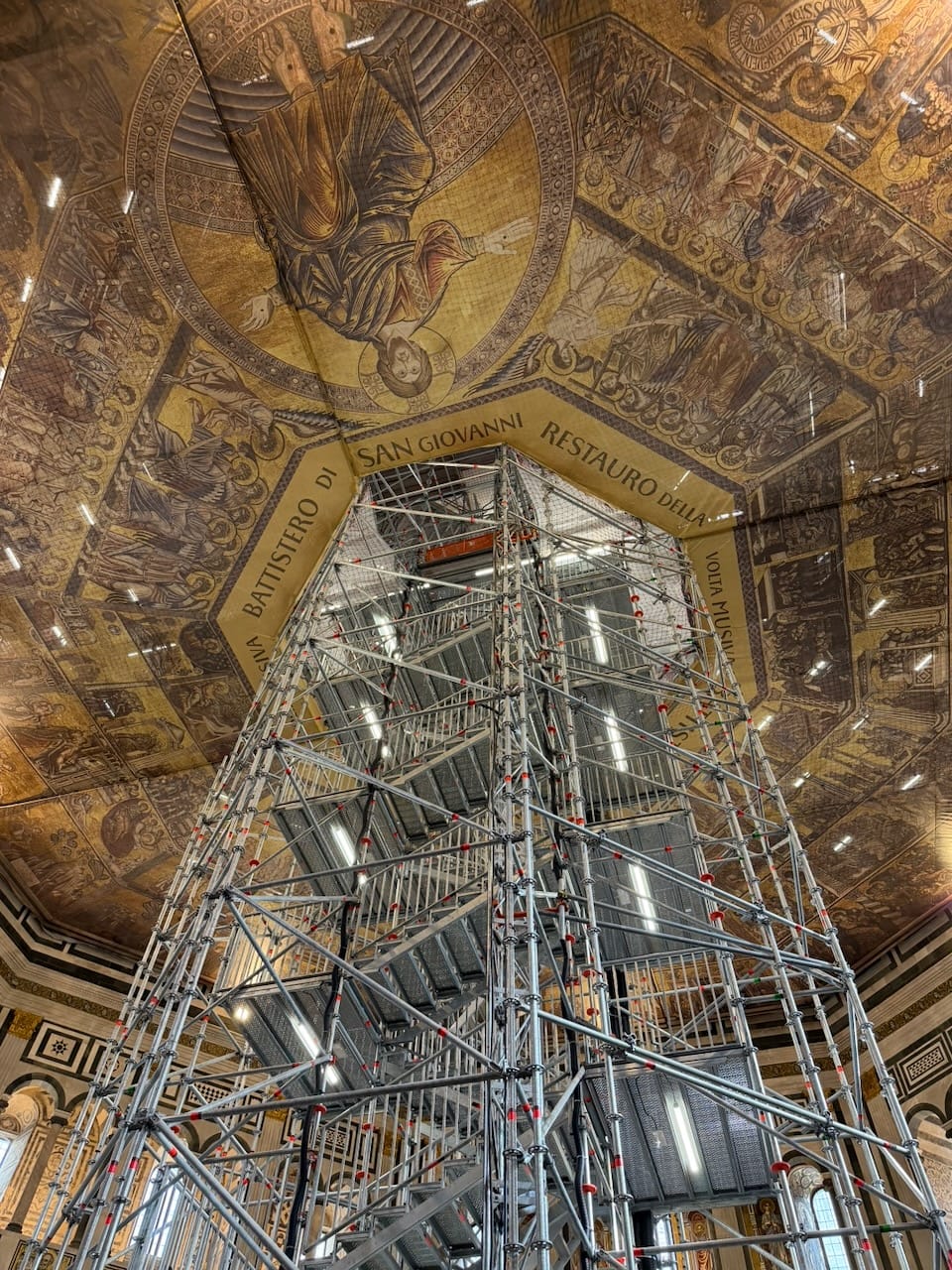
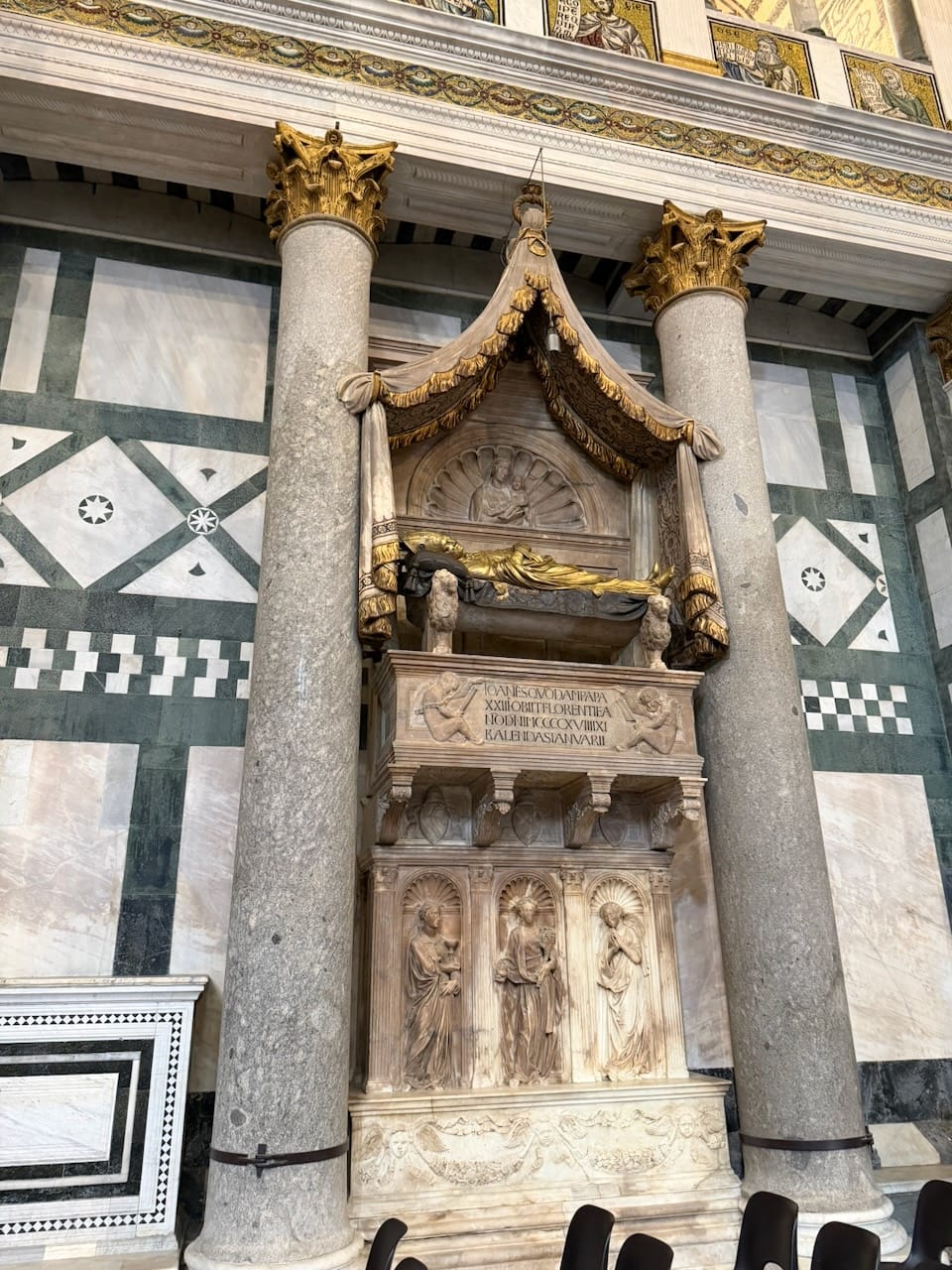
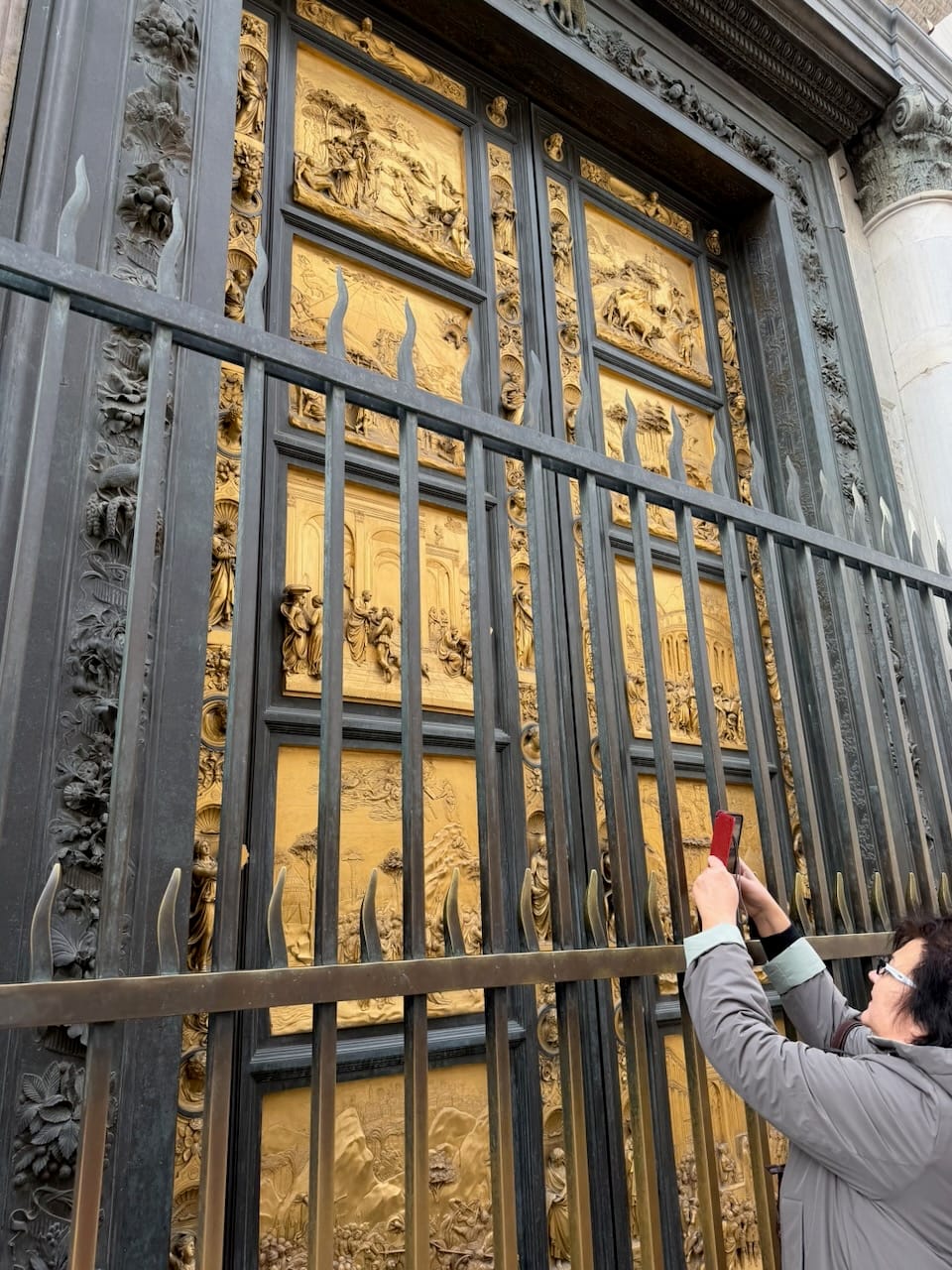
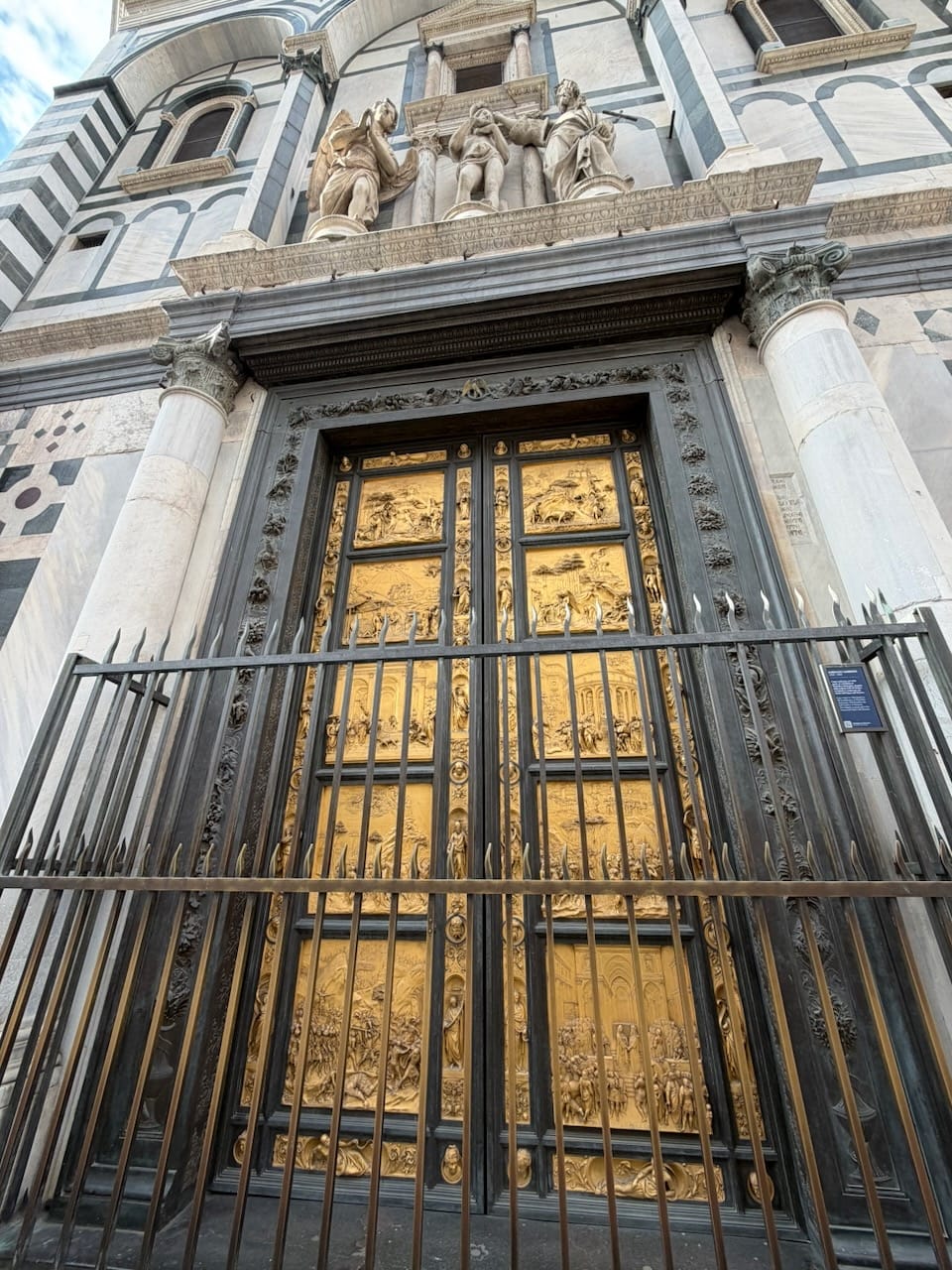
The Baptistery
We noticed the line had shortened, so we headed for Giotto’s Bell Tower. The panoramic view from the top of the Duomo had been stunning, but it missed one crucial thing: the Duomo itself. The Bell Tower is the only place where we could truly frame the cathedral together with the city of Firenze — and that alone made the climb worth it. That said, it was another 414 steps. The first day had been a battle of distance; this day was a battle of height. Thankfully, the tower is divided into three or four levels, where we could stop, breathe, and reset our pace. Each level offered a slightly different perspective of the Duomo and the city. And at the very top came the final reward: the perfect frame: the Duomo rising over Firenze.
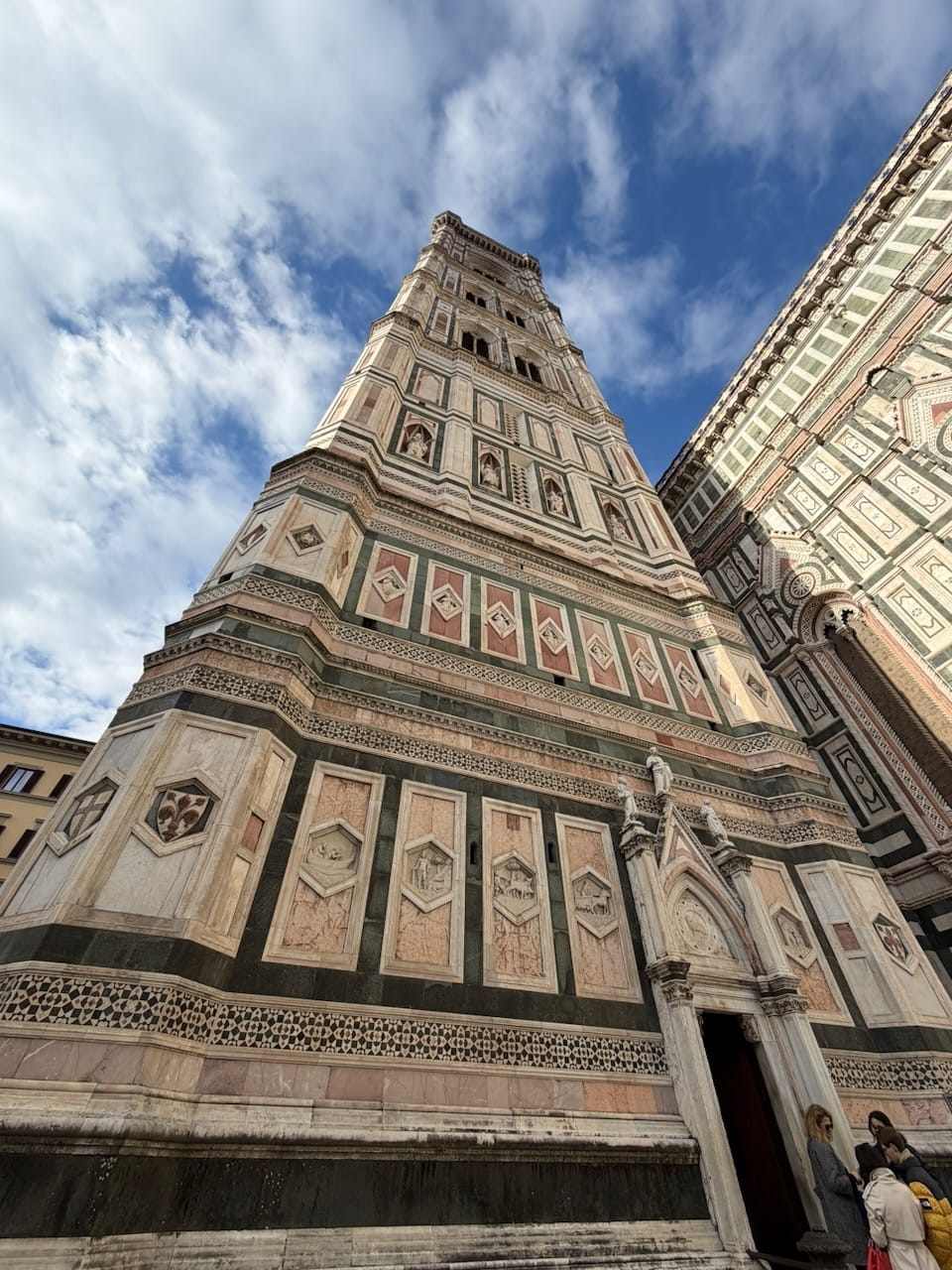
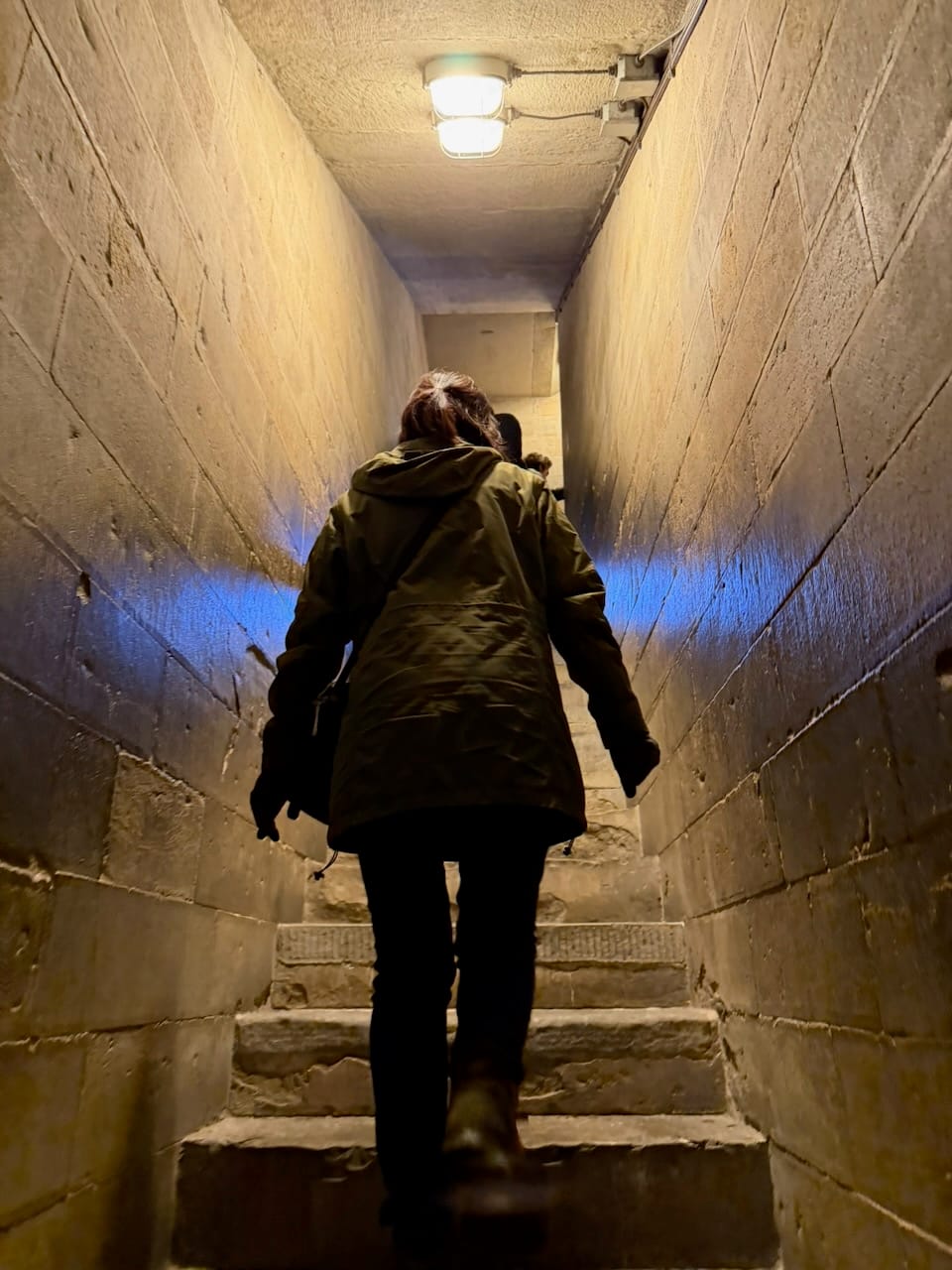
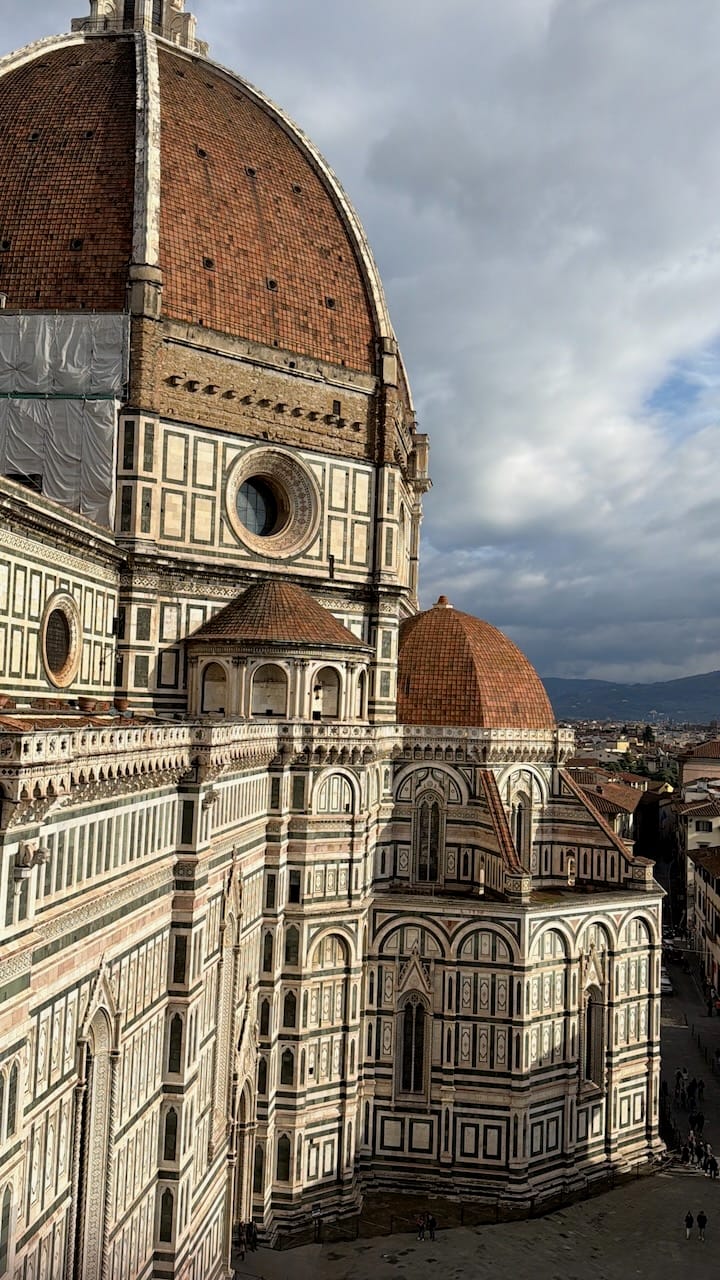
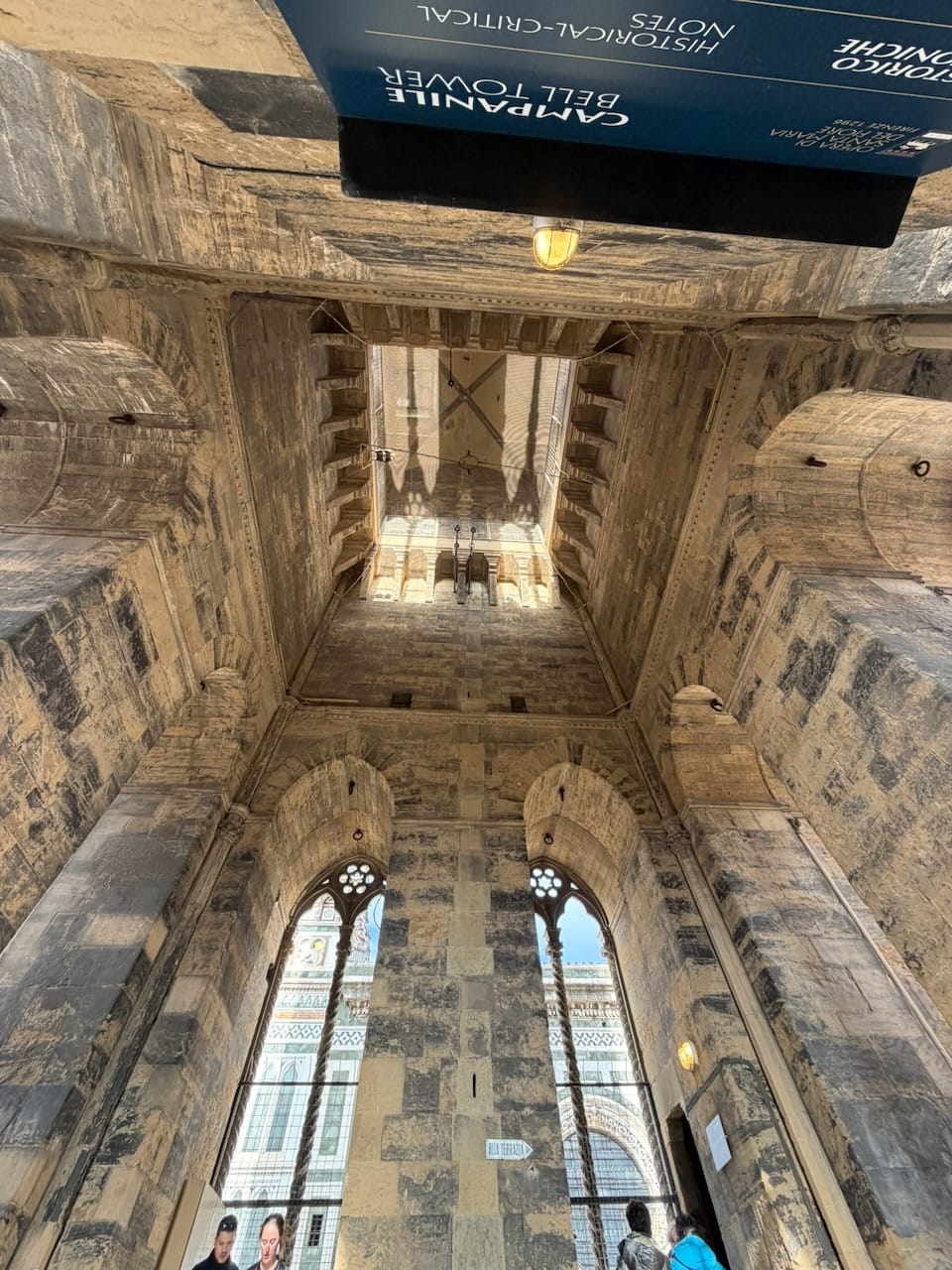
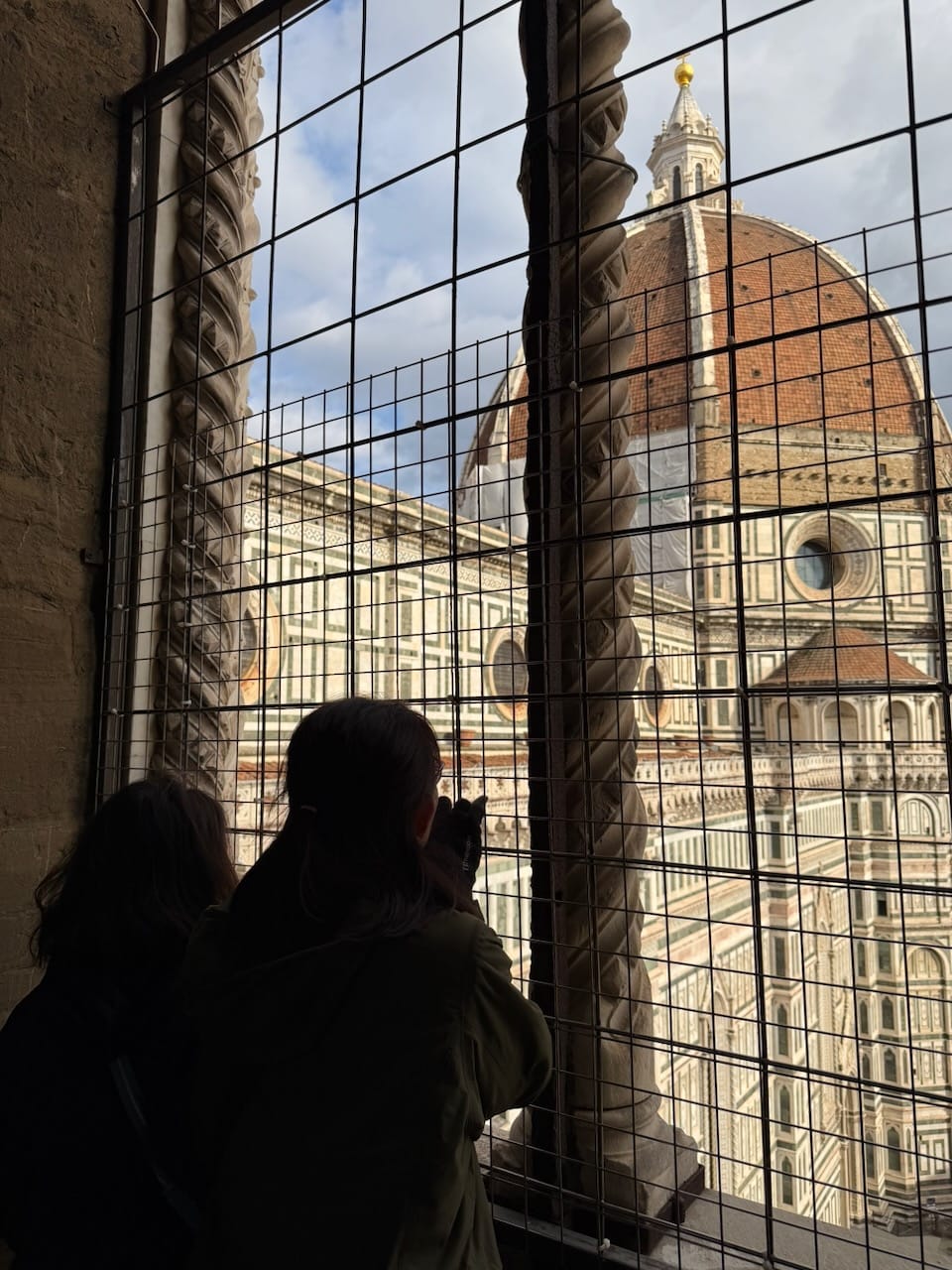
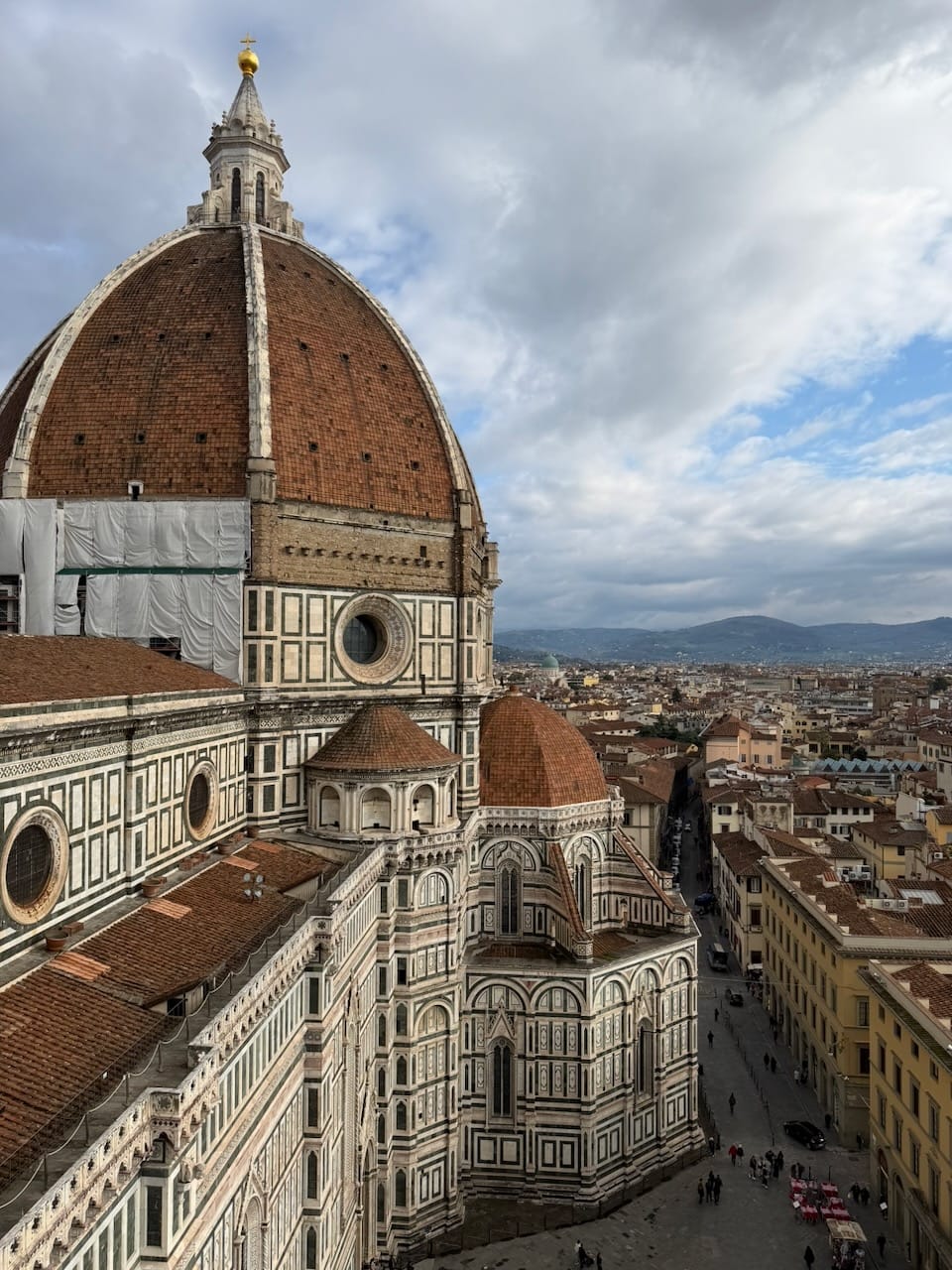
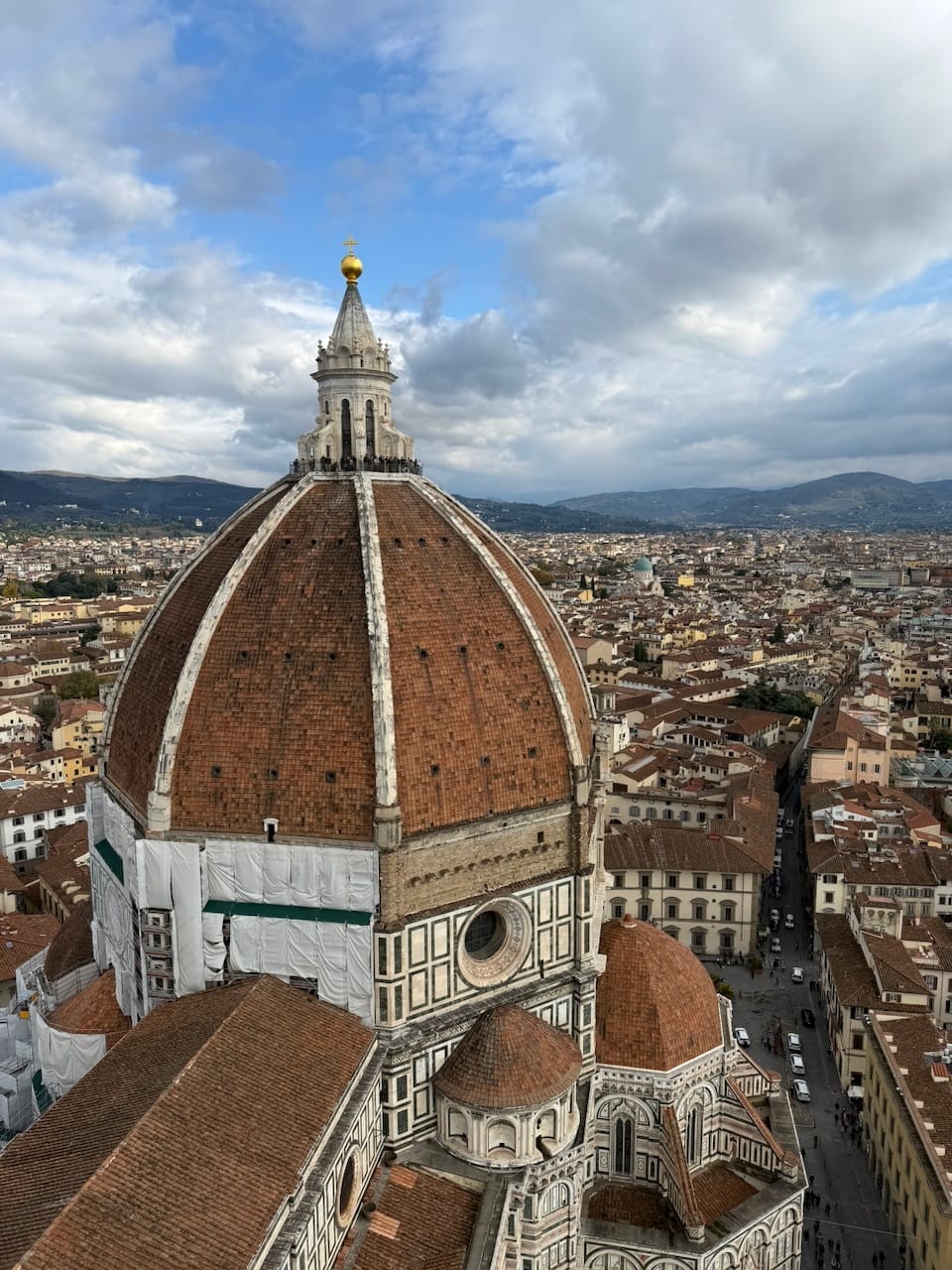
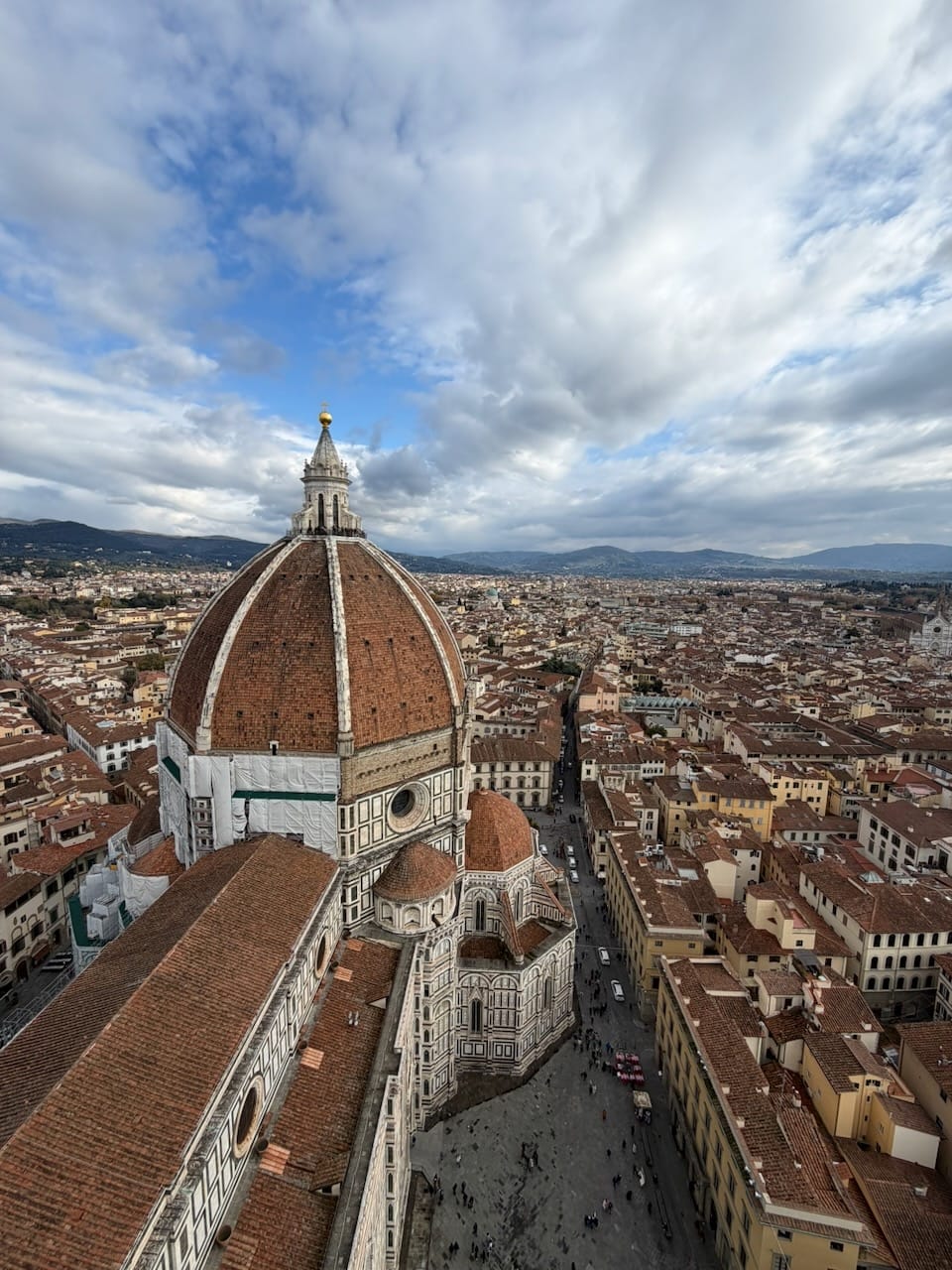
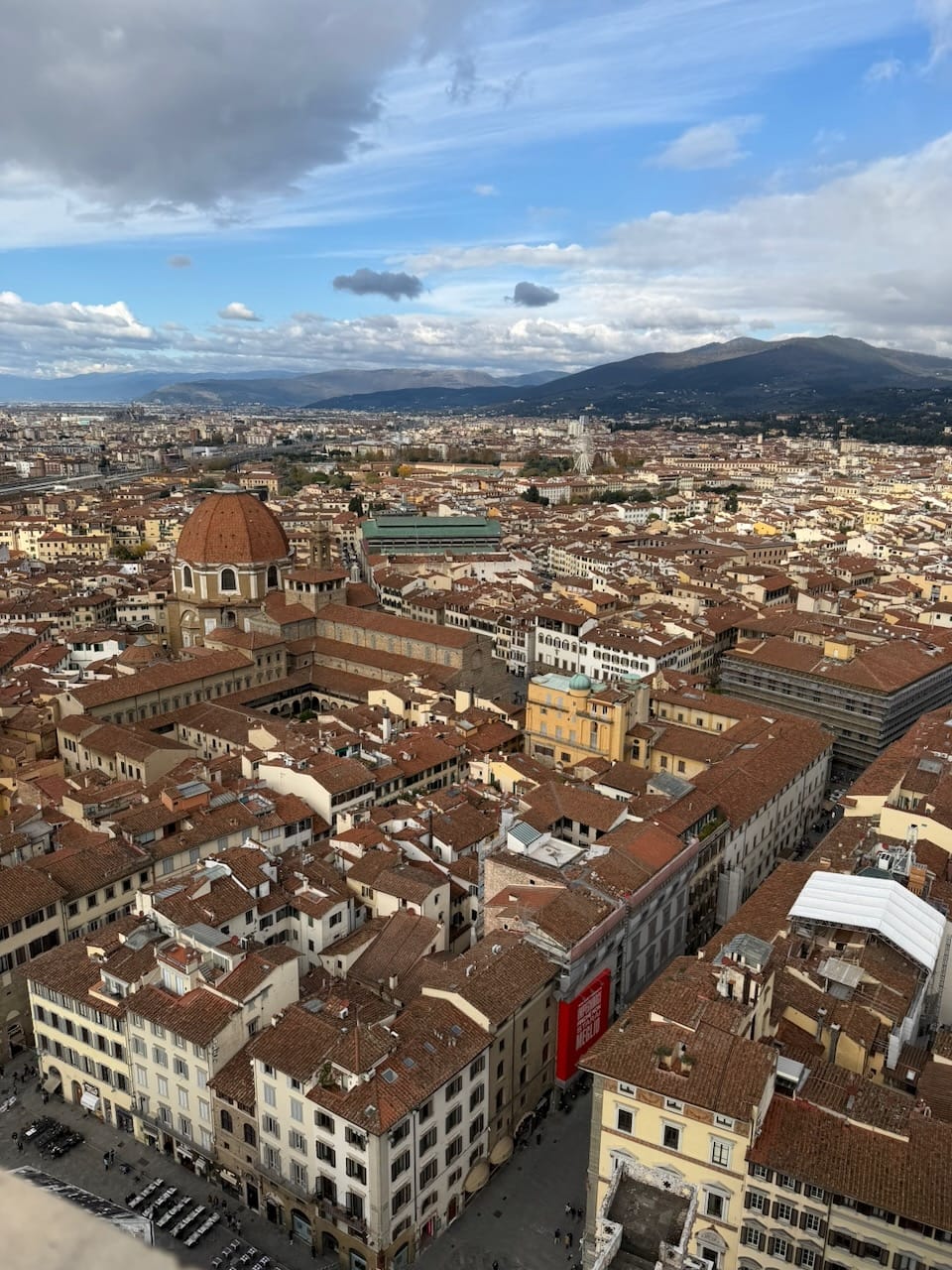
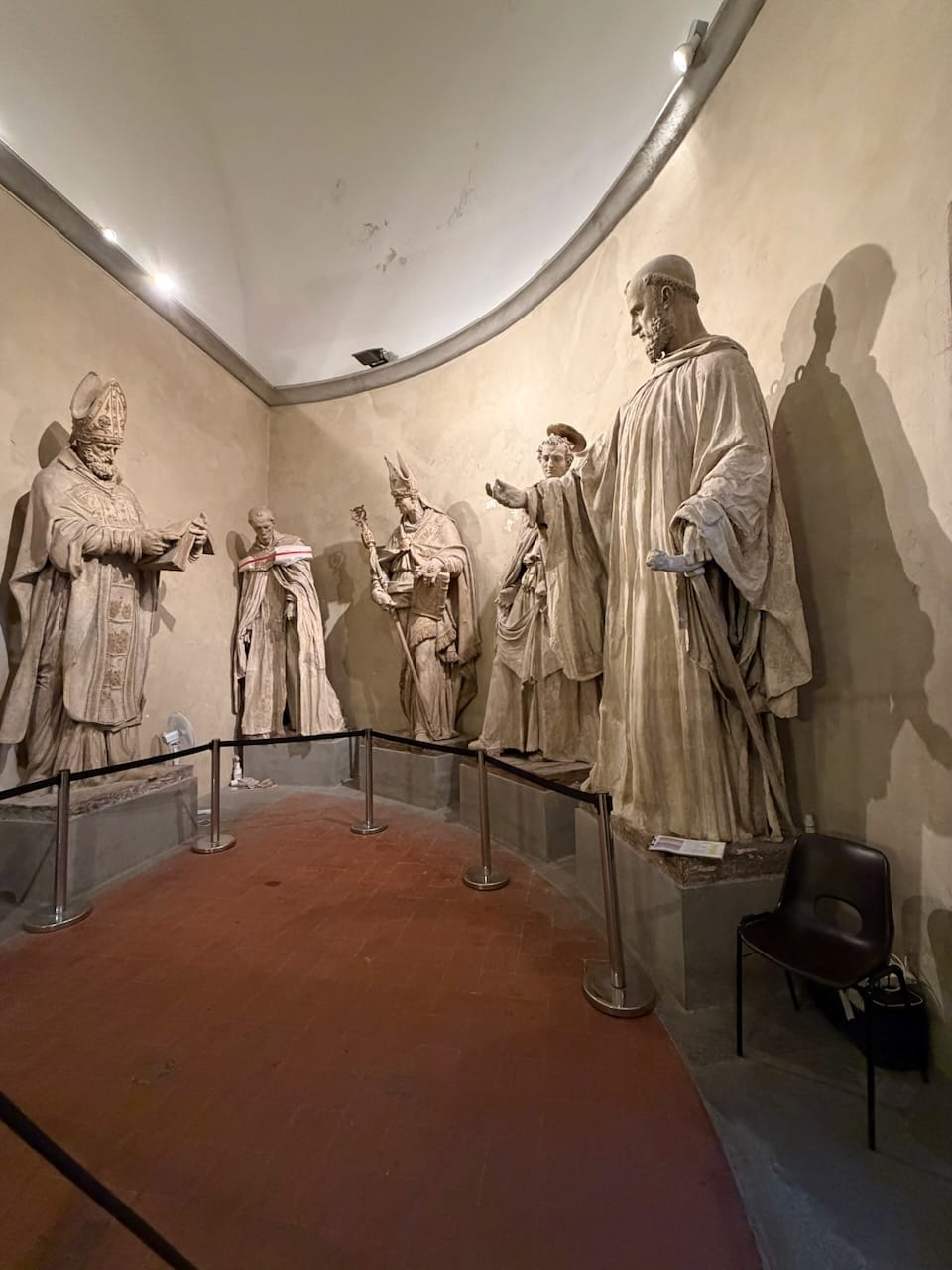
The final stop covered by our pass was the Museo dell’Opera del Duomo (Opera del Duomo Museum)—and in many ways, this was the real highlight. The original Gates of Paradise are not on the Baptistery at all; they are preserved here in the museum, along with many of the sculptures we had just seen outside. Seeing them up close made perfect sense: after centuries of weather, pollution, and touch, this is the only way these works could survive. We also stood in front of Donatello’s Magdalene, fragile, raw, almost painful in its honesty. And Michelangelo’s Florence Pietà, unfinished and powerful, with the figure of Nicodemus believed to be a self-portrait of Michelangelo himself. They felt deeply human, and that, perhaps, is the essence of the Renaissance.
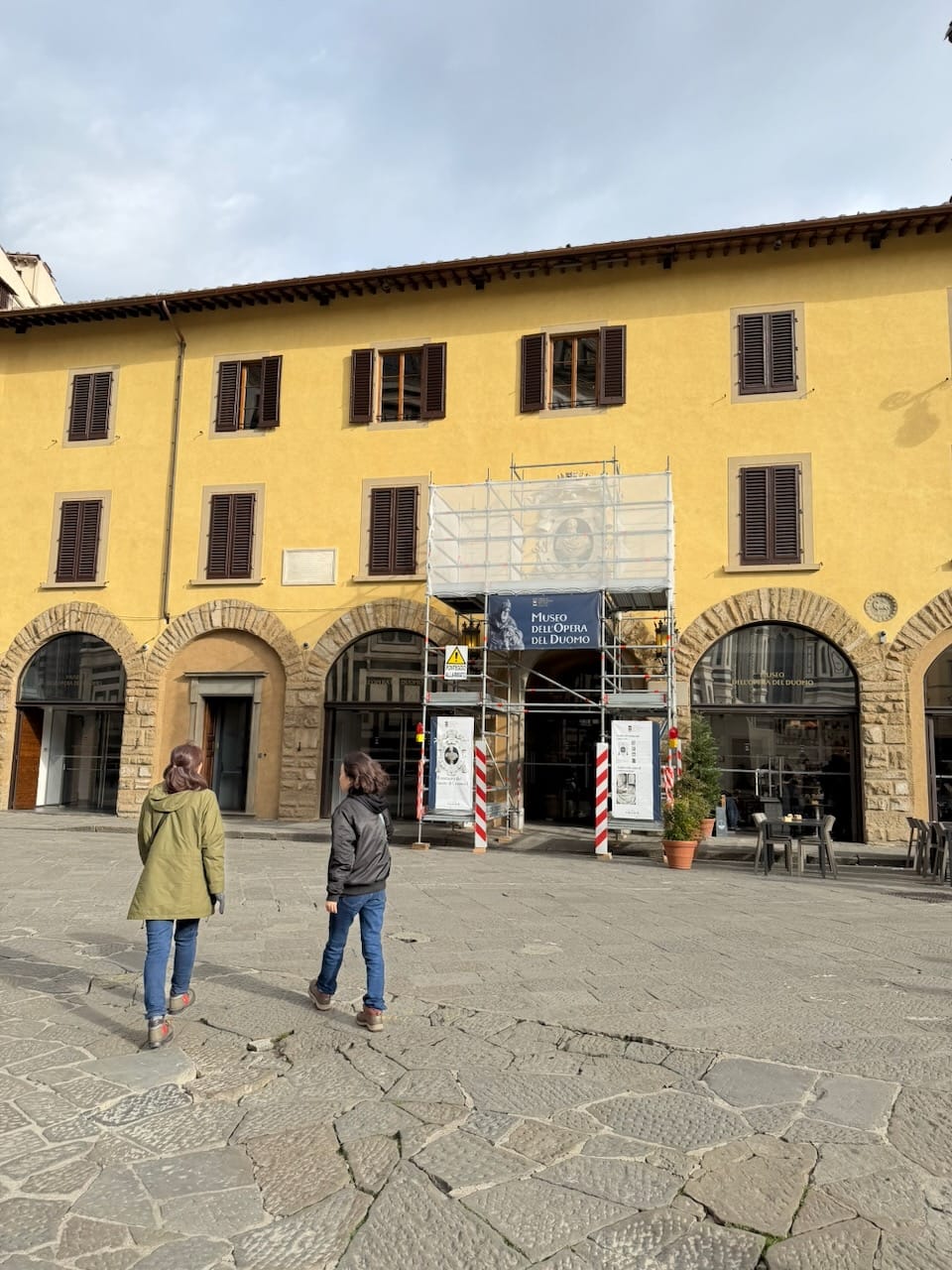
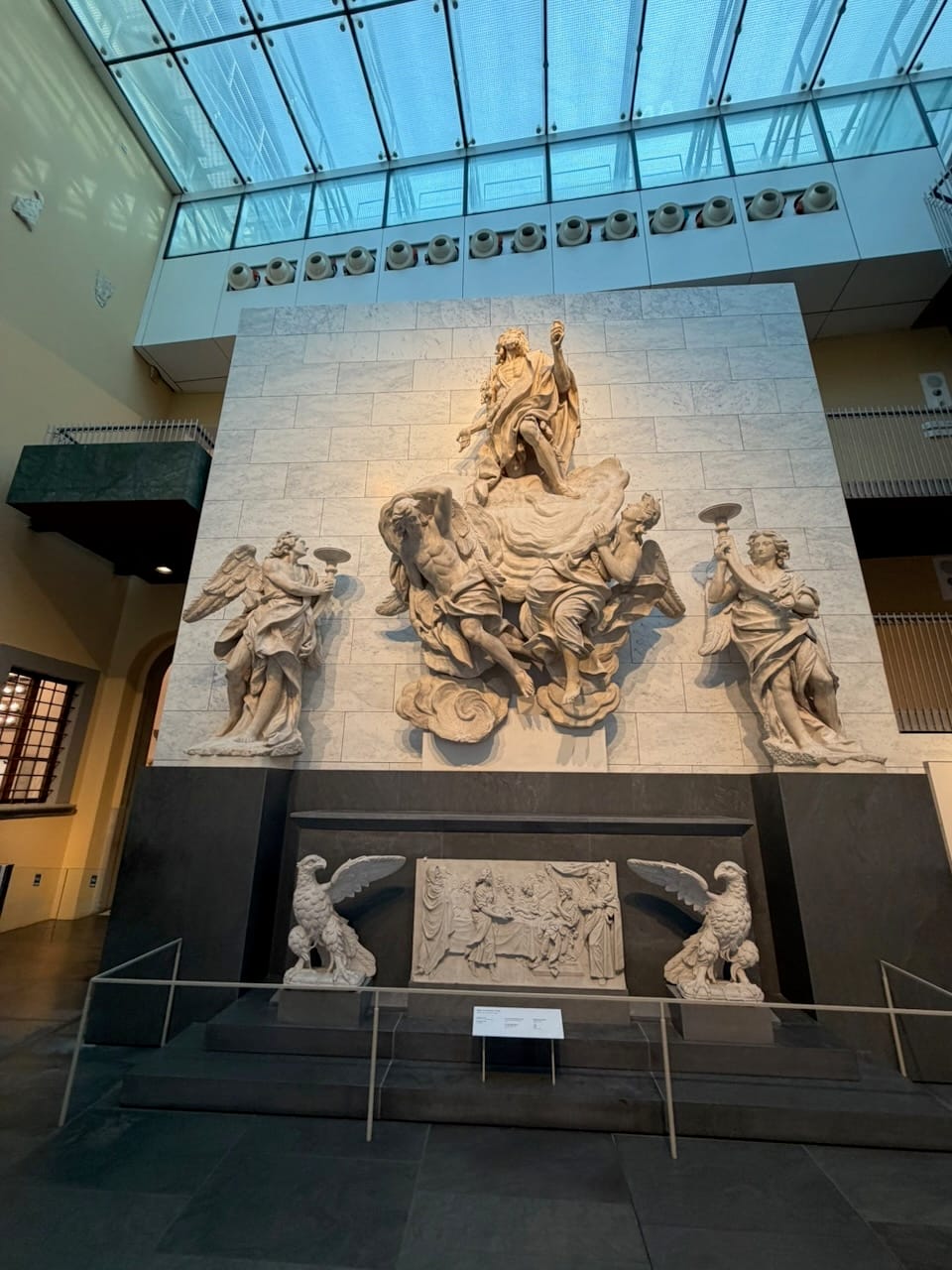
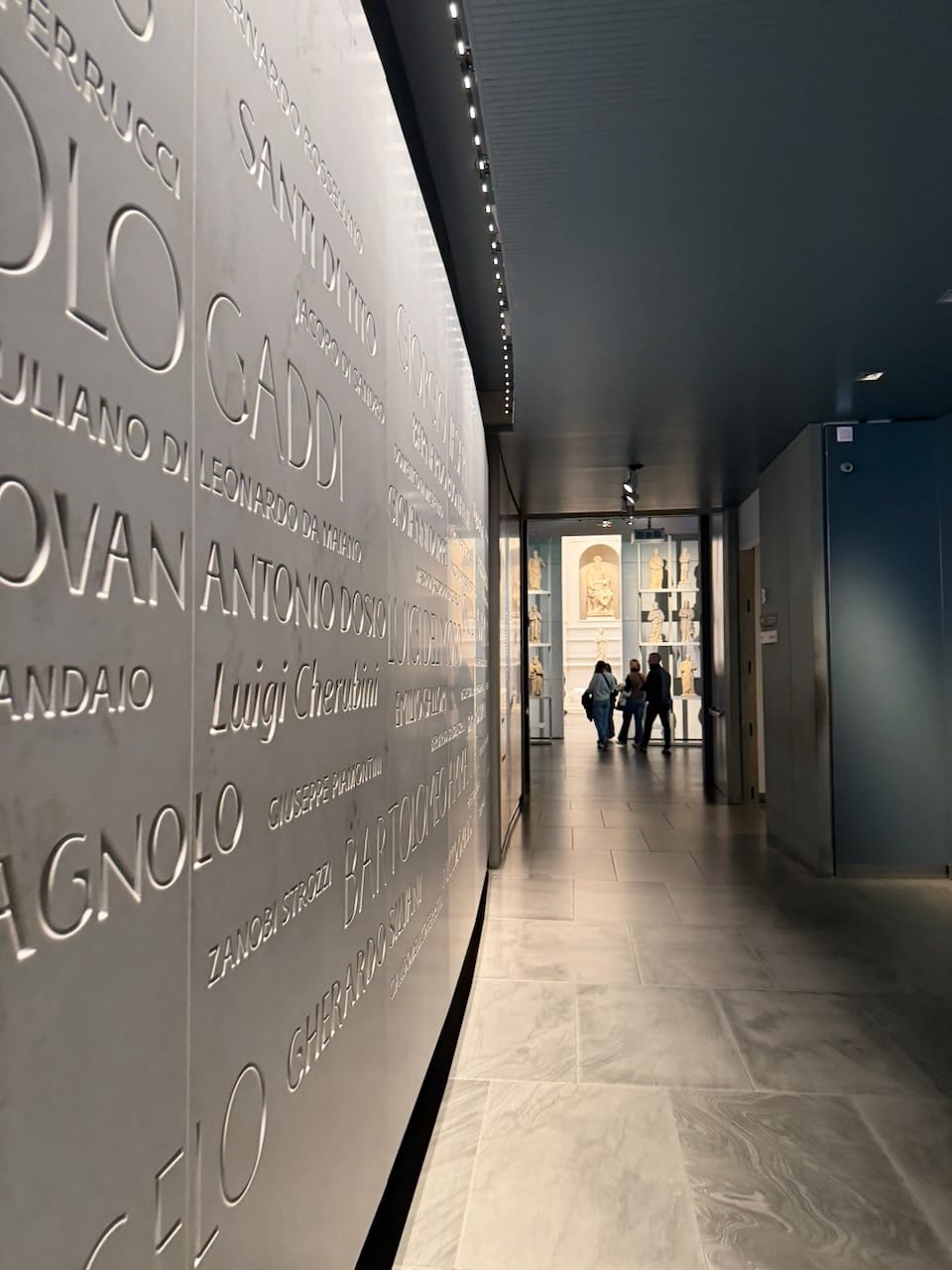
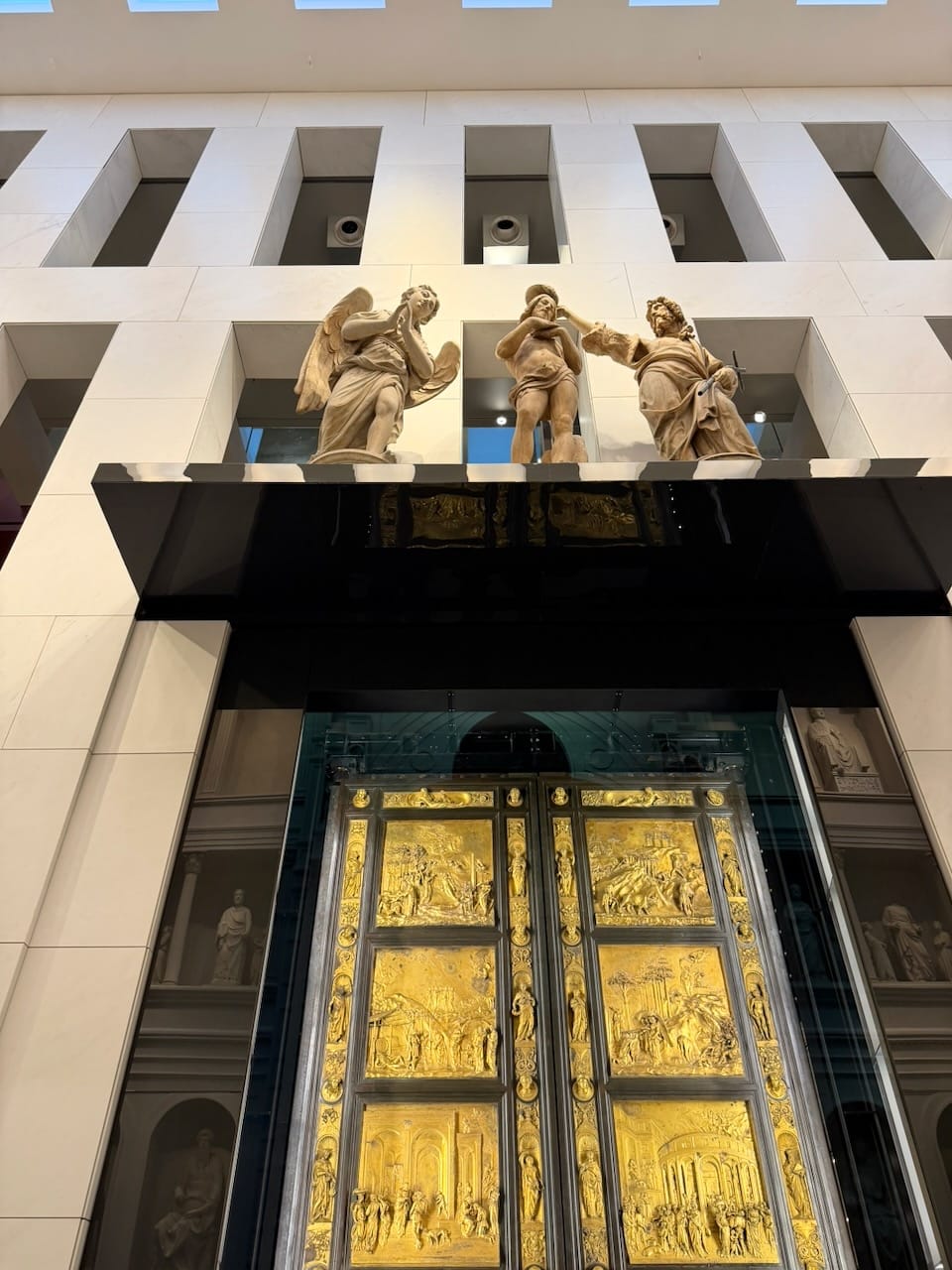
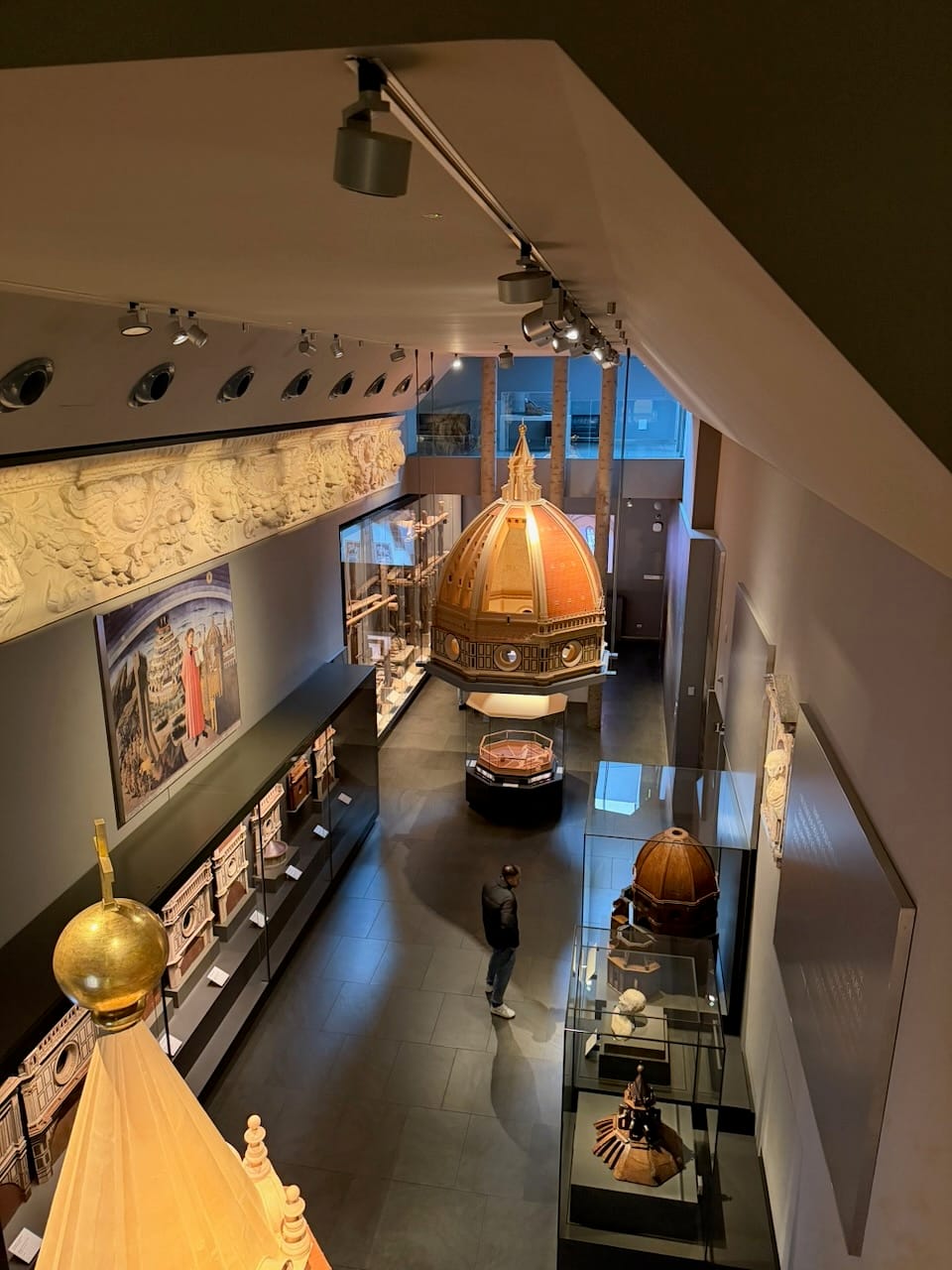
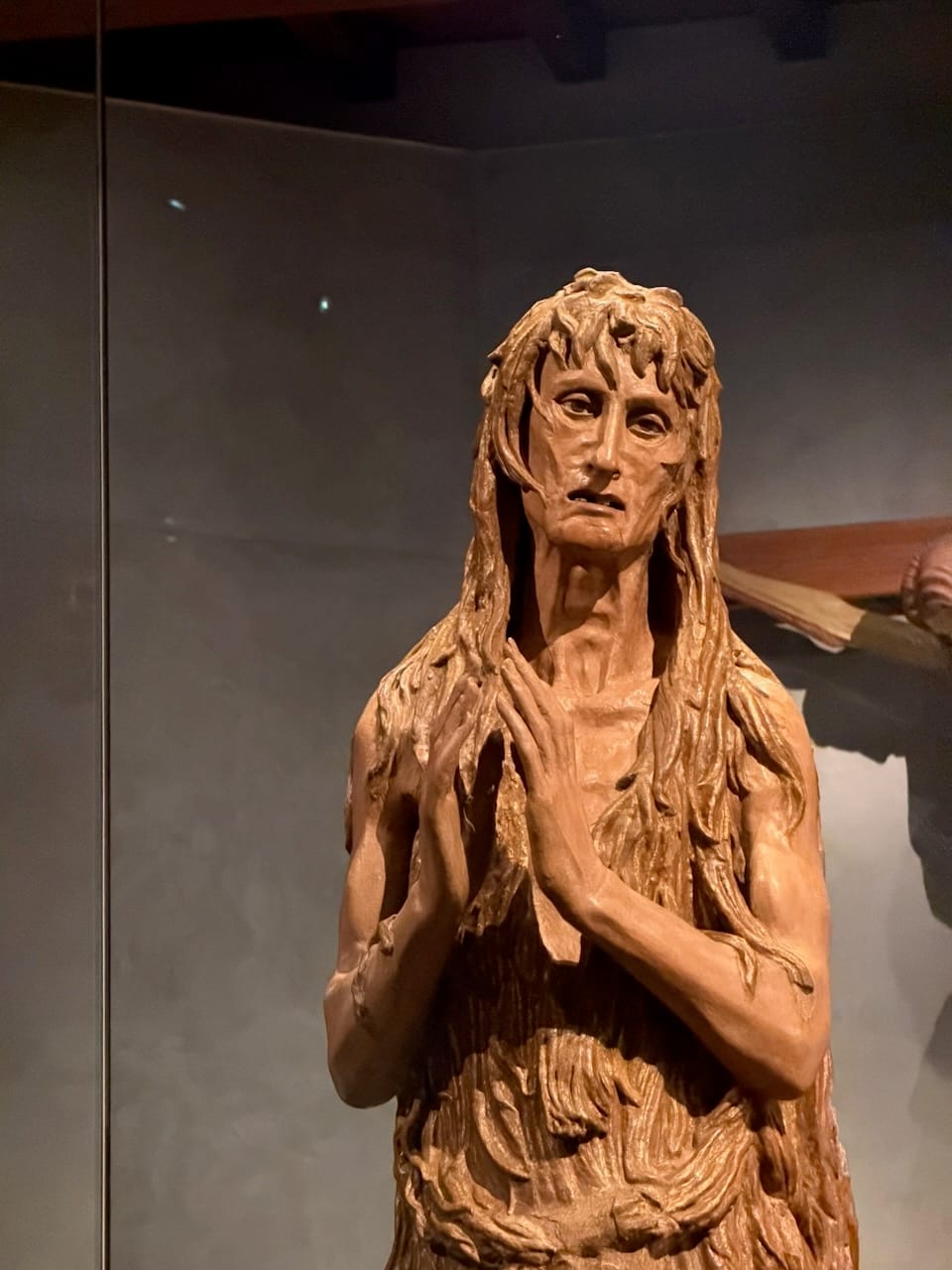
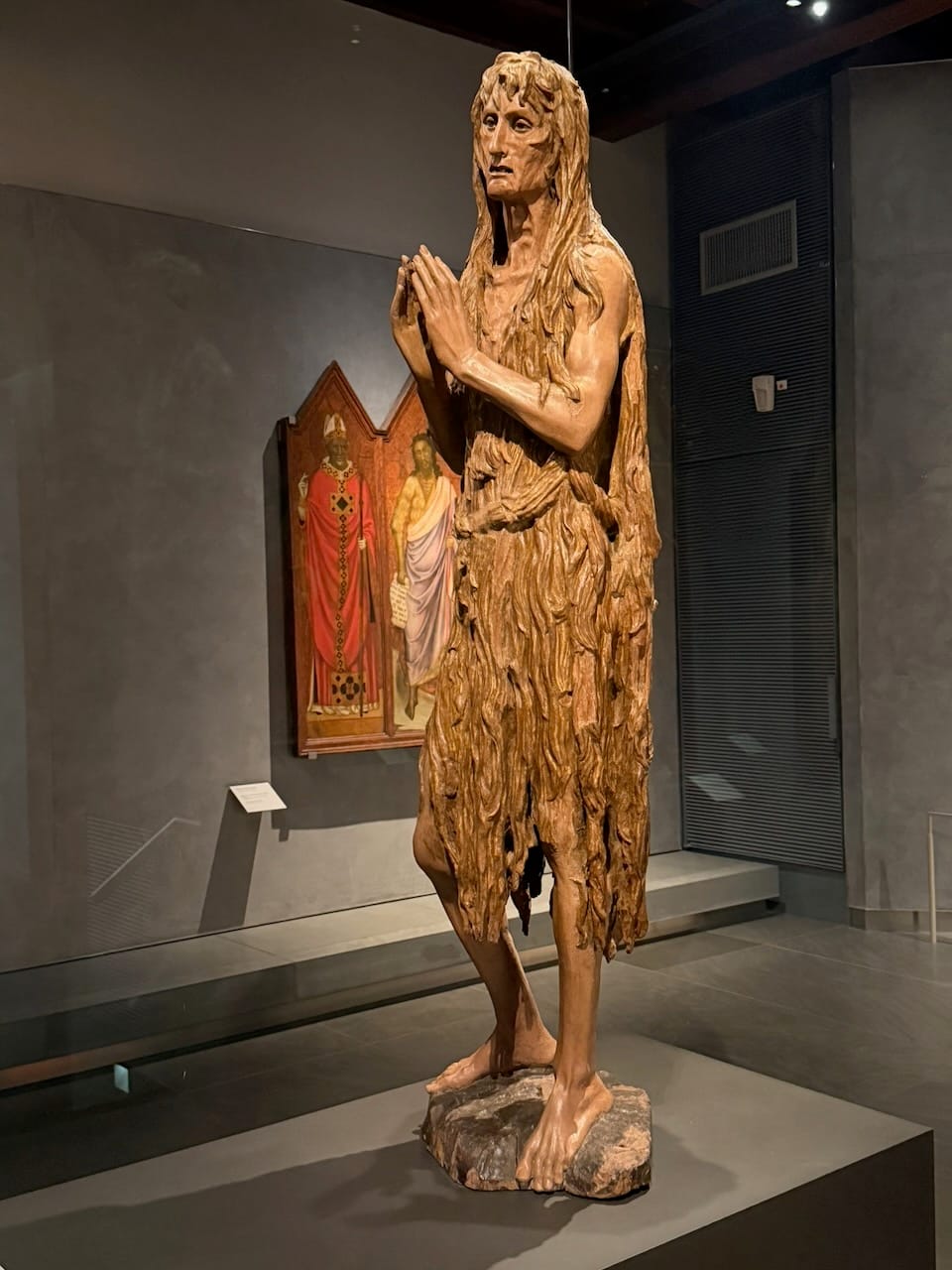
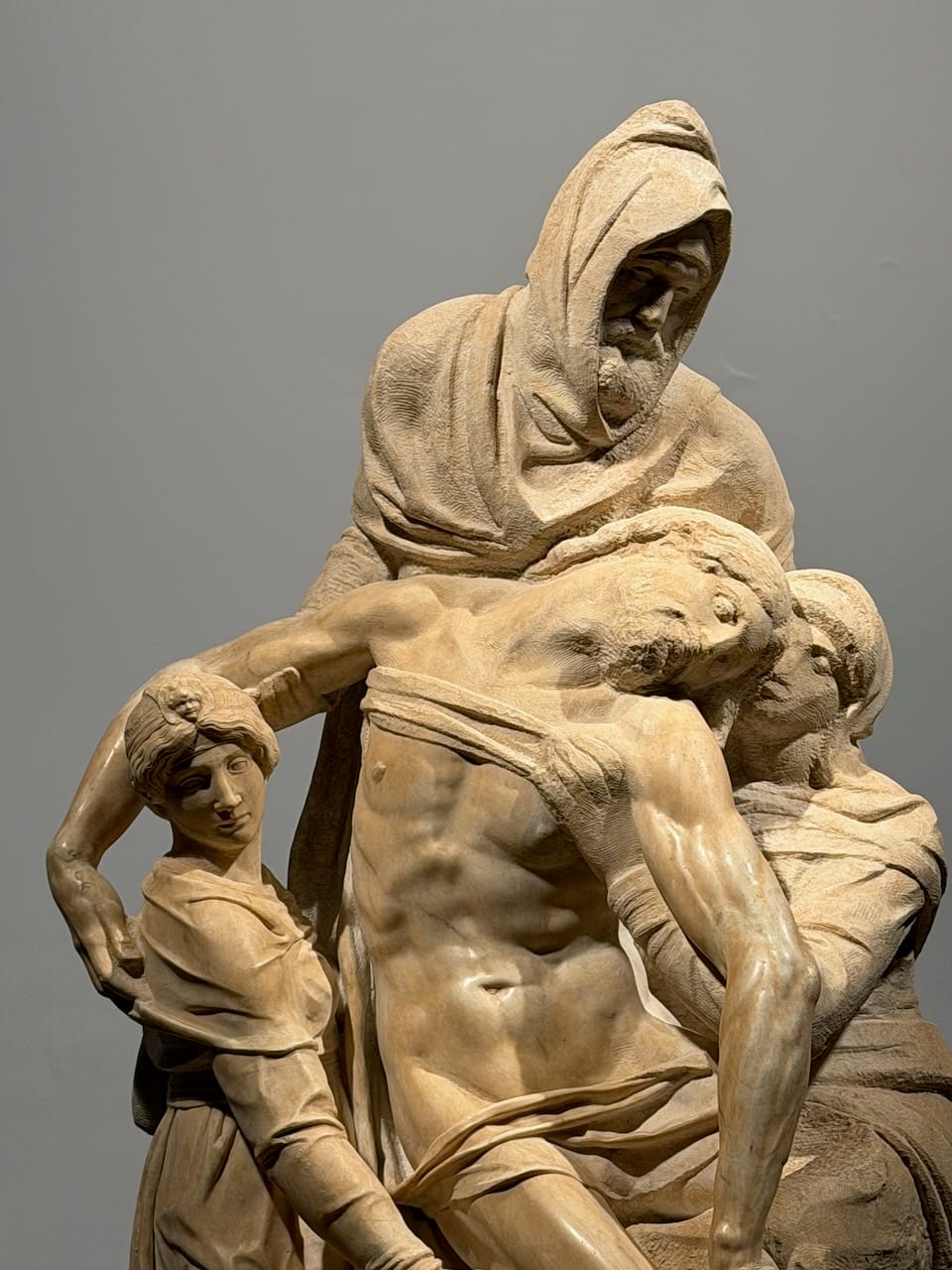
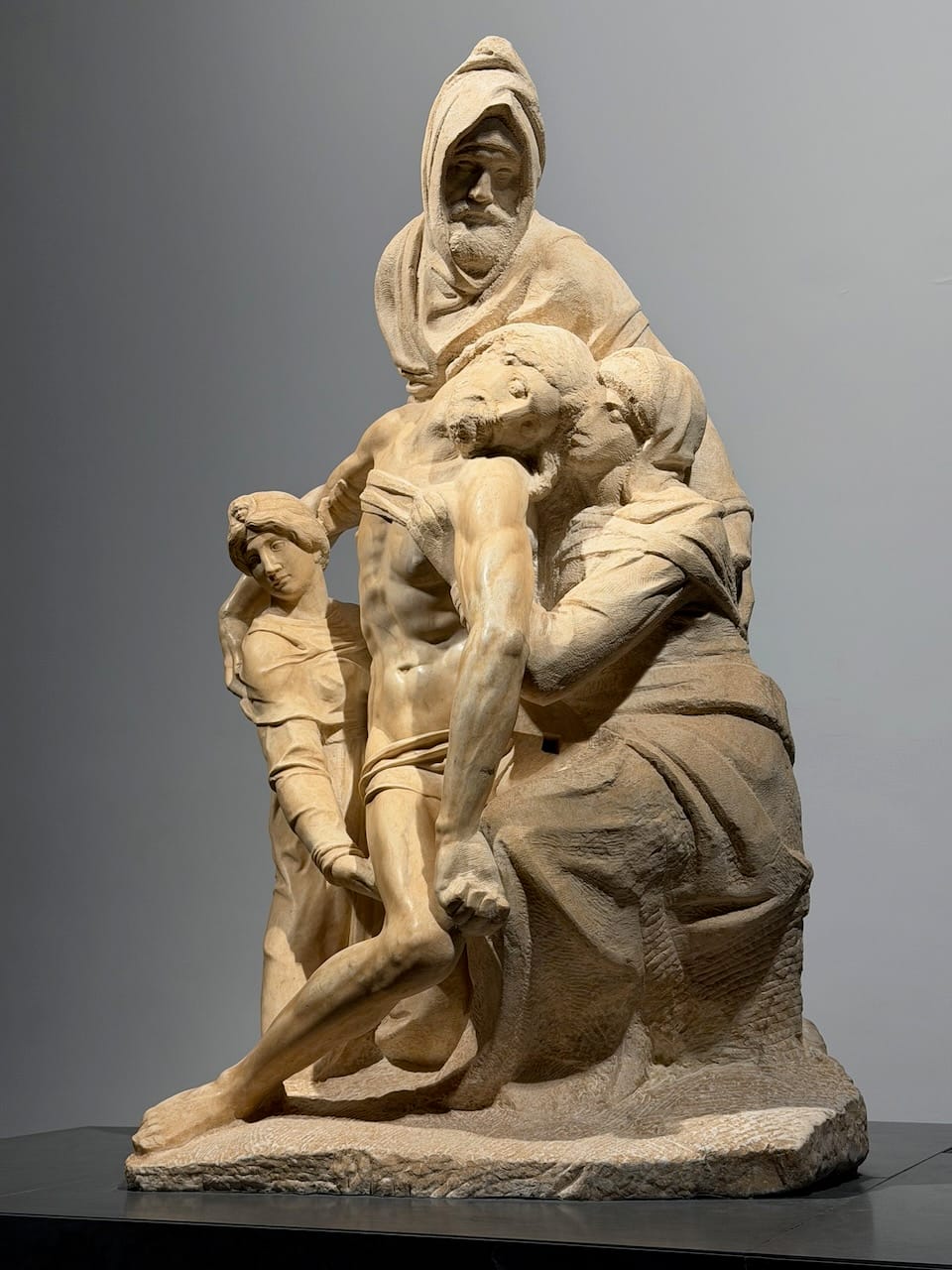
Museo dell’Opera del Duomo
And one very practical note: if you have the Brunelleschi Pass, the best restroom around the Duomo is actually inside this museum. The security check is a bit cumbersome, but it’s absolutely worth it.
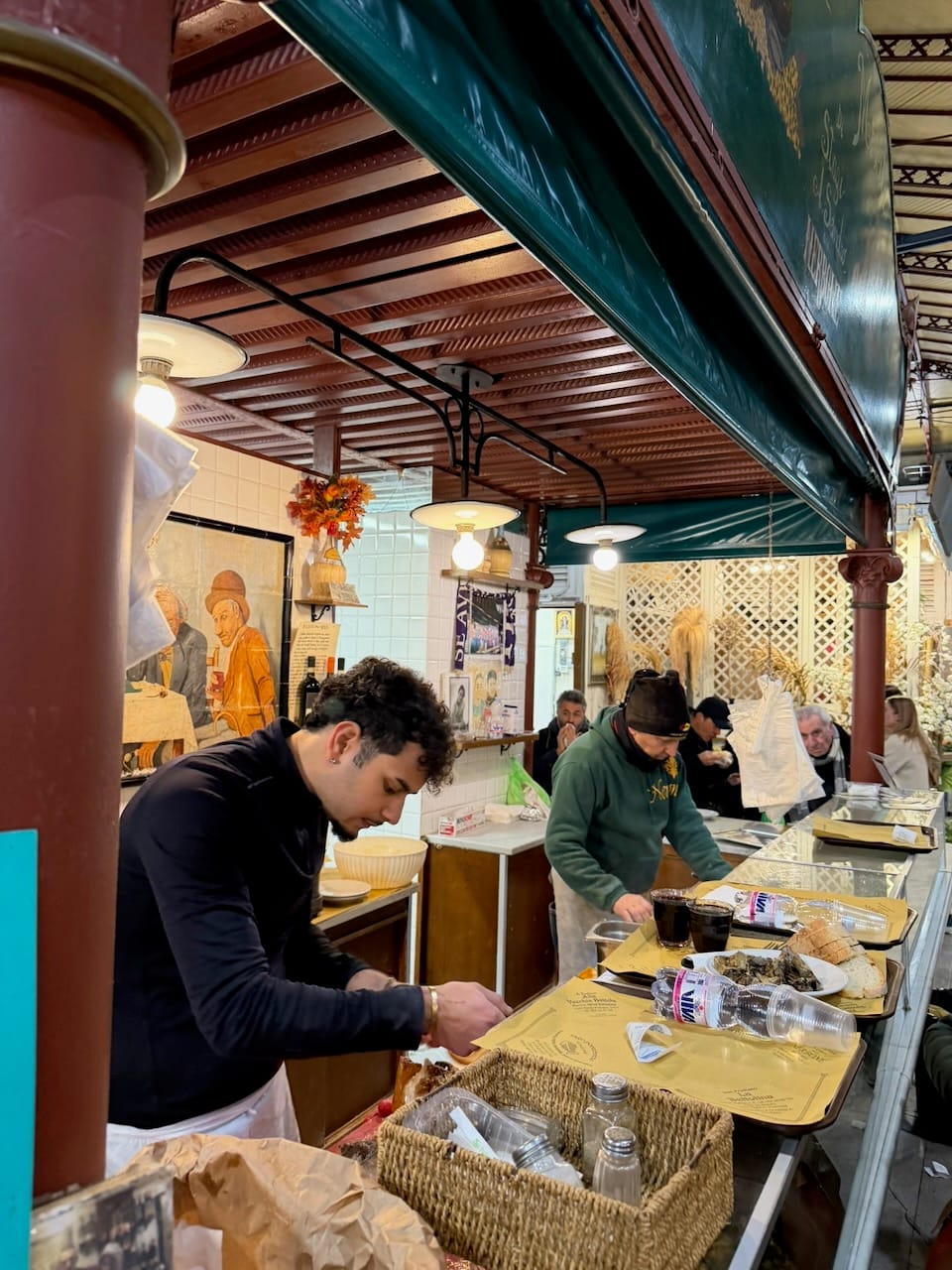
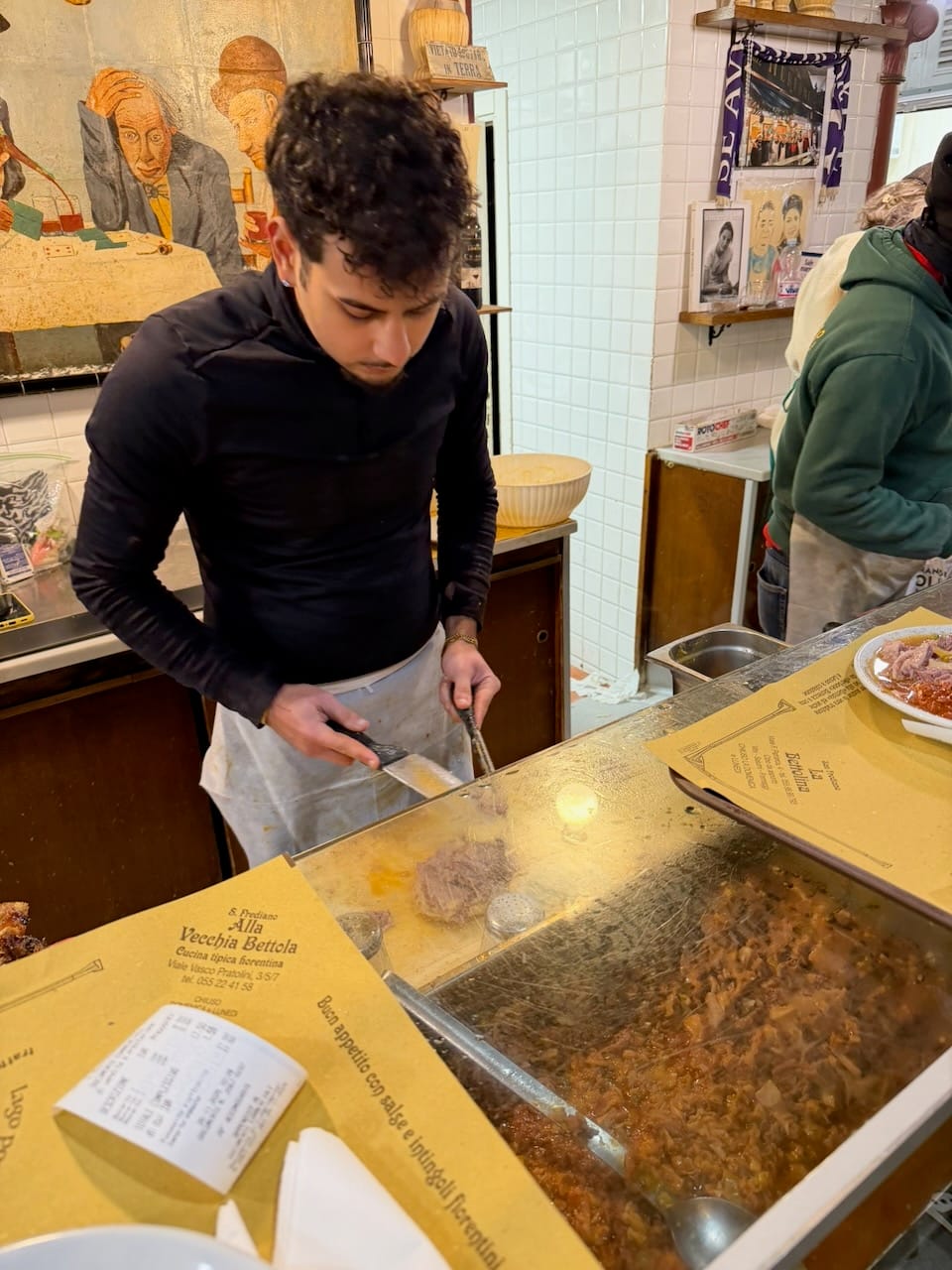
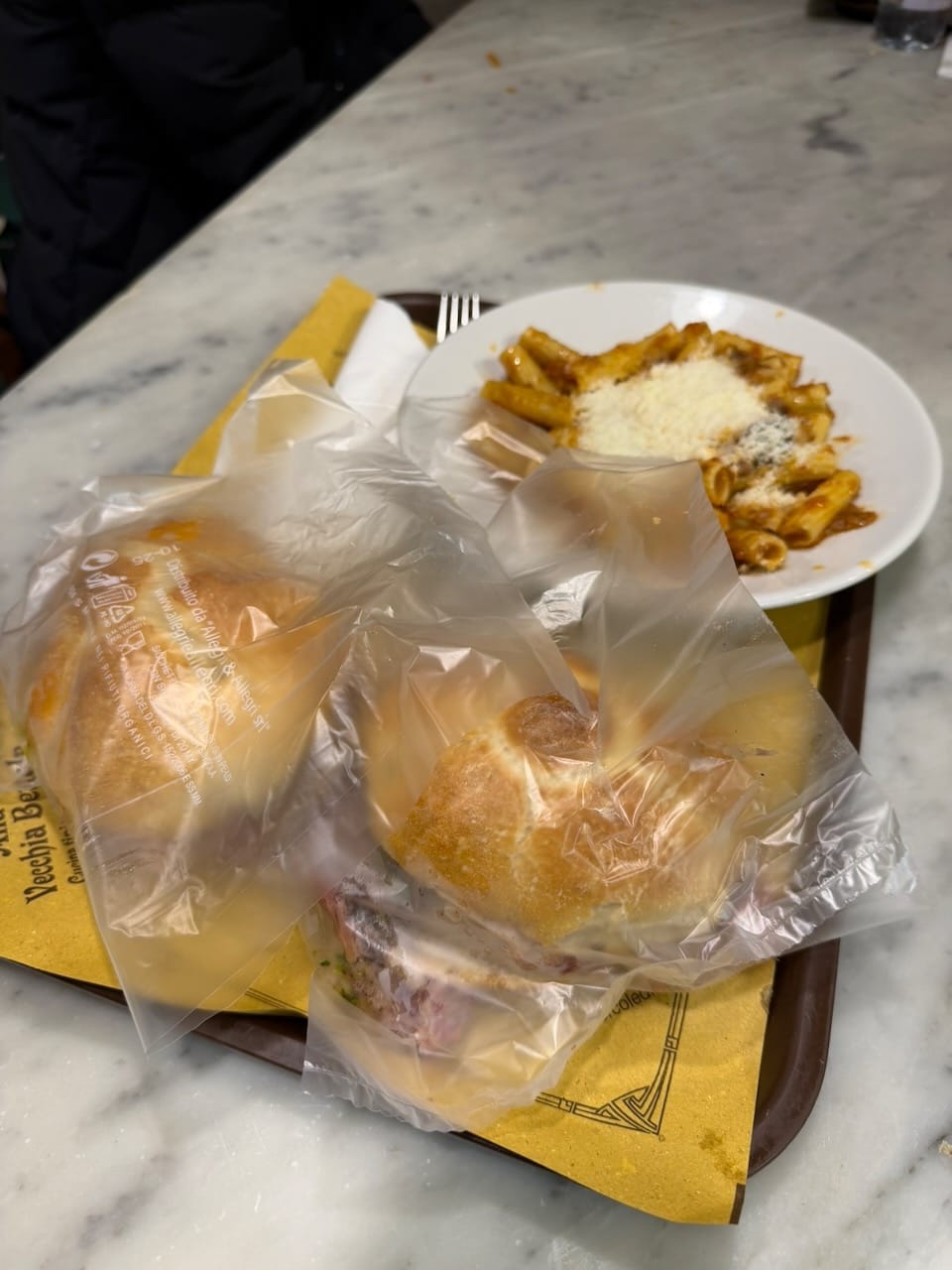
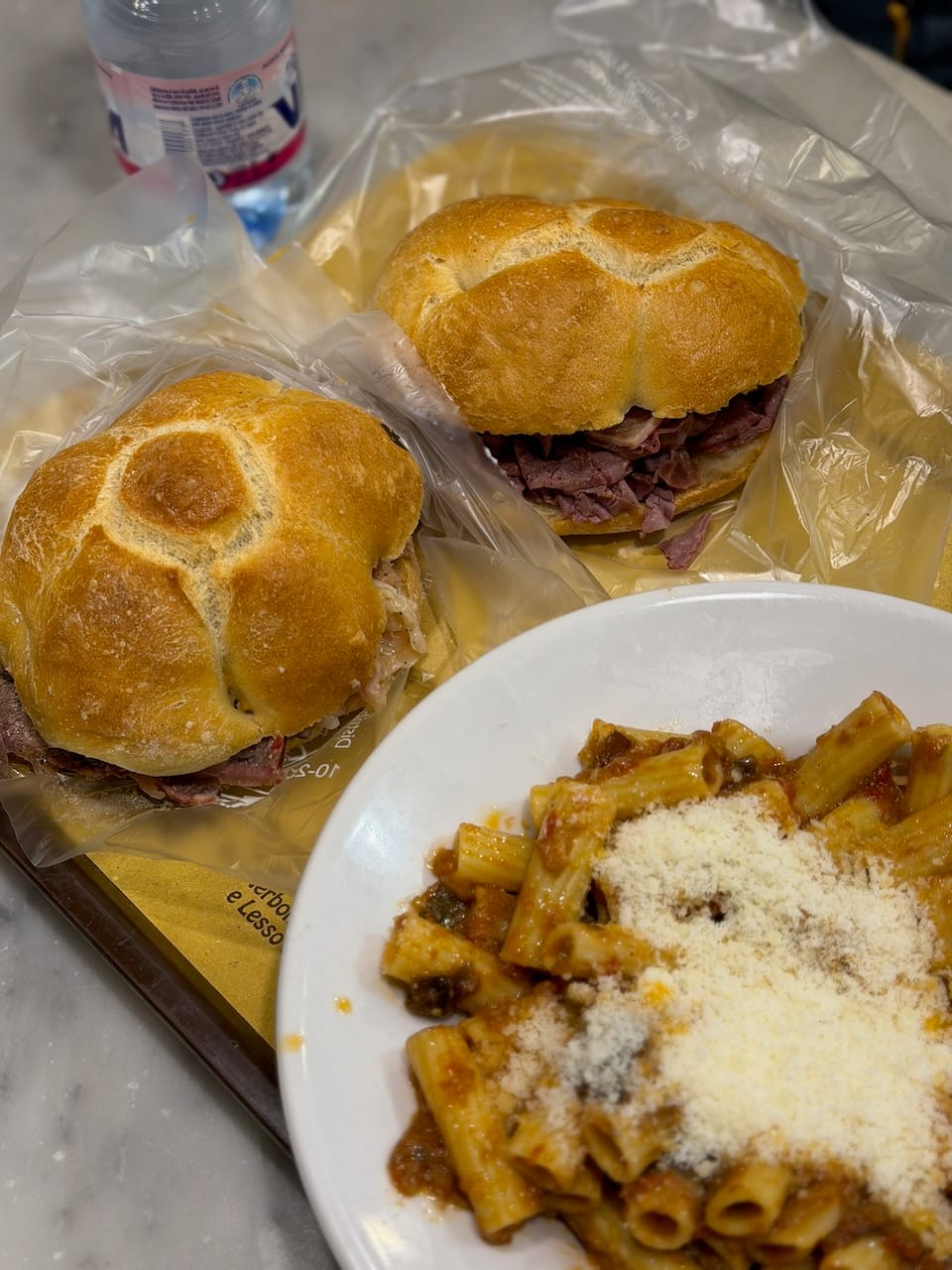
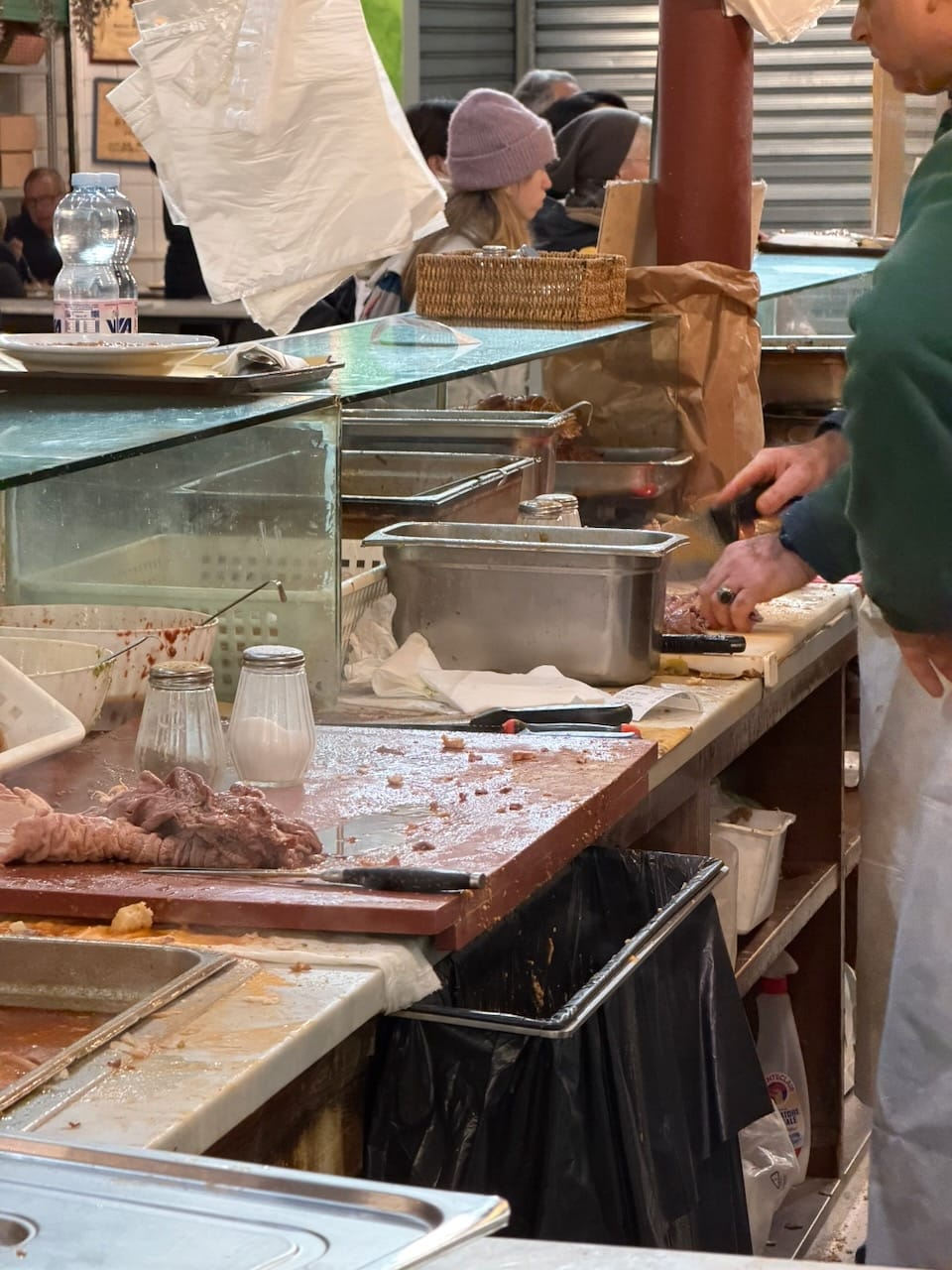
For lunch, we went to Nerbone, located inside a marketplace building: the Mercato Centrale. It was a little tricky to find at first, but the long line gave it away. I had discovered the place in a Korean travel guide book and came specifically to try two local classics: Panino con il Lampredotto (lampredotto sandwich) and Panino con Bollito (boiled beef sandwich). The guidebook, however, only listed them in Korean: 곱창버거 (lampredotto) and 수육버거 (bollito). I was hesitating at the counter, trying to translate in my head, when the cashier suddenly and fluently said, “곱창버거, 수육버거?” in Korean. Problem solved. And yes, they were the best meat-lover sandwiches I’ve ever had.
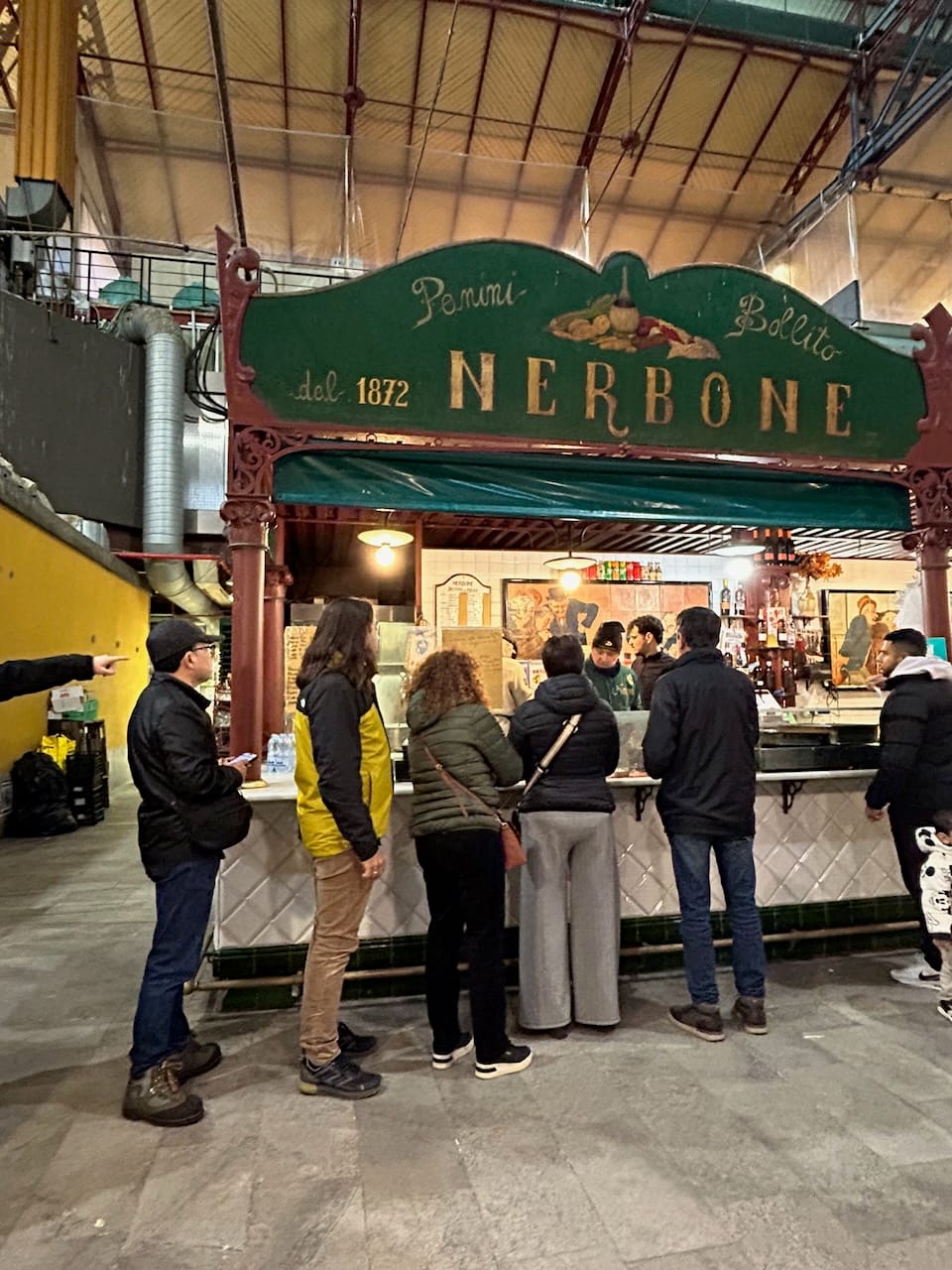
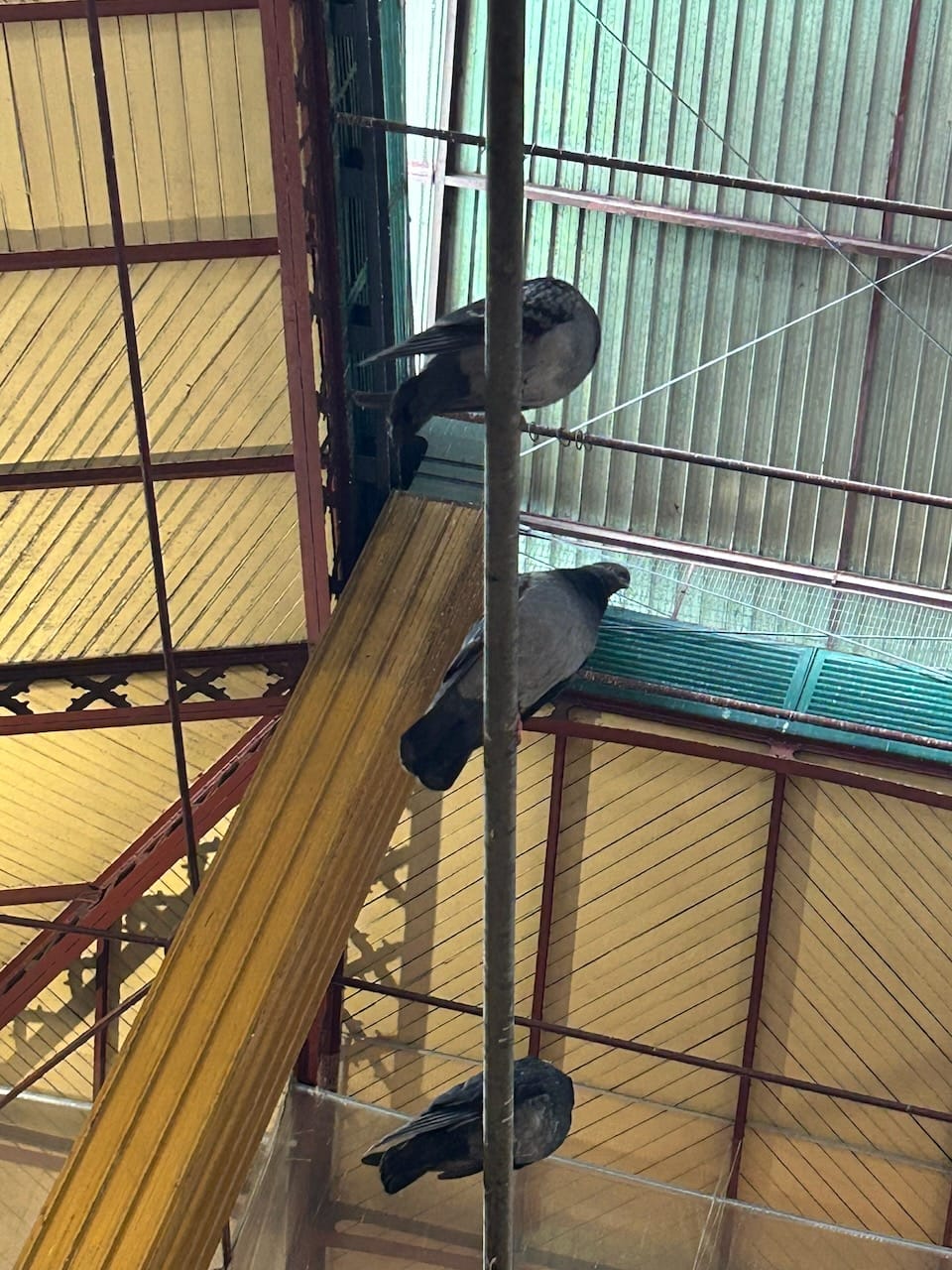
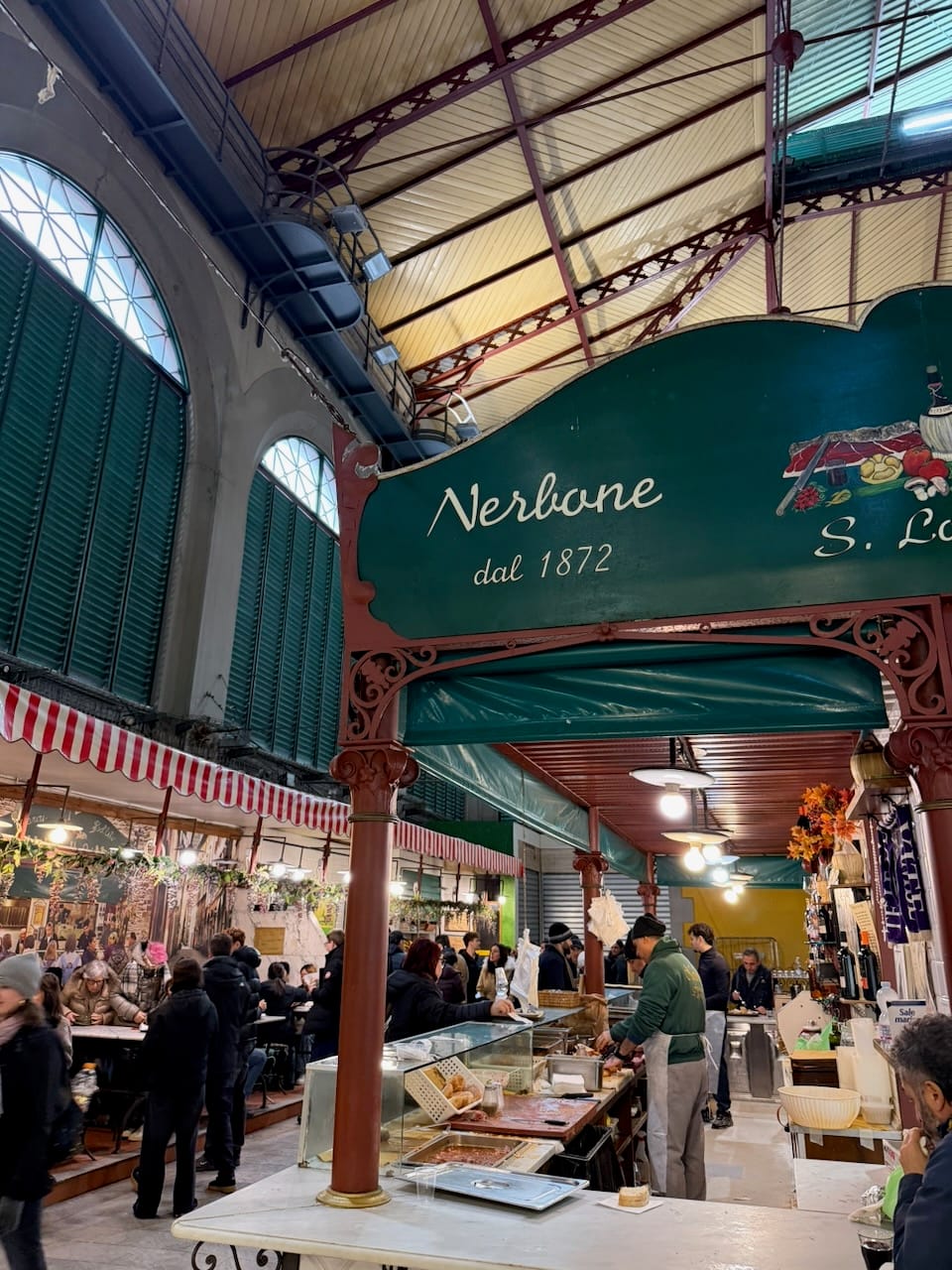
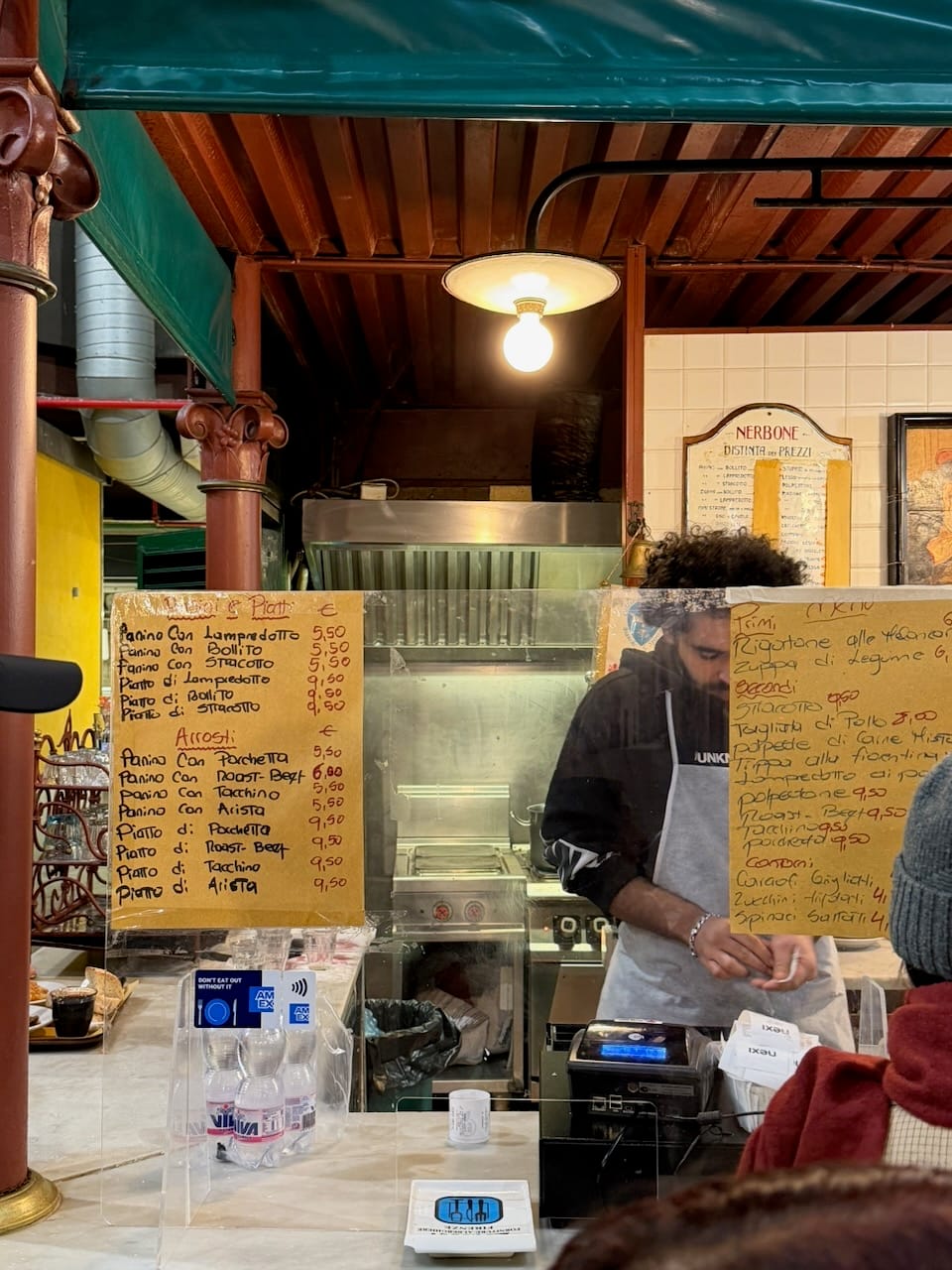
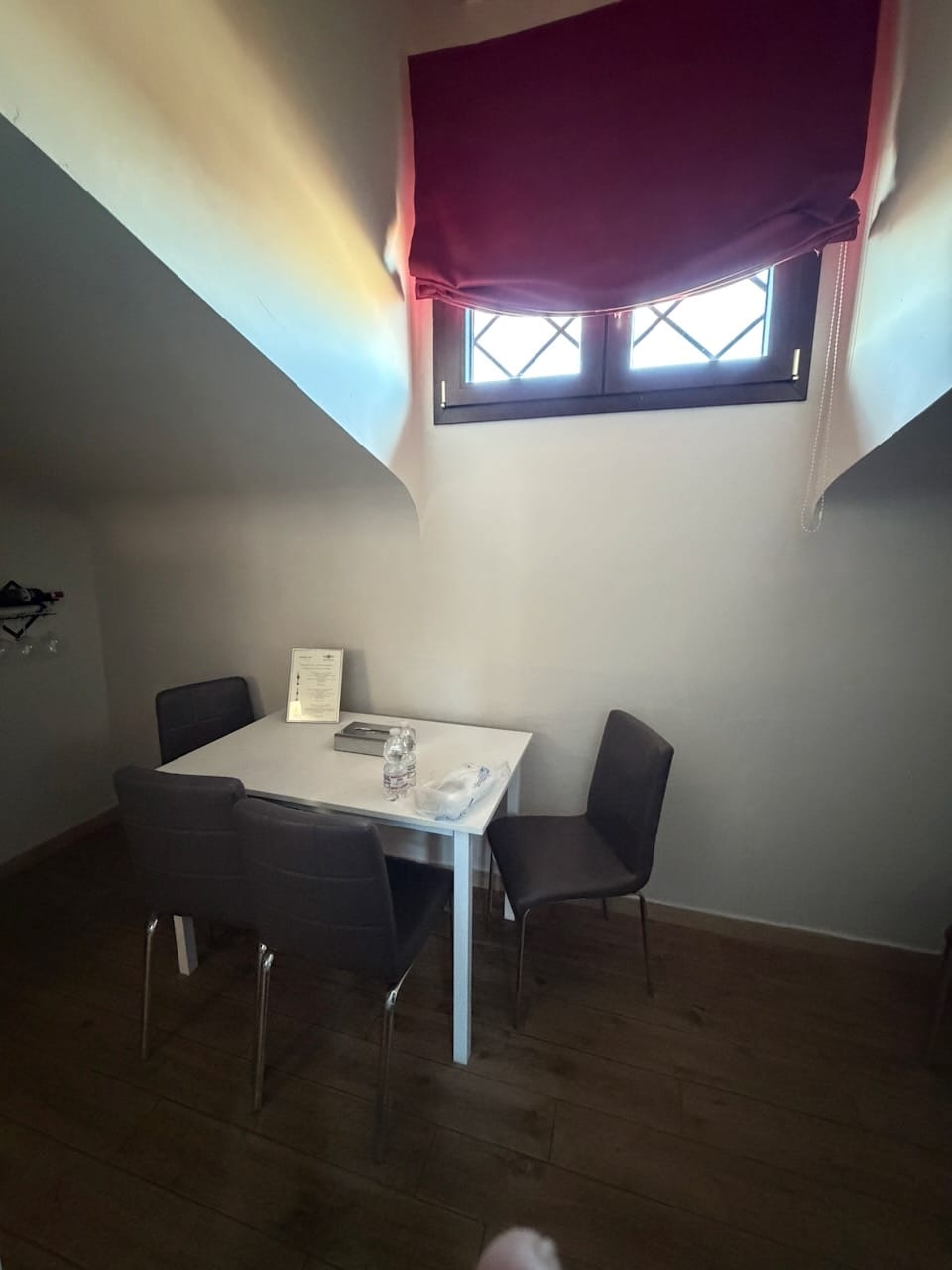
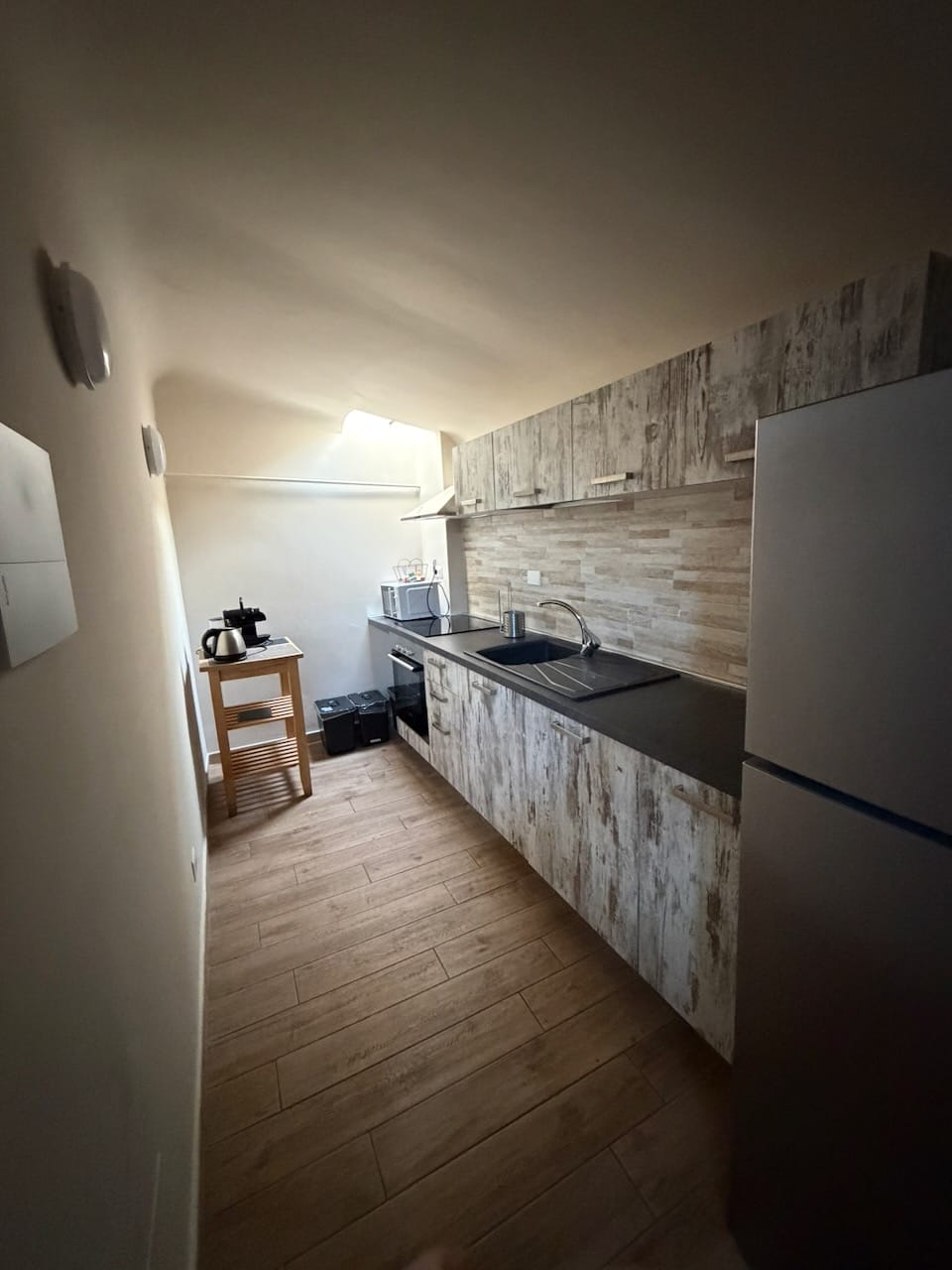
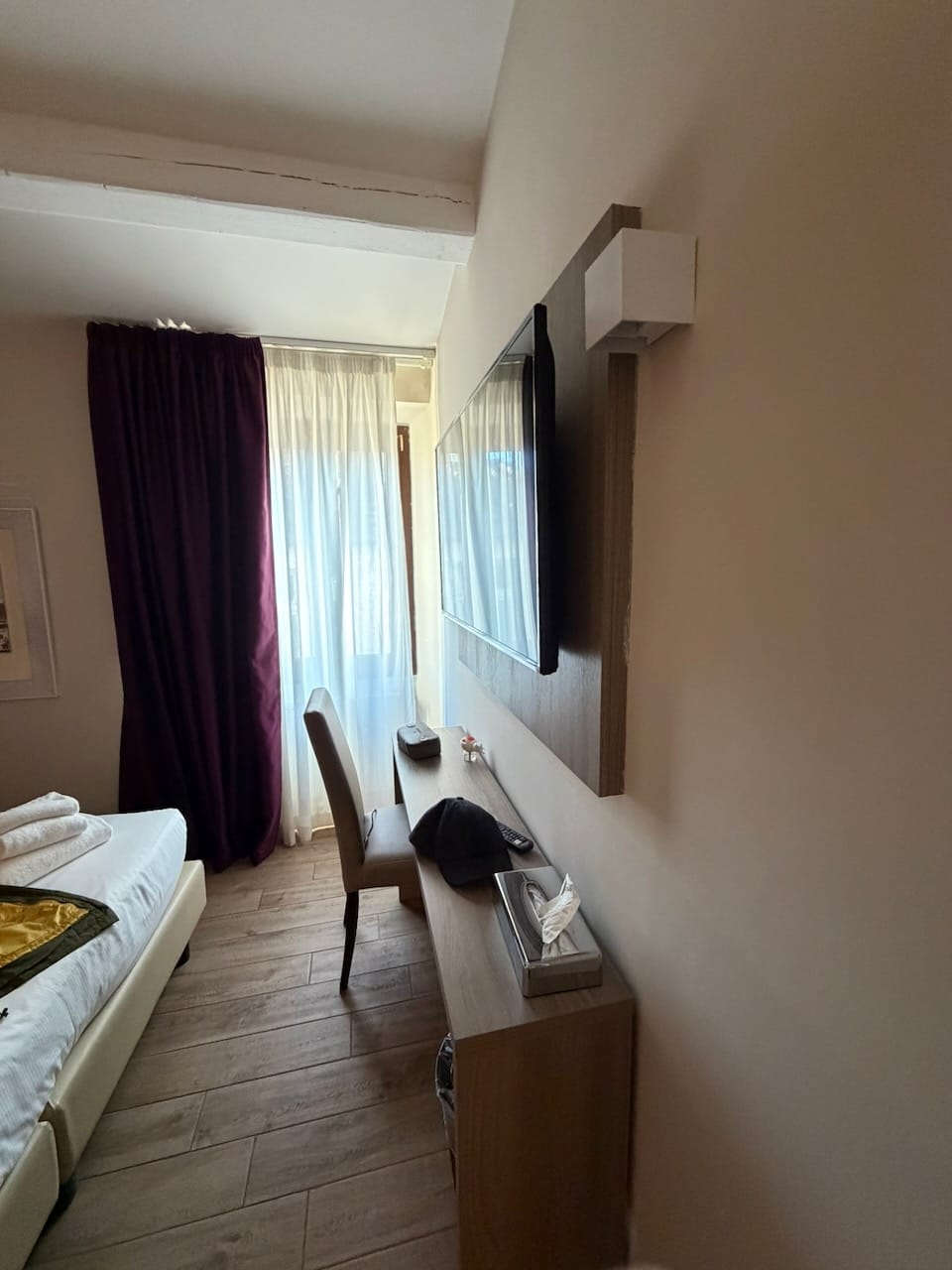
After lunch, we finally checked into the hotel. Our room was a spacious family suite with a separate living room and bedroom, plus a kitchen and all the necessary equipment, a very welcome after the long morning. While everyone else rested, I went hunting for a coin laundry. We had deliberately avoided bringing rolling suitcases or checked luggage, and each of us carried just one backpack, with a few foldable bags (inside the backpack) saved for souvenirs. In Europe, rolling luggage is simply not ideal, especially with the stone pavements. Add the general concern about theft, and traveling light becomes a serious strategy. Local laundry, in that sense, was essential.
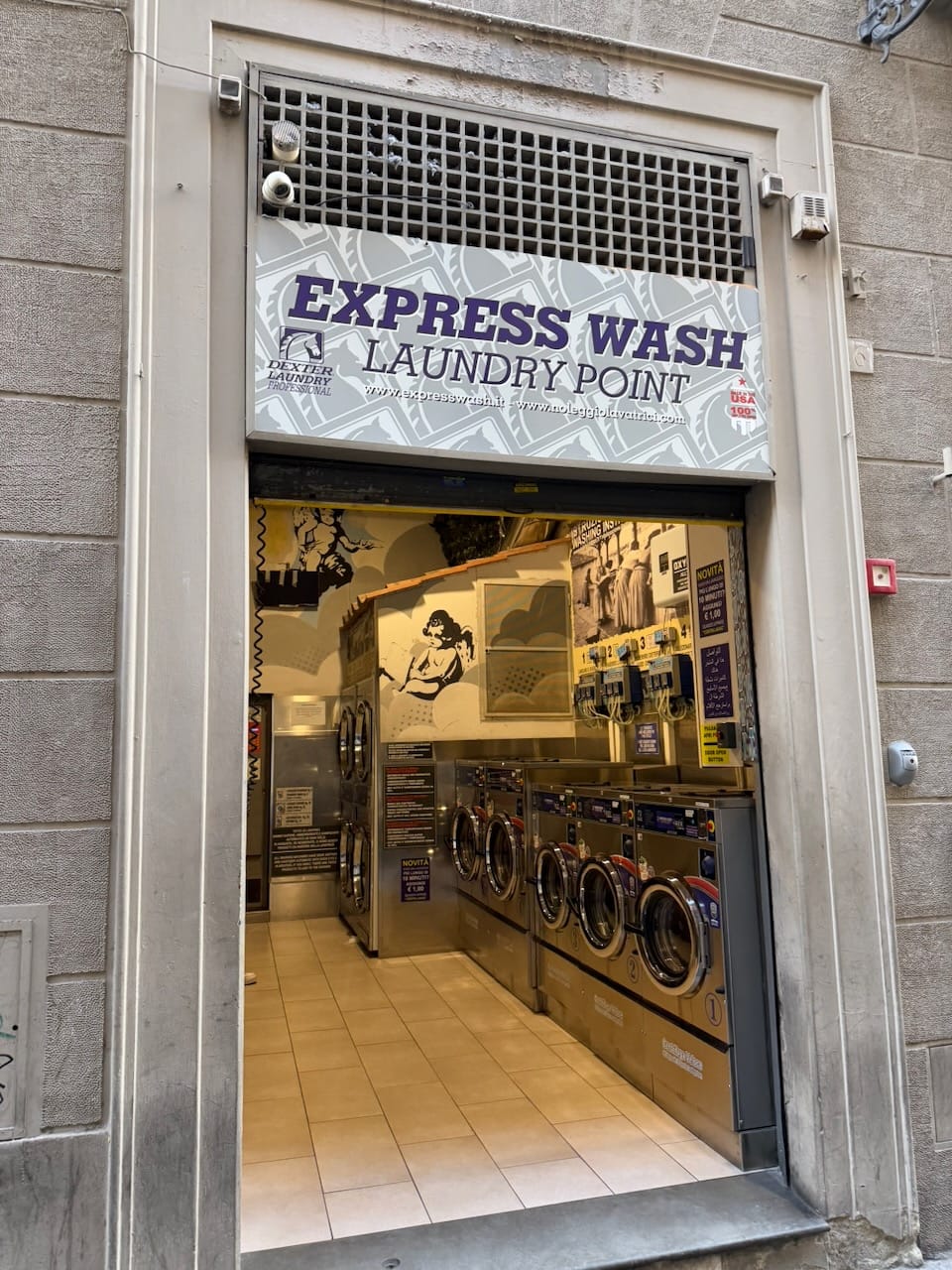
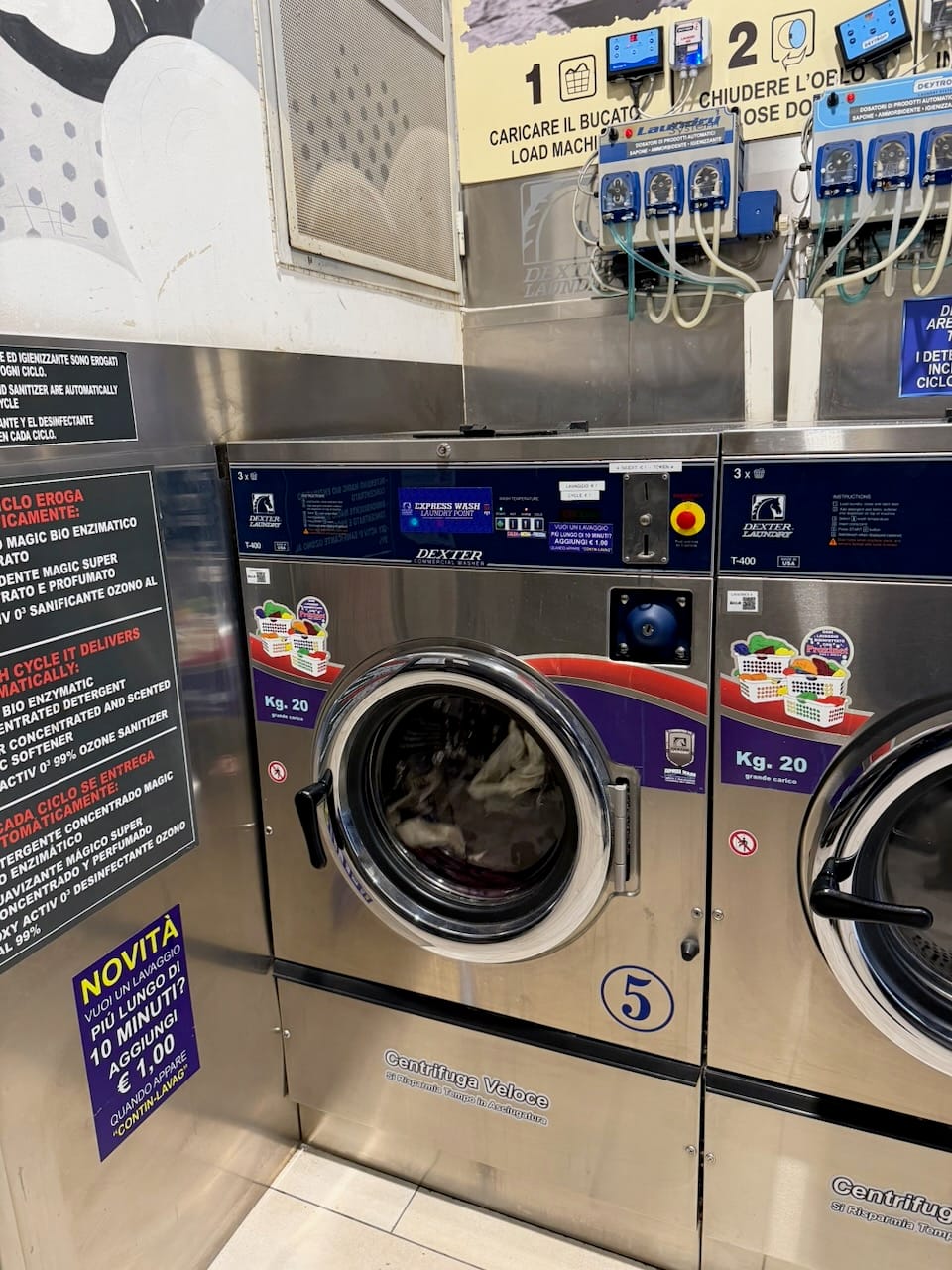
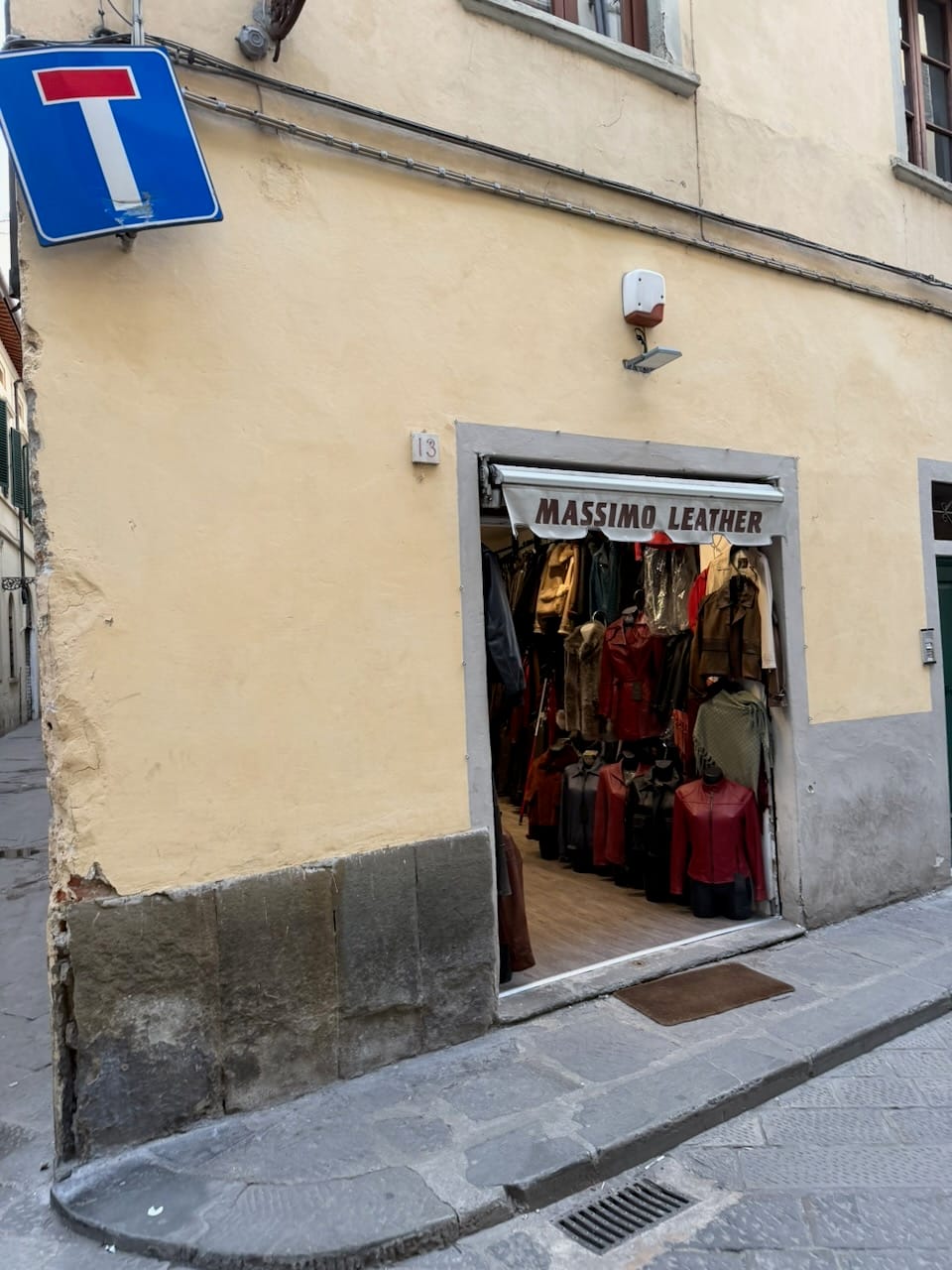
Later, we wandered through the market places and all ended up buying leather jackets, which is exactly why those foldable bags suddenly became very useful. Firenze is famous for leather goods, though much of what’s sold on the street feels overly touristy. Some shops, however, offer genuinely good quality, and Massimo Leather was one of them. The owner even told us he had lived in the Bay Area and gone to high school there. Highly recommended.
We had an early dinner reservation at Trattoria Dall’Oste at 5:30 pm., which was the only available slot. In Italy, we quickly learned that most people don’t start dinner until around 7 pm., so the place was still waking up when we arrived. When I first visited Firenze in 1999, I remembered the steak being incredible, and clearly, that wasn’t just my imagination—I also heard it from many others. So this time, trying a proper Firenze steak was another objective. Dall’Oste is one of the most famous steak houses in the city, with several locations. We chose the one closest to the station, which also seems to be their main branch.
There was a small hiccup: our reservation hadn’t been recorded correctly. But then a Korean staff member appeared, and promptly fixed everything using our confirmation email. She ended up serving our table as well. Judging from the Korean menu and a promotion poster featuring Alberto Mondi (a well-known Italian personality in Korea), this place clearly sees a lot of Korean visitors.
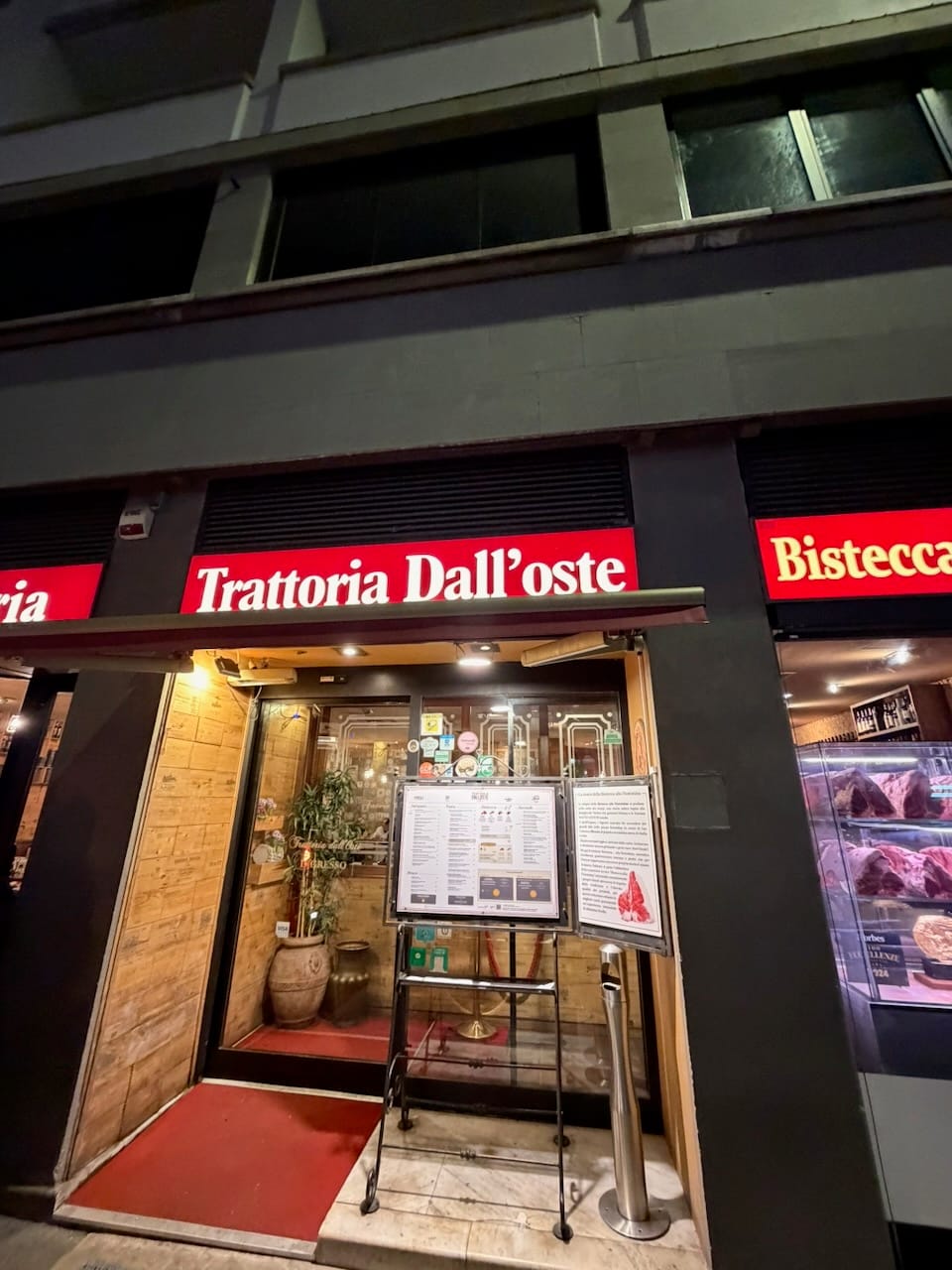
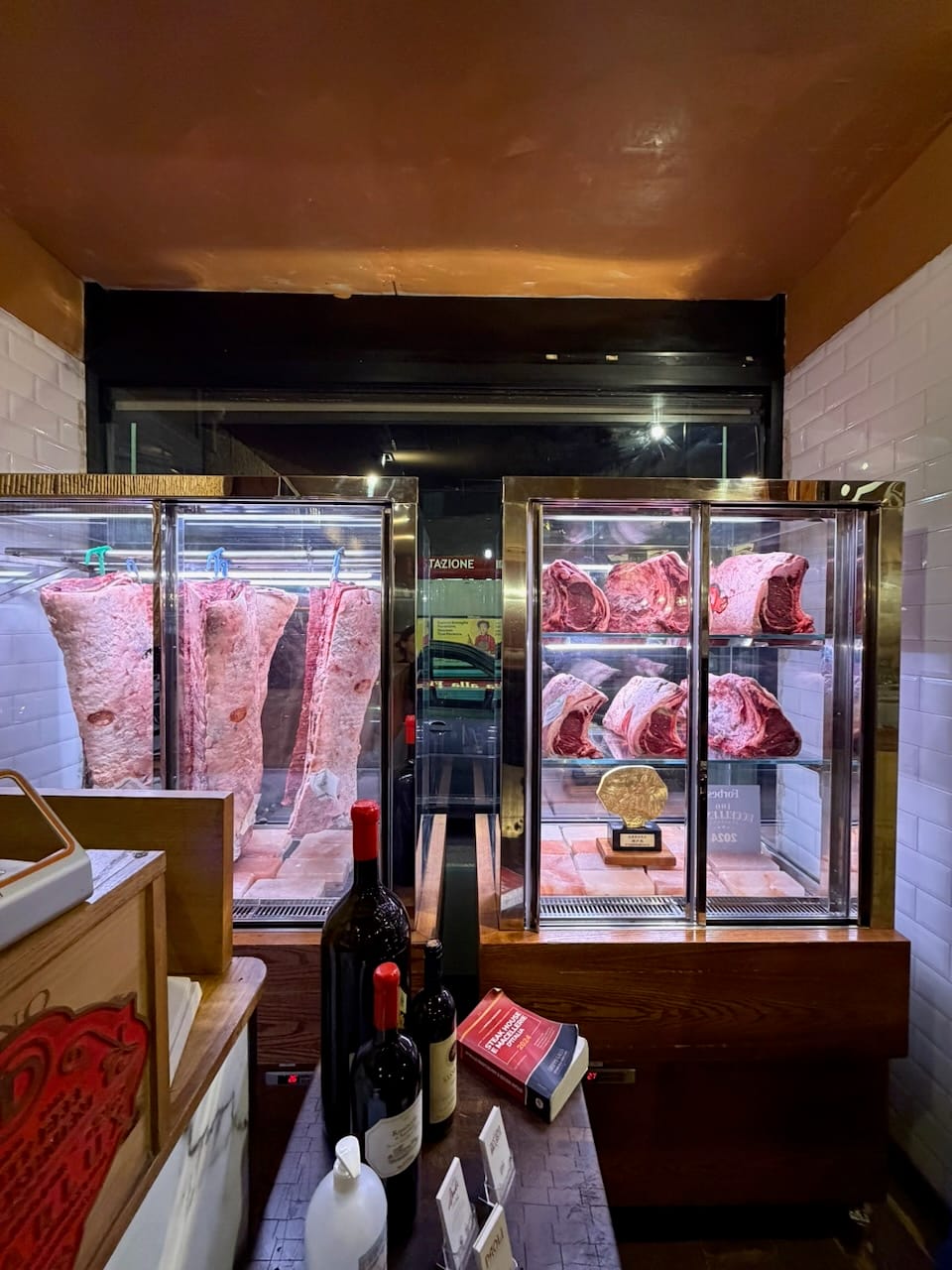
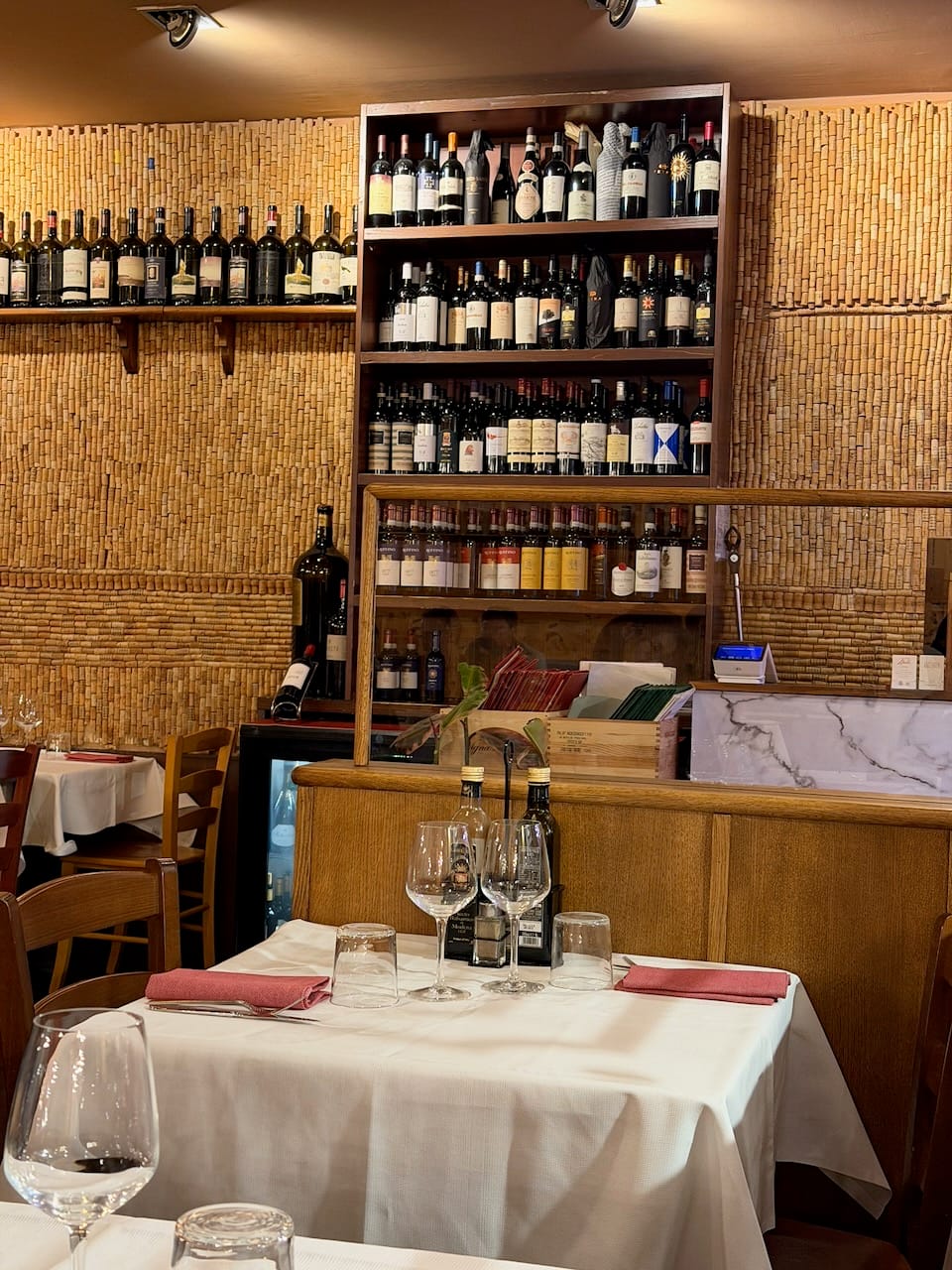
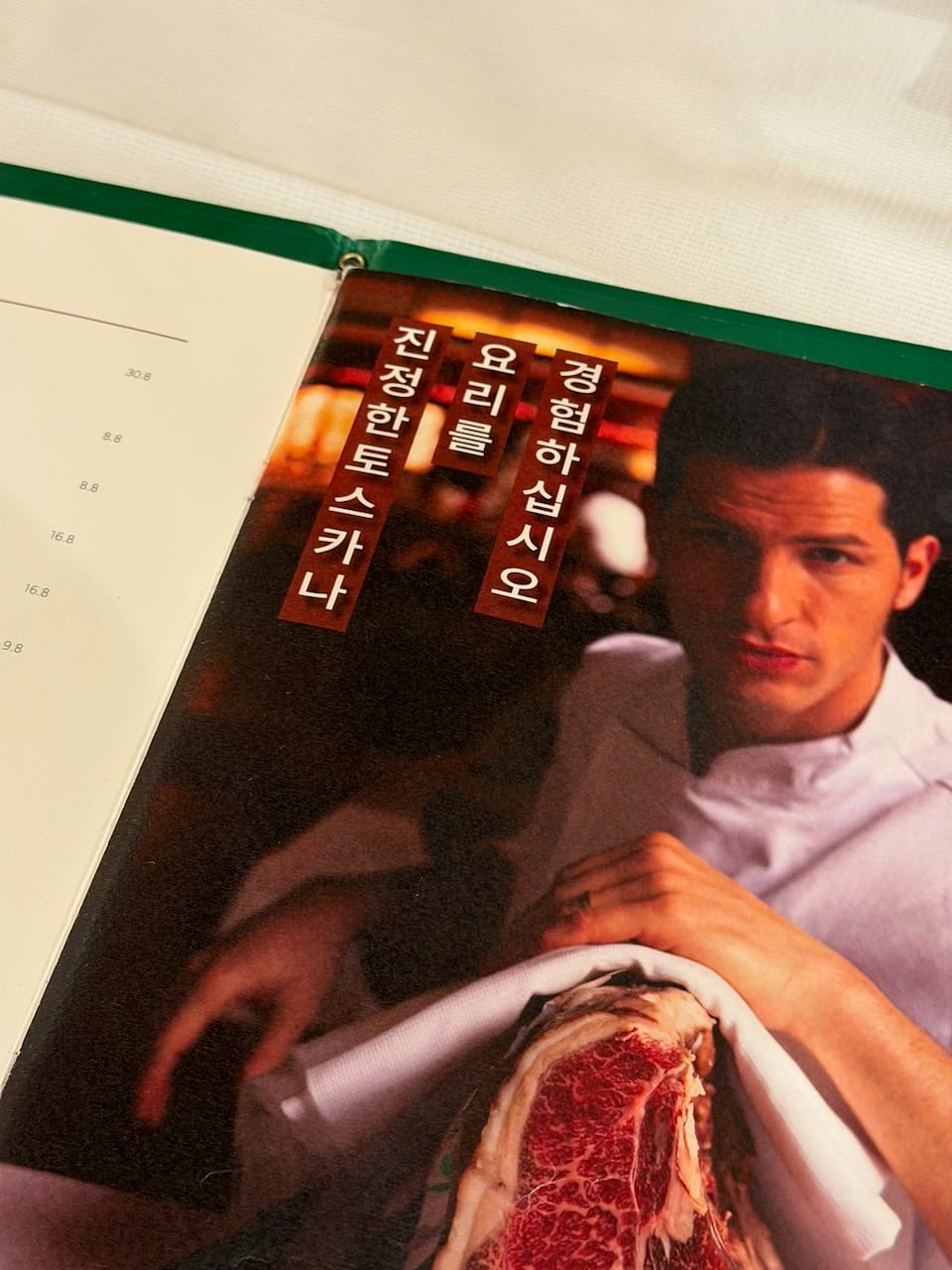
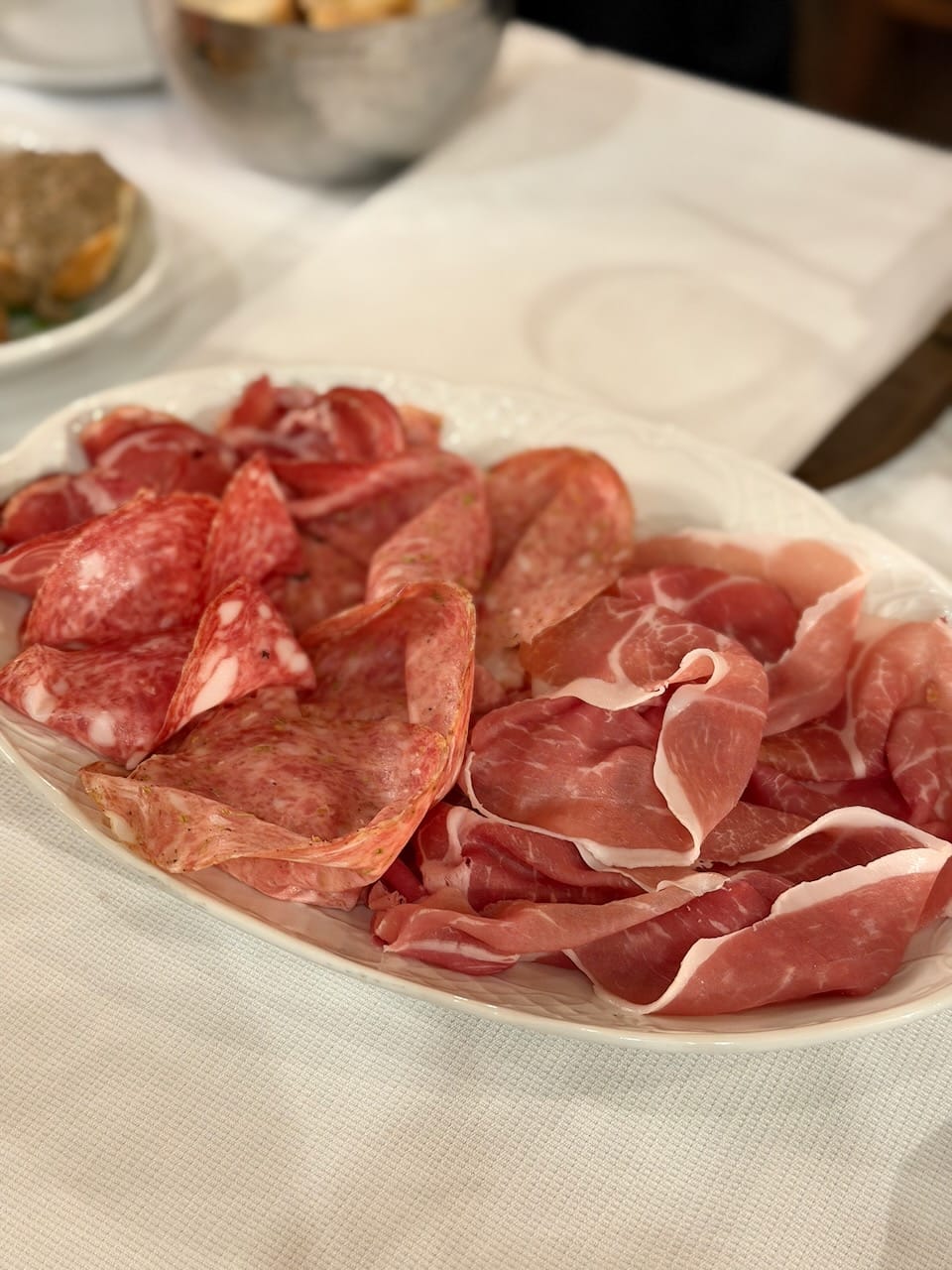
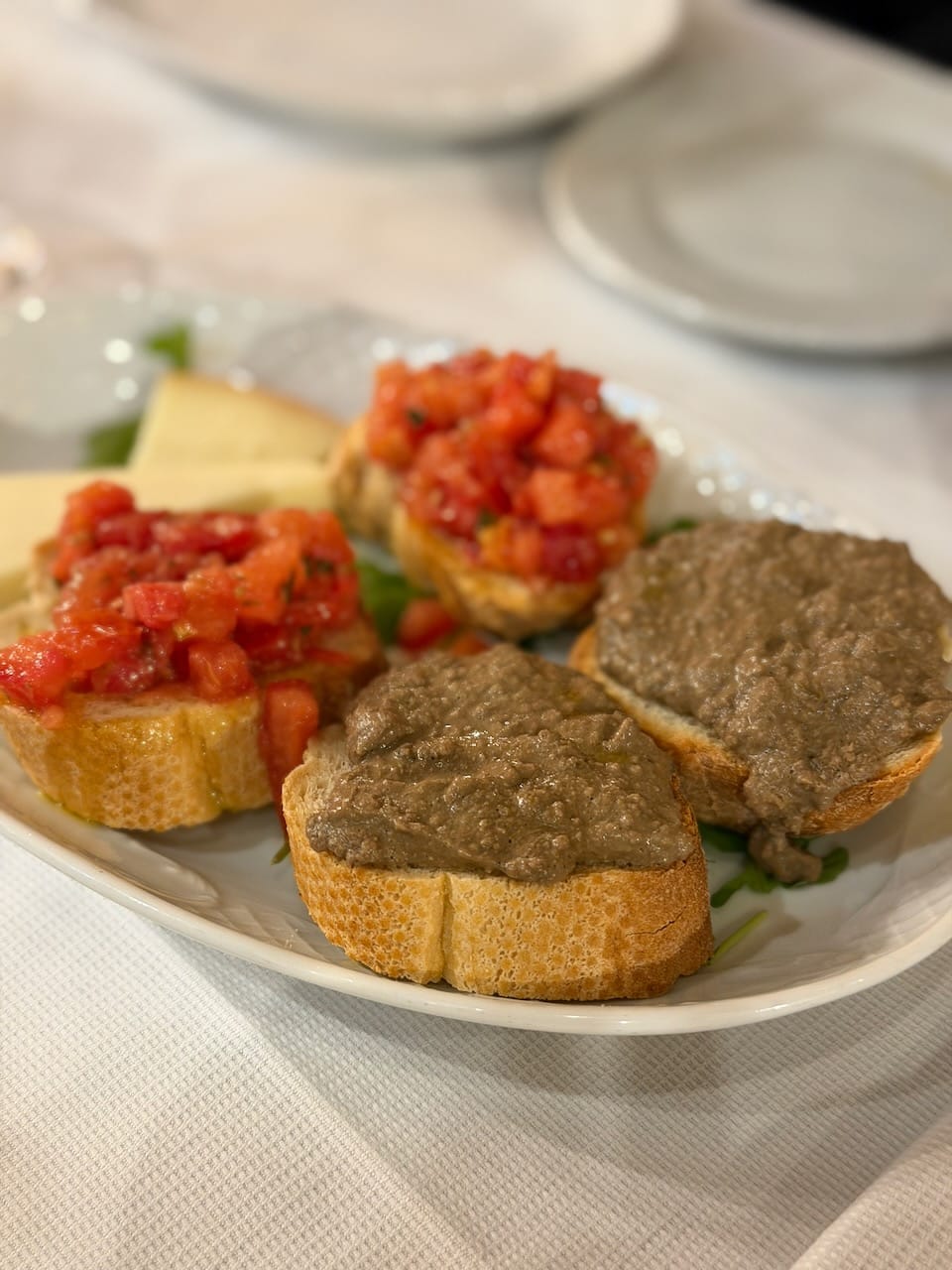

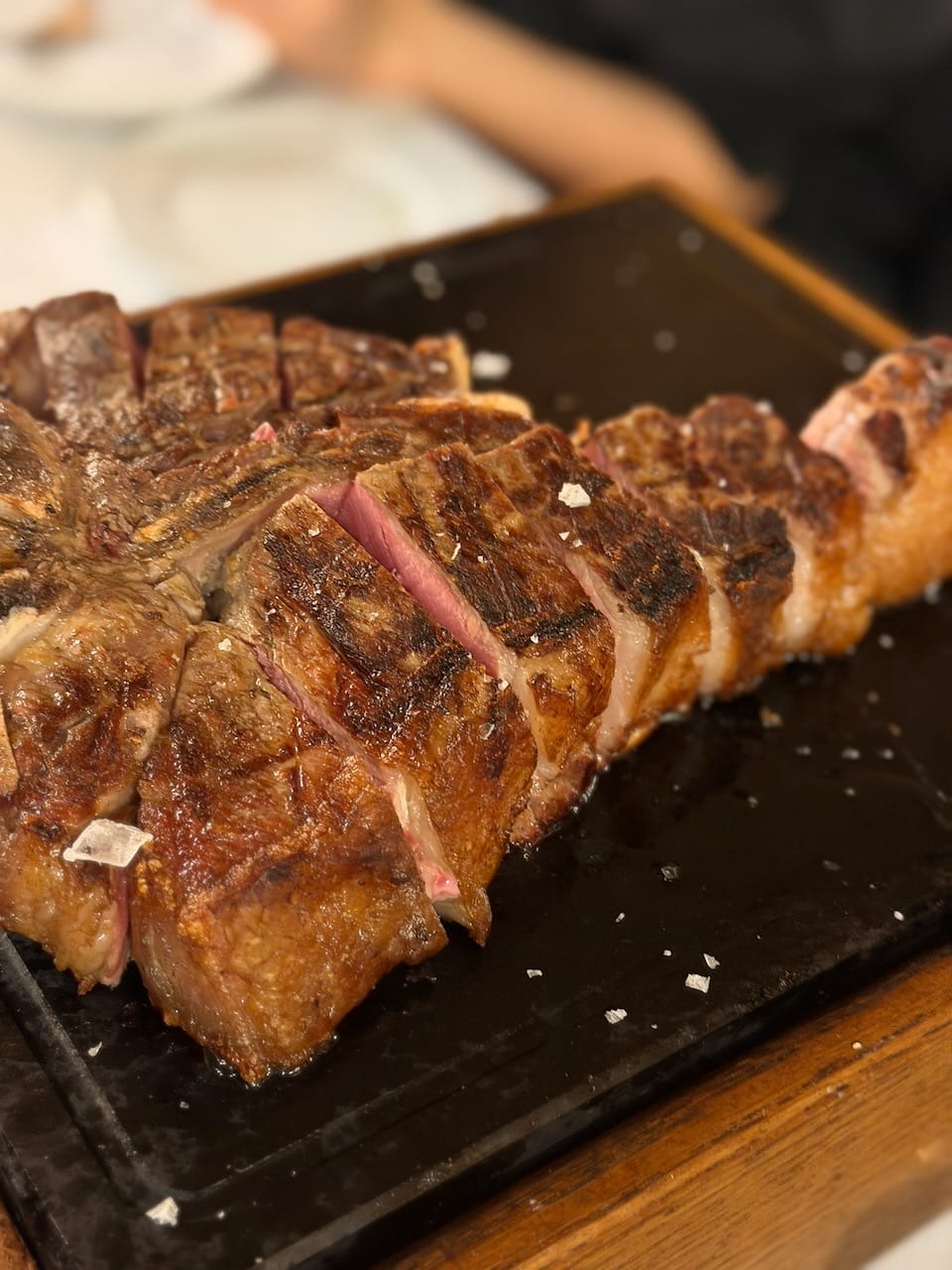
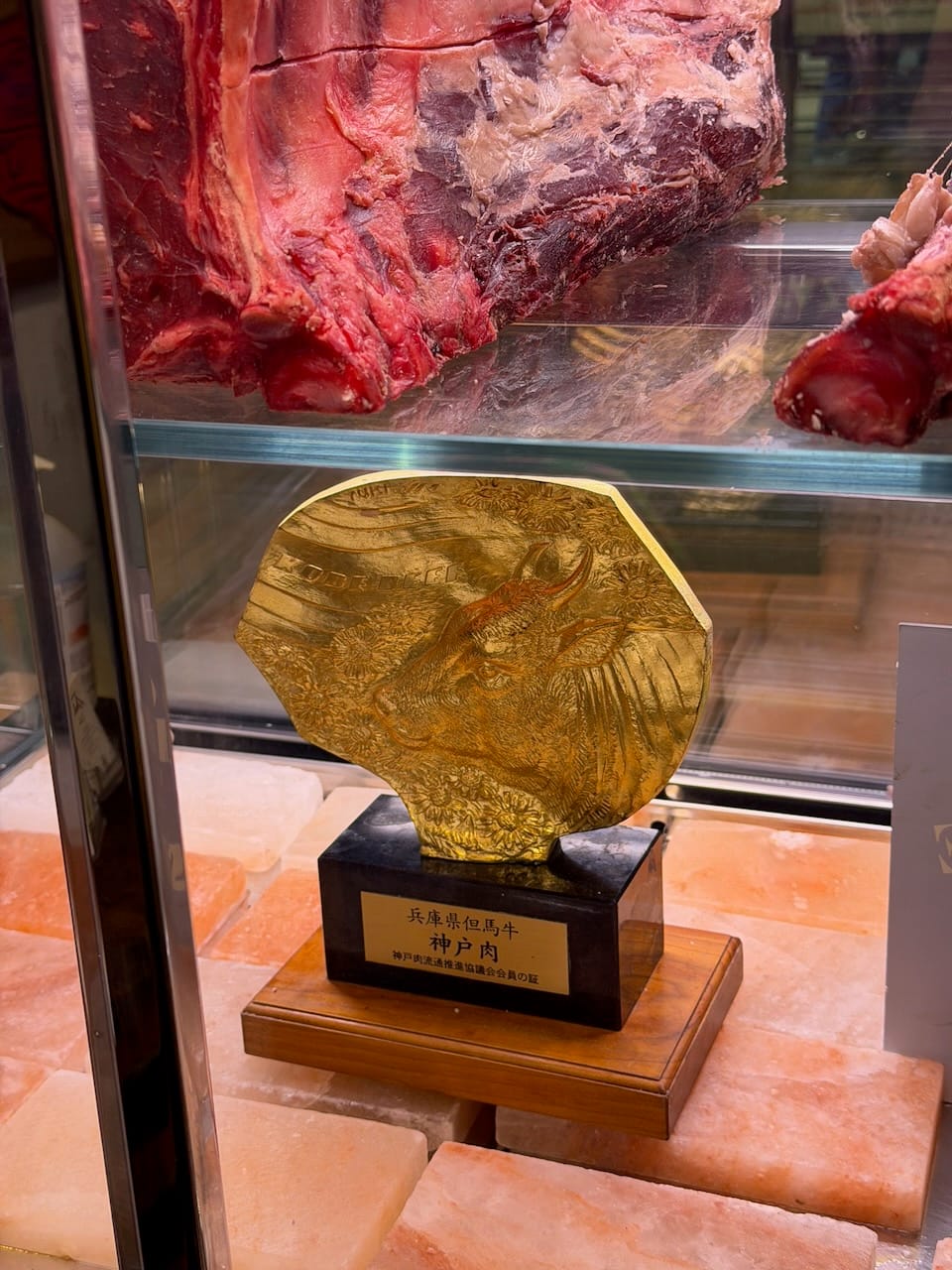
Trattoria Dall’Oste
The food was solid. We ordered their special T-bone steak set with appetizers. The steak itself was good, though the flavor leaned more toward an American dry-aged steak than the slimmer, more distinctive Firenze style I remembered. Still, the portion was massive, and we packed enough leftovers for breakfast the next morning since our accommodation didn’t include breakfast.
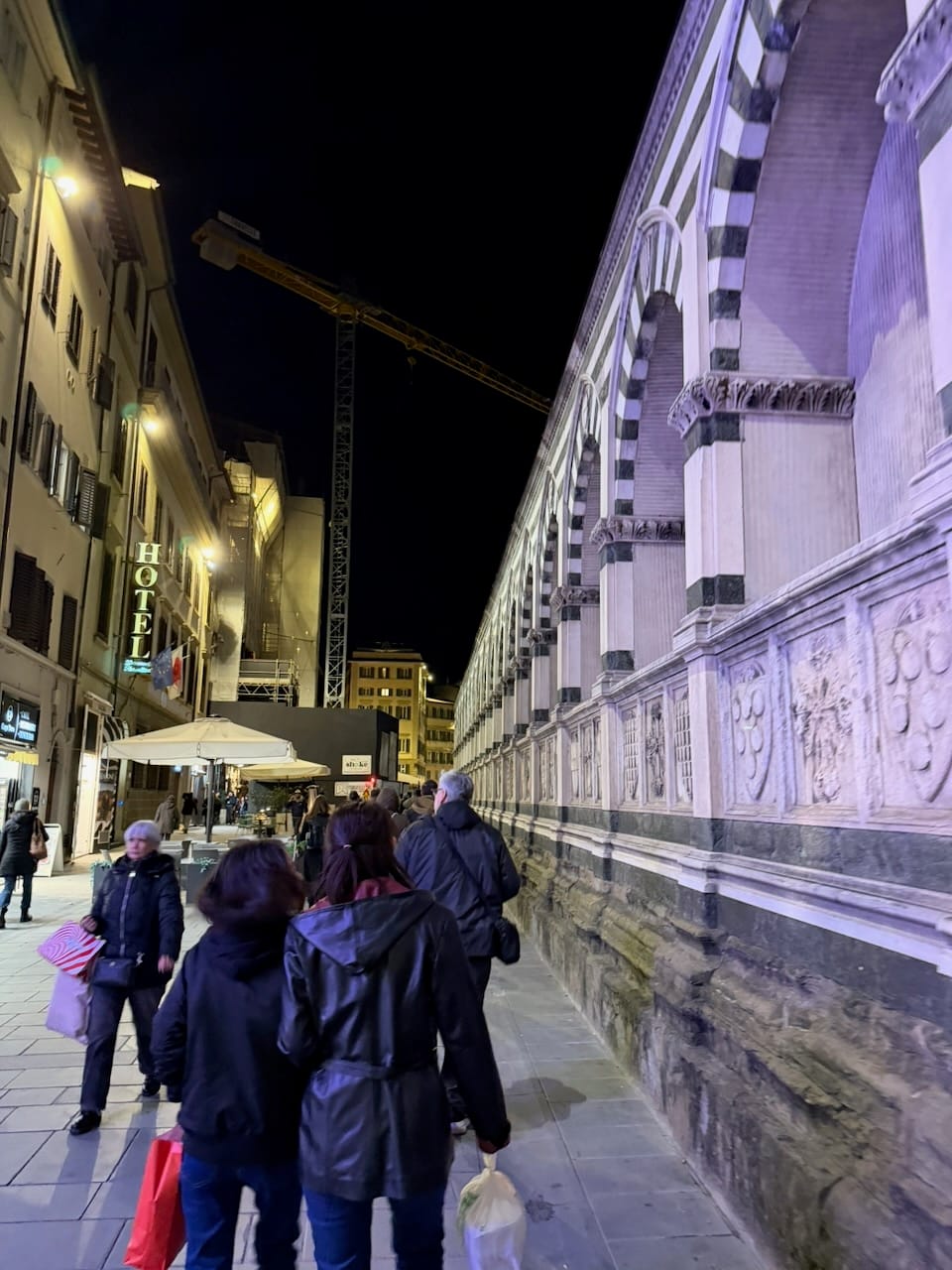
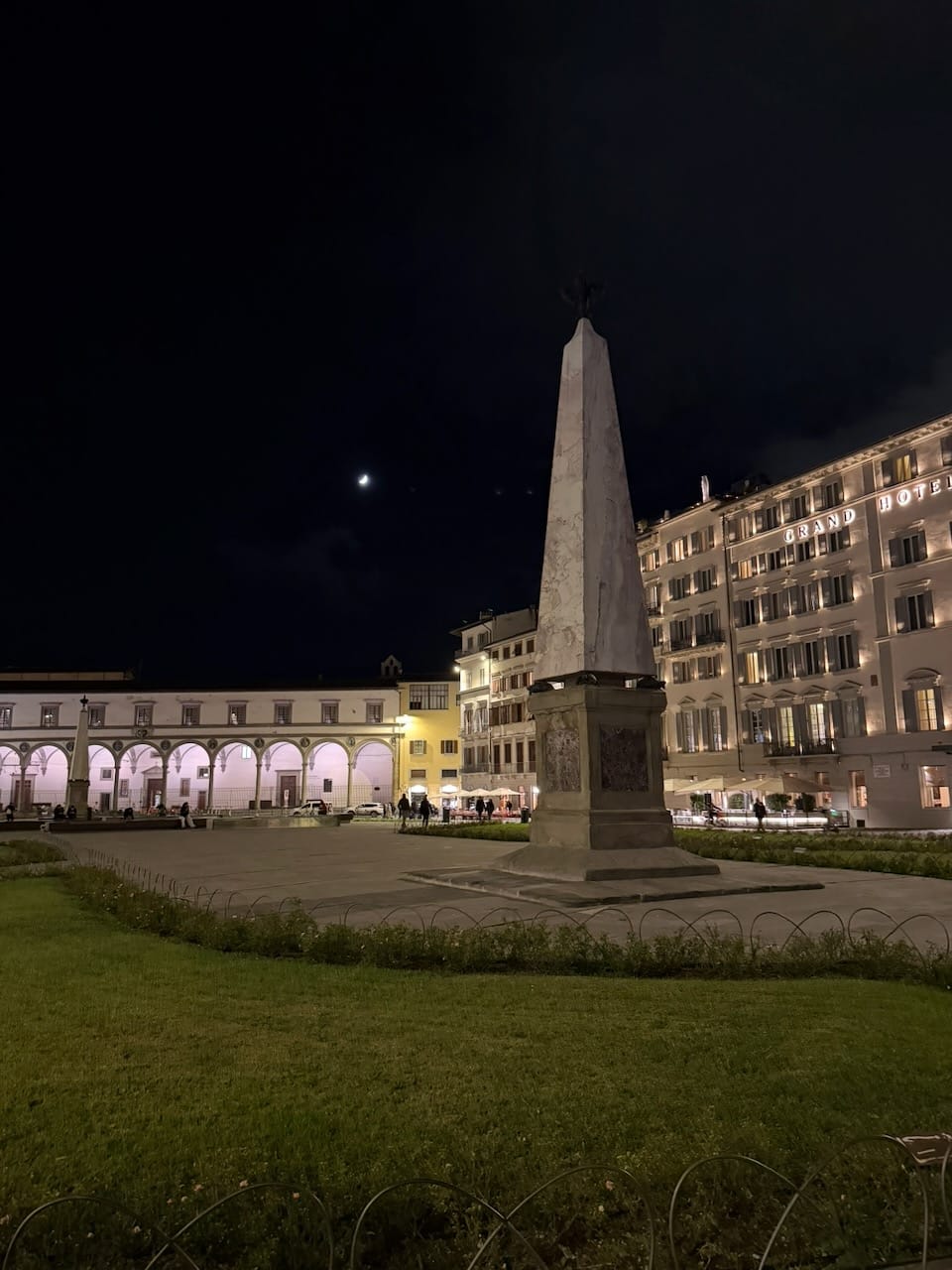
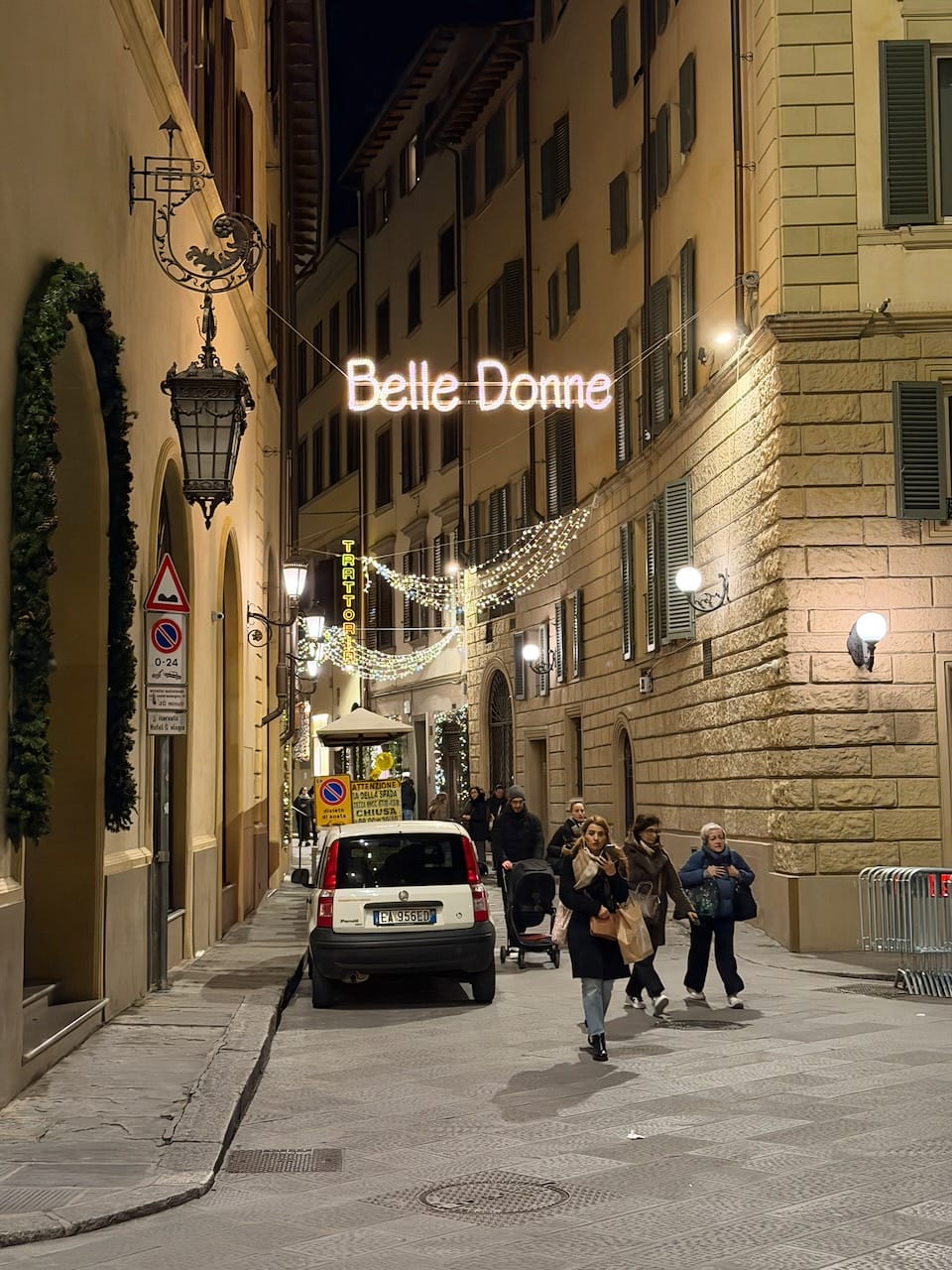
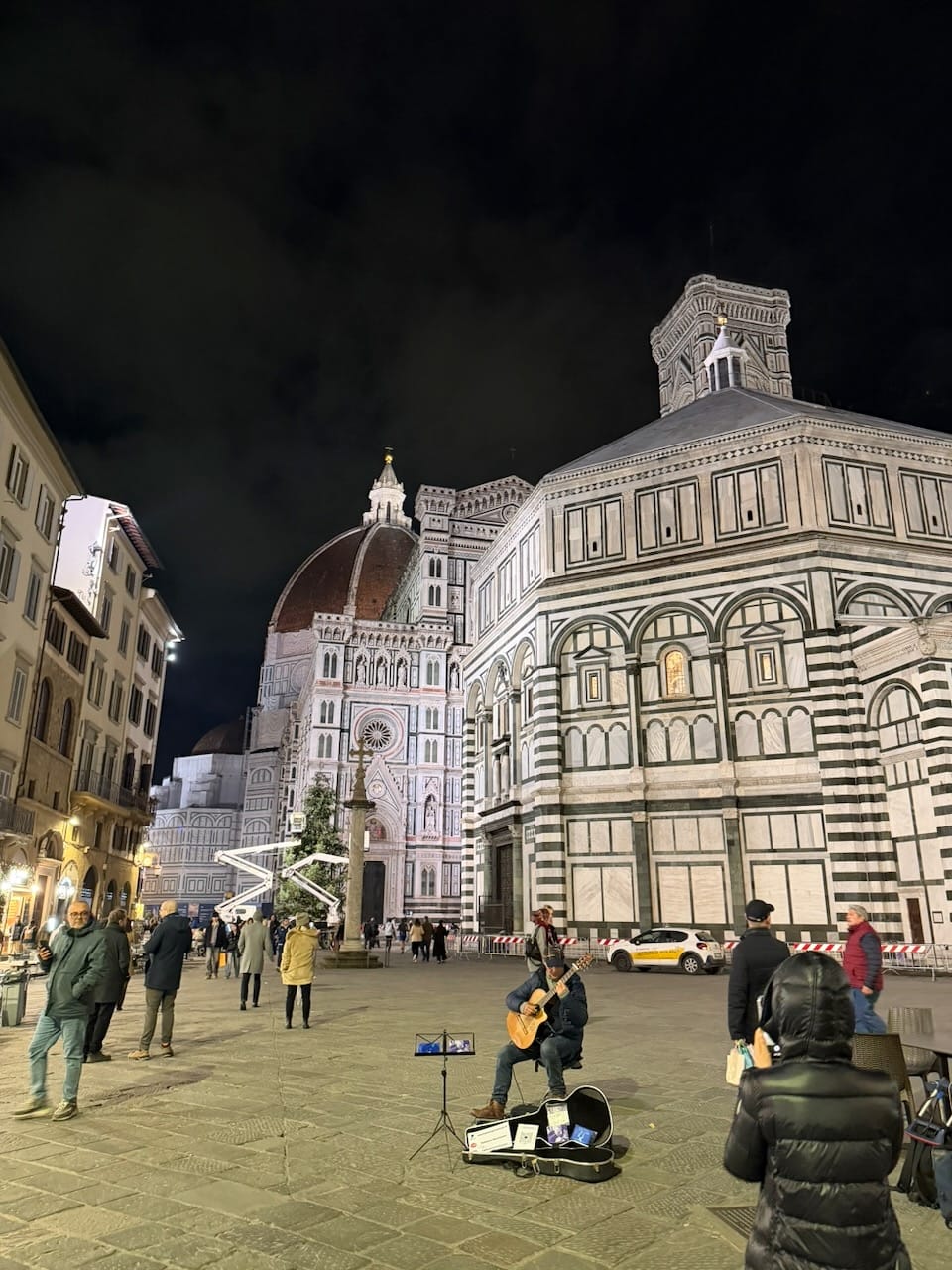
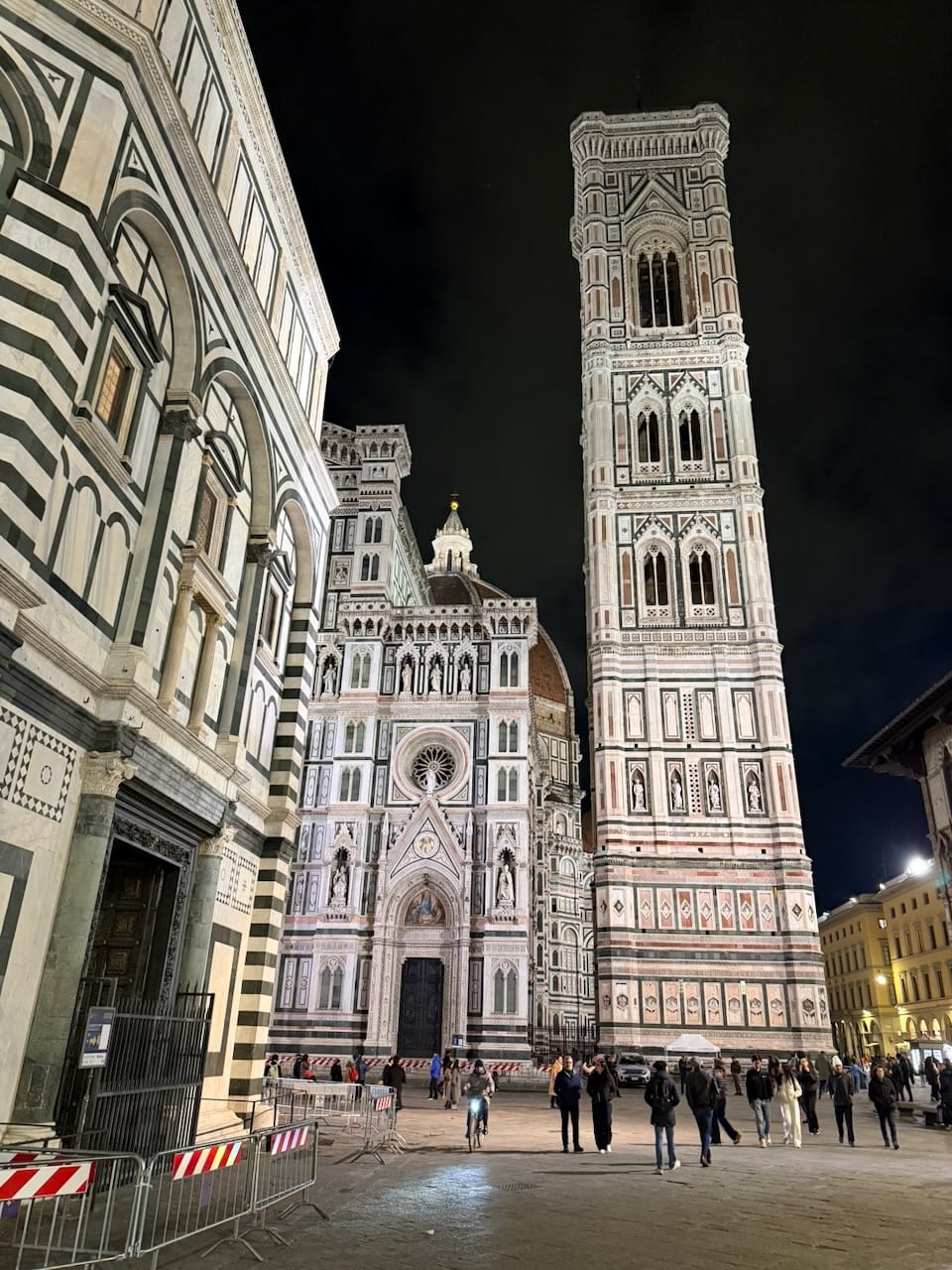
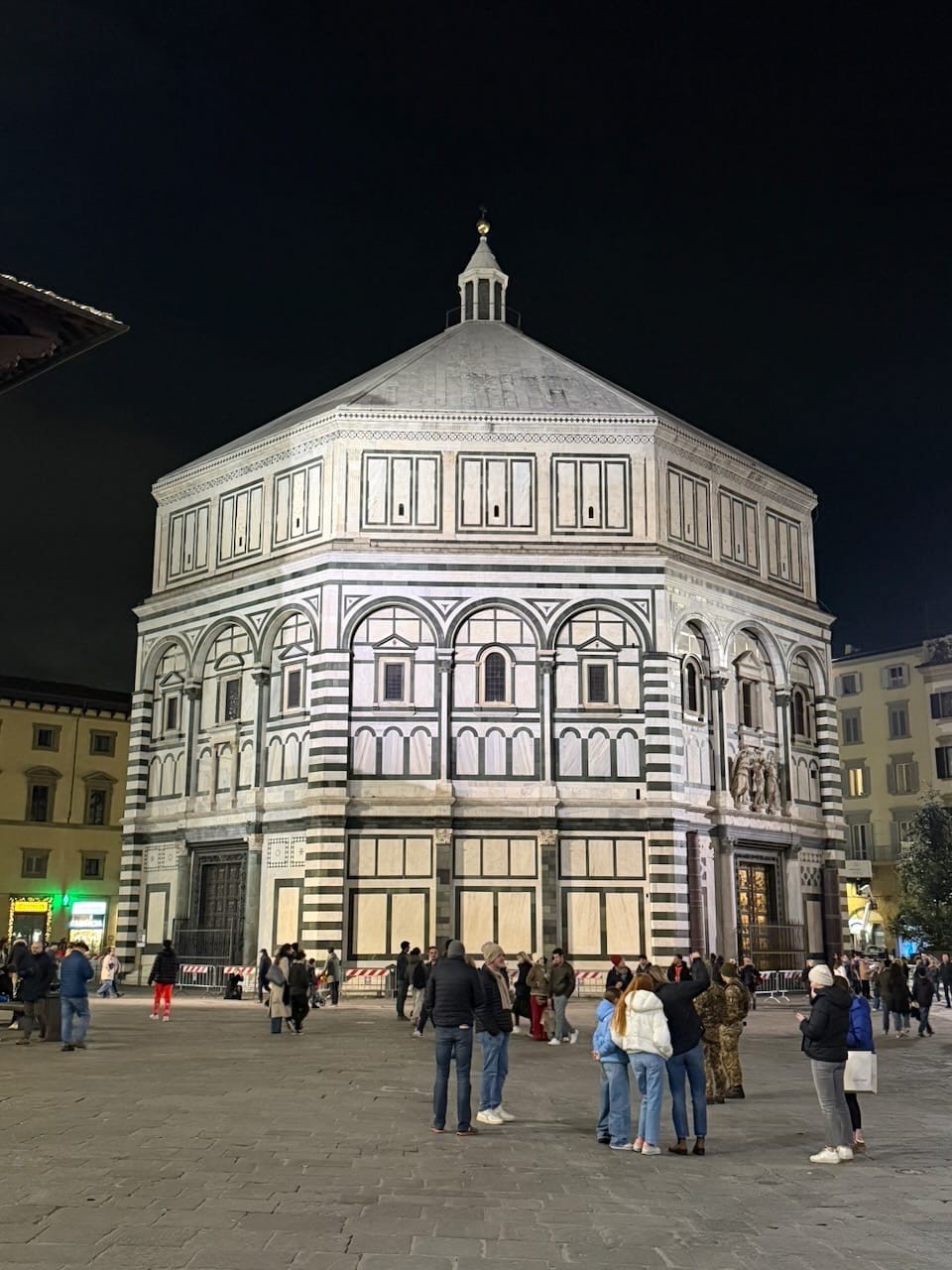
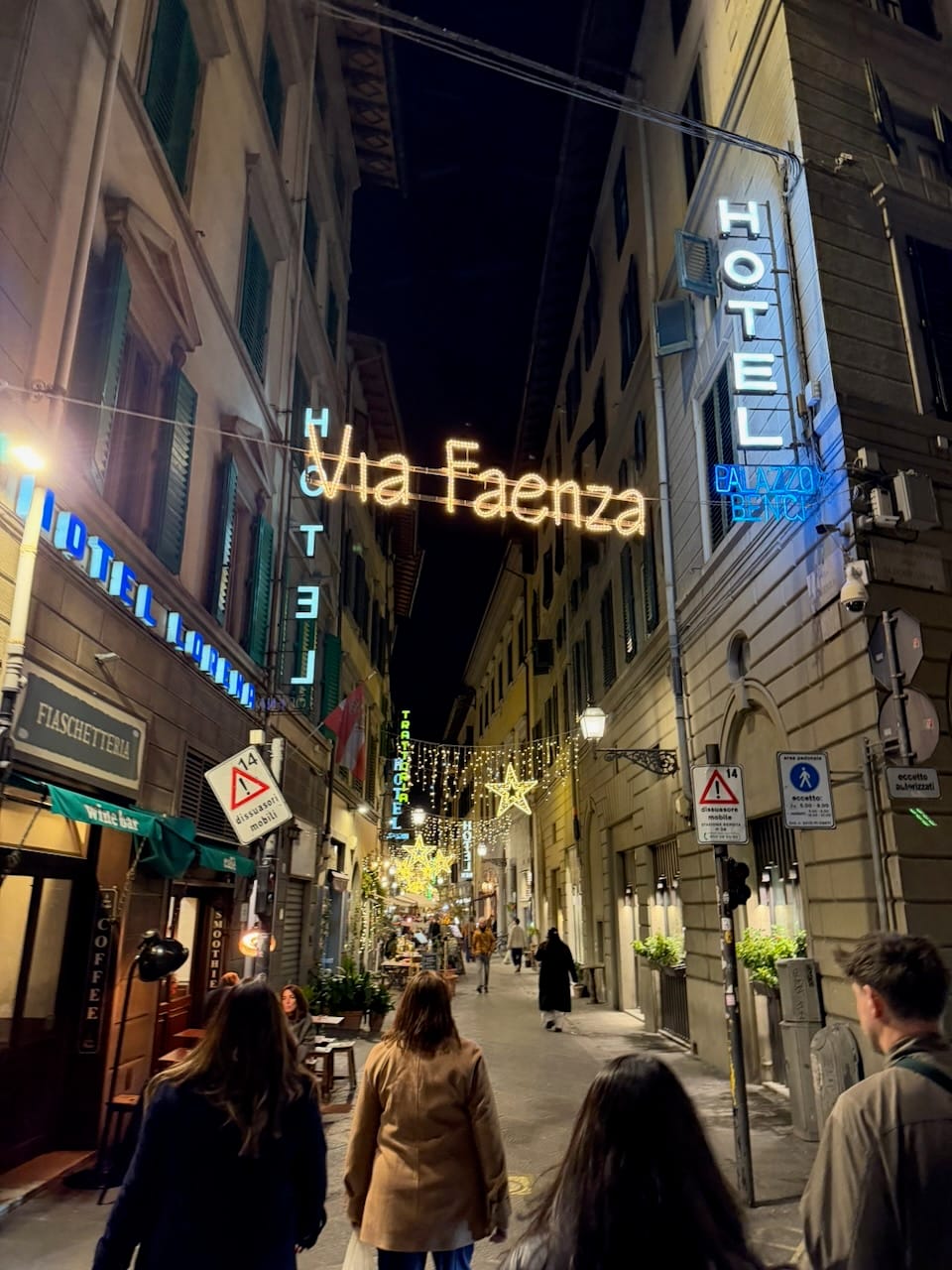
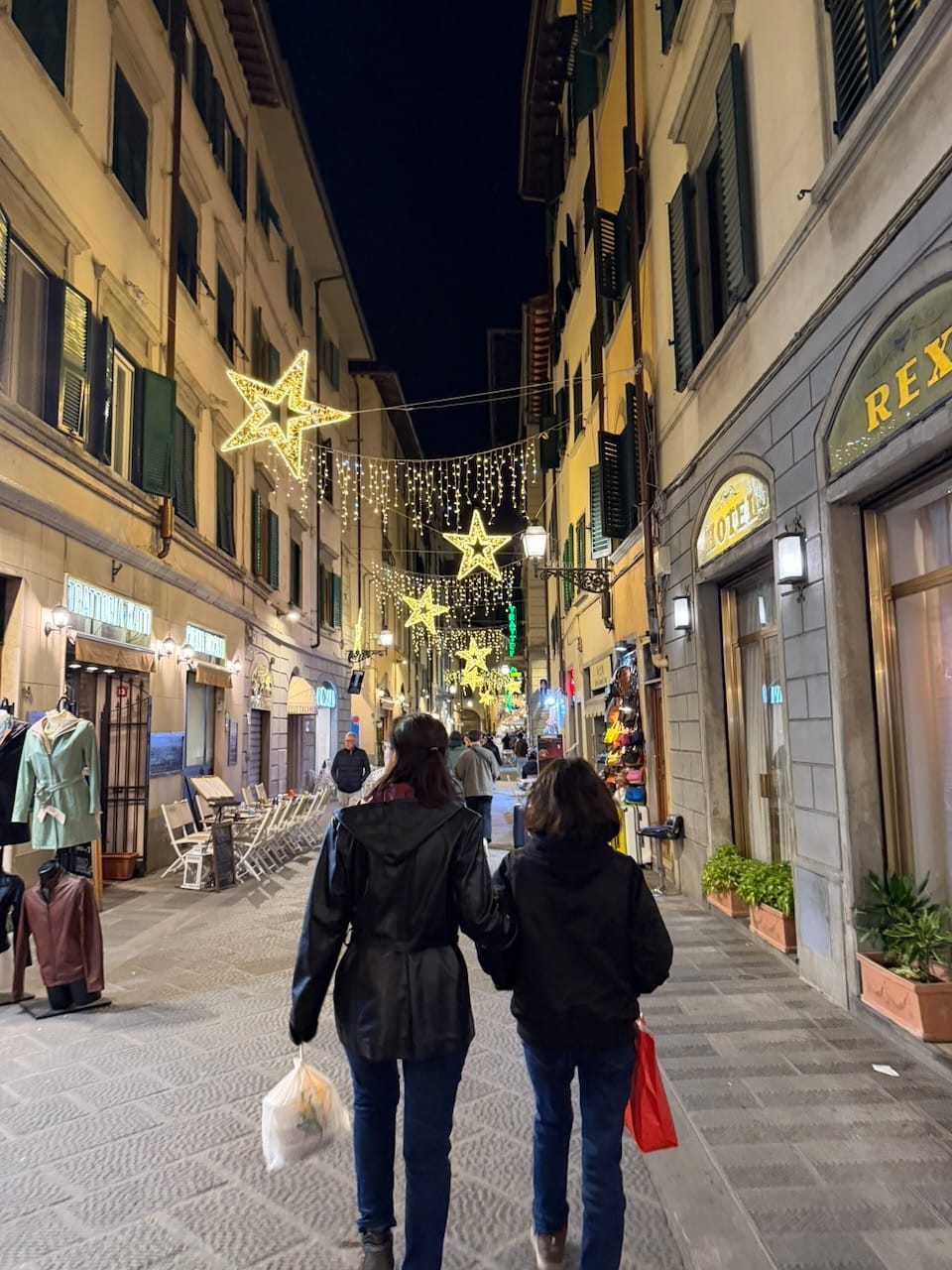
On our way back, we wandered through the night streets of Firenze. The air was chilly, but it carried that quiet, pleasant feeling of approaching Christmas and the end of the year. After a day of climbing, walking, eating, remembering, and rediscovering, the city already felt settled around us.