Thanksgiving 2025: Day 5, Firenze


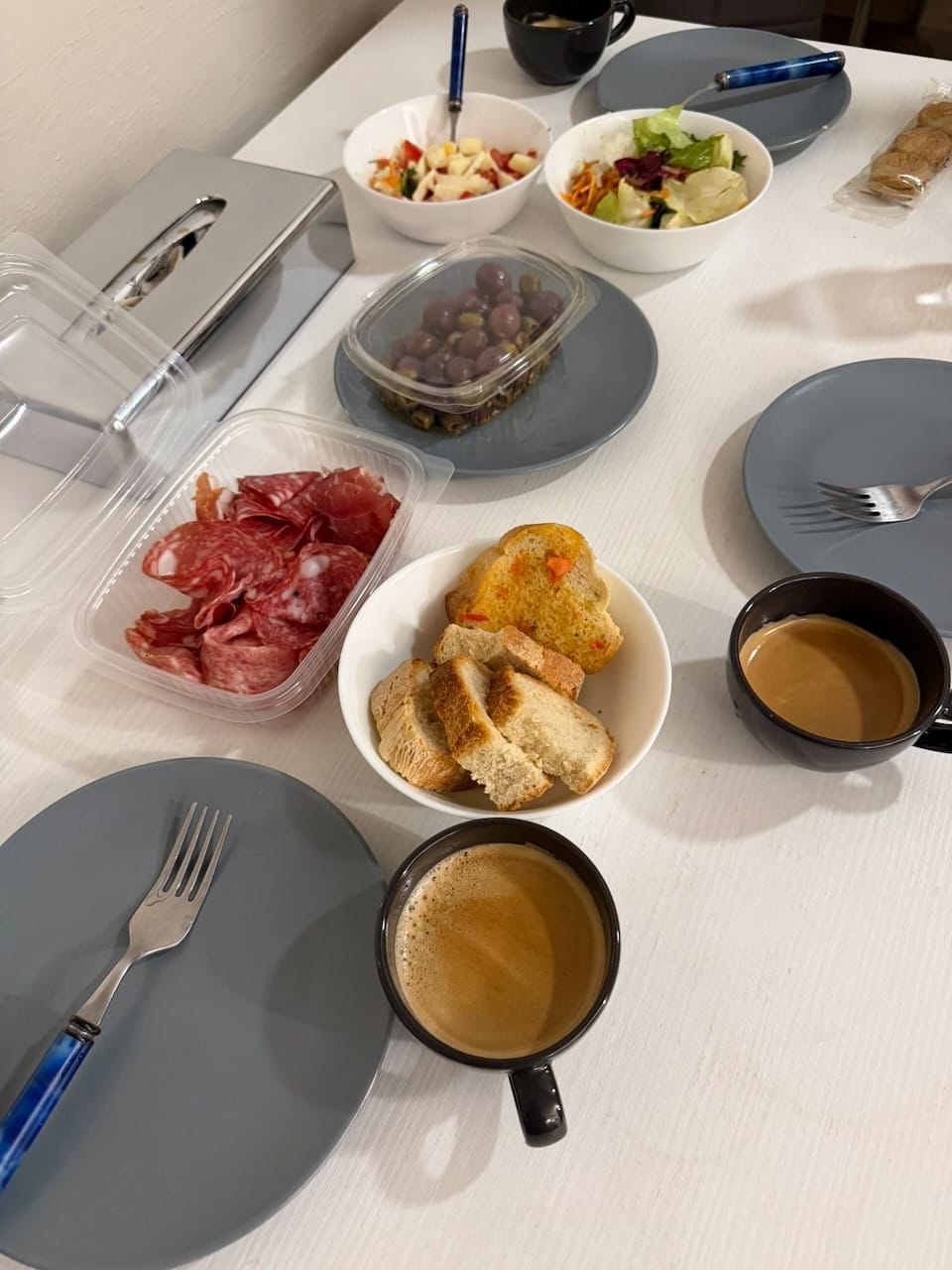
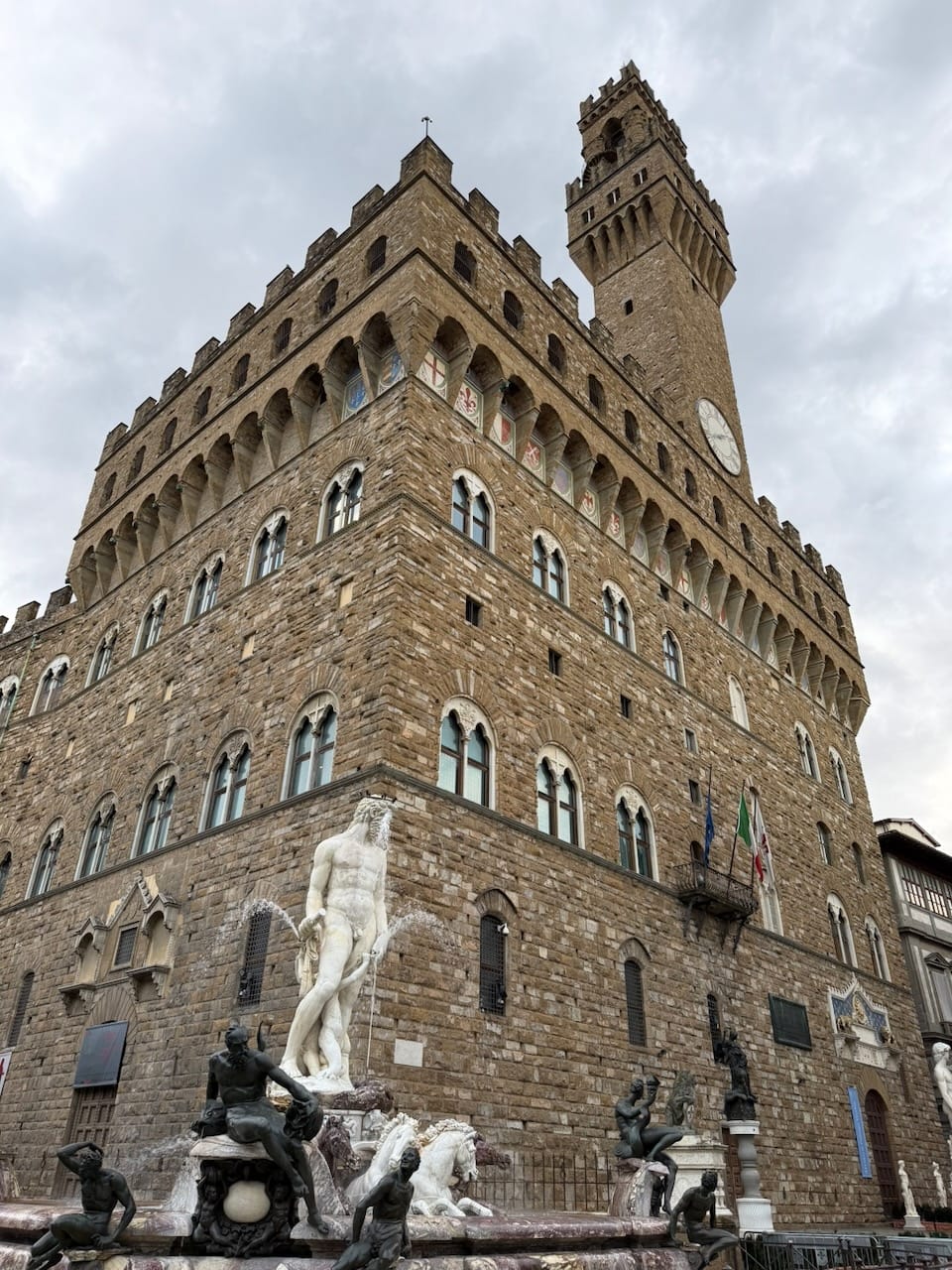
We got up early on Day 5. There was no breakfast service at the guesthouse, but we still had plenty of leftovers from the previous night’s steak dinner. And the room was equipped with a Nespresso-compatible machine and a generous supply of capsules, which made our morning far easier. We stepped out into the early Firenze streets. The sky was cloudy, the city nearly empty yet, and the air felt gentler than the day before. We walked toward Palazzo Vecchio, passing through Piazza della Repubblica.
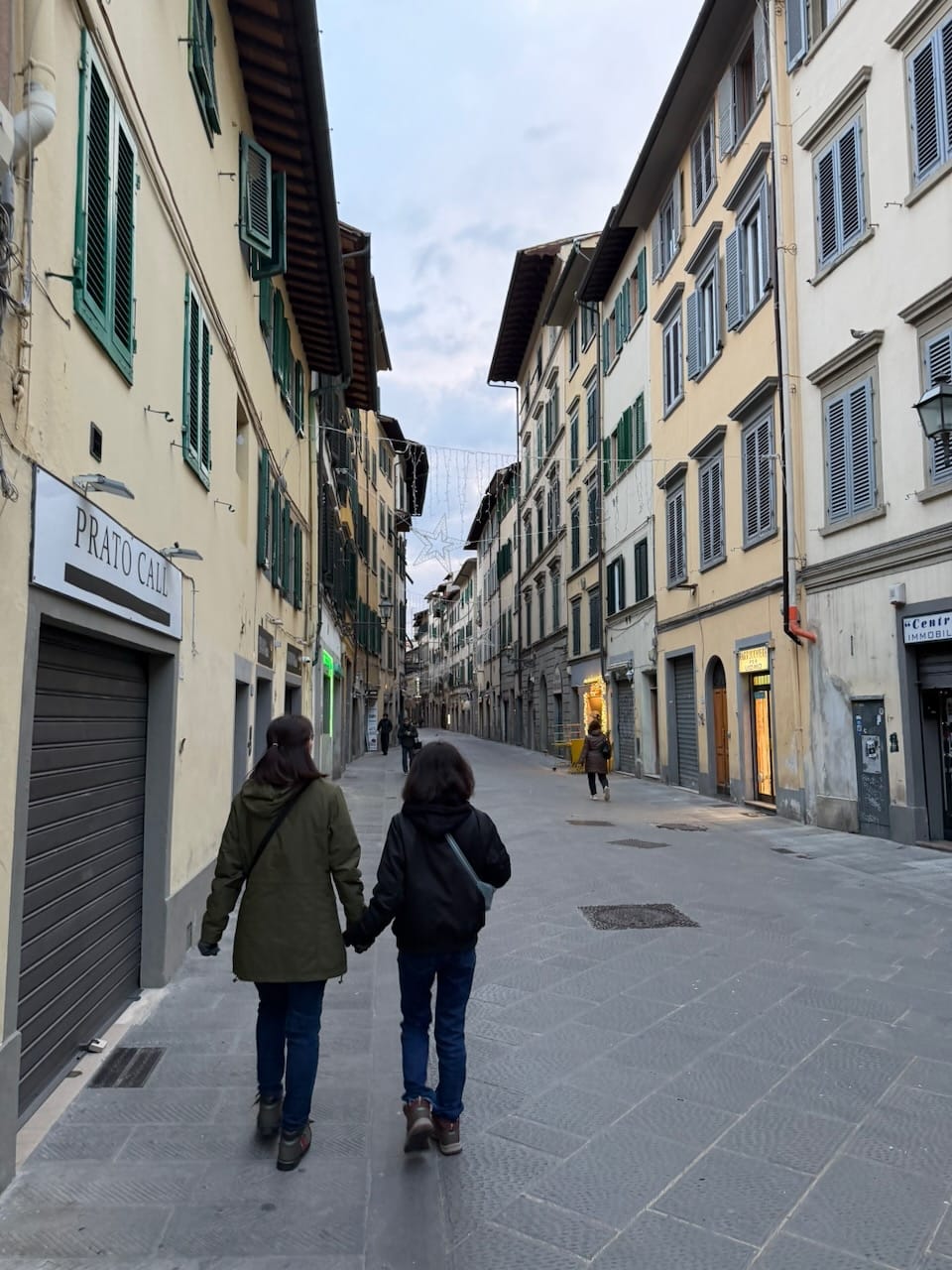
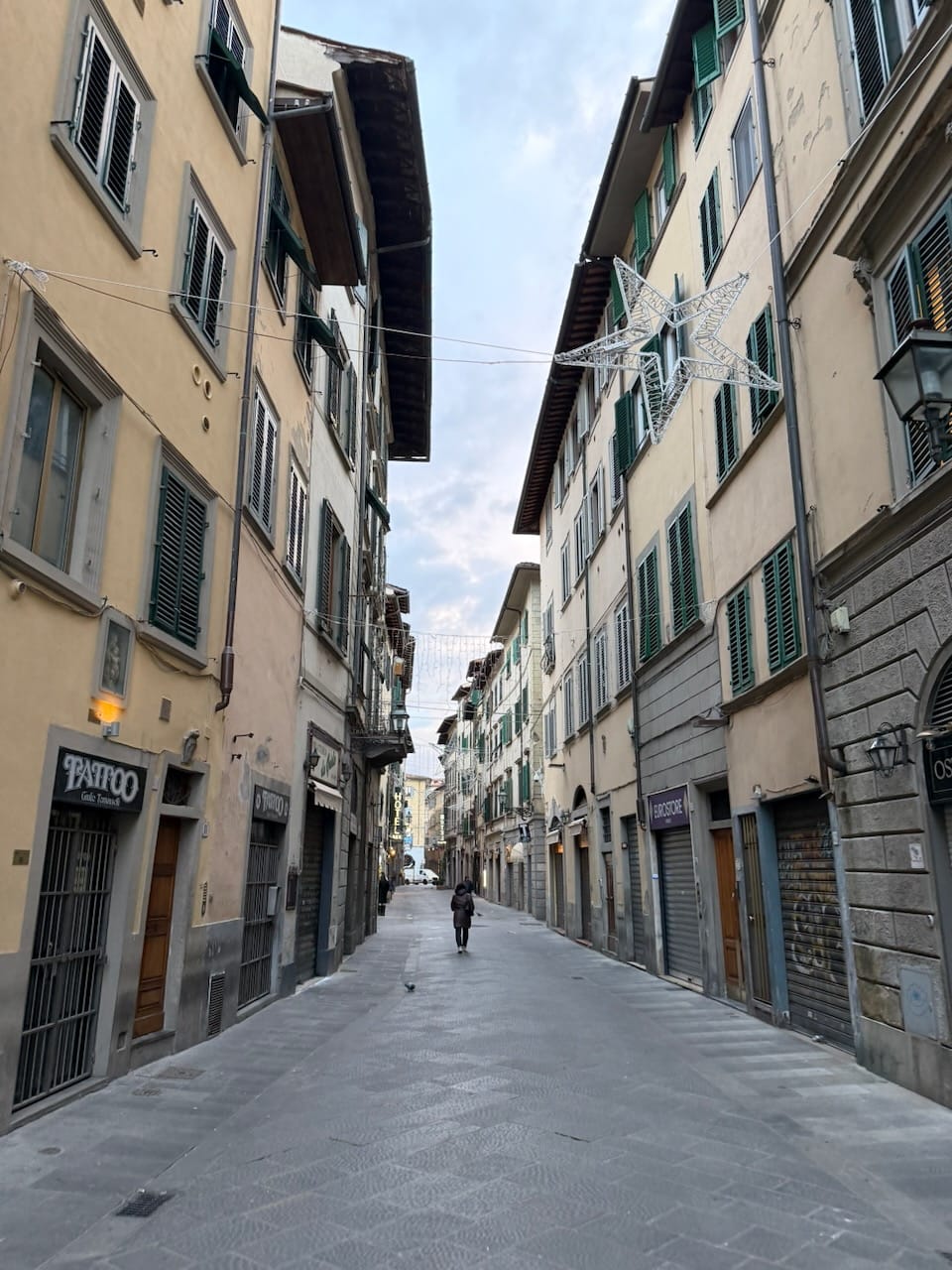
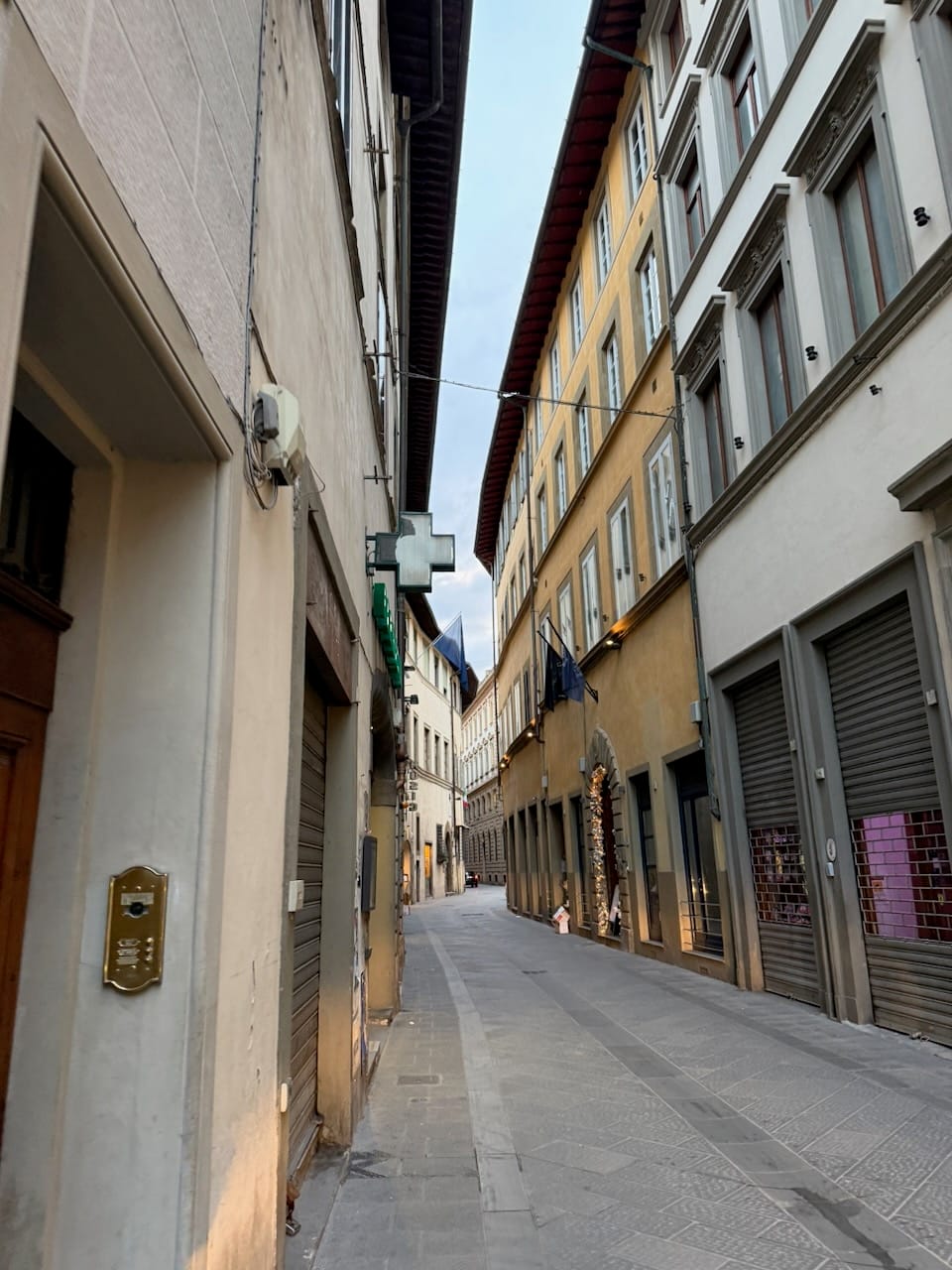
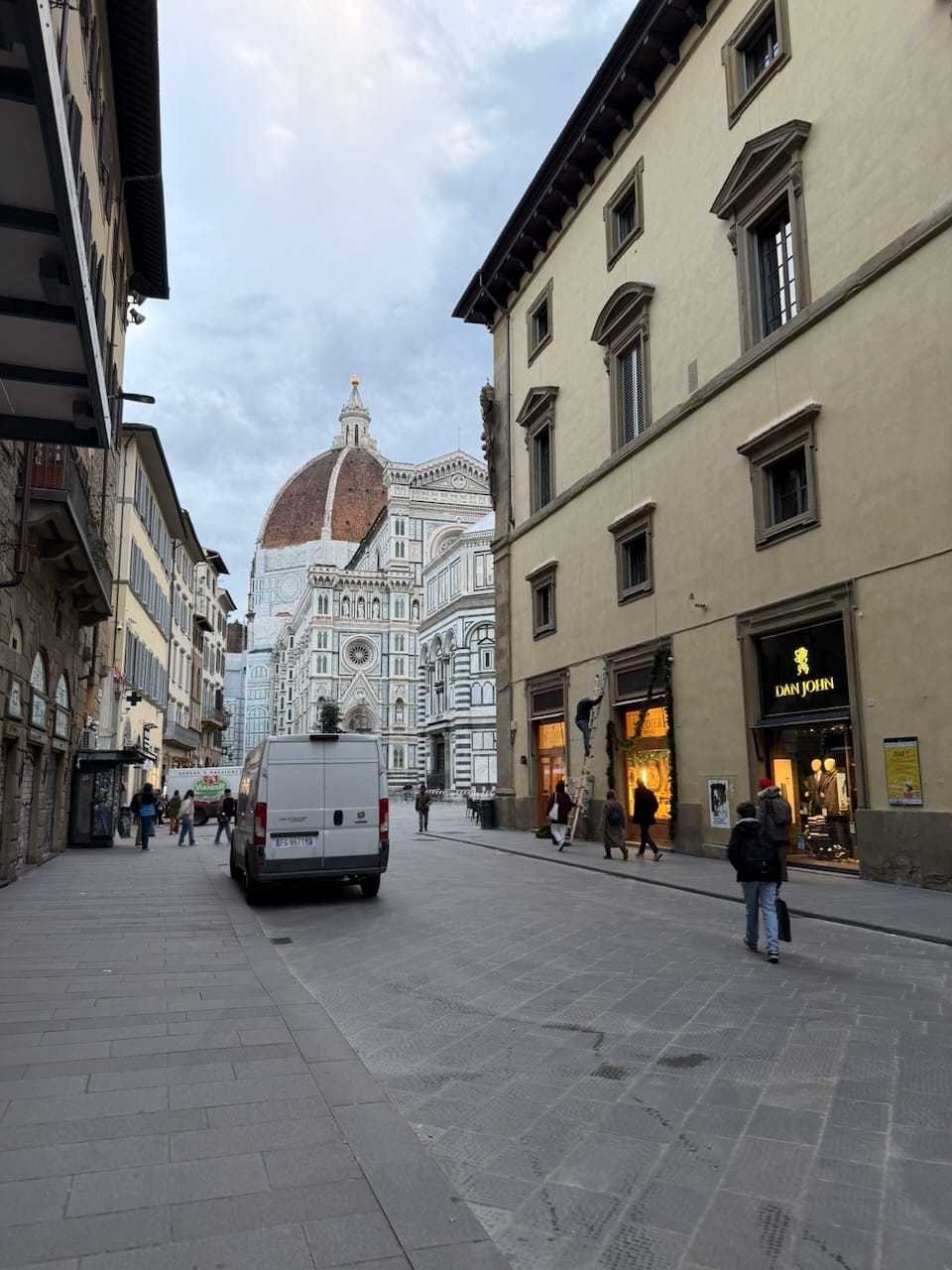
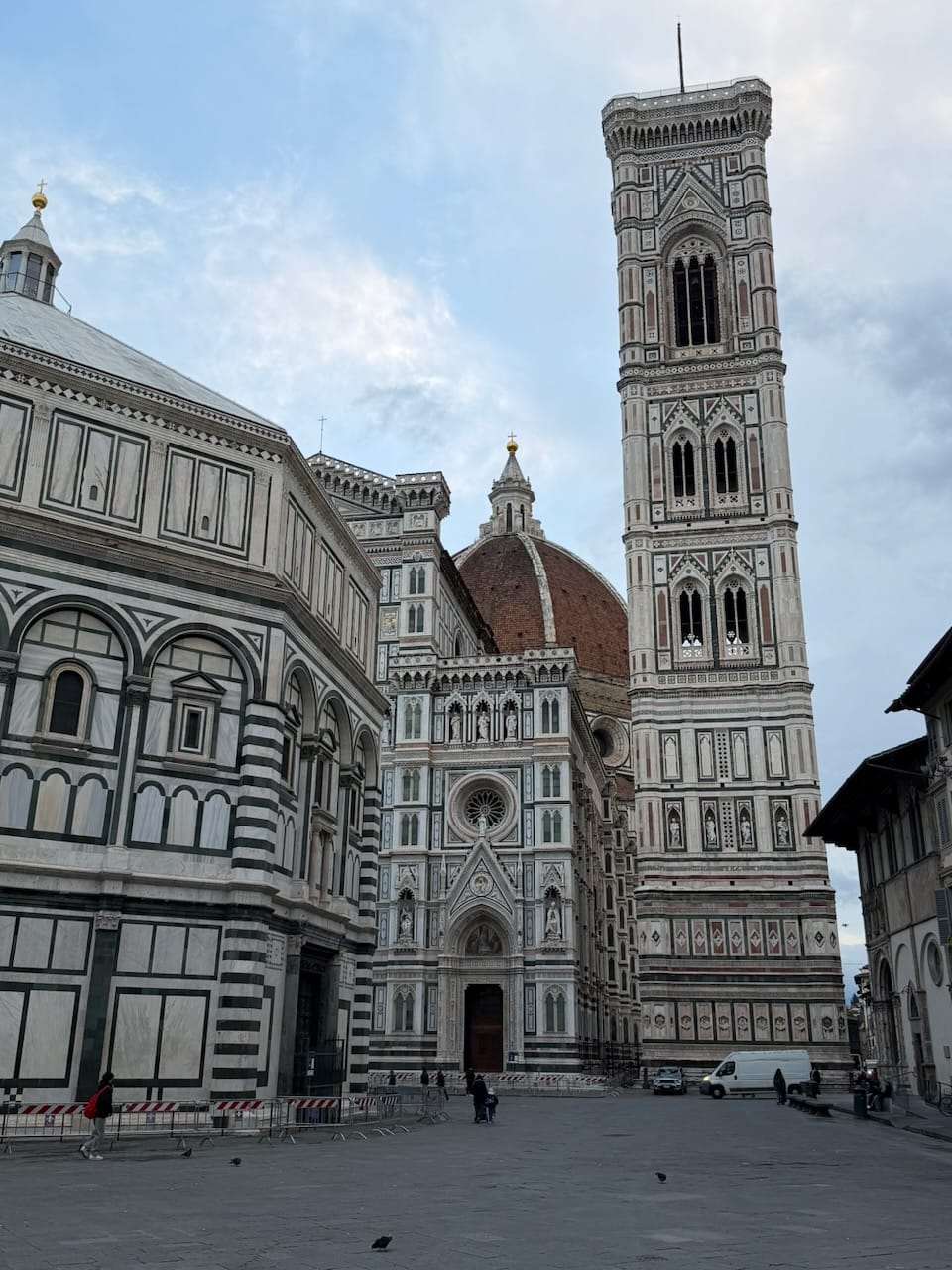
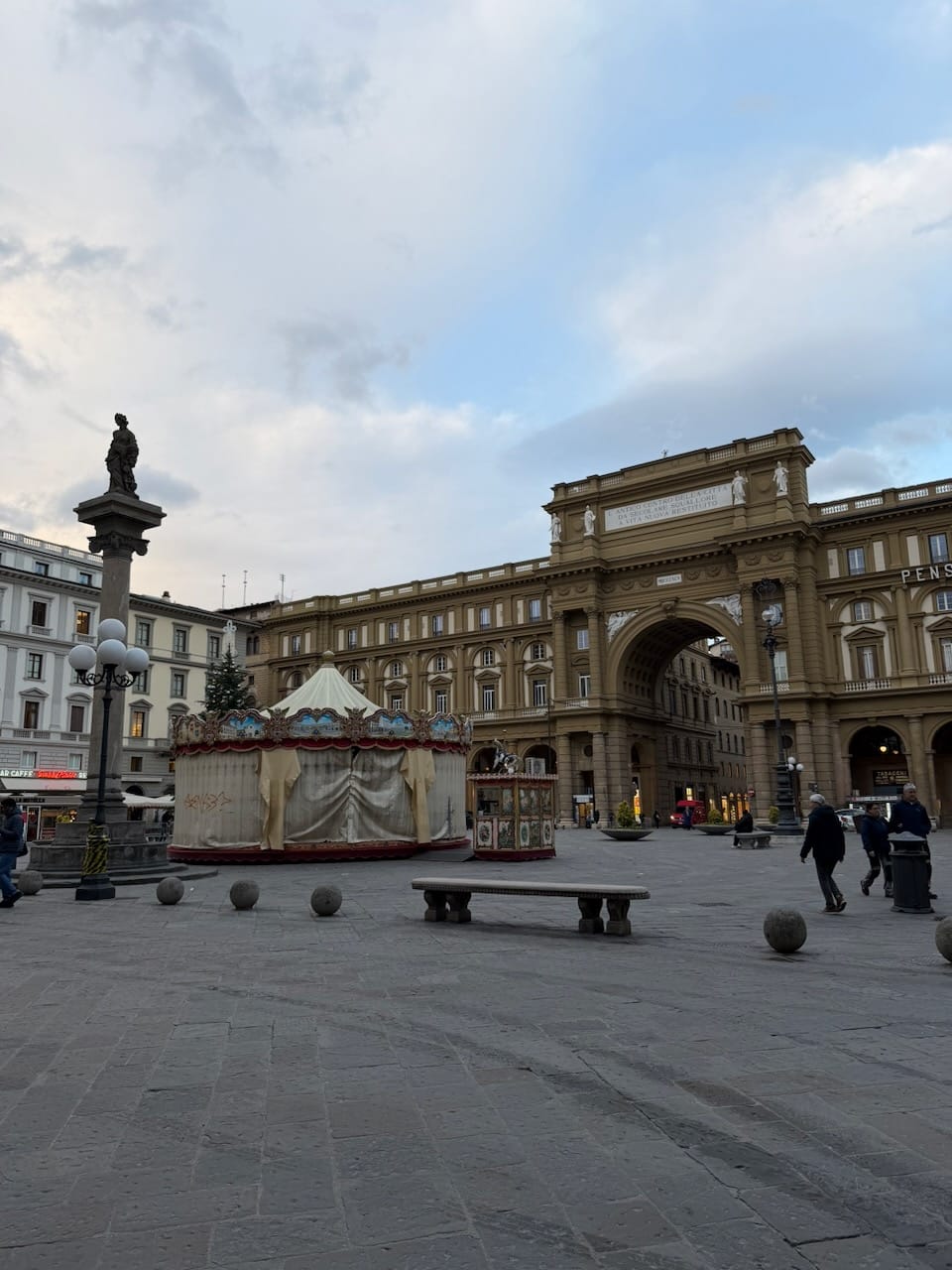
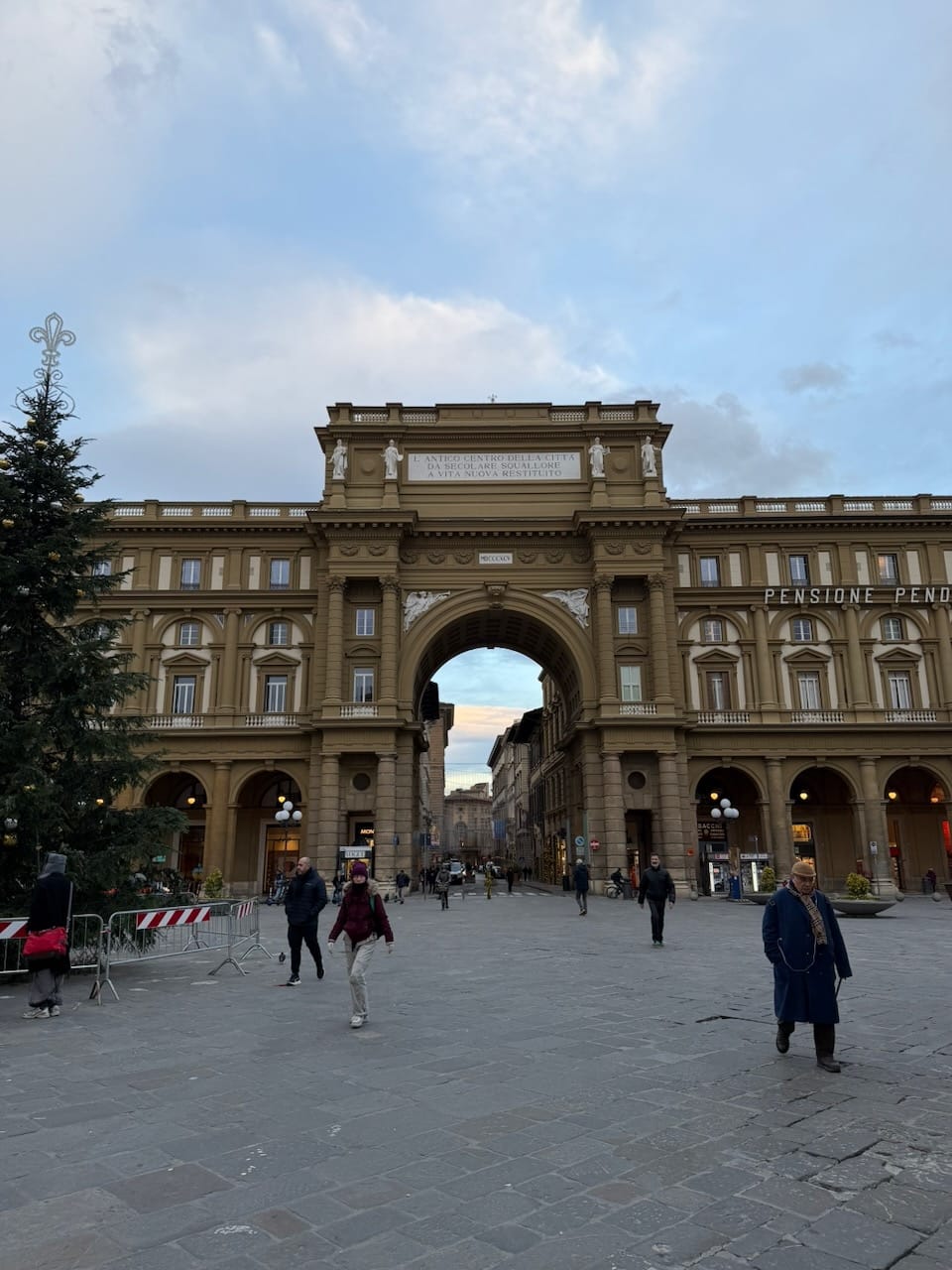
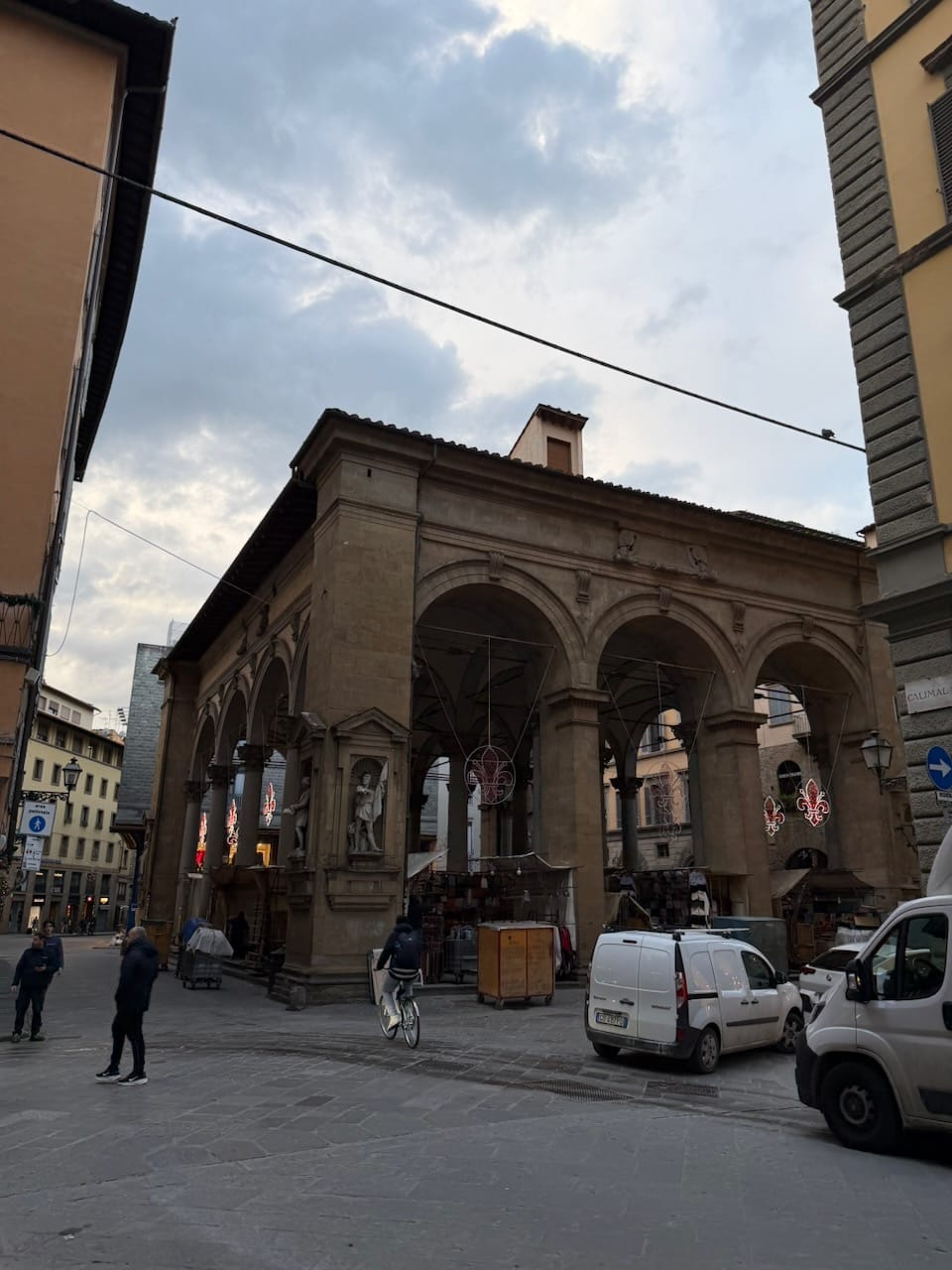
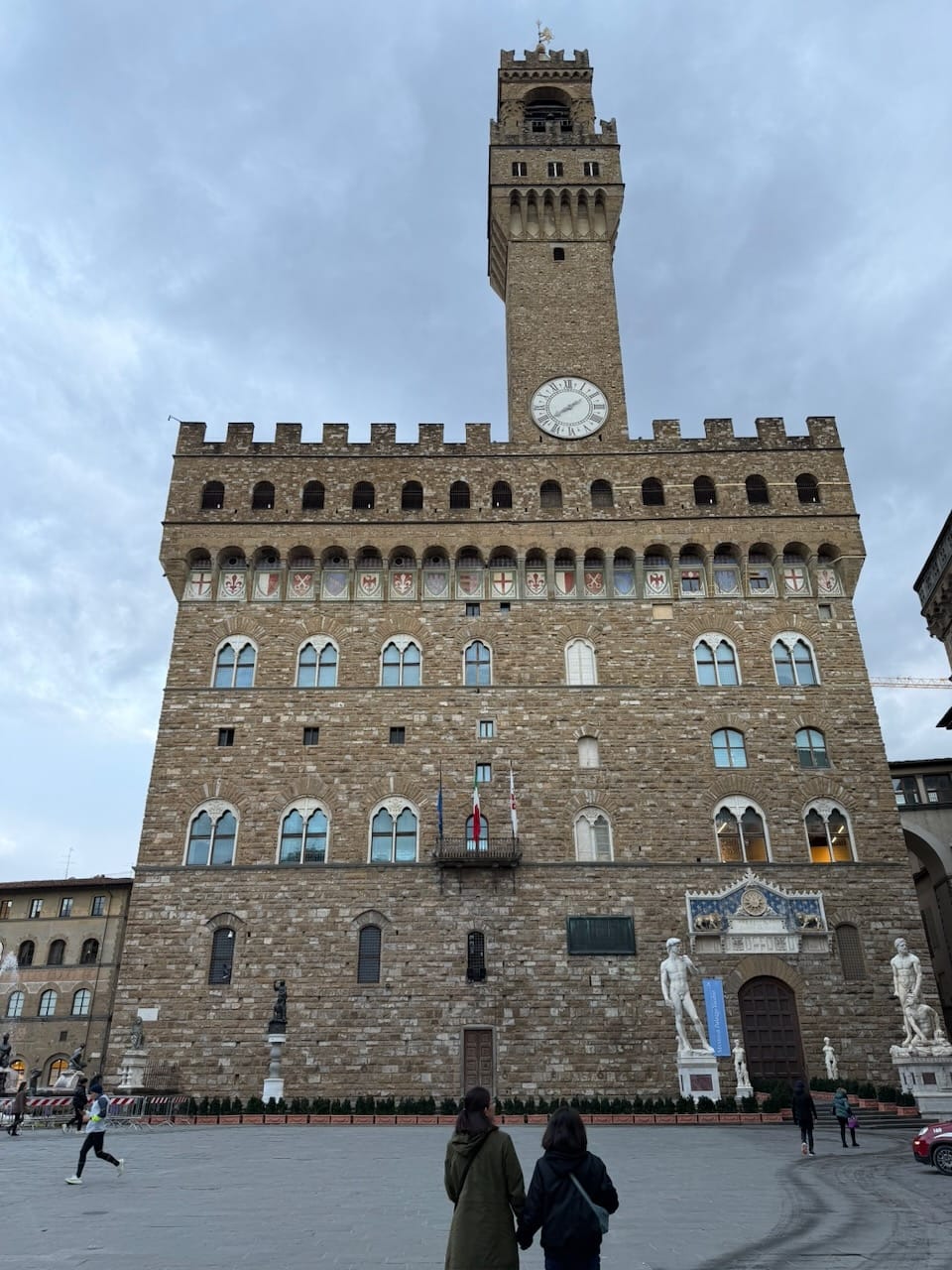
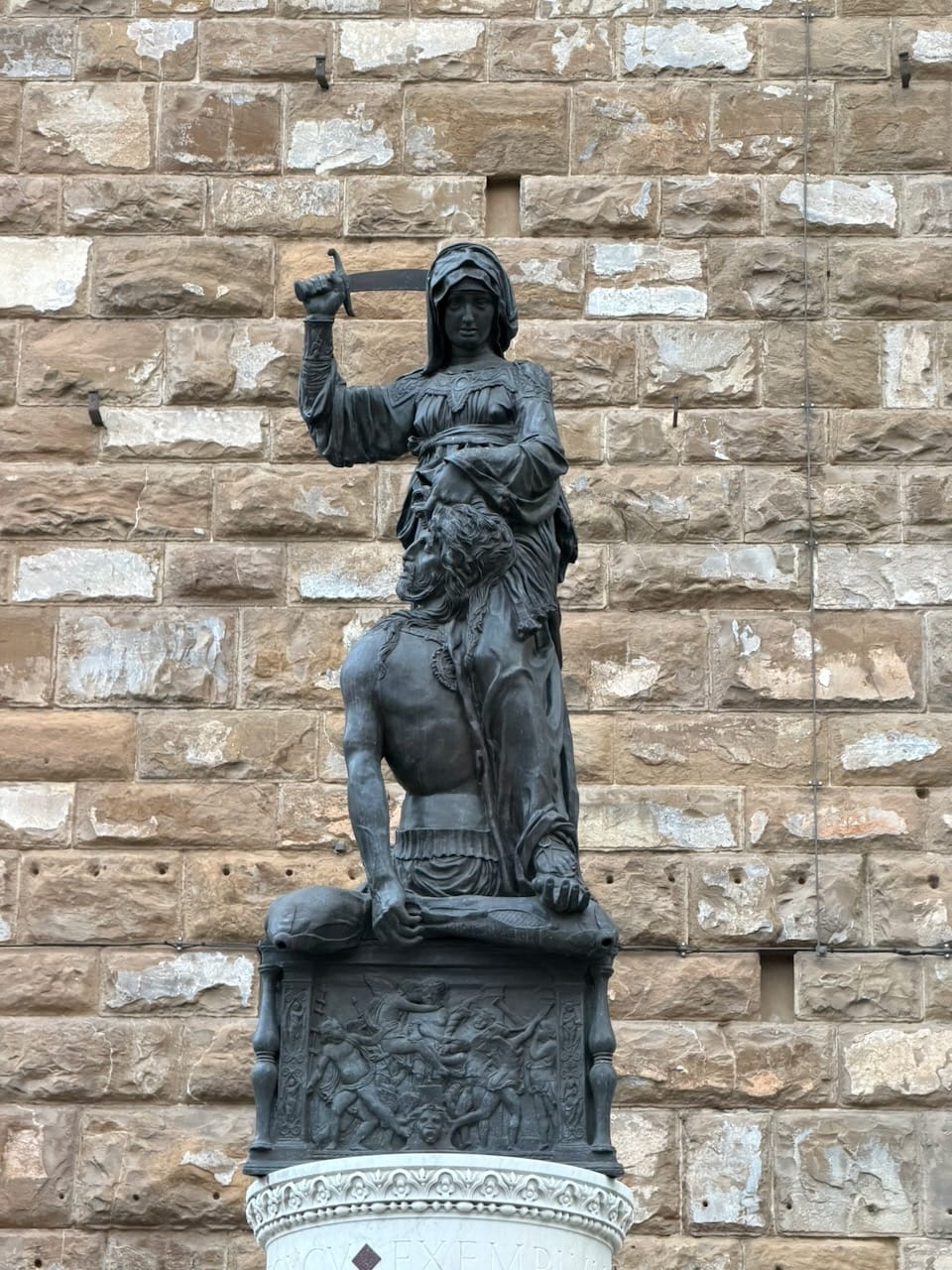
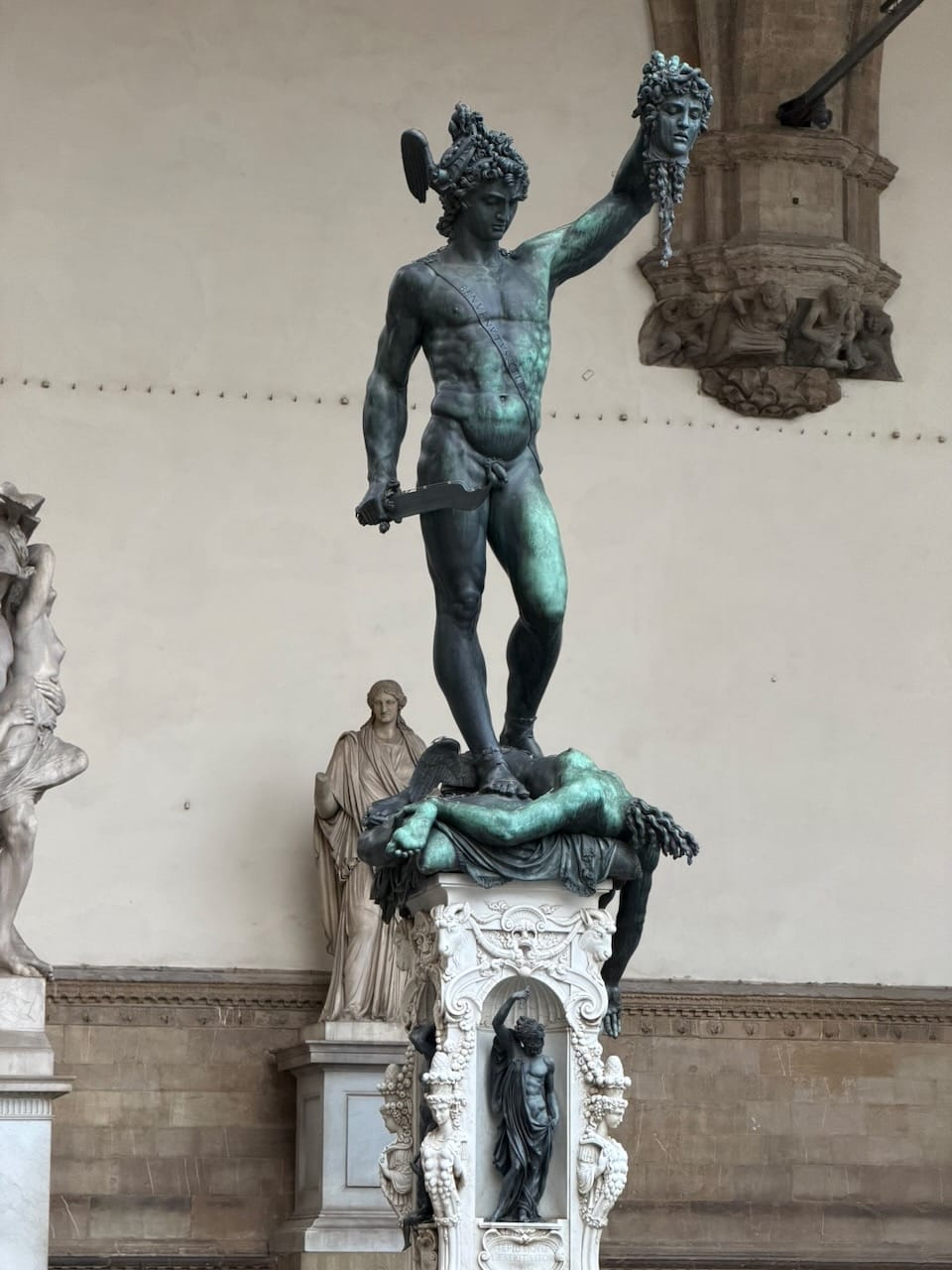
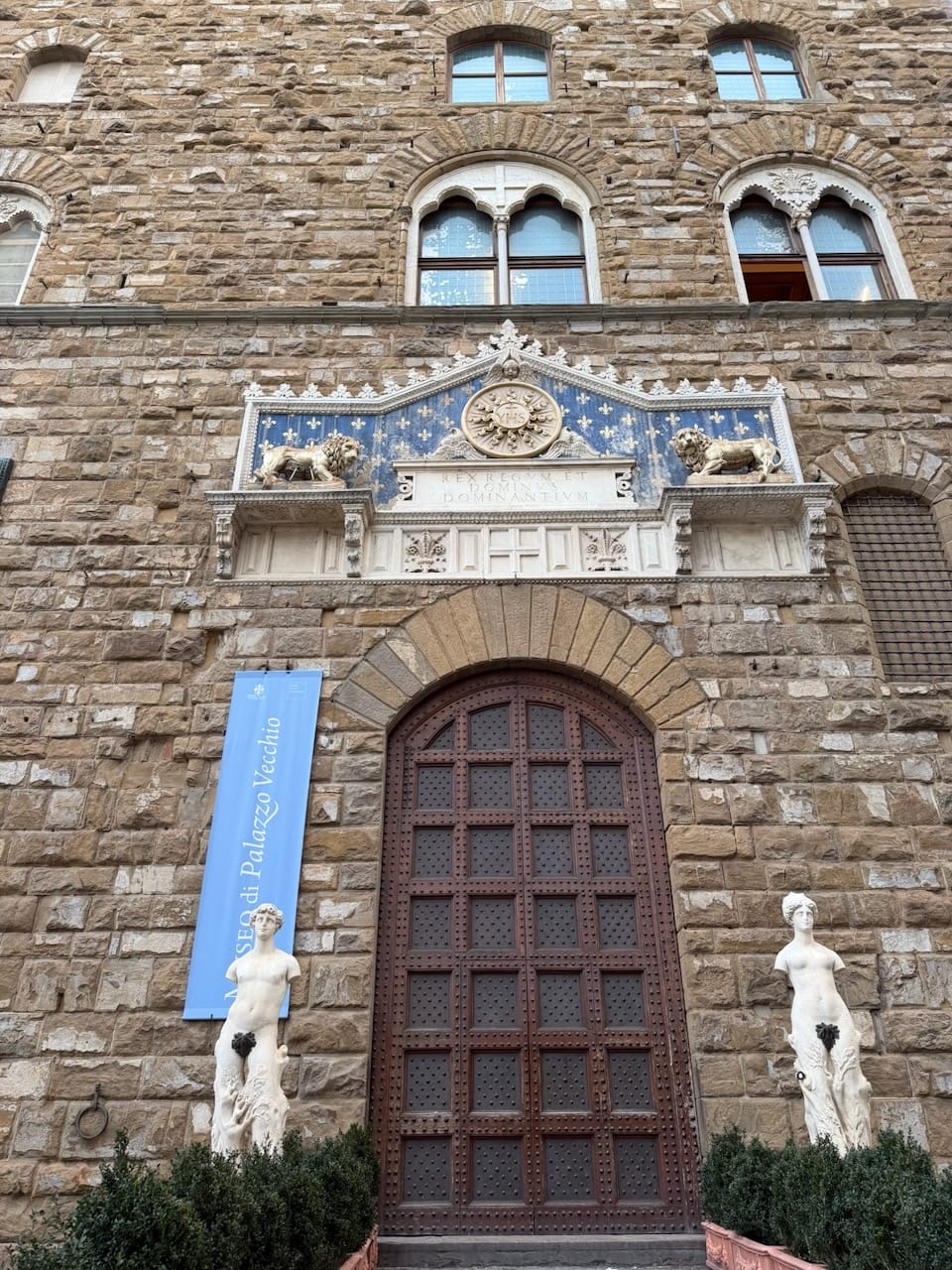
When we reached Piazza della Signoria, the square in front of the palace, it was almost empty. We stood there for a while, simply enjoying the quiet. Palazzo Vecchio holds a personal memory for me: it was the reception venue during my conference visit in 1999. I don’t remember much from that event anymore, but the image of its great hall (but it was an open space) has just remained. Unfortunately, we didn’t have much time, so I couldn’t go inside to confirm it.
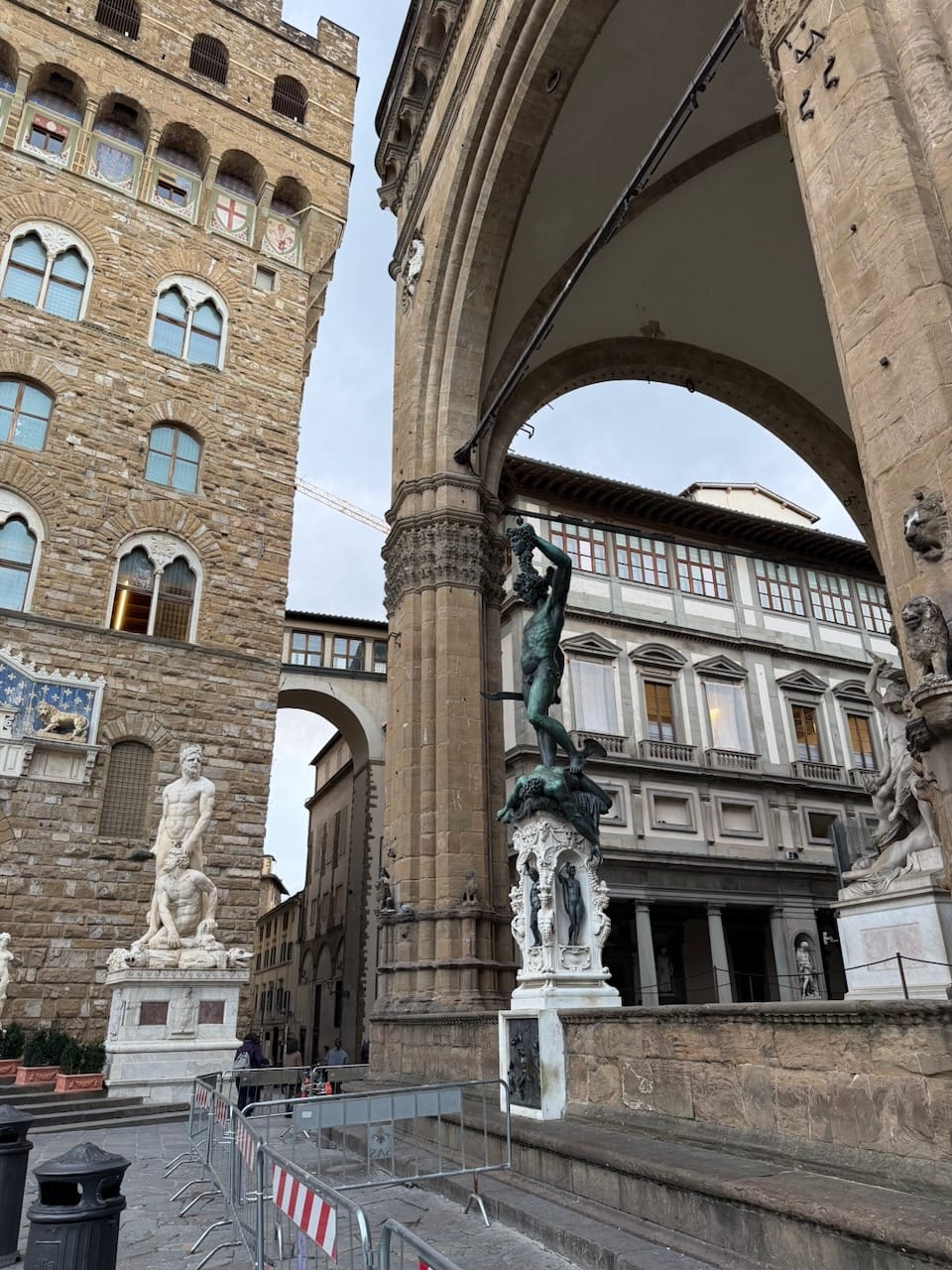
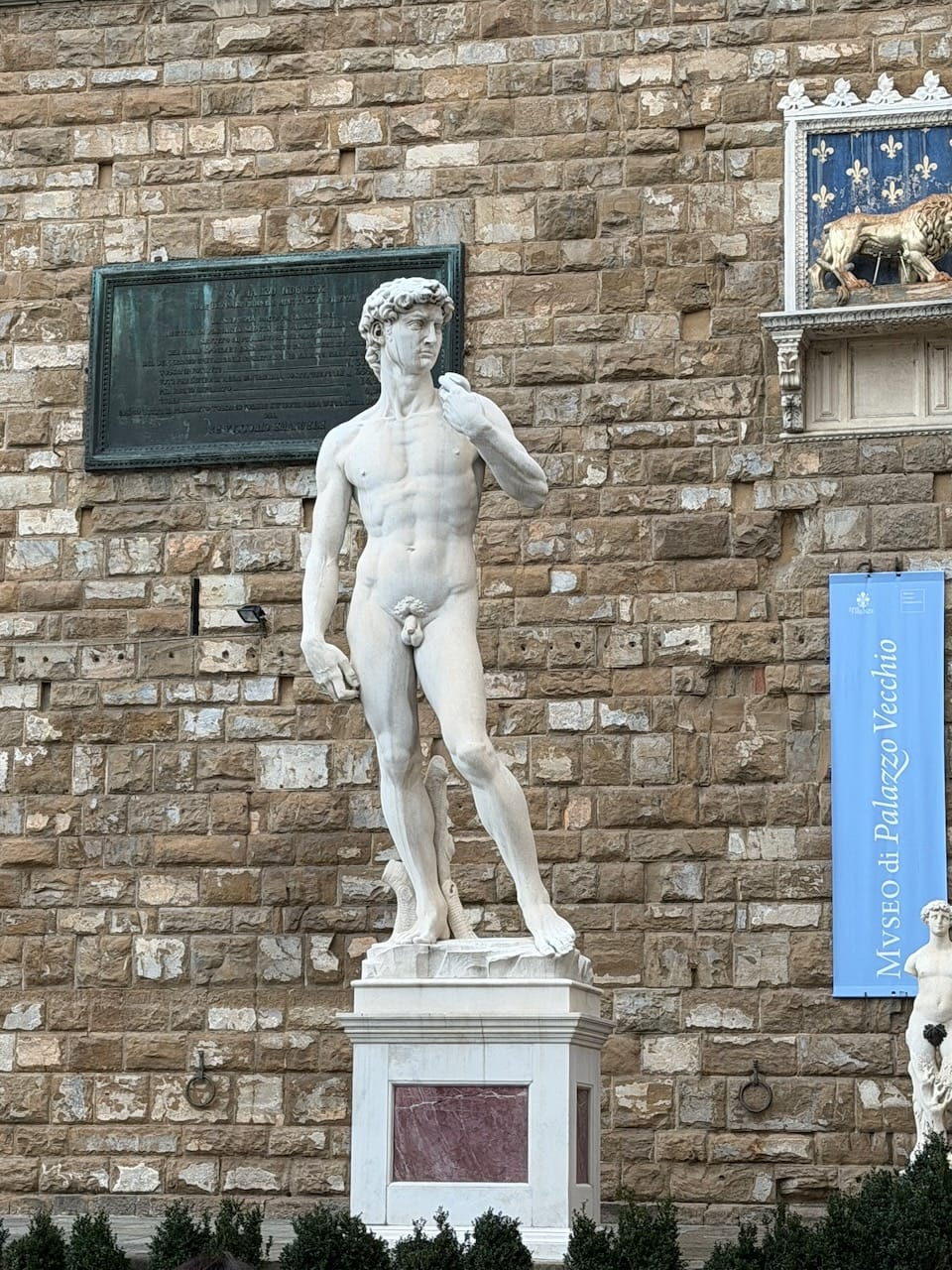
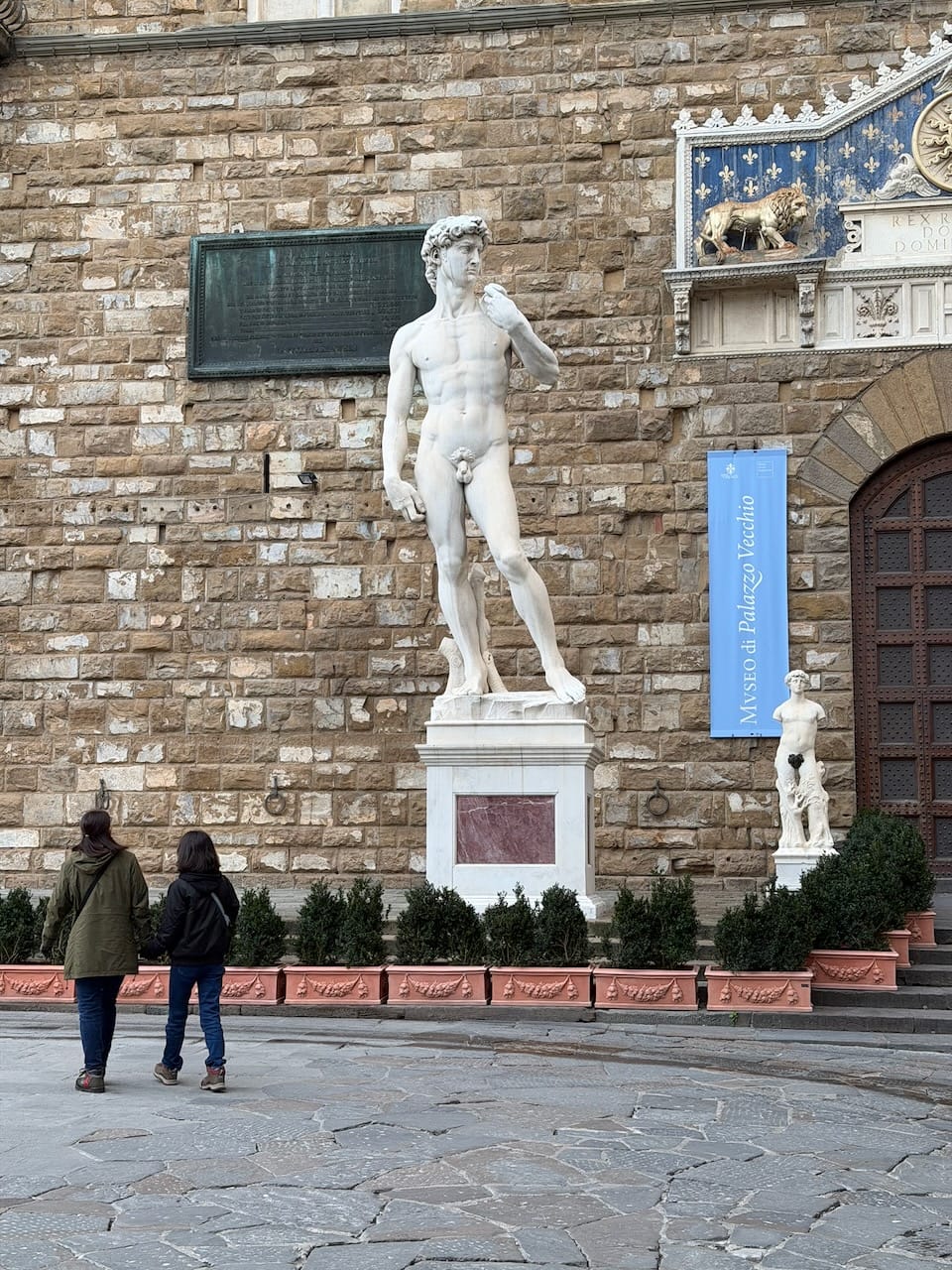
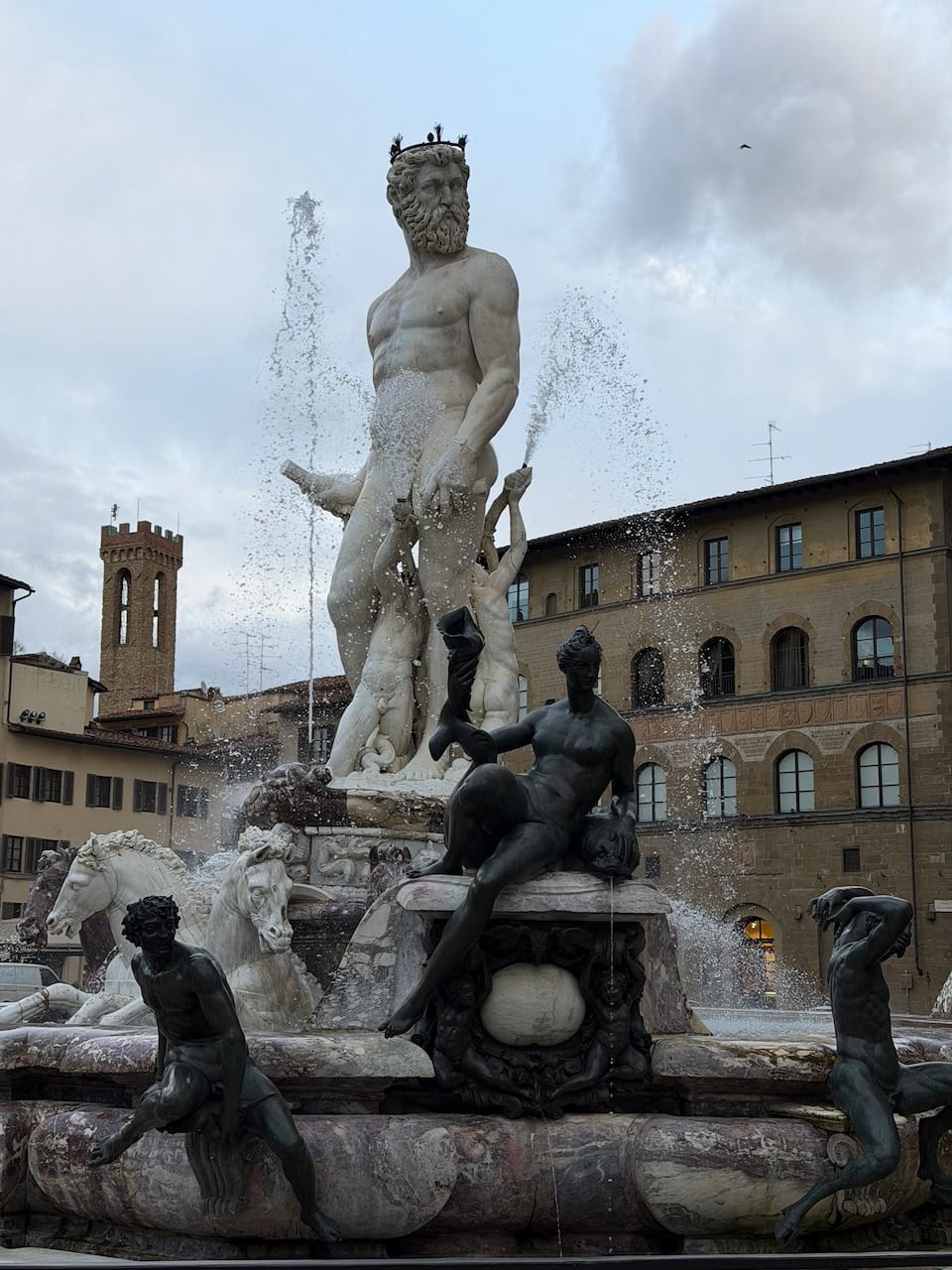
We didn’t have the time because we had a reservation for the Uffizi Galleries. Or, more accurately, we “sort of” had a reservation time. Our tickets were a combo pass for the Uffizi + Corridoio Vasariano (Vasari Corridor), priced at 47 EUR per person. Normally, Uffizi tickets come with a specific entrance time. Ours, however, only listed a time for the Vasari Corridor: 10:45 am., and the instructions on the ticket said:
“Visits to the Gallery of Statues and Paintings must be made 2 hours before entering the Vasari Corridor.”
So we did the math. 10:45 minus two hours meant 8:45 am for the gallery. And since the earliest Uffizi entry slot was 8:30 am, we decided that a 15-minute gap was probably close enough. And we could join the very first group of the day at 8:30 am.
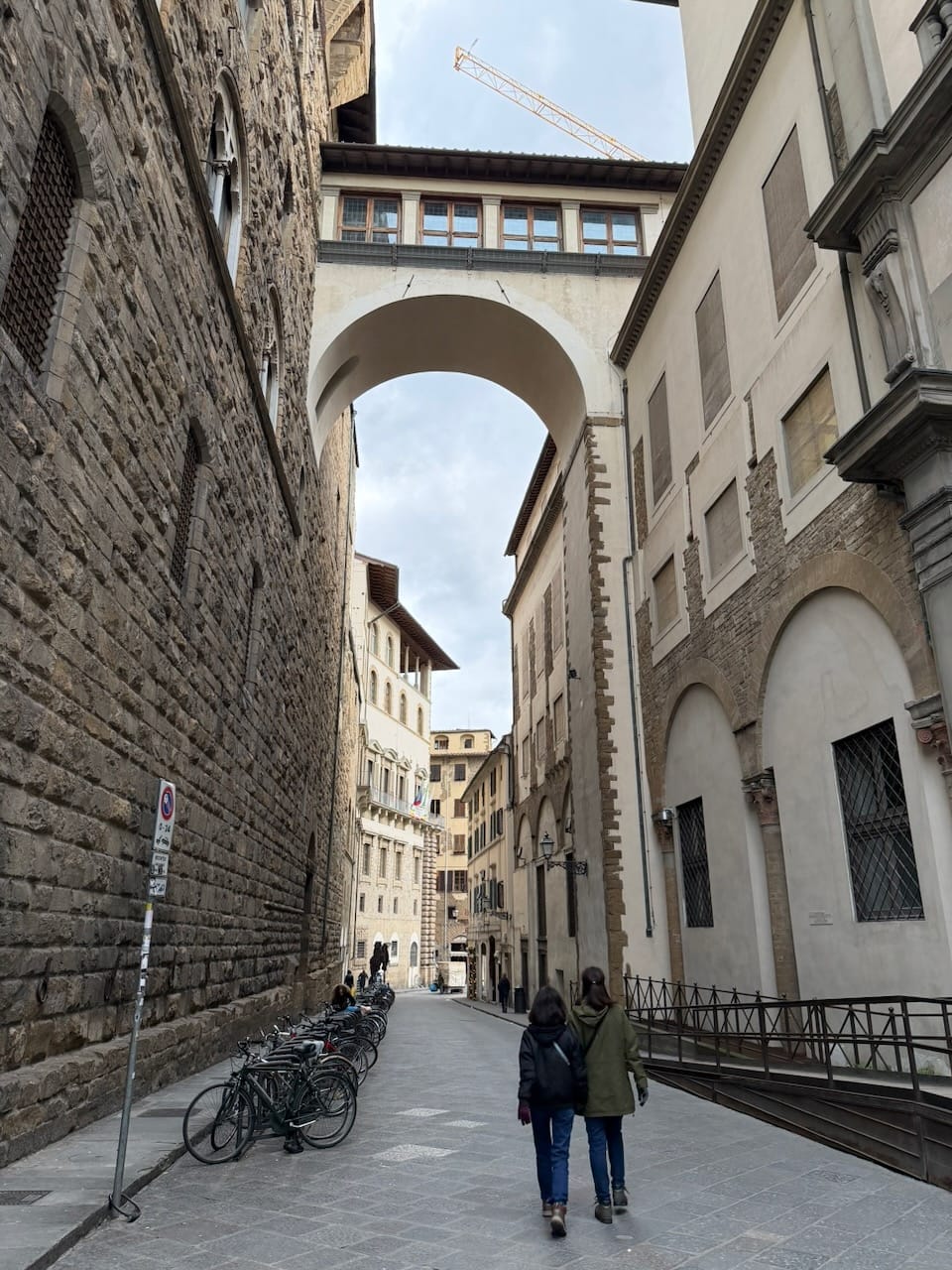
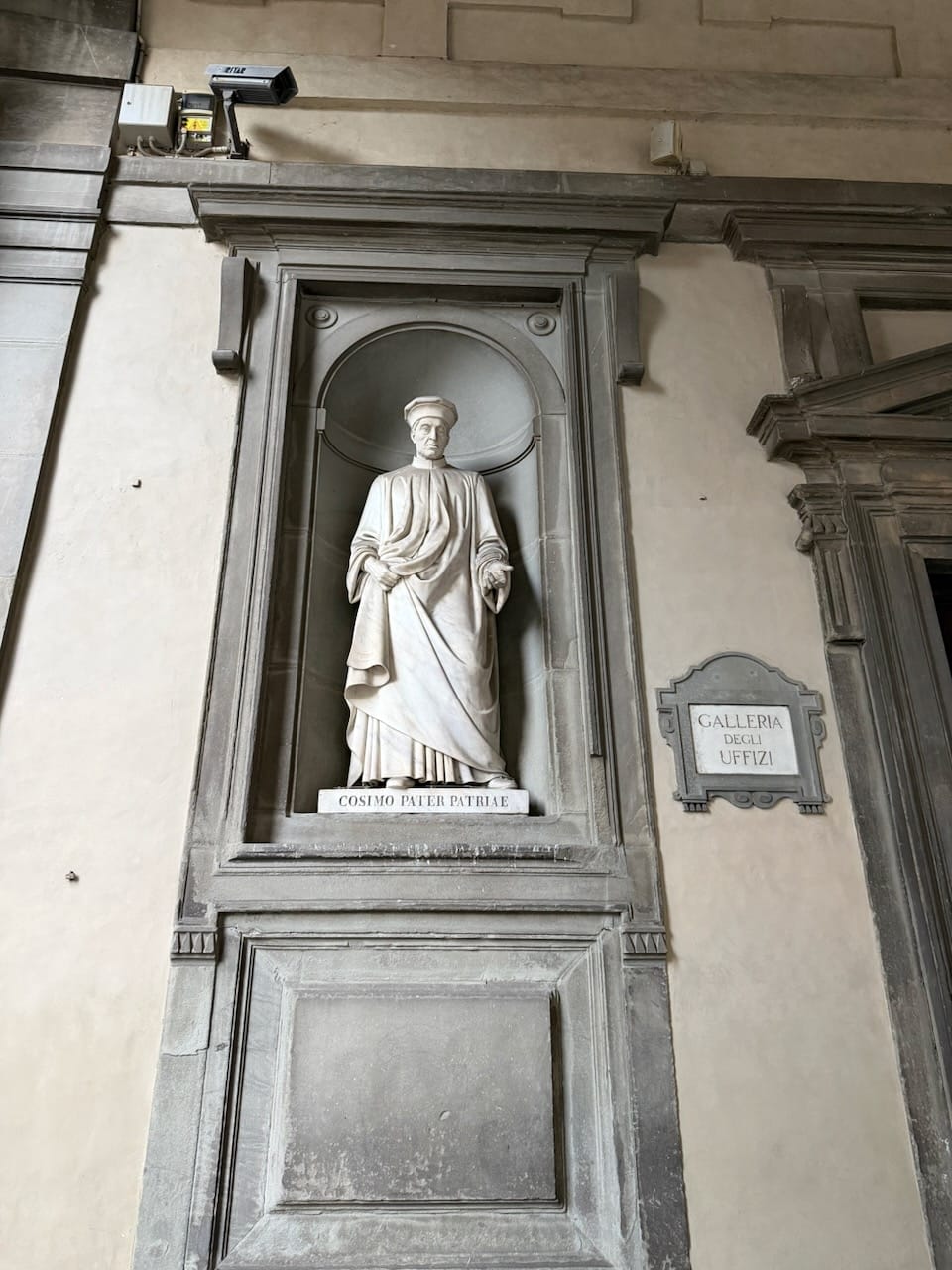
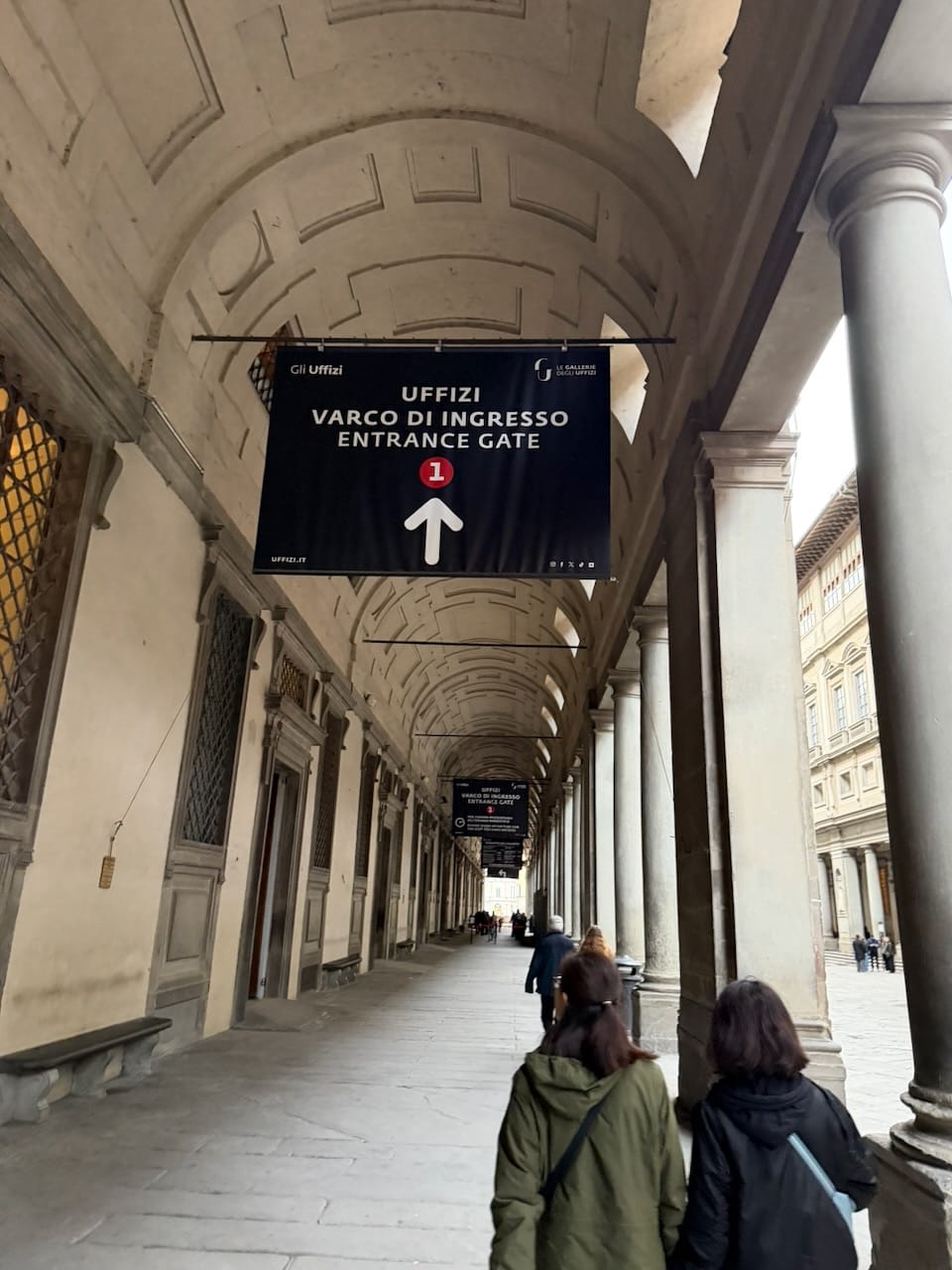
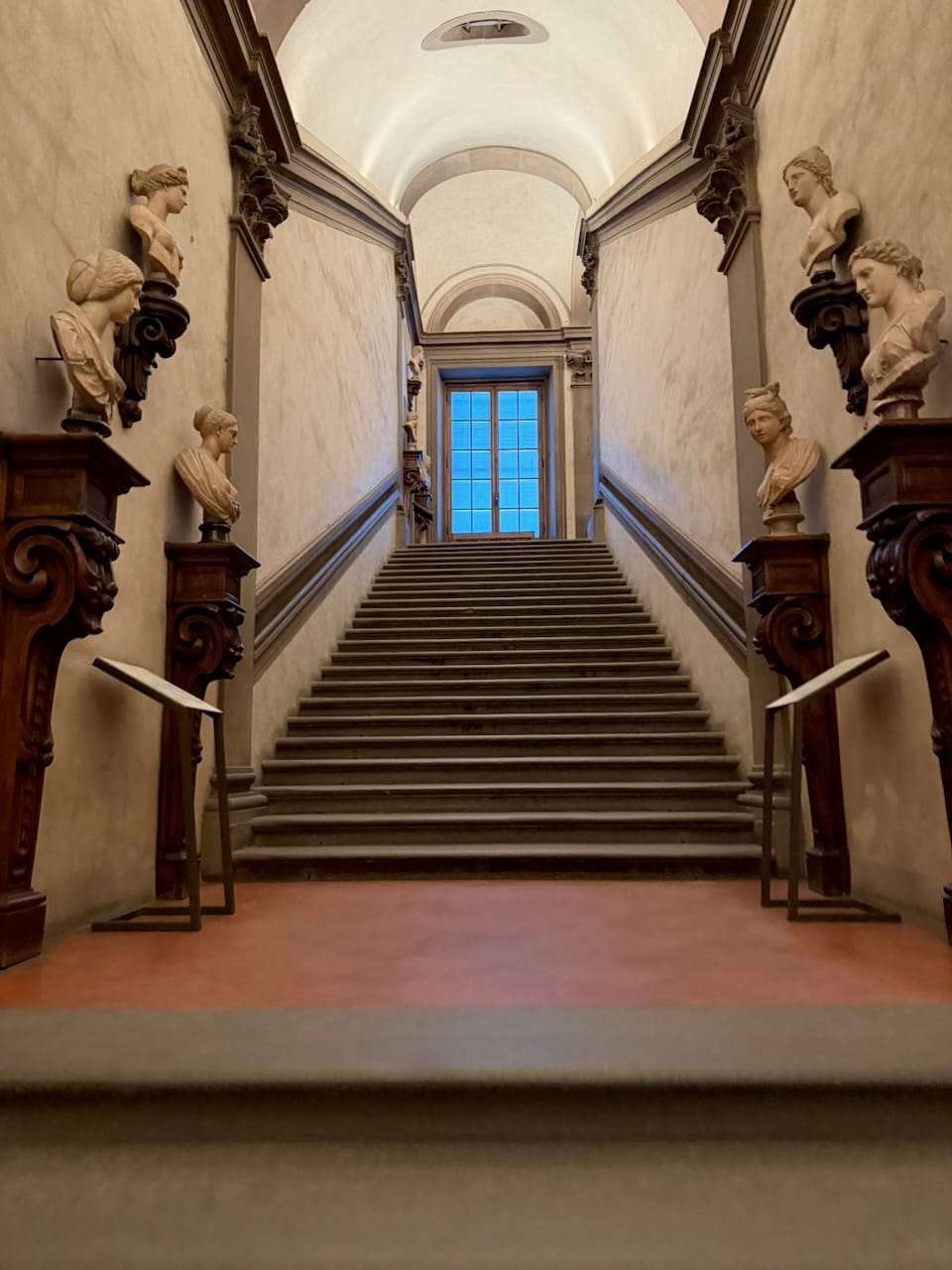
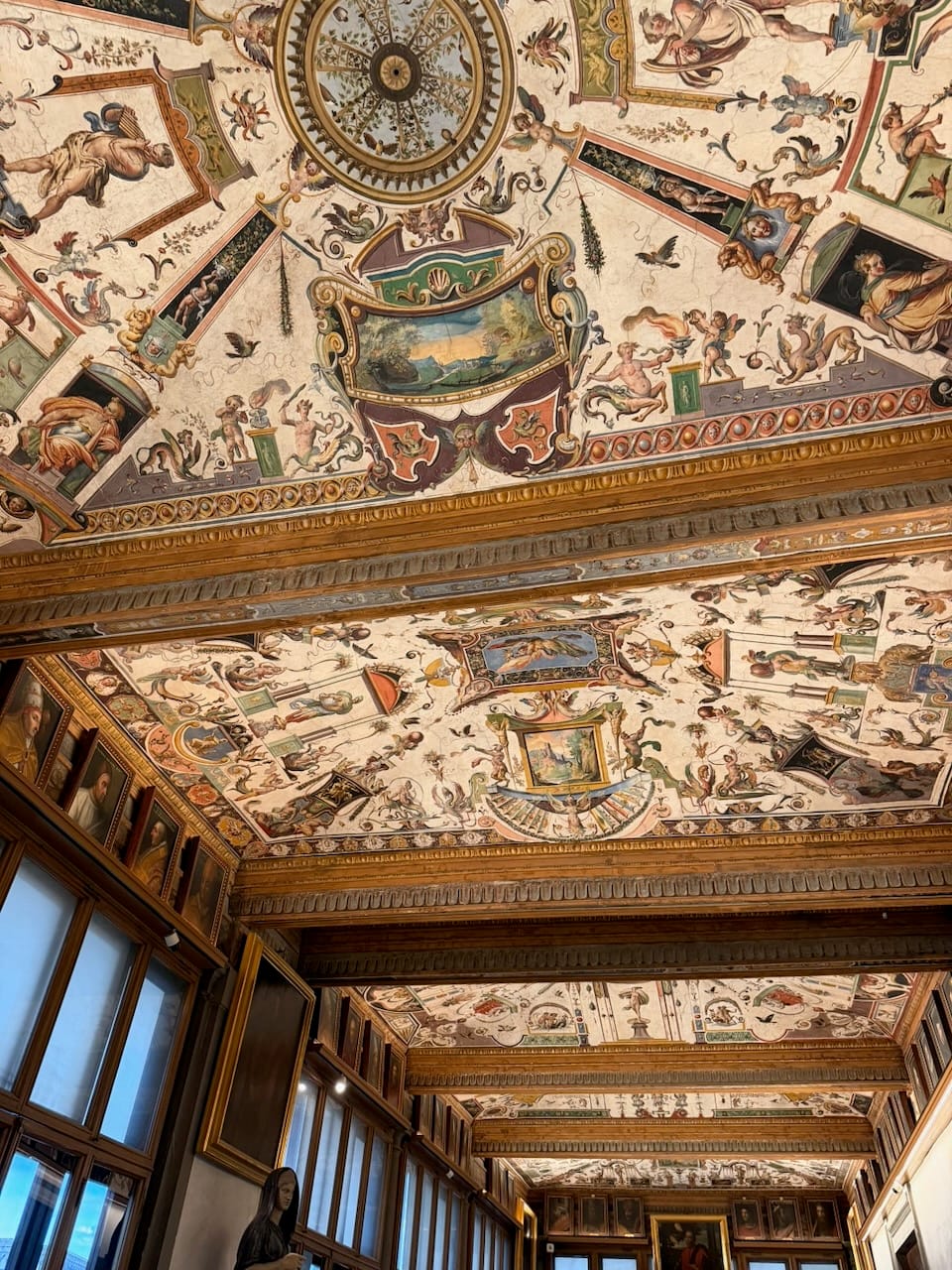
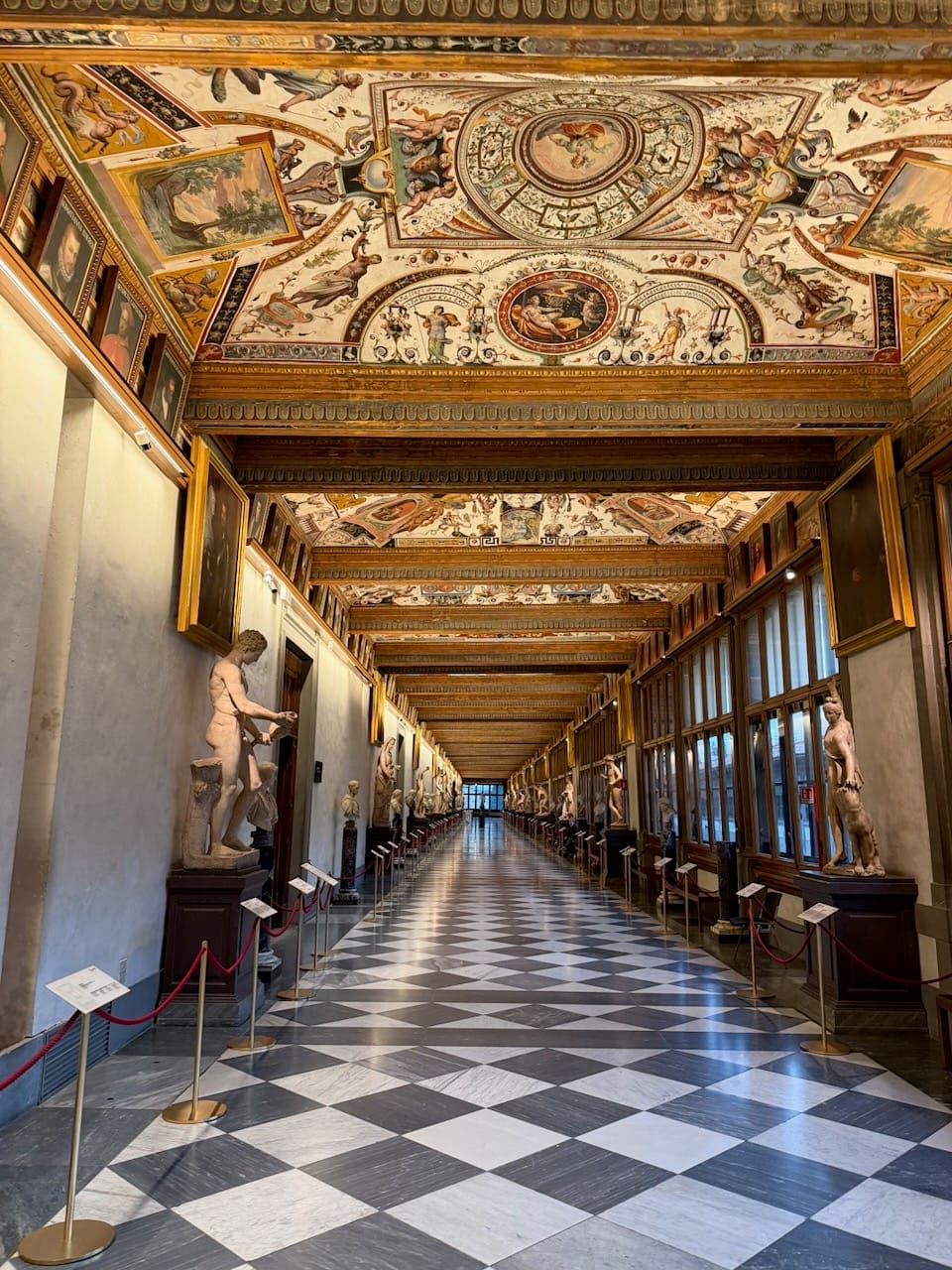
There is a special benefit to being in the very first group. We walked into the Uffizi with the kind of quiet that only exists before the crowds arrive. It felt almost as if we had chartered the entire museum for ourselves. The silence, the space, the time, all of it belonged to us. And then came the highlight right after beginning. We stepped into the room and found Botticelli’s two masterpieces, The Birth of Venus and Primavera, waiting in an empty gallery.
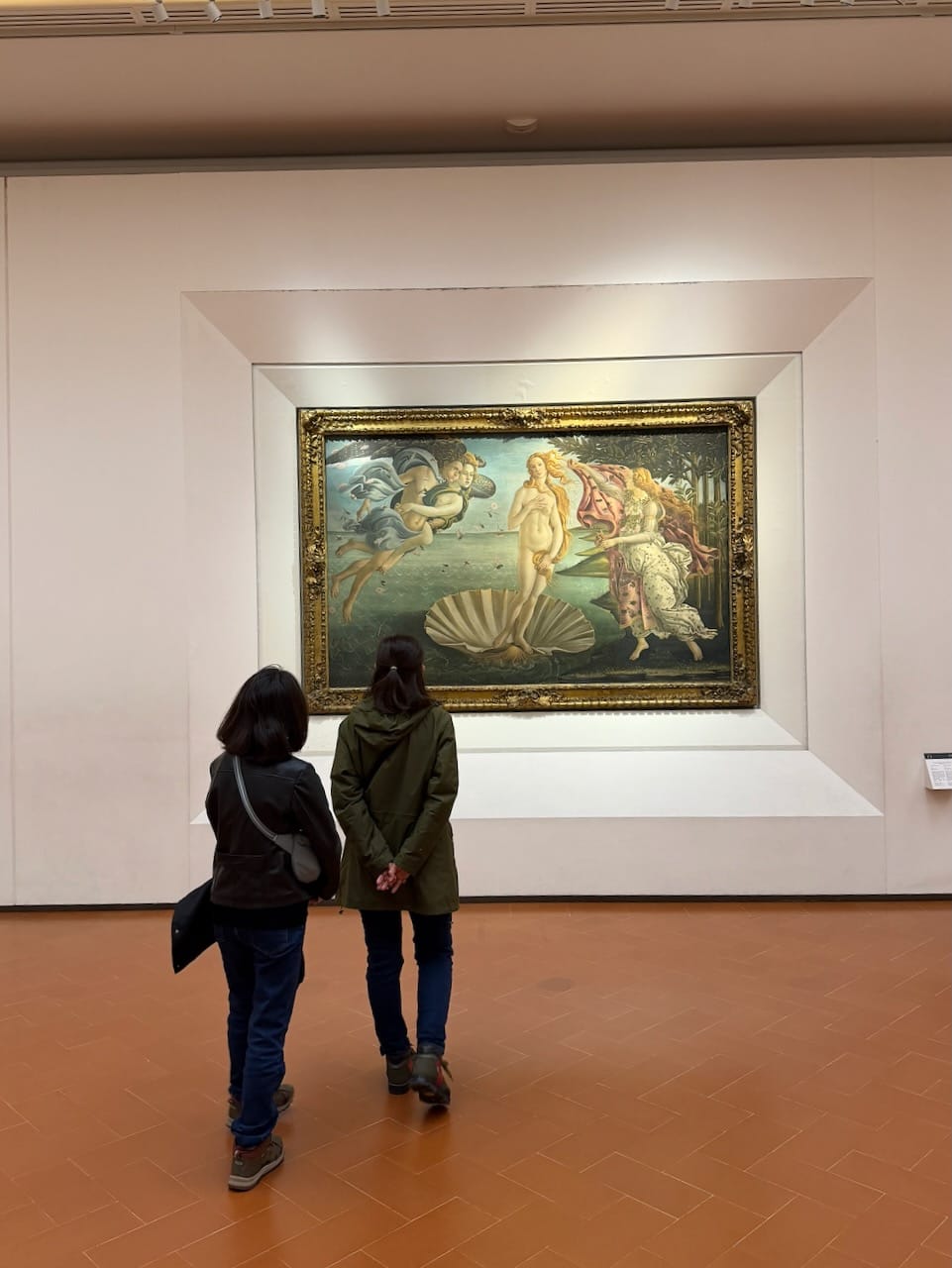
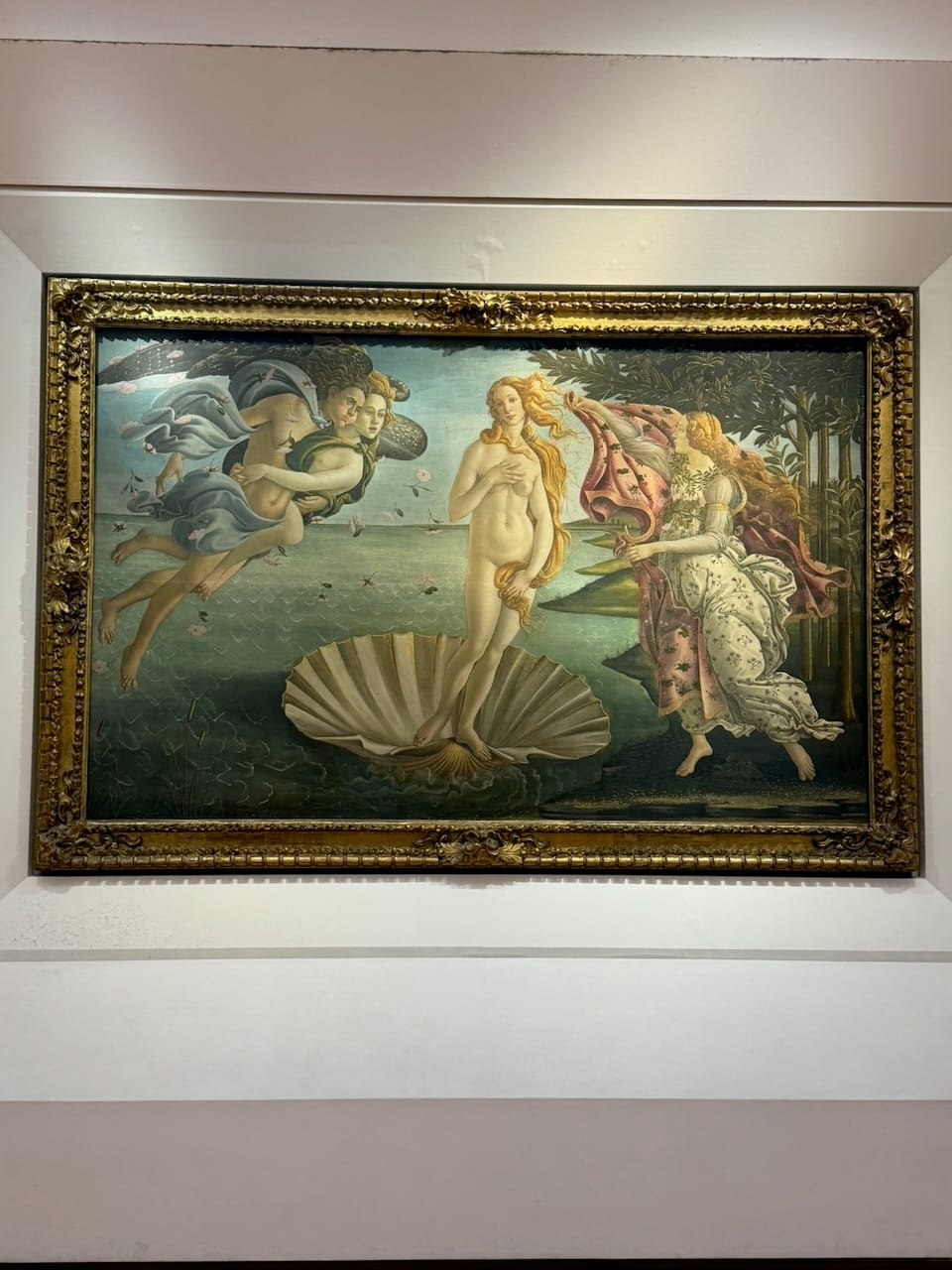
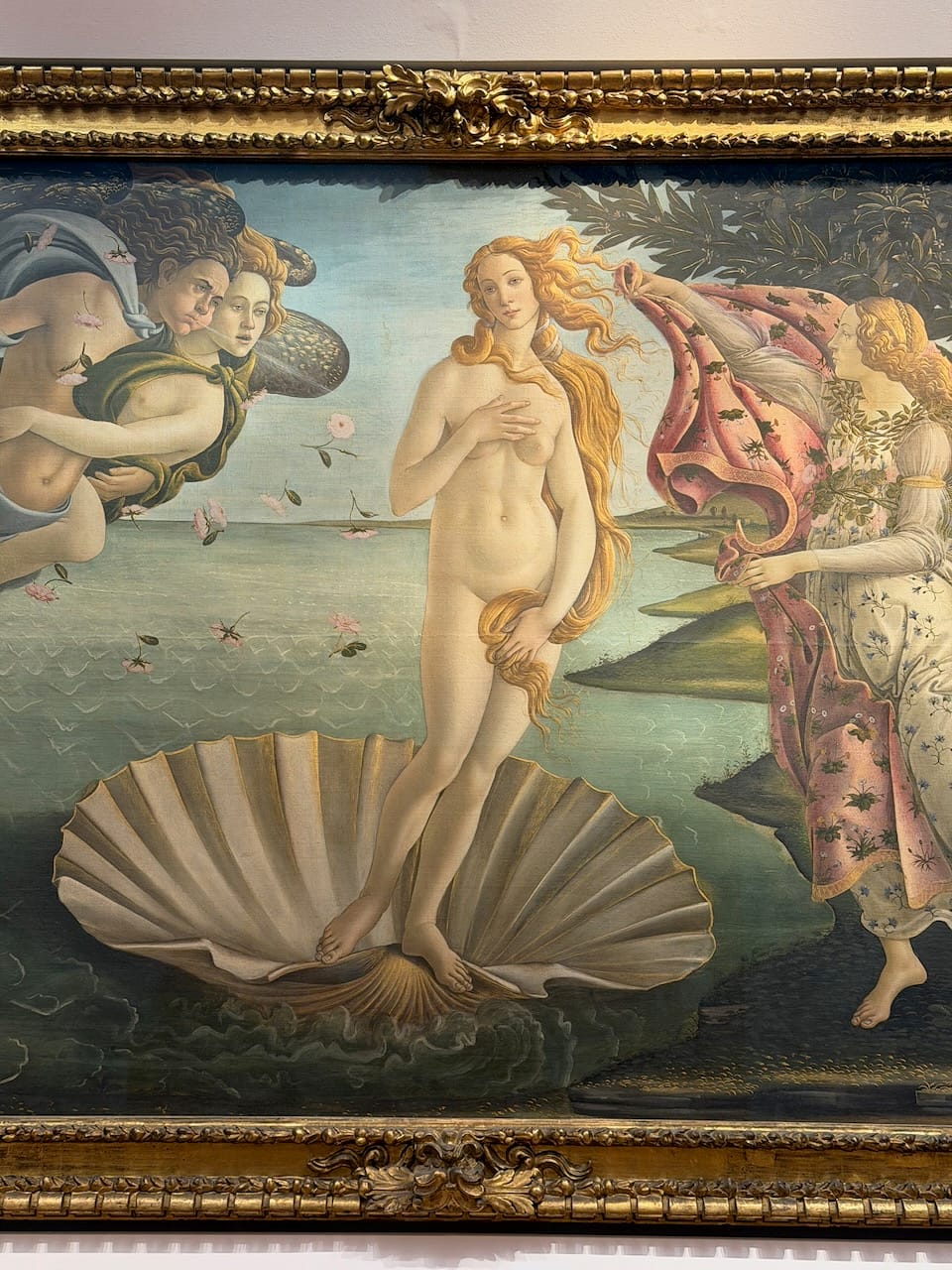
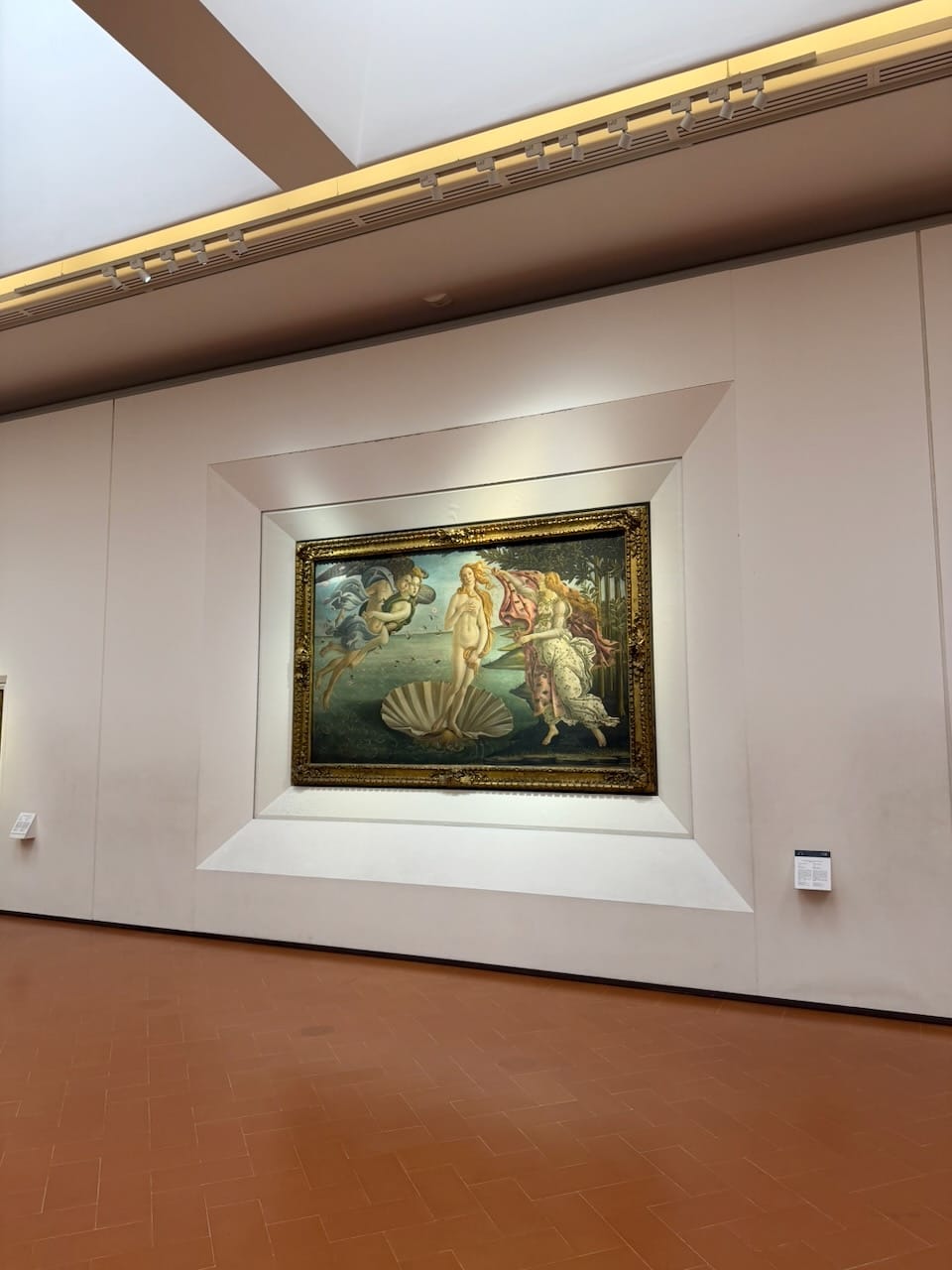
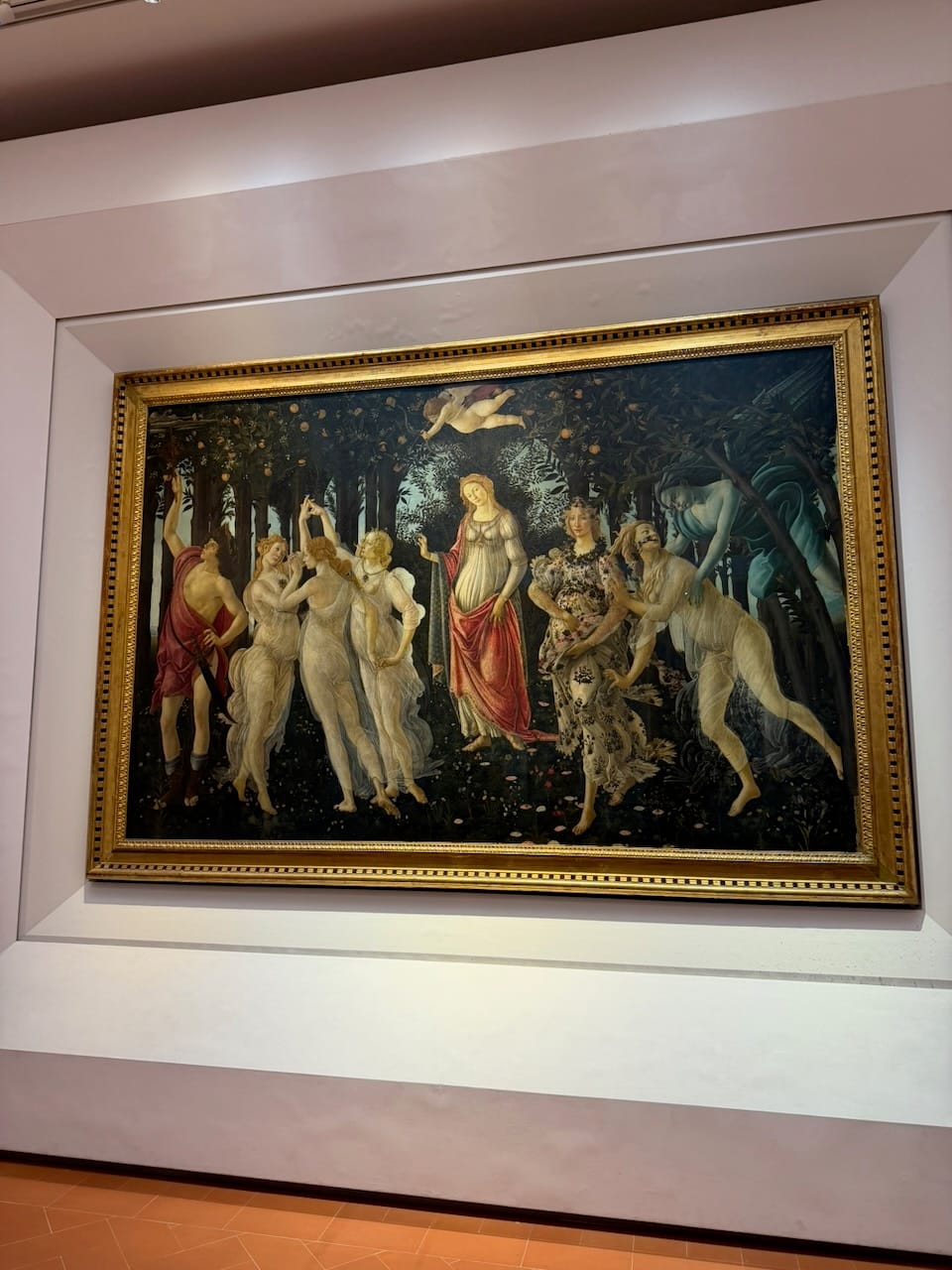
In 1999, when I first visited the Uffizi, these same paintings were surrounded by massive people. Digital cameras were not common back then, and the cellphone cameras you see everywhere today did not exist, but the room was still packed. I remember standing on tiptoe, trying to steal a glimpse between shoulders and heads. This time, I could stand still and truly look. I could follow the brushstrokes, the colors, the expressions, the tiny details that are impossible to notice when you are being carried forward by a crowd. That was where the happiness came from. It was one of those rare museum moments that feel almost unreal. If you ever visit the Uffizi, I cannot recommend this enough: weekday, first entrance.
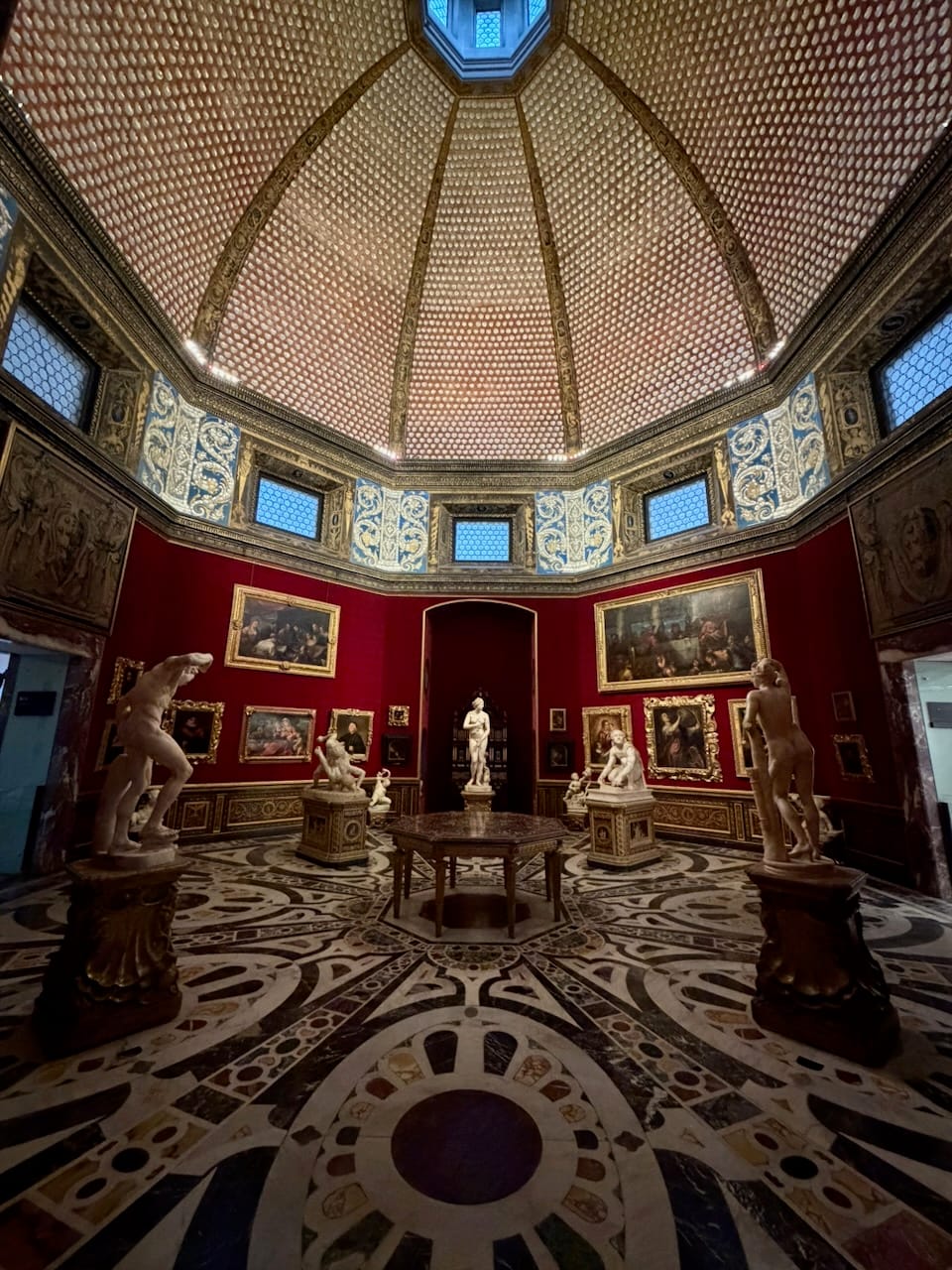
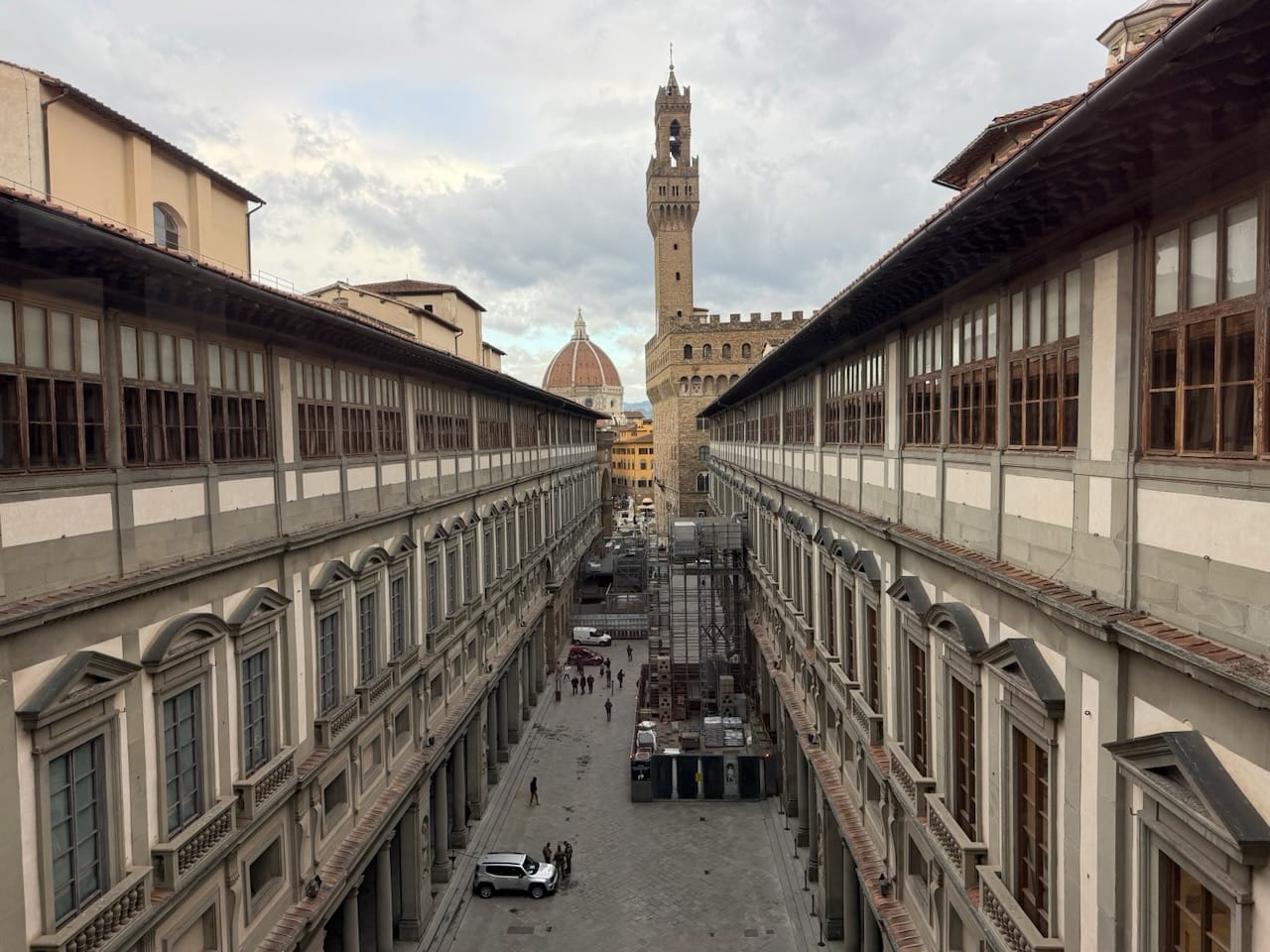

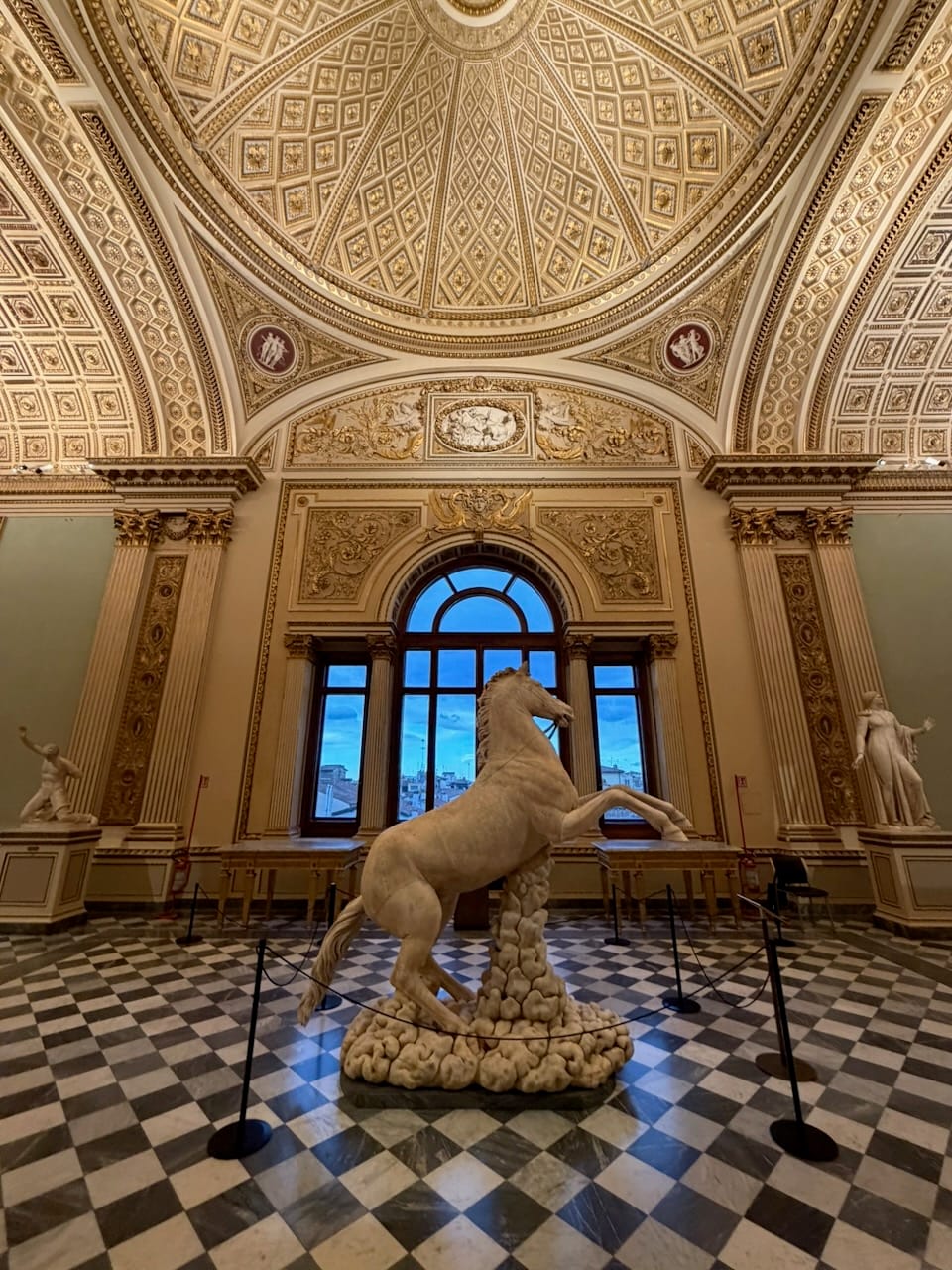
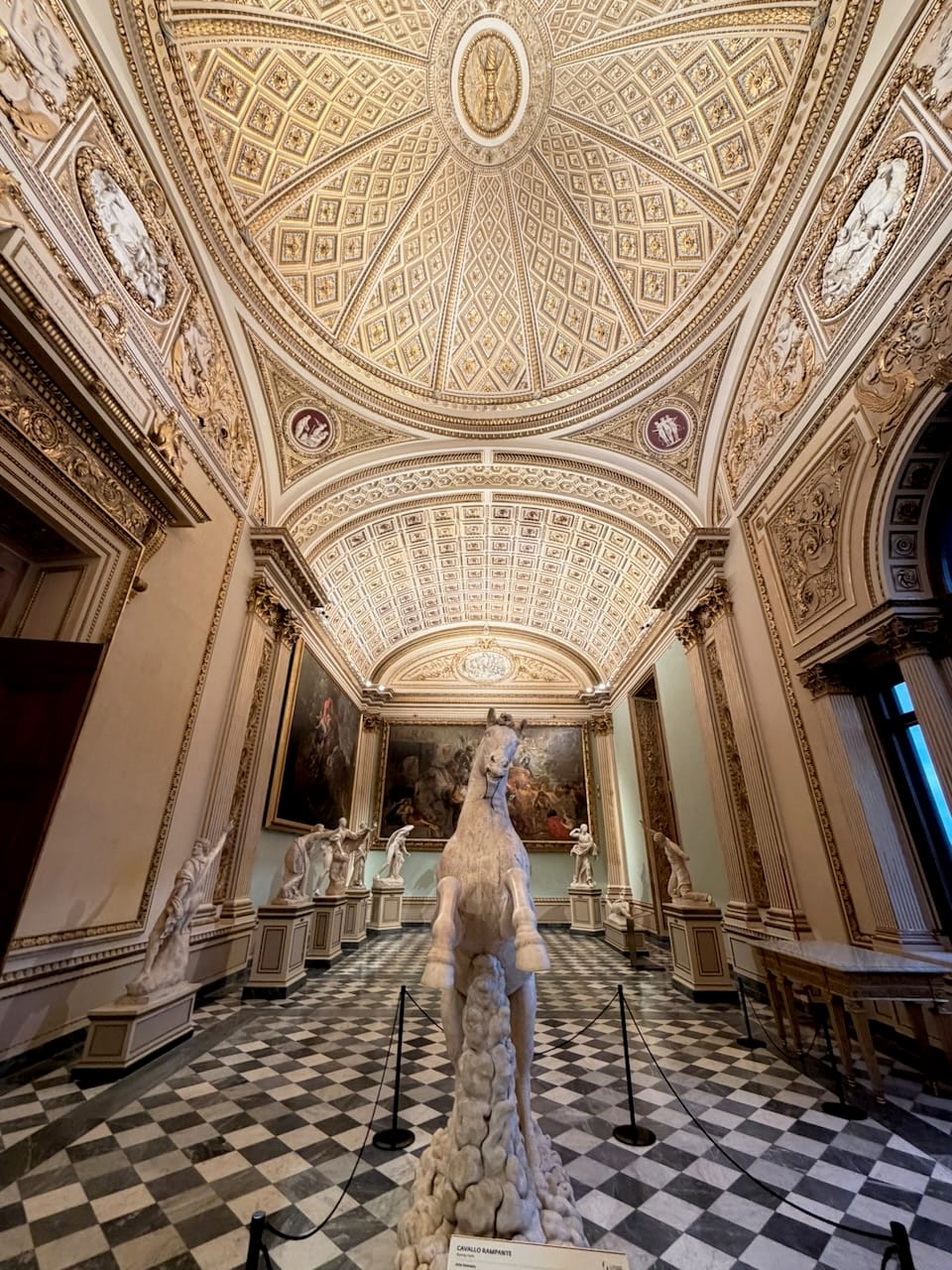
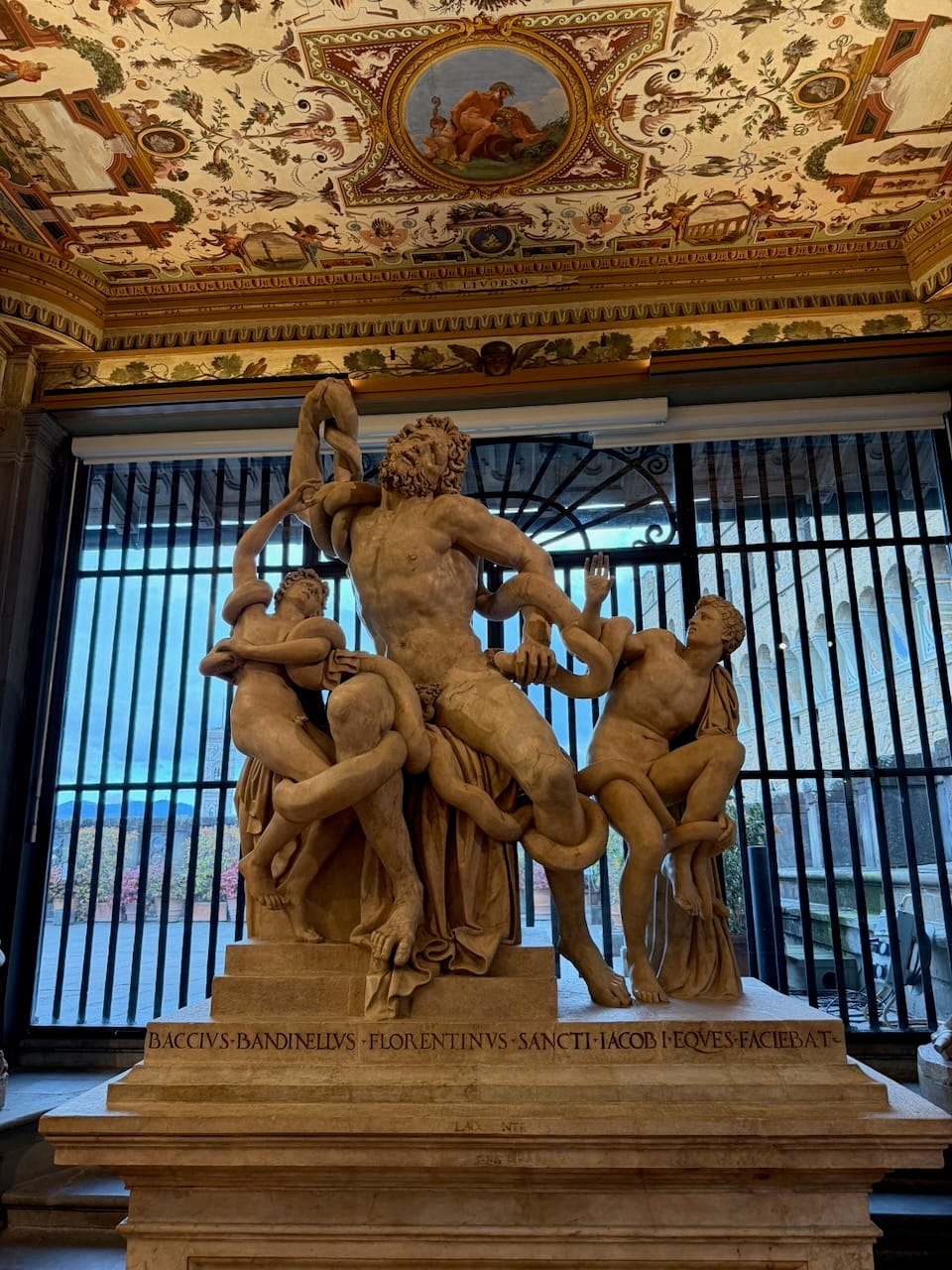
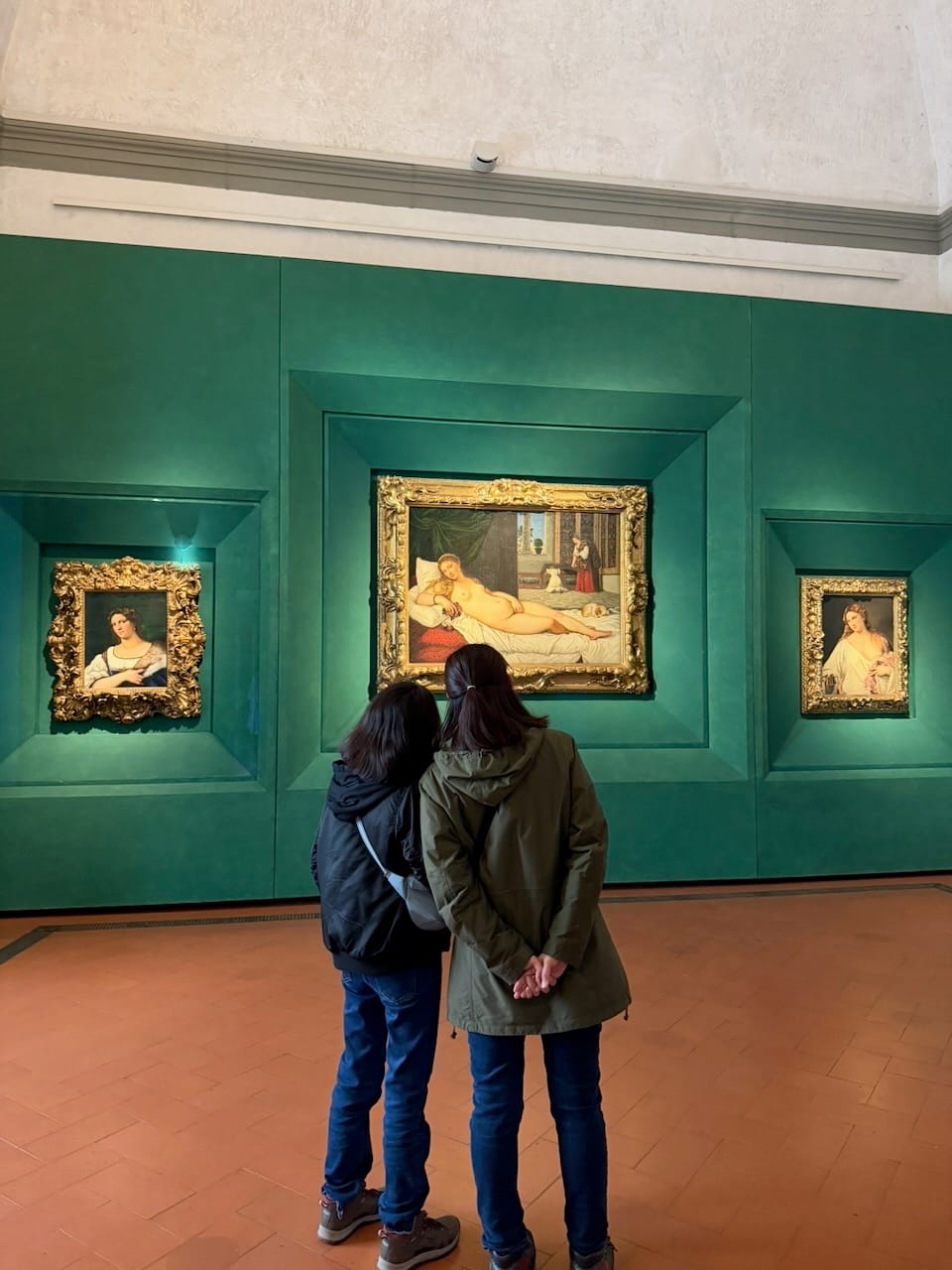
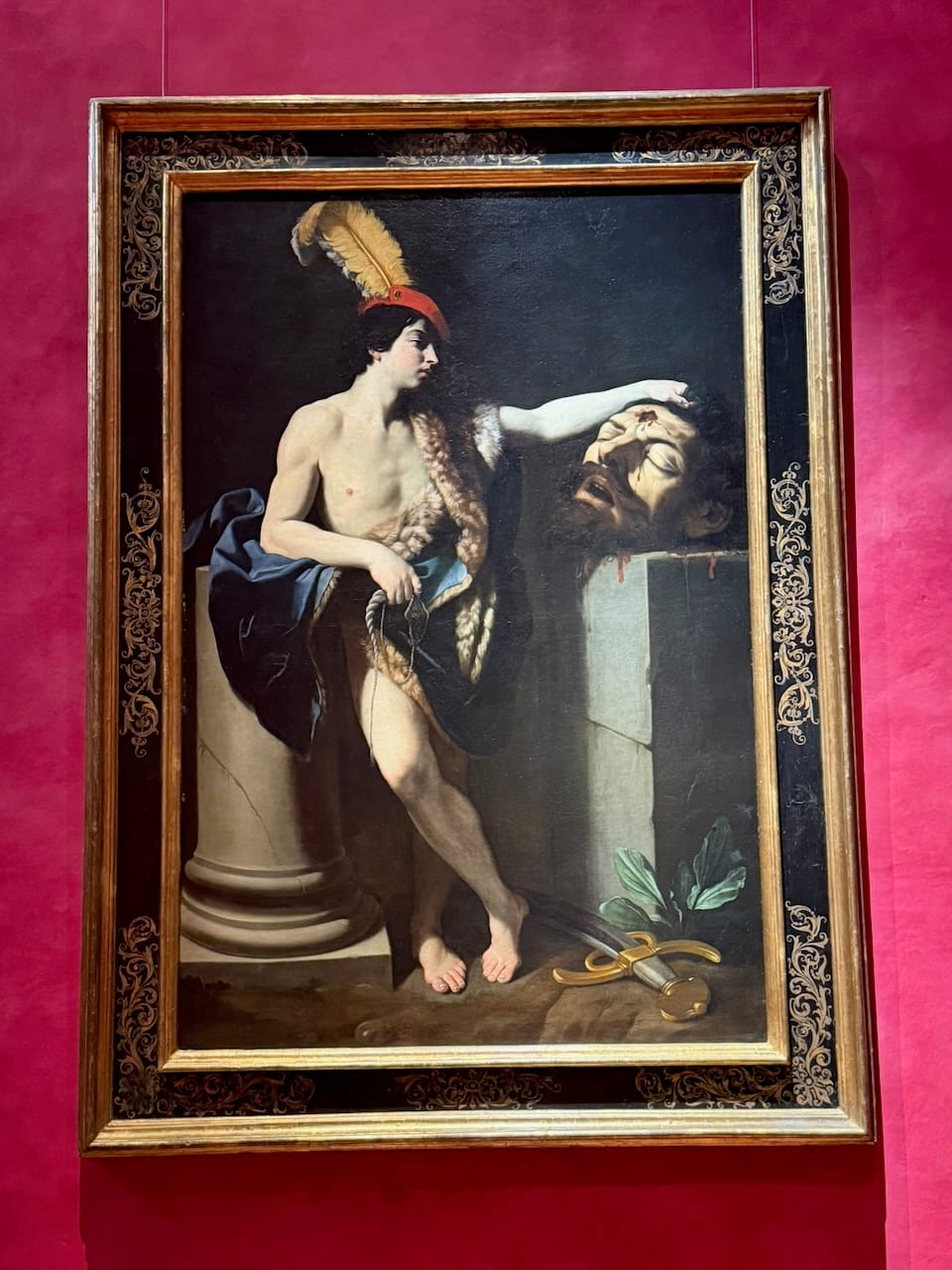
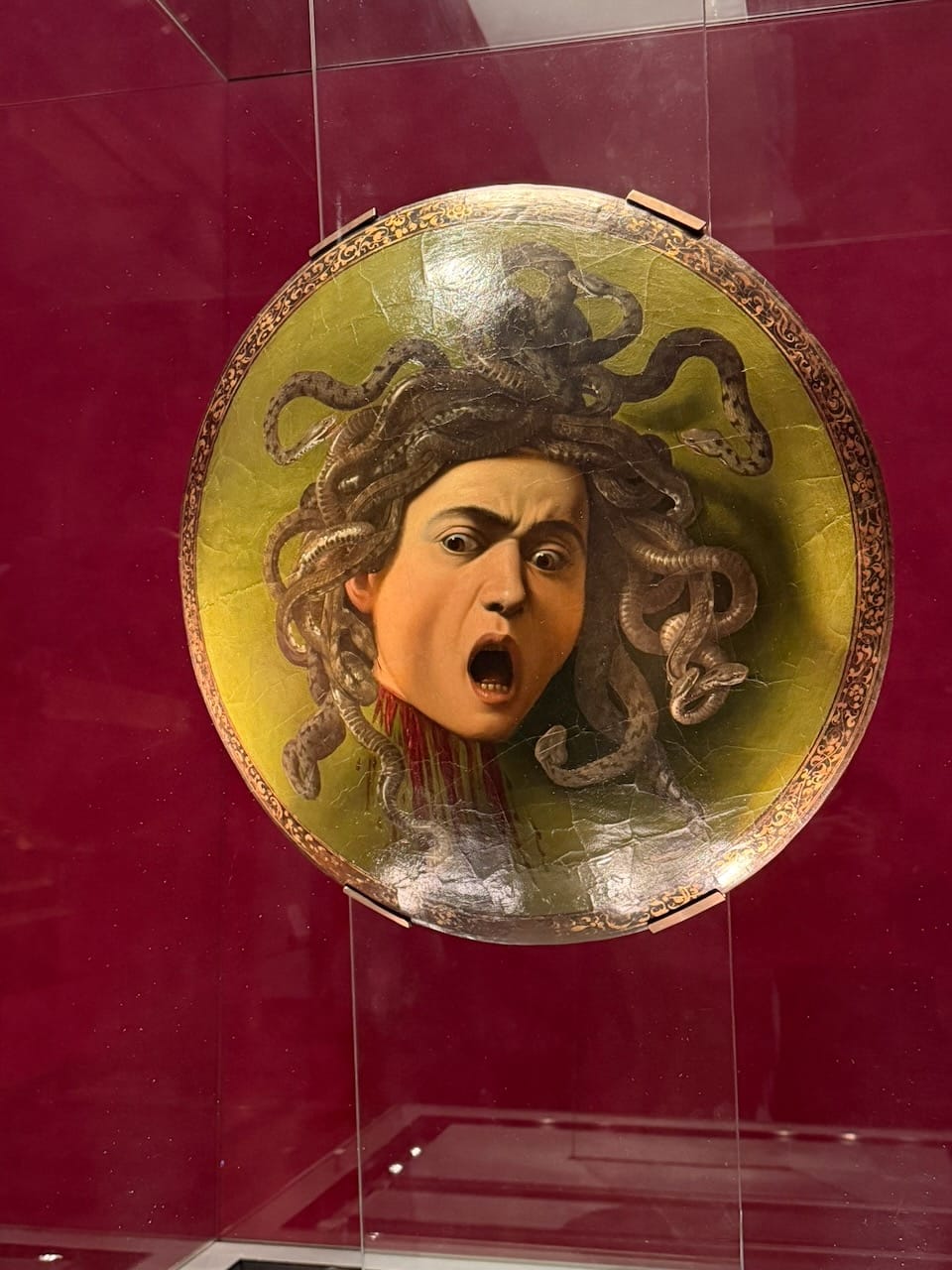
As time went on, the galleries gradually filled with people, but we were still able to enjoy the museum quite comfortably until it was time to head for the Vasari Corridor at 10:45 am. That said, we did have to start hurrying near the end. We had spent more time than expected searching for the gift shop, which, we learned, can only be accessed from inside the Uffizi. By the time we finally found it, the clock was no longer on our side.
We reached the meeting point for the Vasari Corridor with just five minutes to spare. Safe enough. The Vasari Corridor visit itself was organized as a small group tour (officially by the museum), but the “guides” were really more like quiet guards. They were not oppressive at all, simply professional, there to protect both the corridor and the visitors. There was not much formal explanation, but they gave us plenty of time to walk, look, and absorb the space.
The corridor was built in 1565 for Cosimo I de’ Medici, and it was designed by Giorgio Vasari, from whom the corridor takes its name. Cosimo wanted a private passage connecting the Palazzo Vecchio to the Palazzo Pitti so the Medici family could move across the city without mixing with the public. Walking through it felt exactly like that, a secret path floating above Firenze, calm and detached from the life below.
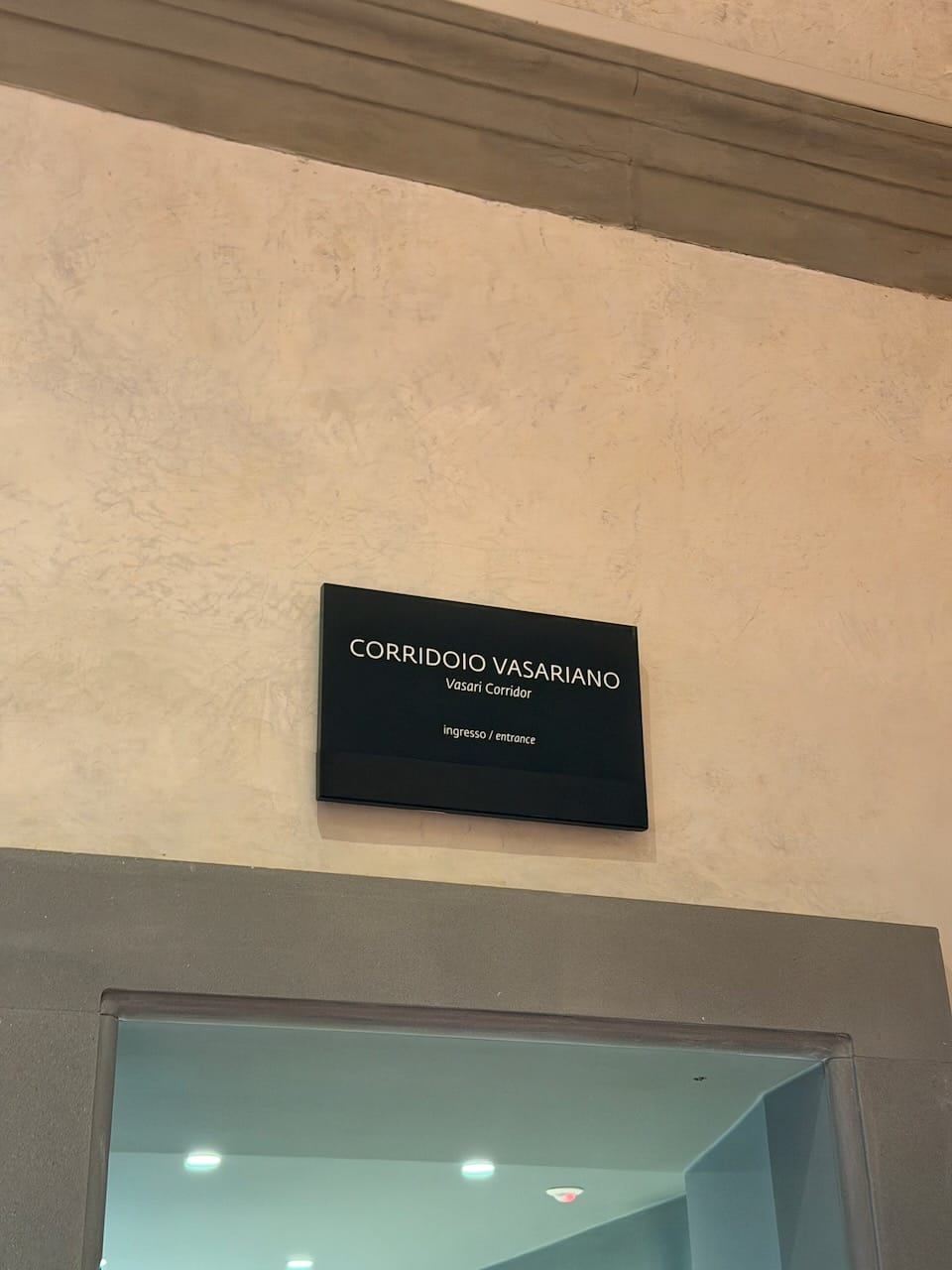
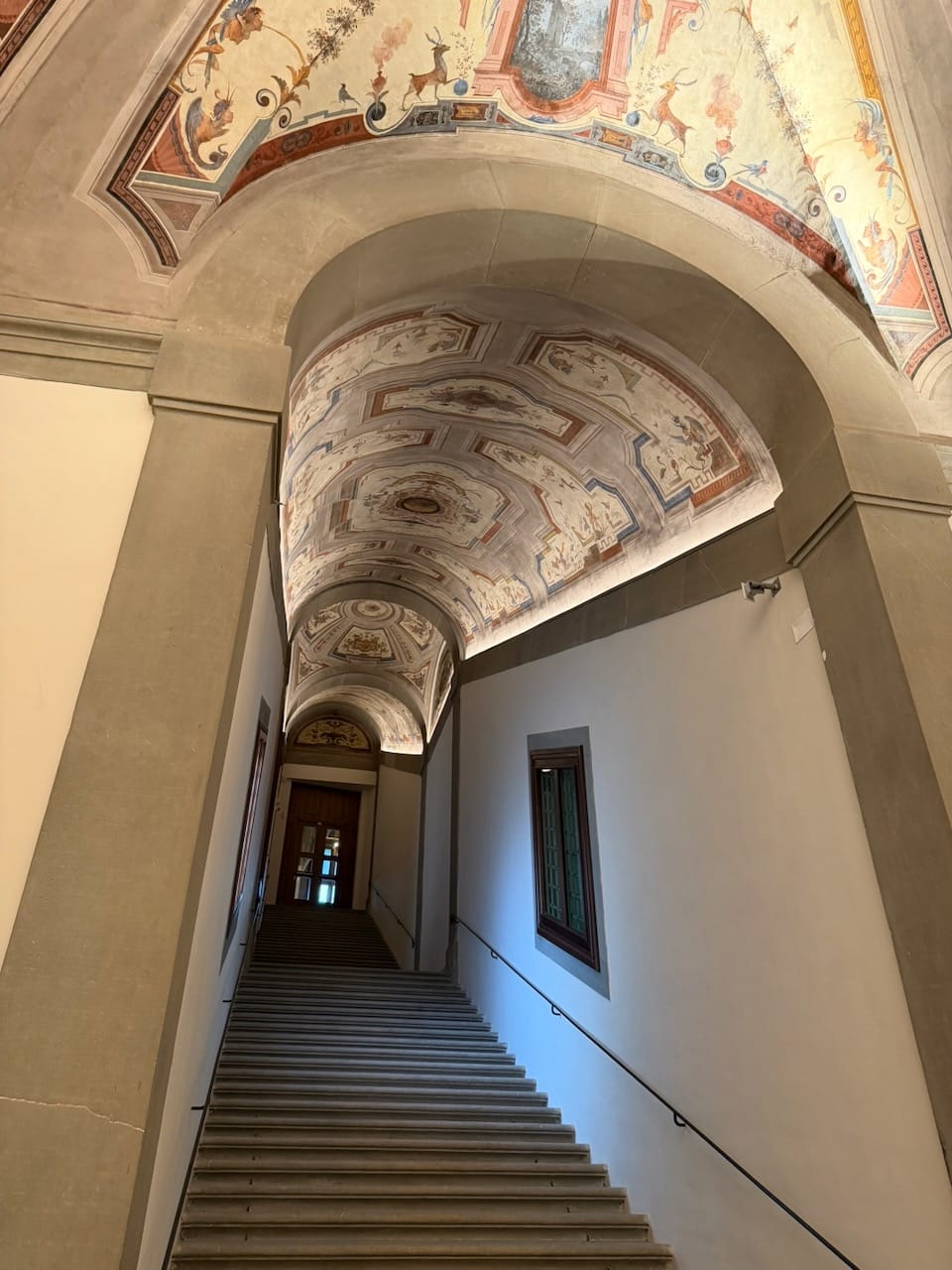
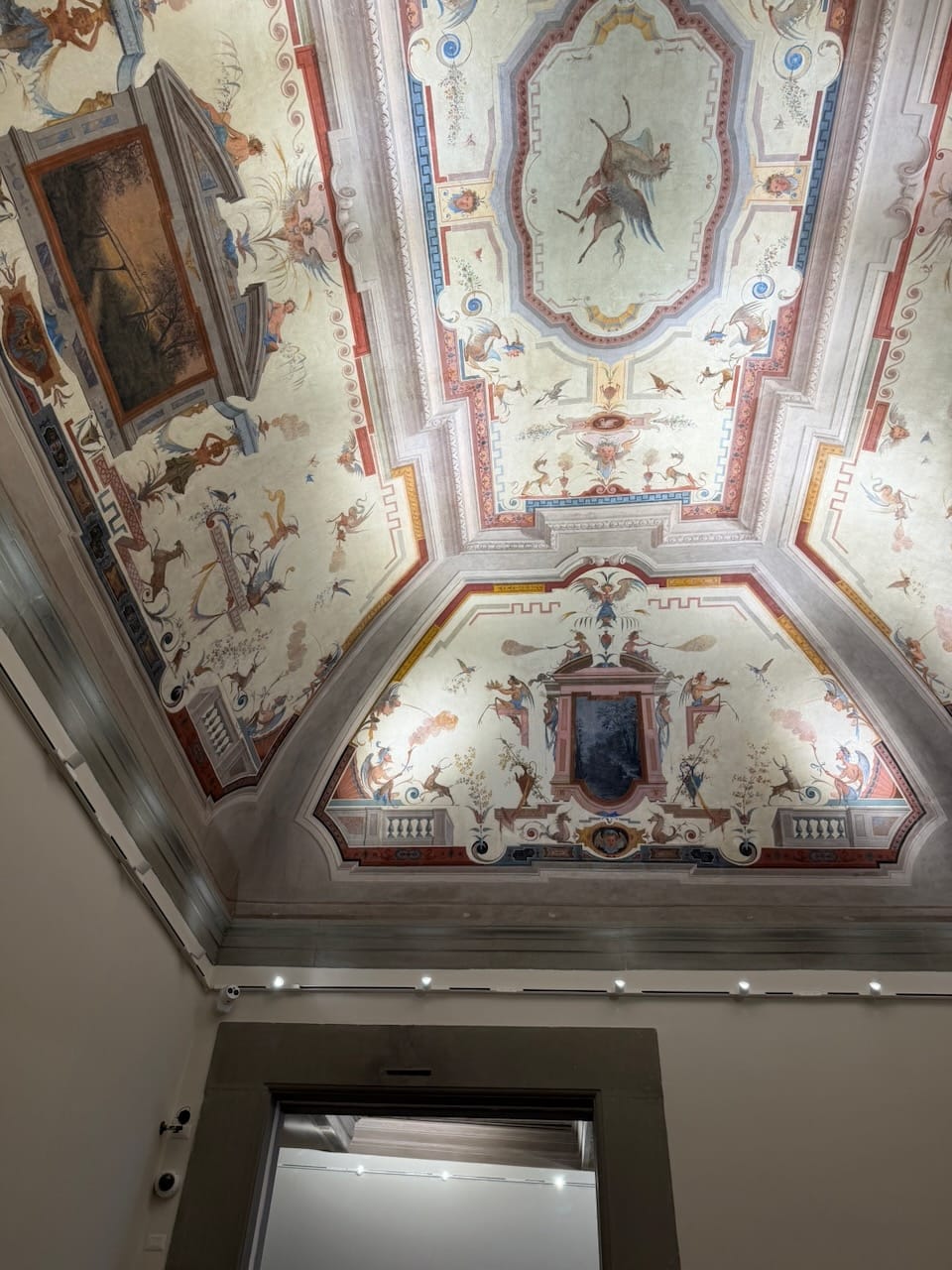
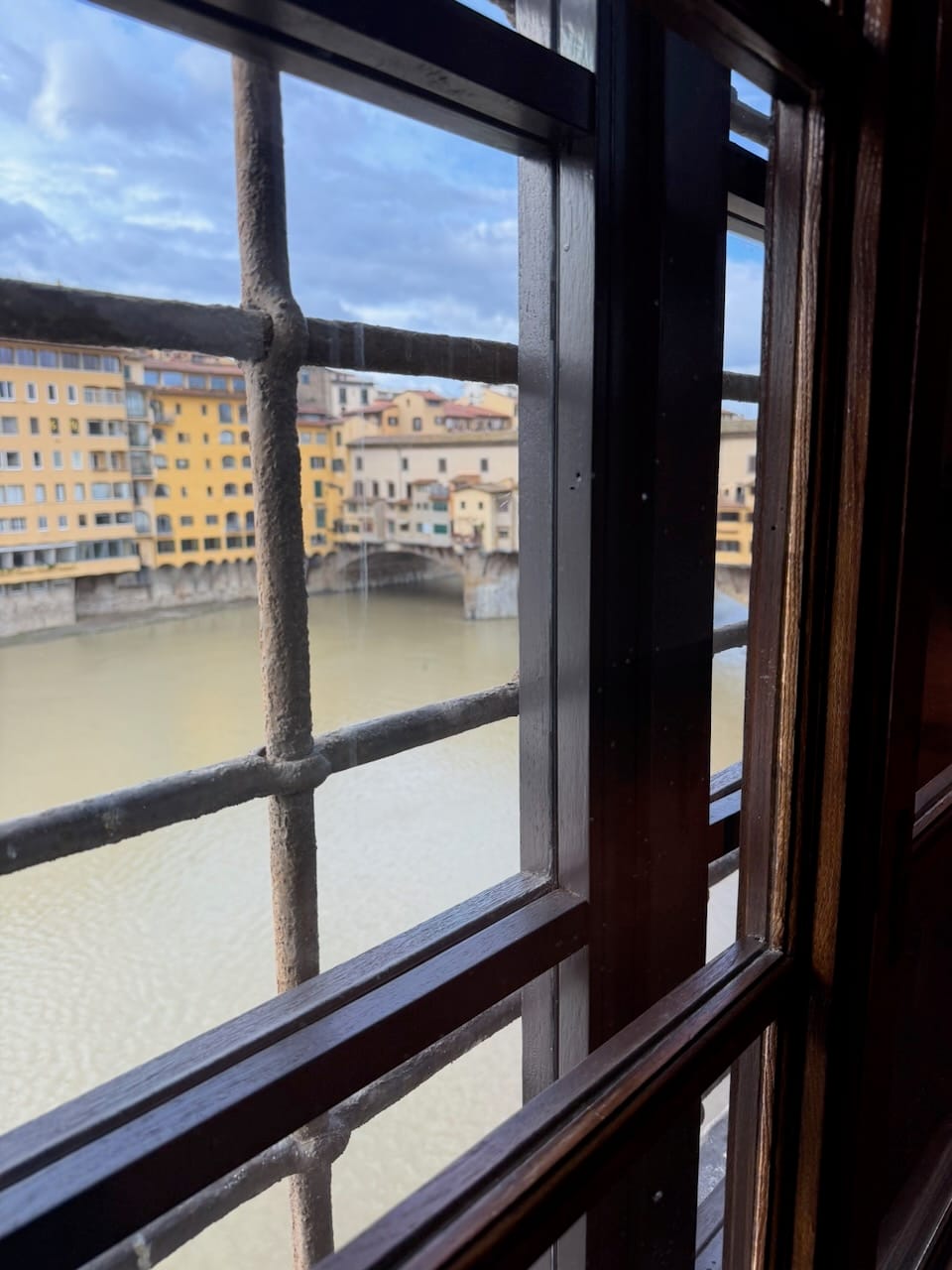

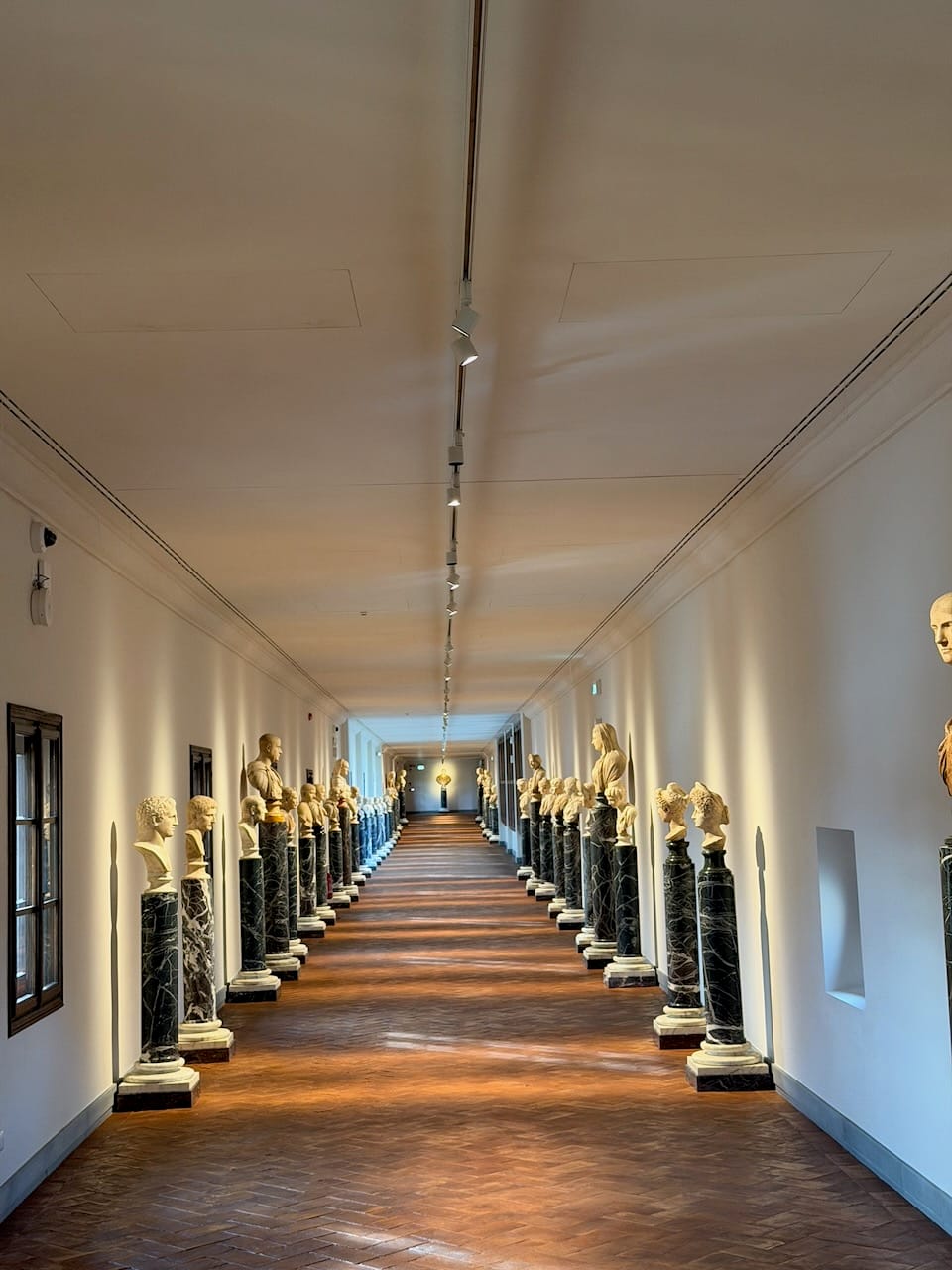
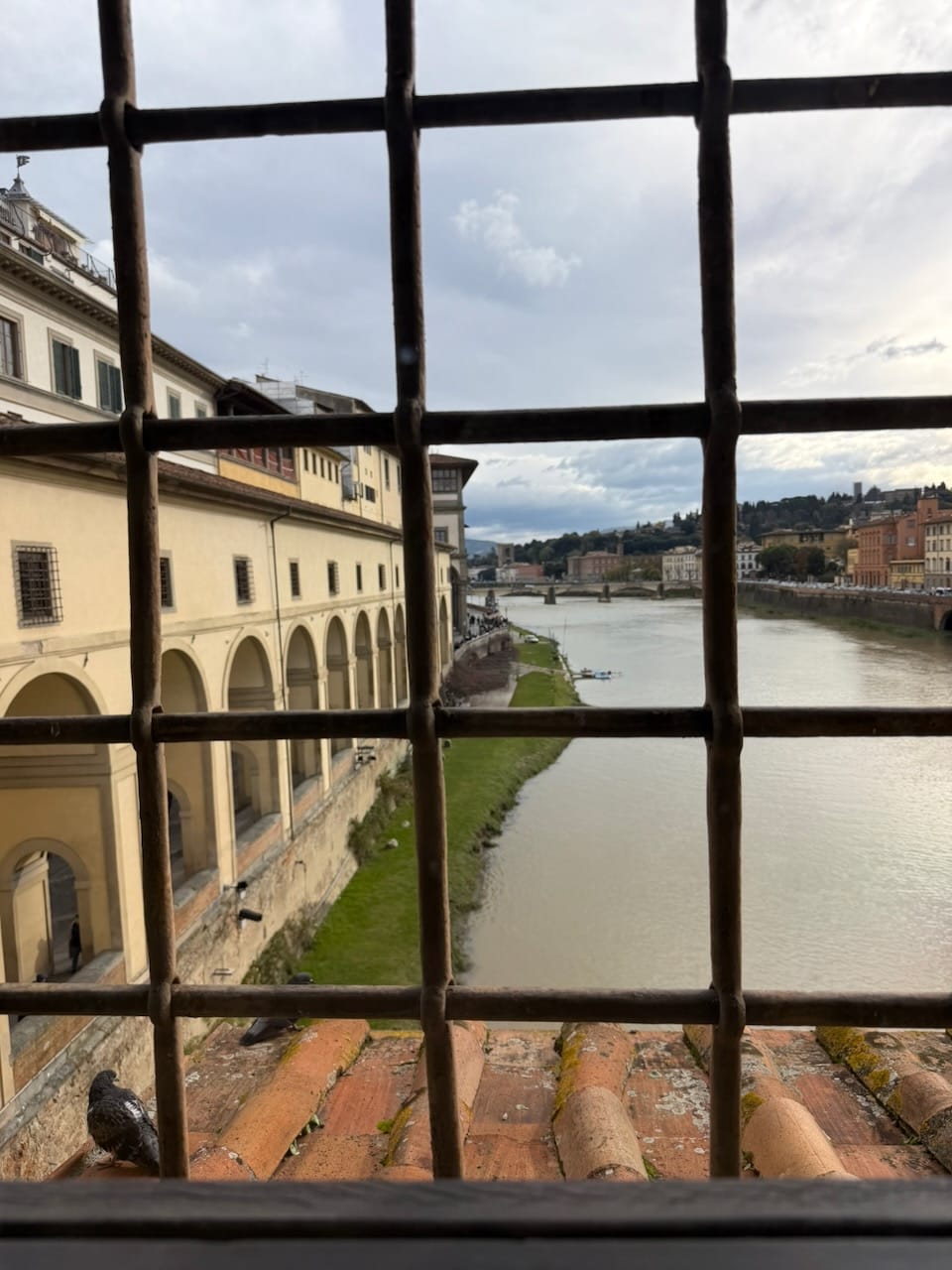
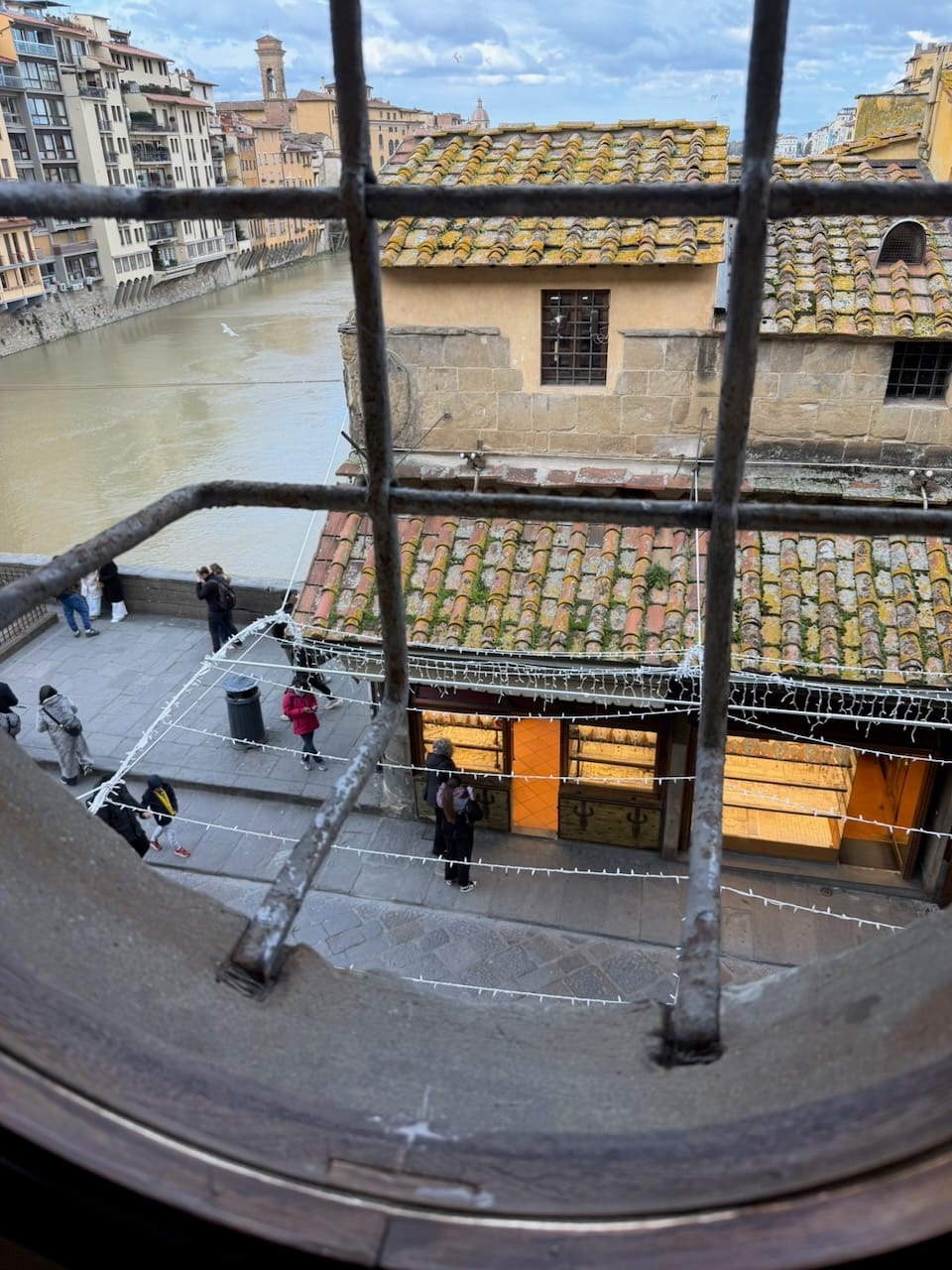
Along the way, we saw many private windows that looked down into churches and streets. One of the most striking was the private window overlooking the Capponi Chapel, where the Medici could observe religious services without joining the crowd. It was a quiet reminder of how carefully the family controlled distance, visibility, and power. At several points we could also look down onto Ponte Vecchio and the street beneath it. I kept wondering what it must have felt like, centuries ago, for the Medici to pass through here, watching the city from above, unseen.
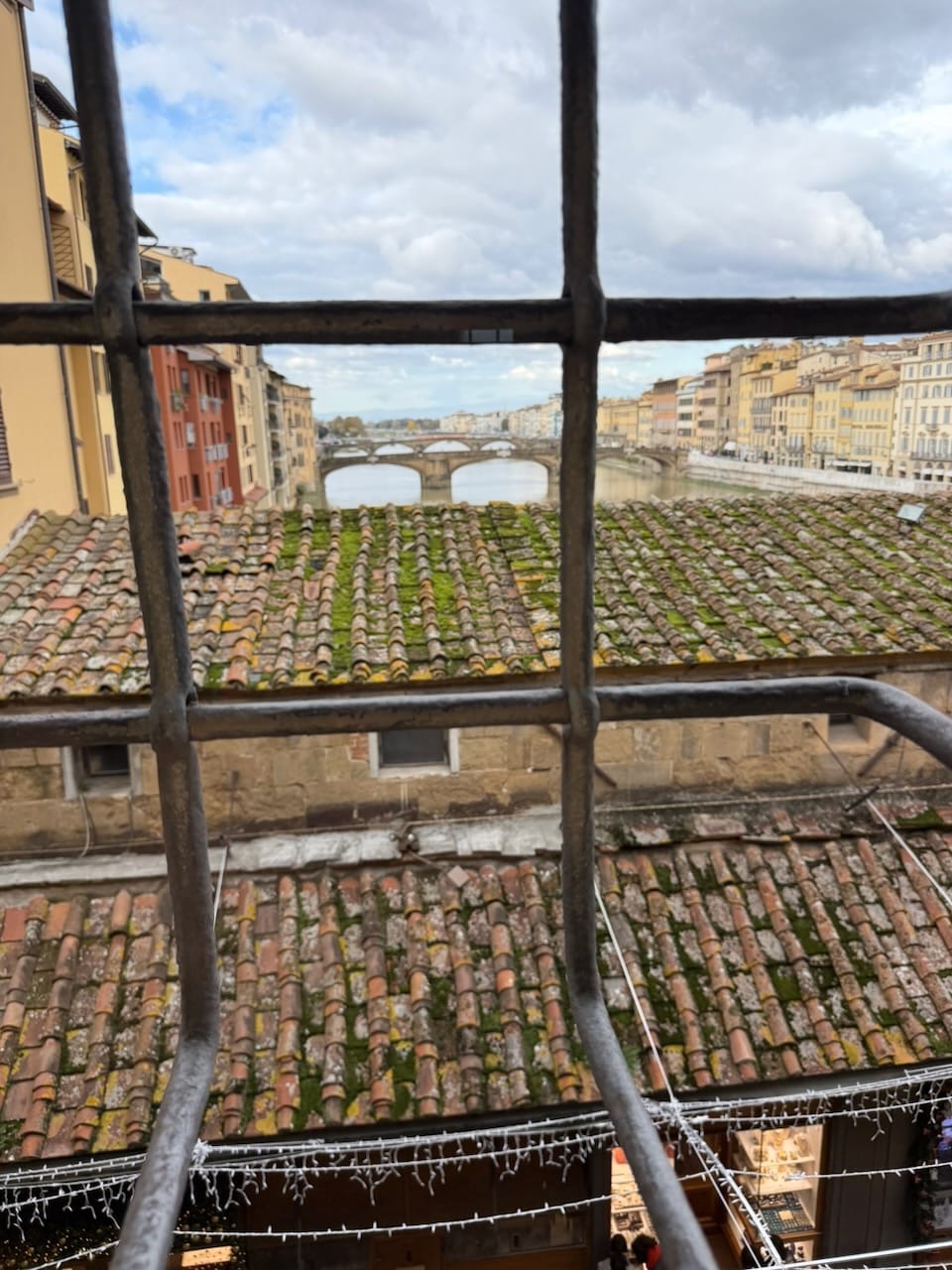
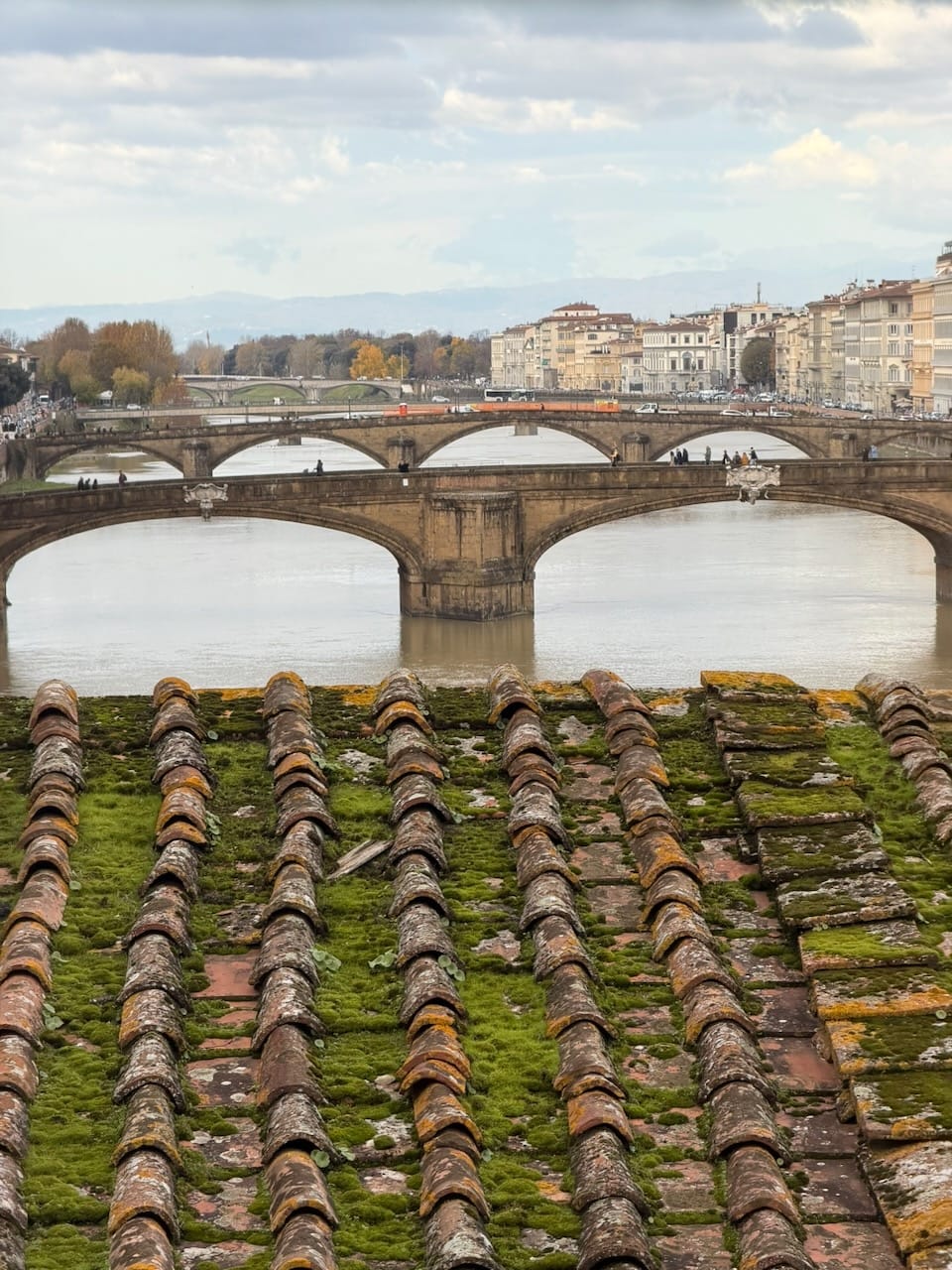
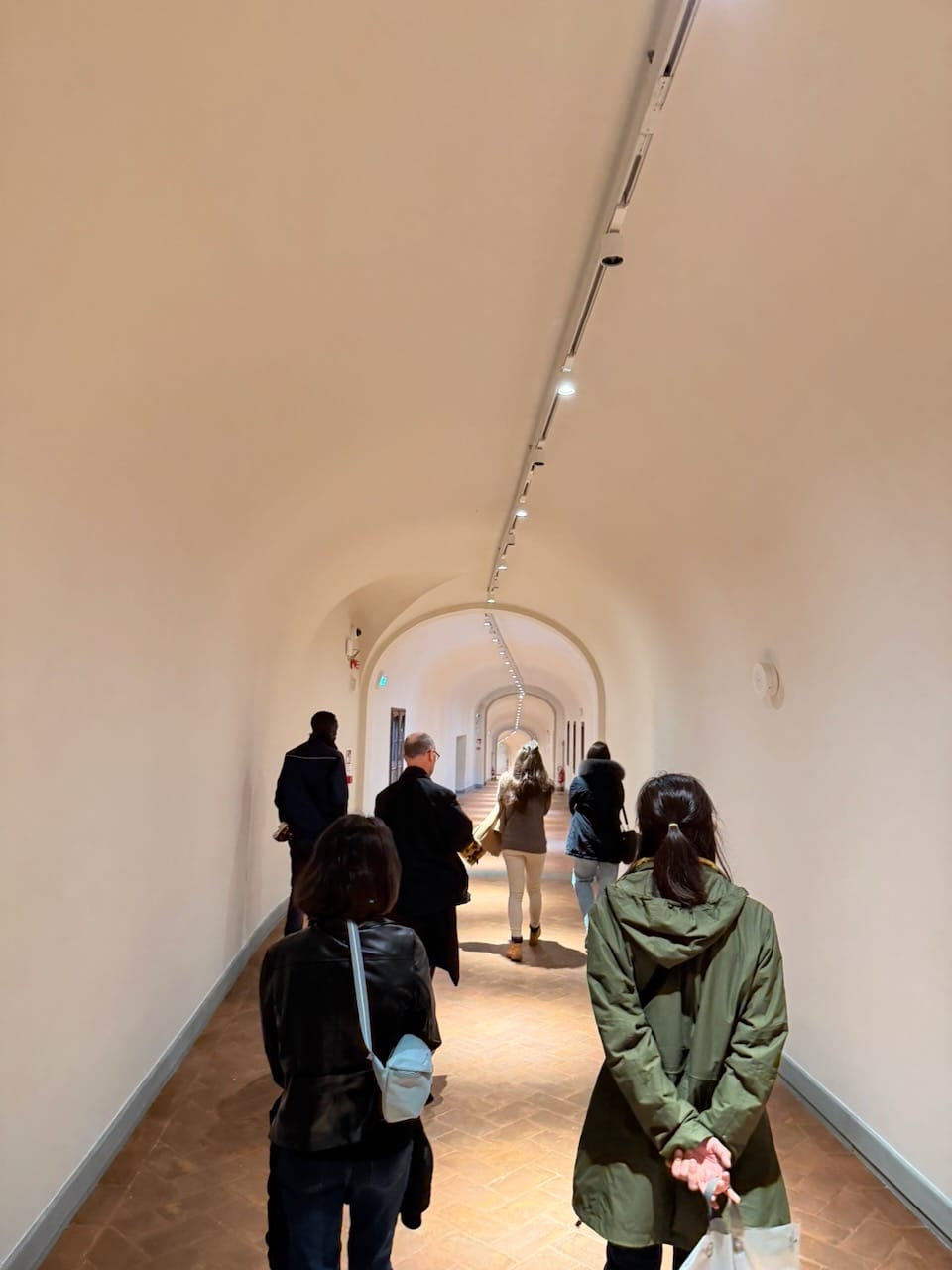
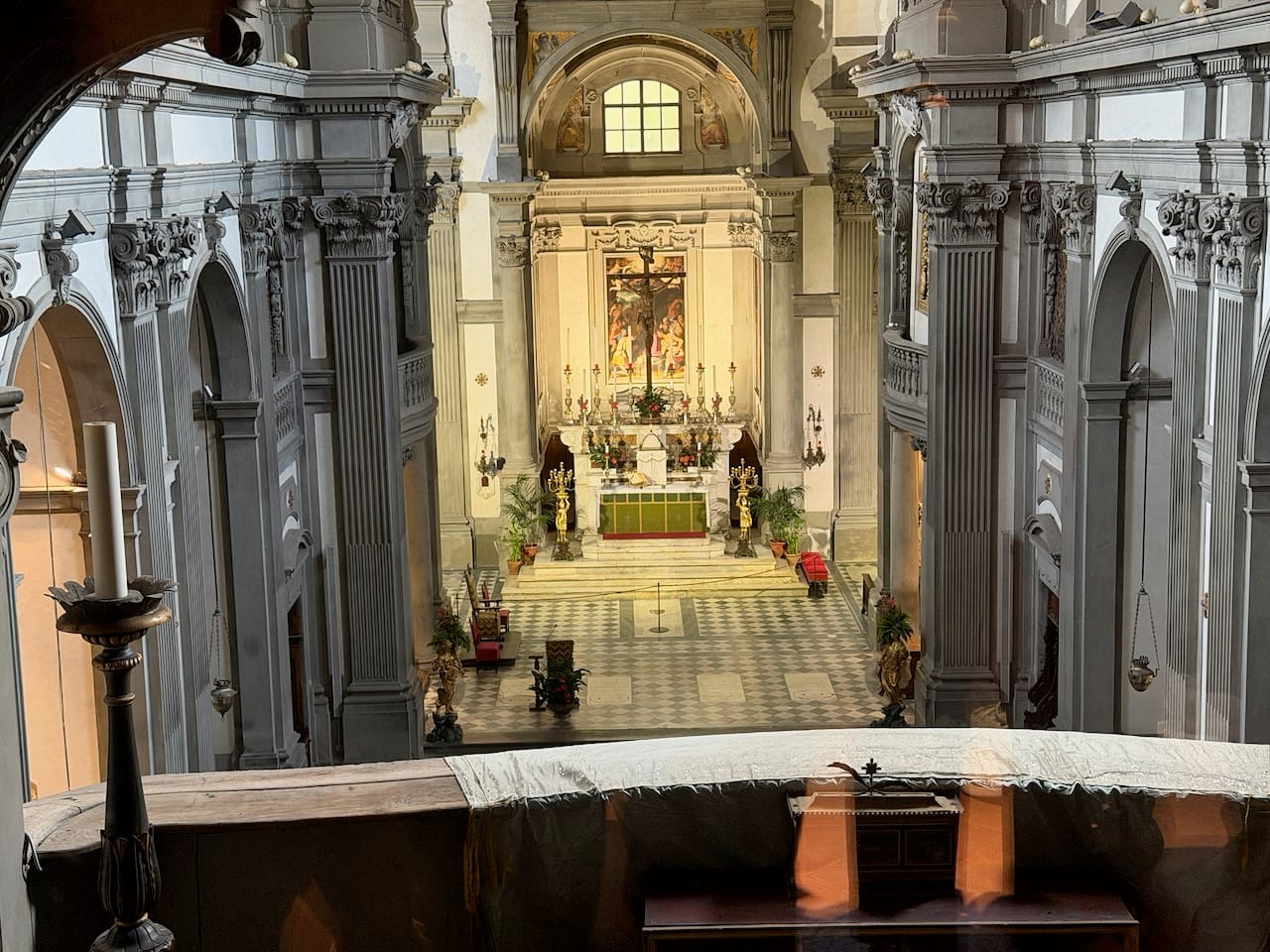
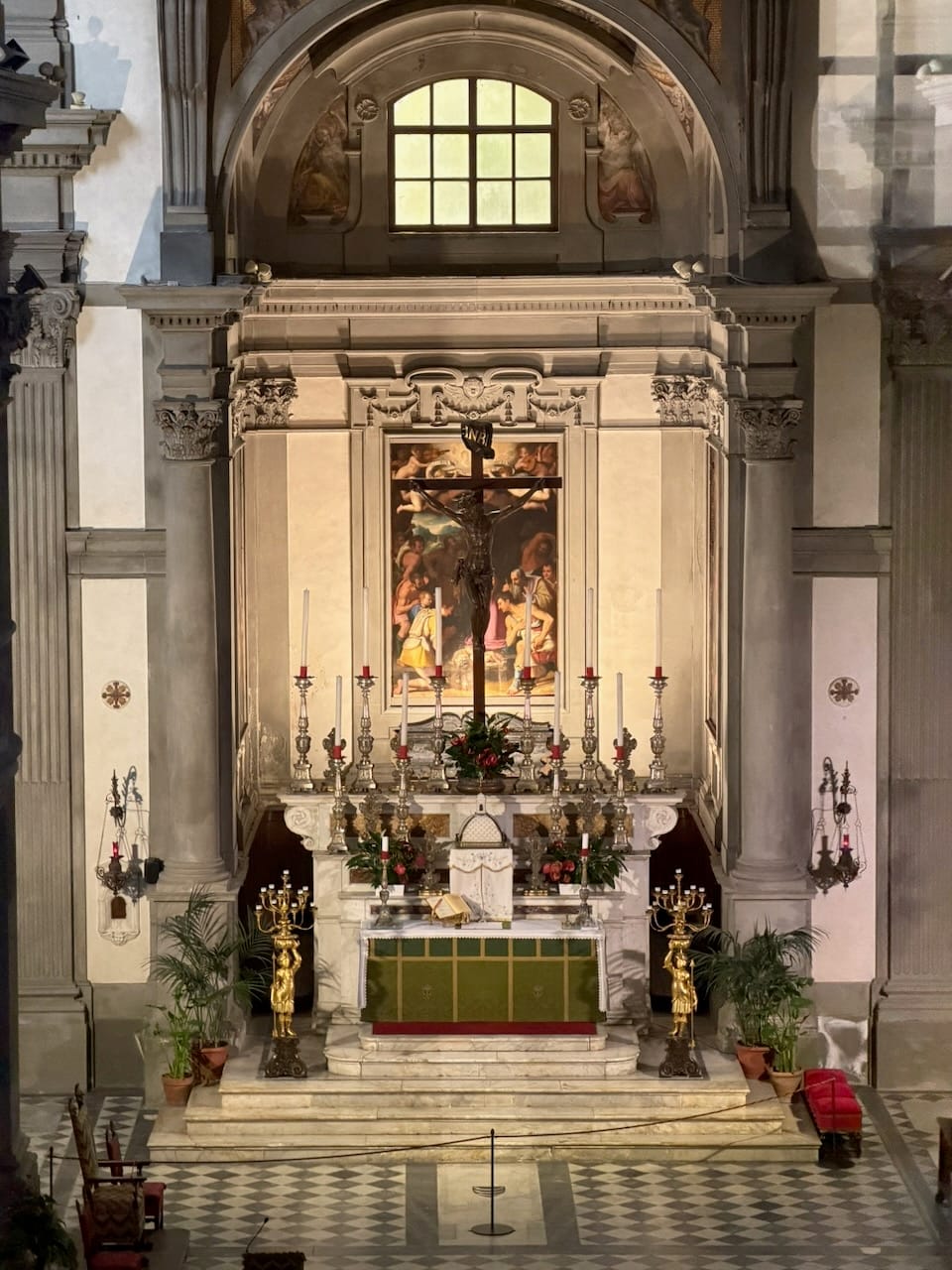

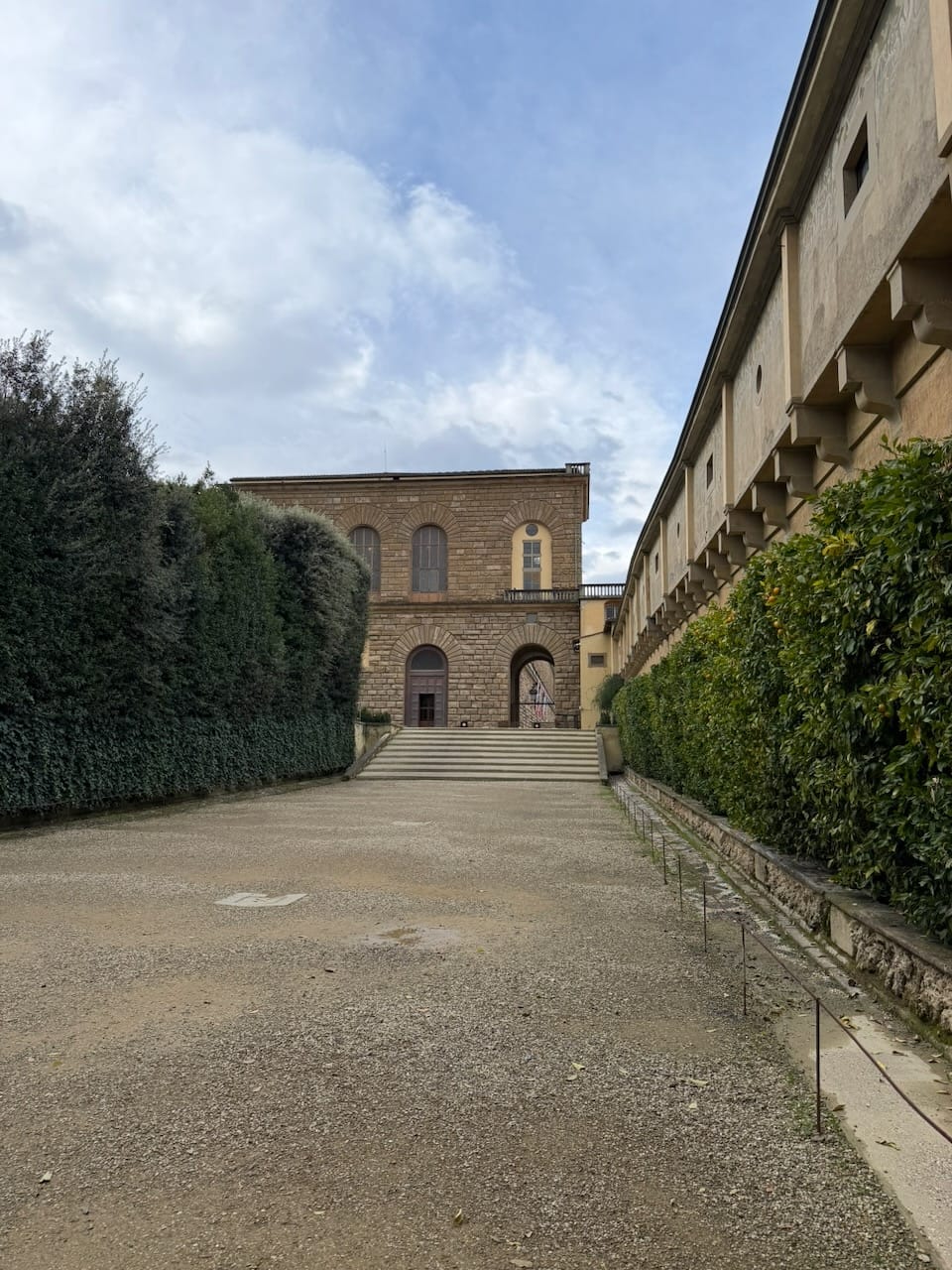
The corridor tour ended at Palazzo Pitti. We already had a reservation for the palace itself at 1:45 pm, so we briefly looked around the entrance area and stepped back out rather than rushing through it.


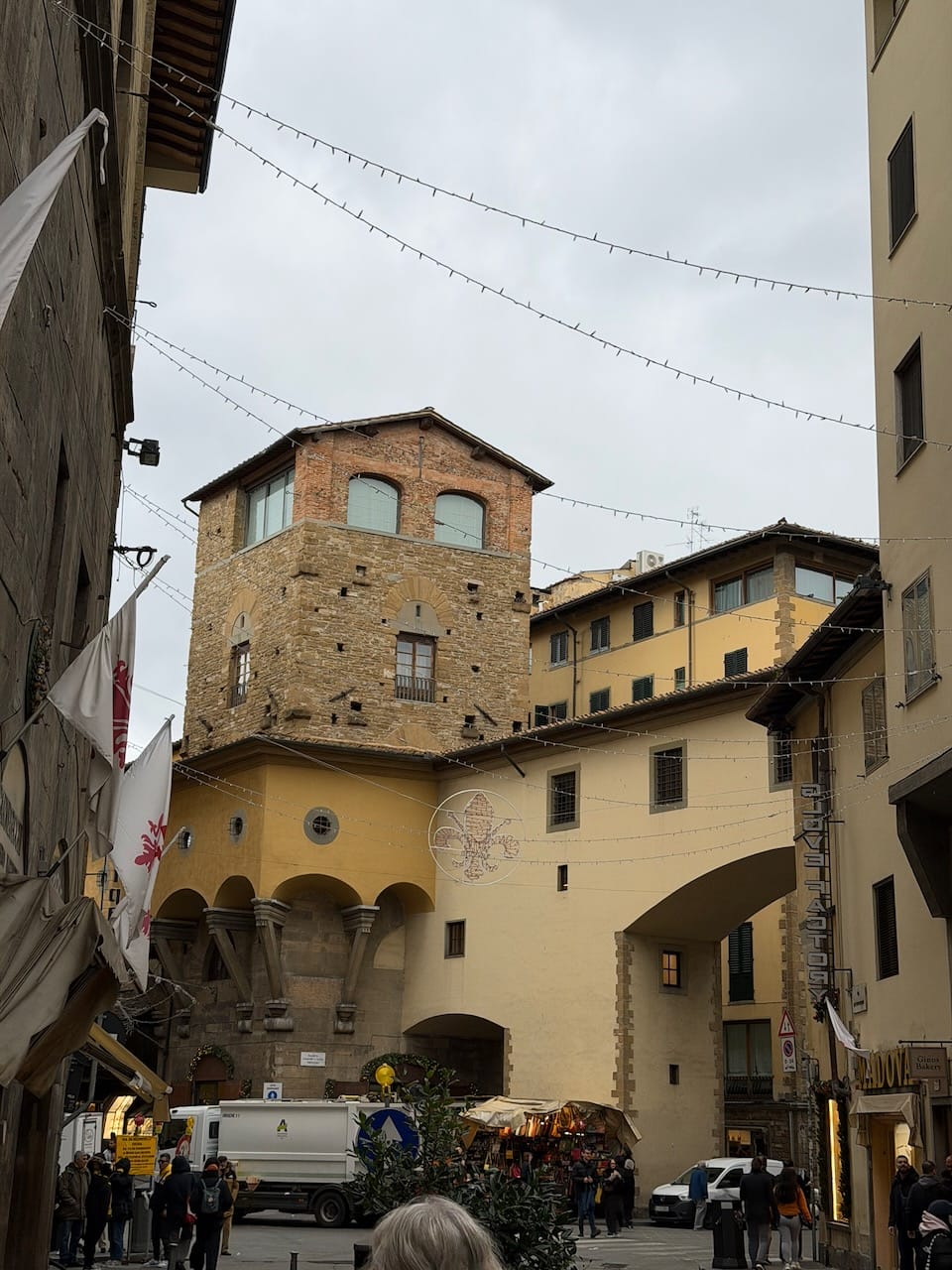
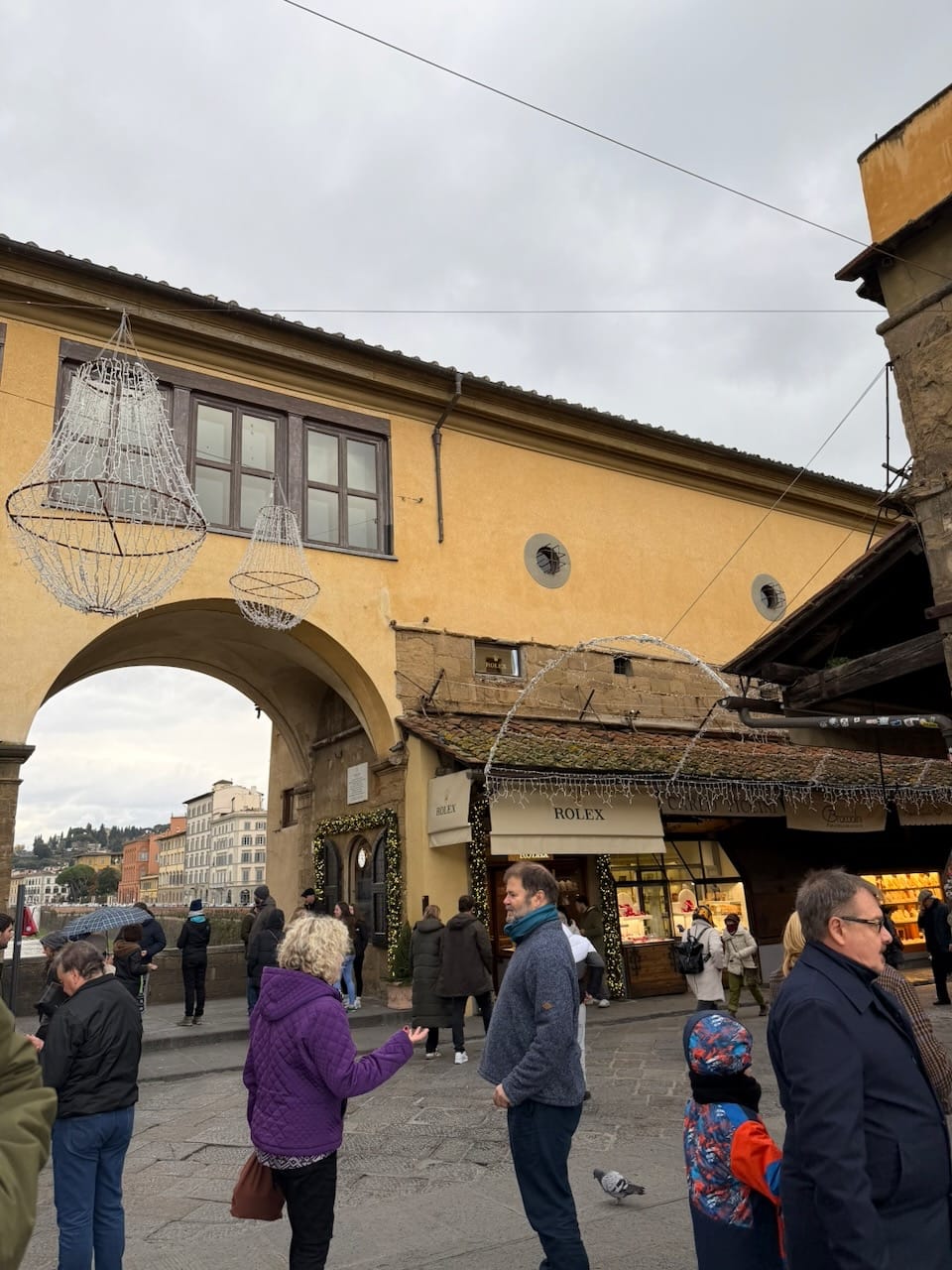
On our way back toward the city center, we crossed Ponte Vecchio and looked up at the very corridor we had just walked through. Seeing it from below felt strangely different. A few minutes earlier we had been moving quietly above the city, hidden from view. Now we were part of the crowd again, looking up at that thin strip of windows. From below, I couldn’t see anything through the glass at all, which somehow made the whole experience feel even more secretive, knowing what it was like on the other side.
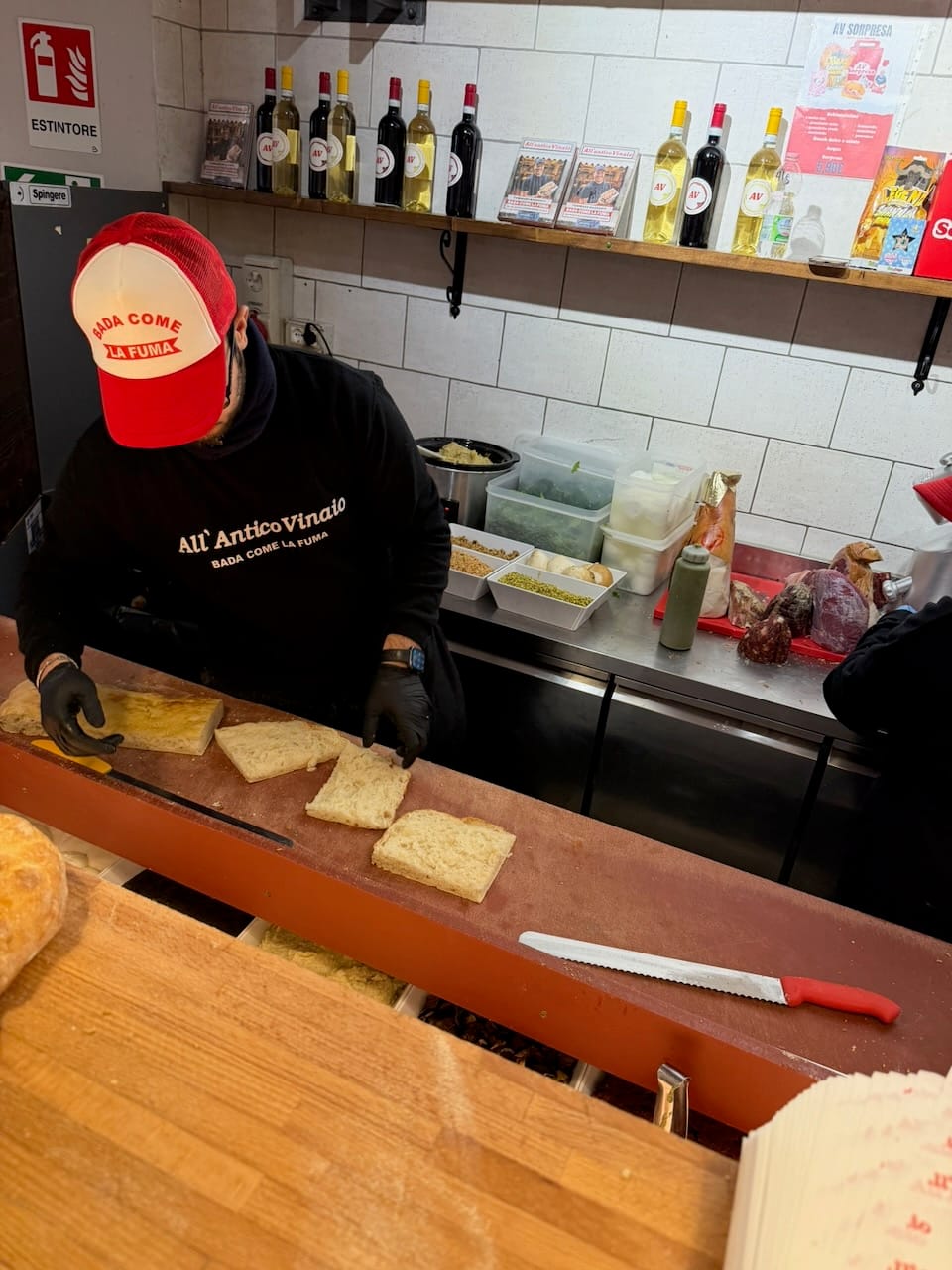
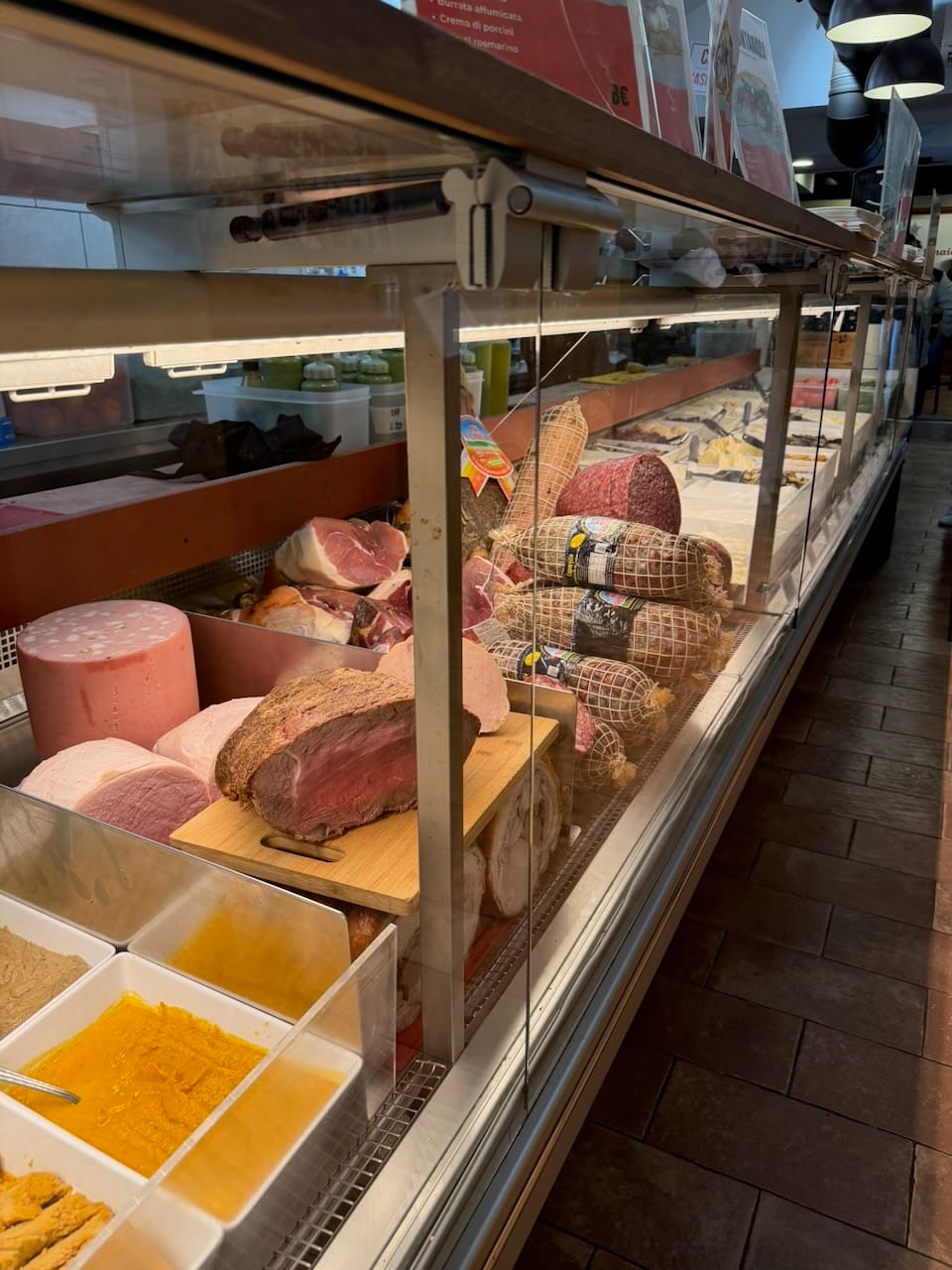
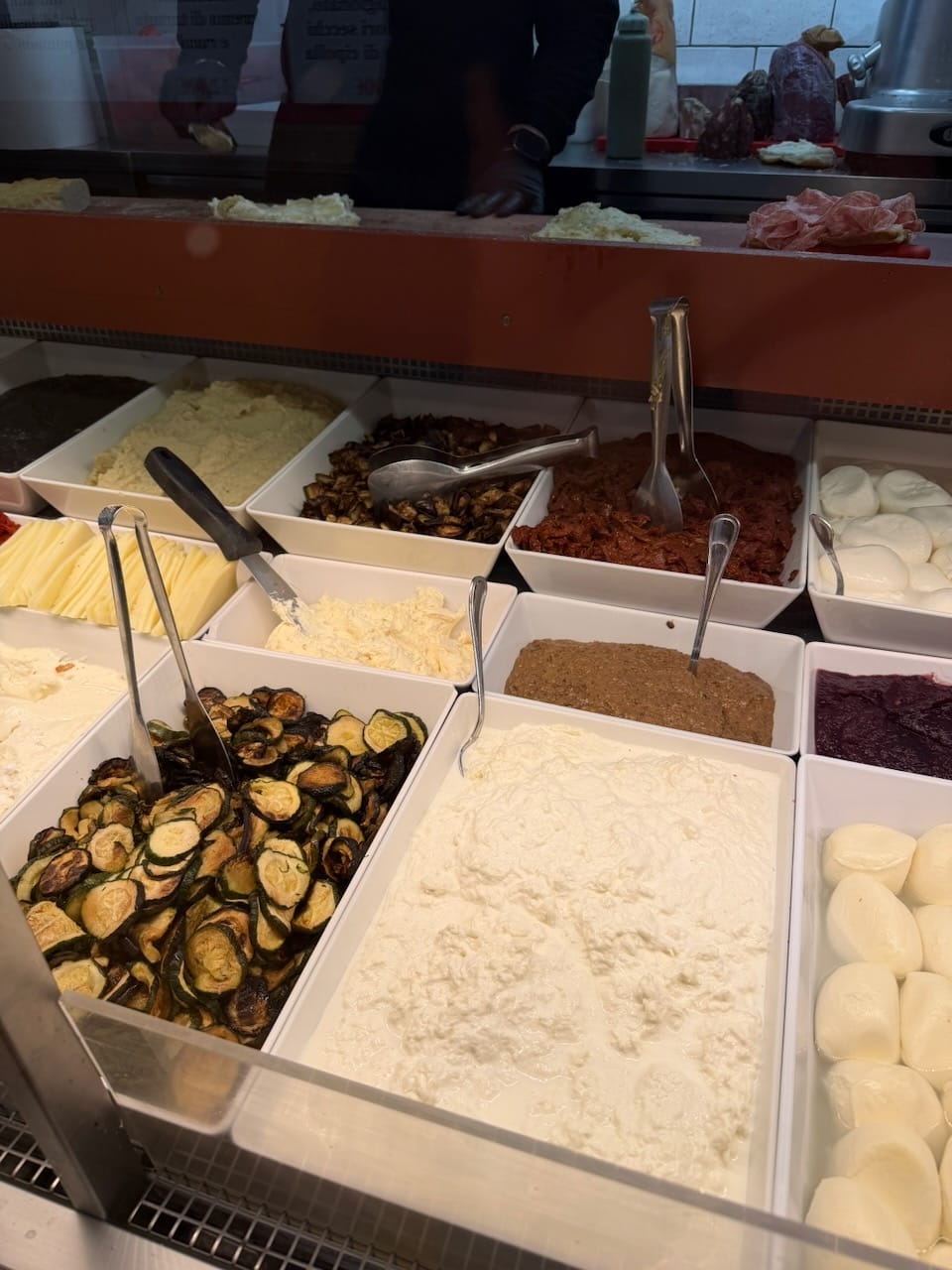
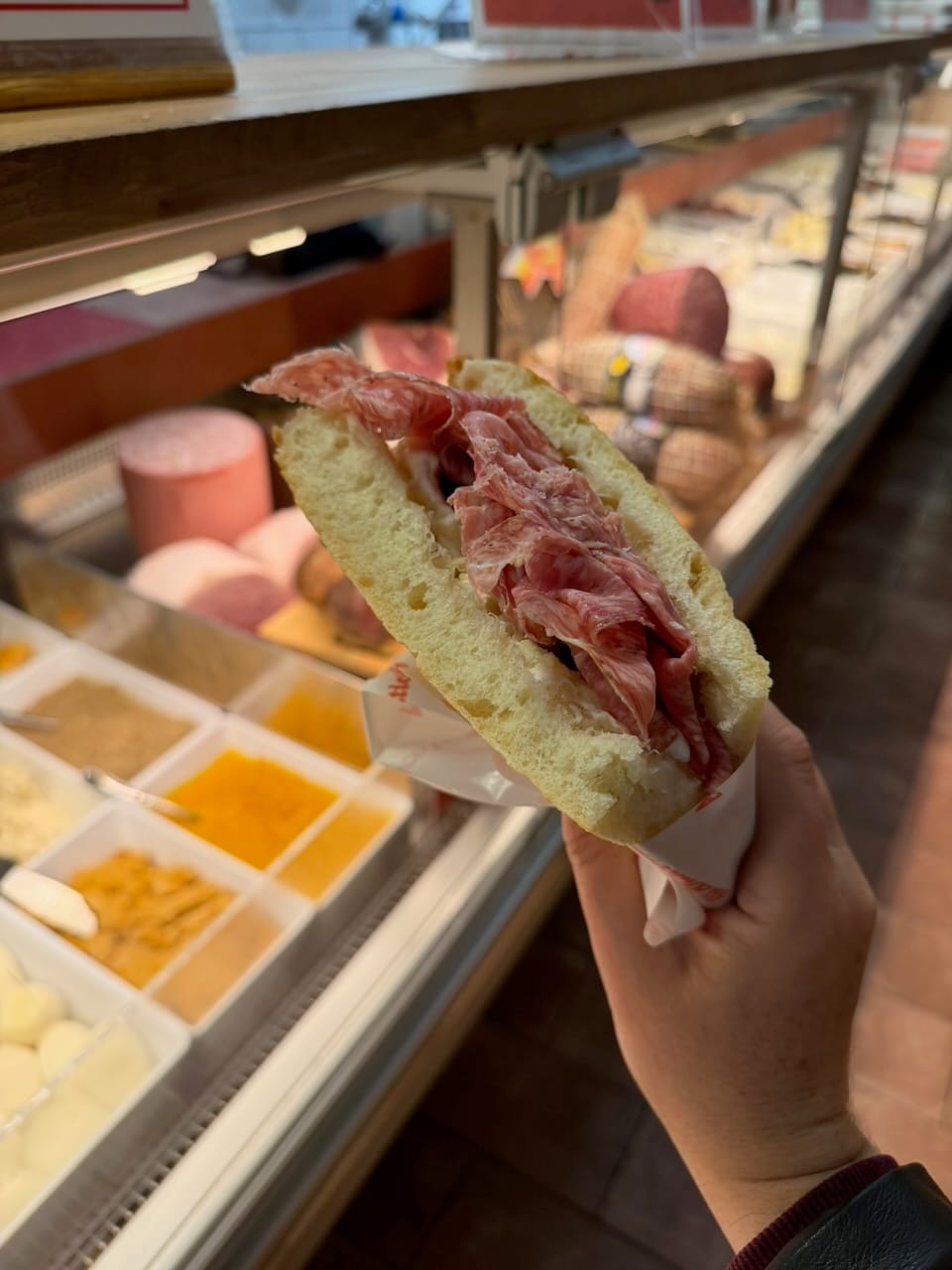
For lunch, we finally managed to try the traditional Italian sandwich(that we had failed to get in Rome), at All’Antico Vinaio. They also have stores in the US and I’d heard they recently opened a new location in LA Korea Town. After yesterday’s Nerbone, which taught us how far a sandwich can go with bold, generous meat, All’Antico Vinaio delivered a completely different lesson: how something so simple, built mostly on good bread, cheese, and cream, can be just as unforgettable.


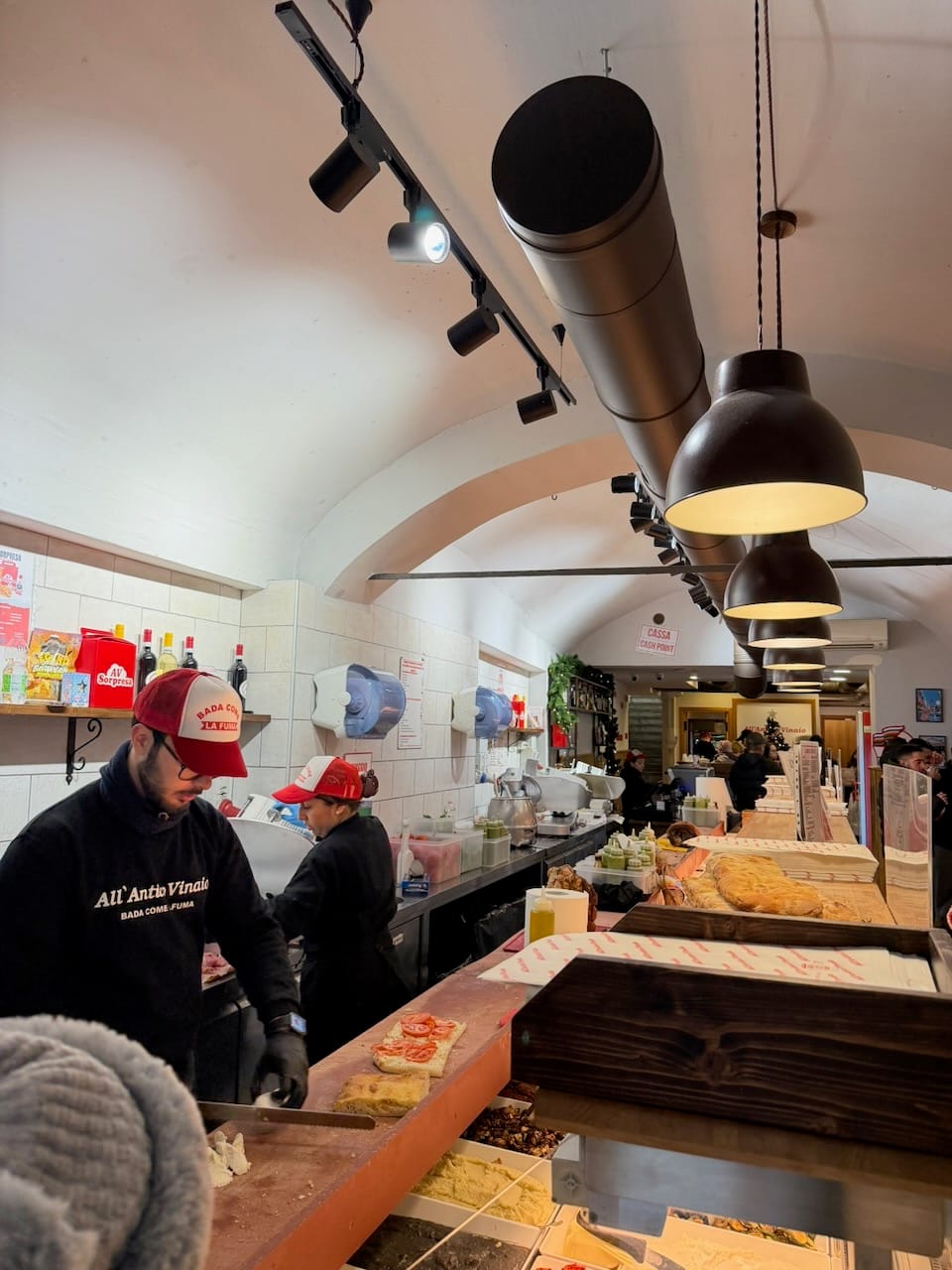
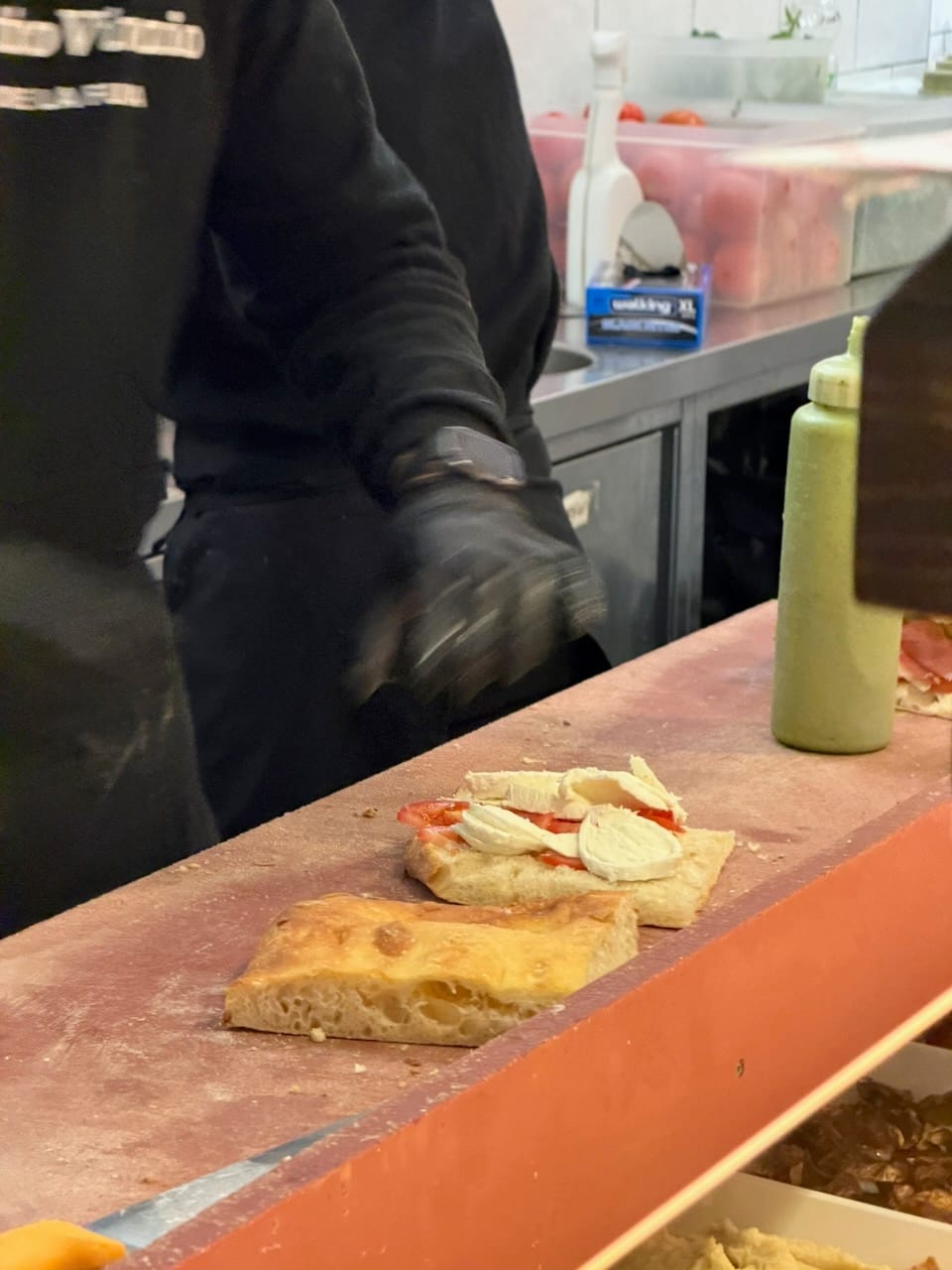
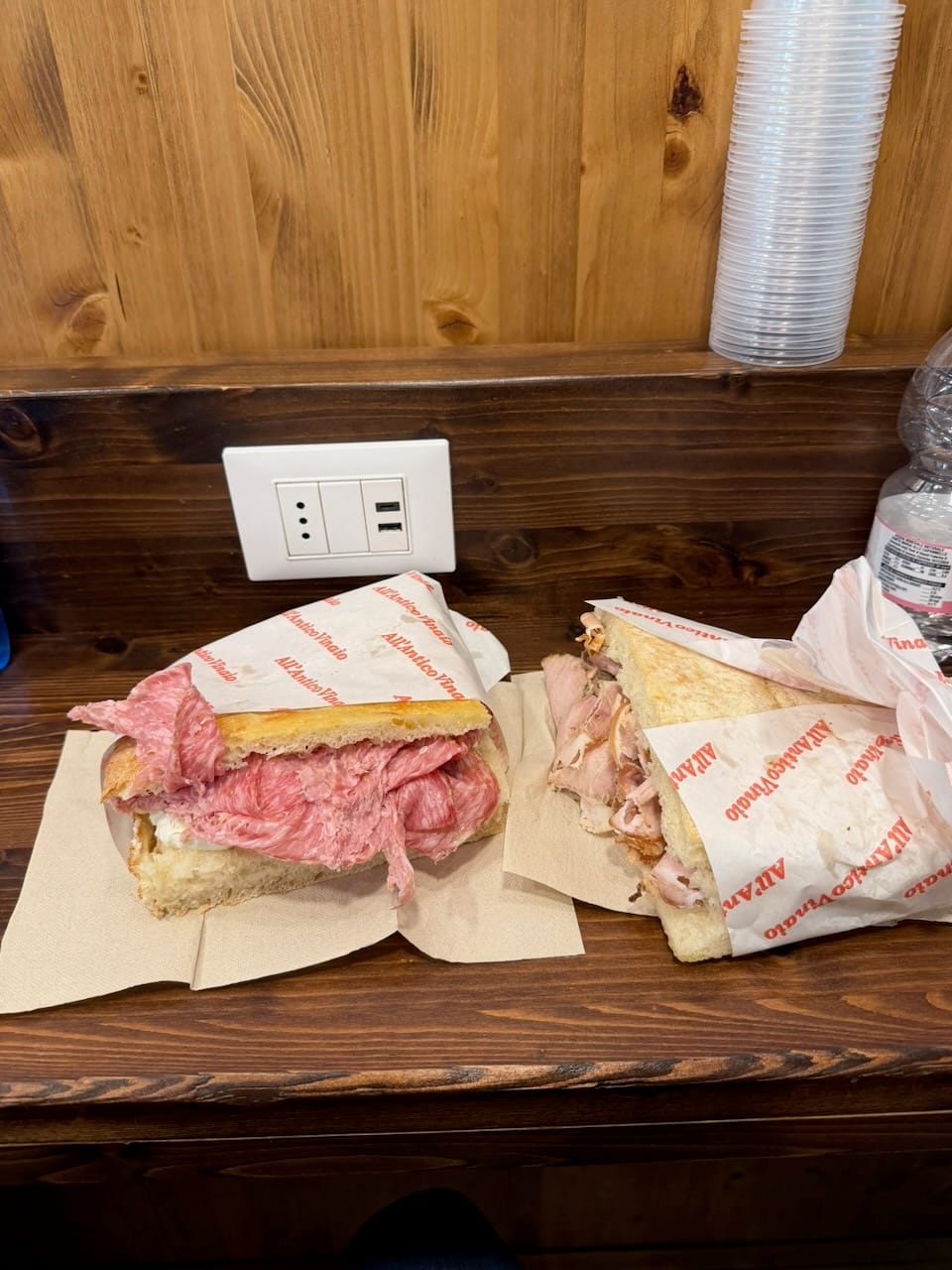
All’Antico Vinaio
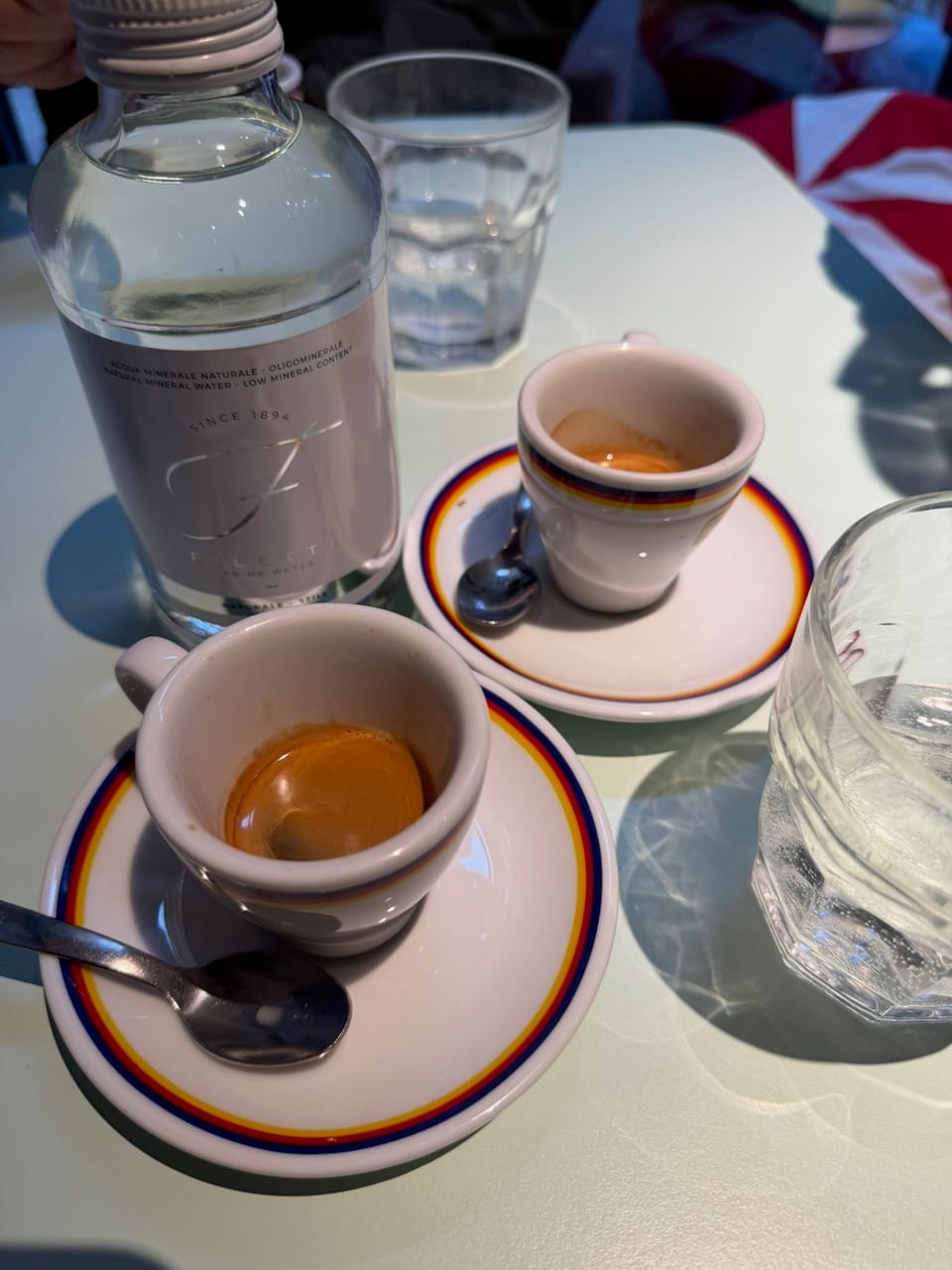
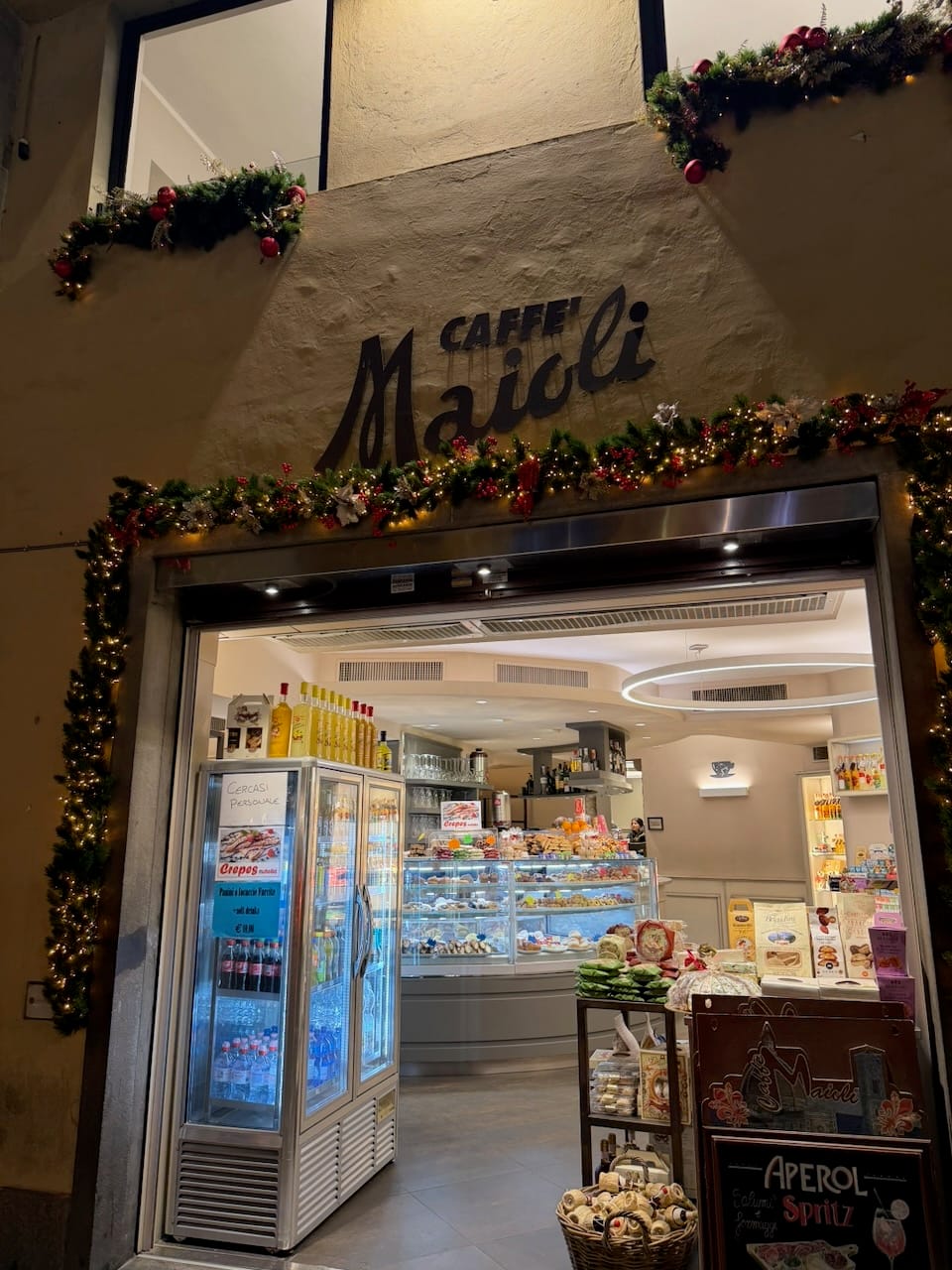
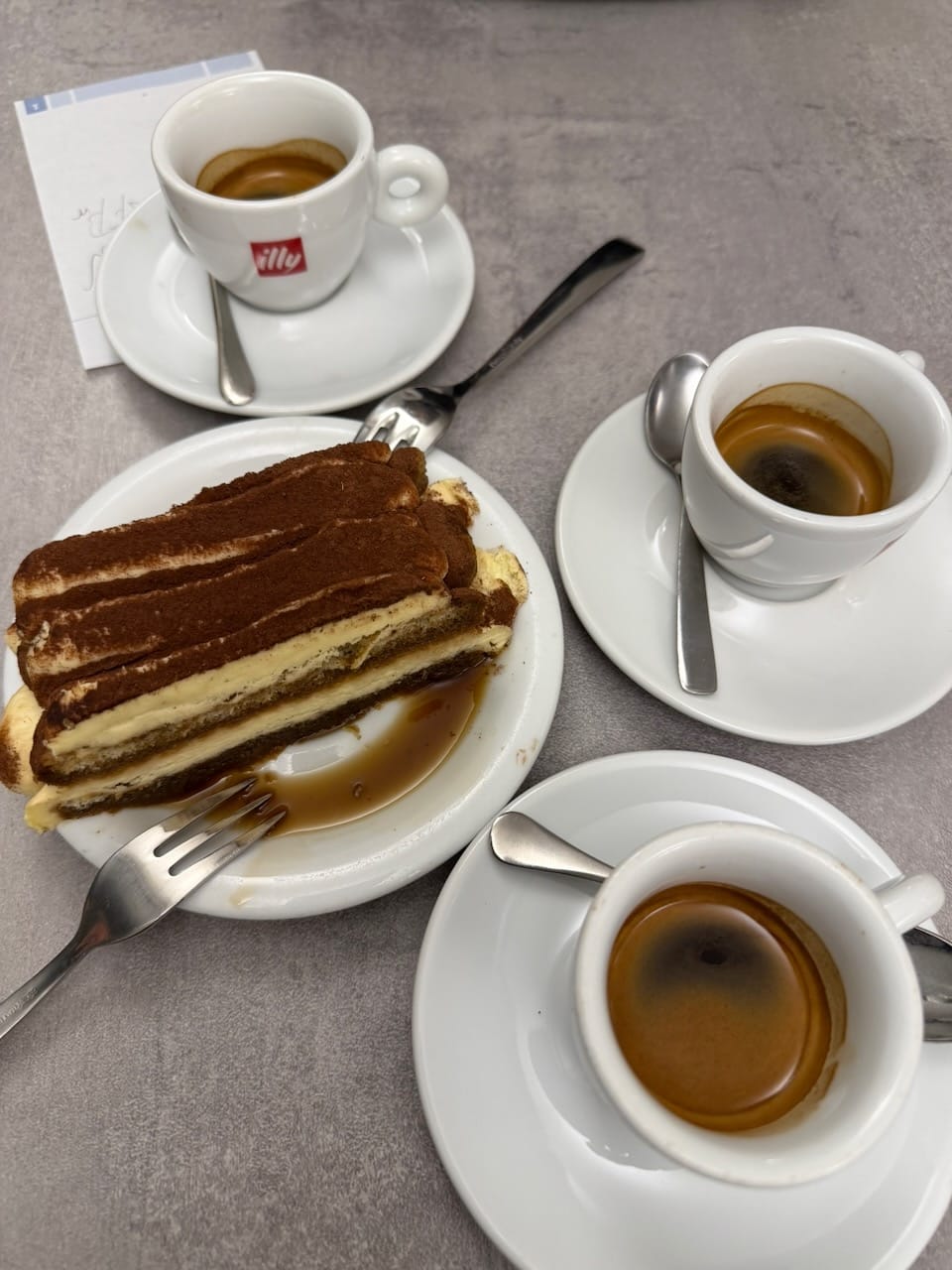
After lunch, we stopped by a cafe called Ditta Artigianale. The espresso, as always in Italy, was excellent.

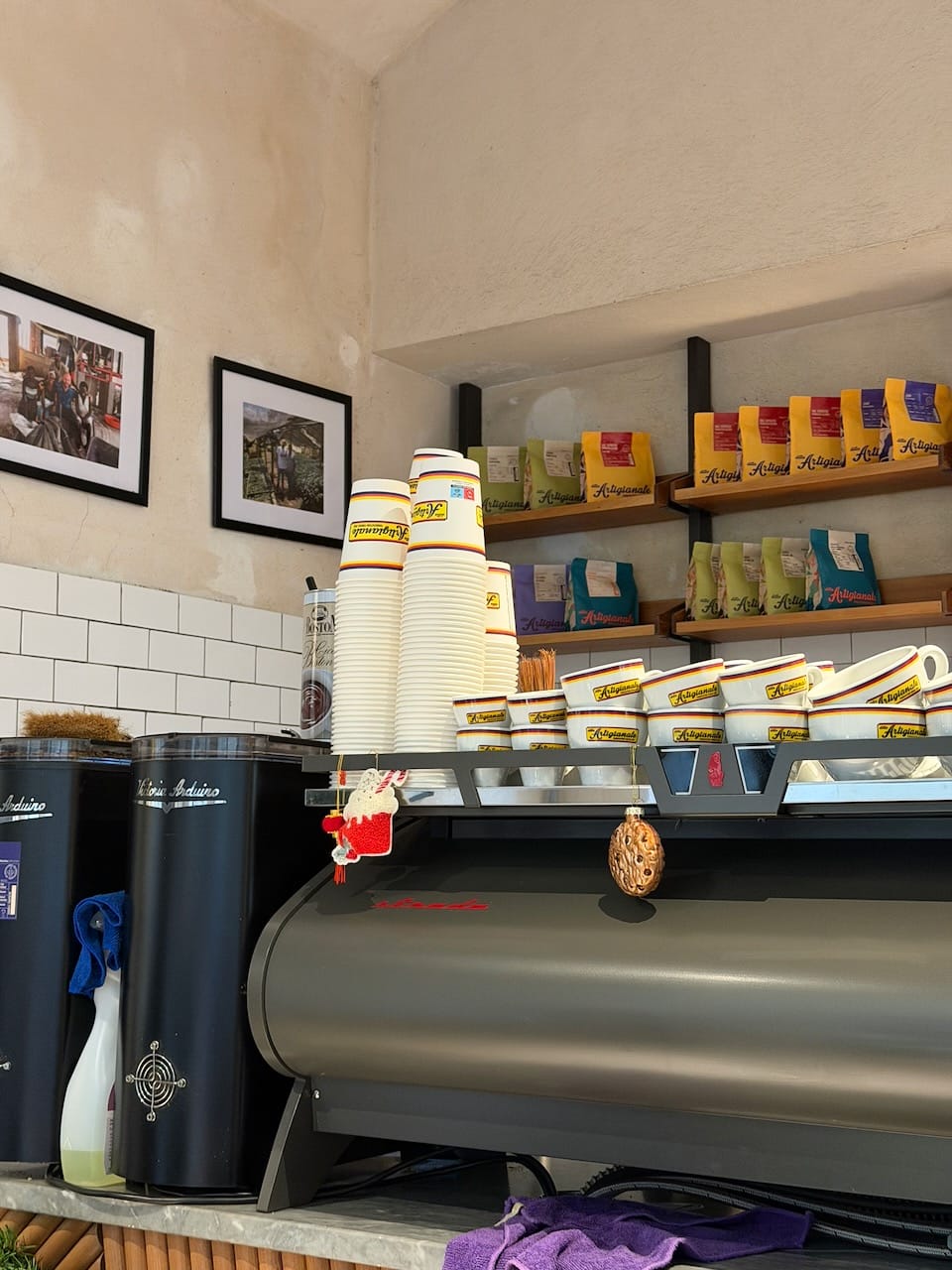
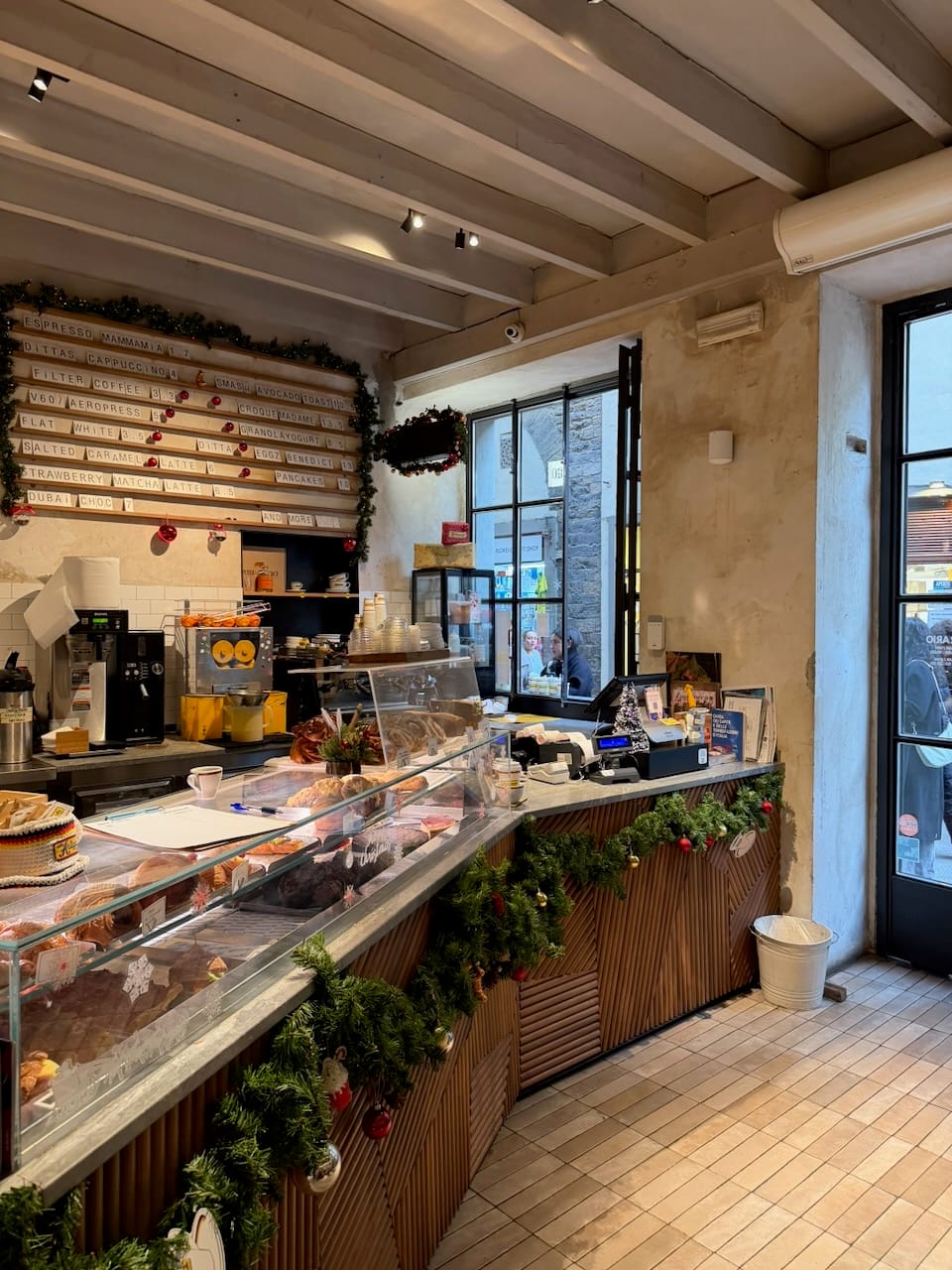

One interesting thing I noticed during the trip was the ordering system at Italian cafes. In many places, you first order and pay at the cashier, receive a small ticket, then hand that ticket to the bar staff to get your coffee or food. This is especially common when you’re standing at the counter or taking it to go. But if you want to sit at a table, the process flips into something more like a typical restaurant: the server comes to your table, takes your order, and brings everything to you. Even then, the checkout still happens at the cashier counter, usually by showing the ticket (usually the server gives) or simply giving your table number. Tipping, generally, is not expected in Italy. However, there often seems to be some kind of table charge or service fee (especially we were at table), and the whole system isn’t always clearly explained. In practice, we usually left a little extra when we sat at a table, especially if we also used the restroom—it felt like the polite thing to do.
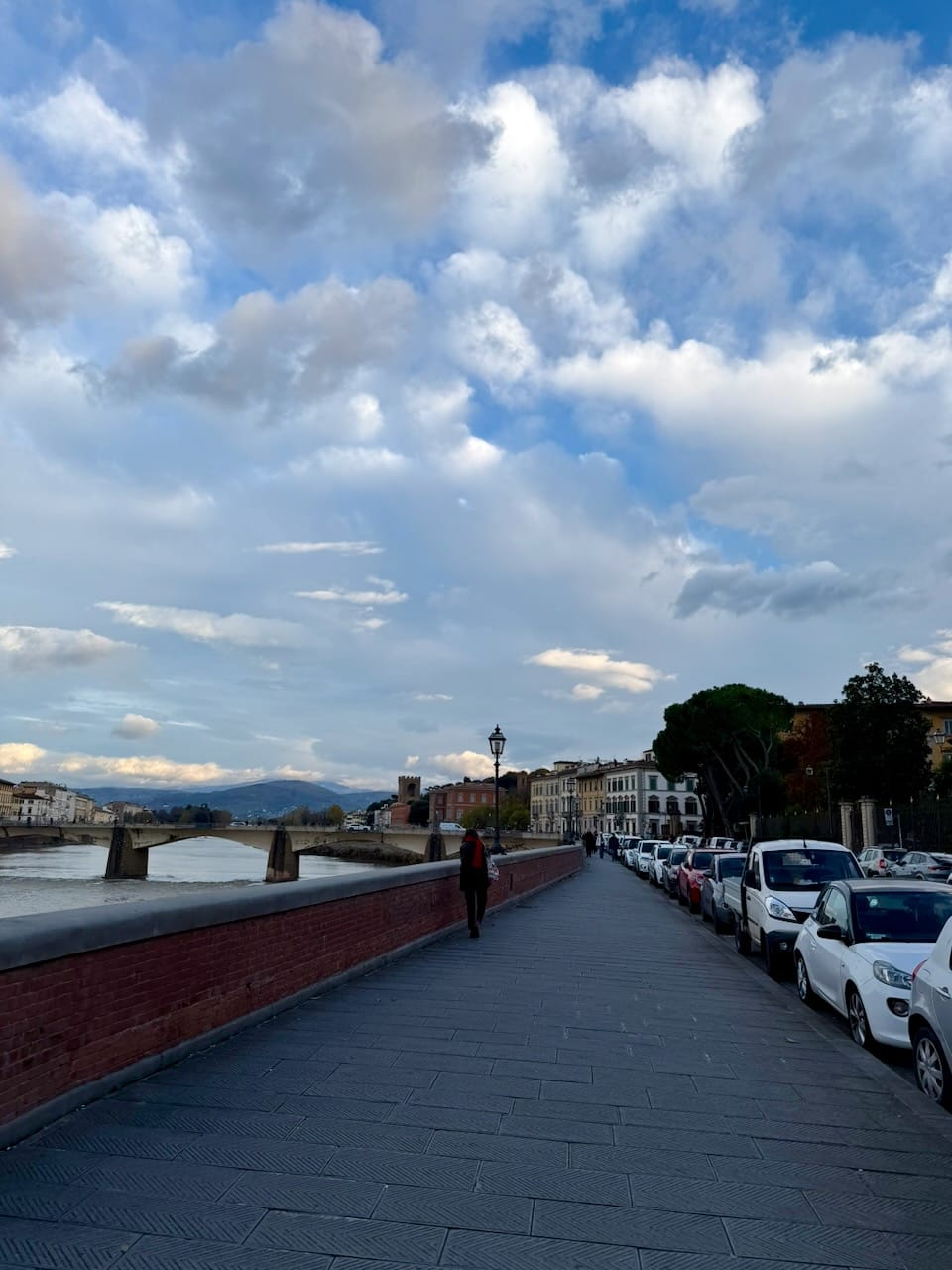
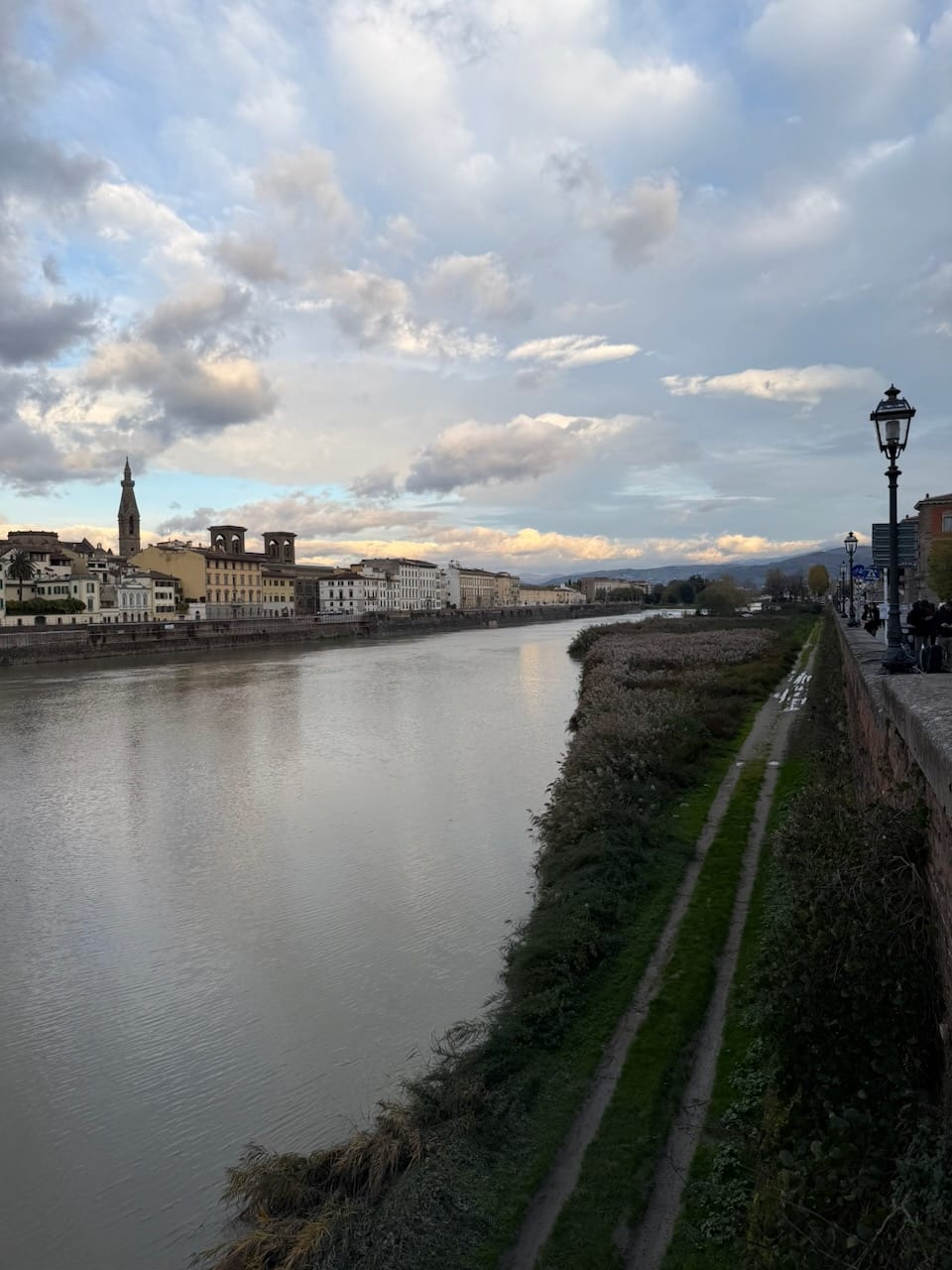
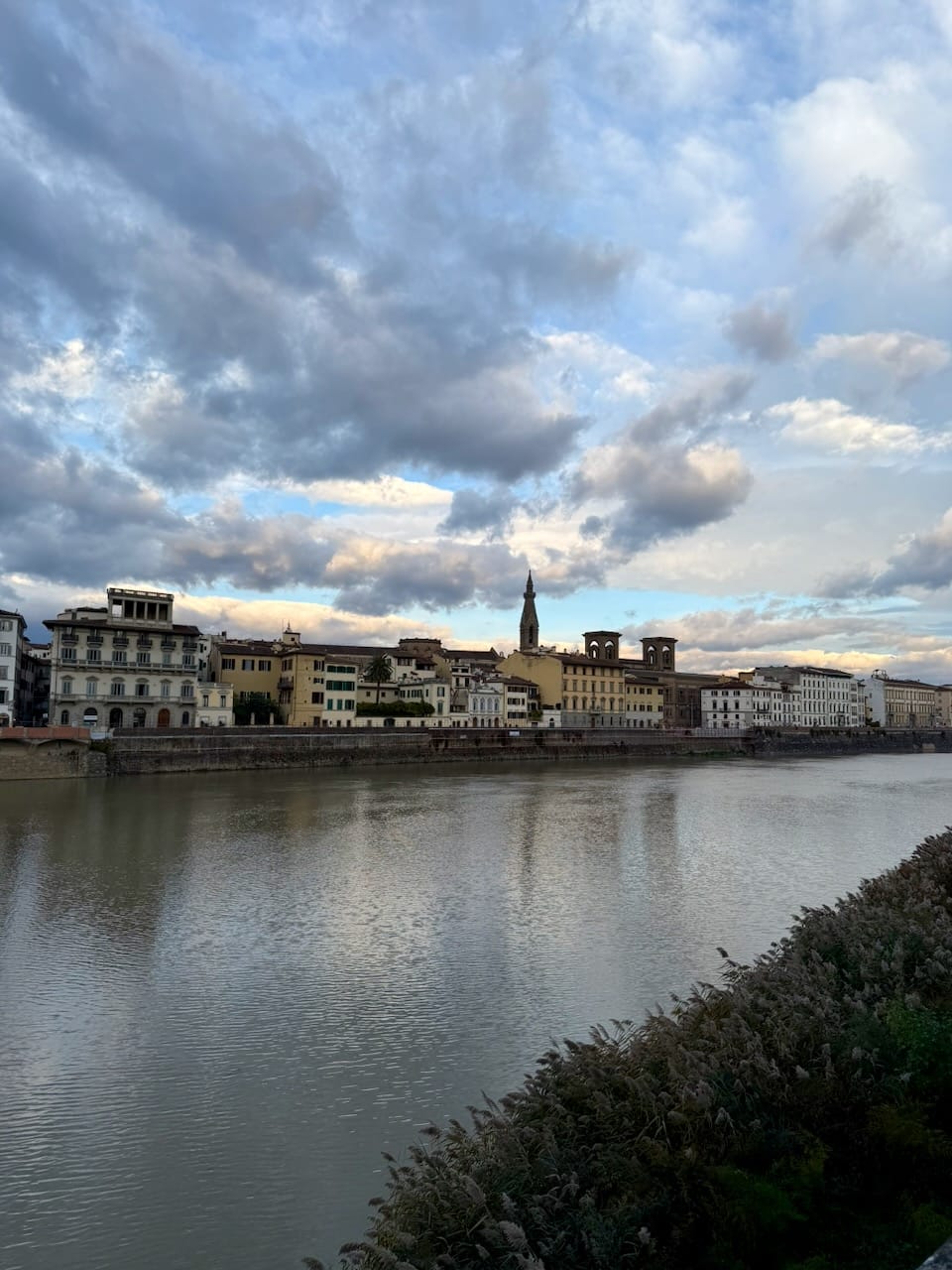
With full stomachs, we took a slow walk along the Arno River. Ponte Vecchio is impressive up close, of course, but seeing it from a little distance, framed by the river and the city, had its own quiet charm.
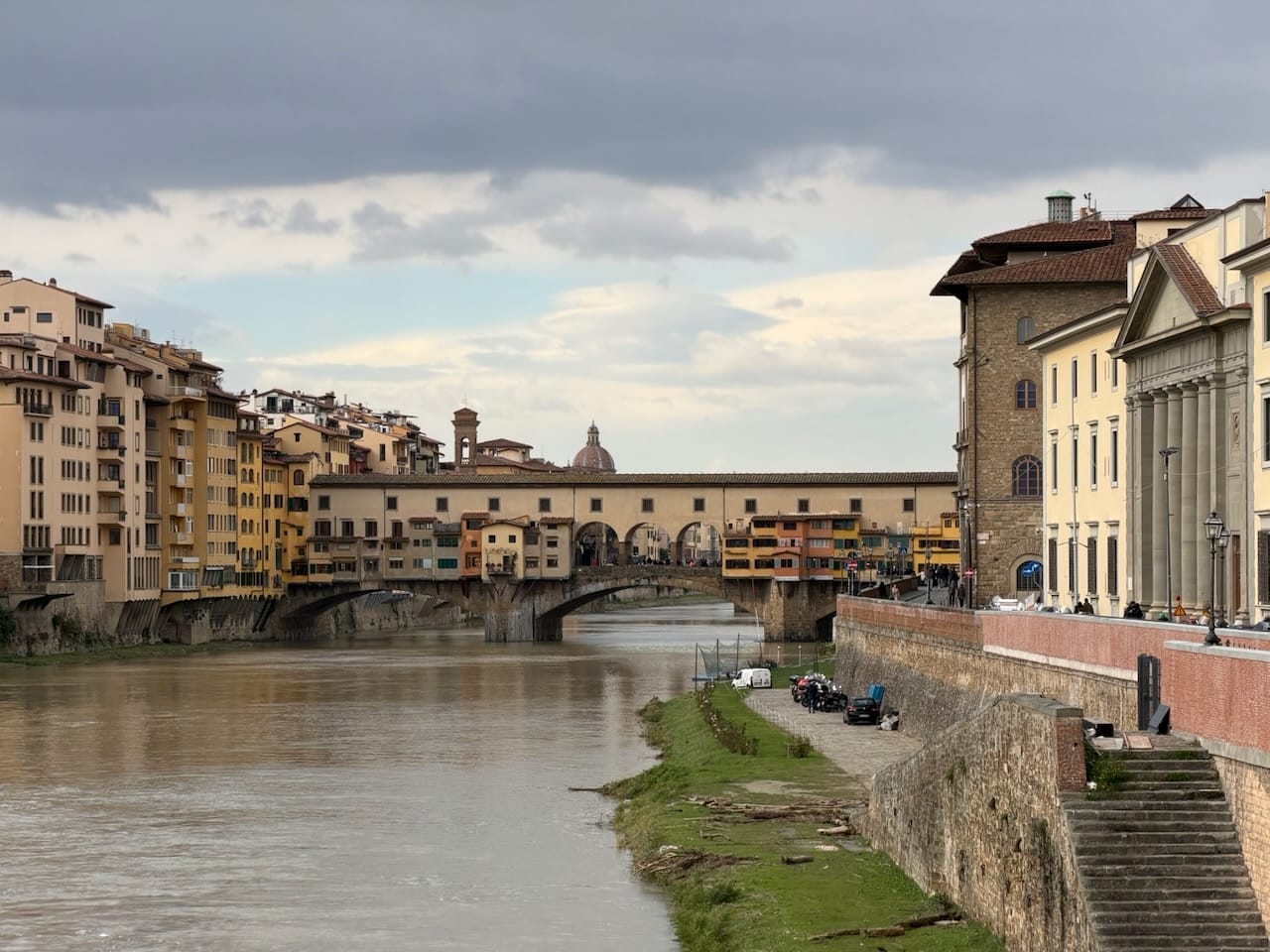
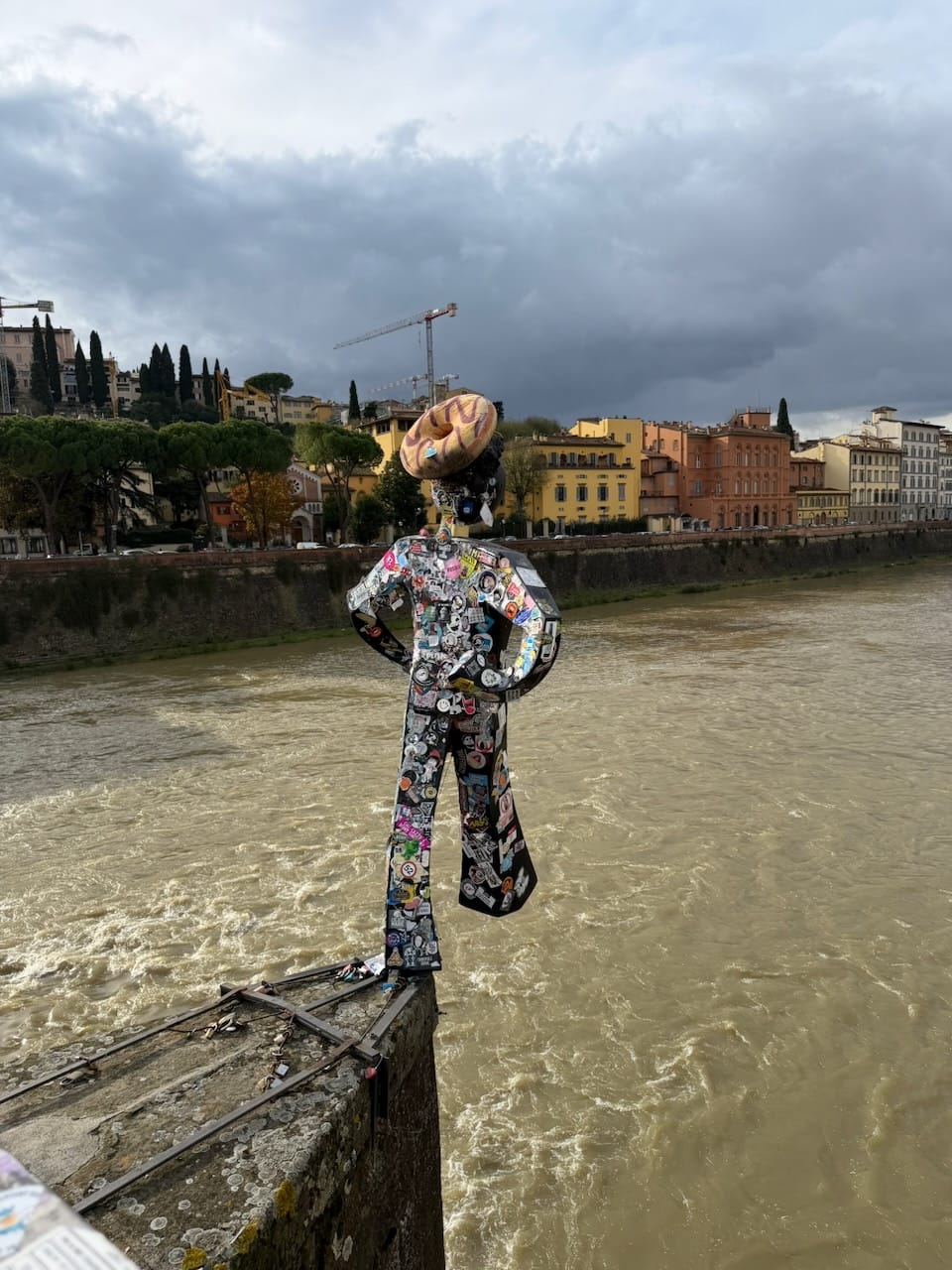
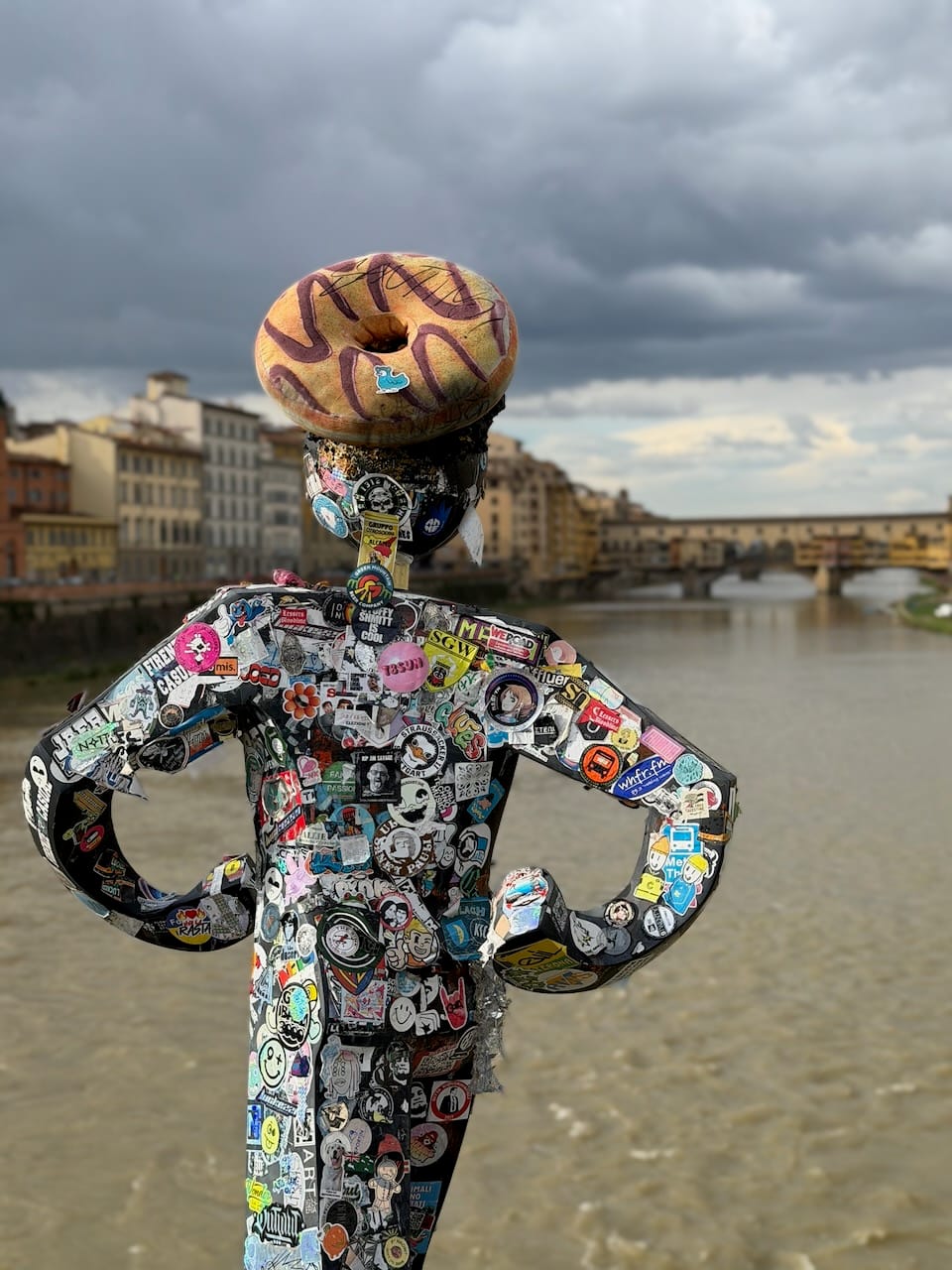
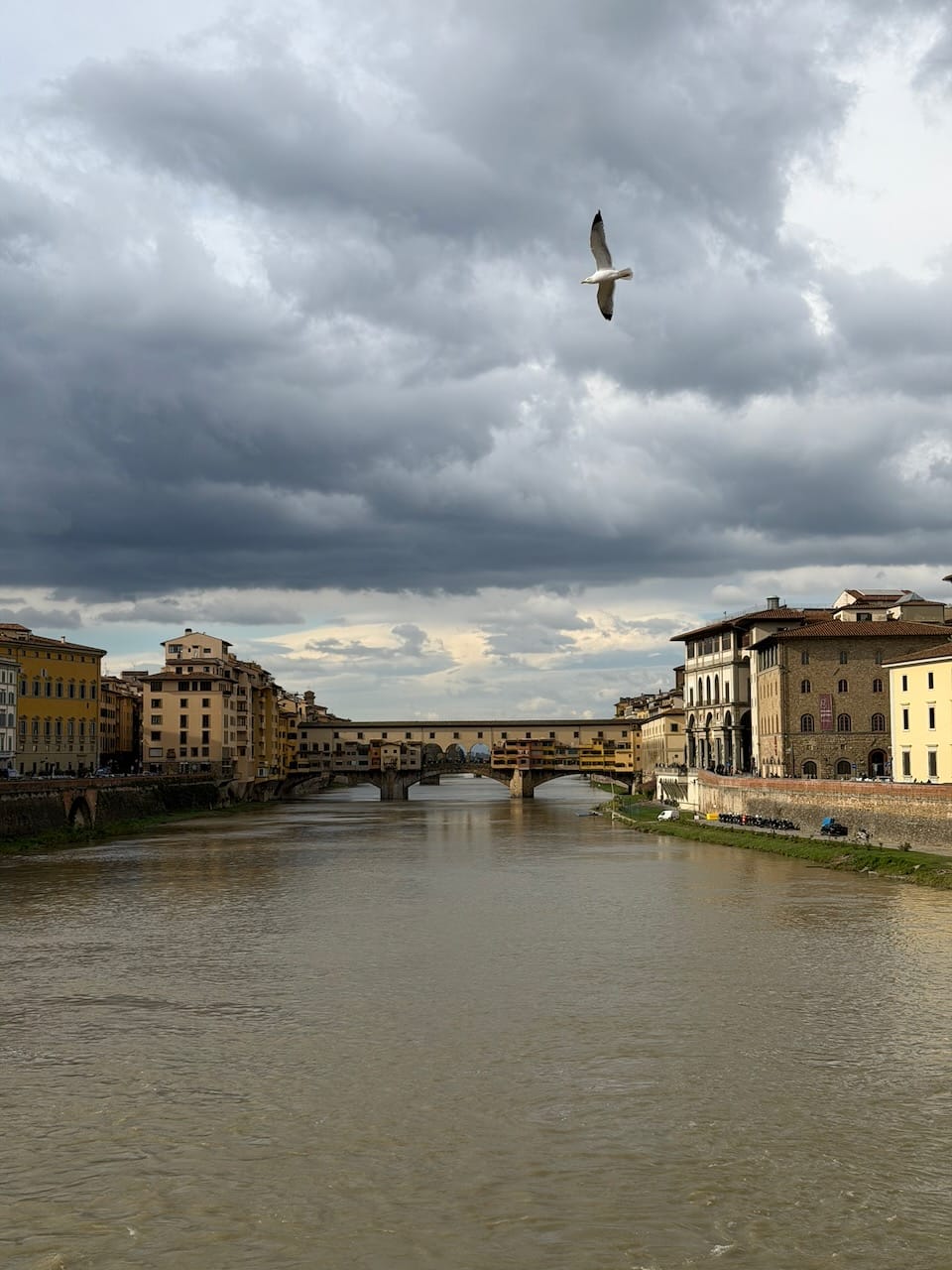
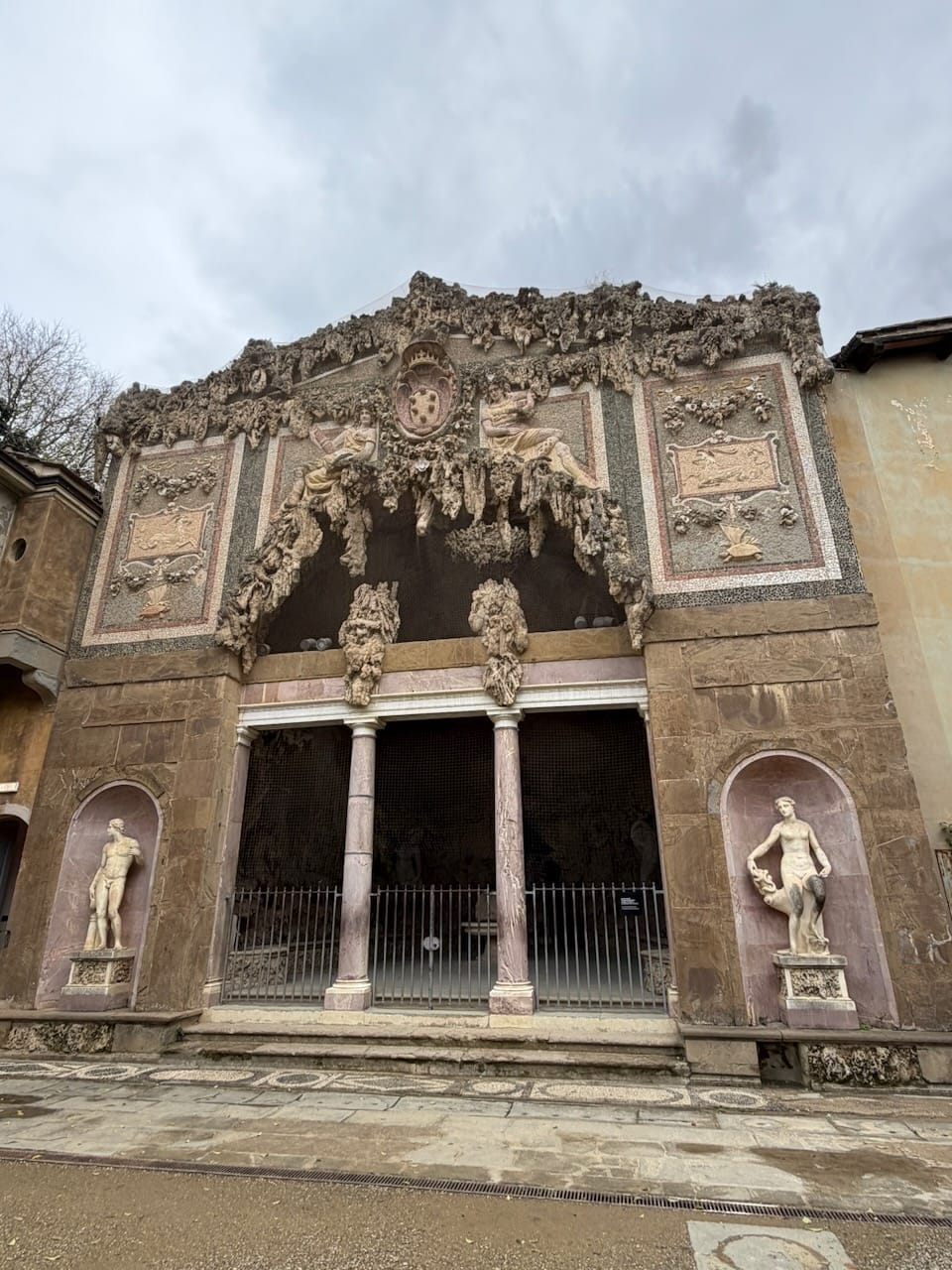
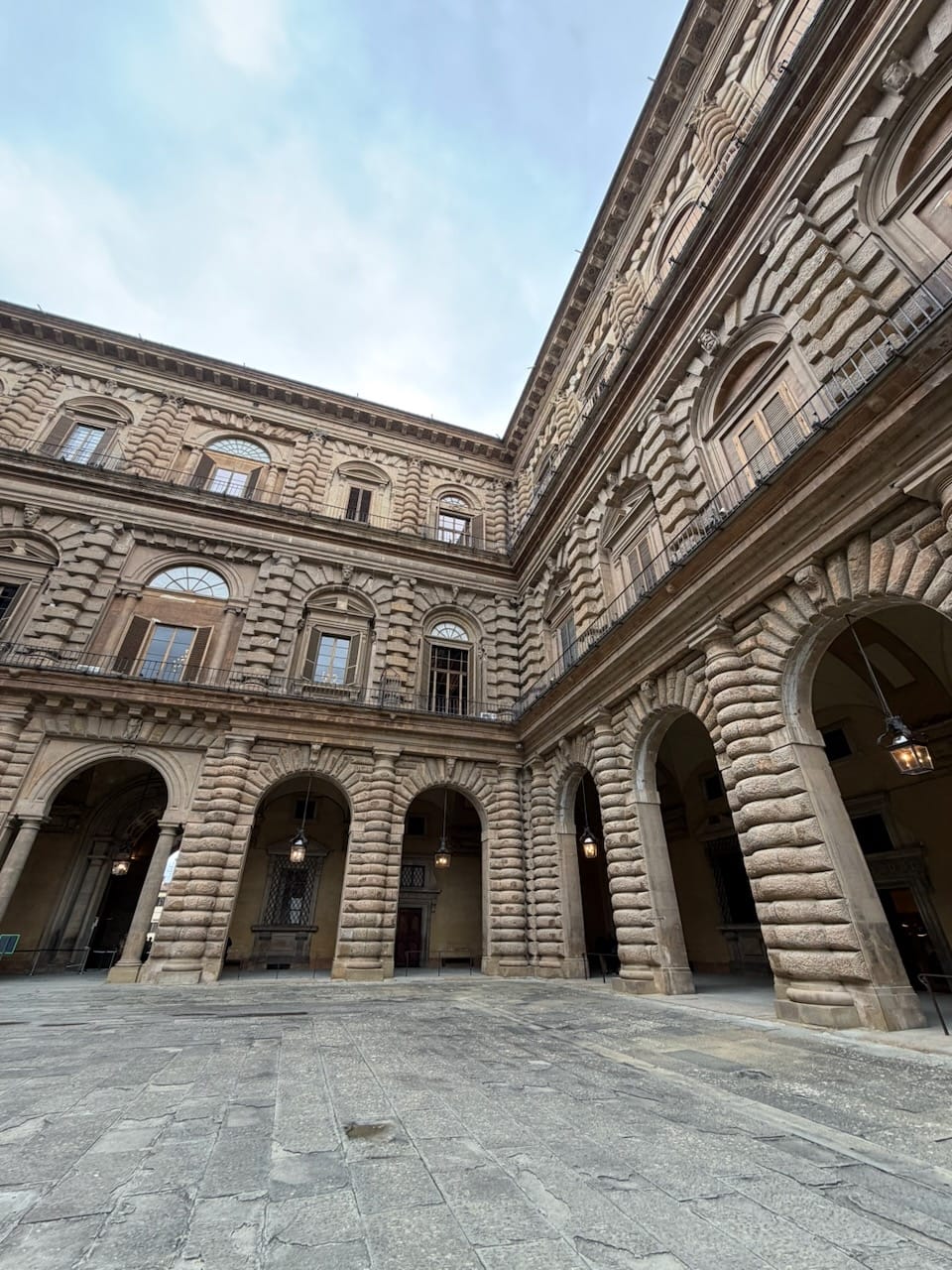
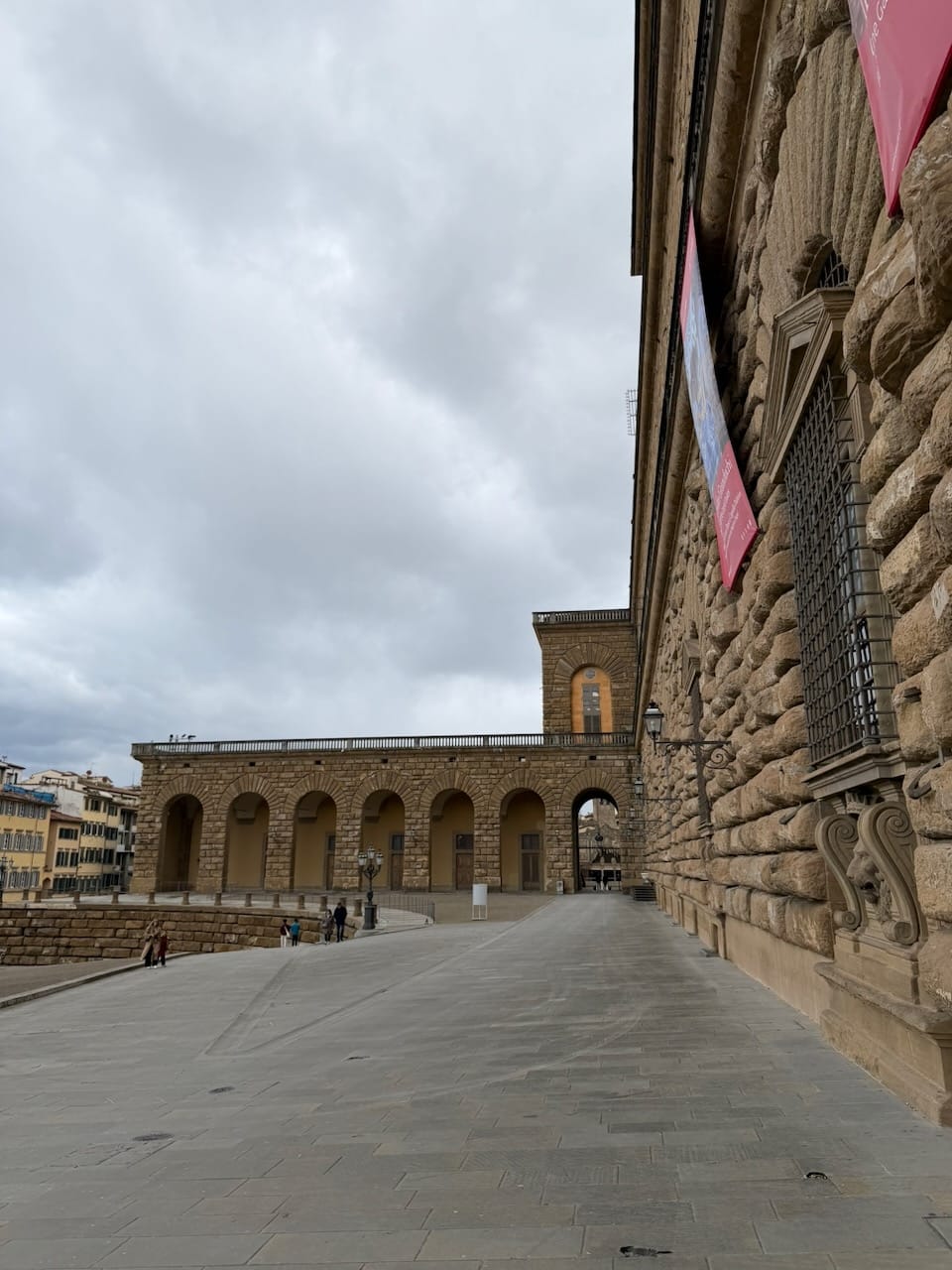
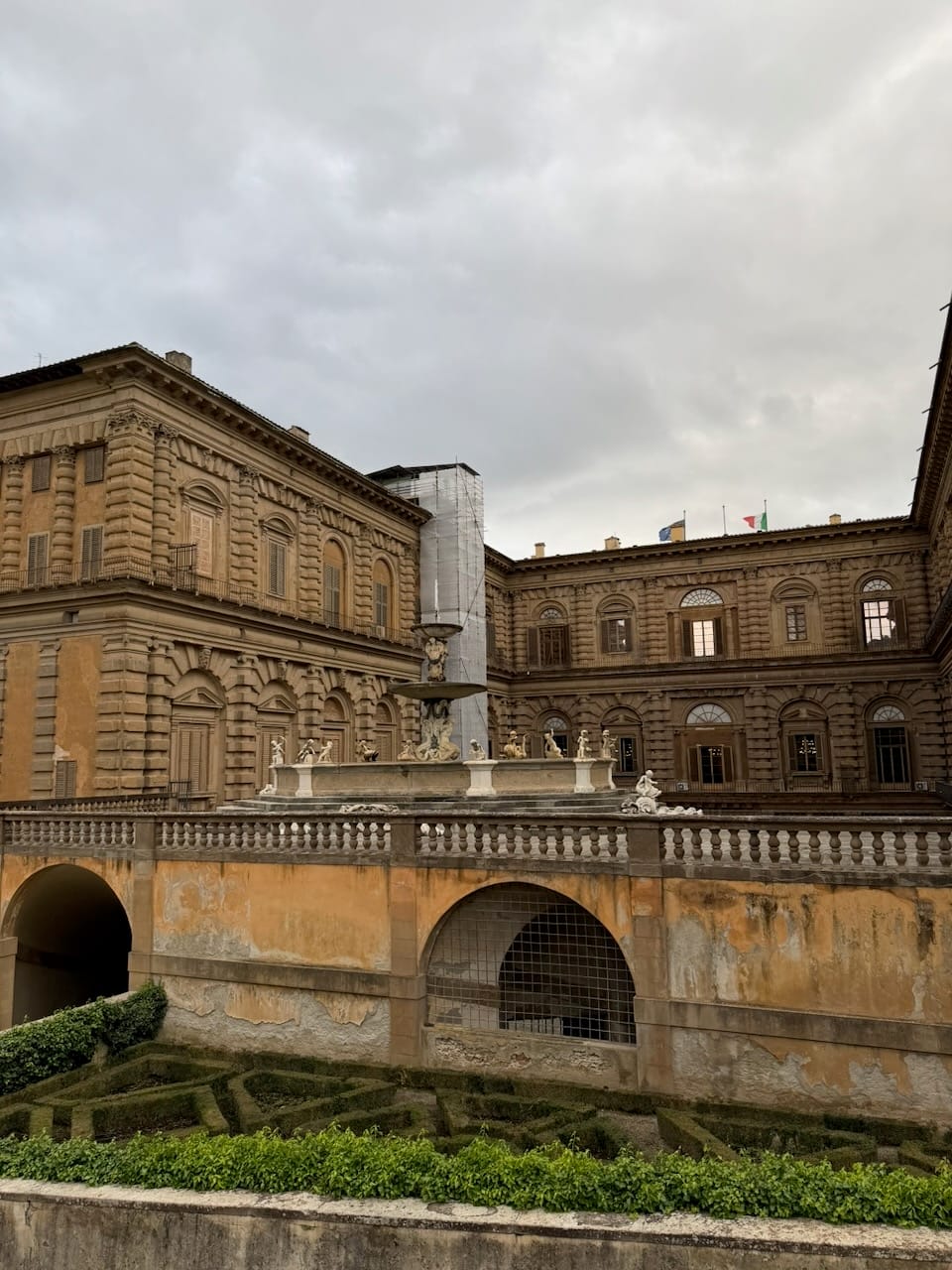
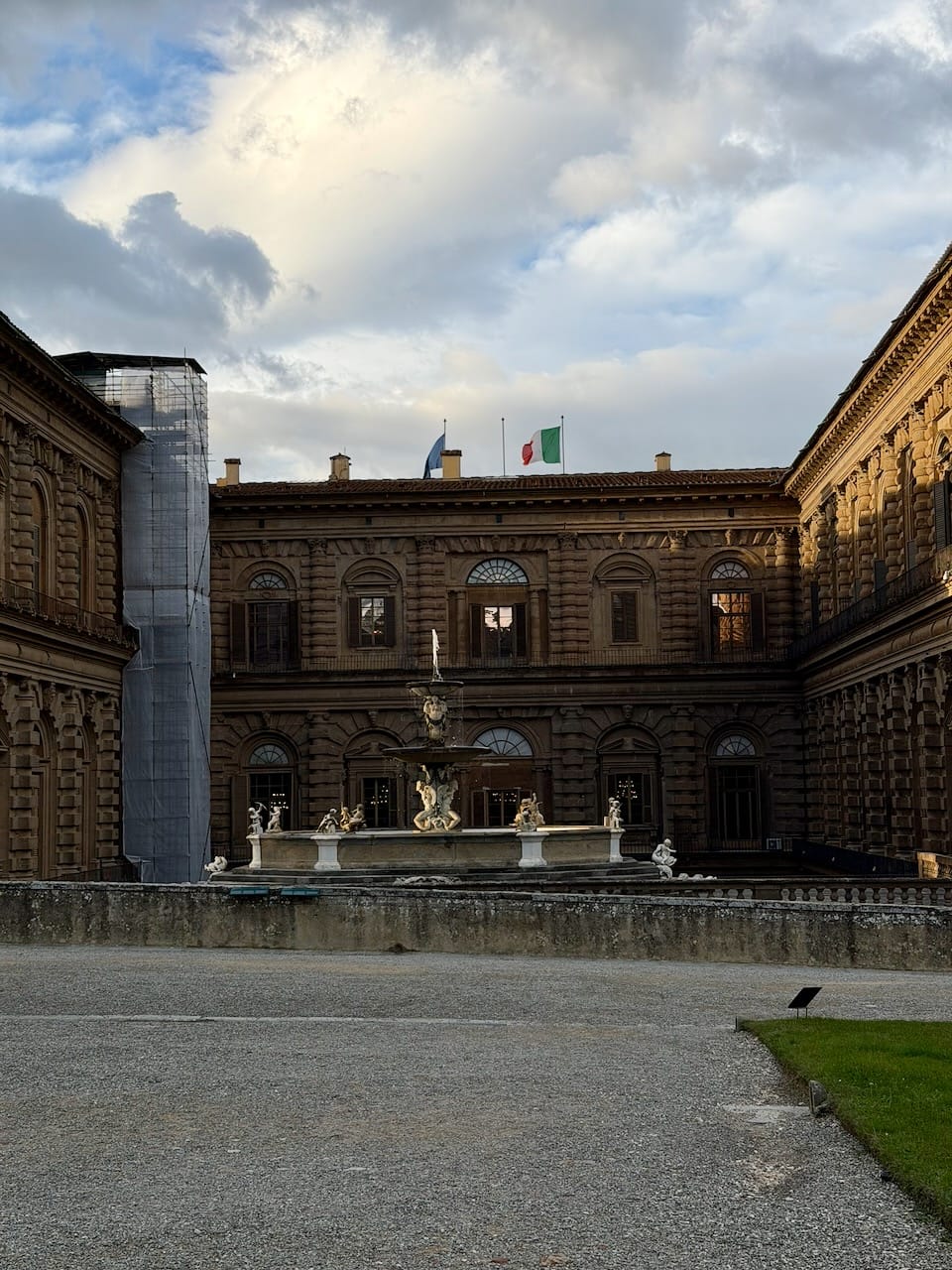
Then we returned to Palazzo Pitti, the later and much larger palace of the Medici family after they moved from Palazzo Vecchio, now filled with museums and galleries that reflect centuries of power, wealth, and taste.
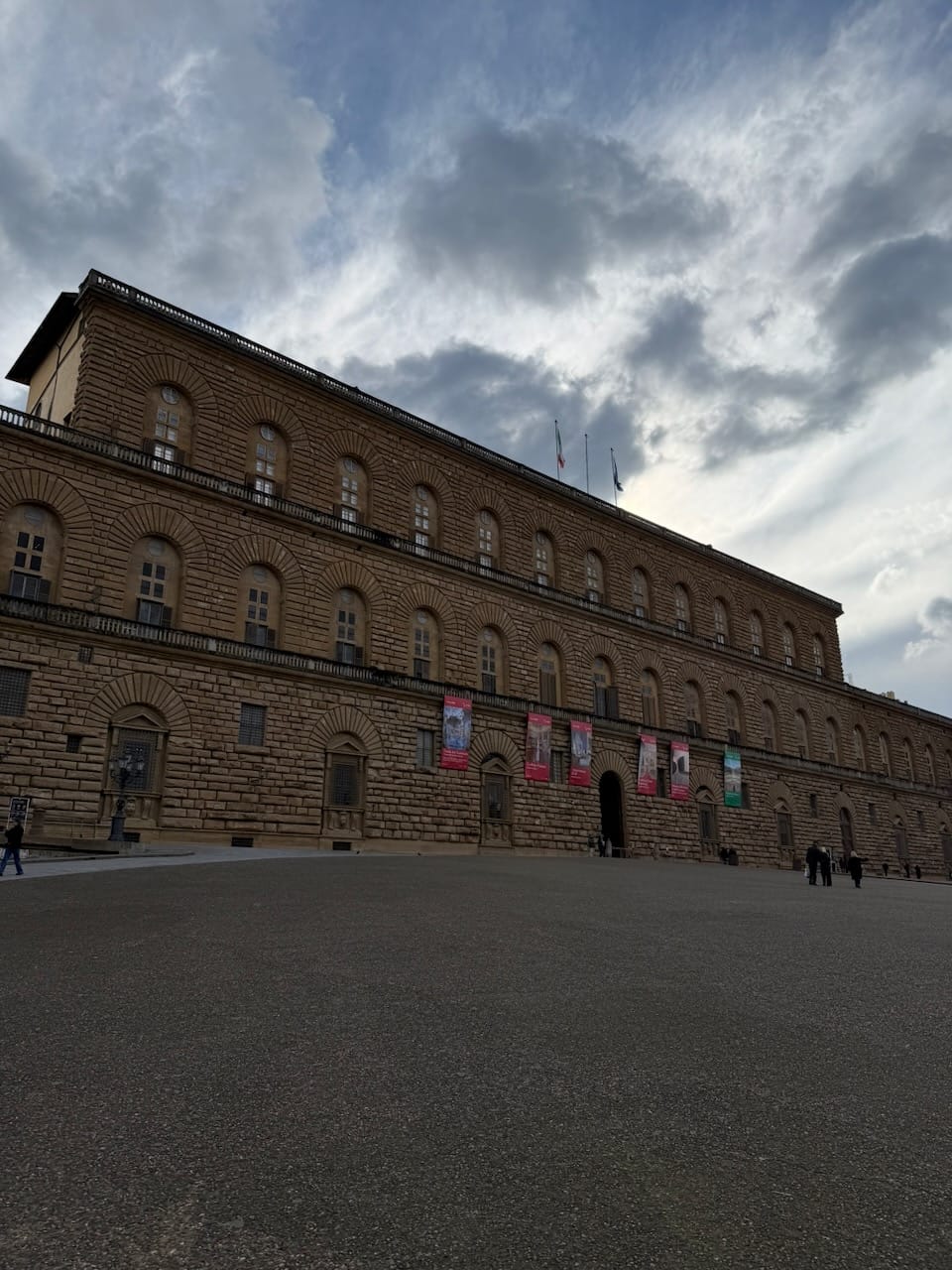

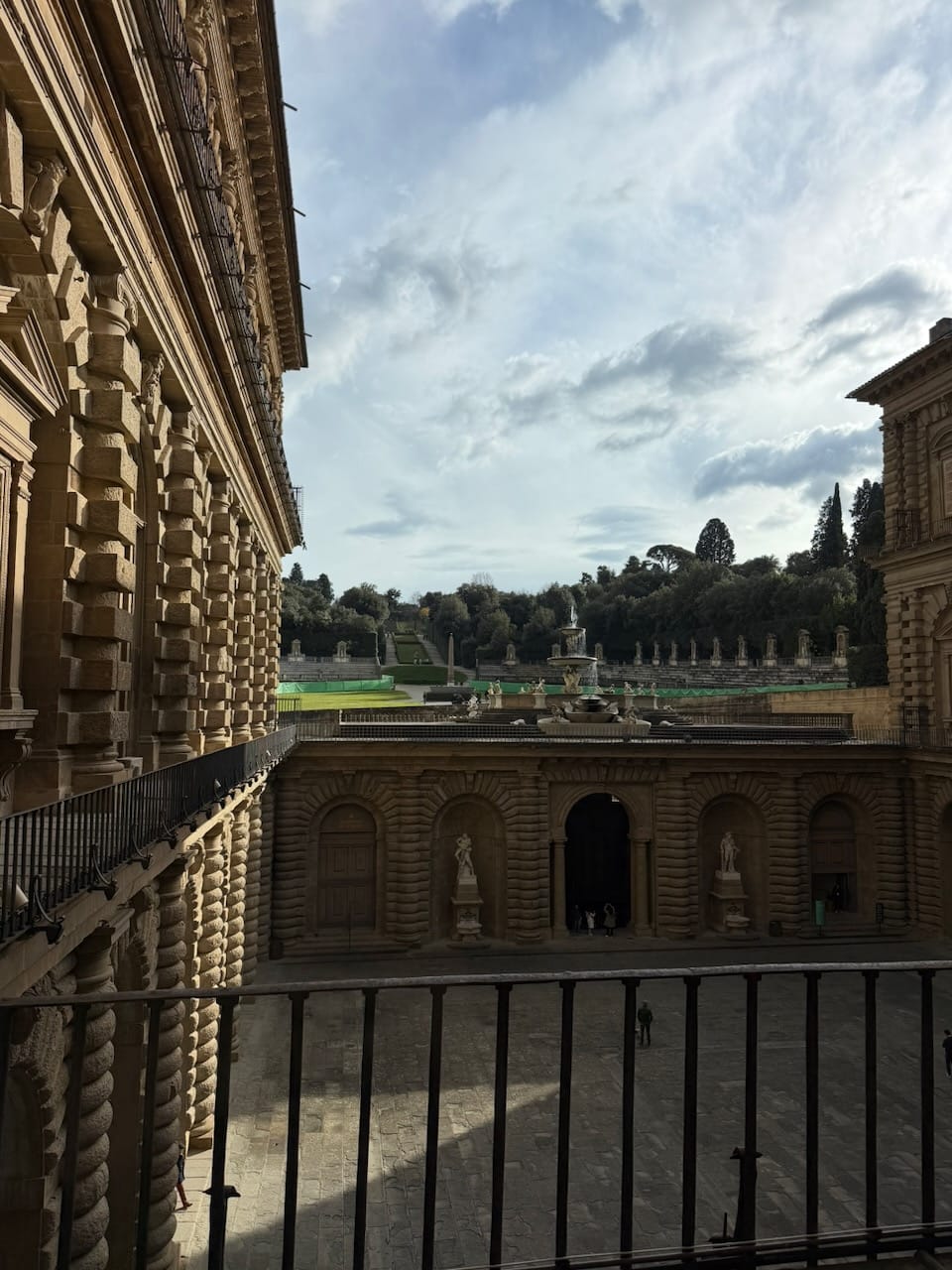
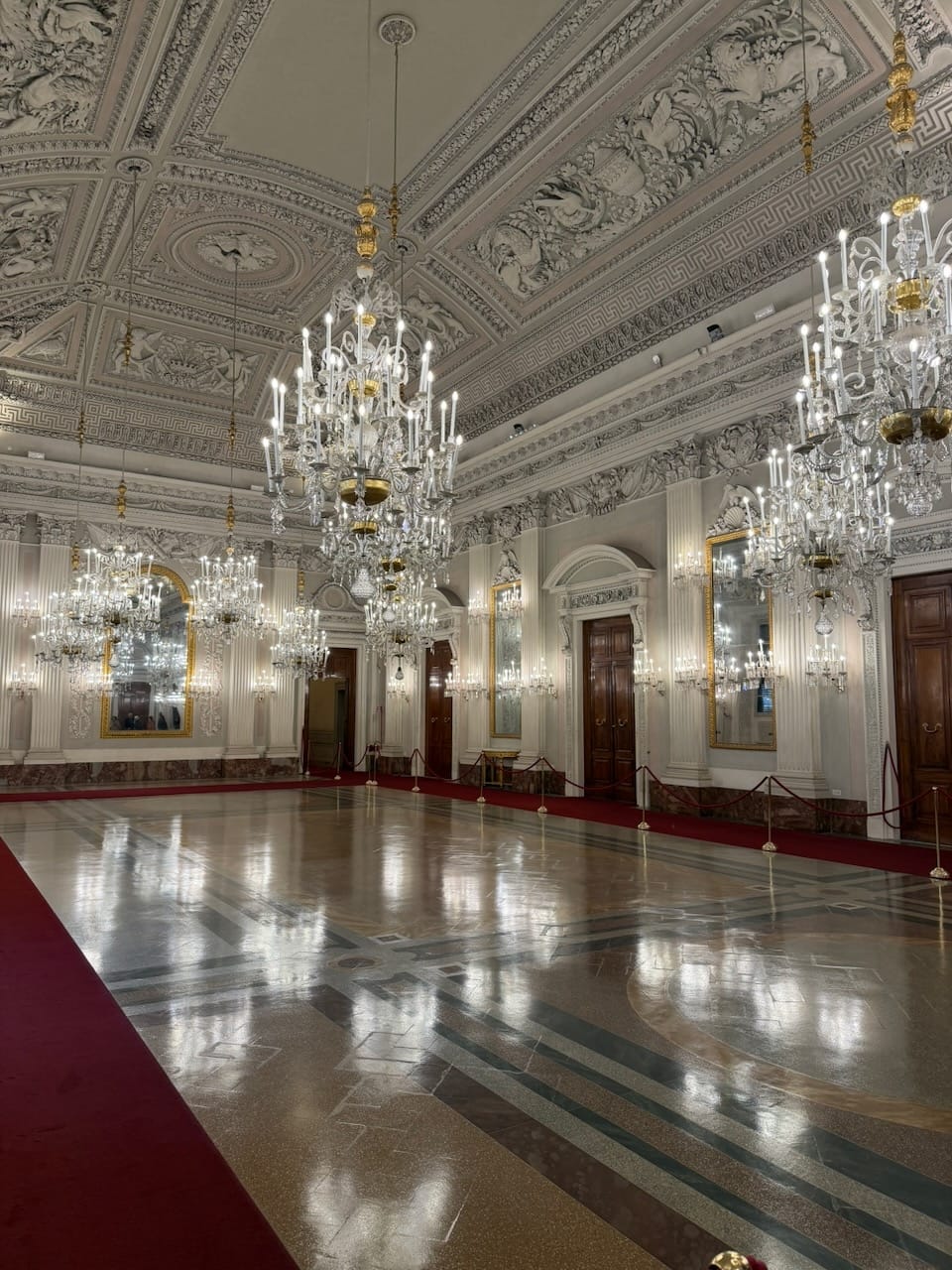
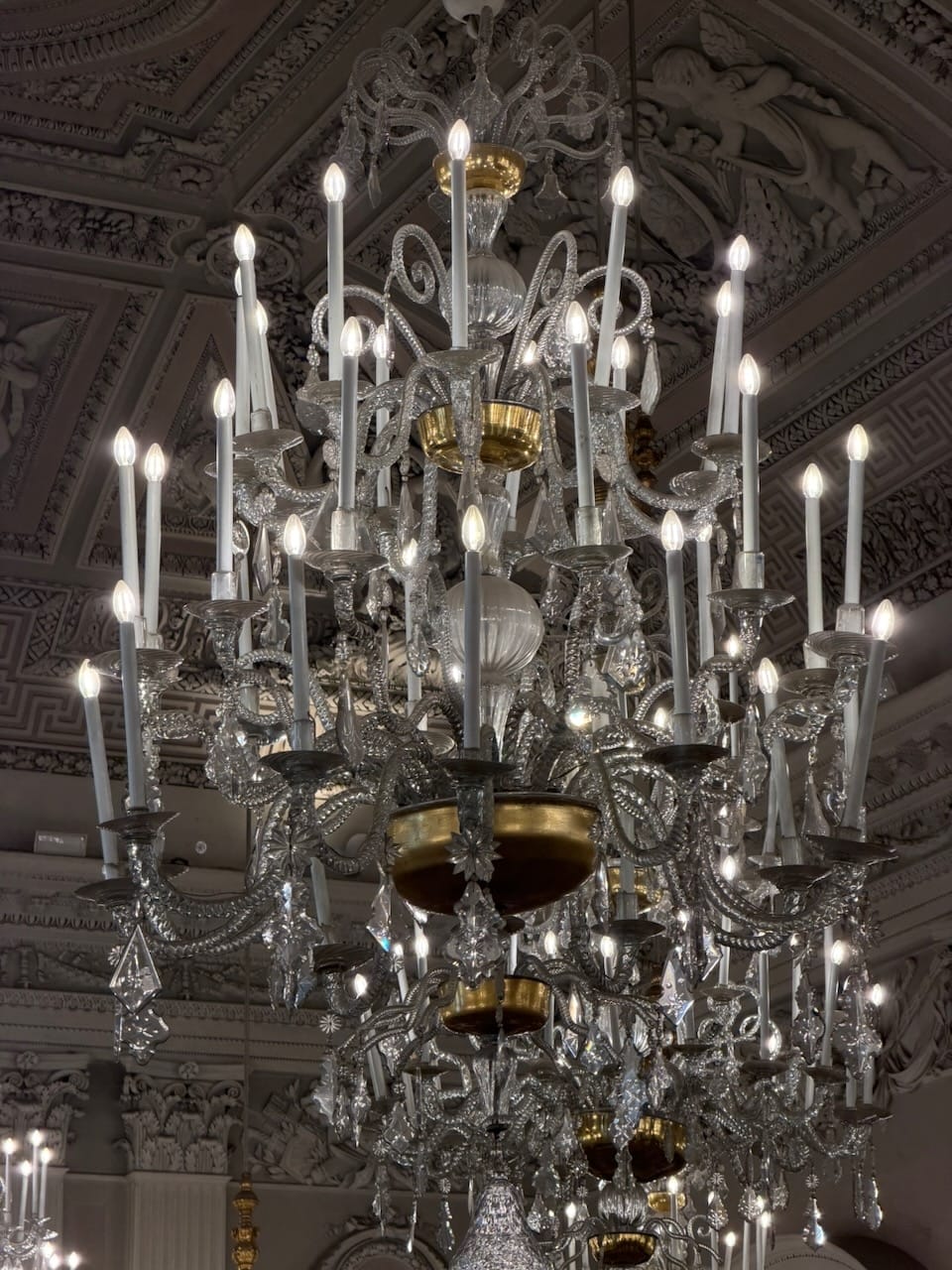
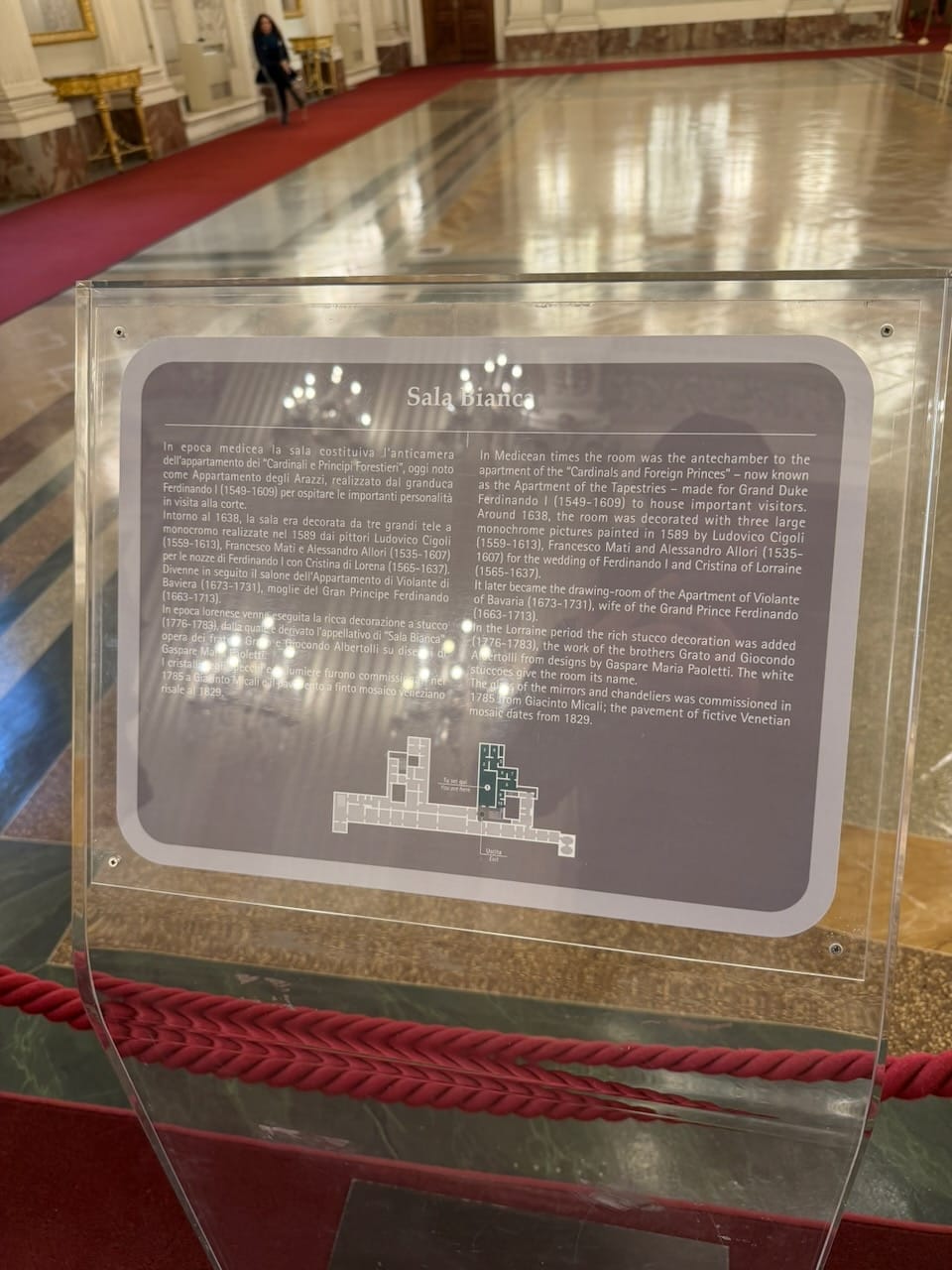
Palazzo Pitti
As usual, there was a security check at the entrance. Unfortunately, the glass water bottle we had just bought at the cafe was not allowed inside. We should have checked the bag policy more carefully. Lesson learned: in Italy, it’s wise not to carry large backpacks or any glass containers when visiting major sites.
Palazzo Pitti was another remarkable palace and gallery, but by this point, we had already absorbed a lot of art that day. Combining the Uffizi and Pitti in one schedule turned out to be a bit ambitious. We were tired, and I couldn’t help thinking it would be better to split them across different days if possible.

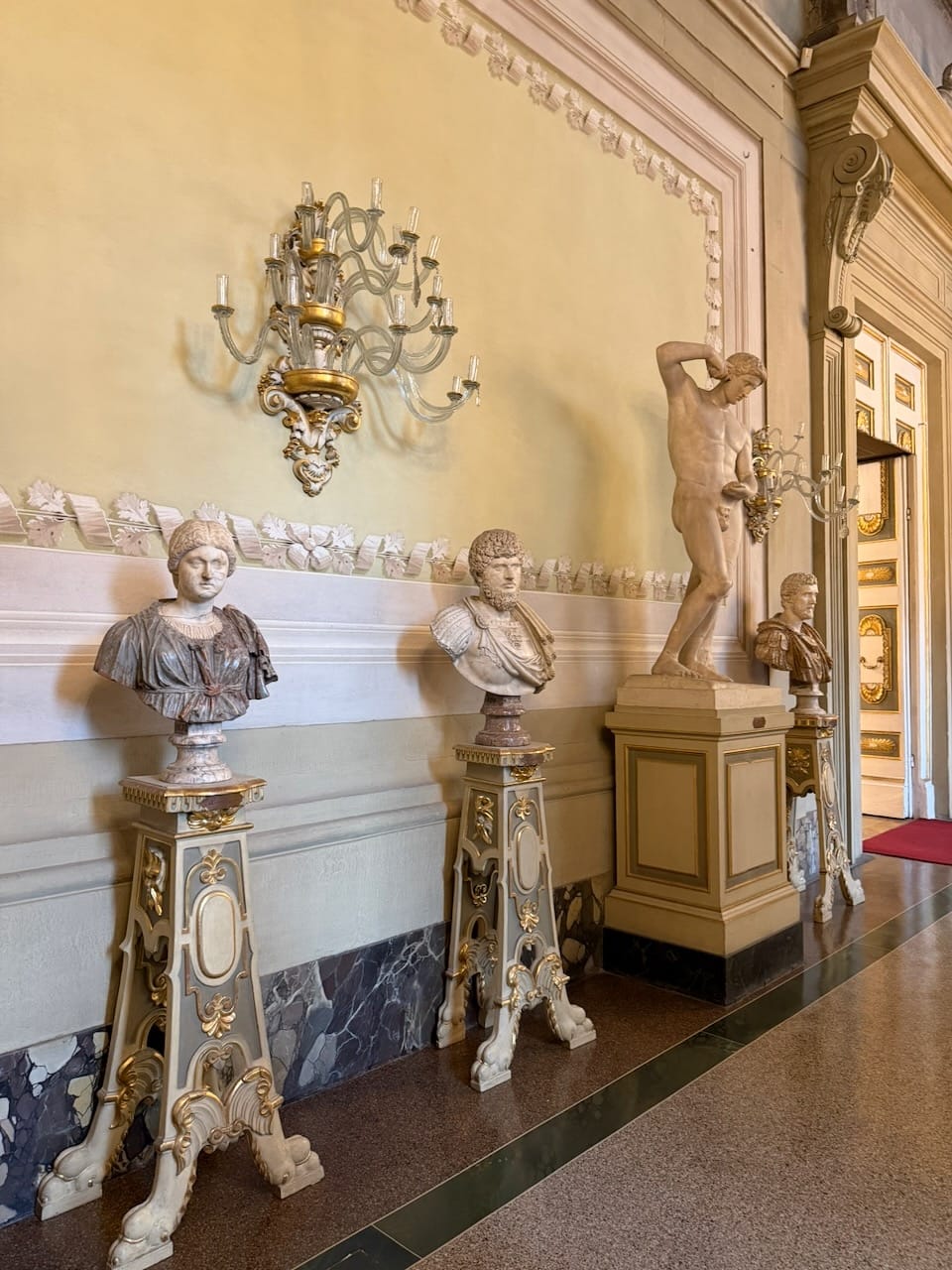
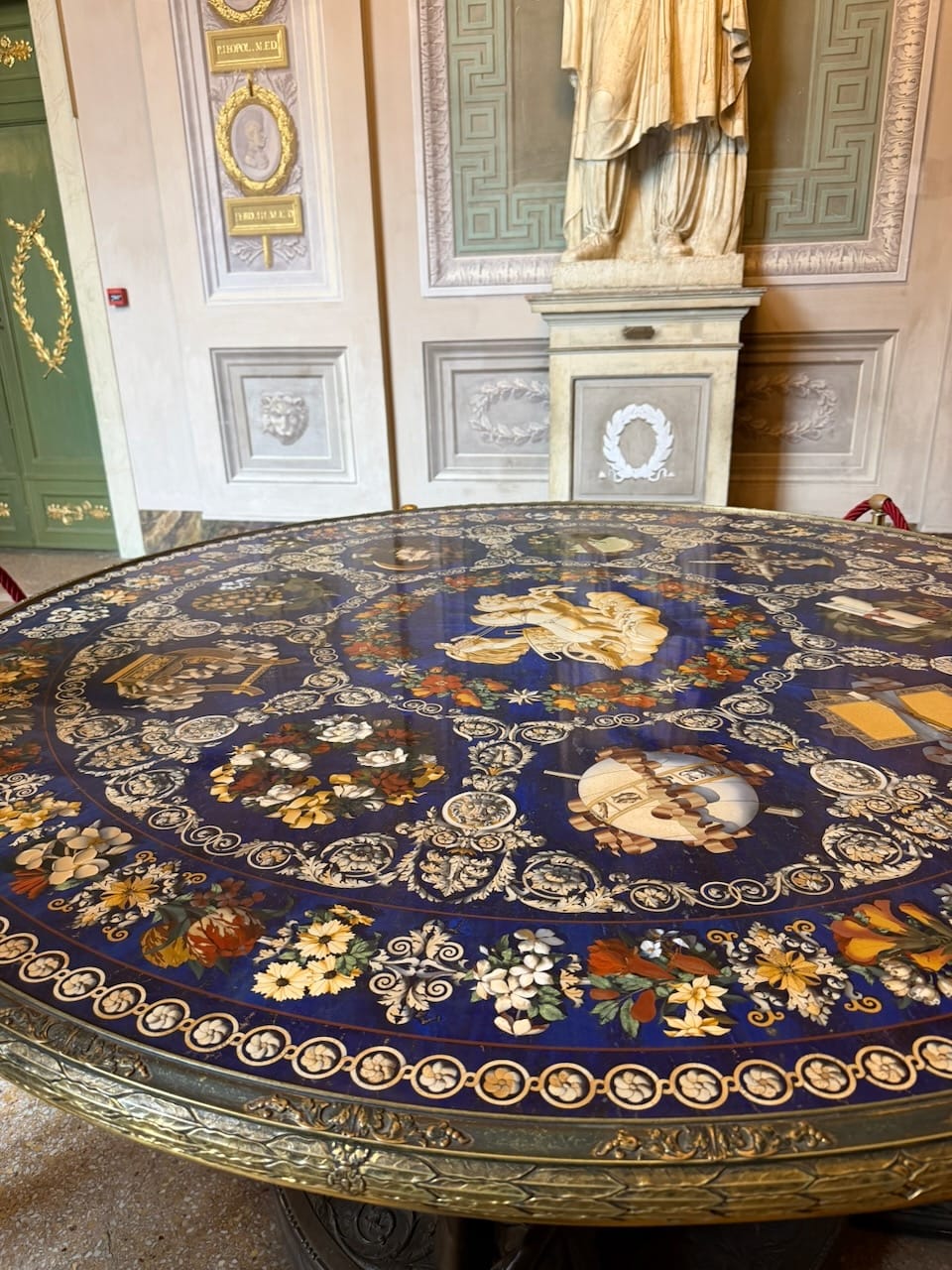
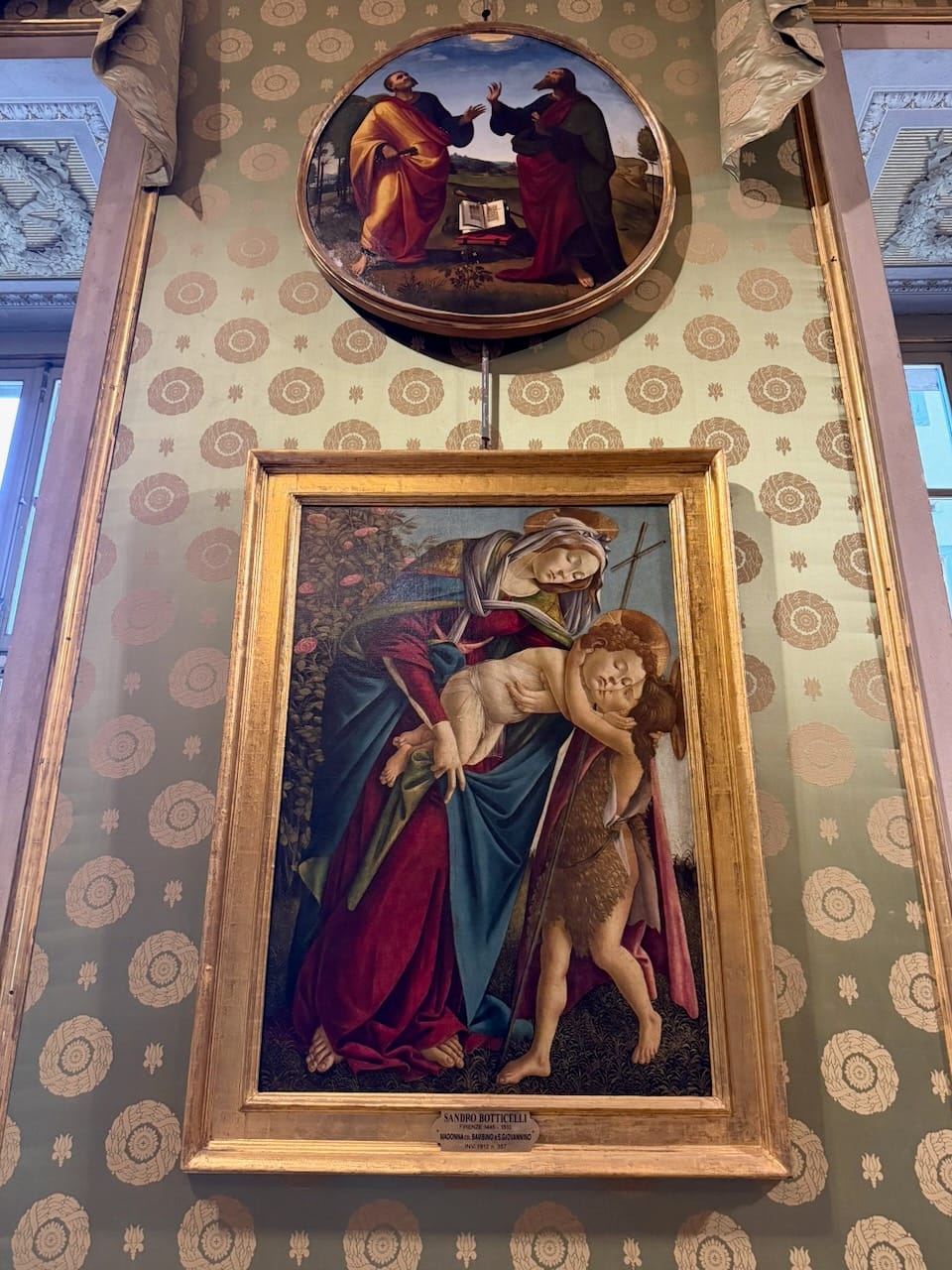


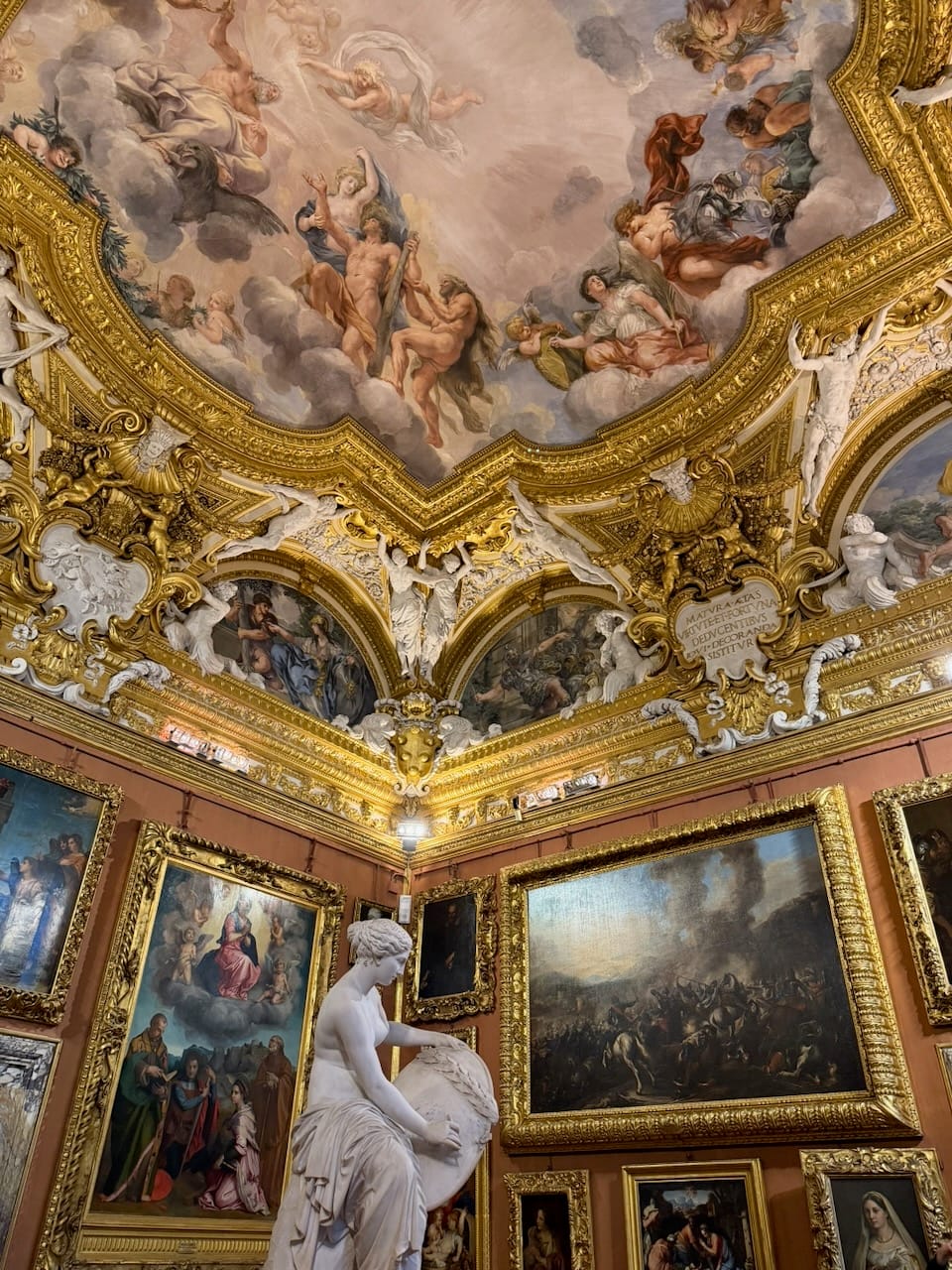


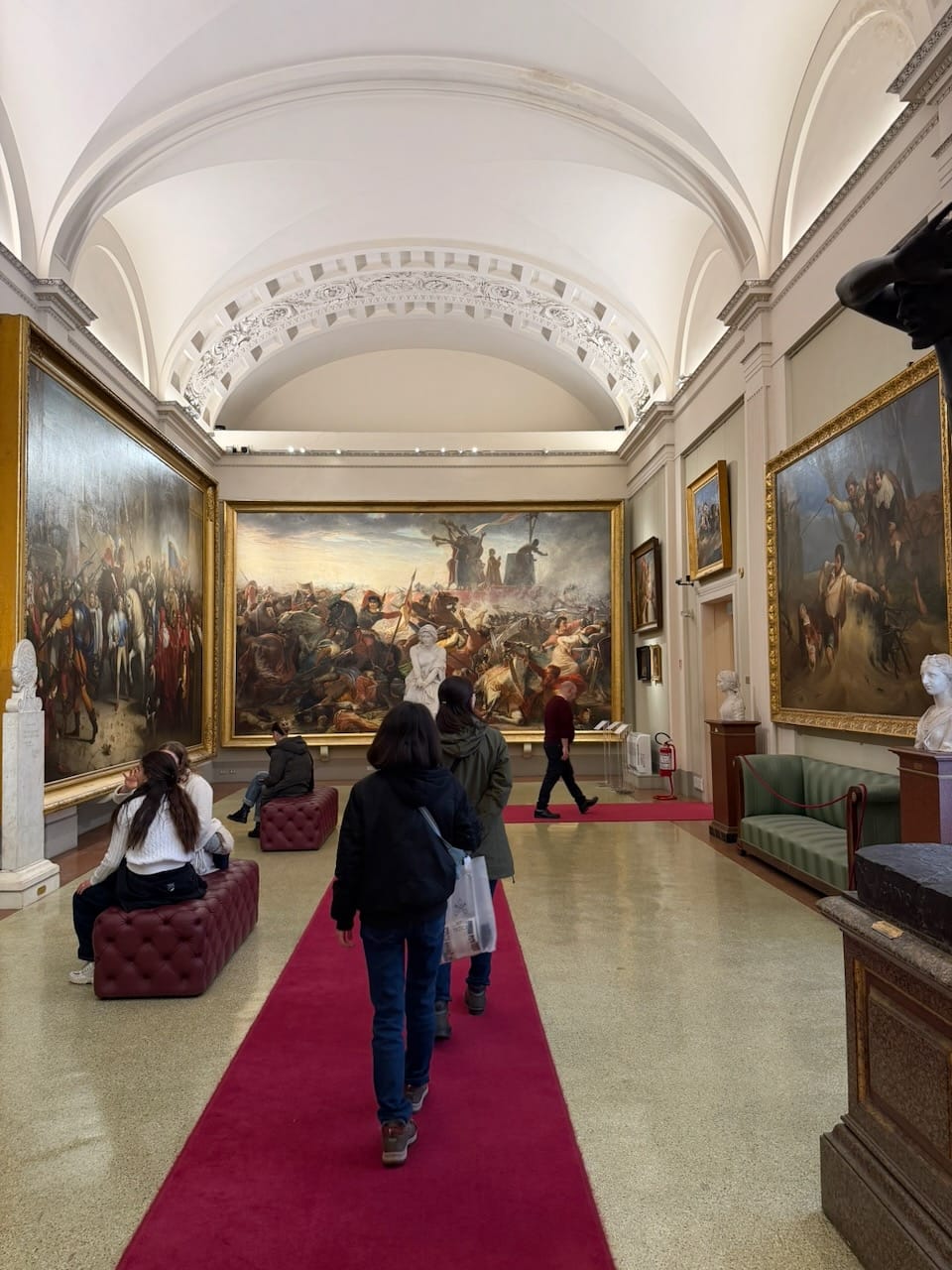

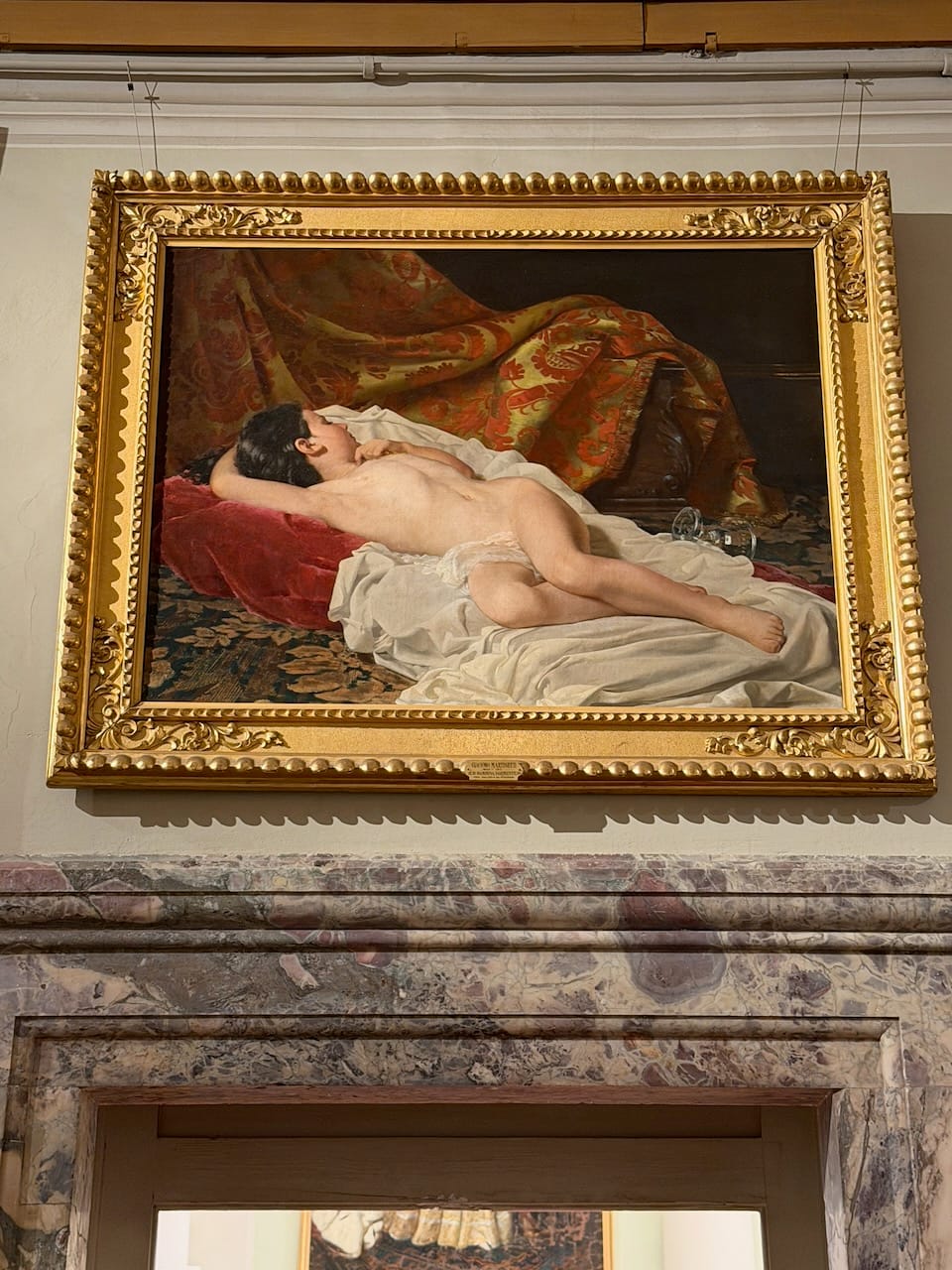


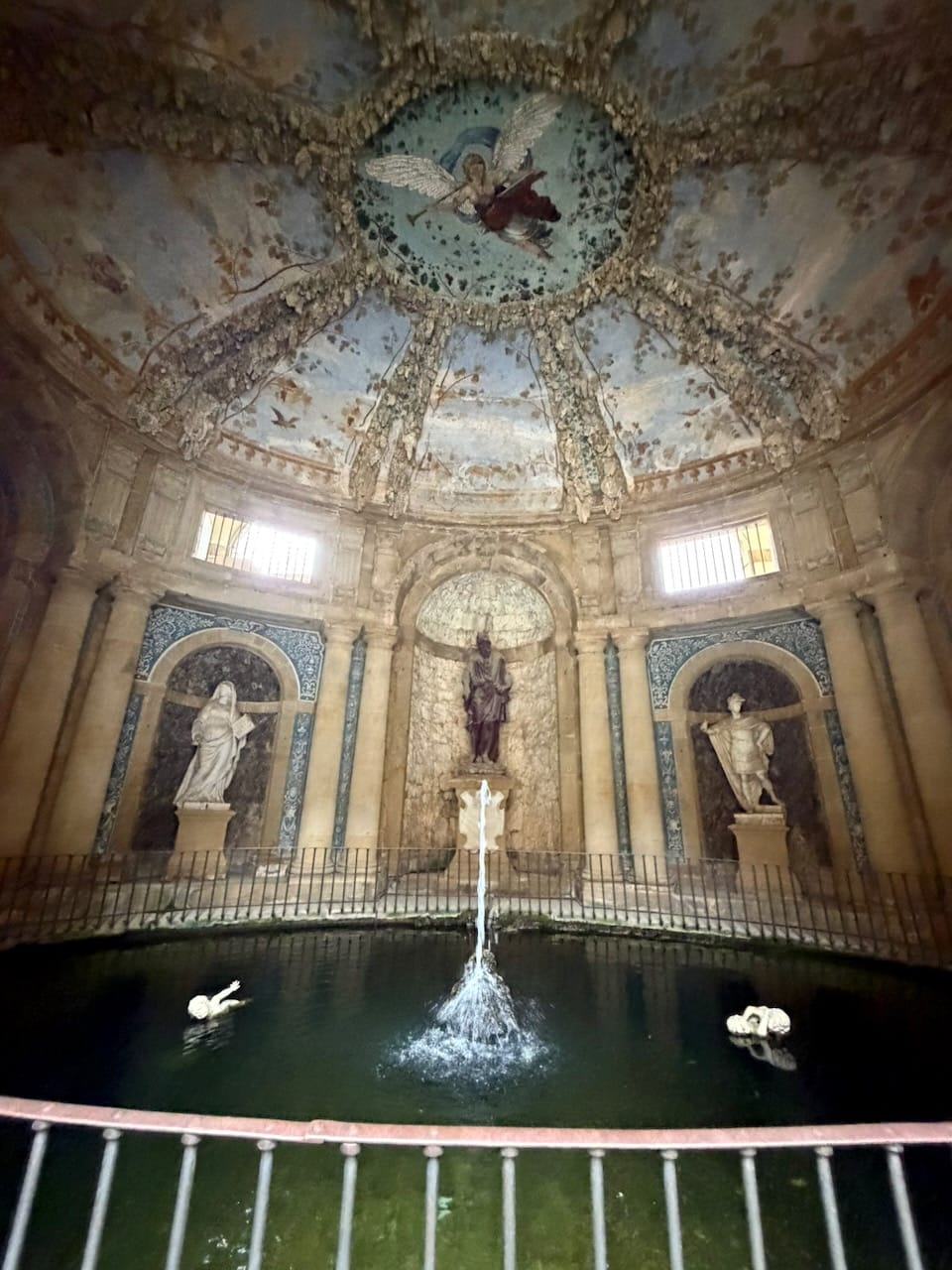
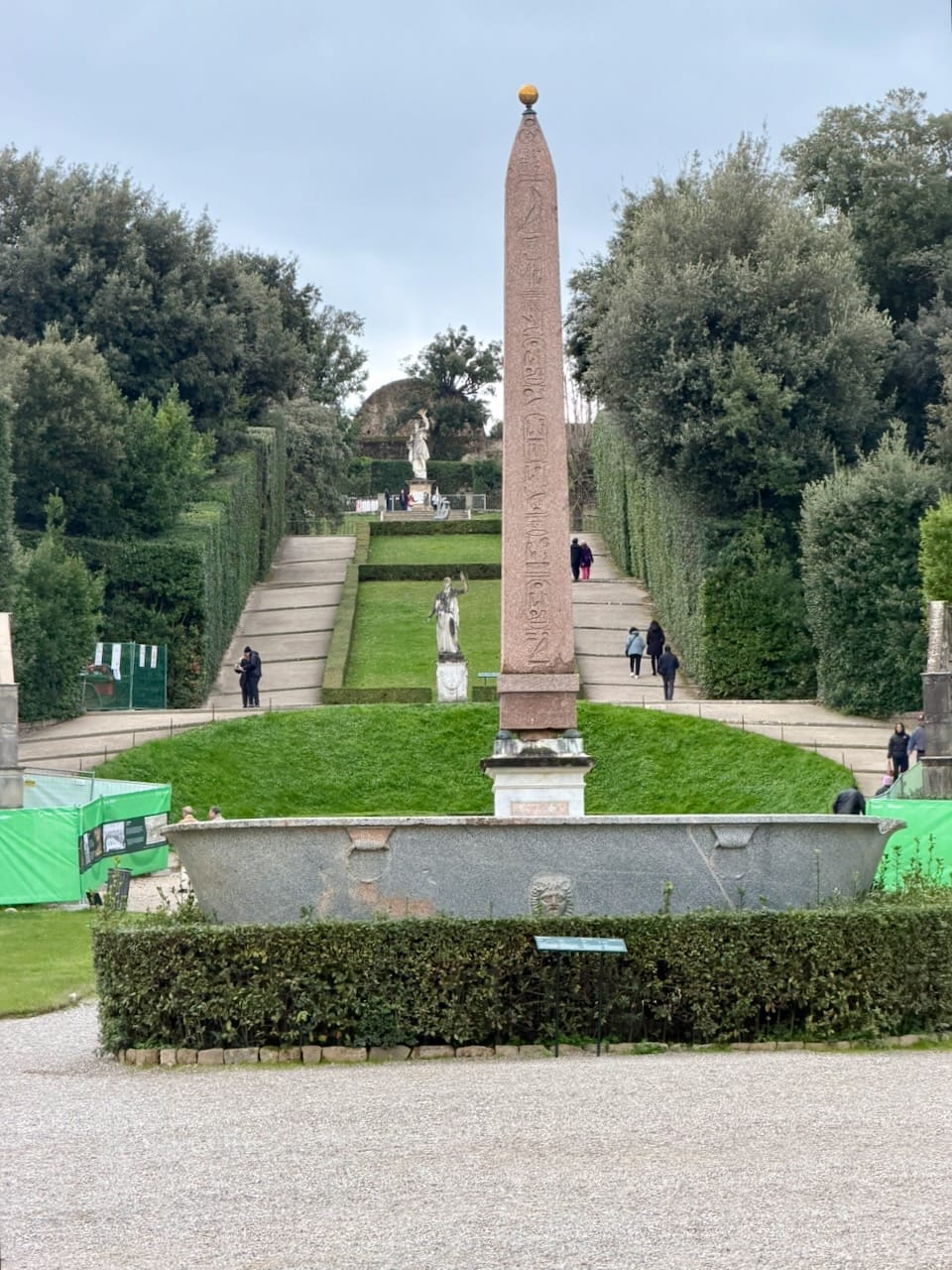
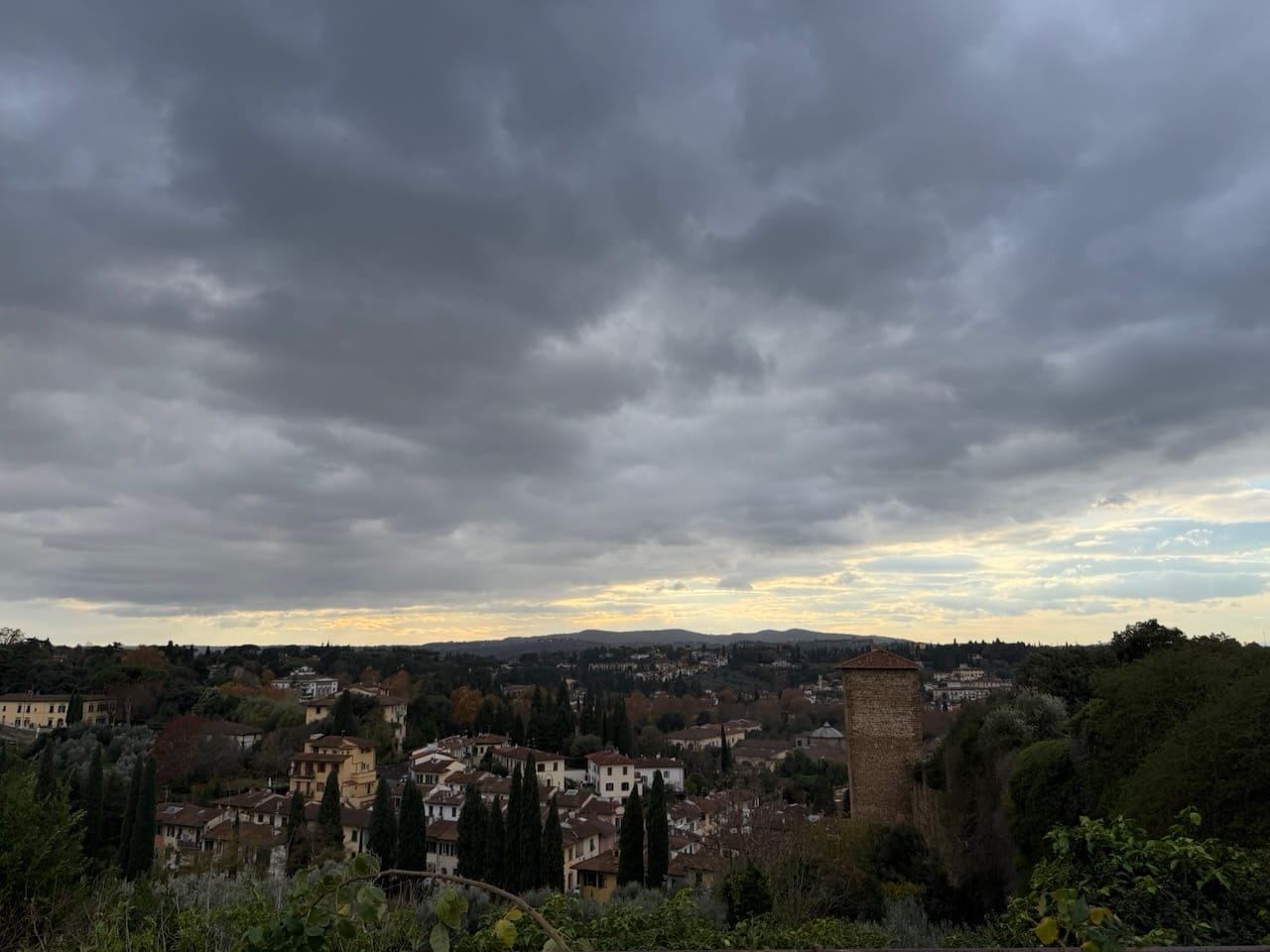
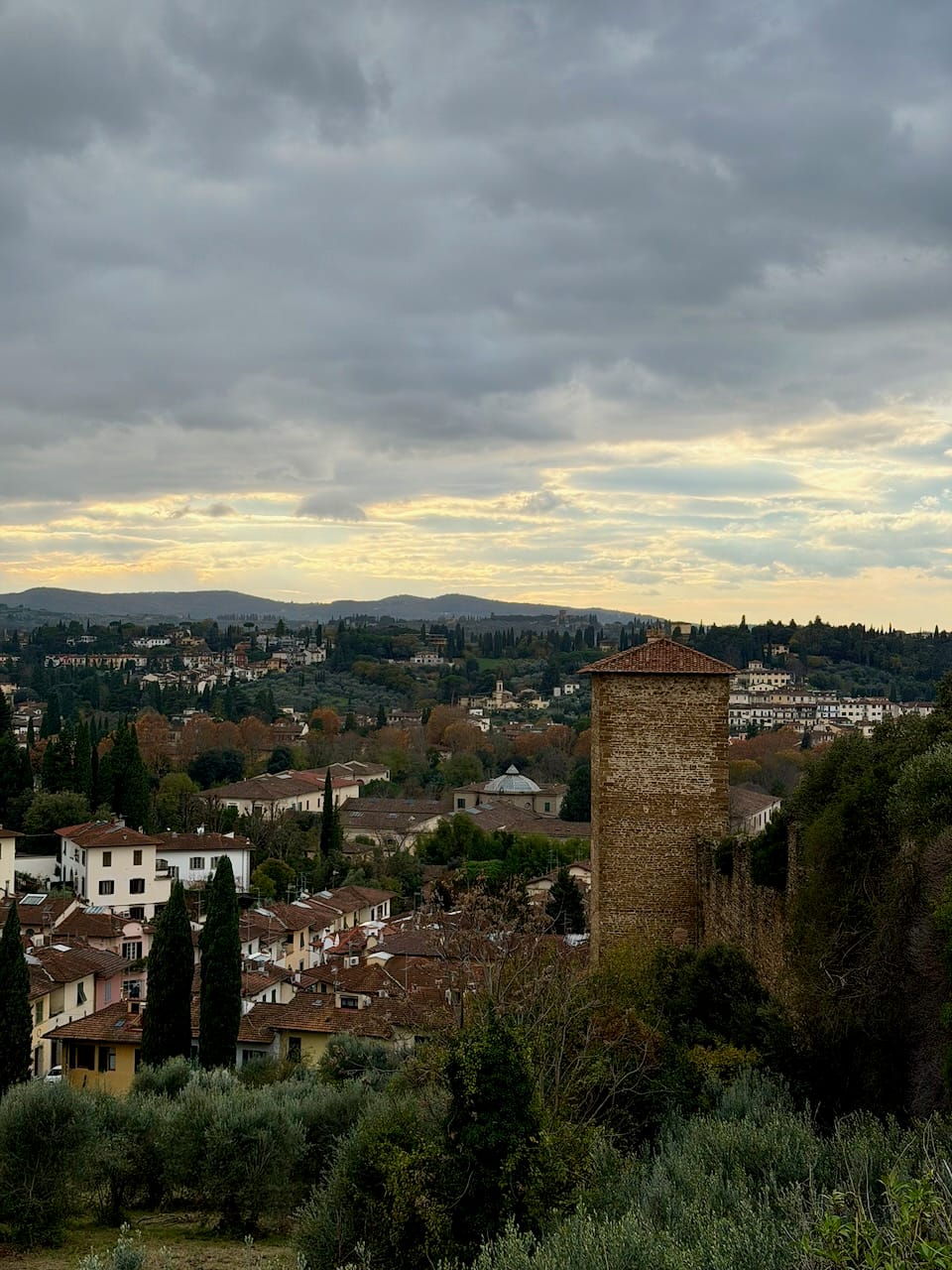
Our ticket (25 EUR each) also included access to the Boboli Gardens. I had heard it was a beautiful place, and we planned to spend some quiet time there before heading out for sunset. Unfortunately, it was winter, a bit rainy, and many restoration projects were underway, so the gardens weren’t at their best. Still, from the hills of Boboli, we could see a different side of Firenze—not the city skyline this time, but the softer Tuscan landscape beyond it. Even under gray skies, that view alone made the walk worthwhile.
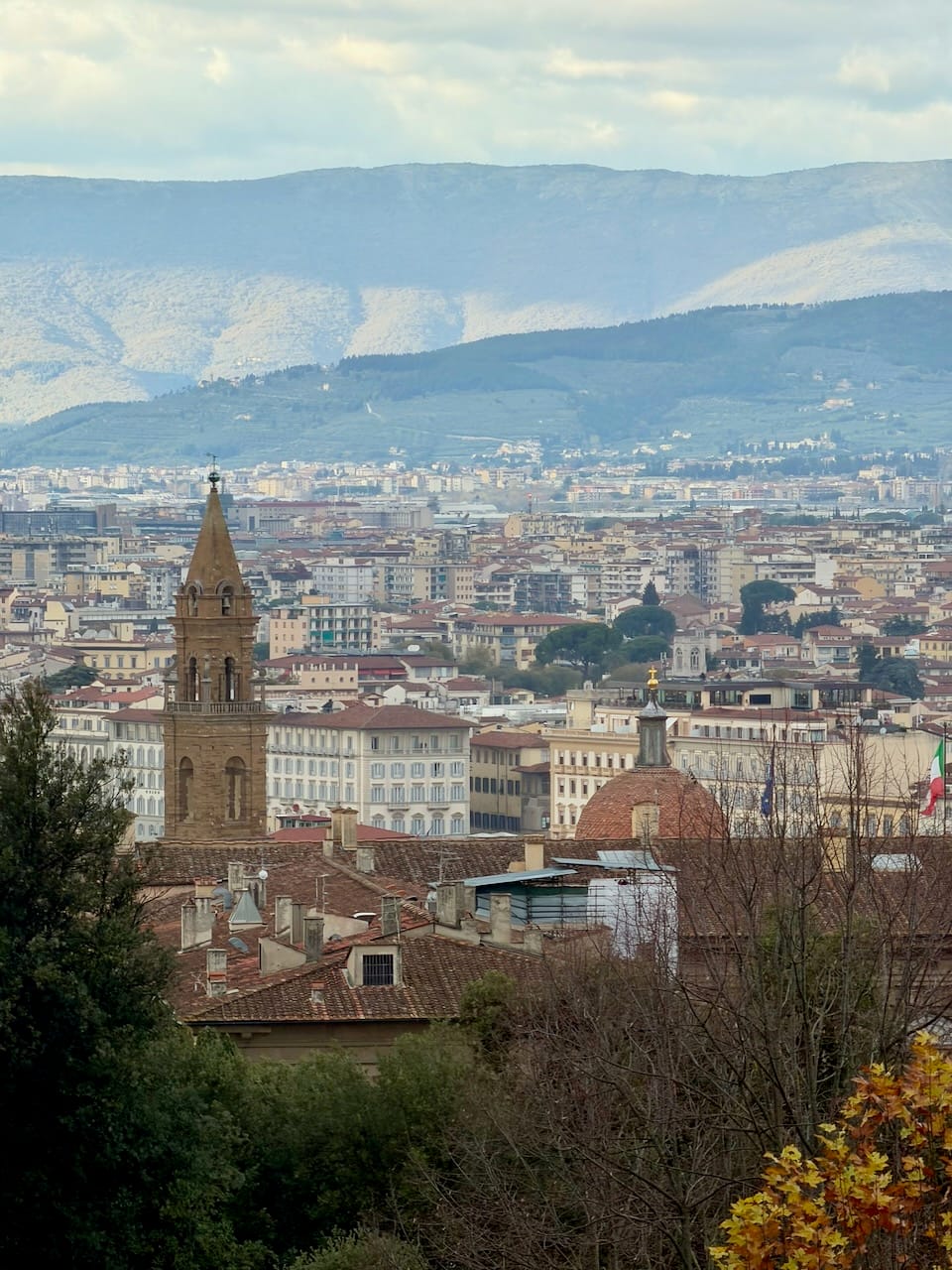
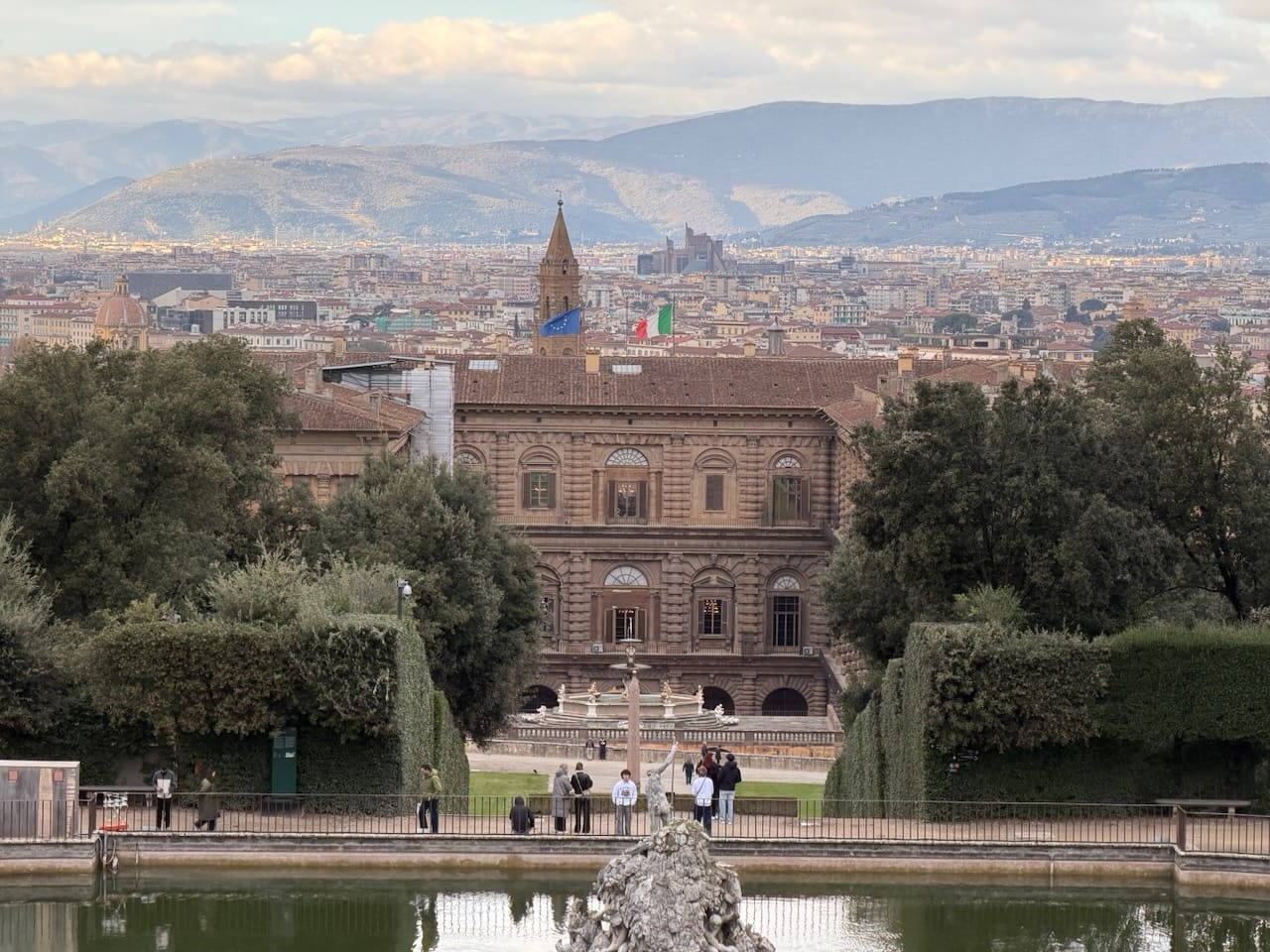
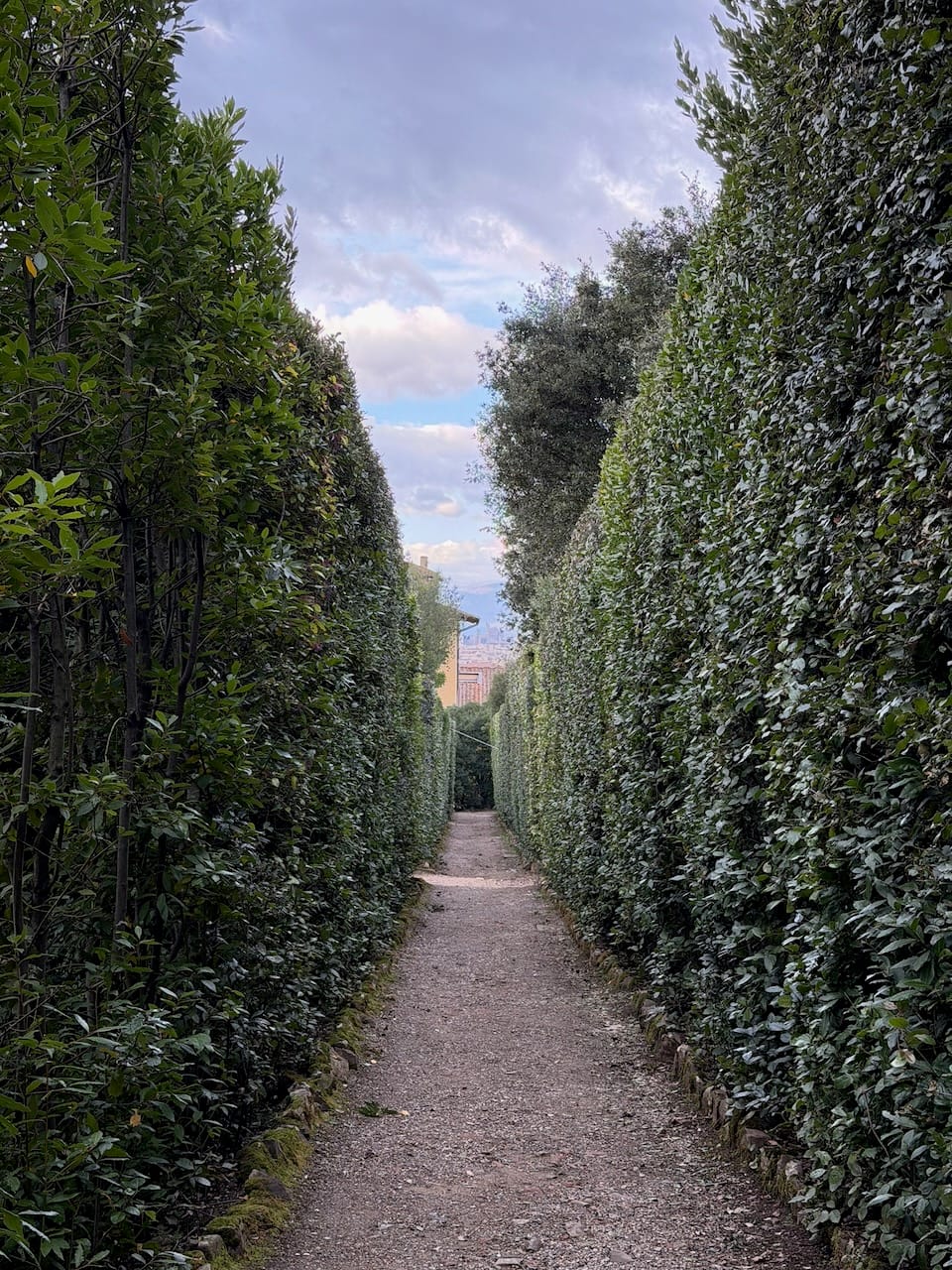
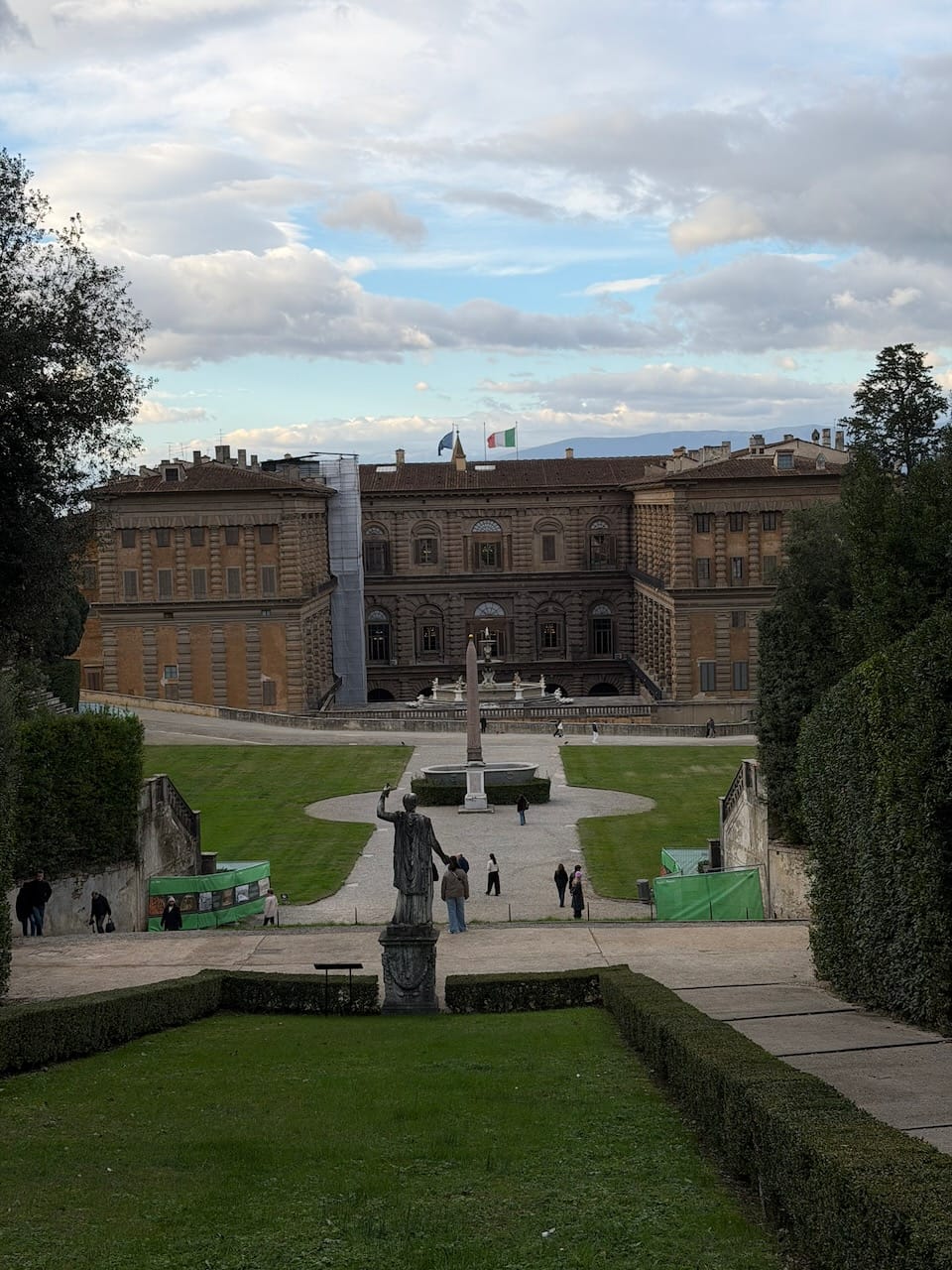
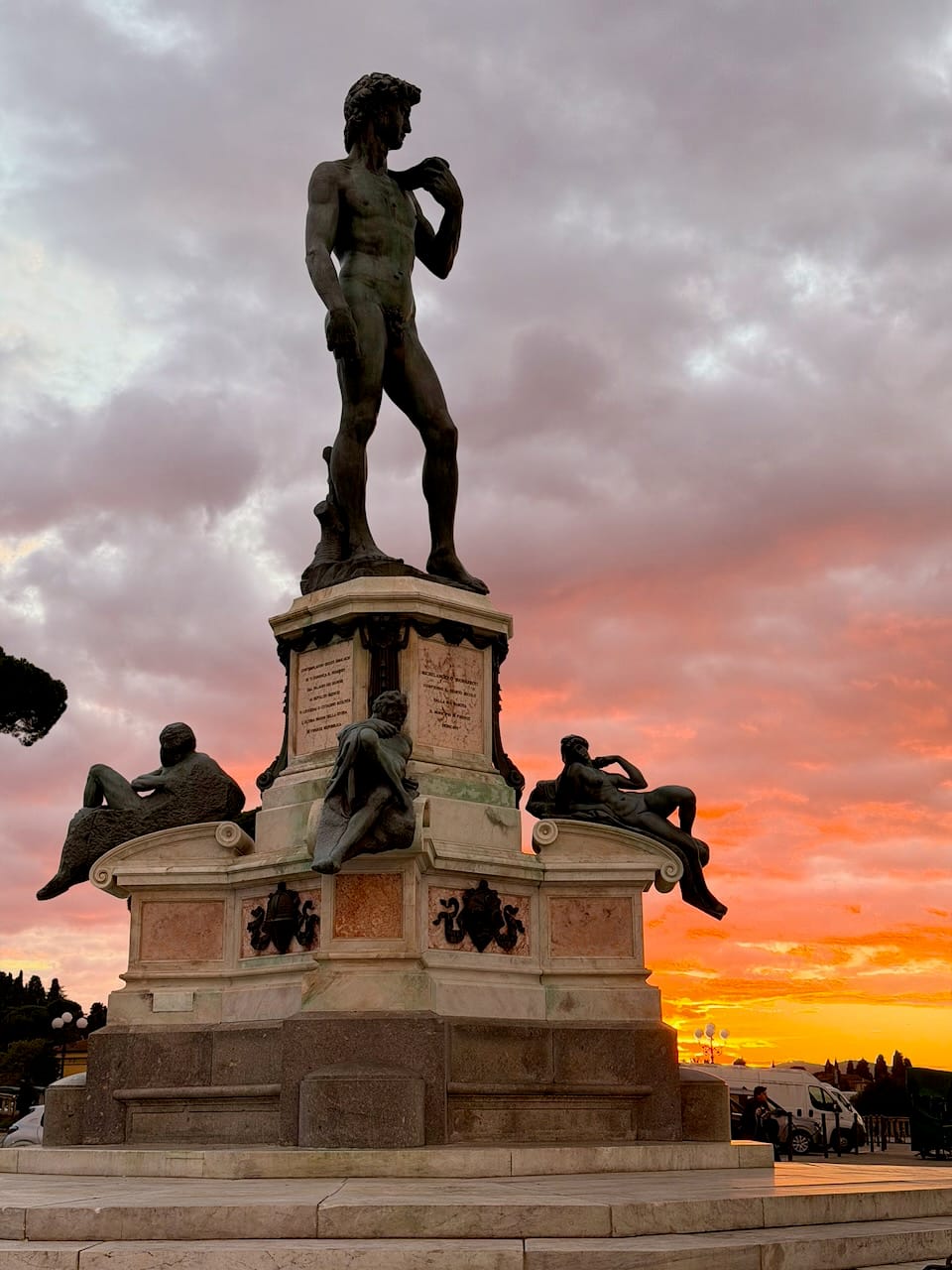
After Boboli, our plan was to take a taxi up to Piazzale Michelangelo for sunset. But, My taxi app (FreeNow) didn’t work in Firenze, or at least not in that area. So we did what we had already grown very comfortable doing on this trip: we walked. It was about a 40-minute walk with a gentle but steady climb. By the time we reached the top, Piazzale Michelangelo was full of people also with food trucks, cafes, and the massive replica of David presiding over everything.
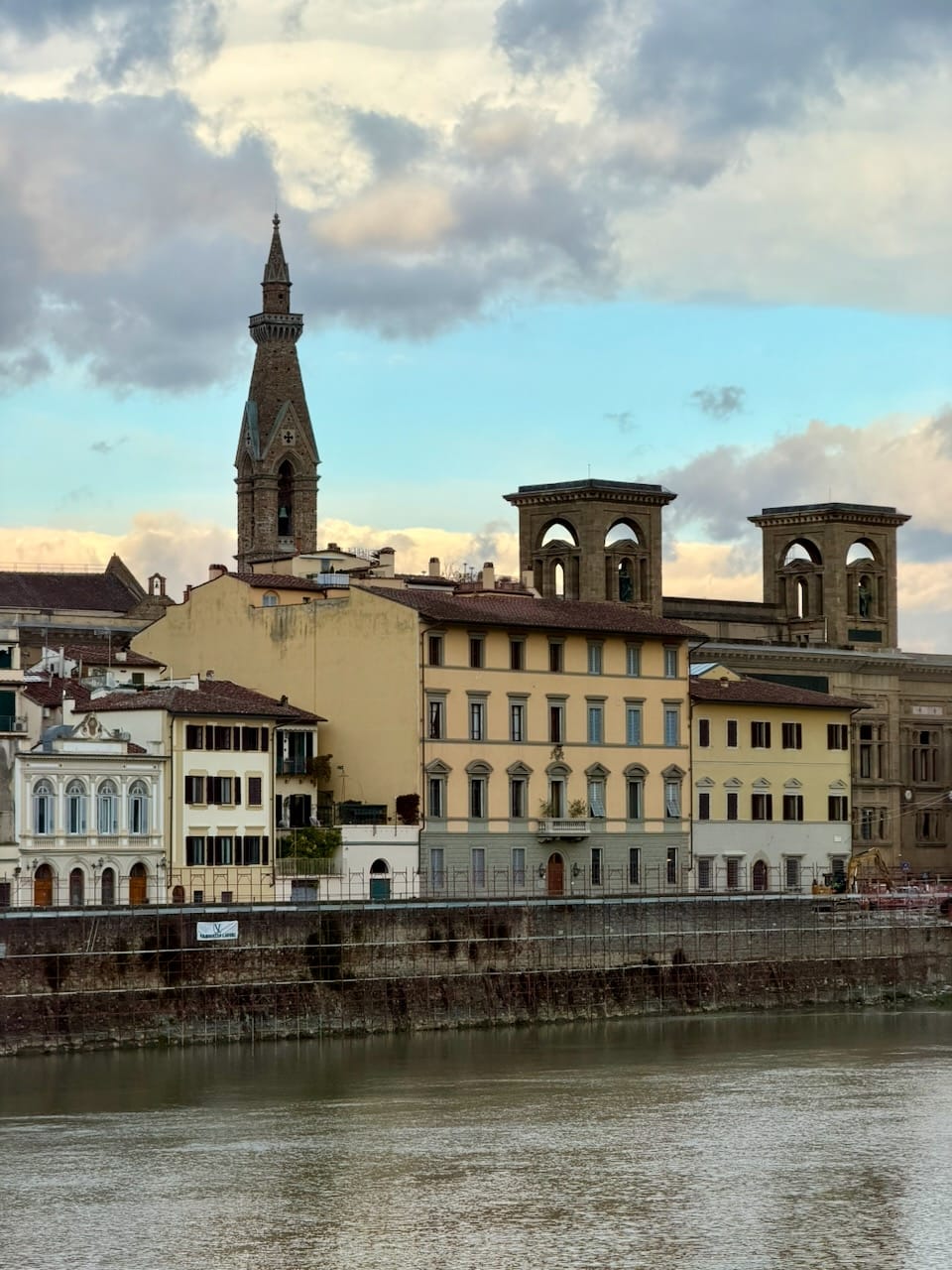
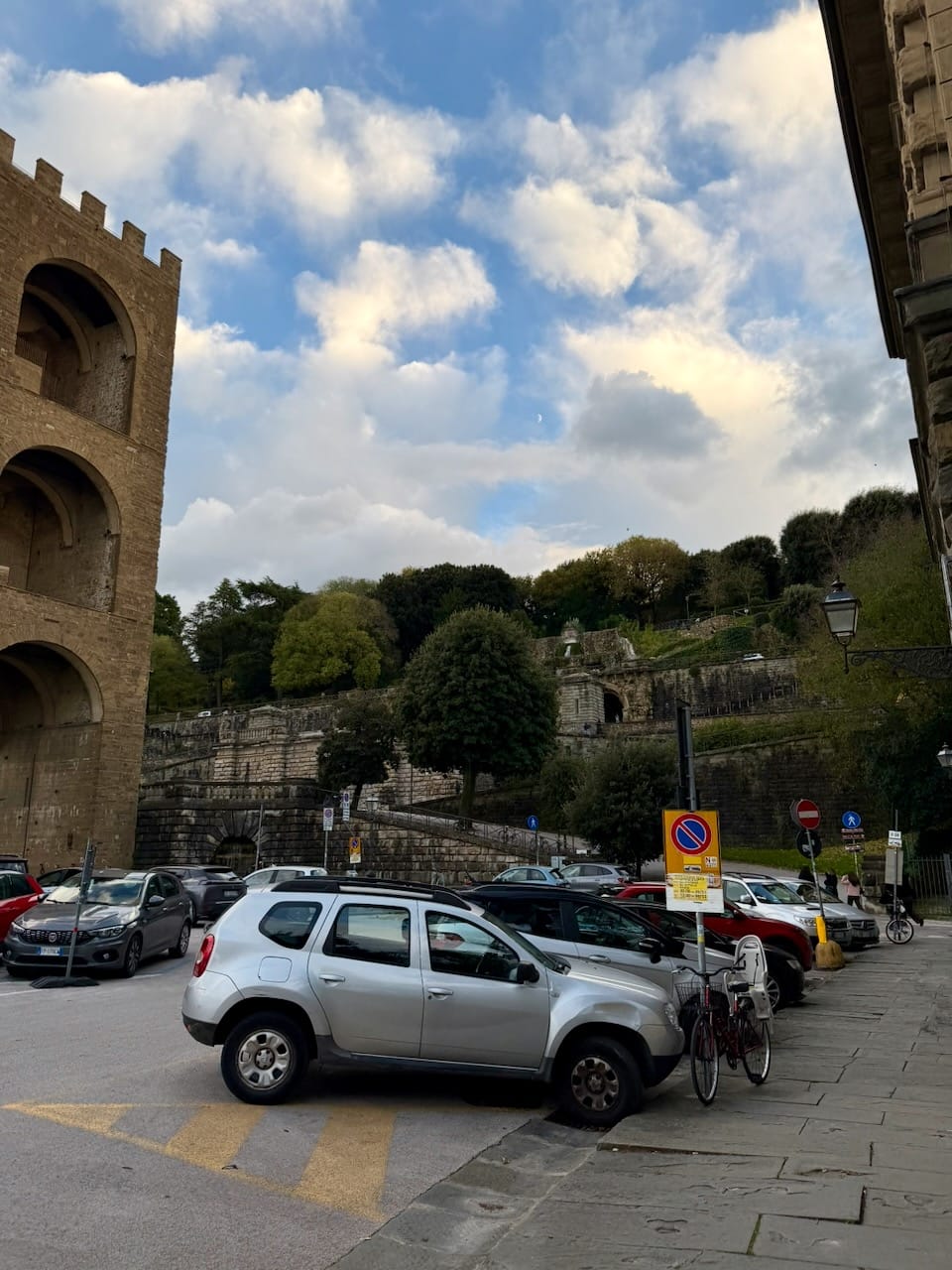
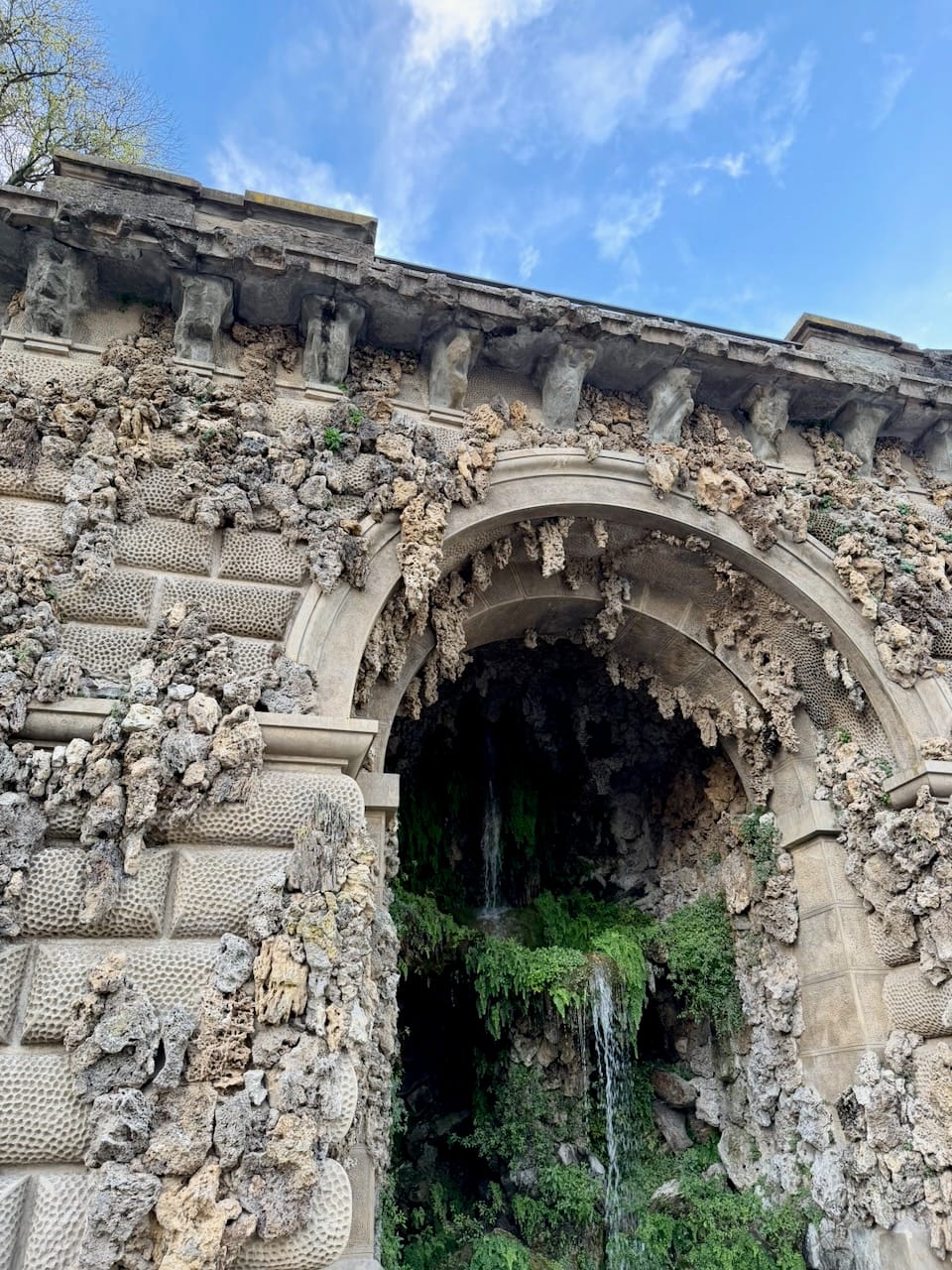
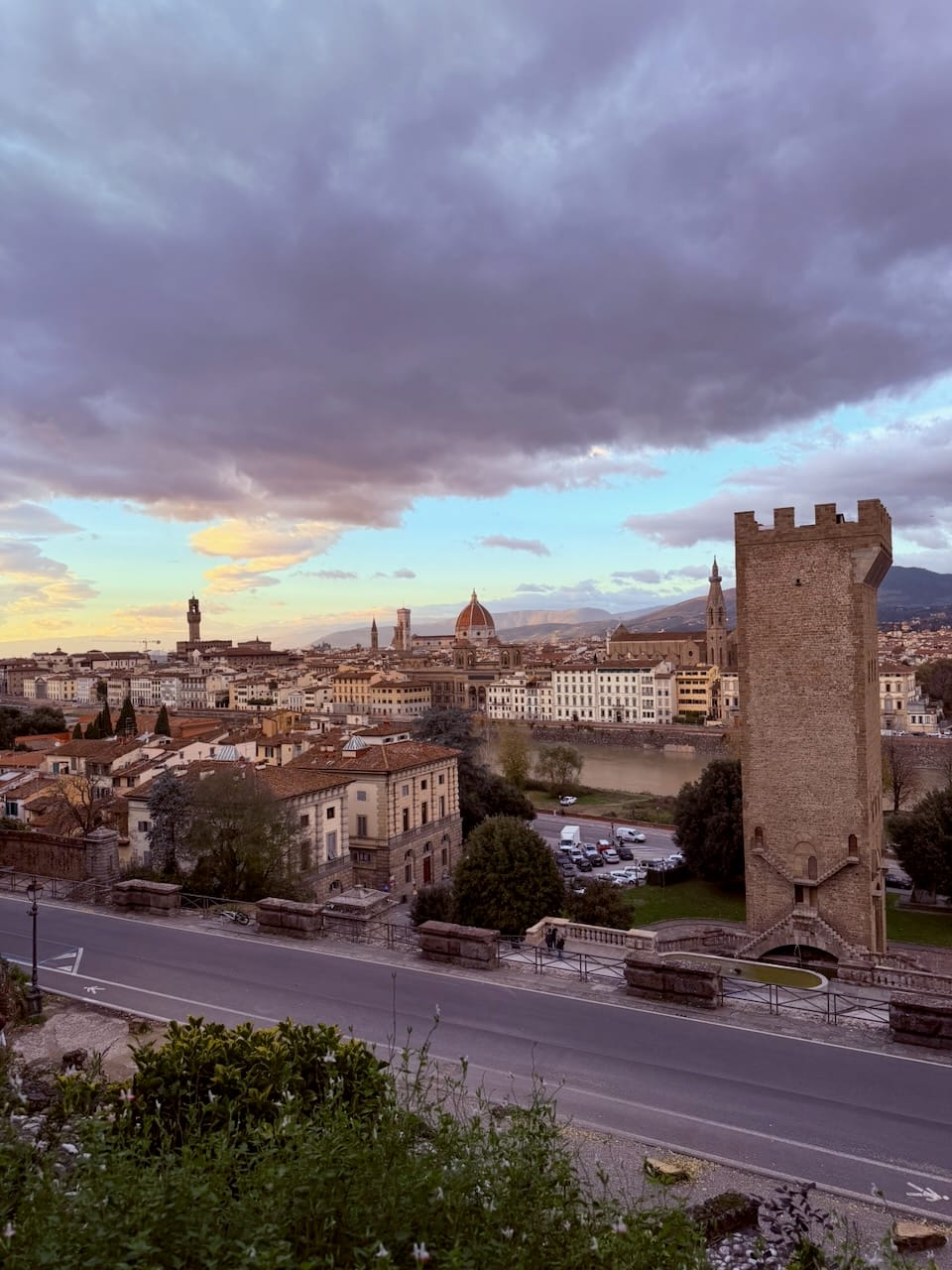
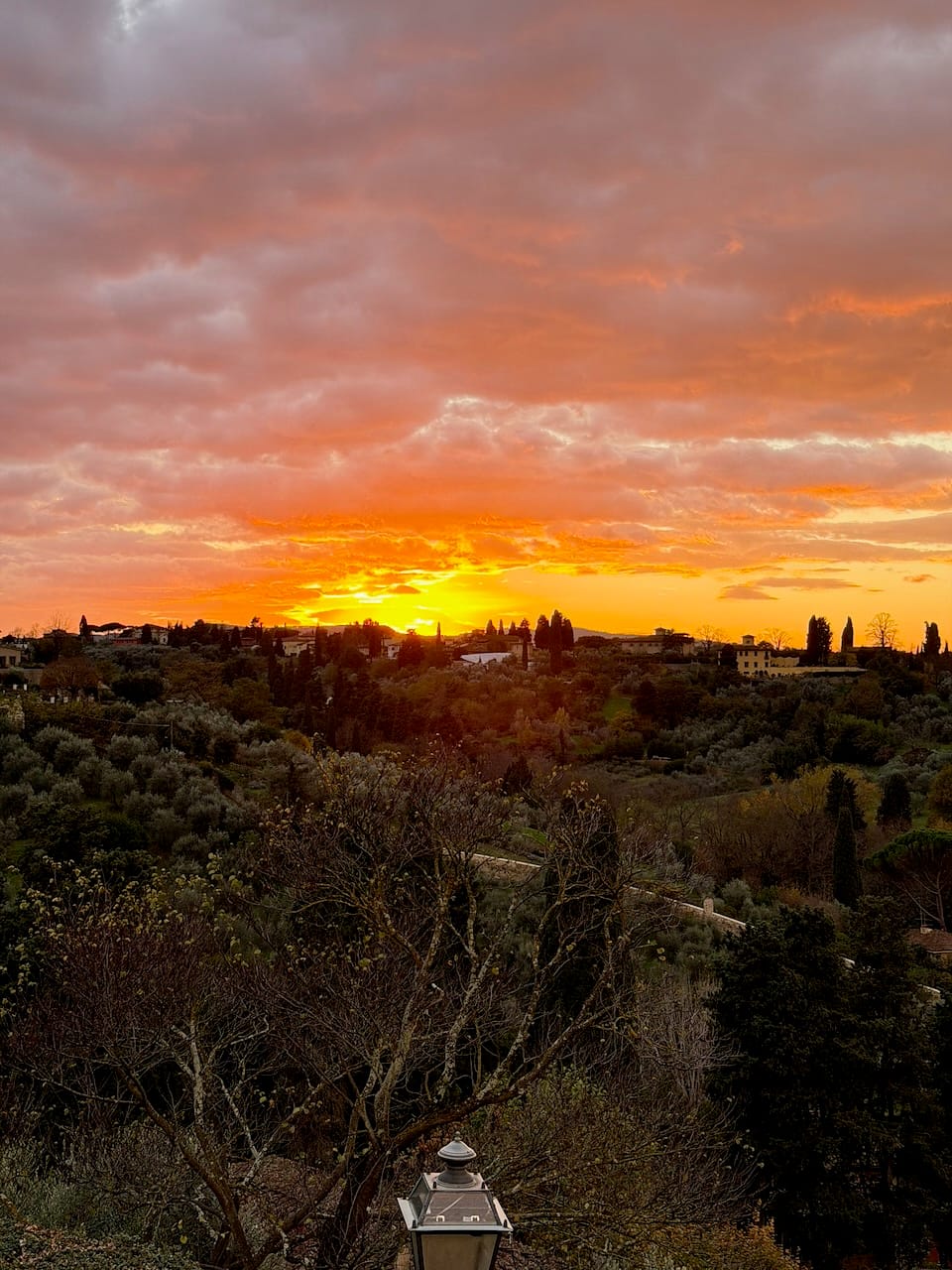
And then there was the view. From up there, I could see the perfect panoramic view of Firenze: the Duomo, the river, the bridges, the terracotta roofs. Right at that moment, the clouds opened just enough to reveal a strip of blue sky, and the setting sun soaked the city in warm red and gold. The buildings seemed to put on evening clothes, glowing quietly as the light slipped away.
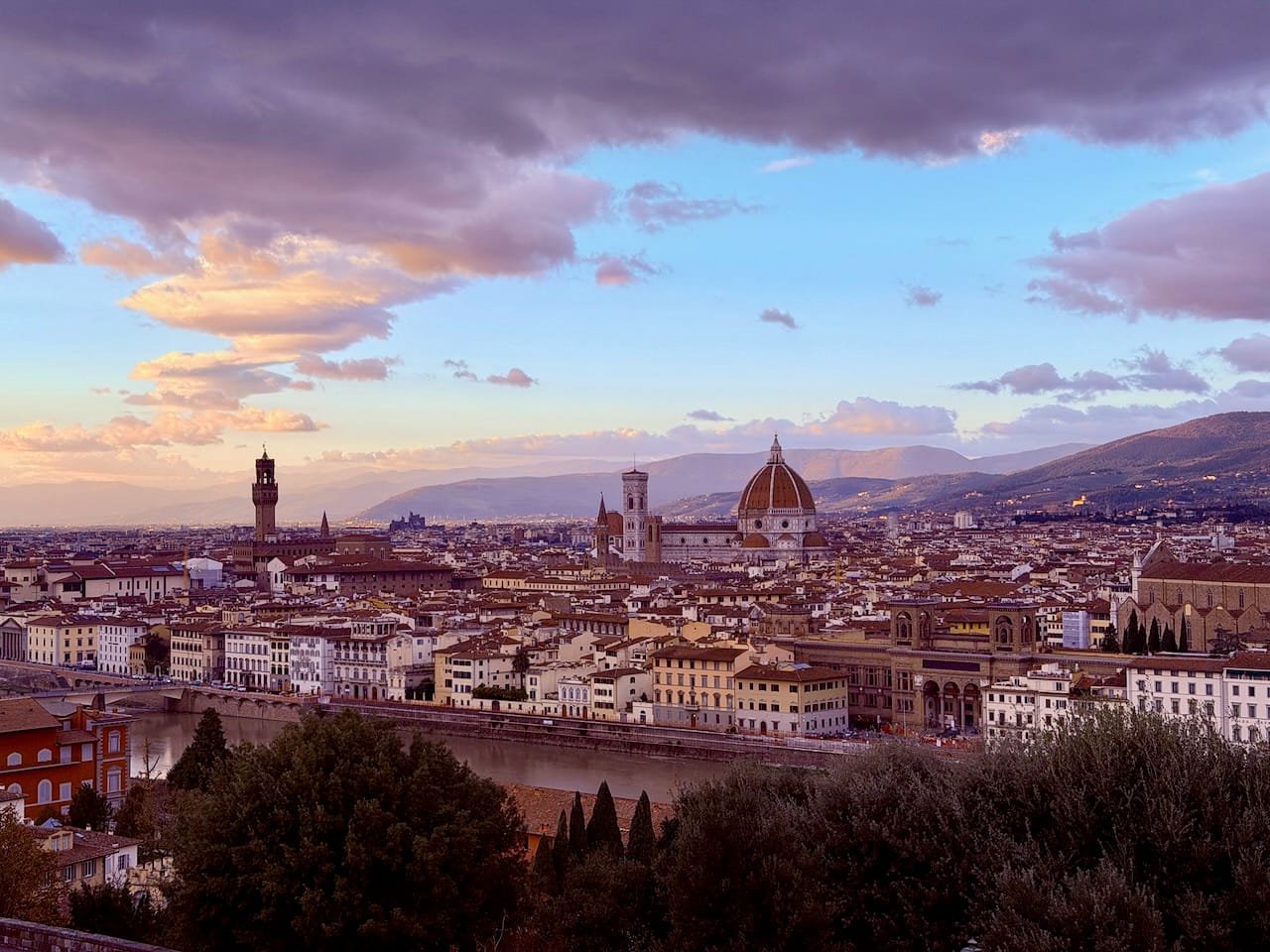
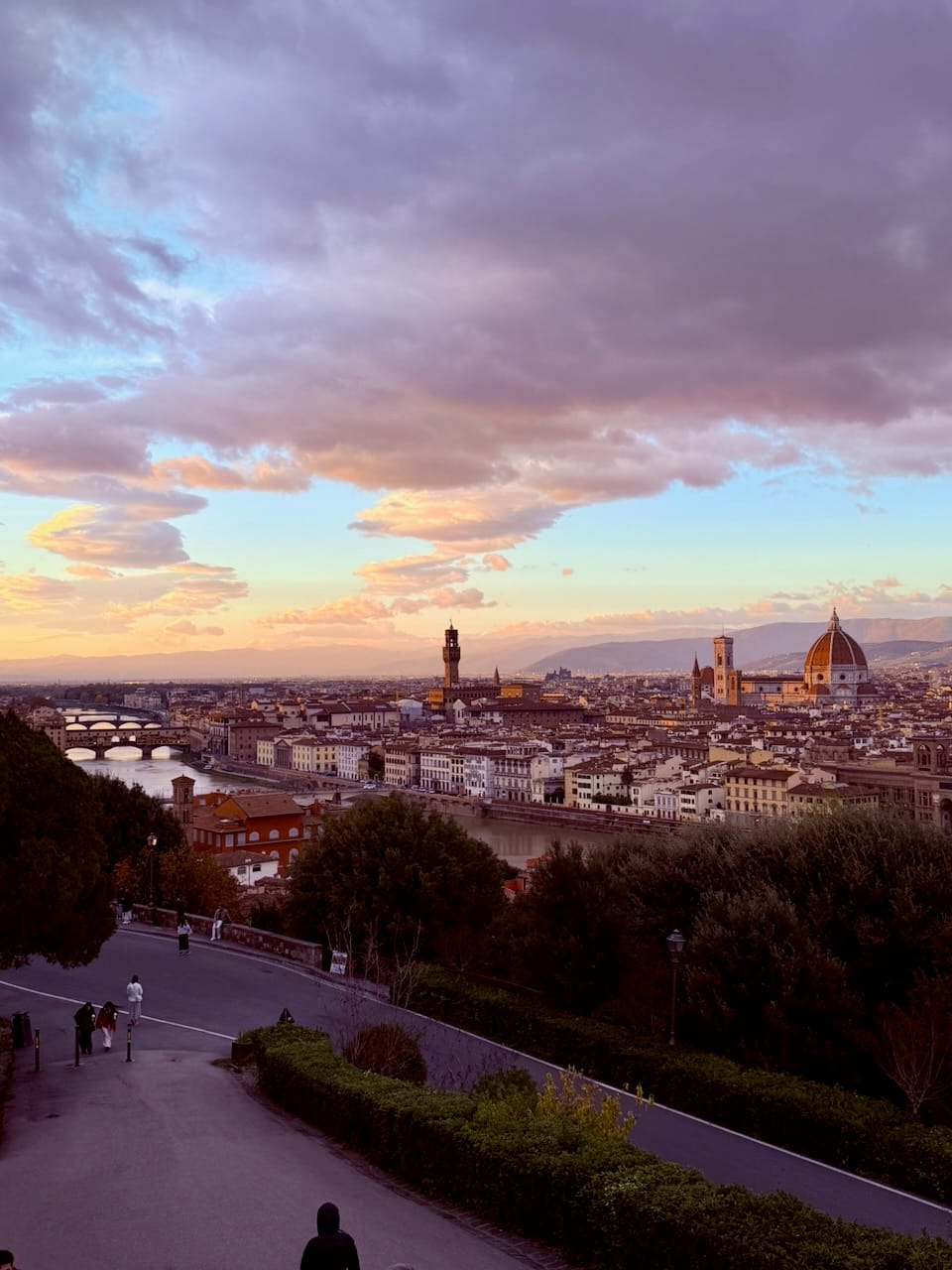
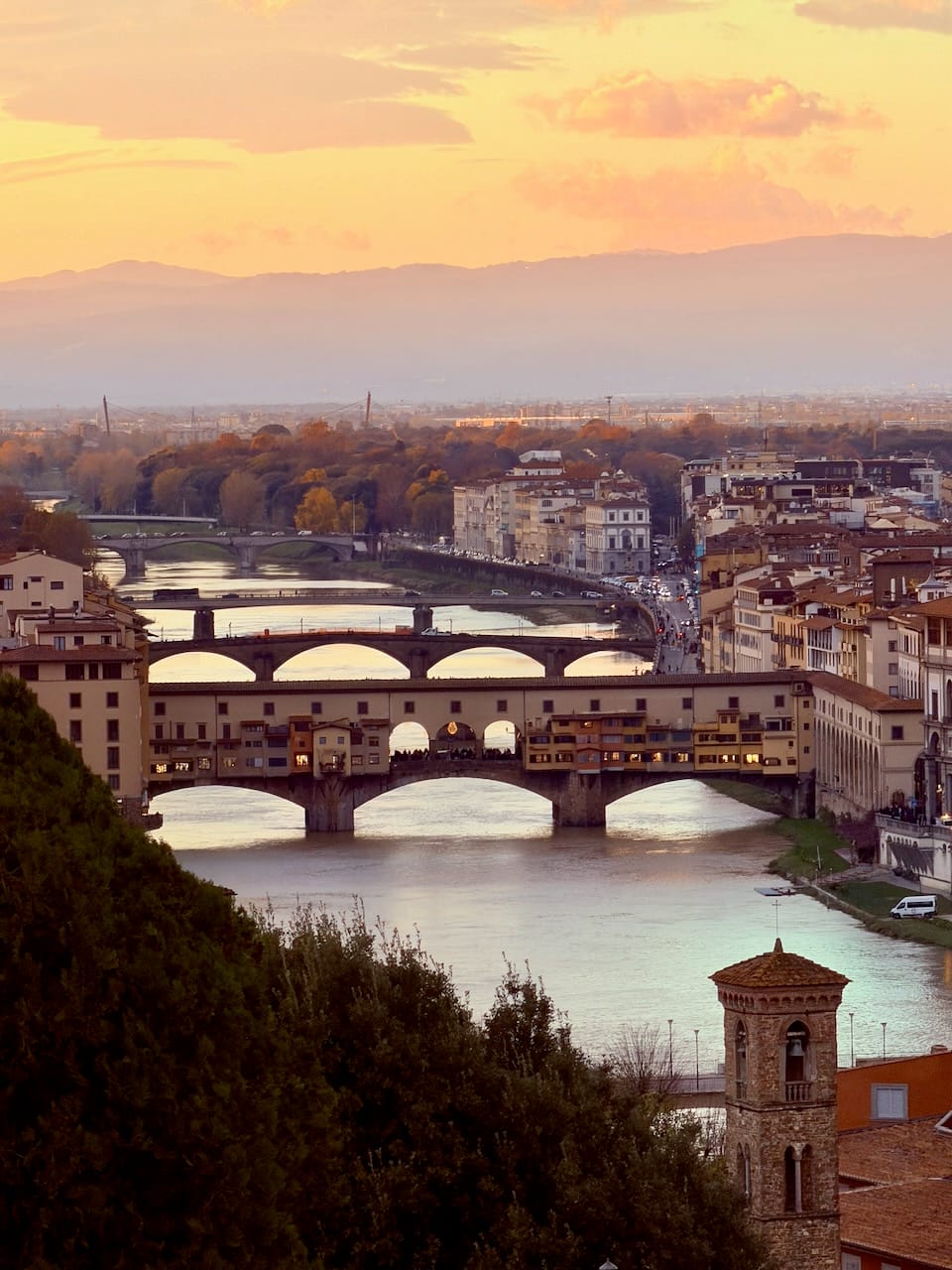
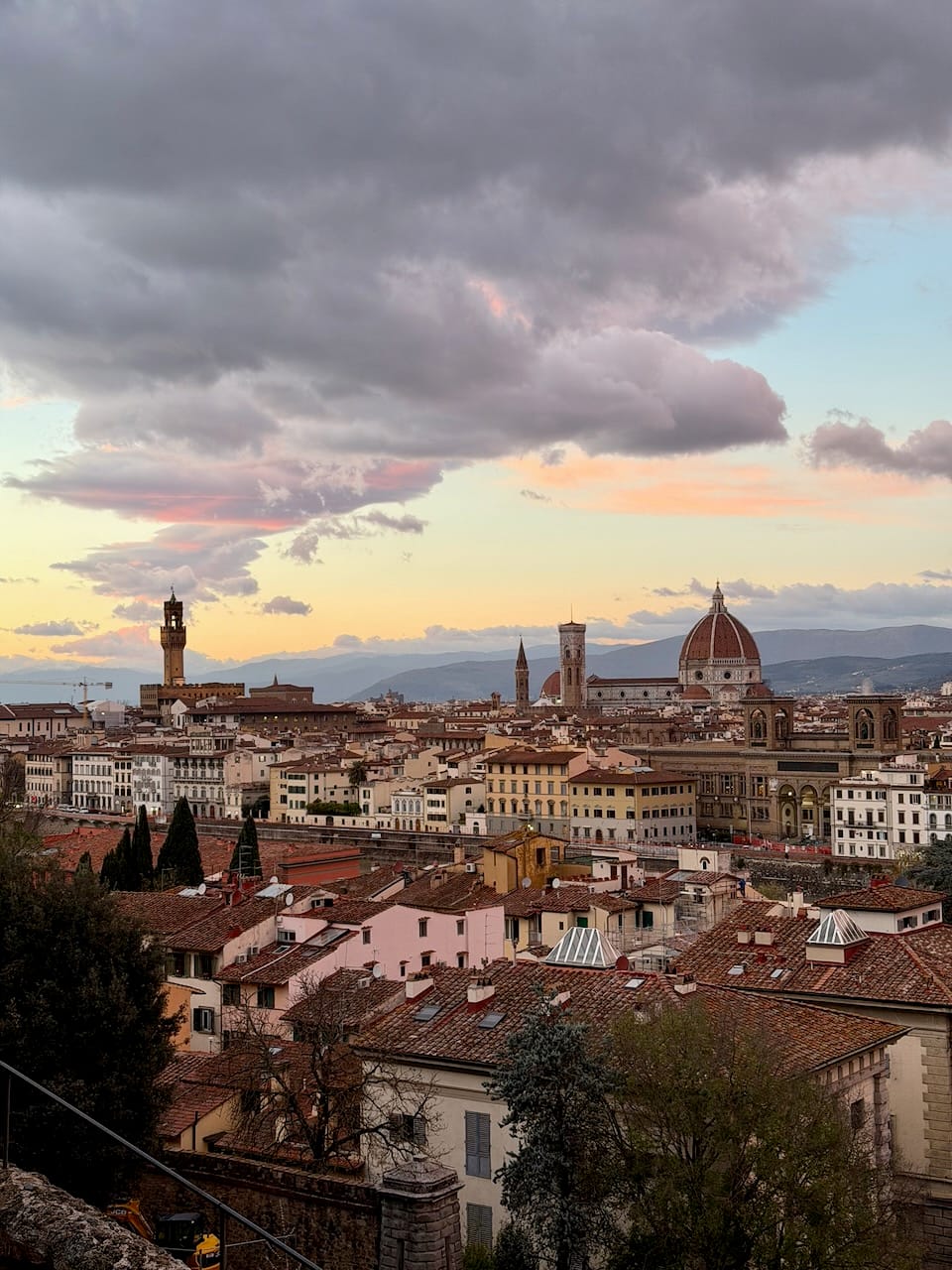
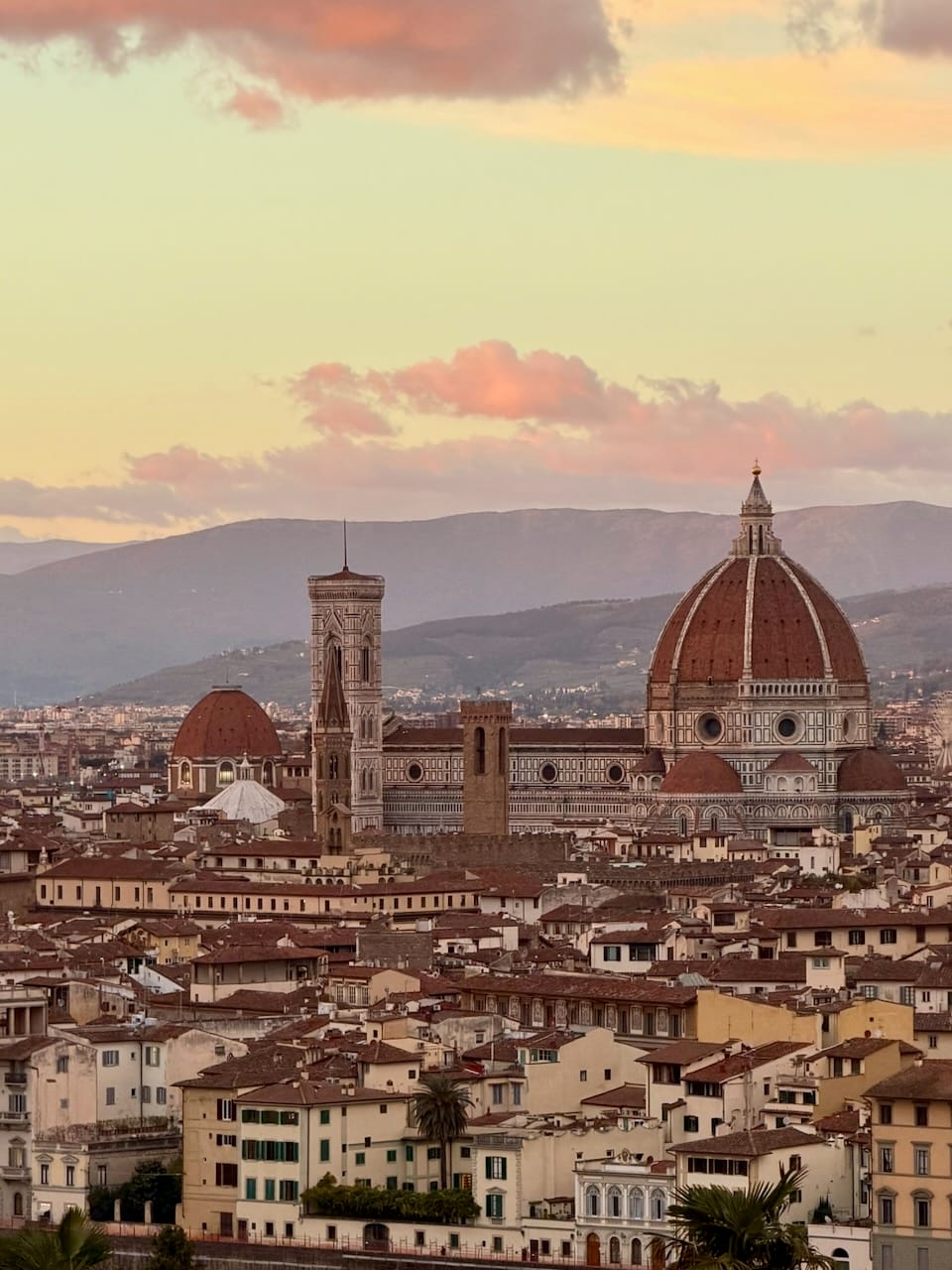
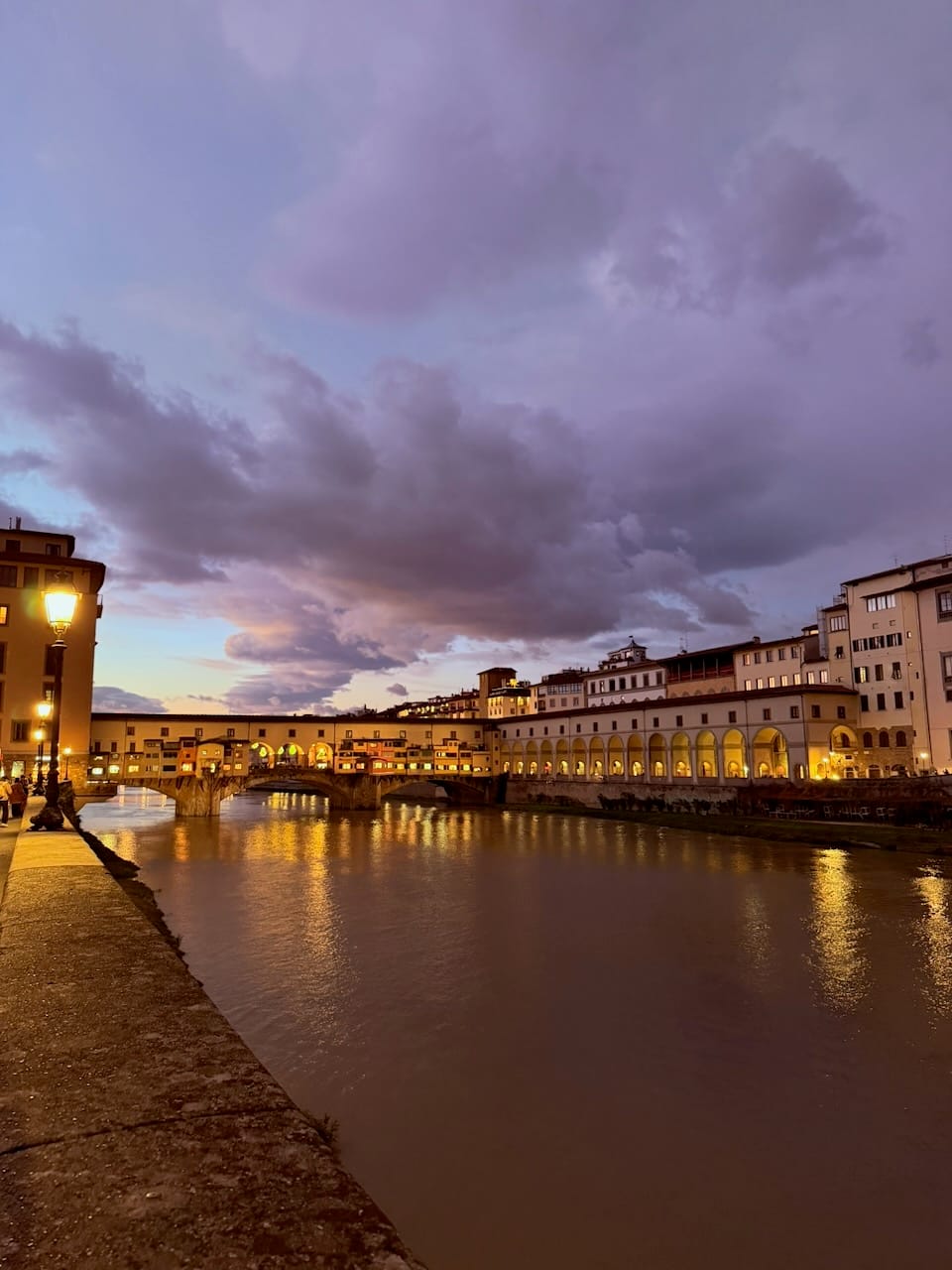
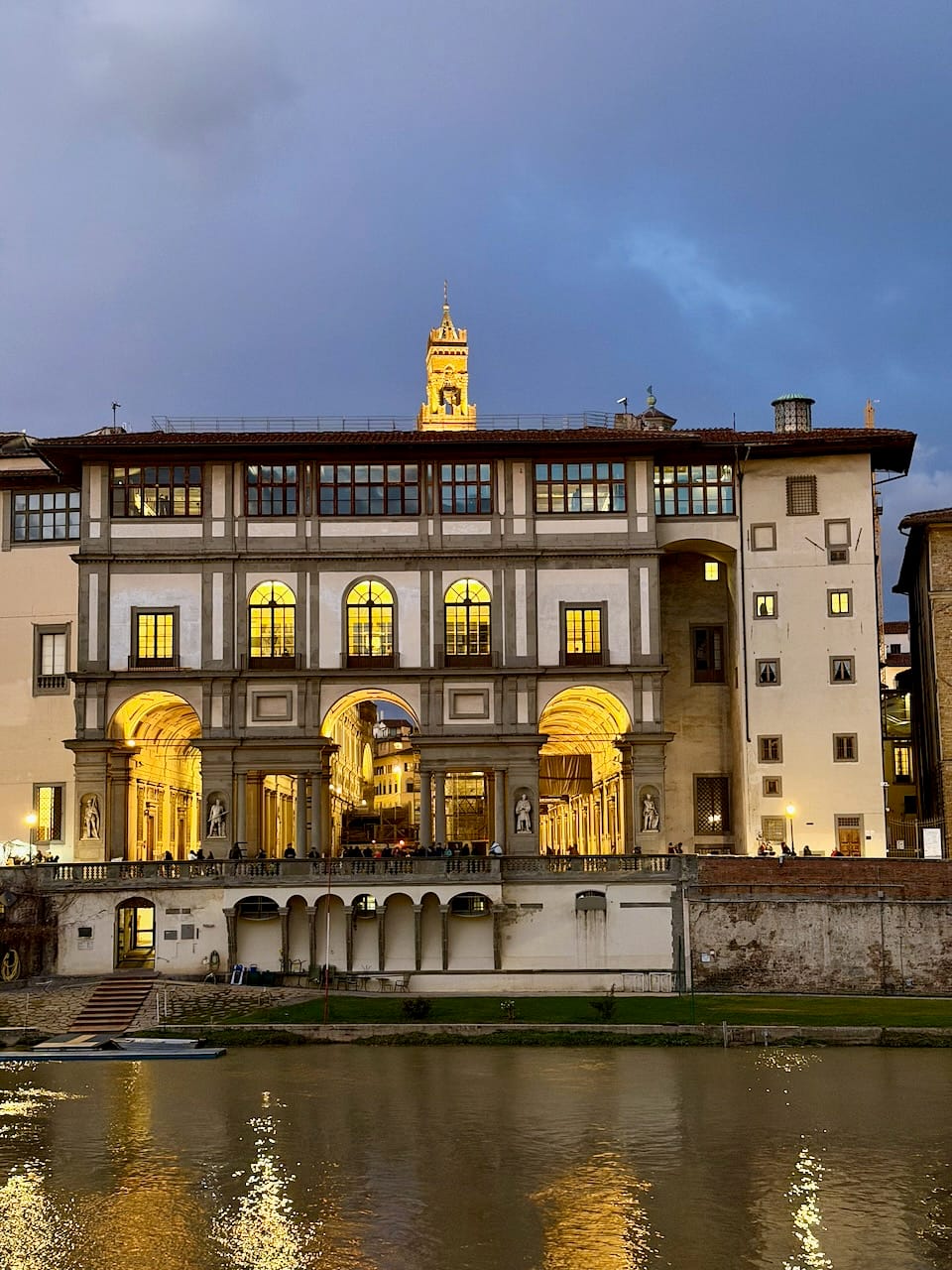
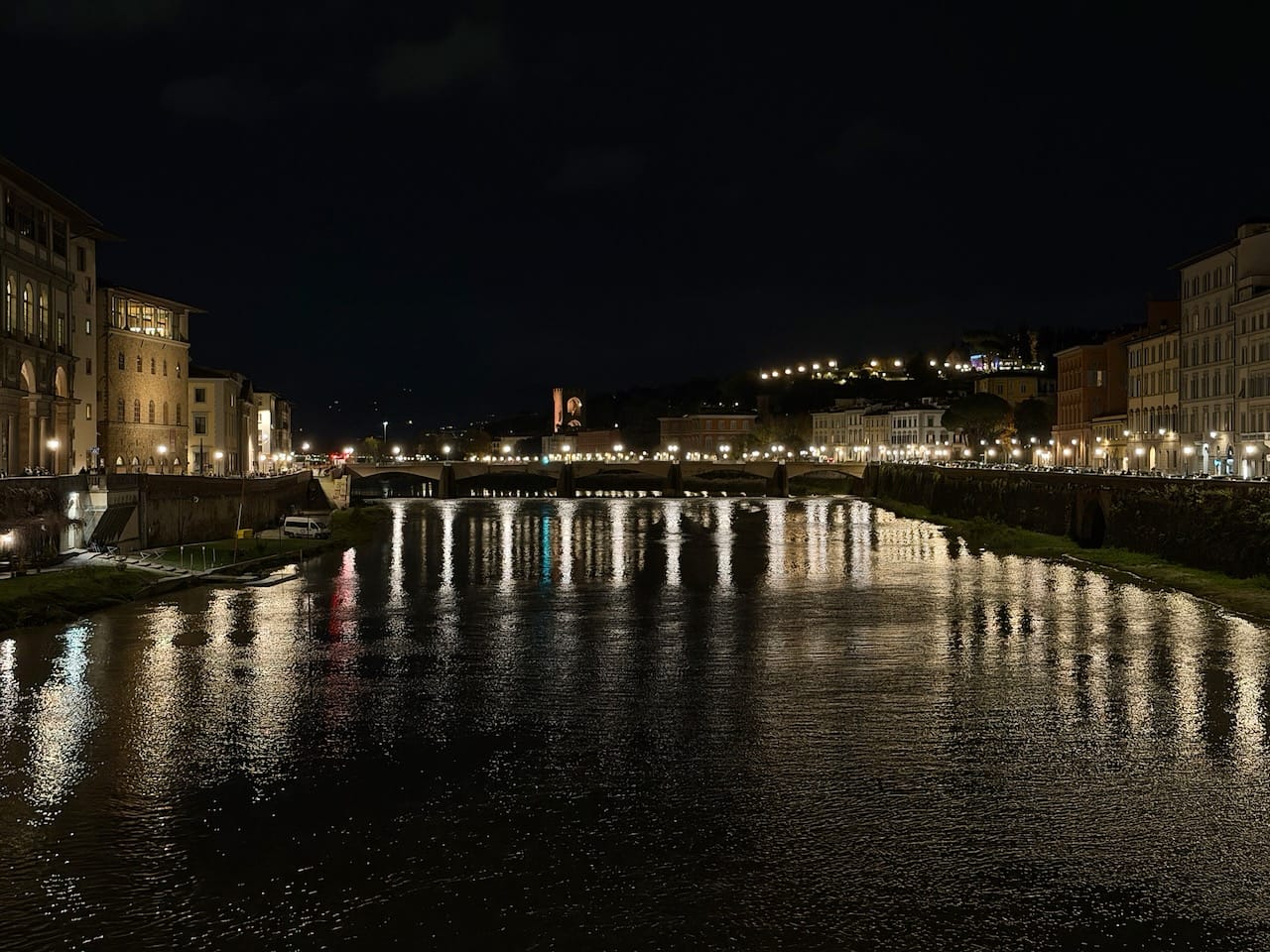
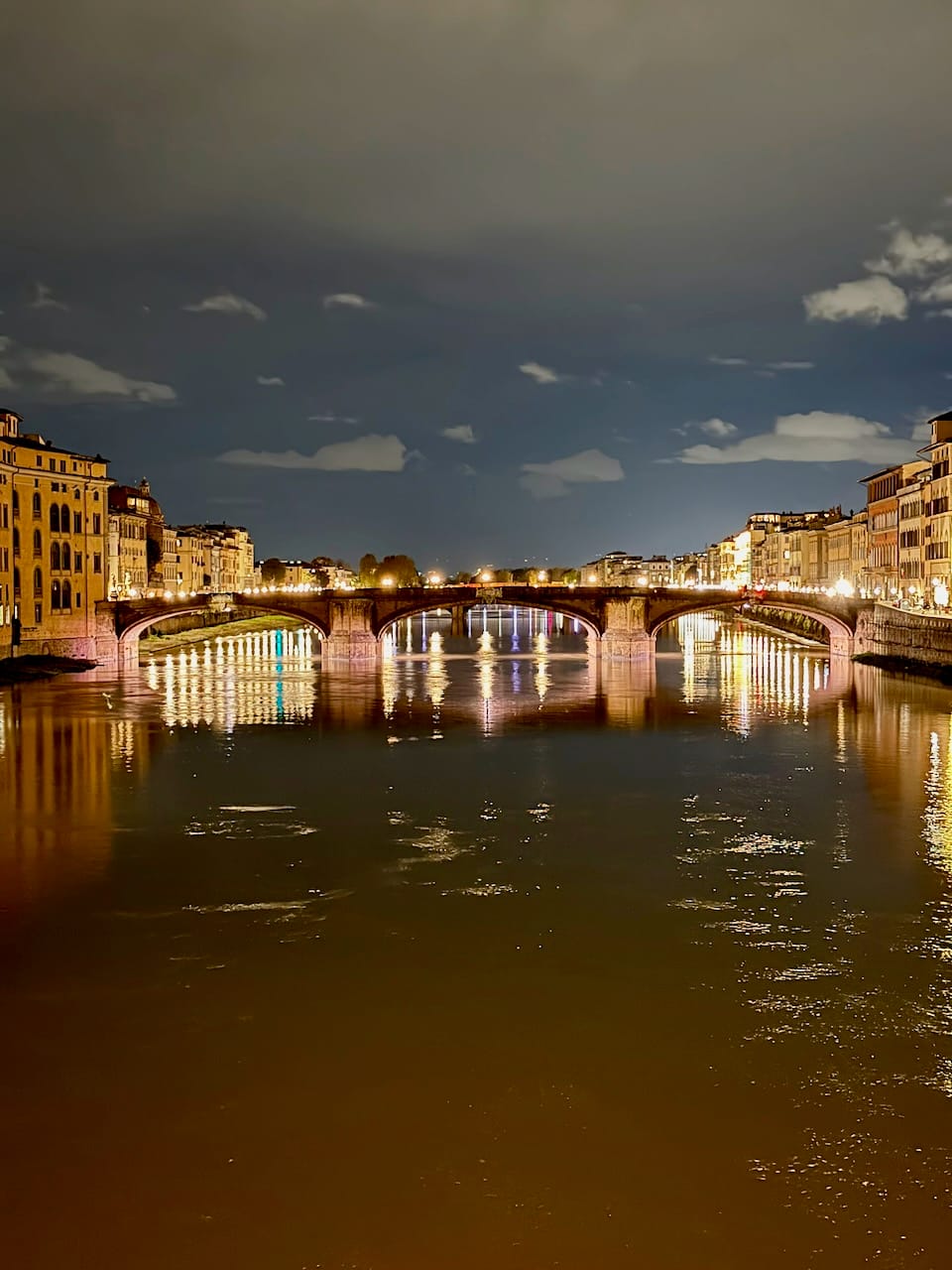
At twilight, we walked back down along the river, with Ponte Vecchio slowly coming into view again. The bridge was glowing now, wrapped in soft yellow light, reflected on the water together with the surrounding buildings — including the Uffizi, standing quietly on the opposite bank.
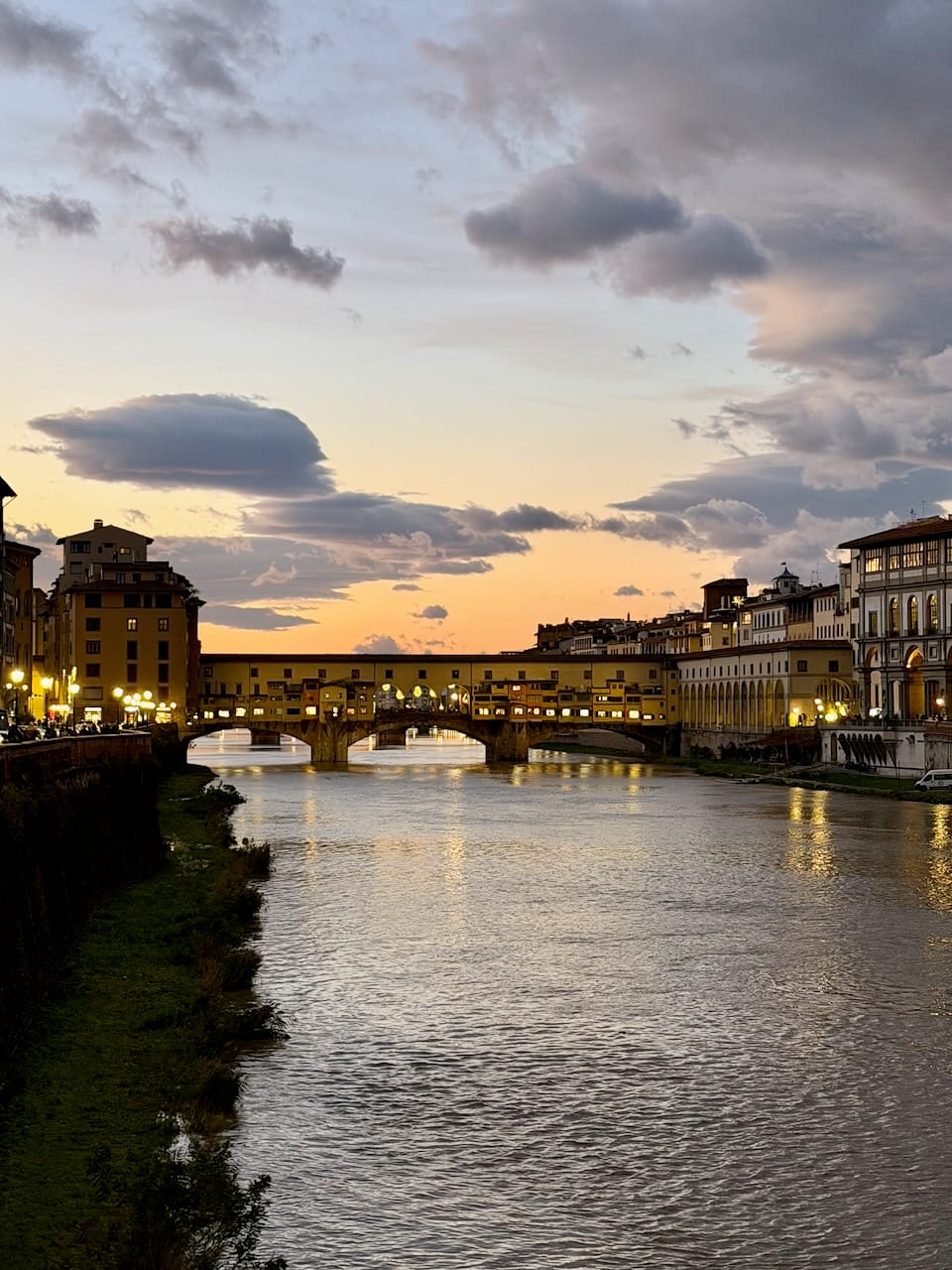
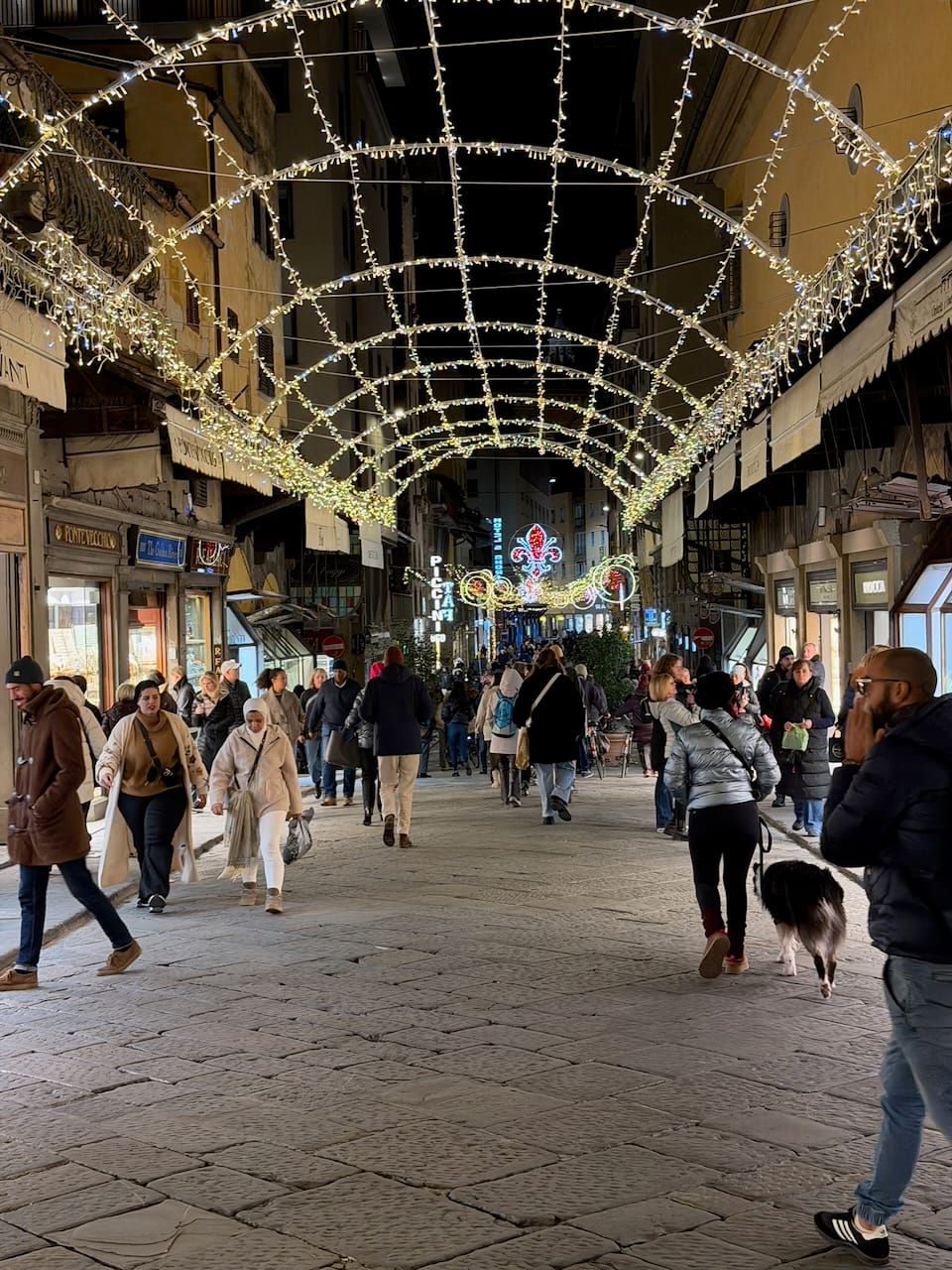
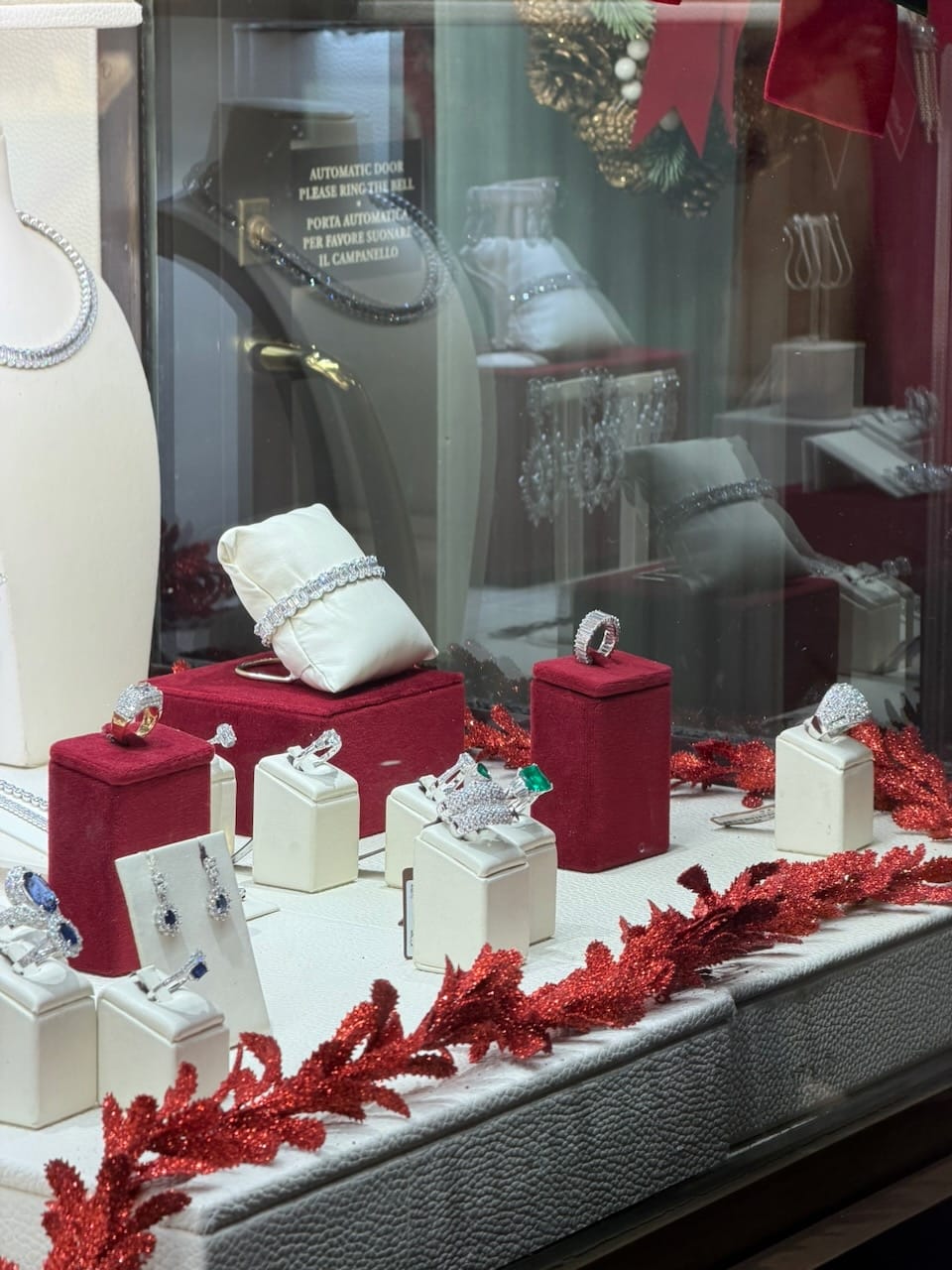
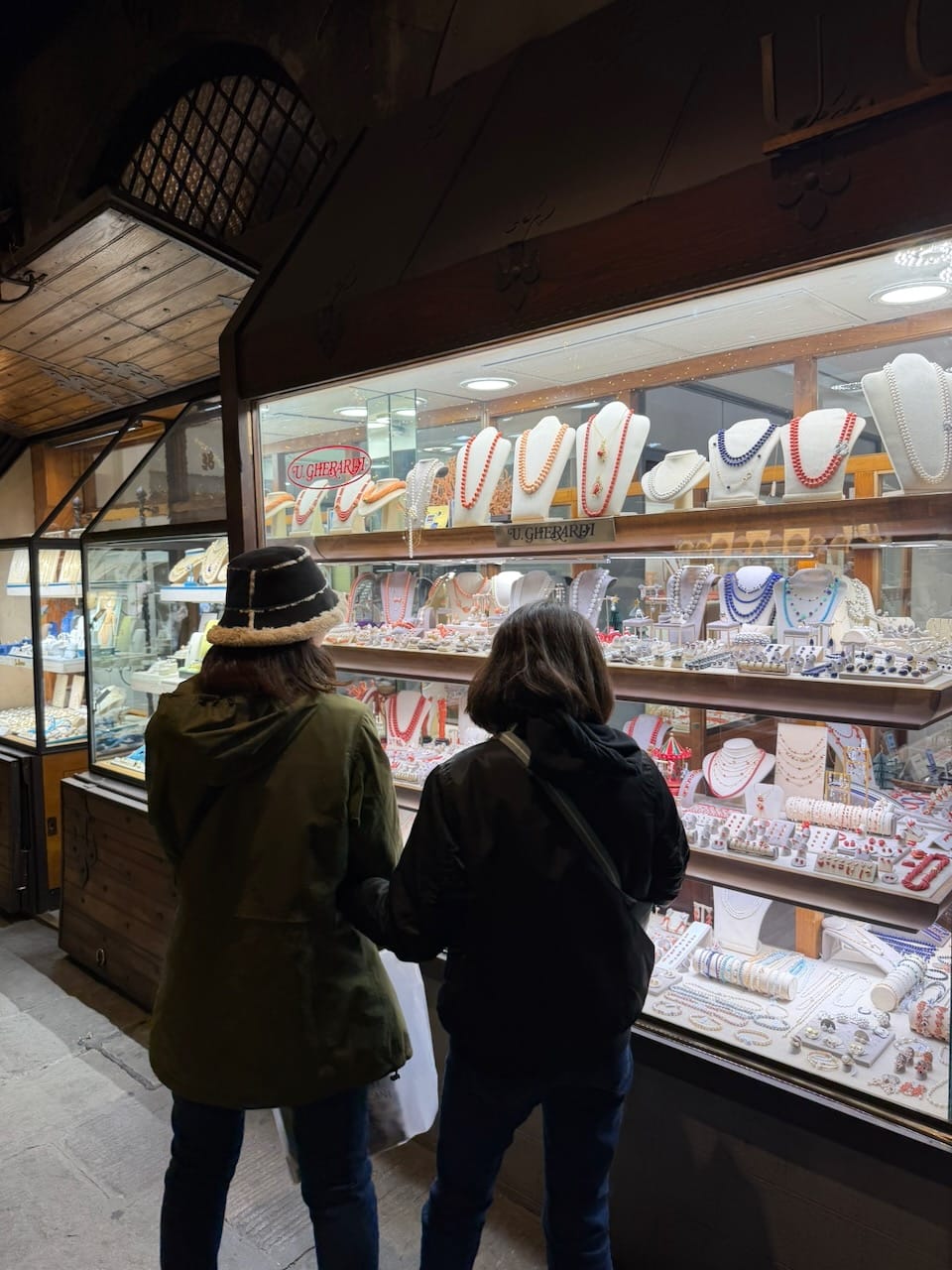
We still had time before our dinner reservation, so we lingered on the bridge, letting the moment stretch. We wandered past the famous jewelry shops, their windows full of gold and gemstones, doing a bit of slow eye-shopping. It wasn’t about buying anything; it was just pleasant to drift there, among the evening crowd, watching Firenze’s night.
Dinner that night was at another well-known steak house in Firenze: Ristorante dei Rossi. This time, again, I still wanted the steak I remembered from my first visit to Firenze more than 26 years ago. So I ordered the house specialty, the “Dei Rossi” sirloin. And it was… bingo. It wasn’t the same restaurant as back then, but the taste was exactly what I had been looking for this simple, honest, perfectly cooked, and deeply satisfying. One bite was enough to bring the memory back. Some flavors really do survive time.
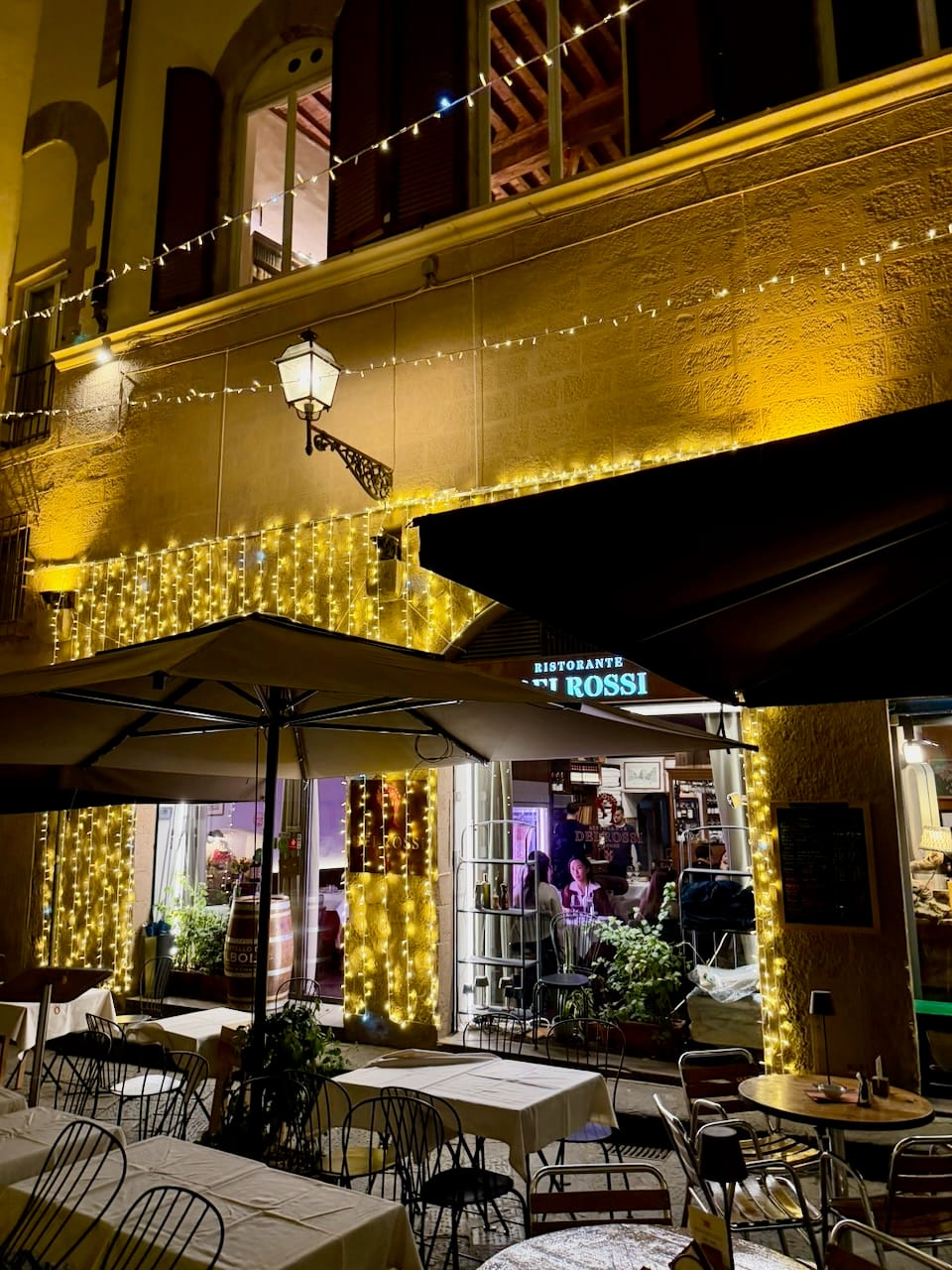
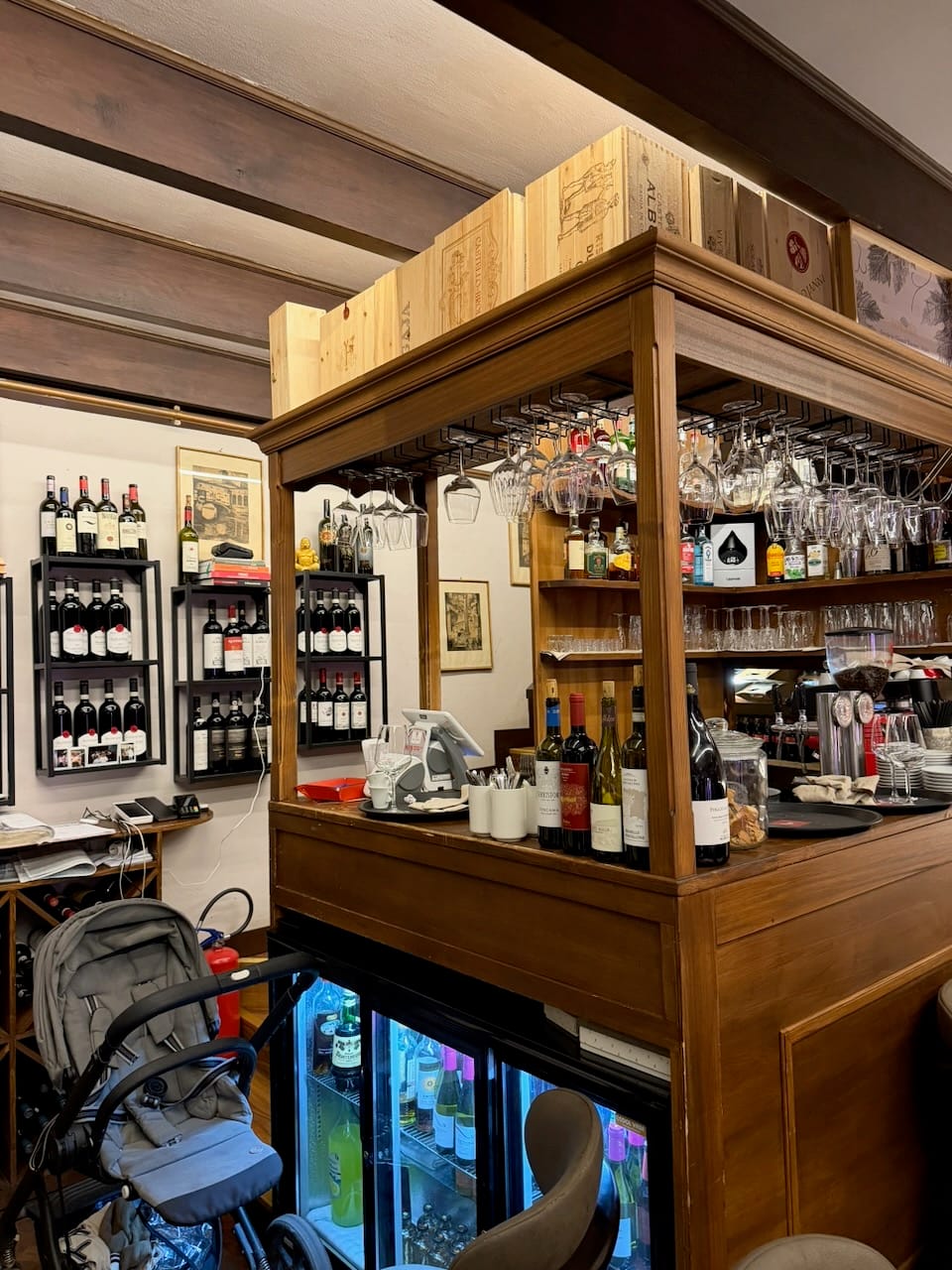
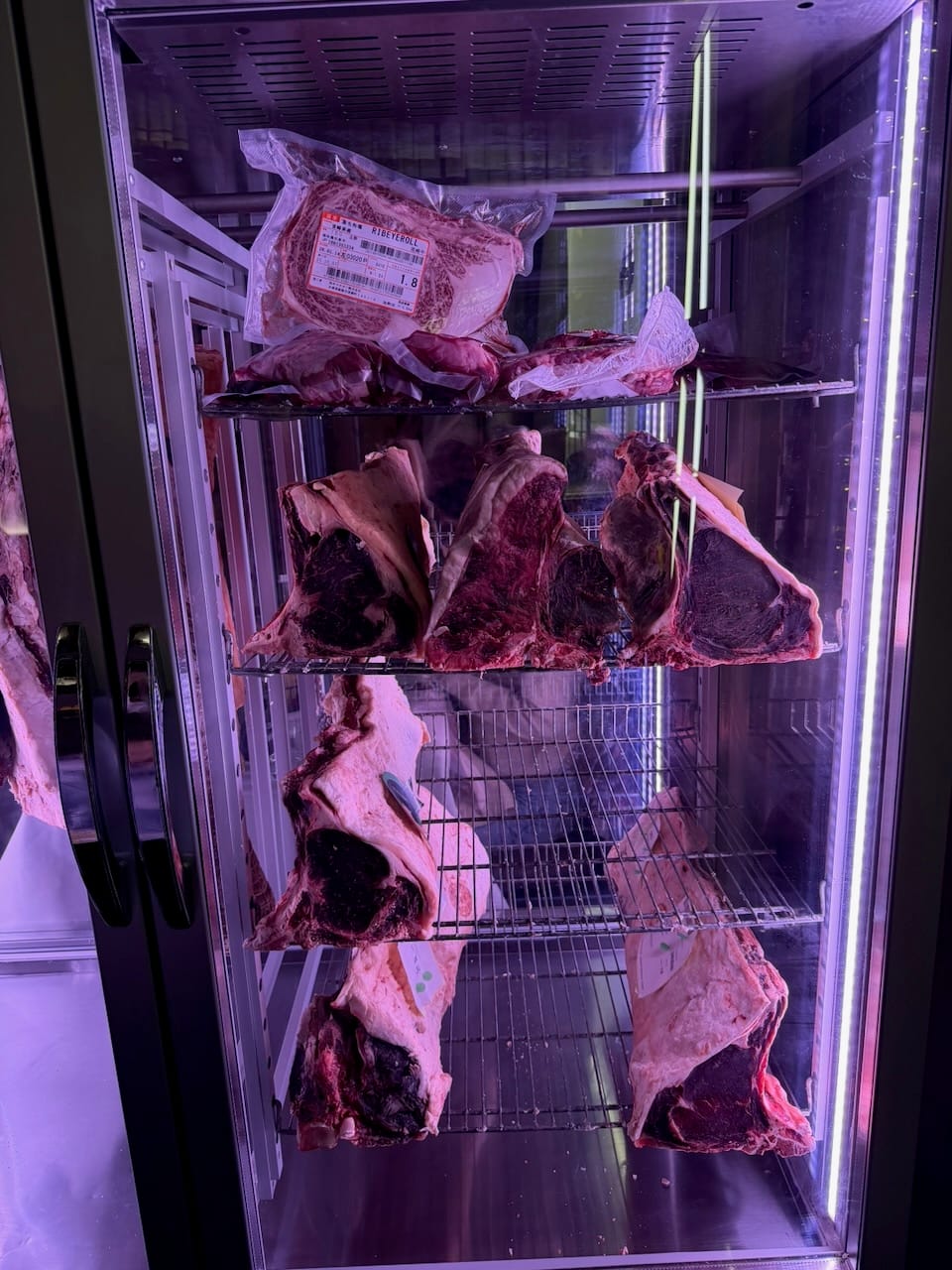
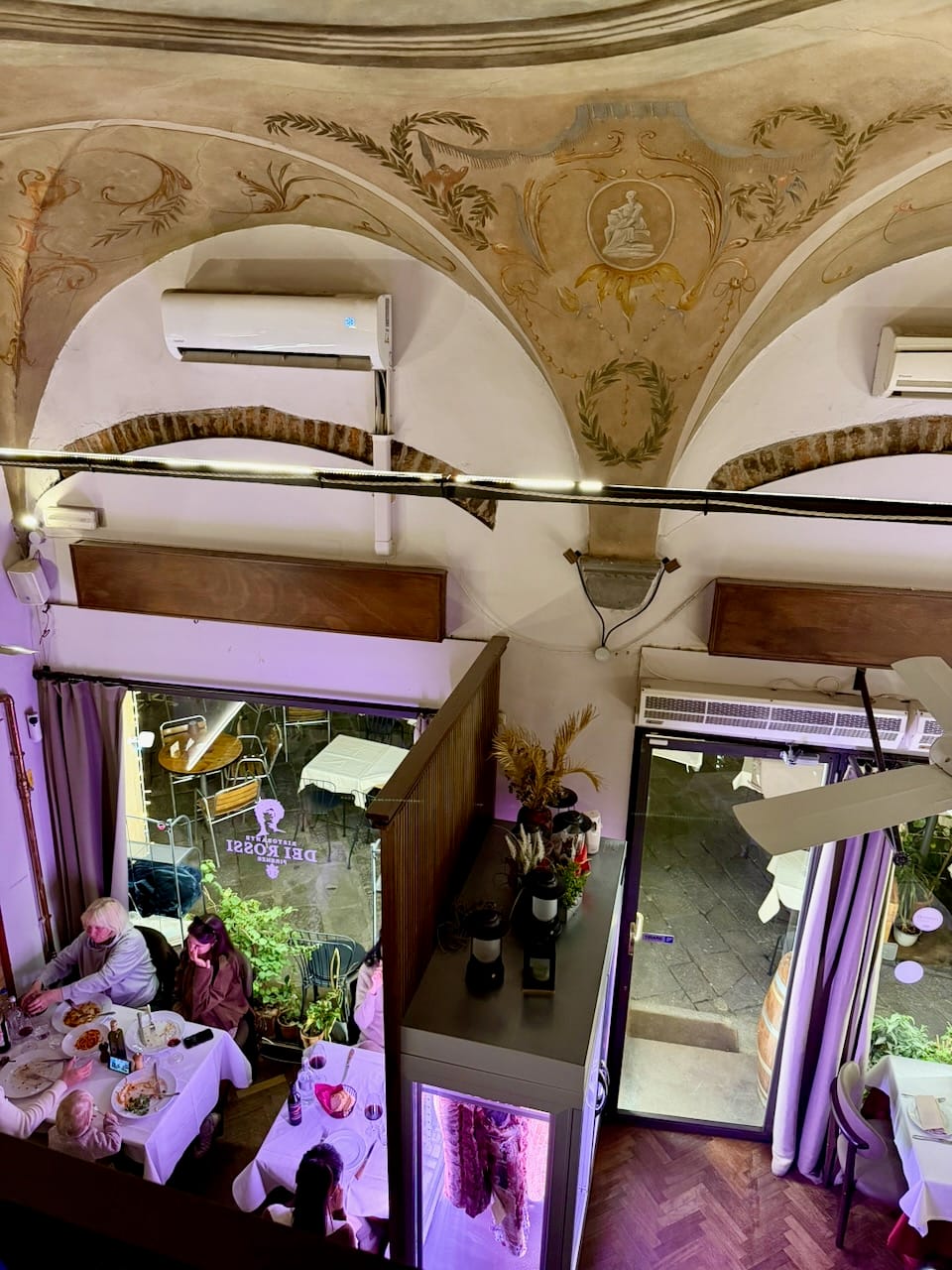
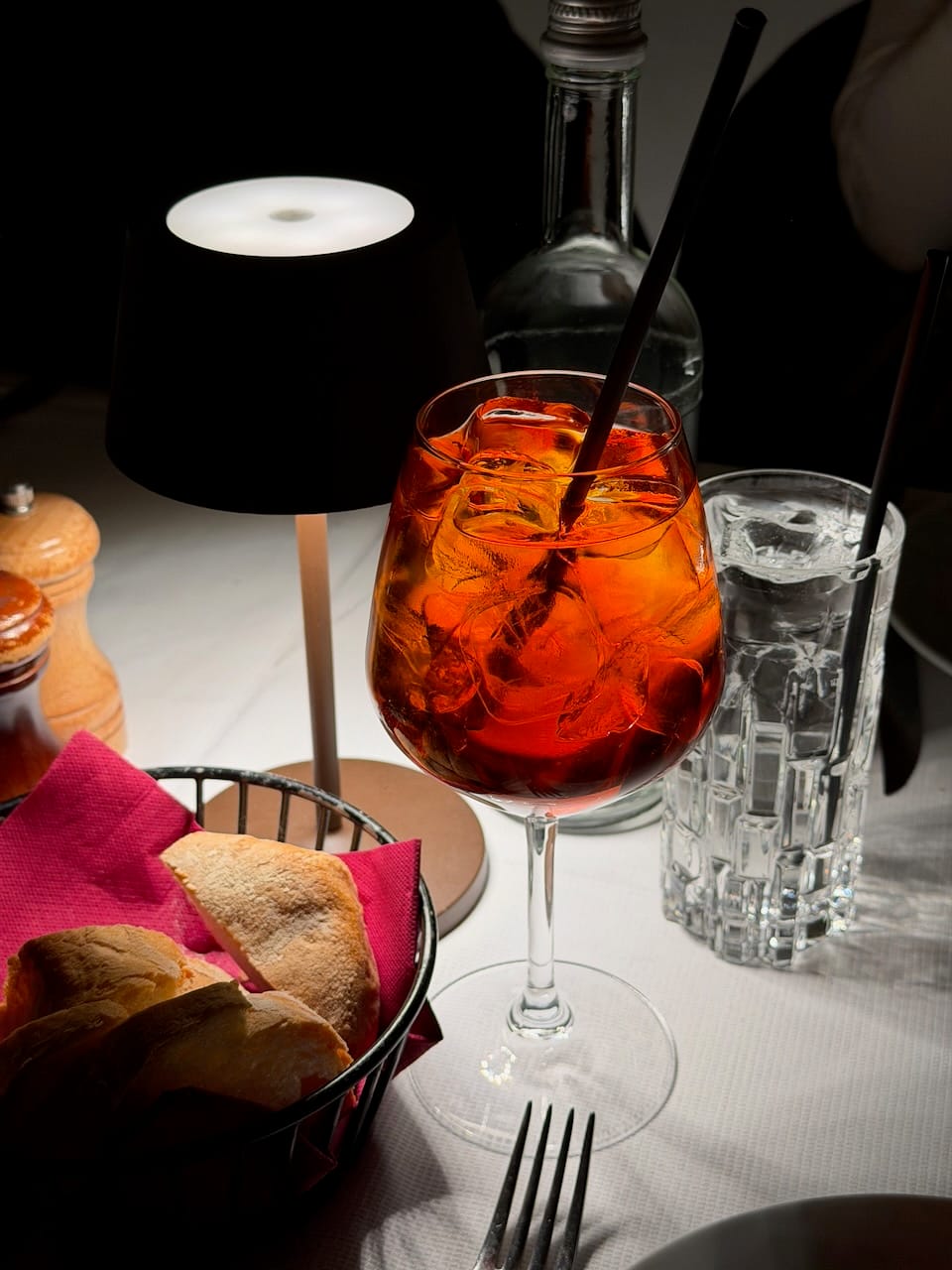
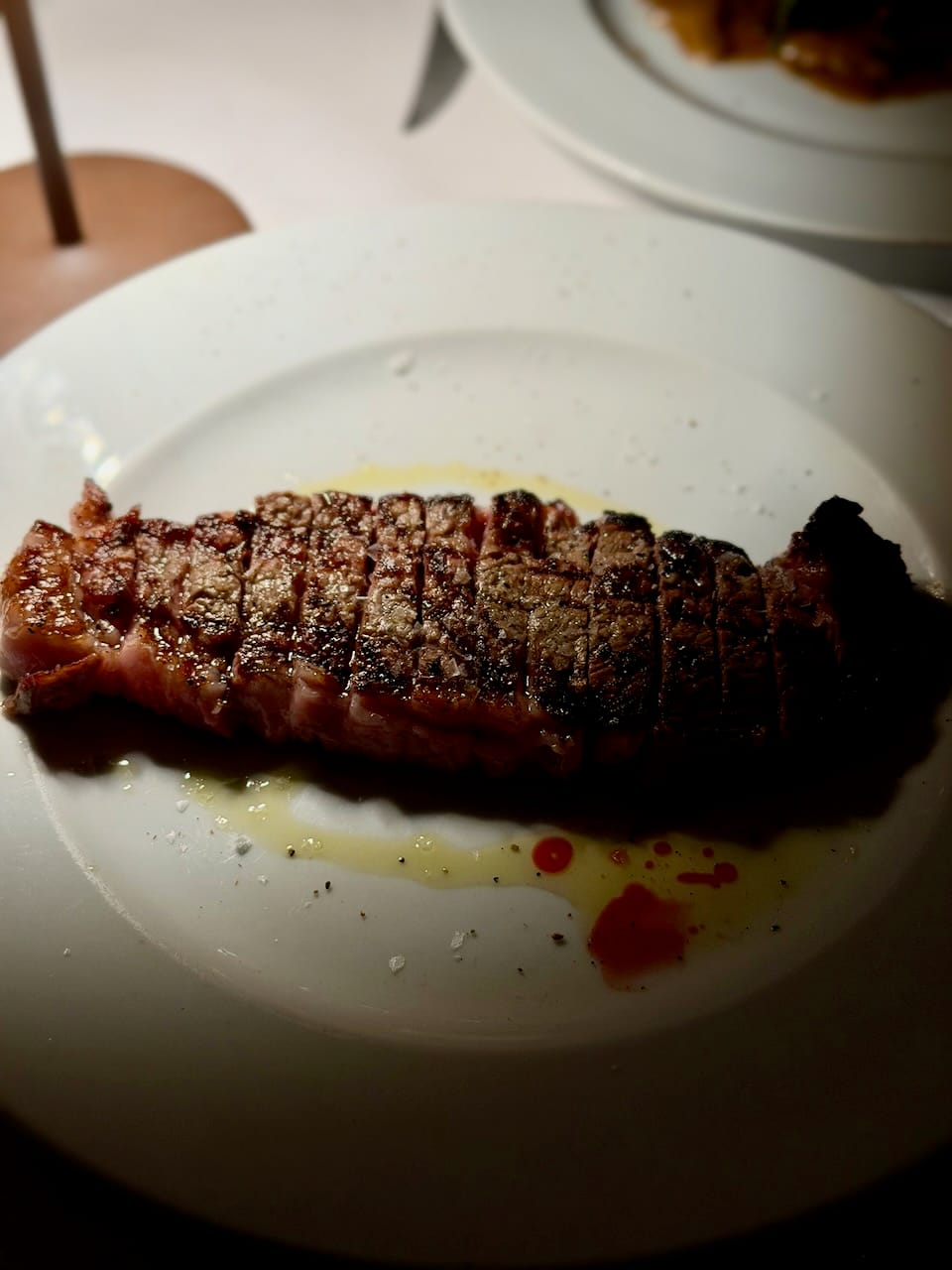
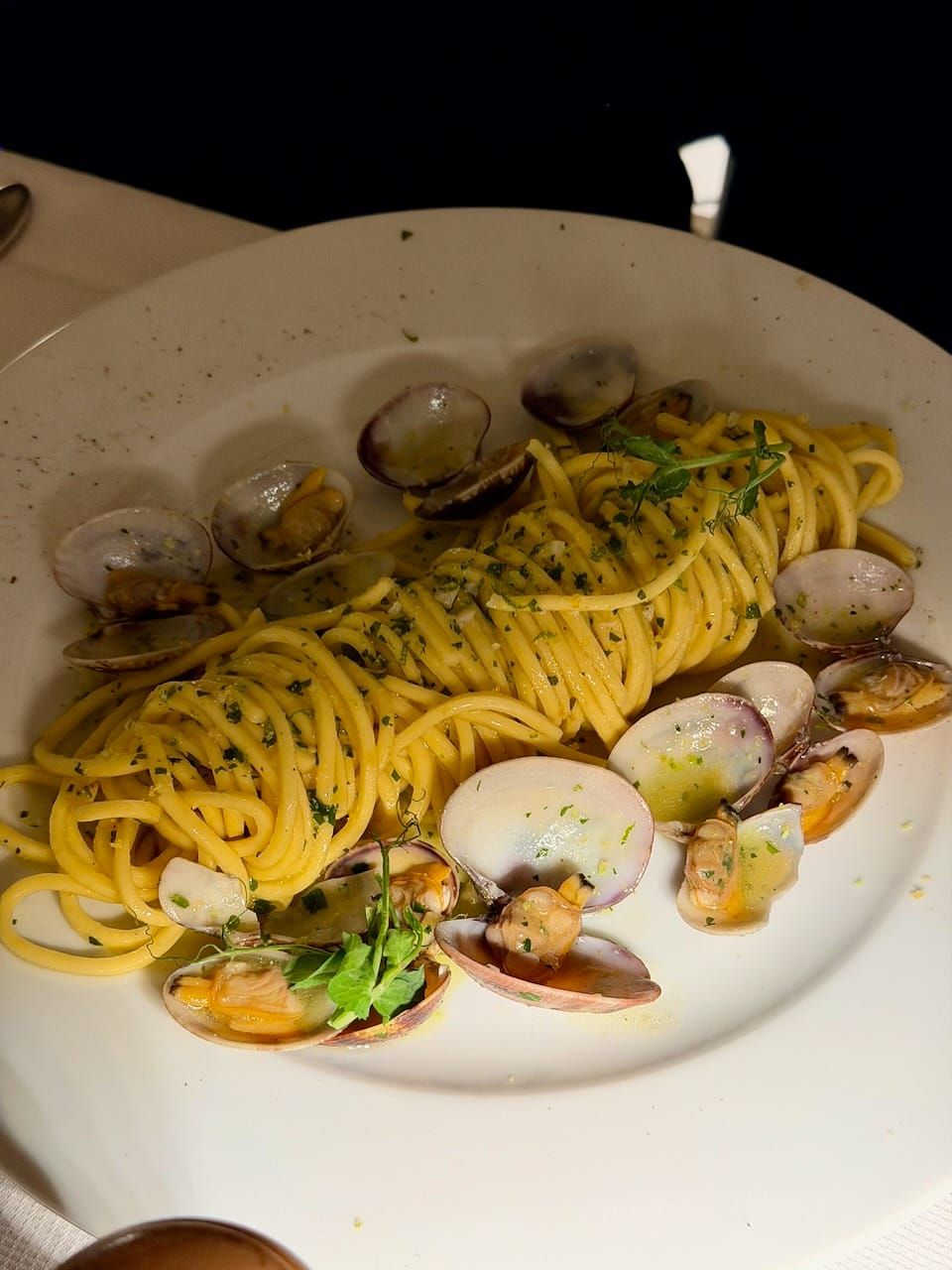
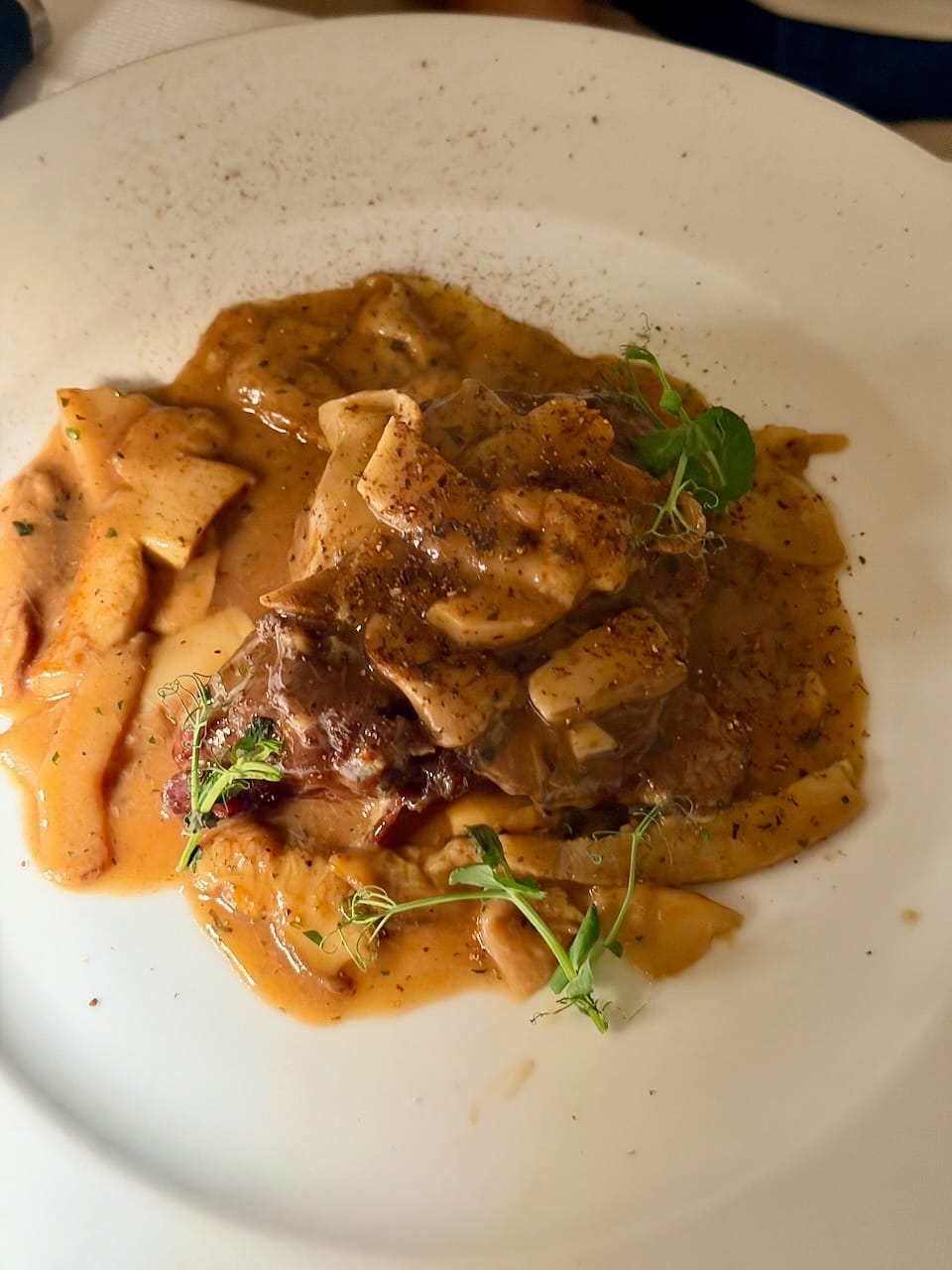

Ristorante dei Rossi
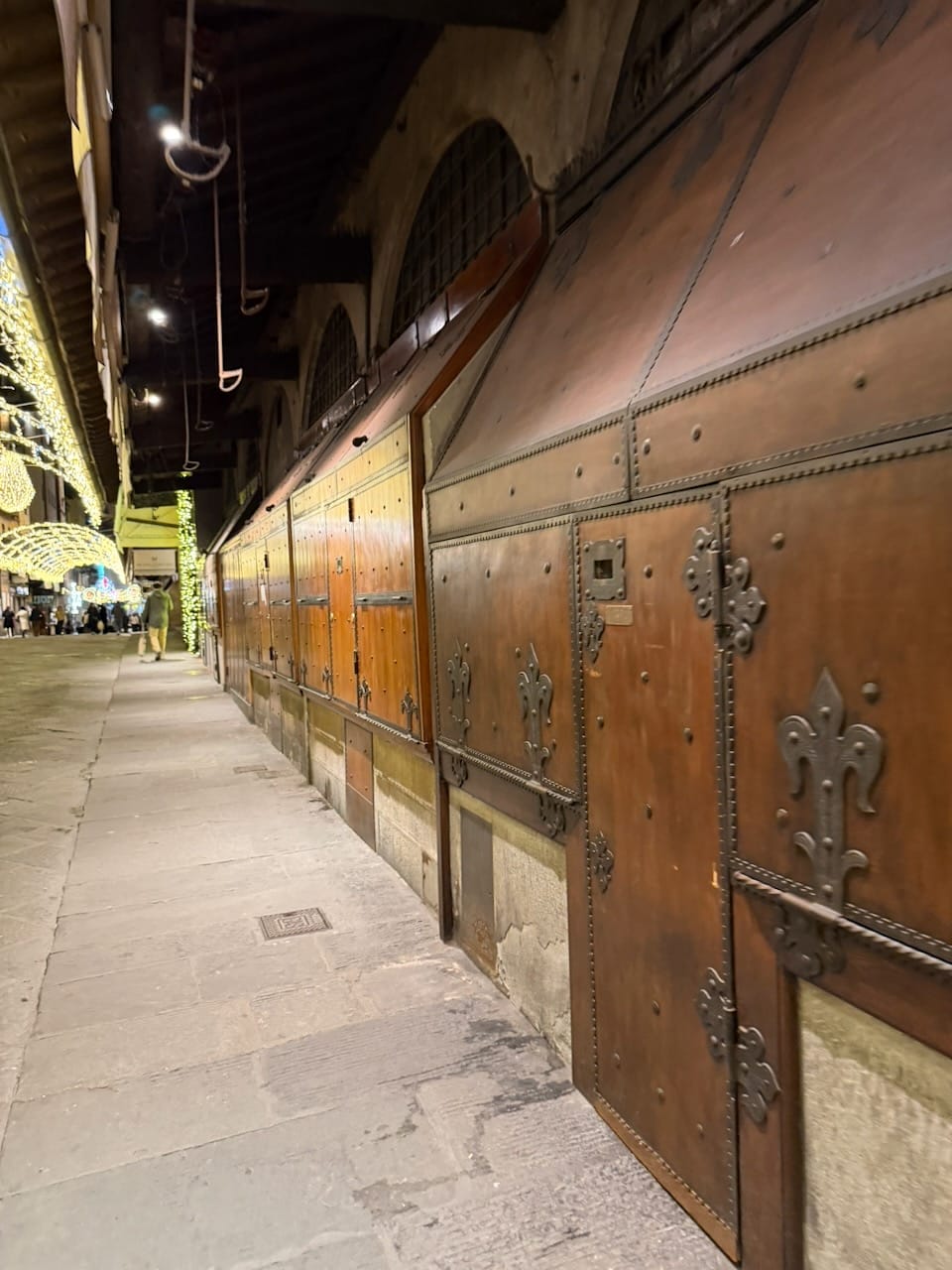
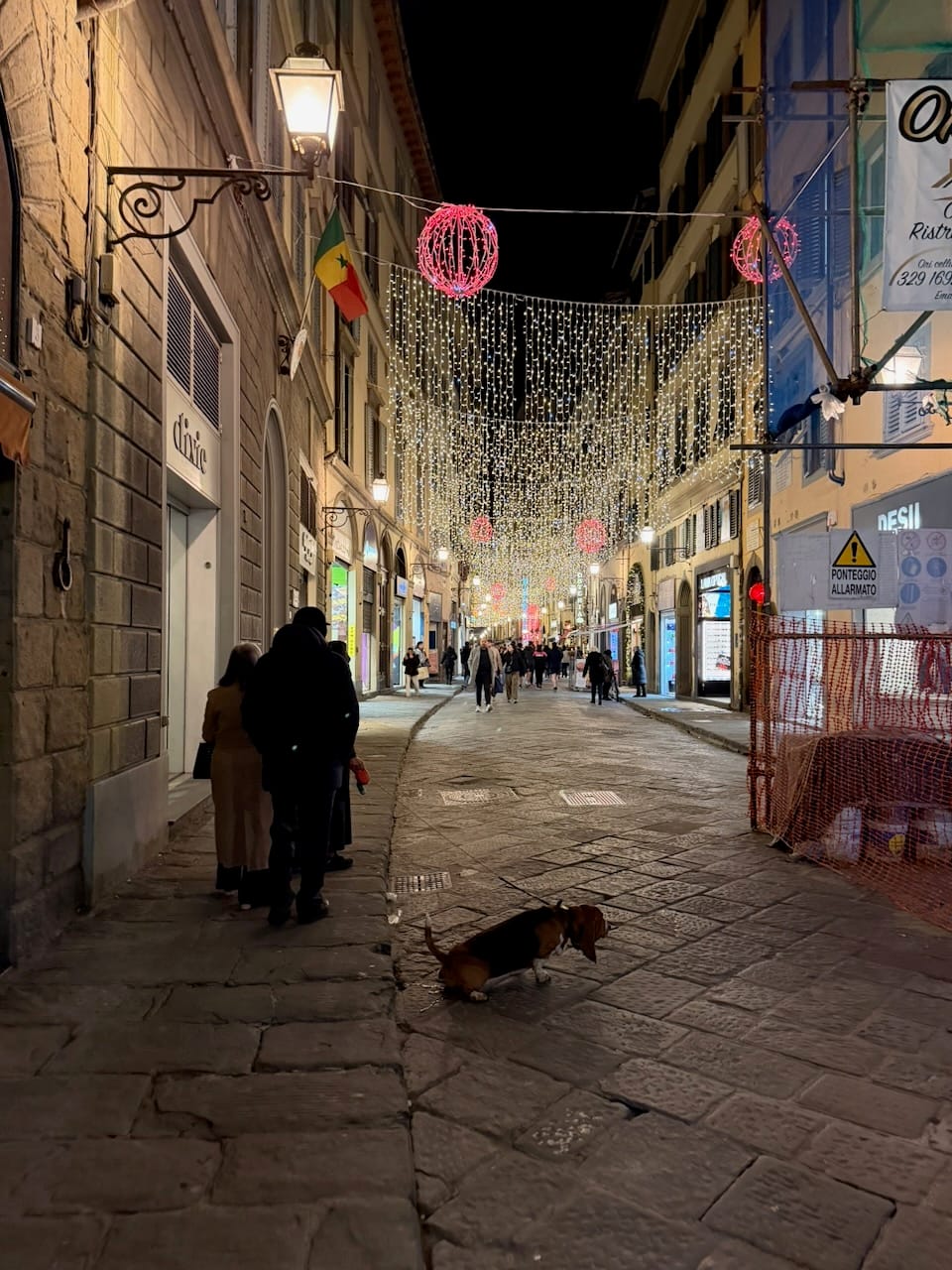
After dinner, we walked back to the hotel through the night streets of Firenze. When we reached Ponte Vecchio again, the famous wooden shutters of the jewelry shops had already been drawn for the night. The bridge looked quieter, softer, almost private, wrapped in its evening glow. It was another beautiful night.
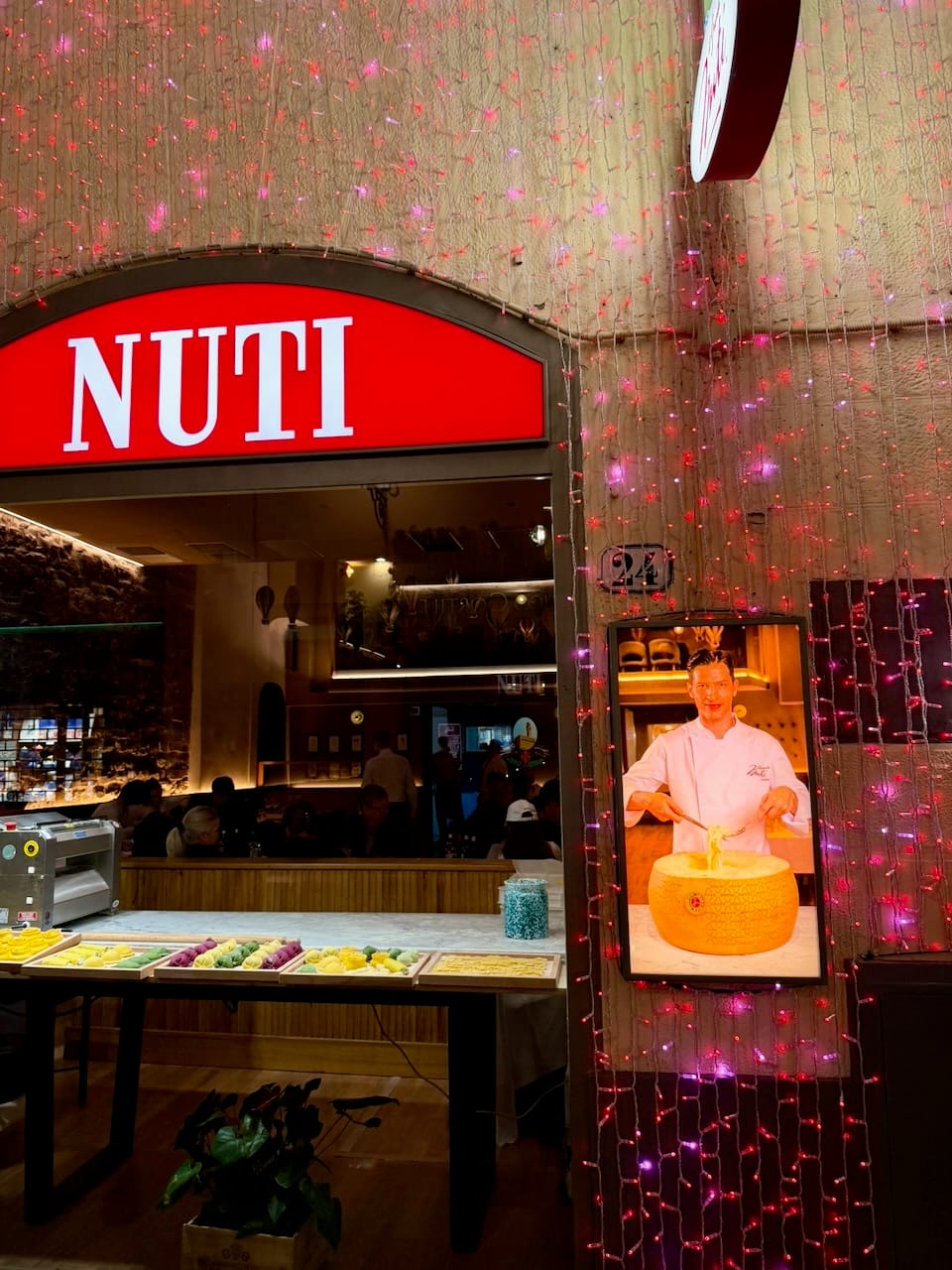
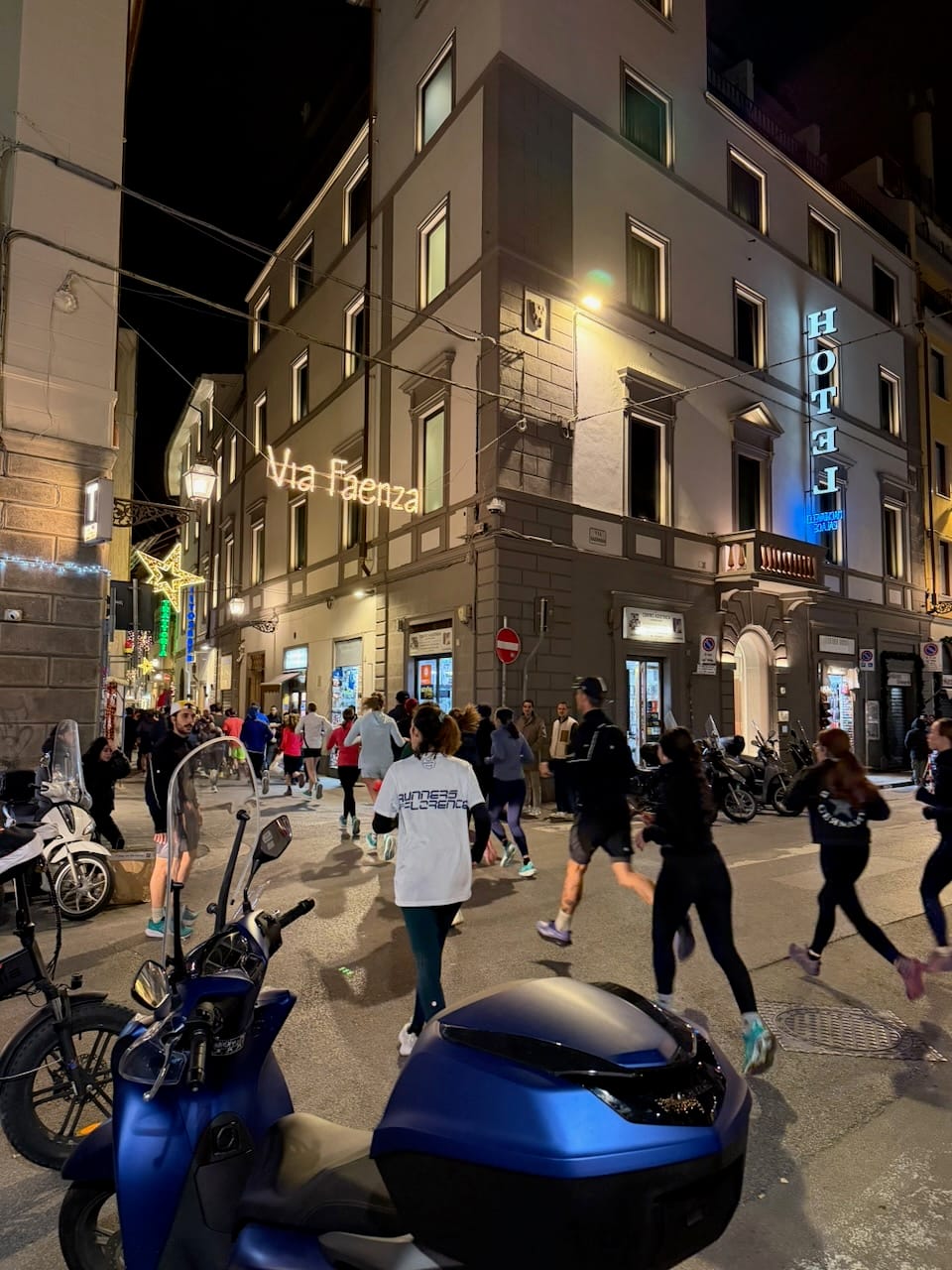
There were some unexpected little joys along the way. We kept spotting Alberto everywhere, and I was amused to realize just how local he really is. We were also briefly swept up by a running crew passing through the streets, a reminder that this city stays alive in many different rhythms, and that this kind of urban energy isn’t only a Korean thing.
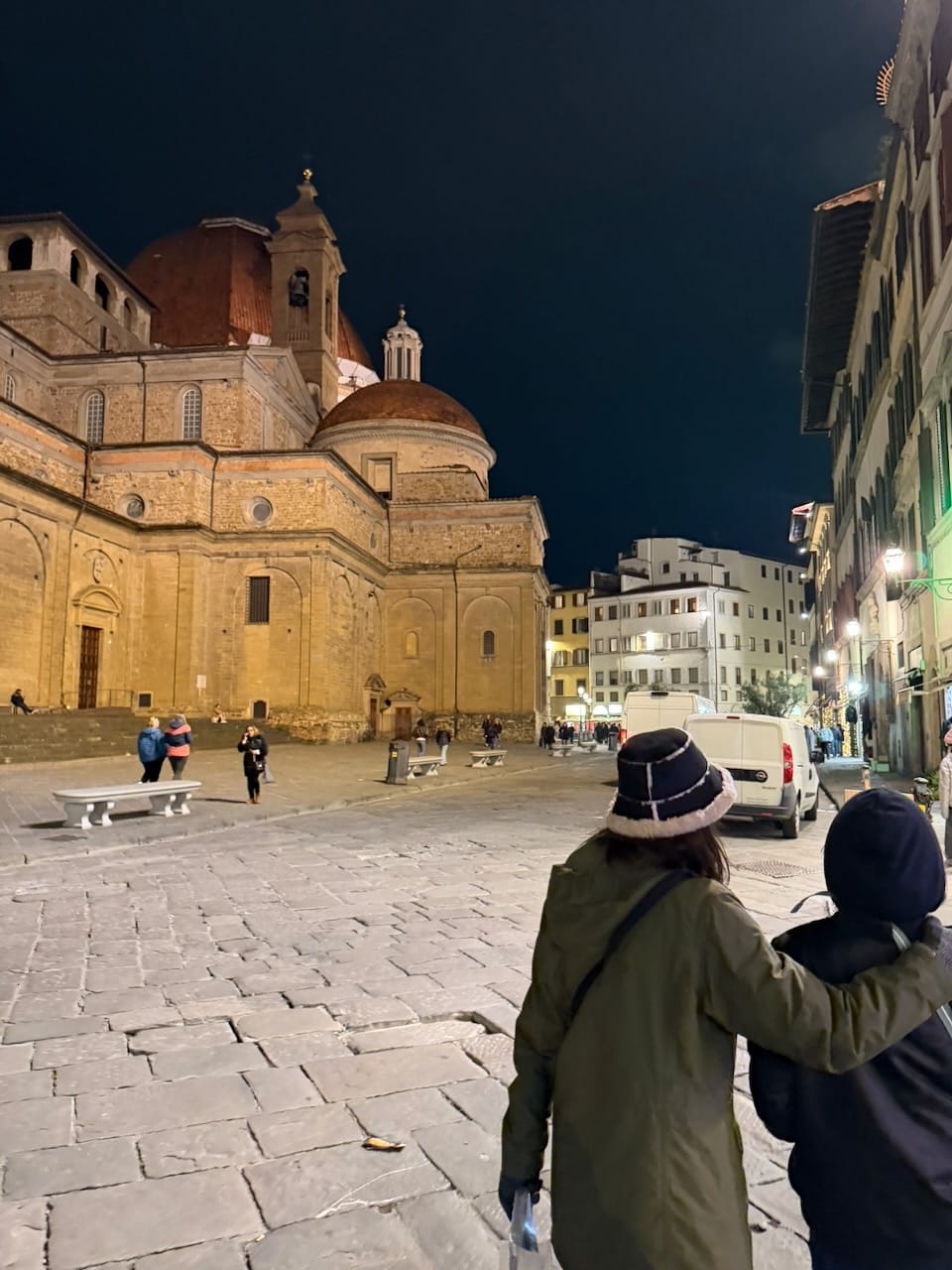
It was our last night in Firenze on this trip. Only two nights— far too short—but tomorrow we would move on to another city, carrying this one quietly with us.