BTS World Tour Arirang at Stanford, Day 2

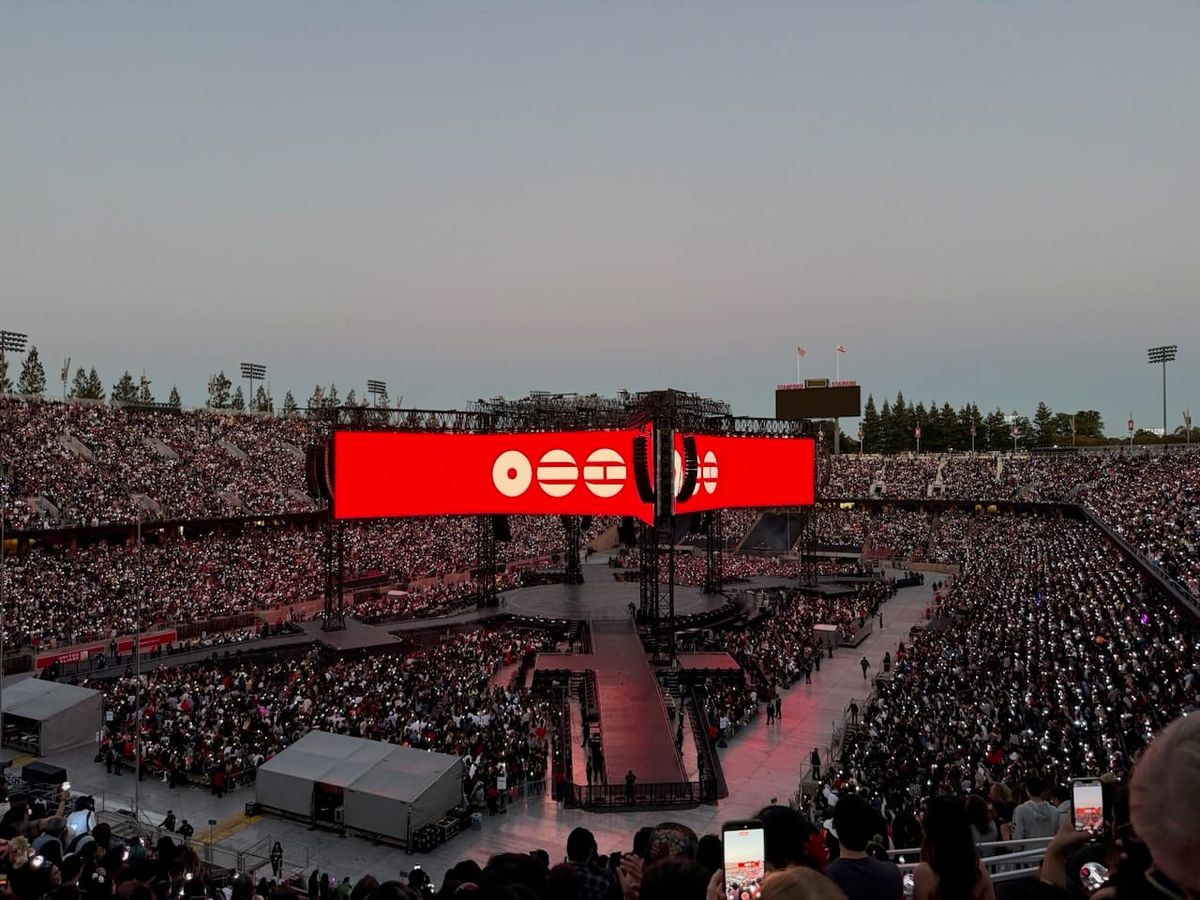
Not long after K-Pop Fireworks Night at Oracle Park, the real K-pop moment came much closer to my home. BTS came to Palo Alto.
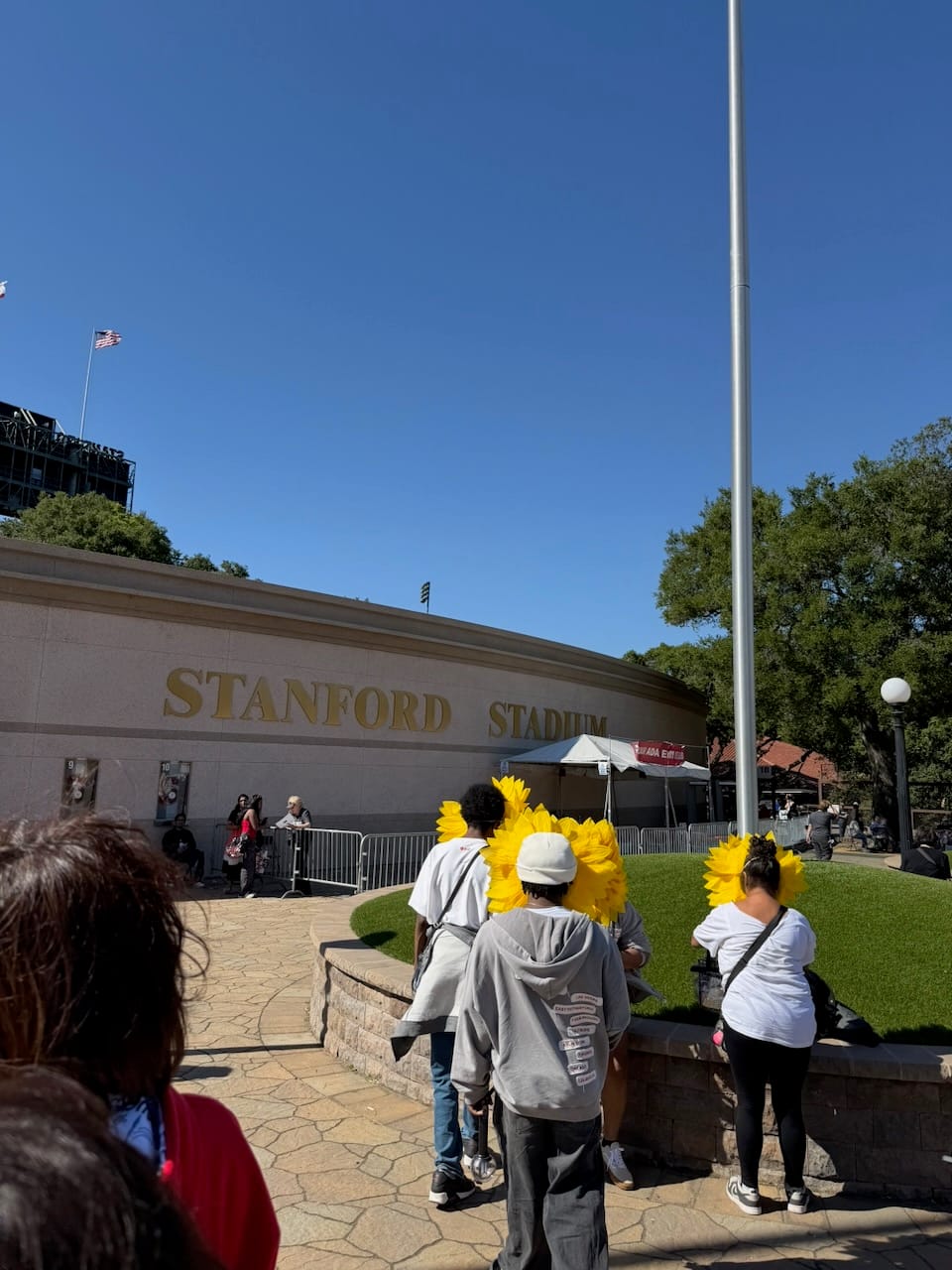
Technically, the venue was Stanford Stadium, not Palo Alto, and technically this was part of the BTS World Tour Arirang. But from our side of town, it felt almost absurdly local (the stadium is within 3 miles from my home). One of the biggest pop groups in the world was playing a stadium concert within walking distance of places where we usually go for lunch, coffee, groceries, or a quiet weekend walk. For a city that often feels engineered to be calm, expensive, and slightly sleepy after dark, that alone was strange.
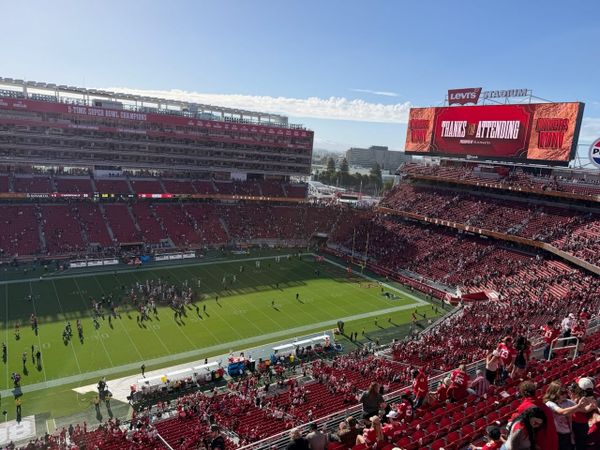
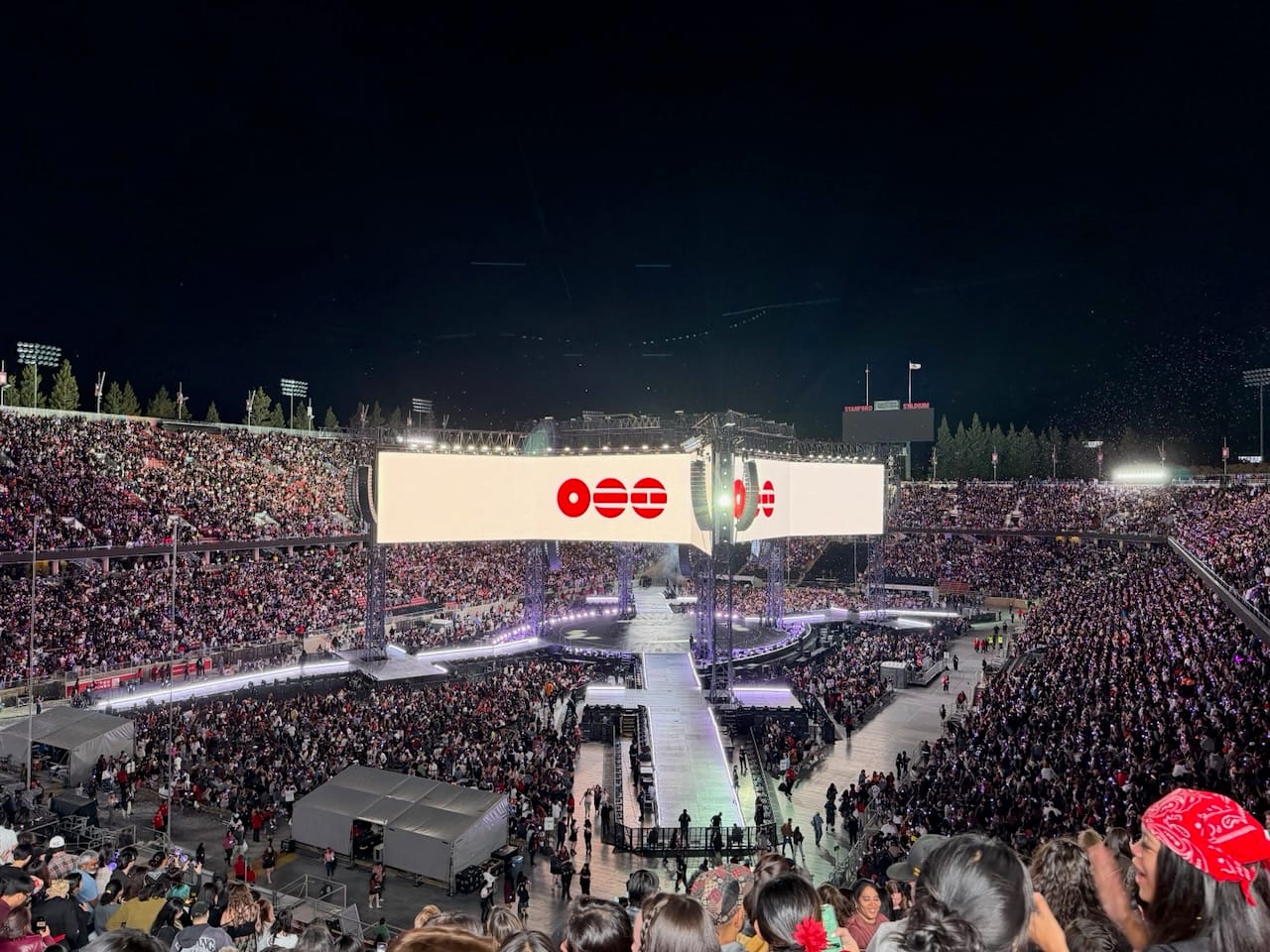
The Stanford stop was unusual in another way. Large commercial pop concerts in the Bay Area usually feel as if they belong at Levi's Stadium. That is the default mental picture: huge parking lots, NFL-scale infrastructure, the whole machinery of Santa Clara built around absorbing a crowd. Stanford Stadium is large too, of course. It holds a serious college football crowd. But it is still Stanford, with campus roads, neighborhood sensitivities, and the sense that every event has to negotiate with a place that was not primarily designed for this kind of mass spectacle. Stanford's own framing made that clear: these were three sold-out shows on May 16, 17, and 19, roughly more than 150,000 people in total, and only the Northern California stop on the tour. That is not a normal weekend on the small city of the Bay Area.
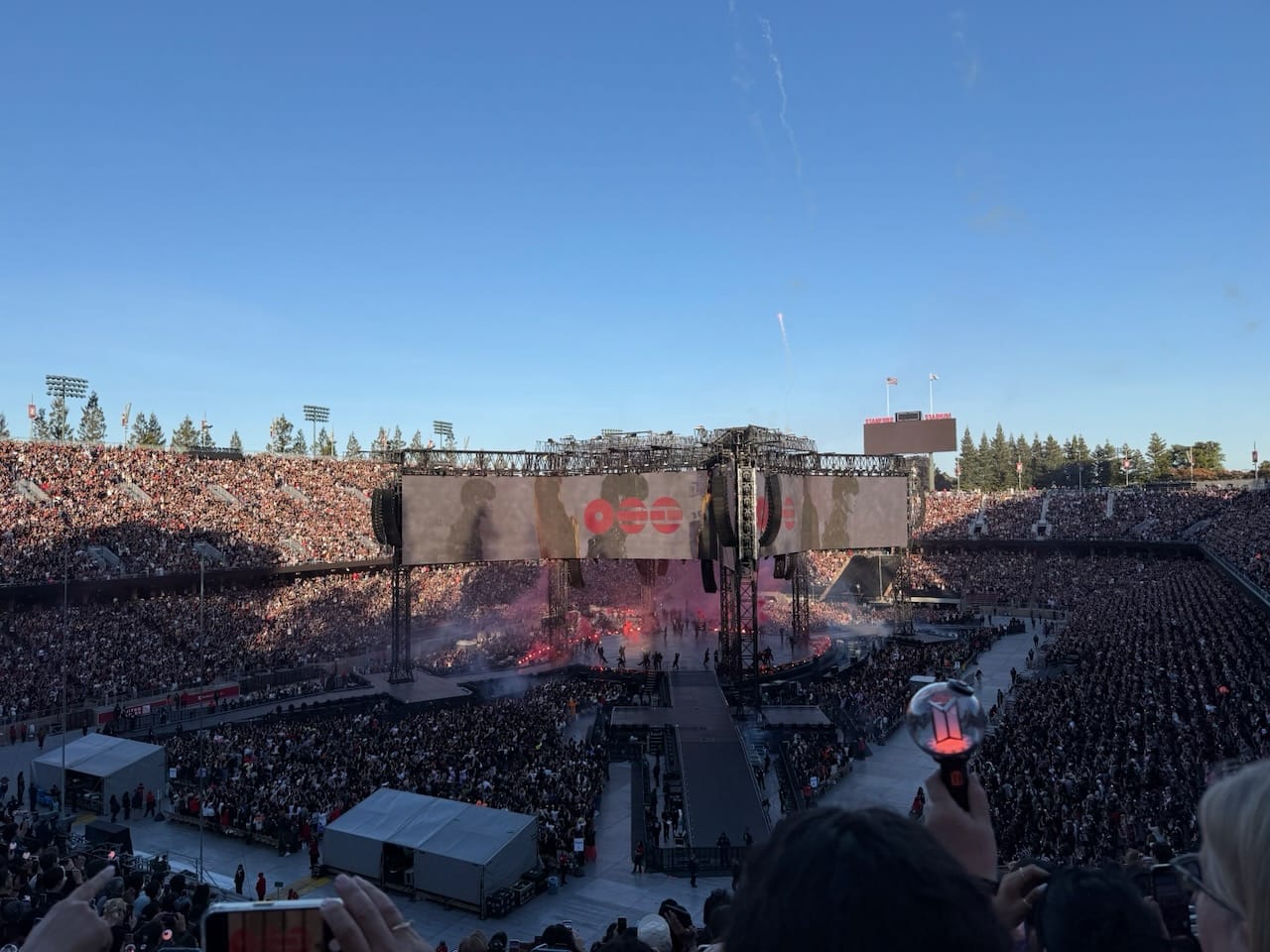
Because it was Stanford, the whole night began earlier than a stadium concert usually does. The show started at 7pm, under daylight. I heard the concerts had to finish by 10pm because of local rules, and Stanford had also told the community that amplified sound would run only until about then. The members mentioned from the stage that they had worried about performing while it was still bright, but that it was nice to see fans' faces clearly. I believed them, but only partly. The tone I sensed was less "this is ideal" than "this is better than we were afraid it would be." For a pop concert built around screens, lights, color, and transformation, daylight is not exactly your friend. Still, there was something memorable about seeing a stadium full of ARMY bombs glowing faintly before the sky had fully given up.
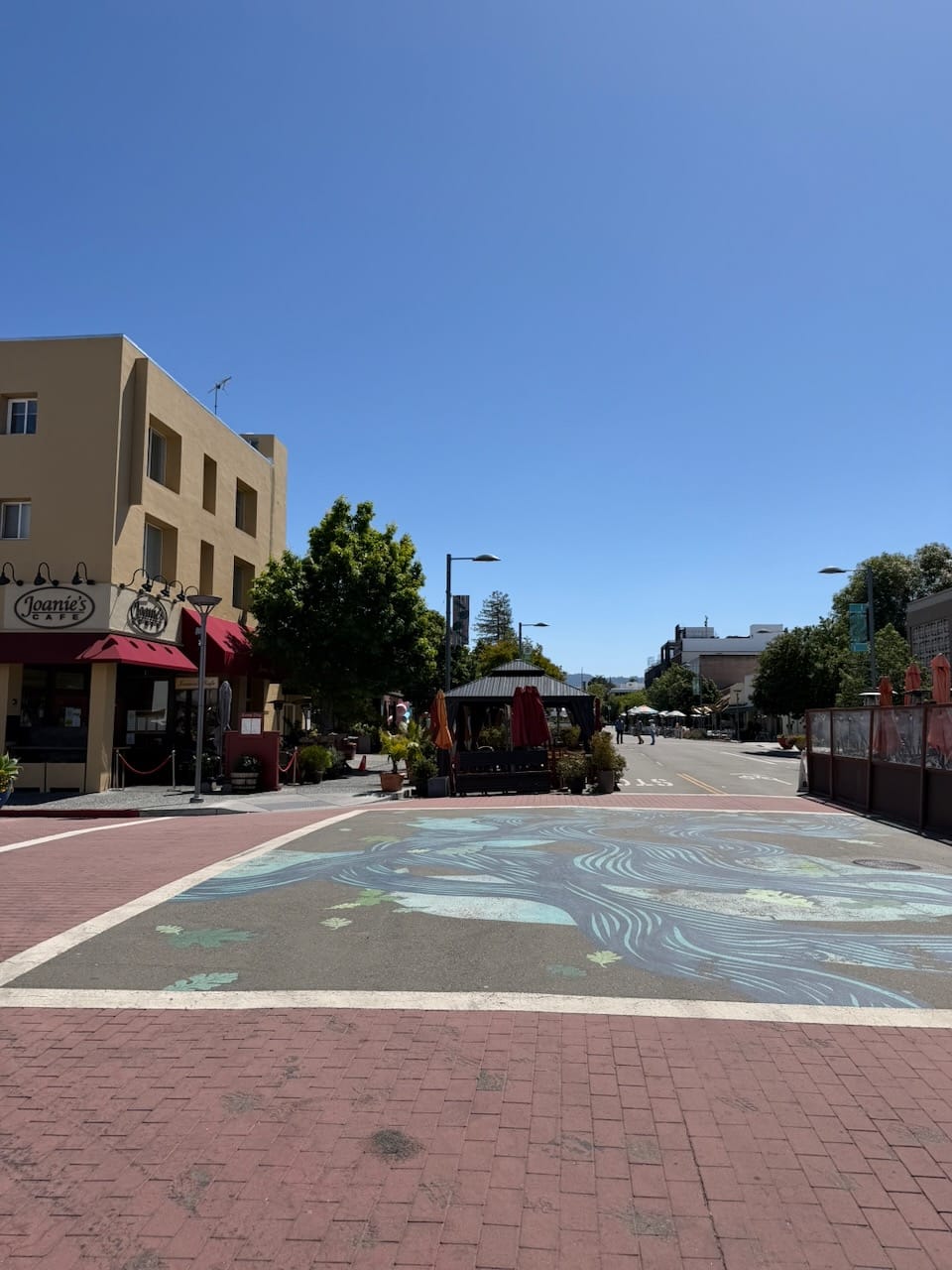
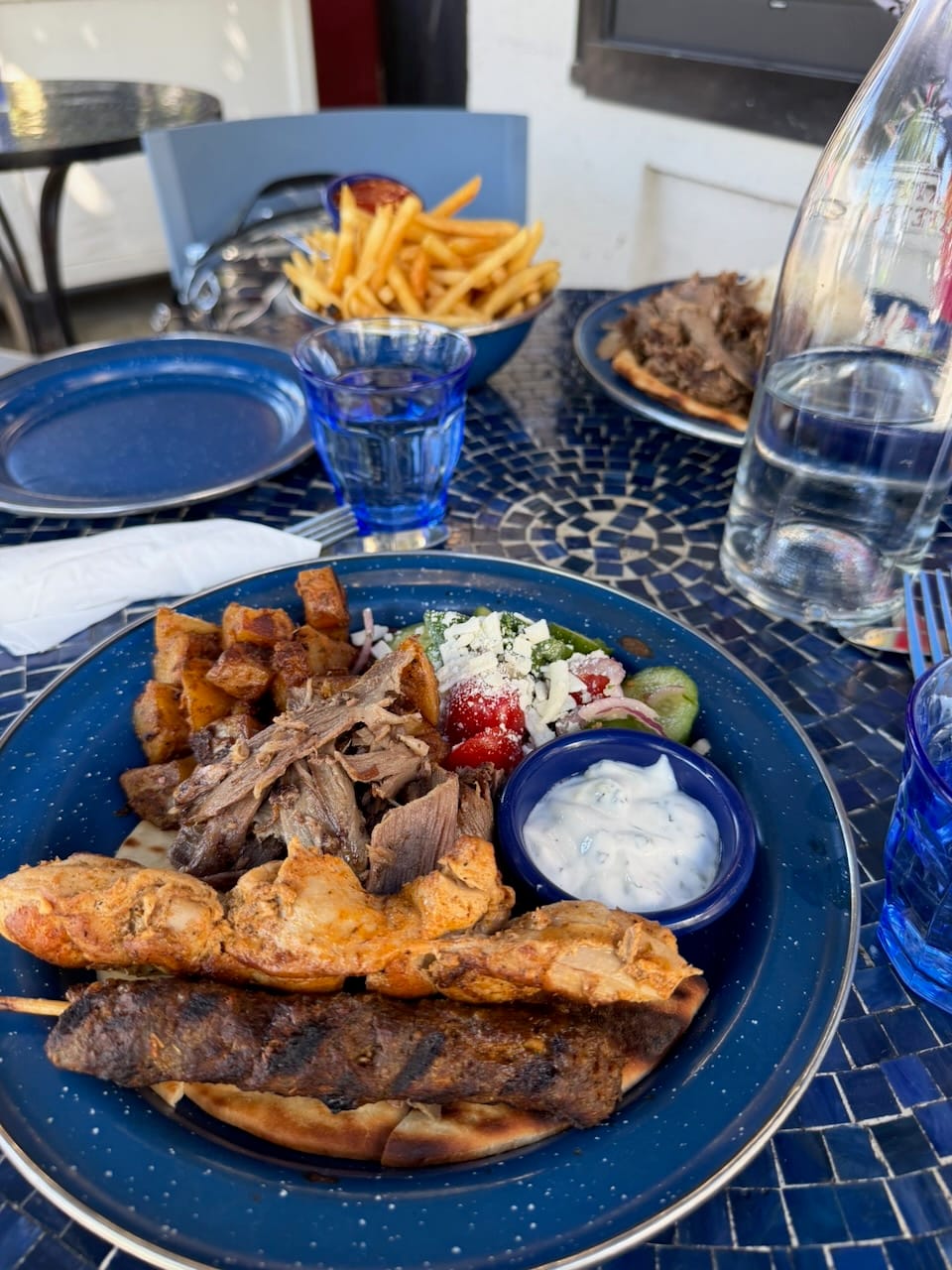
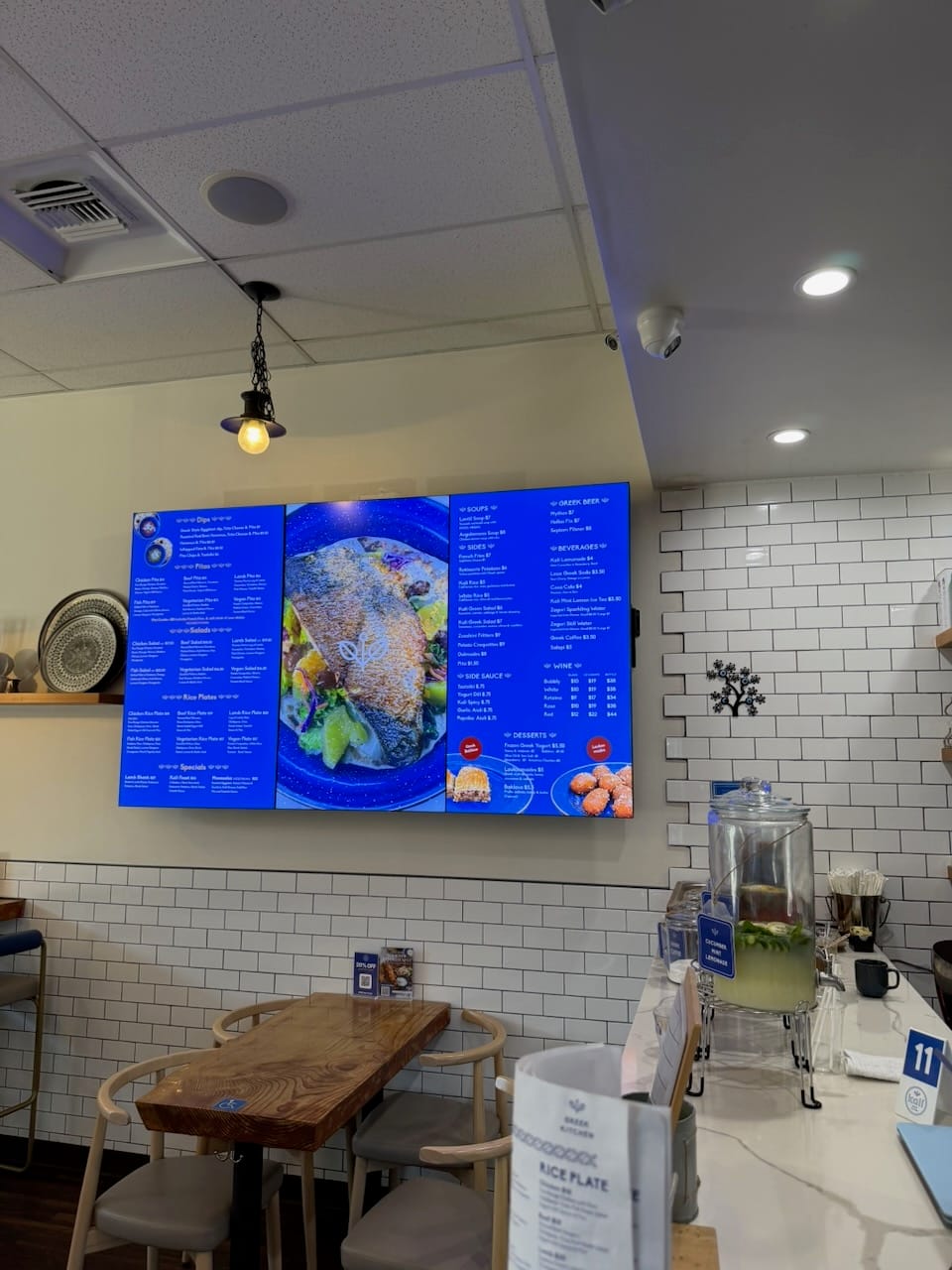
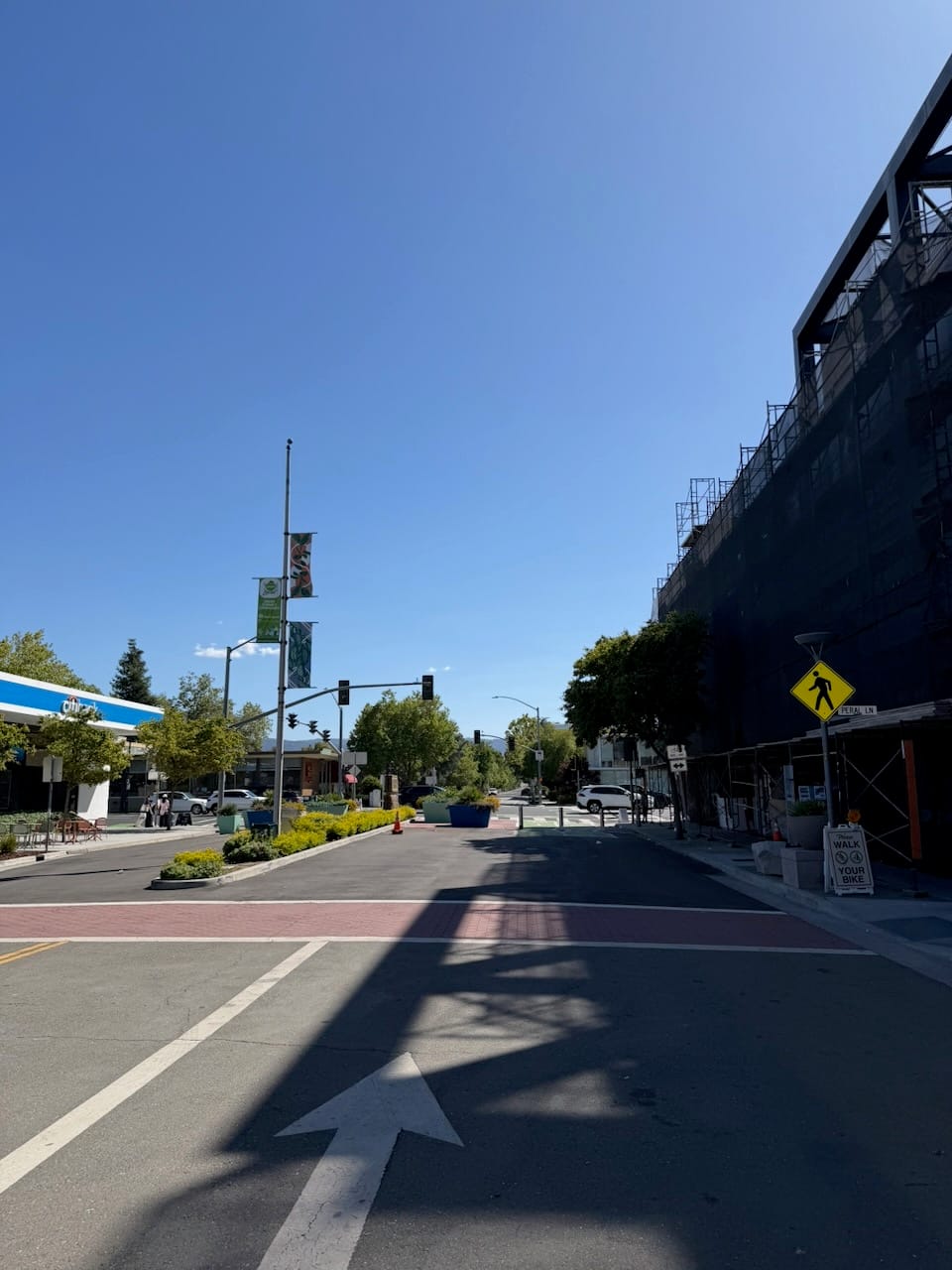
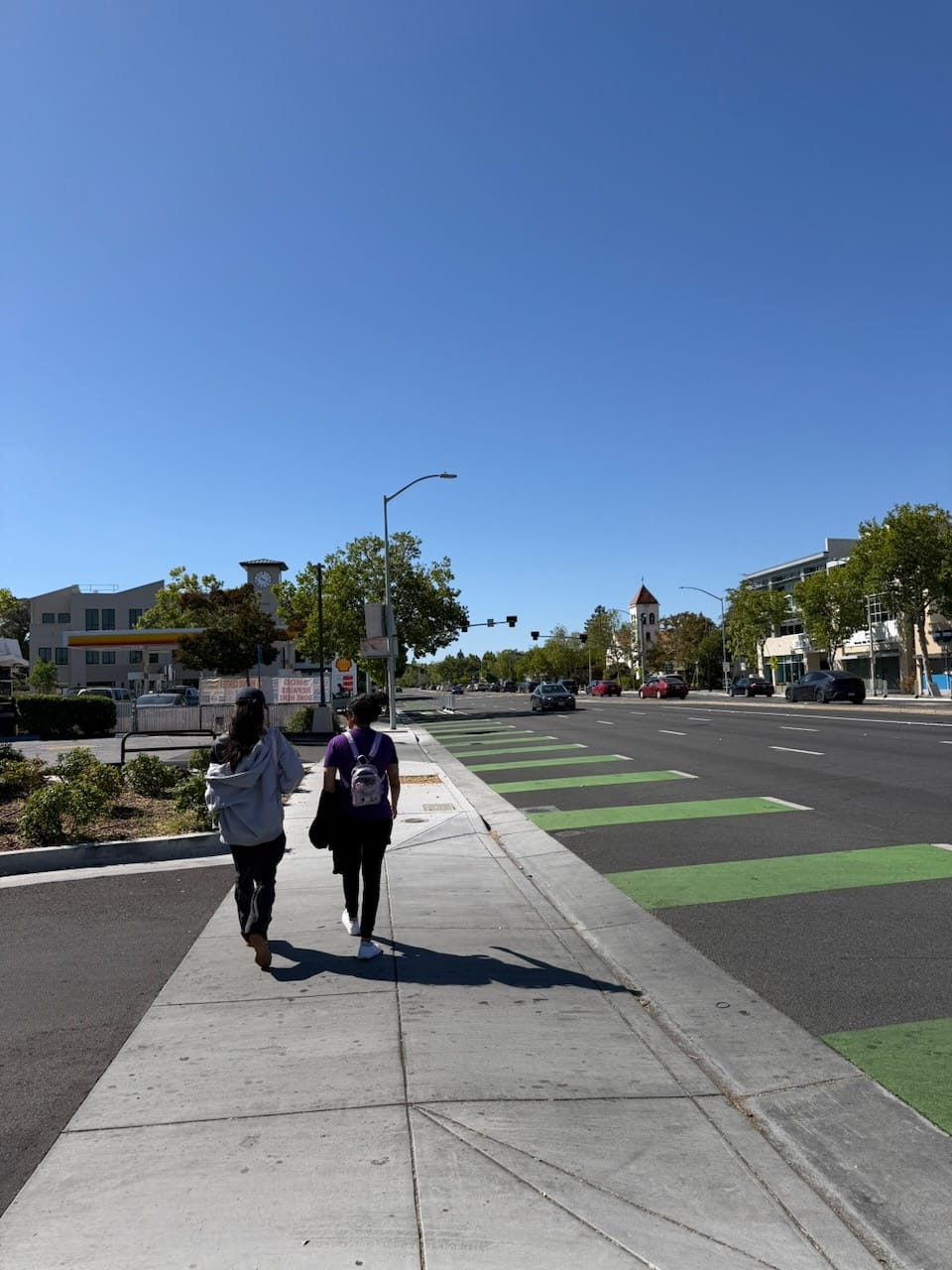
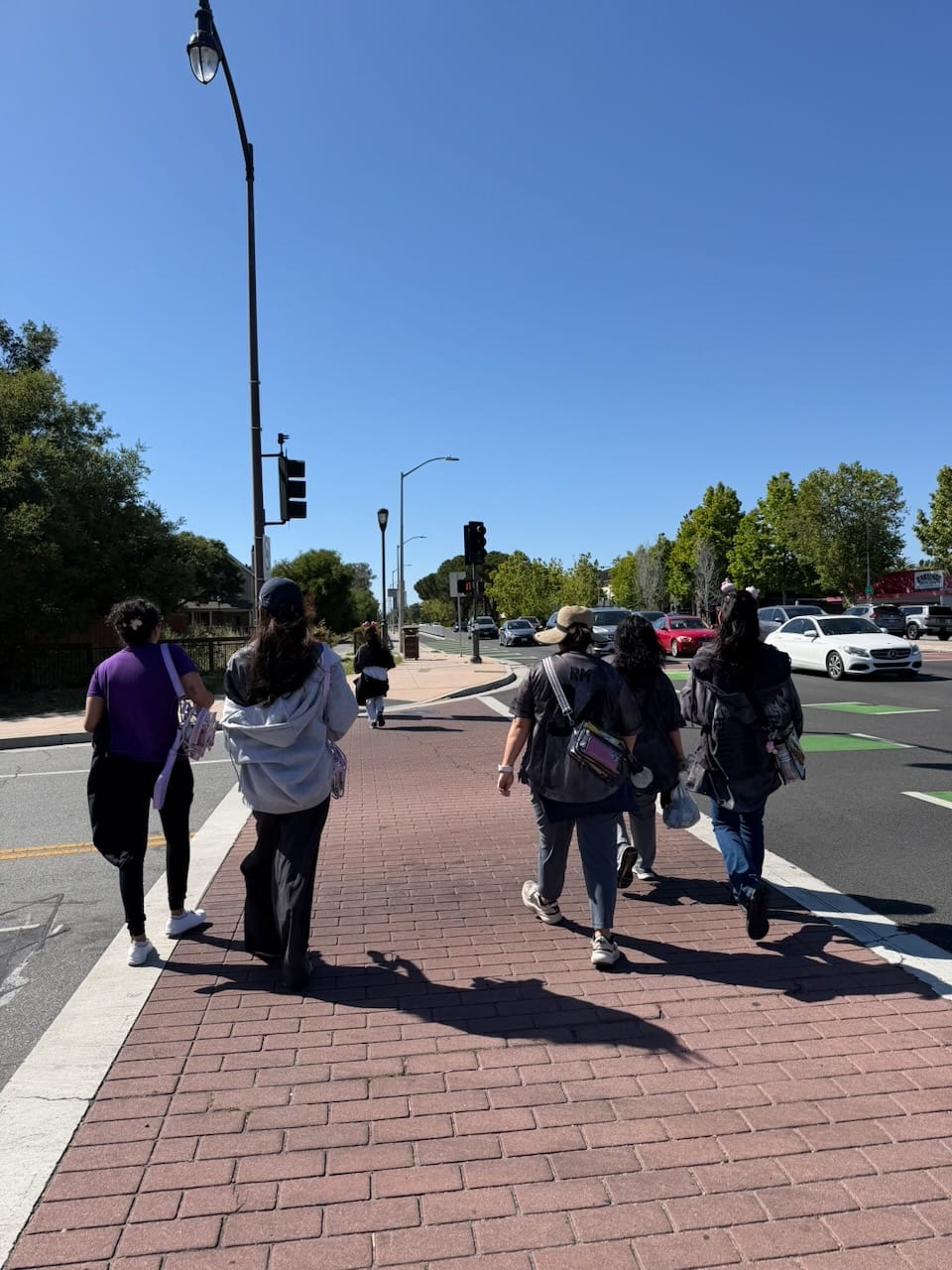
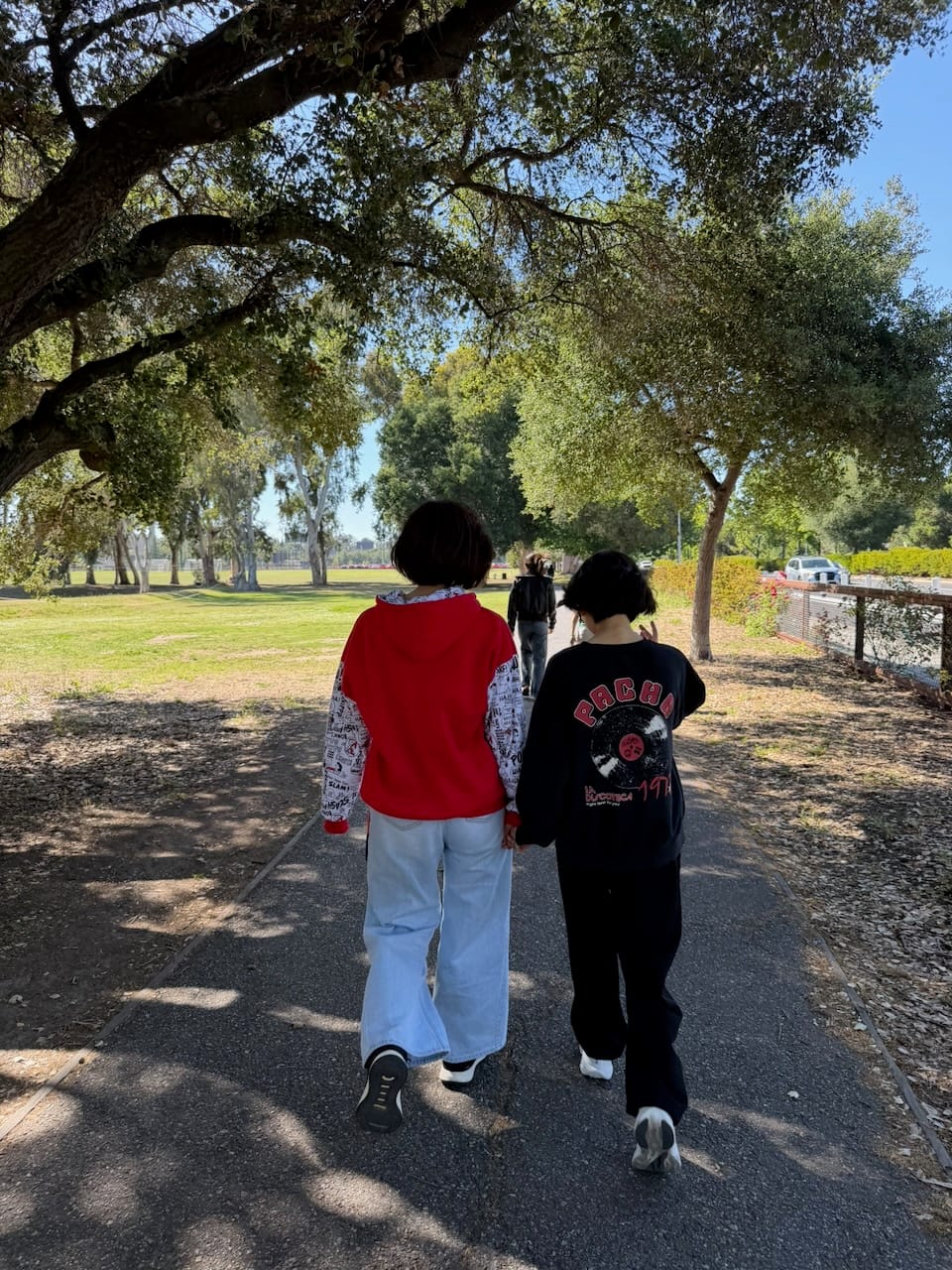
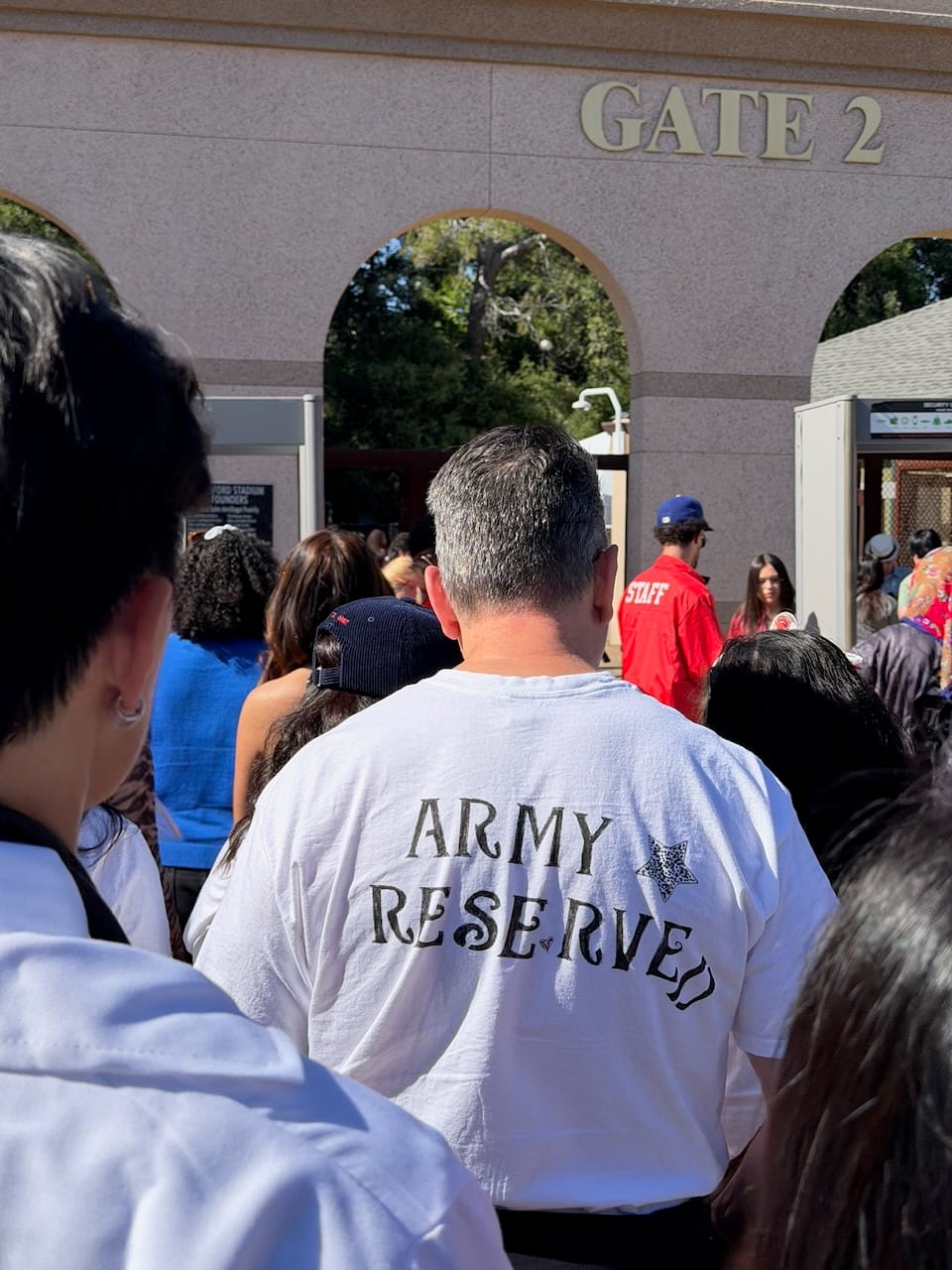
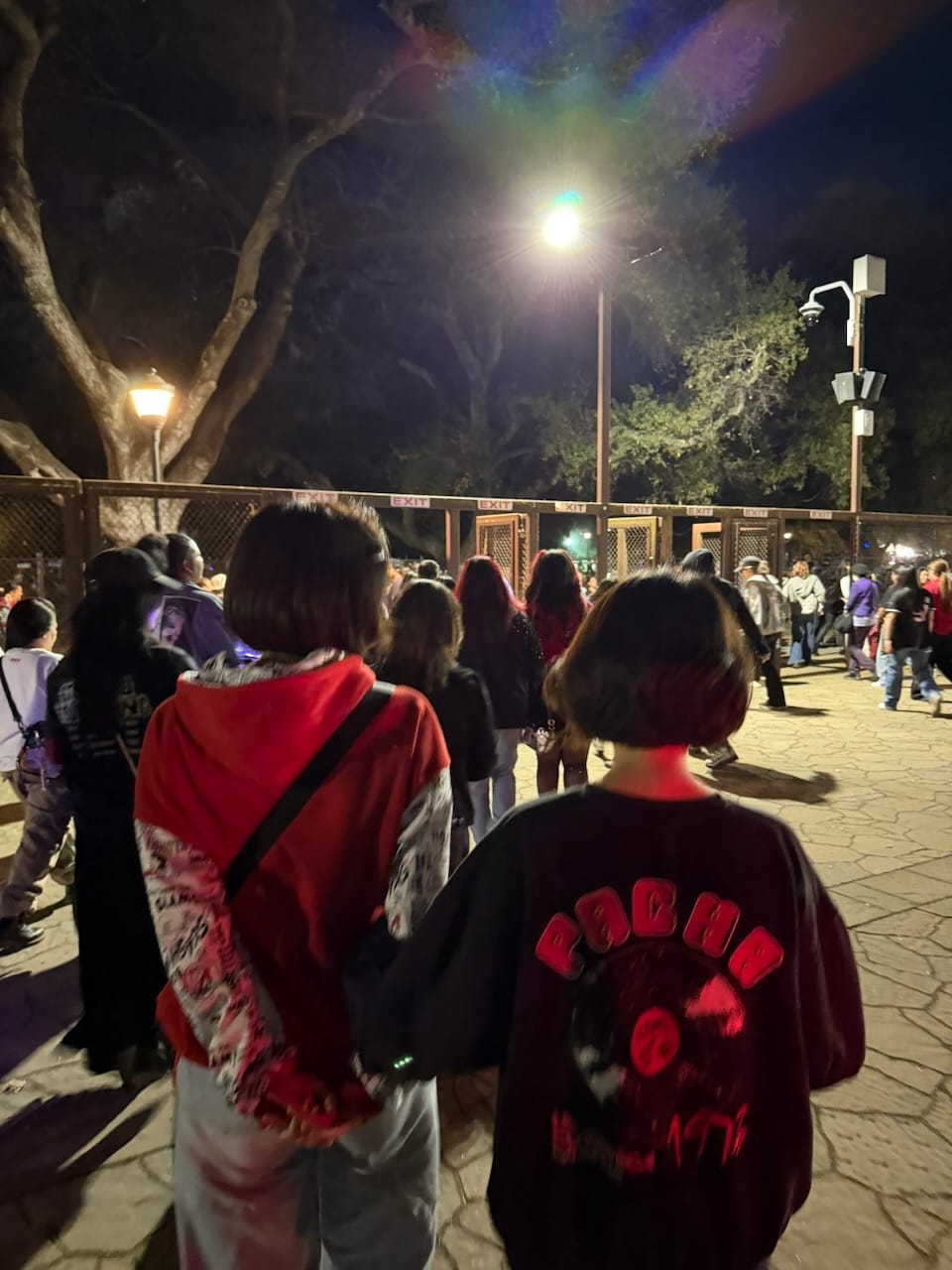
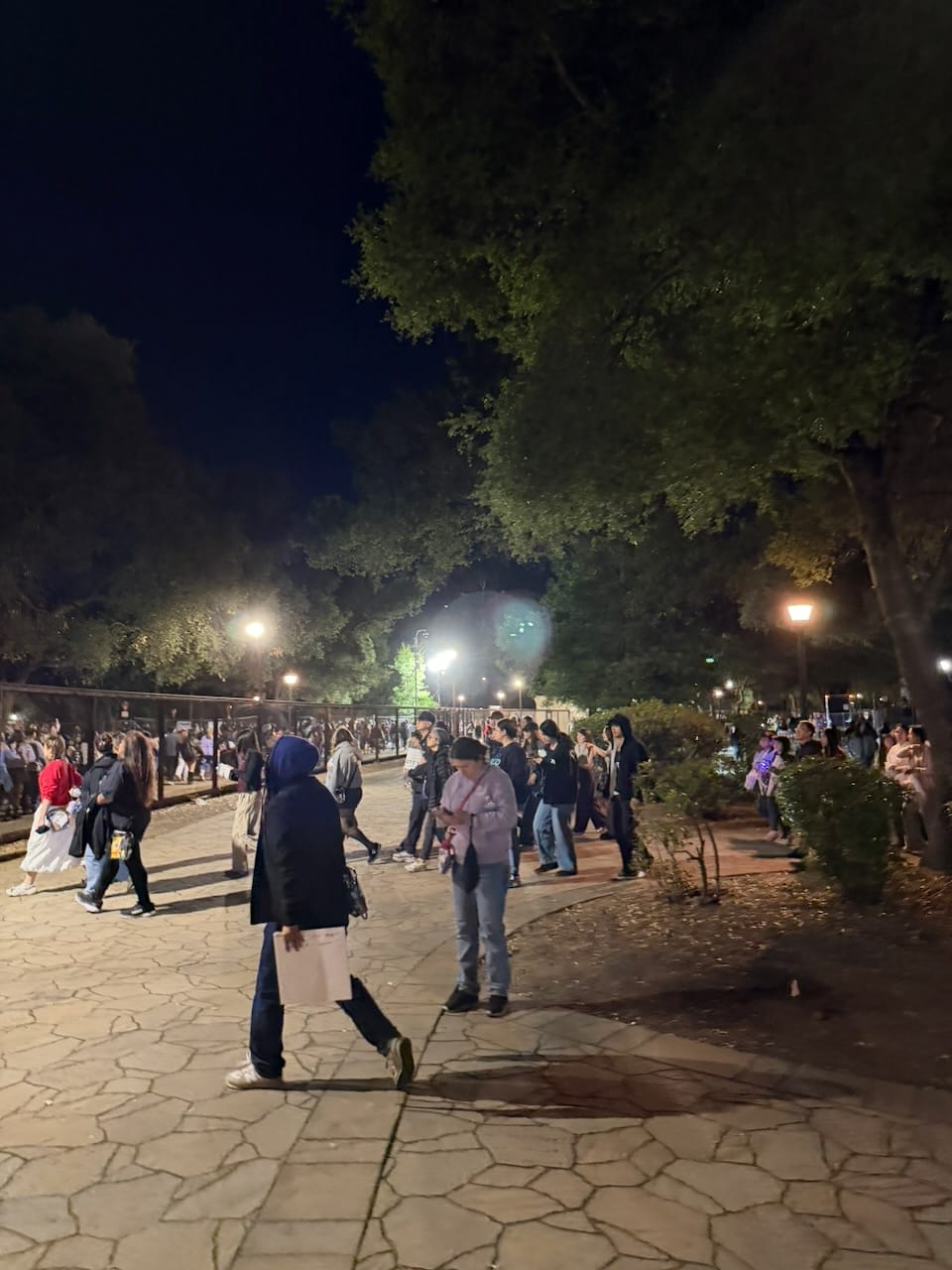
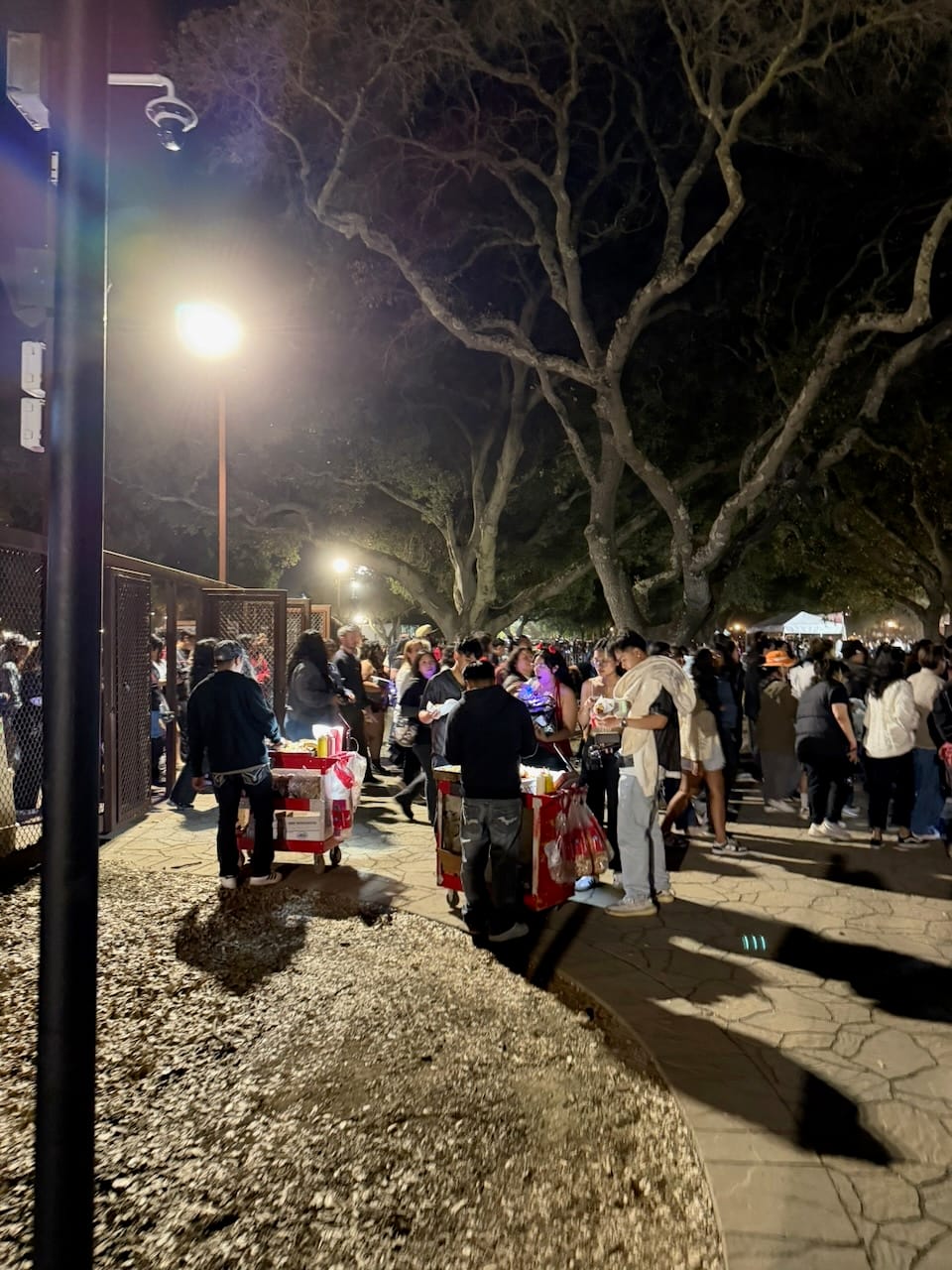
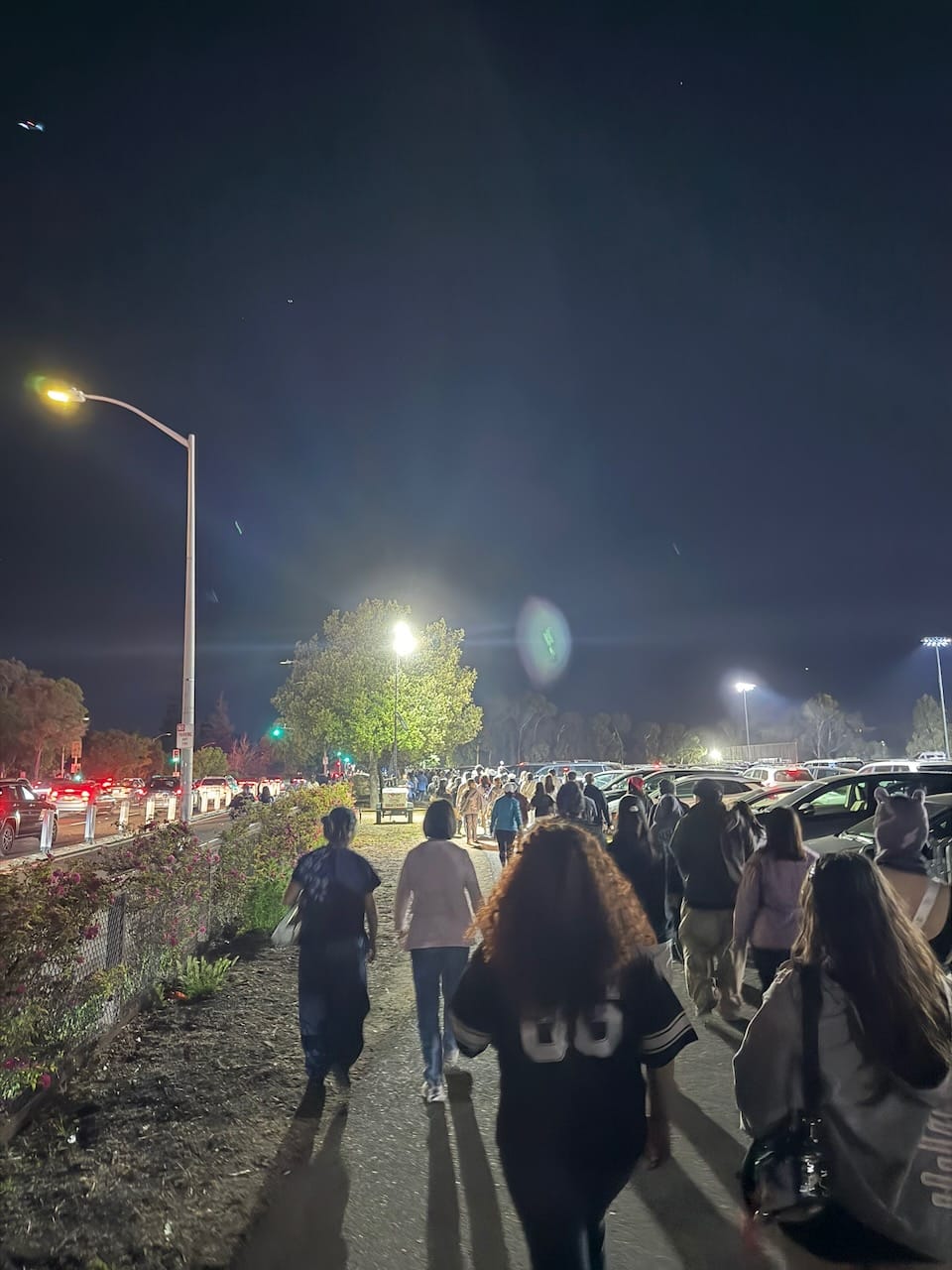
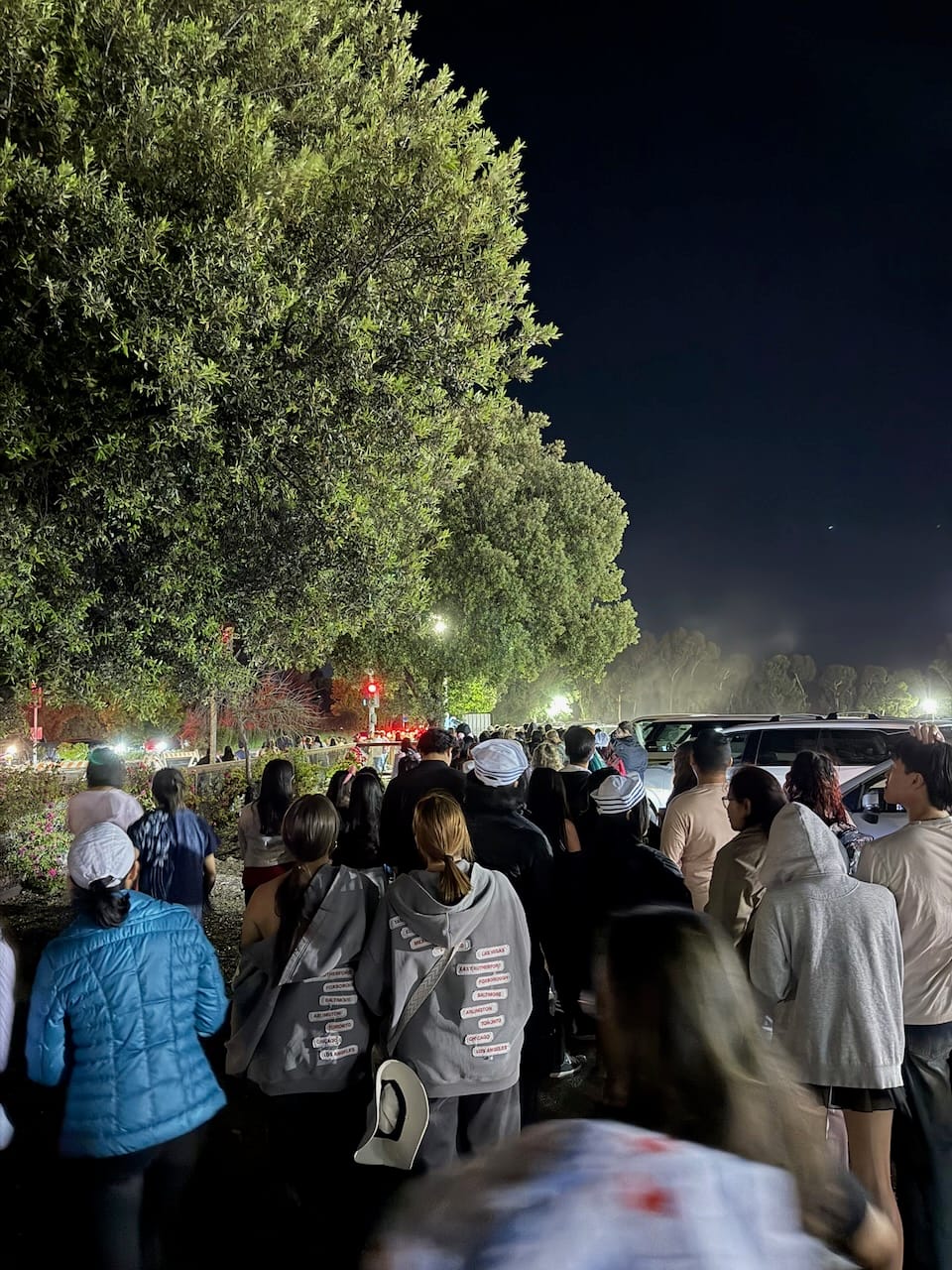
The practical part of the night was where my local knowledge helped. I heard that parking and traffic around the stadium were bad, which did not surprise me. But with the privilege of living nearby, we did not try to fight our way into the official lots. We parked at California Avenue, Palo Alto's second (and smaller) downtown, where weekend parking is free, had a late lunch, and walked to the stadium. It took about 30 minutes. That sounds long until you imagine inching through event traffic, parking far from the gate anyway, and still walking more than ten minutes from an official lot. Our route felt almost too reasonable: a normal Palo Alto afternoon slowly turning into a world-tour night.
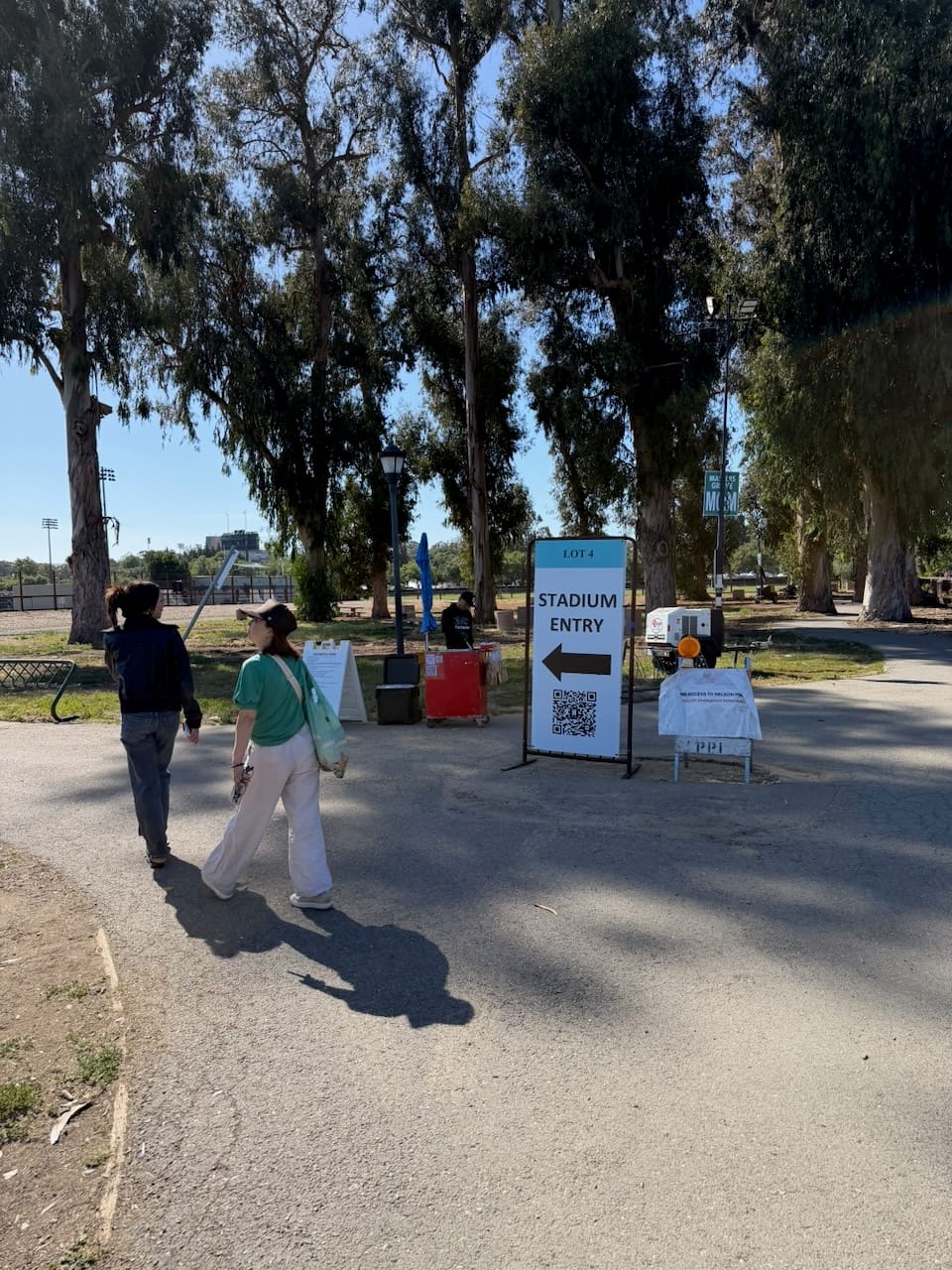
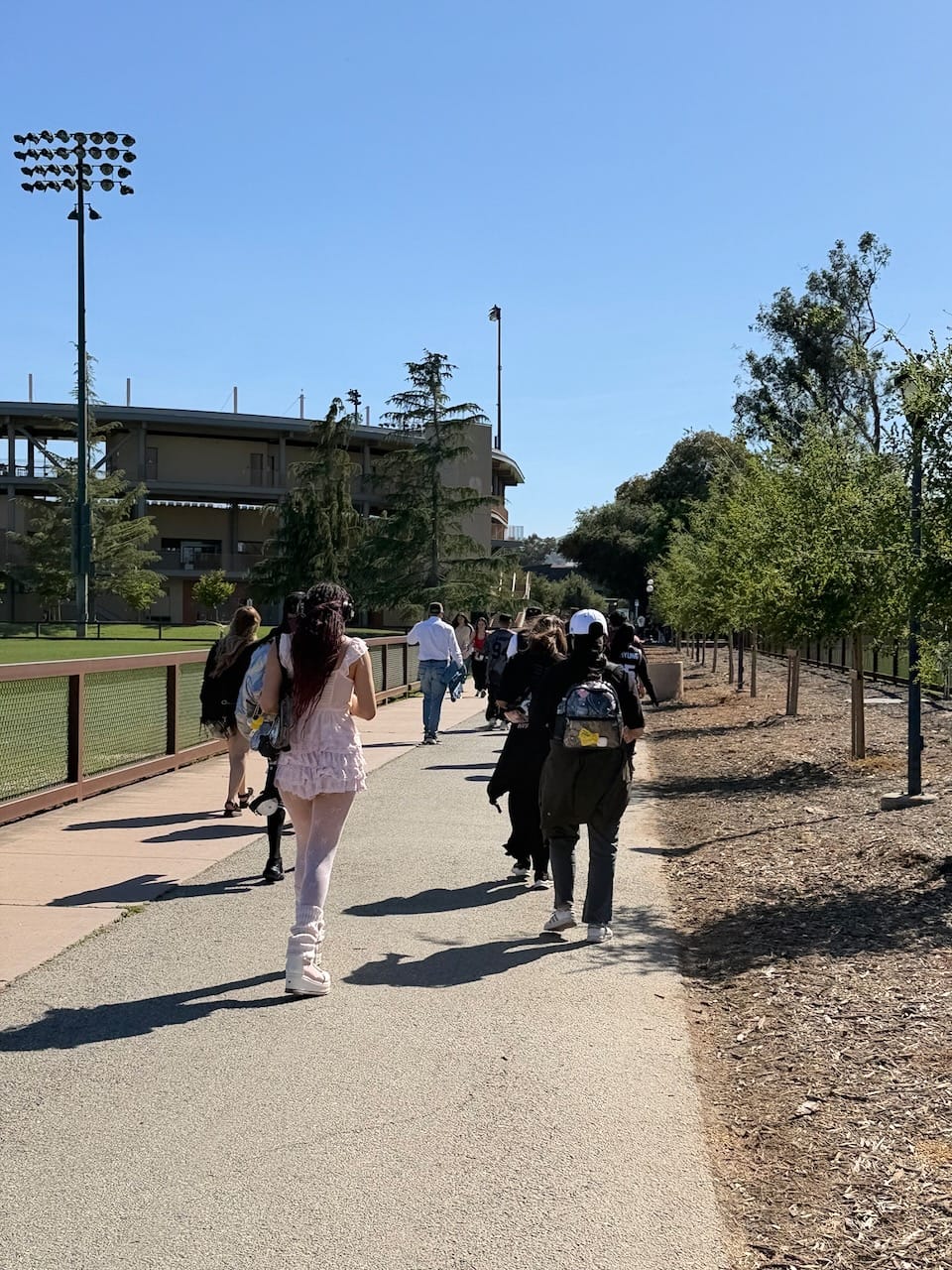
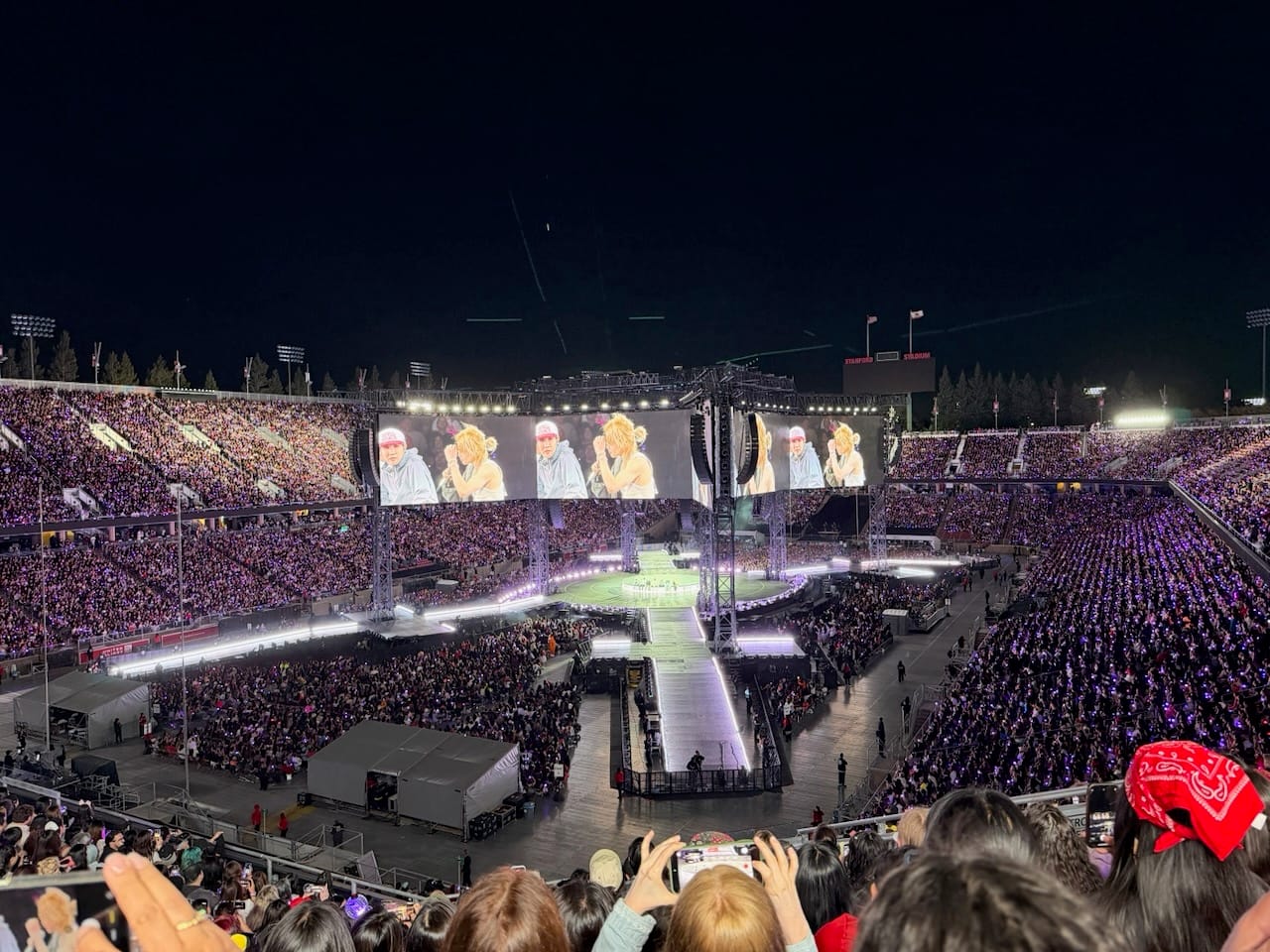
I had been to Stanford Stadium once before, for a Stanford football game. It is a big stadium, but it does not feel like an NFL stadium. The seating is smaller and more condensed than Levi's Stadium, sometimes uncomfortably so. For football, that can feel like a limitation. For this concert, it became an advantage. We were in section 220, on the upper (and top) level, but the stage felt much closer than I expected. It was nowhere near the detached, distant feeling of the 400 level at Levi's. The stadium's compactness pulled the show inward.
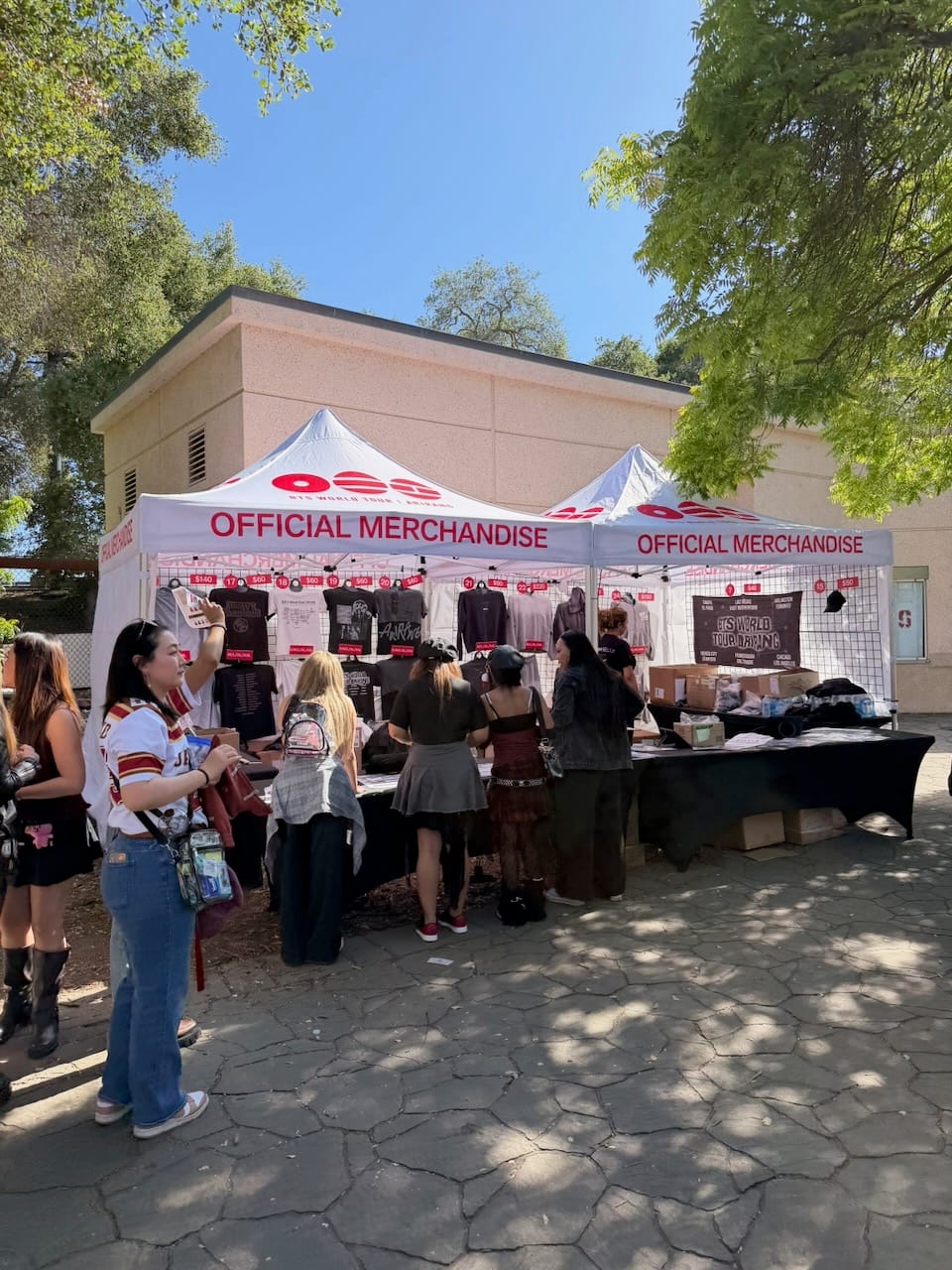
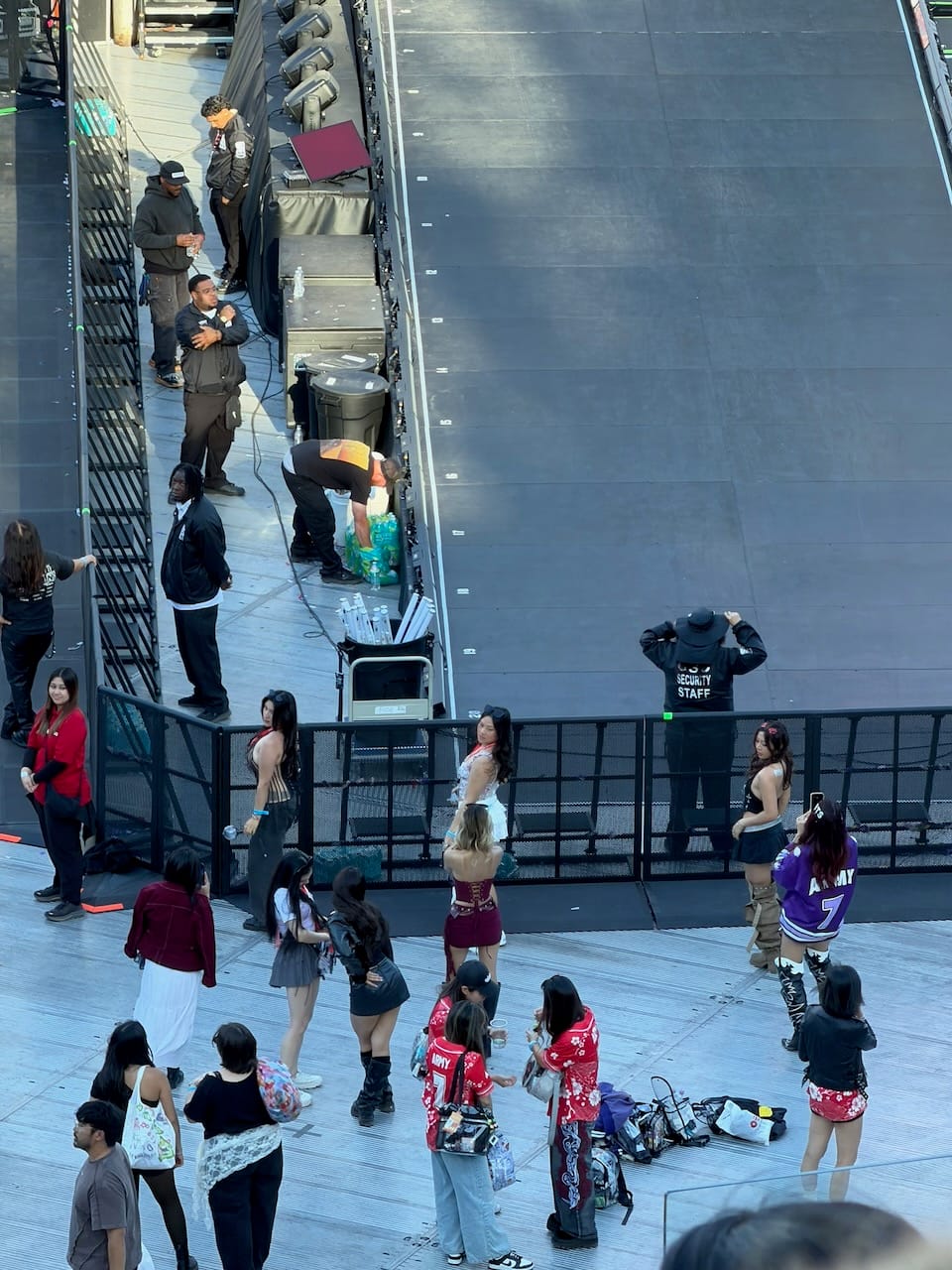
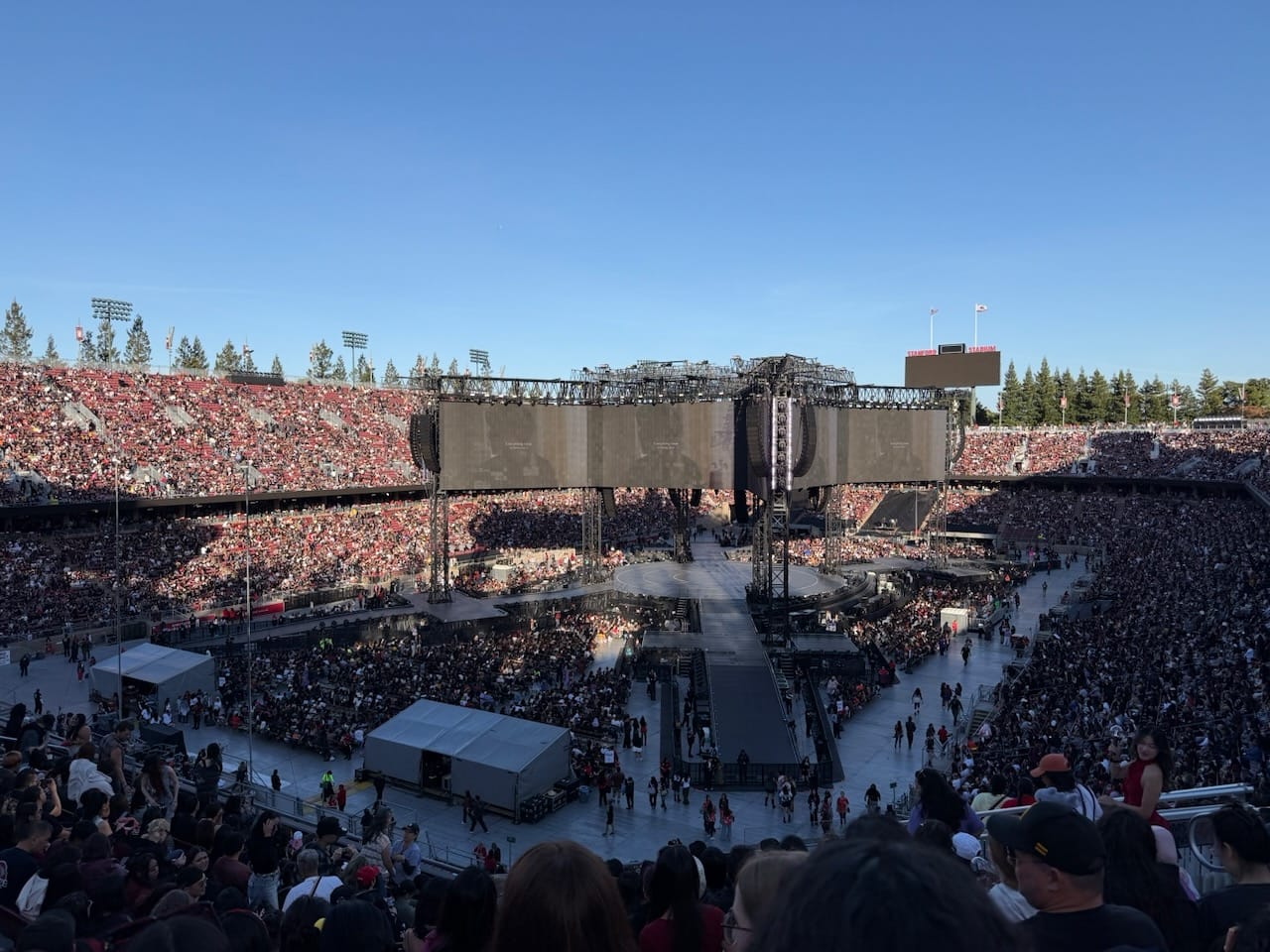
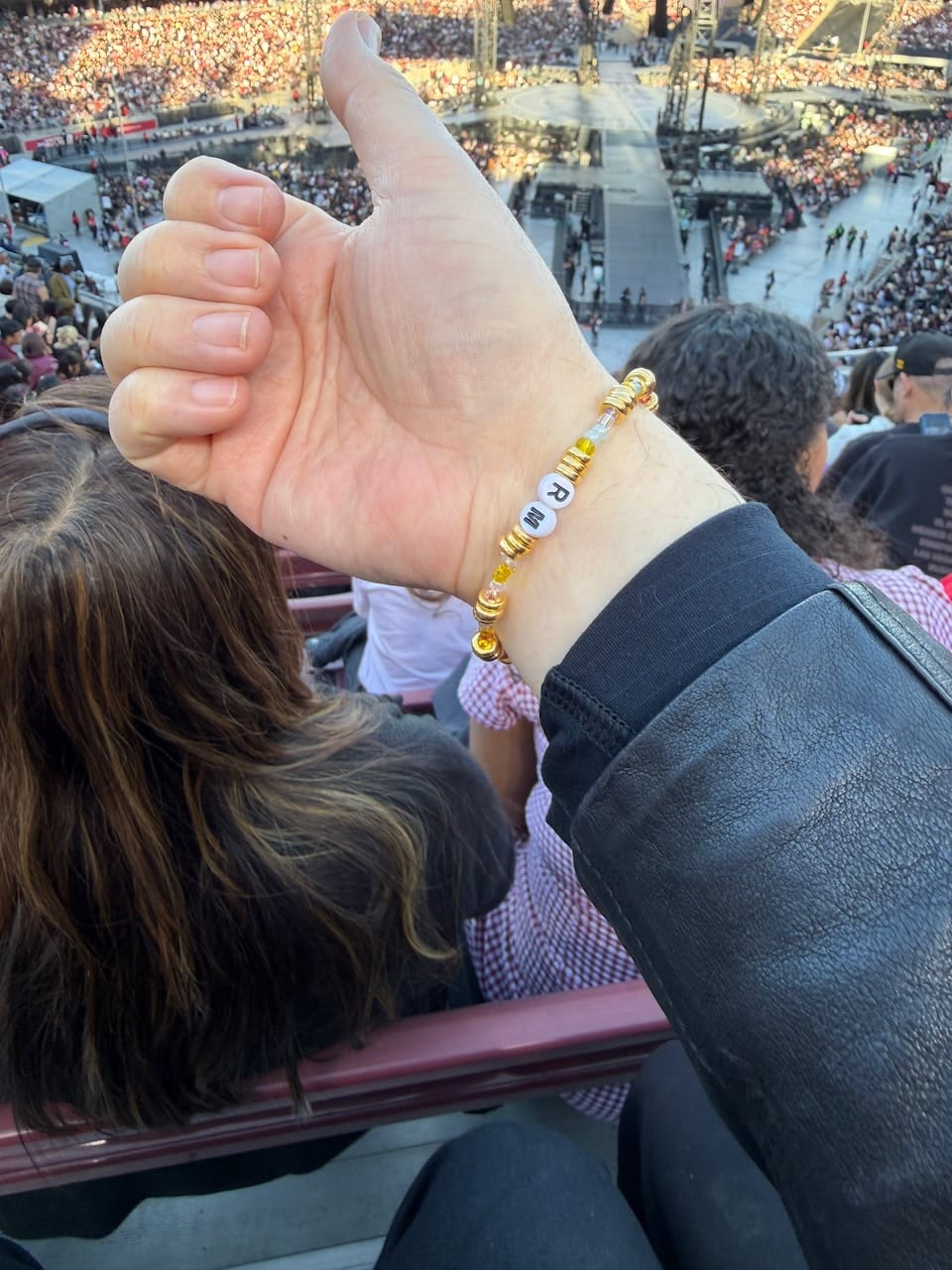
And the show itself was, literally, the best live performance I have ever seen in terms of production, equipment, and program organization.
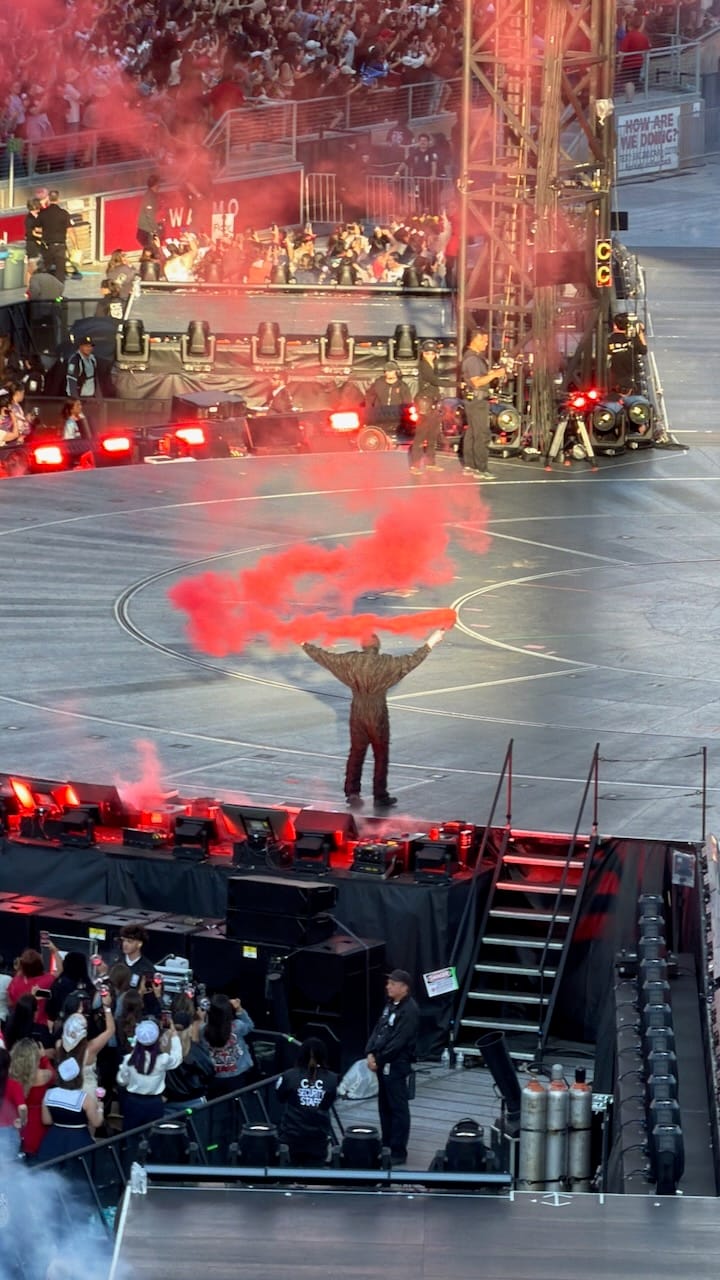
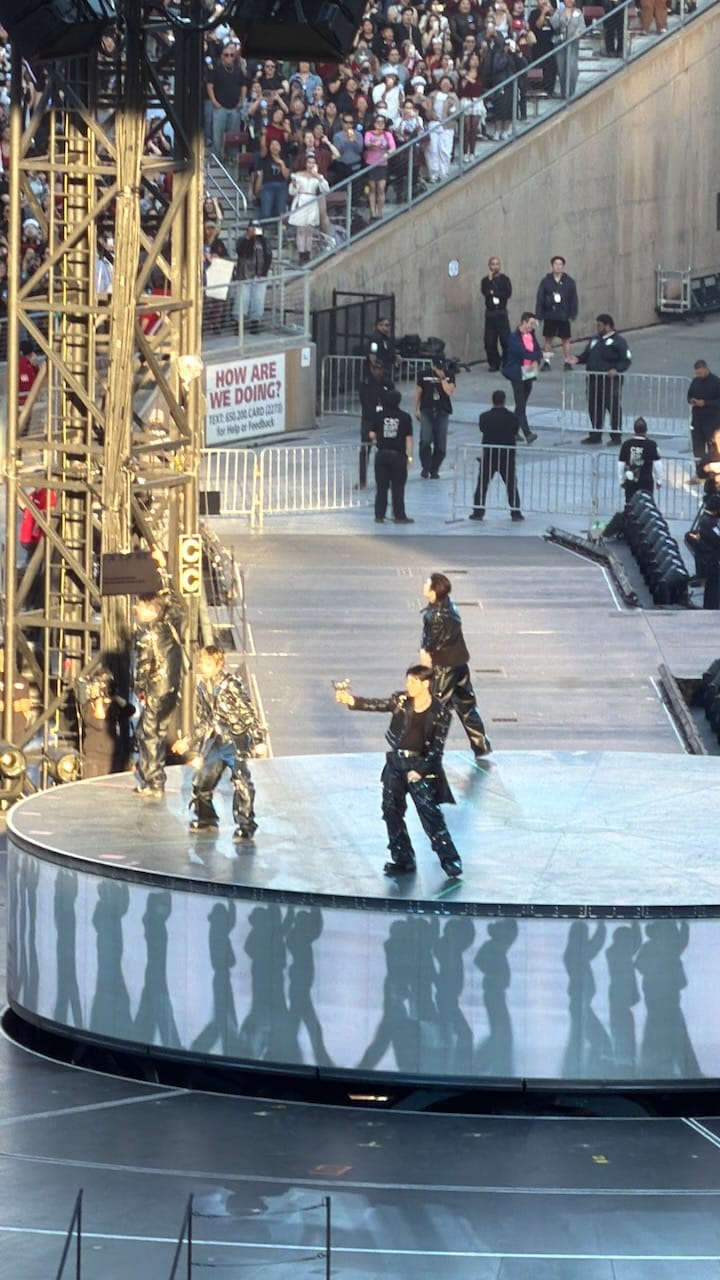
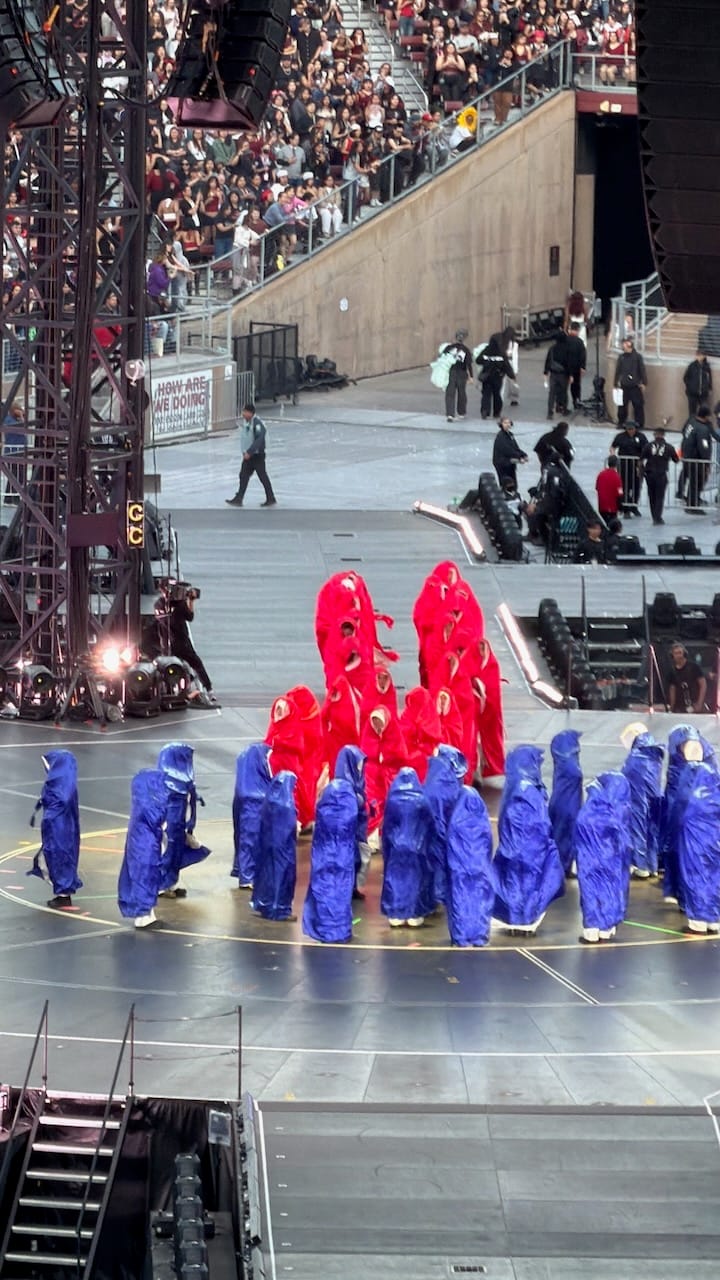
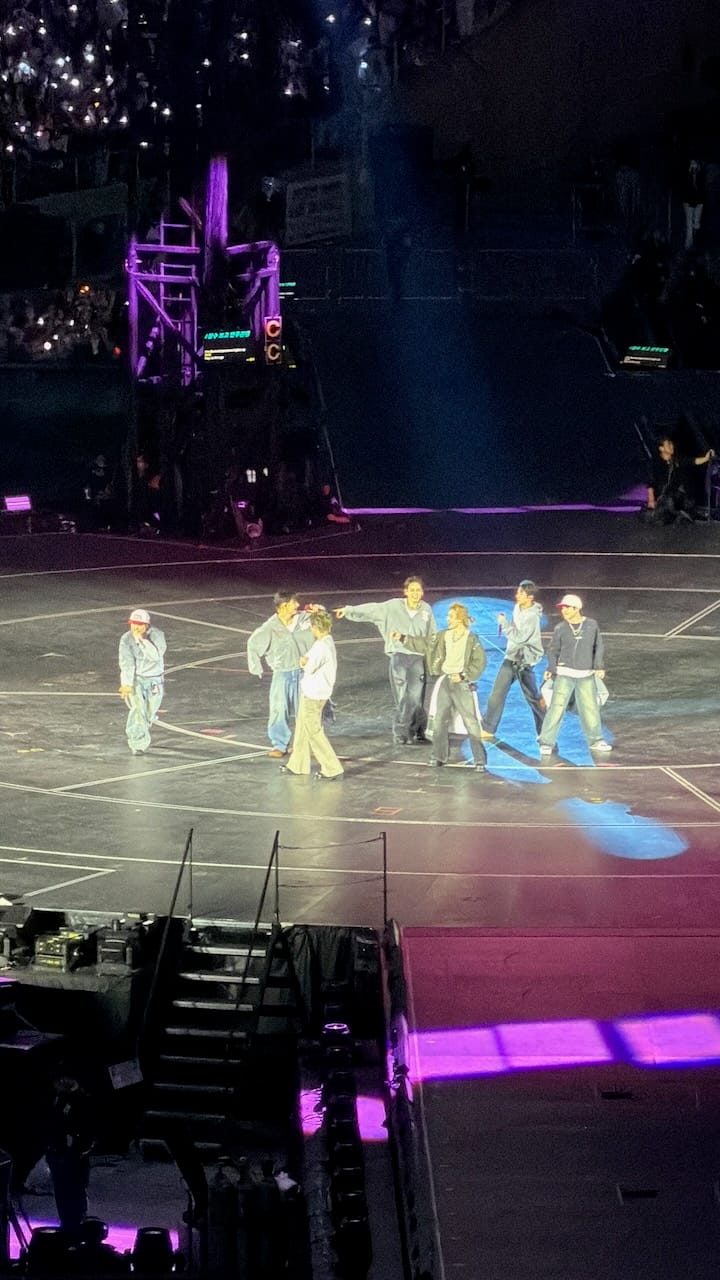
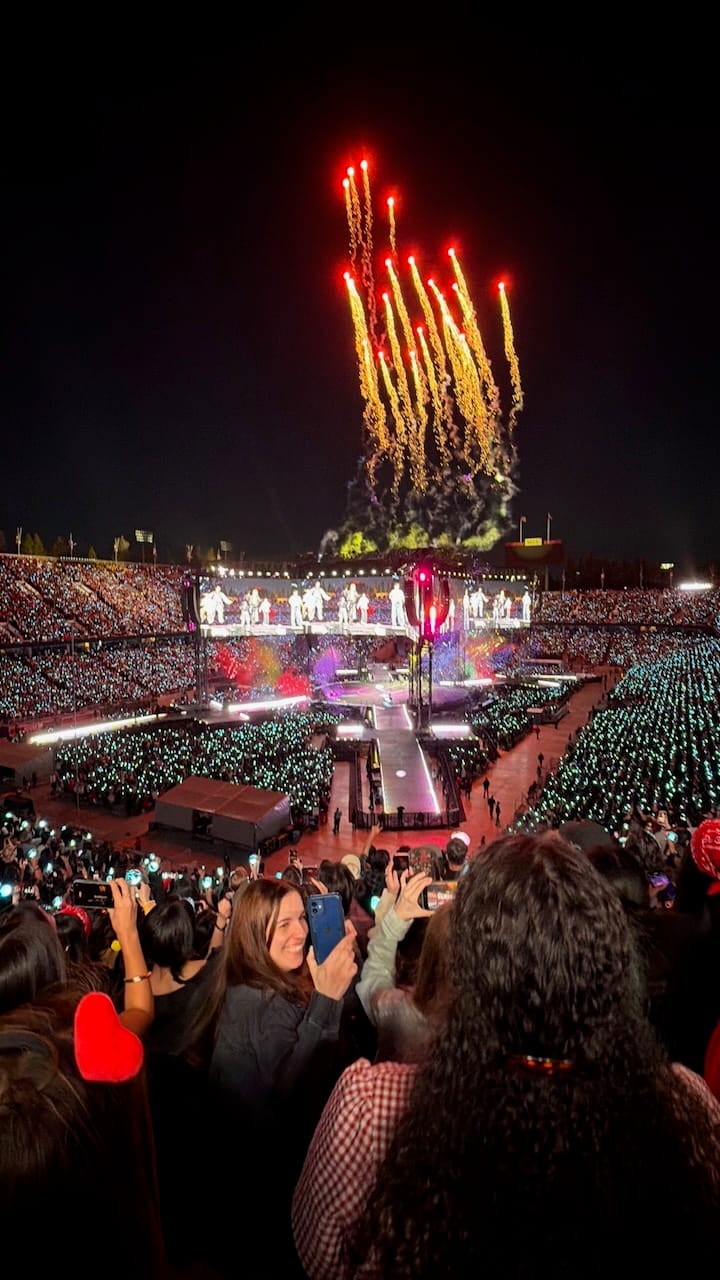
That is a strange sentence for me to write because I am not ARMY. I know the obvious BTS songs: "IDOL," "Butter," "Dynamite." My daughter is more of a SEVENTEEN fan than a BTS fan, and none of us went in as the kind of audience who knew every cue, every member's moment, every song transition. In some ways, that made the experience clearer. I was not filling in the meaning with years of attachment. I was watching the machinery of a world-class live show do its work.
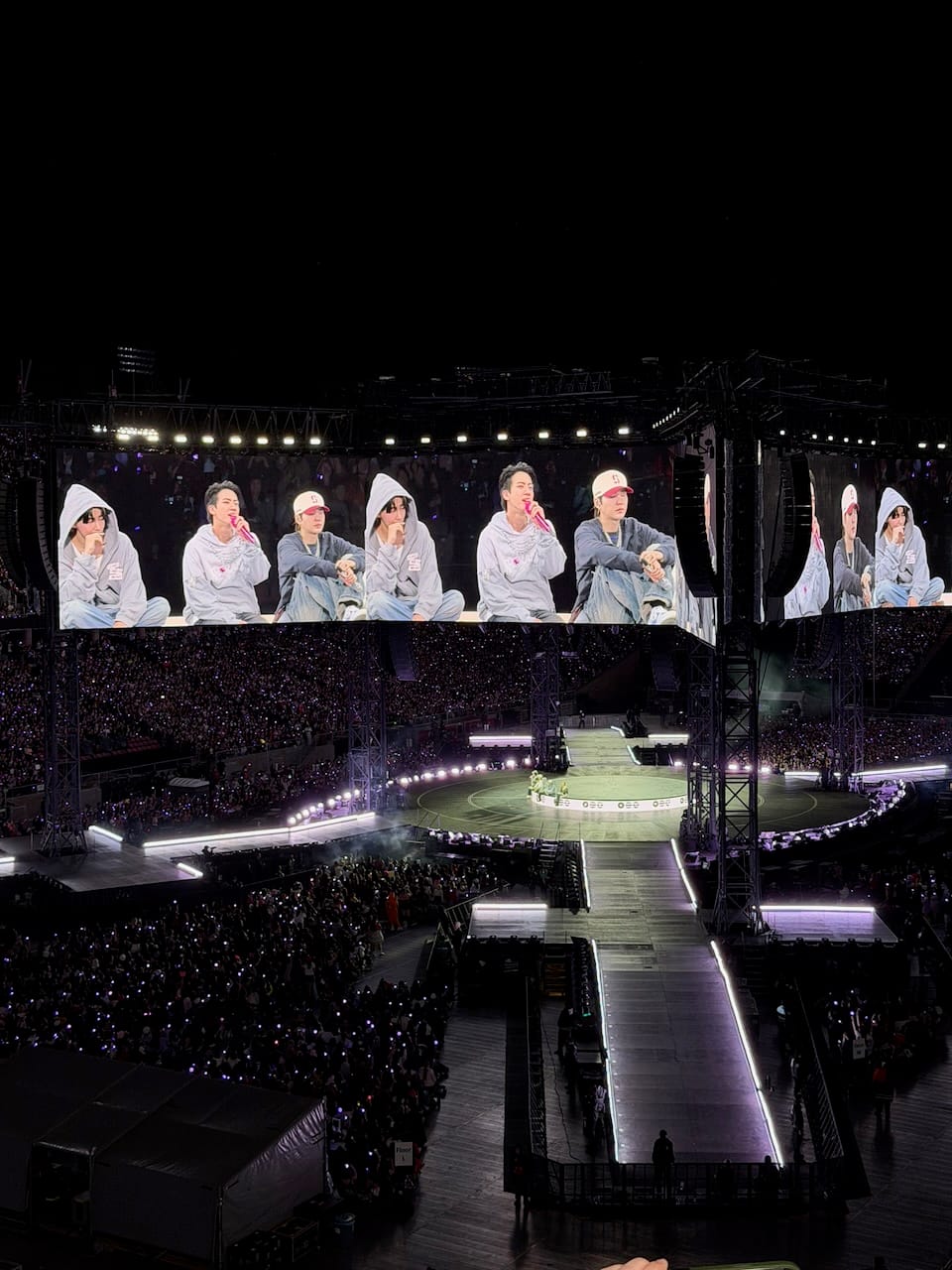
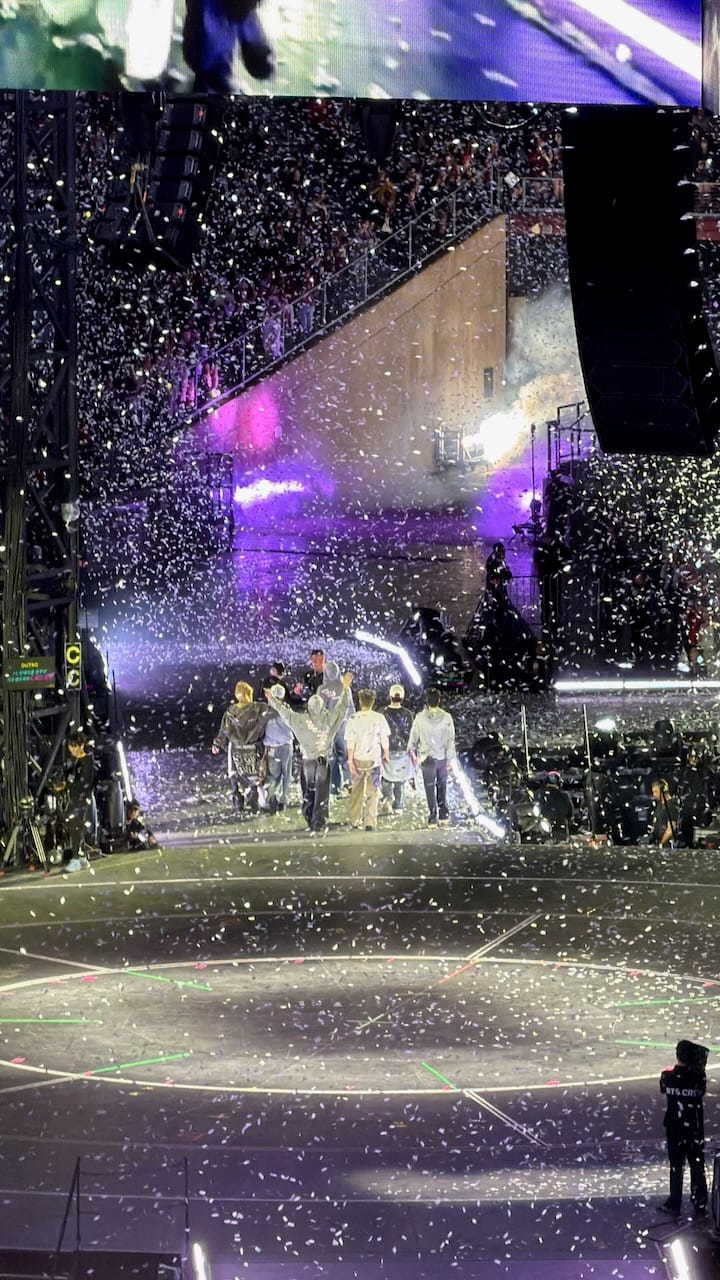
The most obvious part was the screen system. The gigantic screens over the stage did not just supplement the performance. They covered the visual field. From our seats, the eight huge screens seemed arranged to catch every angle of the 360-degree stage, so there was almost no bad direction to look. Big screens have become a defining feature of stadium concerts. I noticed the same trend at Metallica at Levi's Stadium last year, where the screens changed the experience from "watching tiny figures far away" to something closer to a live broadcast happening in physical space. BTS took that logic further. The screens, the stage, the camera direction, and the choreography felt like one system, not separate layers.
That mattered because I could enjoy the concert completely even without deep knowledge of the setlist. The performance gave me enough at every level: the bodies on stage, the crowd around us, the live camera work, the lighting, the screen design, the transitions, the dancers, the scale. If this was already 100% enjoyable for someone who knew only a few songs, I can only imagine what it felt like for the fans who had waited years to see all seven members together again.
The fans behind us gave me one answer. I have never heard voices that loud at a concert. They shouted so much, and with such force, that at some points the sound behind me felt as physical as the speakers right behind me. I had heard that the Day 1 crowd had received some criticism online for not being exciting enough. I do not know how fair that was, and I do not know whether the girls behind us had heard the same thing, but they performed as if they personally needed to repair the reputation of the Bay Area. It was funny, painful, and impressive at the same time.
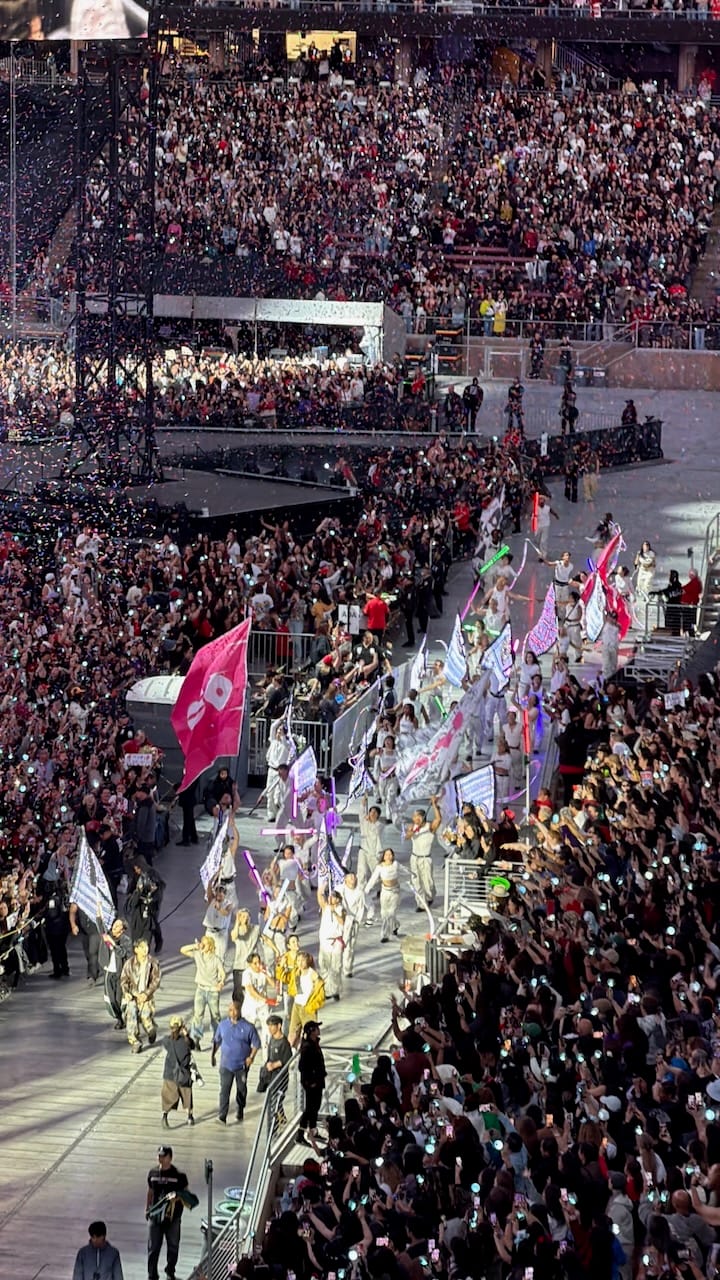
One of my favorite moments came during "IDOL." BTS and the dancers moved around the stage carrying flags, and at first I read them as ordinary concert props, a way to give the song a larger, festival-like shape. Then the images on the flags changed. They were flexible displays. That small realization was more exciting than it probably sounds. Stadium concerts often use technology as a blunt instrument: bigger screens, brighter lights, more fire. This was different. The technology was embedded inside an object that already made sense in the performance. It did not announce itself as a feature. It became part of the movement.
That may be the best summary of the night. The scale was enormous, but the strongest moments were not only about size. They were about integration. Stanford Stadium, awkward daylight, local rules, a 10pm finish, compressed seating, 360-degree staging, eight screens, fans screaming behind us, a family that was not even a fully committed BTS family, all of it somehow fit together. The concert did not feel like a normal event dropped into Palo Alto. It felt like Palo Alto had briefly been pulled into a much bigger current.

I hope Stanford does more of this. Not every month, and not without respect for the neighbors and the campus, but more often than almost never. Large live events change the atmosphere of a place. They bring movement, visitors, noise, anticipation, and the feeling that something memorable is happening nearby. Stanford has the venue, and Palo Alto could use the vibration. For one Sunday night in May, one of the biggest pop groups in the world made this quiet corner of the Bay Area feel like a global city. That was lucky for us. I would like to be lucky again.