The Night Karl Ate the Golden Gate Fireworks

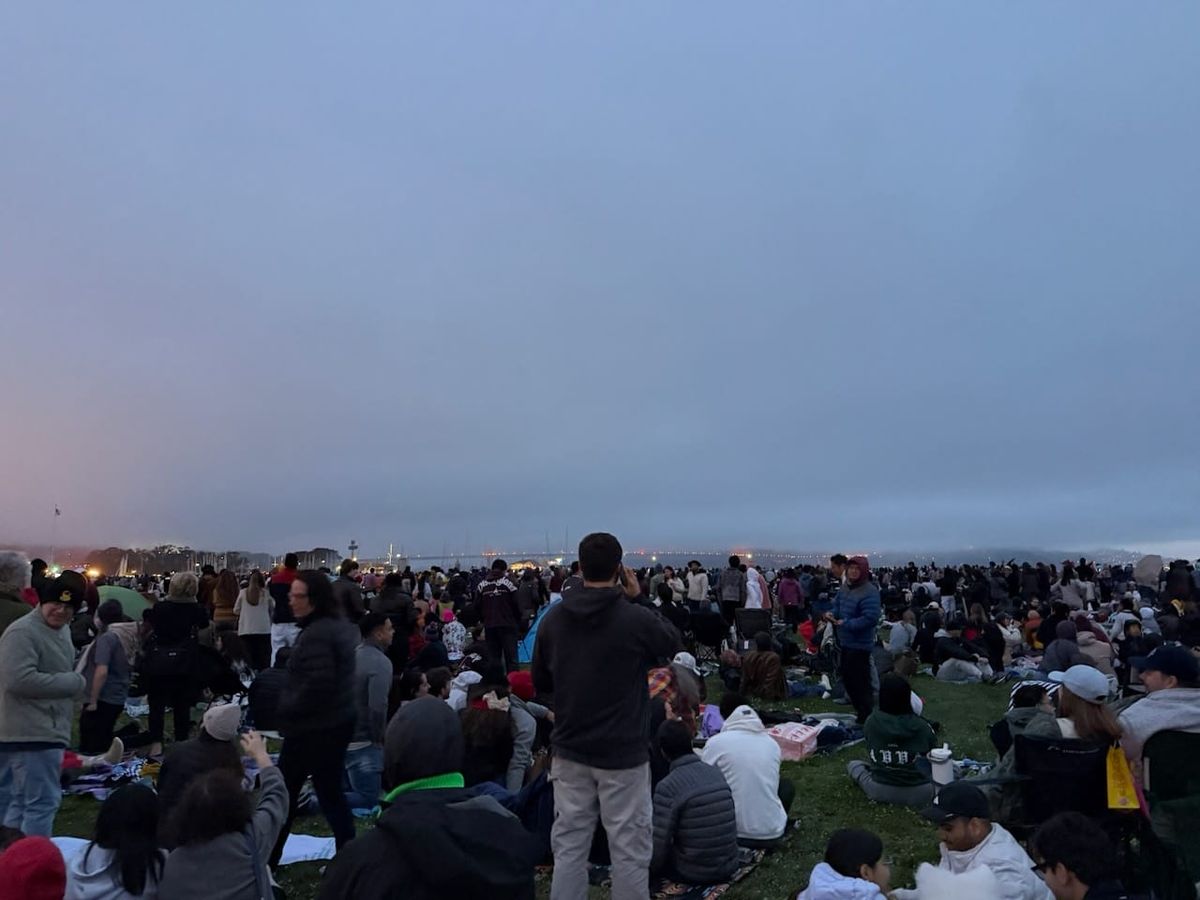
Watching Fourth of July fireworks has become a family ritual for us, as it has for many families in the United States. The location changes, and each year I try to find a place that will make the familiar show feel a little different. Two years ago, we watched from the hilltop at Vista Park in San Carlos. The view stretched across several Bay Area shorelines, and we could see multiple fireworks shows at the same time, but they were all tiny in the distance. Last year, the fireworks were part of our trip to Tiburon, and that was a much better experience.
I had been thinking about another plan like Tiburon for this year when I heard that San Francisco would launch its fireworks from the Golden Gate Bridge. This was not just another change of venue. It would be the first Fourth of July fireworks show launched from the bridge and only the third fireworks display from the span in its history, following the bridge's 50th-anniversary celebration in 1987 and its 75th in 2012. That sounded too rare to miss, so I decided we would watch from Marina Green.
The warnings began well before July 4. There would be road closures, huge crowds, and very limited parking. The official advice was simple: do not bring a car. I took those warnings seriously, but apparently not seriously enough. The largest San Francisco crowd I had personally dealt with was the Fleet Week air show, and I assumed this would be roughly comparable. Fleet Week is complicated, but manageable if you arrive early and plan carefully. I thought this would be the same (spoiler alert: it was a total mistake).
I reserved a space through SpotHero at the Wells Fargo parking lot on Chestnut Street, one of my usual lots in the neighborhood. The price was an astonishing $90. Still, it was July 4 in San Francisco, close to what might be a once-in-a-generation event. I accepted the price as part of the day. My larger concern was the road closure around Chestnut Street, but I understood that it would begin after 8 p.m., while the show was scheduled for 9:30. If we arrived early, I thought, we could park without trouble and later escape through Lombard Street.
We reached the lot around 5:30 p.m. and immediately found that something was wrong. There was no available space. It is a small lot, and we circled it several times, as if a parking spot might appear if we repeated the route often enough. Eventually I called SpotHero customer service. While I was speaking with an agent, someone from the lot came over and told me I could leave the car in a no-parking marked area, which was the only unused space (literally 'space') left. The problem seemed to have solved itself. In reality, it had only been postponed.
After parking, we walked around Marina Green. More than three hours before the show, the area looked reasonably crowded, but not alarmingly so. People had claimed spots and spread blankets across the grass, yet the scene was peaceful. For a moment, I wondered if all the warnings had been exaggerated.
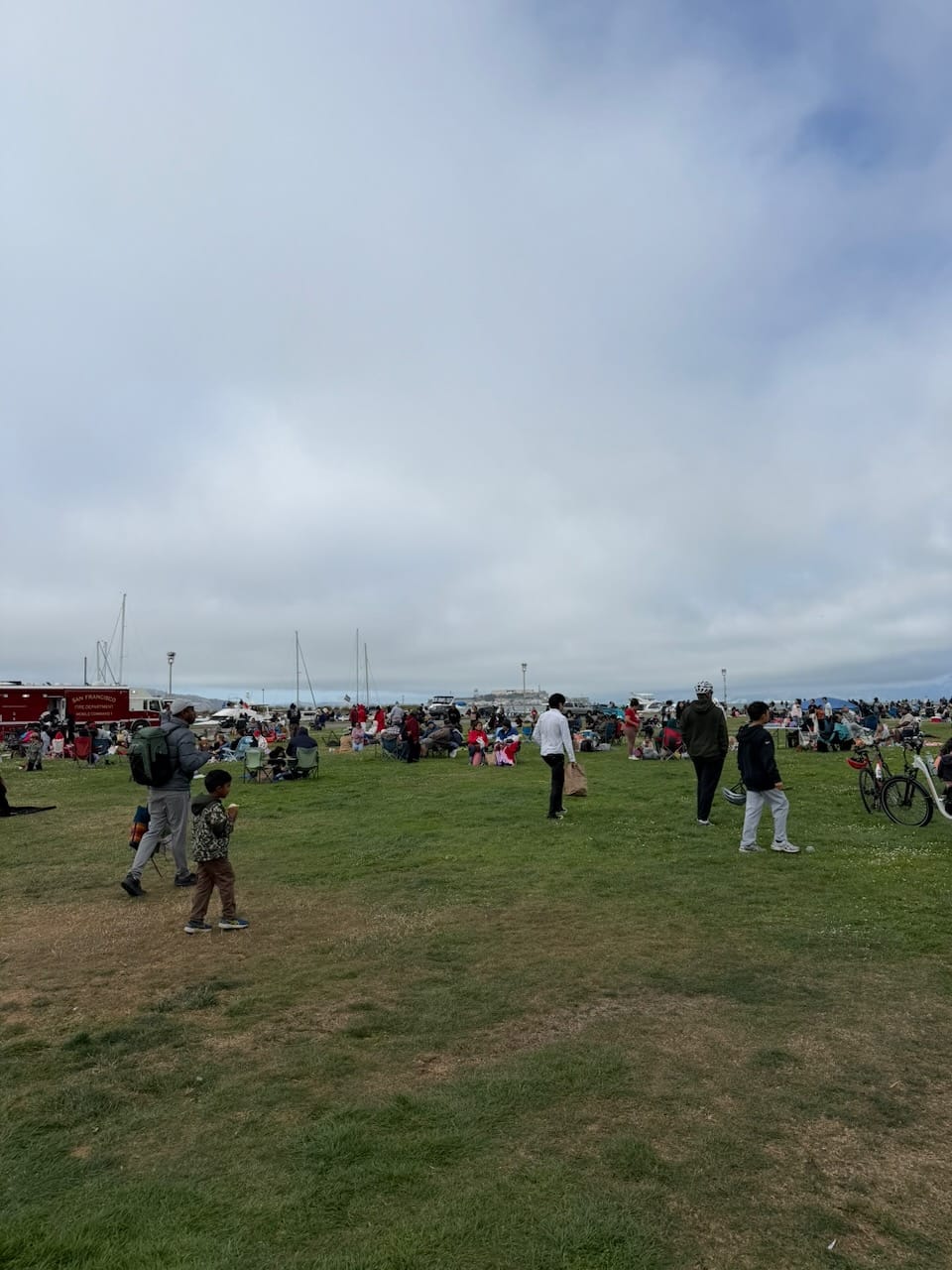
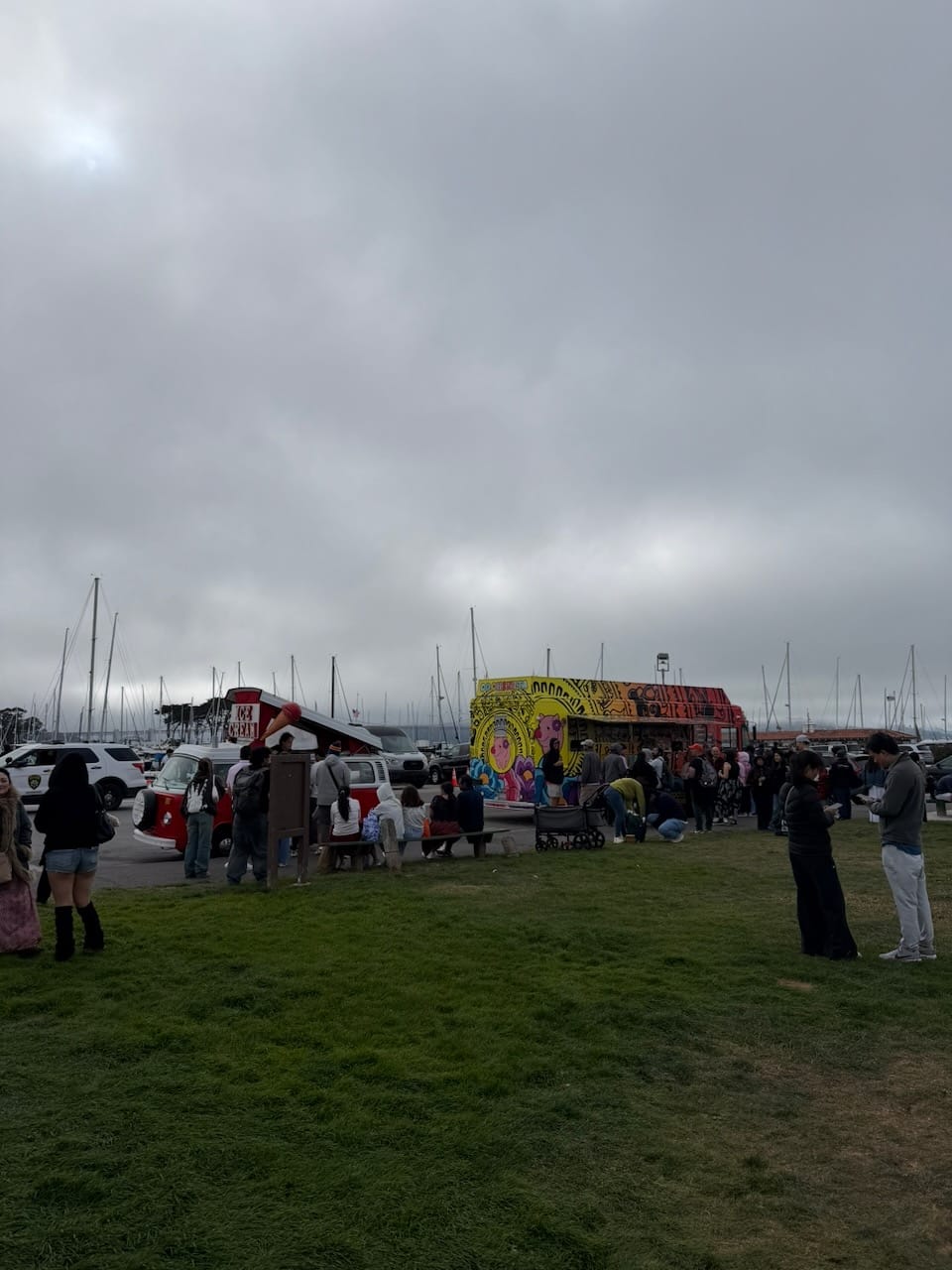
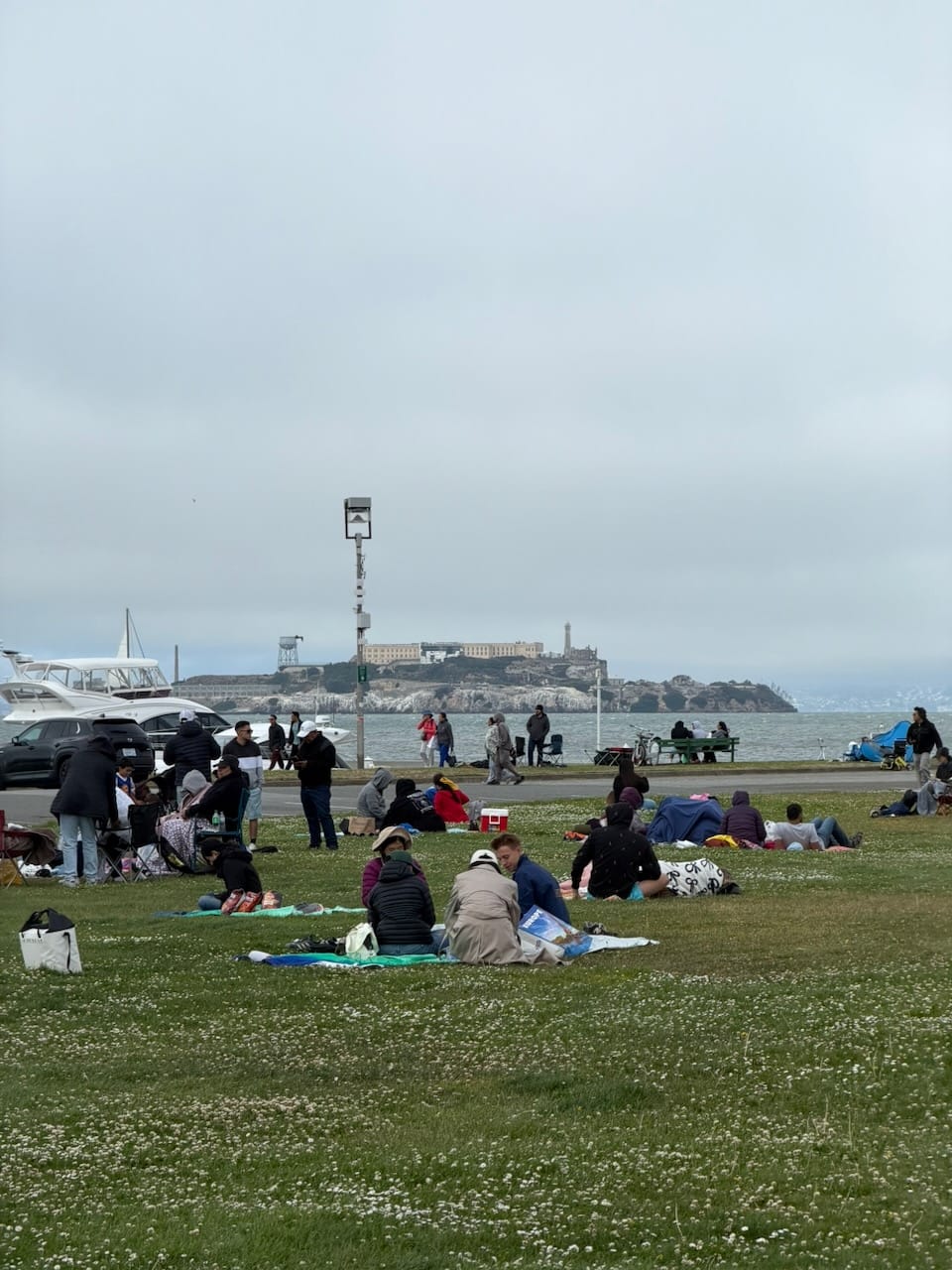
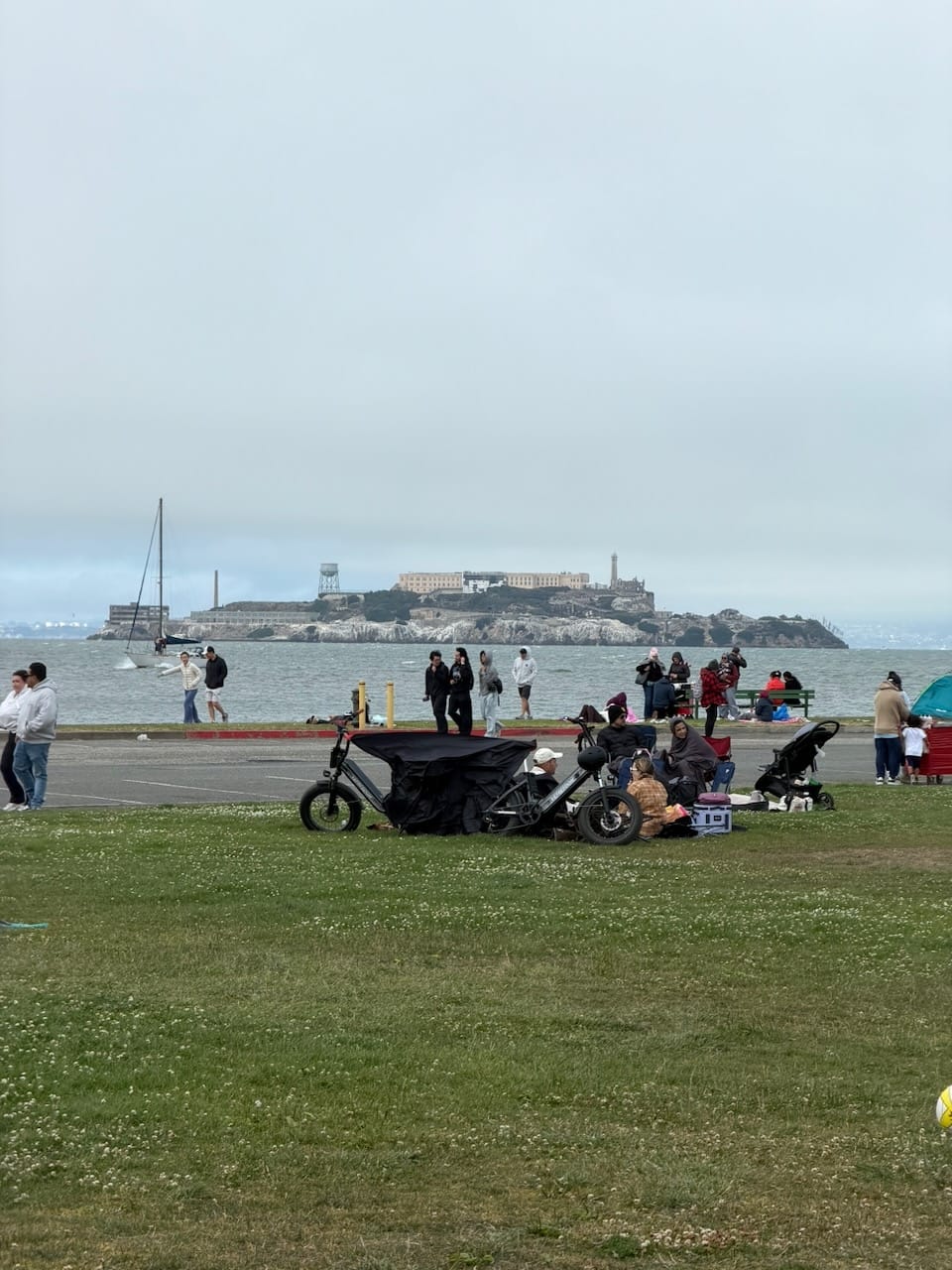
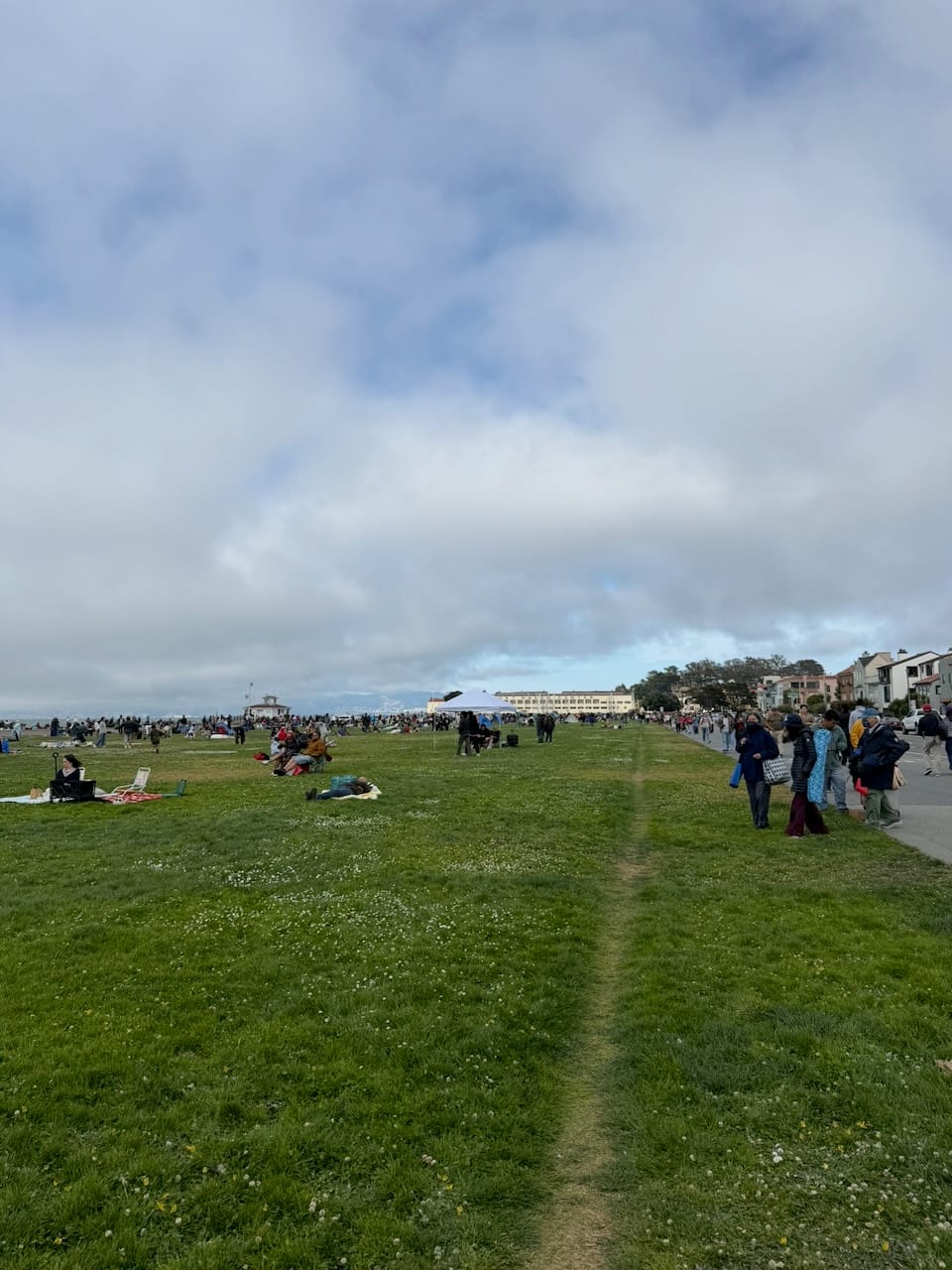
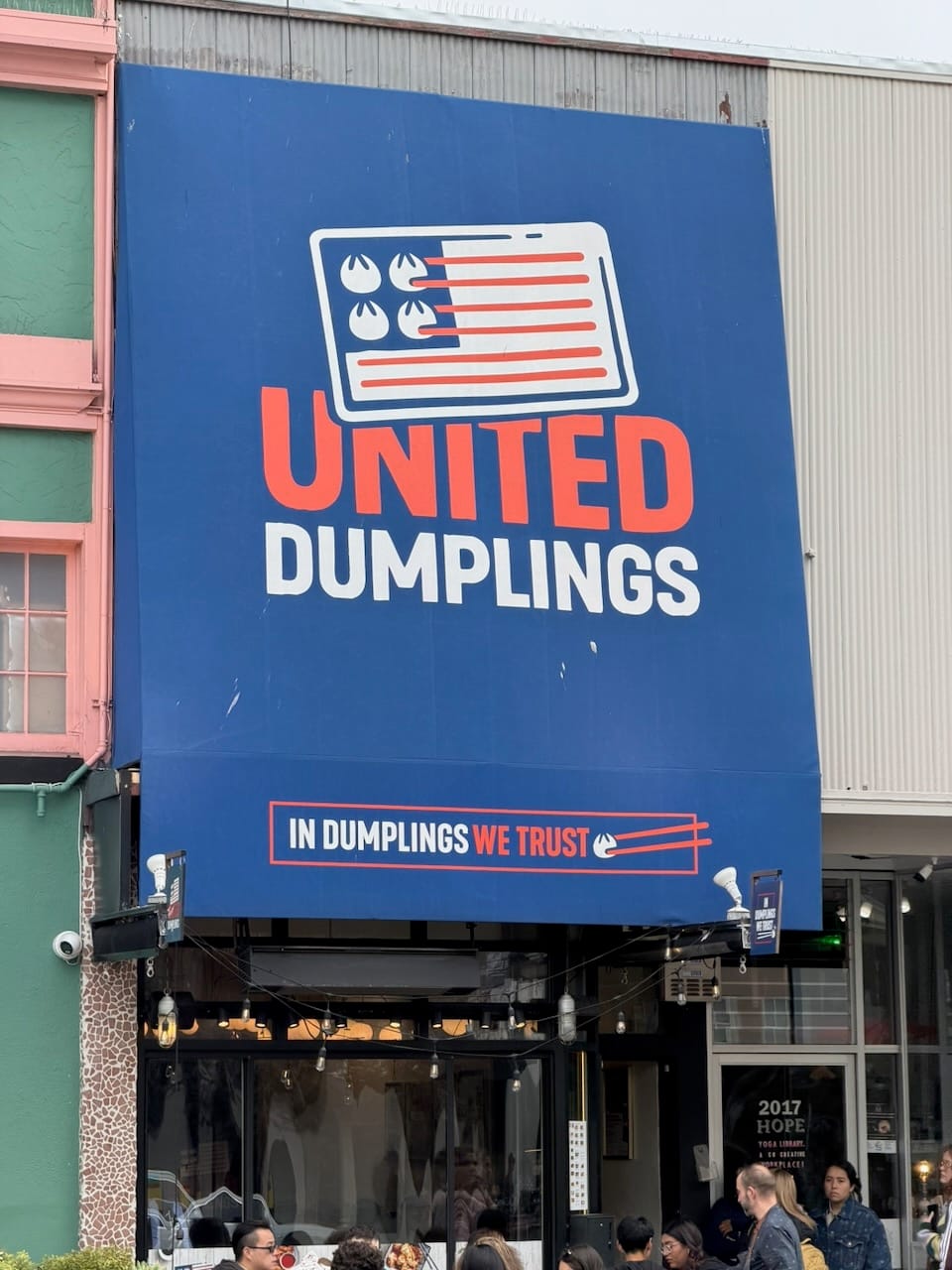
There was only one obvious threat: our old nemesis, Karl the Fog.
Karl had already spoiled Fleet Week in 2022 and again in 2023. Now he was settling around the Golden Gate Bridge on the one night when everyone needed him to go somewhere else. I tried to imagine what fireworks inside the fog might look like. Would they disappear completely, or would the clouds glow and create something more fantastic? Weather reports suggested the show might still be beautiful through the marine layer. I chose to believe that version.
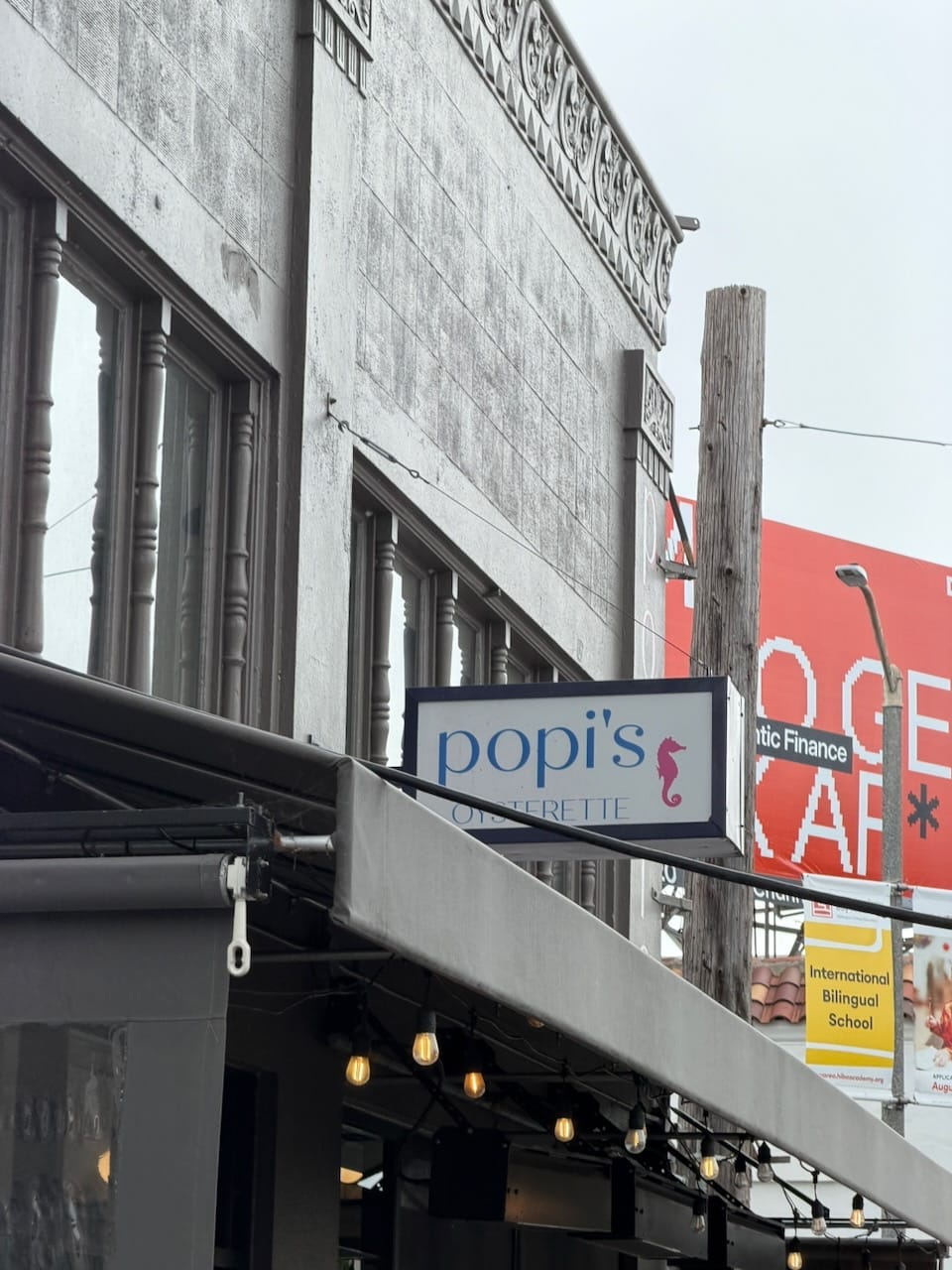
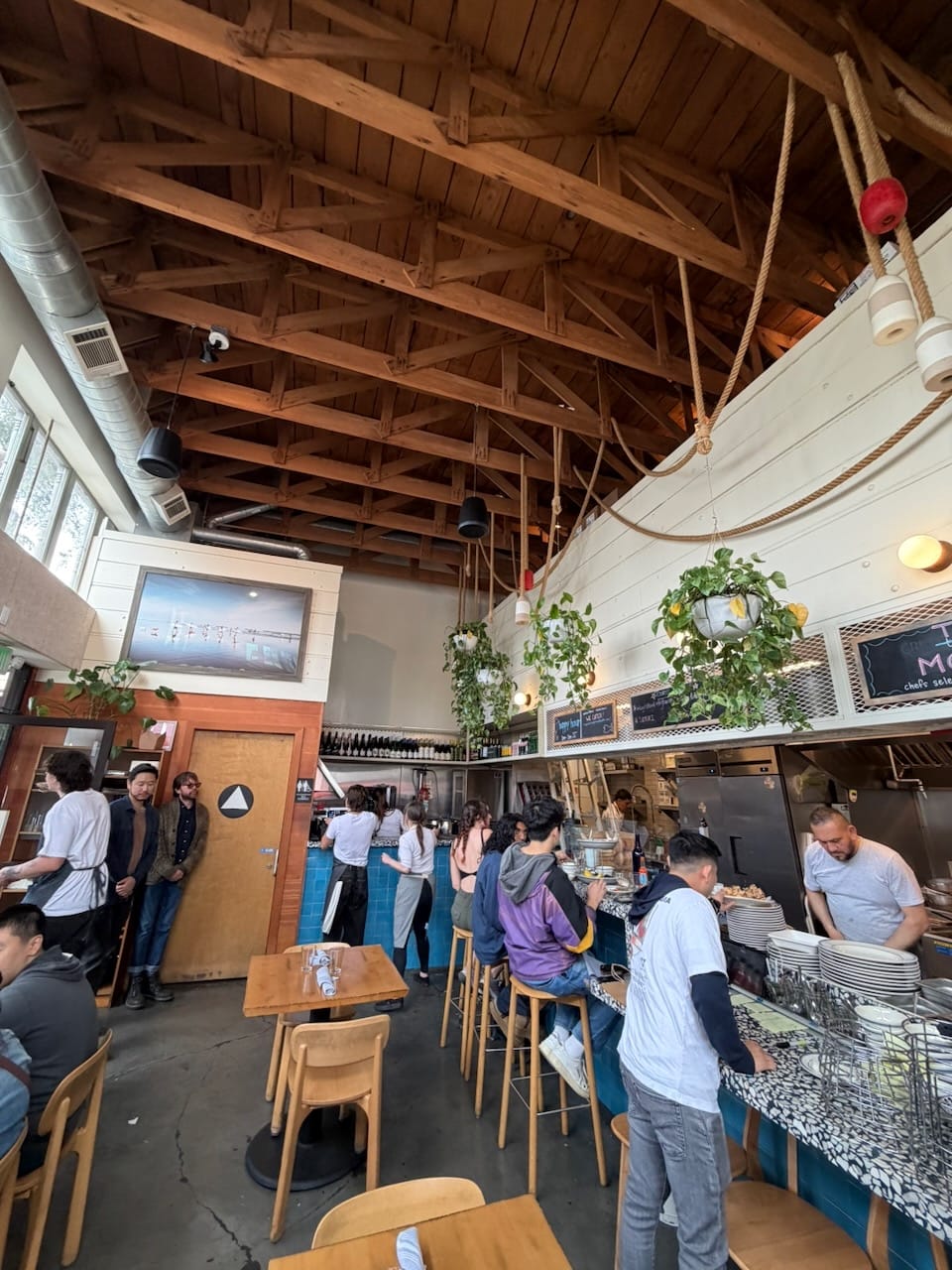
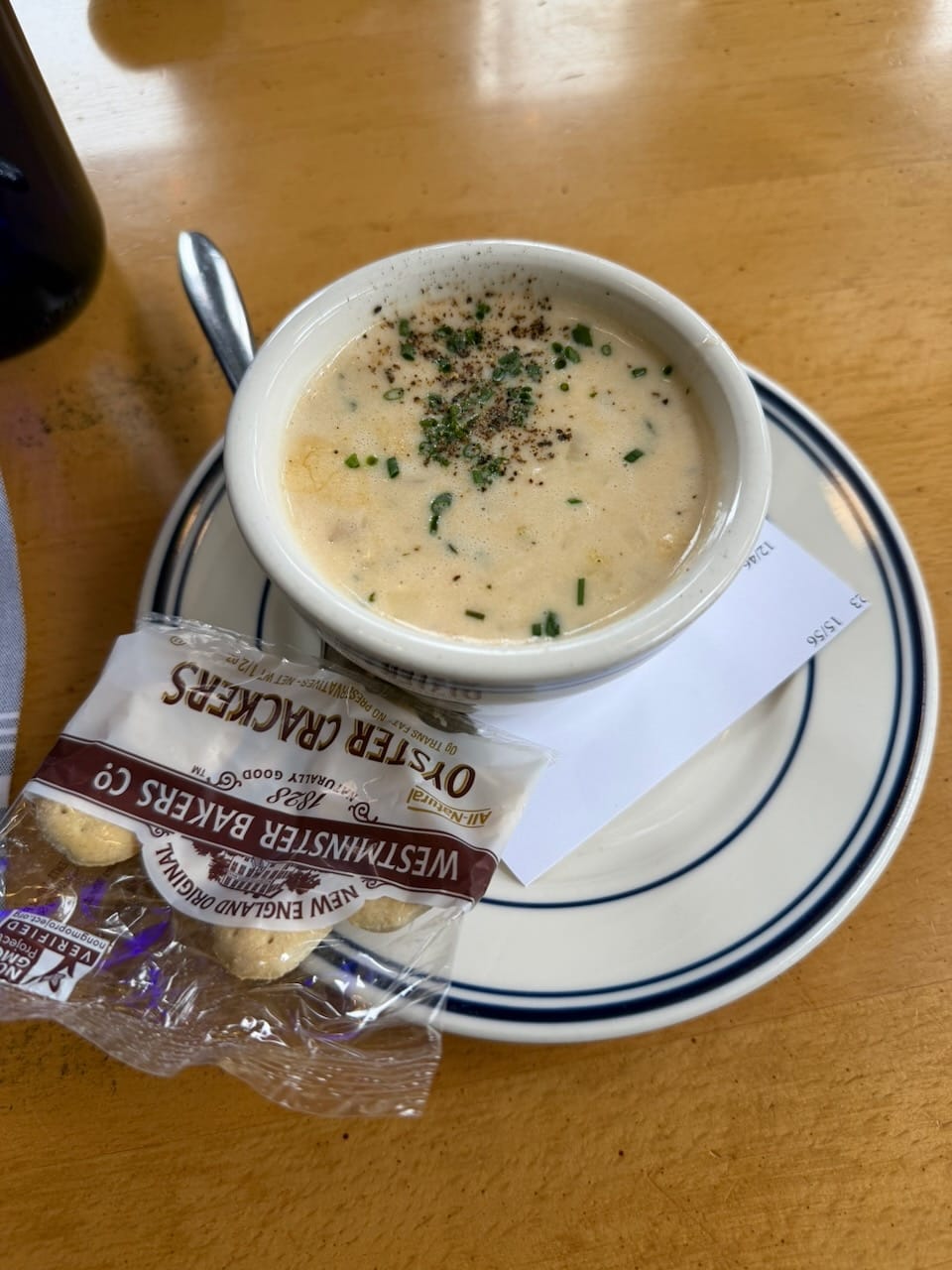
We had dinner at Popi's Oysterette on Chestnut Street. In retrospect, that was the best part of the evening. The restaurant gave us a warm place to sit, the restroom line was reasonable (they opened it to public), and the food was excellent. It was expensive, but again, this was San Francisco and Chestnut Street, and my Amex Resy credit softened the bill a lot. More importantly, for a while we could relax instead of thinking about parking, crowds, road closures, or fog.
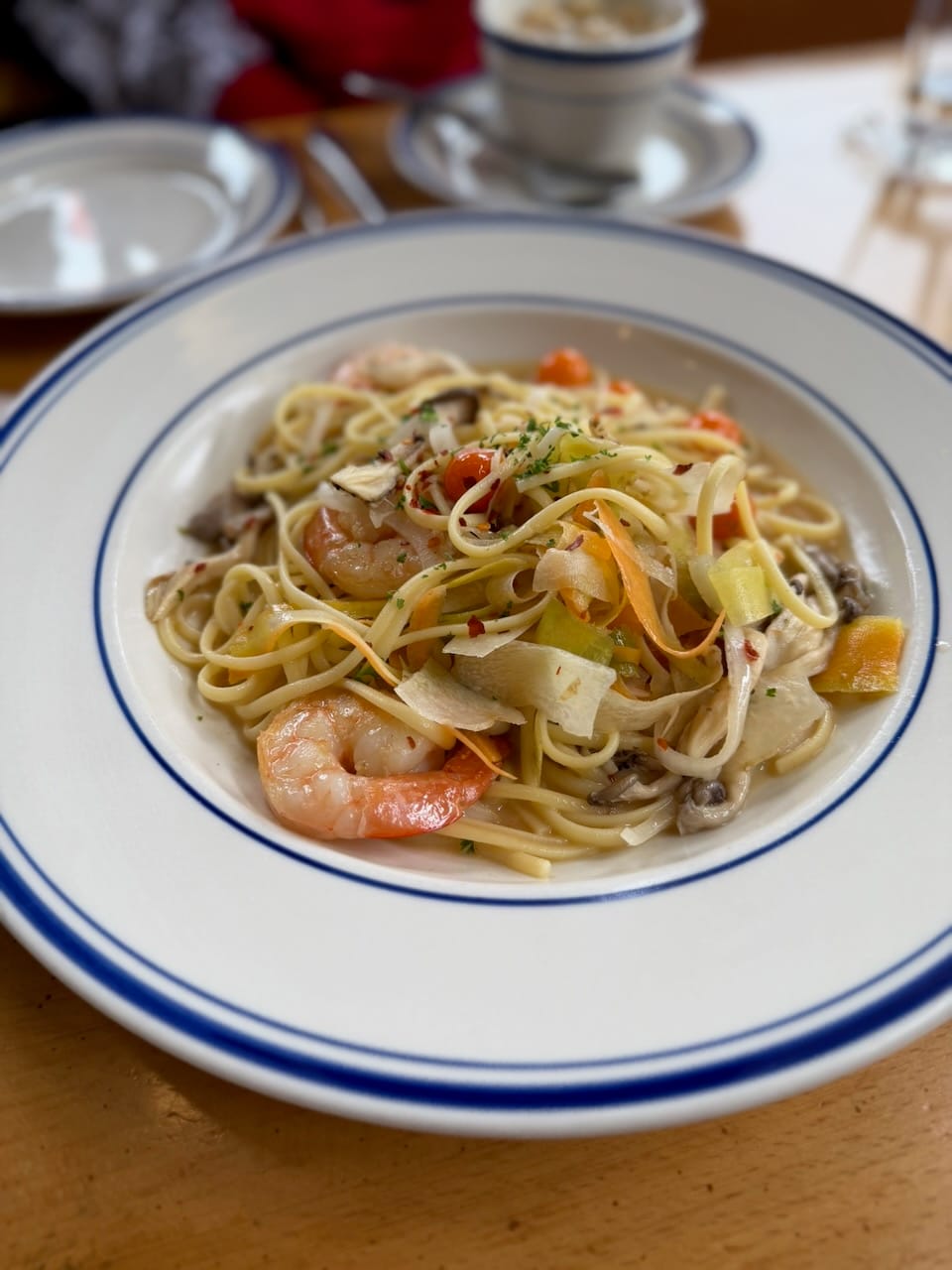
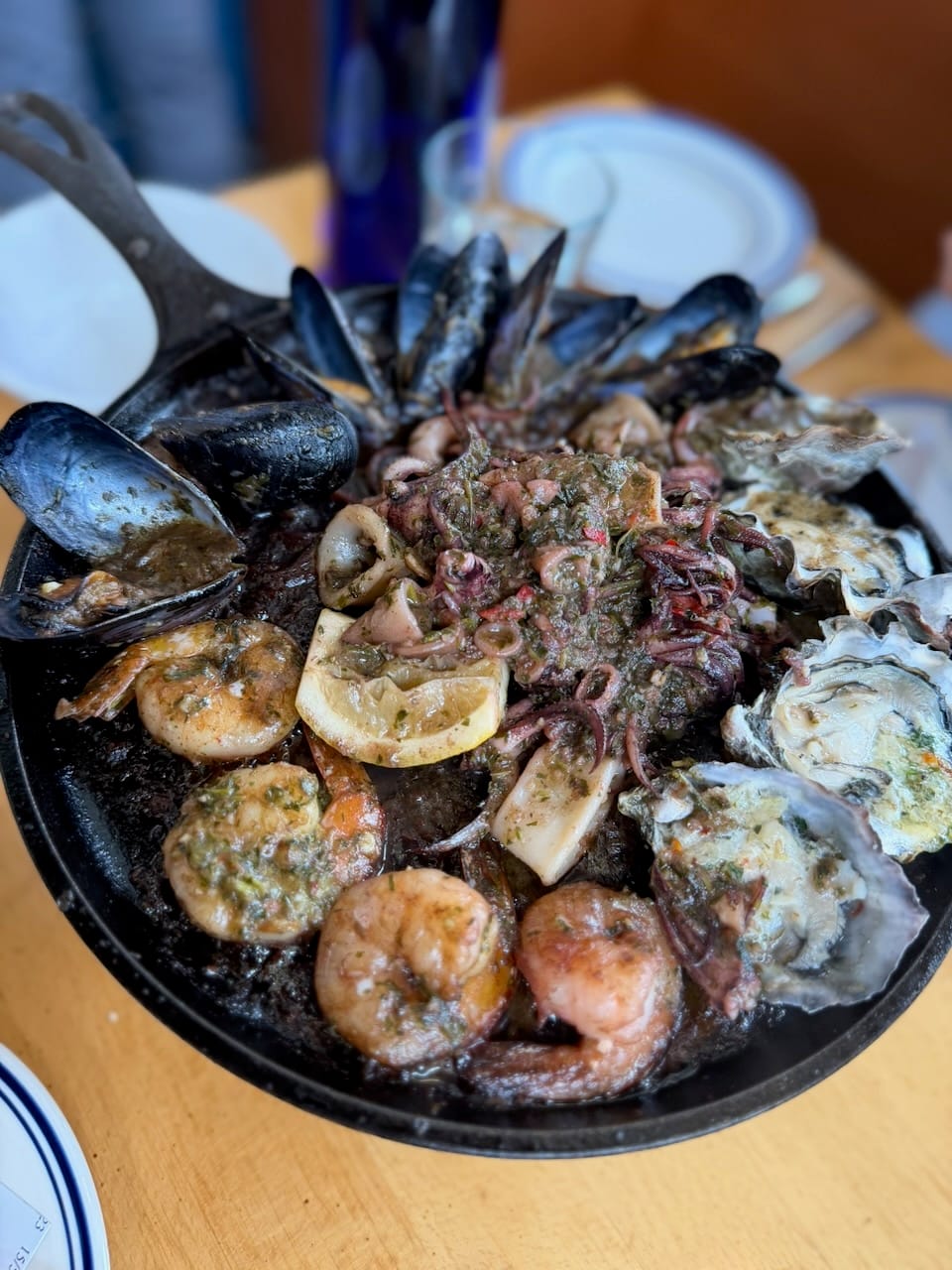
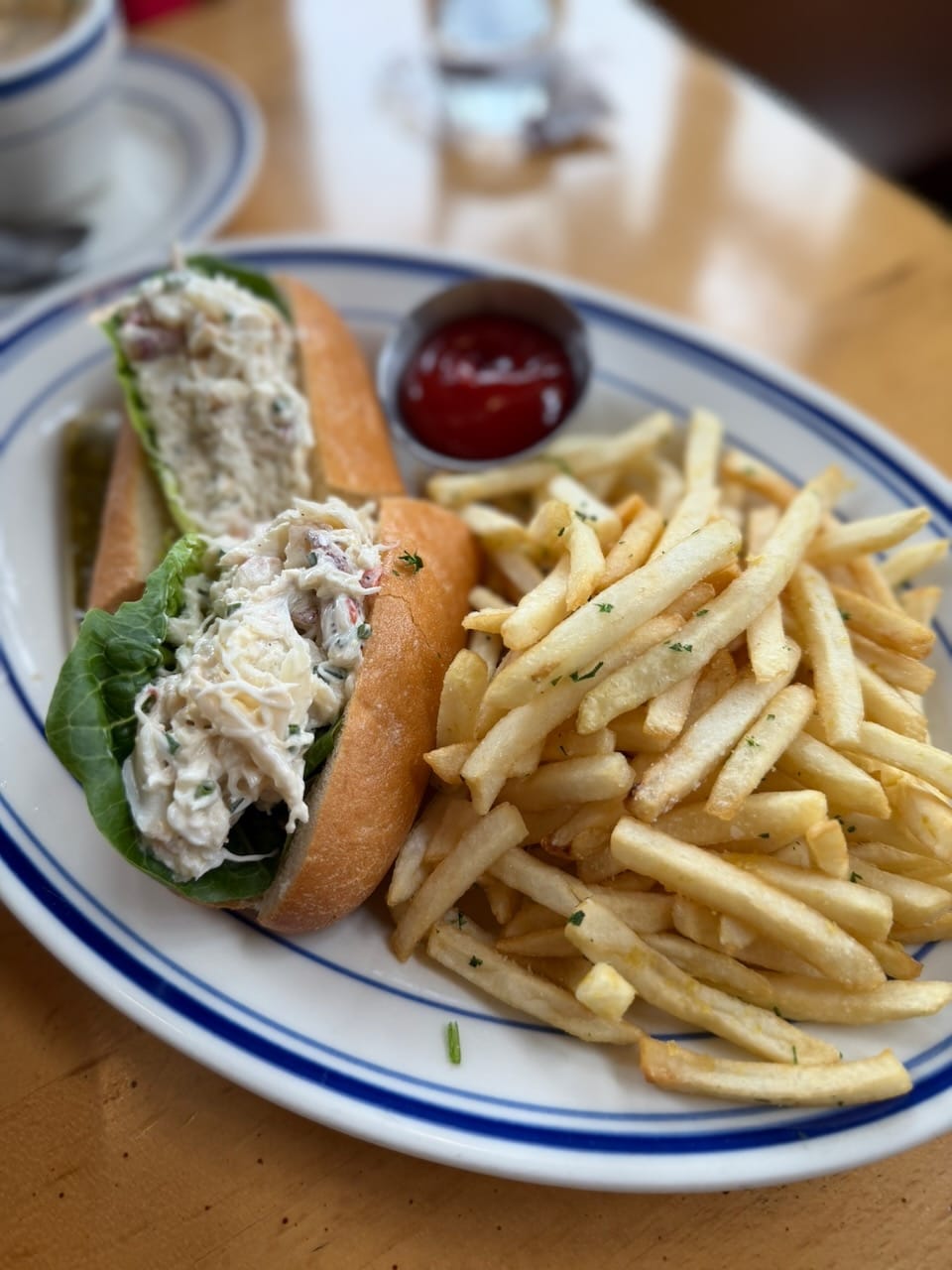
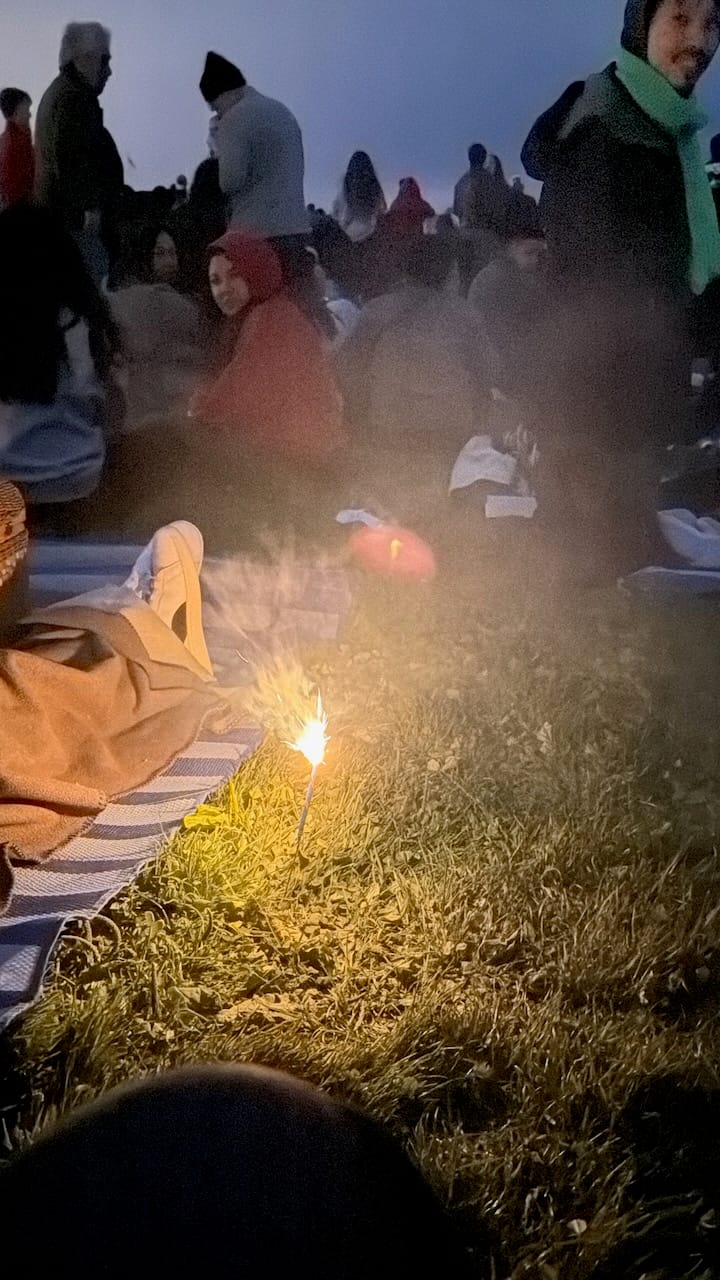
We headed back toward Marina Green around 8:30, one hour before the show. The calm space we had seen earlier was gone. I had never seen so many people there. We managed to find a place to stand among the blankets and bodies. People were already cheering as private fireworks rose from different parts of the city. I am not sure they were legal, but from where we stood, they became the clearest and best fireworks we would see that night.
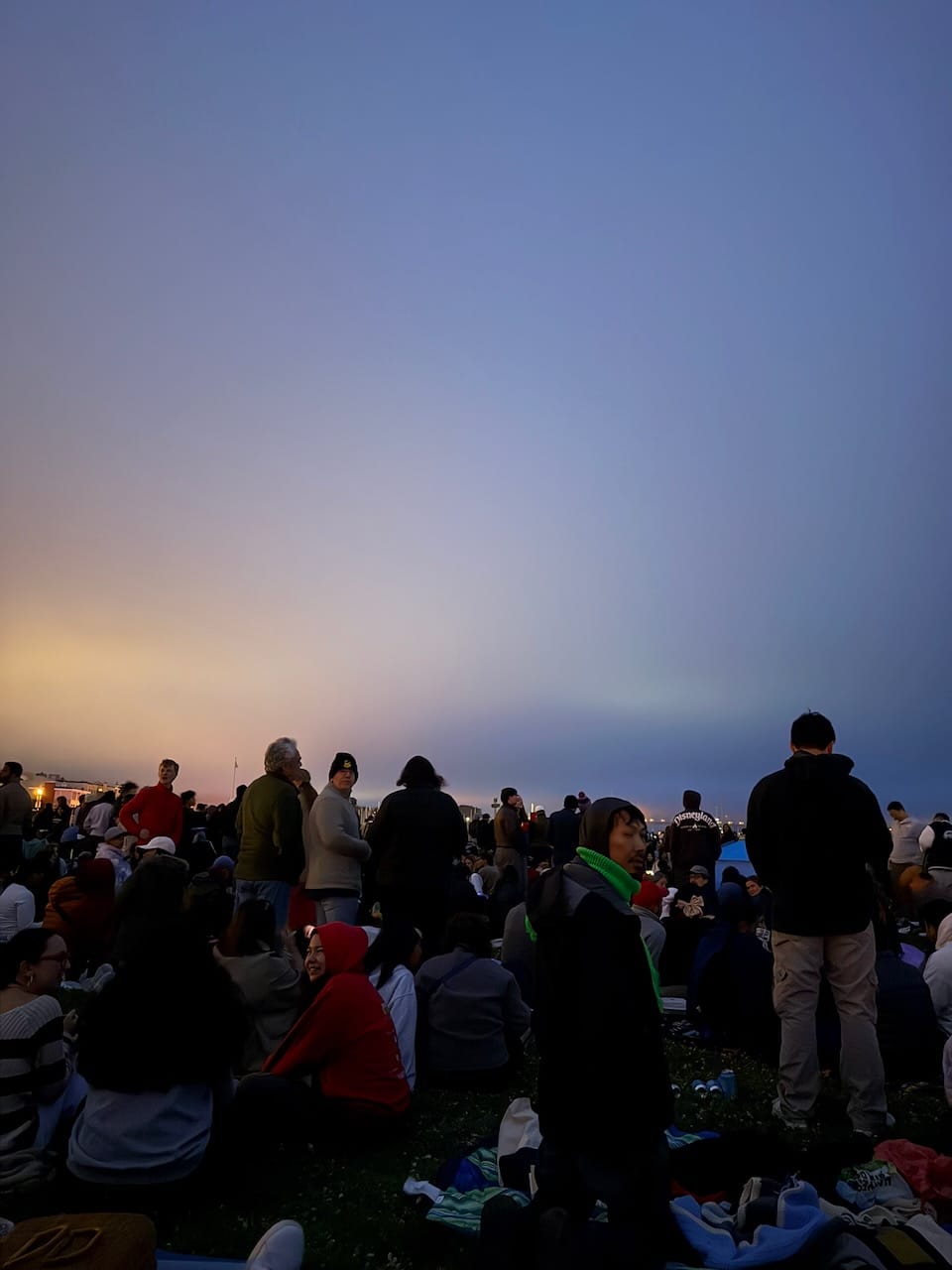
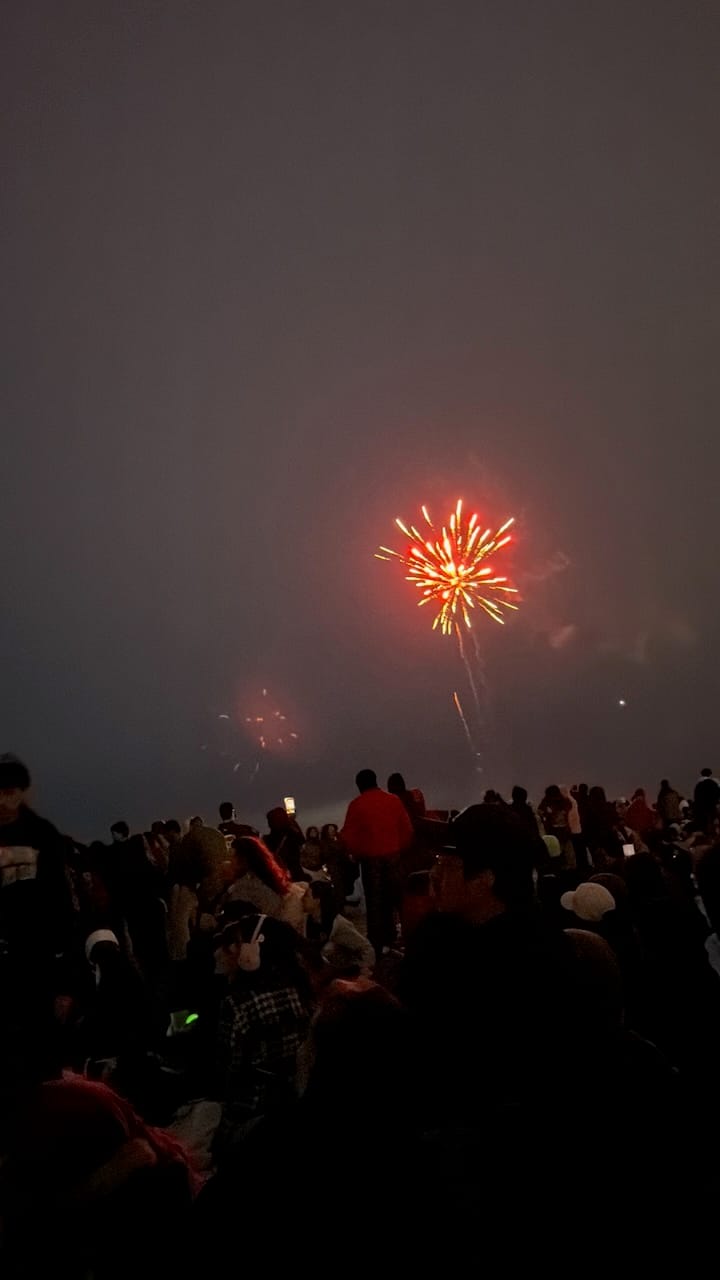
The official show began at 9:30. There were bursts of color, loud explosions. But much of the display vanished as soon as it reached the fog. The lower half remained visible while the upper half dissolved into a pale glow. Karl consumed the rest.
The show involved about 3,000 fireworks and lasted only 15 minutes. From Marina Green, we saw enough to understand what we were missing. I felt sorry for the people who had designed and installed such a complicated display on the bridge, only to have so much of their work hidden. Many people around us still cheered and enjoyed it. There was something almost funny about the scale of the effort and how casually nature dismissed it. San Francisco had put fireworks on its most famous landmark, and the fog had the final decision.
But the real disaster began after the show.
It was difficult even to walk back to Chestnut Street through the crowd. When we finally reached the parking lot, more cars had been left in the driving lanes, including the route I had expected to use toward Lombard. We could not leave that way. The only option was to head onto Chestnut Street, the street I had spent the day trying to avoid.
Cars filled every available space. Pedestrians moved between them. Bicycles and electric scooters threaded through the gaps. Even Muni's long articulated buses were trapped in the same traffic, occupying most of a block without being able to move. There was no obvious flow and very little visible traffic control. Every driver was trying to solve an individual problem, and together we created one enormous problem.
It took nearly an hour just to get out of Chestnut Street. Lombard Street was no better. Eventually I joined the line of cars escaping through San Francisco's steep hills, which I normally try to avoid. I do not enjoy stopping on those grades, and I prefer not to feel as if I have wandered into a scene from The Rock. Yet during the city's biggest events, the hills can be the fastest route out. The stop signs impose a slow order, allowing one car at a time to move. That night even this system frequently stopped altogether.
The drive home took more than three hours. Normally it is less than one.
In the following days, reports described more than 100,000 people gathering along the northern waterfront, buses unable to move, and Waymo vehicles getting stuck or running out of charge while idling. I found the Waymo stories interesting because I did not notice many of them myself. From inside our car, there was no single villain. There were simply too many vehicles, too many people, too few usable exits, and no traffic pattern capable of sorting them out. Even SFMTA later acknowledged that the transportation system could not handle the volume.
The city did prepare. It closed roads, added buses and shuttles, and repeatedly warned people not to drive. But from the street, those measures did not add up to a workable plan for getting more than 100,000 people out of a narrow part of San Francisco at the same time. The buses were caught with everyone else. Cars converged on the same roads without clear guidance. For an event of this size, I expected something closer to the modified traffic patterns used after a 49ers game, with temporary one-way routes, controlled intersections, protected transit lanes, and people directing each stream toward a usable exit. I saw almost none of that.
I hope the City studies what happened and builds a better plan before trying another event on this scale. The fireworks themselves lasted 15 minutes, but the traffic became the larger memory of the night. My own lesson is more immediate. If we return for another major Fourth of July show in the city, I will not rely on an expensive parking reservation and an optimistic reading of the road-closure map. We will find a place to stay nearby and leave the car alone until morning.
Our family ritual will continue. Next year, though, the planning may include a hotel room.